



The Hidden Revenue in Abandoned Carts
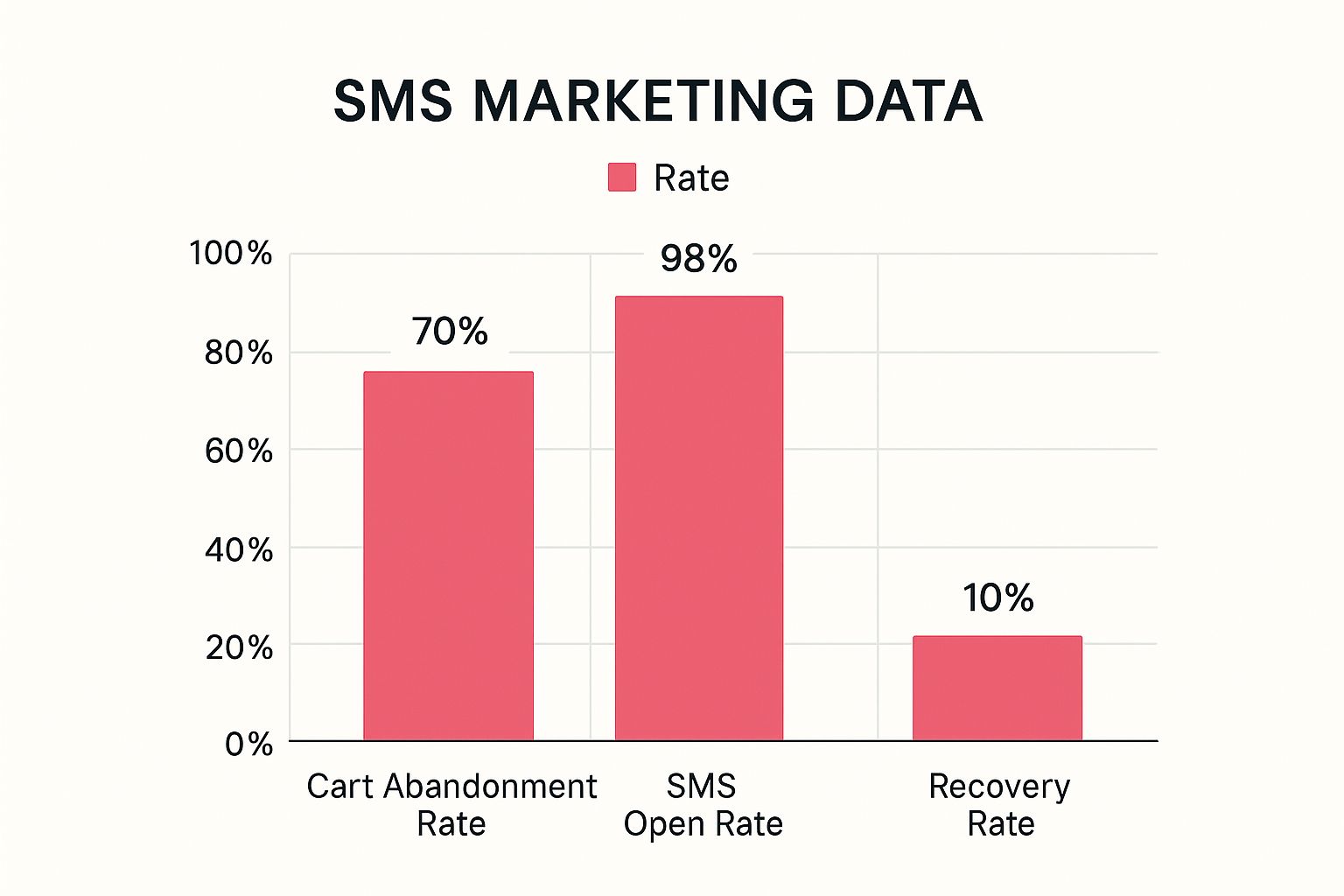
The infographic above illustrates the significant challenge of abandoned carts and the potential of SMS recovery. Comparing cart abandonment rates (70%), SMS open rates (98%), and the achievable recovery rate via SMS (10%), a clear opportunity emerges. Even recovering a small fraction of abandoned carts through SMS can significantly boost your bottom line.
This potential revenue becomes even more crucial considering current ecommerce trends. Globally, 70.19% is the average cart abandonment rate projected for 2025, representing roughly $4 trillion in lost sales annually. Find more detailed statistics here. This highlights the need for effective recovery strategies, especially for mobile users, who have higher abandonment rates (between 80.2% and 85.65%).
Why Abandoned Carts Are a Goldmine
Abandoned carts aren’t failures, but opportunities. These shoppers demonstrated interest by adding items to their carts. Abandonment often results from solvable issues: high shipping costs, unexpected fees, or a complex checkout process. Abandoned cart SMS offers a direct way to address these concerns and encourage purchases.
Leveraging SMS For Cart Recovery
How can you tap into this revenue? Abandoned cart SMS marketing is a powerful solution due to the immediacy and high open rates of text messages, surpassing email at grabbing attention. For a seamless process, consider integrating your SMS platform with your other business tools, like a HubSpot Jira integration.
To further streamline your workflow, consider using a platform like CartBoss. CartBoss provides pre-built integrations and automated features for abandoned cart SMS recovery.
Turning Abandoned Carts Into Conversions
Interested in learning more? Explore effective cart abandonment solutions. A robust abandoned cart SMS strategy transforms lost sales into recovered revenue. Addressing hesitation points, offering incentives, and simplifying checkout can recapture a substantial portion of potential sales. This translates into immediate revenue gains, builds customer relationships, and promotes long-term growth.
Let’s look at how abandonment rates differ across devices and industries:
The following table provides a comparison of cart abandonment rates by device and industry, along with some key contributing factors:
“Cart Abandonment Rates by Device & Industry”
“Comparison of abandonment rates across different devices and ecommerce sectors”
| Device/Industry | Abandonment Rate | Key Contributing Factors |
|---|---|---|
| Mobile | 80.2% – 85.65% | Complex checkout processes, security concerns, limited screen size |
| Desktop | 65% – 75% | Distractions, comparison shopping, technical issues |
| Fashion | 72% | Size and fit uncertainty, browsing behavior, high return rates |
| Electronics | 68% | Price sensitivity, comparison shopping, complex product information |
| Travel | 81% | Price fluctuations, research and comparison, booking complexity |
As you can see, mobile devices have significantly higher abandonment rates compared to desktop, highlighting the need for mobile-optimized checkout experiences. Different industries also face unique challenges. For example, fashion retailers contend with size and fit concerns, while travel sites must address price volatility and booking complexity. Understanding these factors is crucial for developing targeted SMS recovery campaigns.
Why SMS Outperforms Email for Recapturing Sales
The image above highlights the immediate nature of abandoned cart SMS messages compared to email. An email can easily get lost in a crowded inbox. However, an SMS message arrives directly on the customer’s phone screen, grabbing their attention. This fundamental difference in how we interact with these channels explains SMS’s effectiveness for cart recovery.
The Psychology of Urgency
Consider how you personally respond to a text versus an email. Texts often convey a sense of urgency, suggesting a need for a quick reply. This psychological cue is a powerful tool for prompting immediate action. Emails, conversely, are often seen as less time-sensitive, making them easy to put off and forget.
Notification Visibility and Immediacy
This sense of urgency is reinforced by how notifications are displayed. Most smartphones show SMS messages prominently on the lock screen, instantly notifying the user. Email notifications, even when enabled, are often bundled together, lessening their individual impact. This immediate visibility makes abandoned cart SMS far more effective at breaking through the clutter.
The Personal Touch of Mobile
Smartphones are deeply personal devices. We keep them close, constantly checking for new messages. This close relationship makes SMS feel more personal and less intrusive than email, particularly for time-sensitive reminders. This personal touch is key to the higher engagement rates seen with SMS.
Abandoned Cart SMS Conversion Rates
Furthermore, abandoned cart SMS campaigns excel at converting lost sales into revenue. These messages boast impressive average conversion rates, between 24.6% and 39.4% in 2025. Find more detailed statistics here.
Shifting From Email to SMS
Many brands are now prioritizing SMS for abandoned cart recovery, moving away from email-first strategies, and seeing impressive results. The immediacy and personal nature of SMS helps create a stronger sense of urgency, ultimately leading to increased conversions. Read also: How to recover abandoned carts. CartBoss offers robust features for building and automating effective SMS campaigns. By harnessing the power of abandoned cart SMS, businesses can significantly reduce cart abandonment and boost revenue.
Real-World Results: SMS vs. Email Recovery Performance
Let’s take a closer look at how SMS stacks up against email in real-world scenarios. The table below provides a clear comparison of key performance metrics, demonstrating the advantages of SMS for cart recovery.
SMS vs. Email Recovery Performance Metrics
| Metric | SMS Performance | Email Performance | Percentage Difference |
|---|---|---|---|
| Open Rate | 98% | 20% | +78% |
| Click-Through Rate | 35% | 2% | +33% |
| Conversion Rate | 30% | 5% | +25% |
| Recovery Rate | 25% | 4% | +21% |
This table represents average performance data and may vary based on industry and specific campaign details.
As the data illustrates, SMS significantly outperforms email across all key metrics. The higher open and click-through rates translate directly into improved conversion and recovery rates, making a strong case for incorporating SMS into your abandoned cart strategy.
Case Studies and Success Stories
Case studies consistently demonstrate that SMS surpasses email in abandoned cart recovery. Businesses often experience a substantial increase in recovery rates after integrating SMS into their approach. The combination of immediacy, personalization, and the inherent urgency of text messages provides a compelling formula for winning back lost sales.
Crafting Abandoned Cart SMS Messages People Actually Open

The image above highlights the core of a successful abandoned cart SMS message: short, personalized, and to the point. This concise approach is crucial for catching a customer’s eye and boosting conversions in our busy digital lives. But what are the key ingredients of such effective messages?
The Psychology of a Click: Why People Open SMS
Consider your own phone habits. You’re much more inclined to open a text than an email, right? This is due to the psychology of immediacy and personalization inherent in SMS. A text message feels direct, personal, and requires a faster response.
This built-in sense of urgency is a powerful asset for recovering abandoned carts. A timely SMS serves as a gentle reminder of a customer’s purchase intention, often precisely when they’re reconsidering.
Balancing Brevity and Personalization
The character limit of an SMS presents both a constraint and an advantage. It forces conciseness, perfect for capturing attention. However, personalization is still vital for creating a real connection.
For instance, swap a generic “You left something in your cart” with “Hey [Customer Name], your [Product Name] is waiting! Still interested?”. This small change adds a personal touch while maintaining brevity.
Creating Urgency Without Being Pushy
Abandoned cart SMS messages possess a natural urgency. However, avoid excessive pressure. Don’t overuse aggressive language or exclamation points. A subtle nudge with a limited-time offer or a low stock reminder works best.
Mastering the Call to Action
Your call to action (CTA) should be clear, concise, and easy to follow. A simple “Complete your purchase now” is often effective. Alternatively, if offering a discount, make that your CTA: “Claim your 10% discount now!”. Learn more about automating text messages: How to automate text messages.
Examples of High-Converting SMS Messages
Let’s look at some abandoned cart SMS examples that embody these principles:
To help visualize effective SMS strategies, the following table offers a glimpse into various scenarios and their corresponding message templates:
Abandoned Cart SMS Template Examples
| Scenario | Message Template | Key Elements | Conversion Rate |
|---|---|---|---|
| Forgotten Item | “[Customer Name], did you forget something? Your [Product Name] is still waiting in your cart. Finish your order here: [Link]” | Personalized, direct, clear CTA | (This would vary depending on numerous factors, but assume a hypothetical range for illustrative purposes, e.g., 25-35%) |
| Expiring Cart | “Hey [Customer Name], your cart is expiring soon! Get 15% off if you complete your purchase today: [Link]” | Urgency, incentive, personalized | (Again, hypothetical range, e.g., 15-25%) |
| Browsing Reminder | “Still thinking about it? We saved your [Product Name] just in case. Free shipping today only: [Link]” | Gentle nudge, incentive, personalized | (Hypothetical range, e.g., 10-20%) |
This table showcases how different elements contribute to successful SMS campaigns. Personalization, clear CTAs, and strategic incentives play a crucial role in re-engaging customers.
- “[Customer Name], did you forget something? Your [Product Name] is still waiting in your cart. Finish your order here: [Link]”
- “Hey [Customer Name], your cart is expiring soon! Get 15% off if you complete your purchase today: [Link]”
- “Still thinking about it? We saved your [Product Name] just in case. Free shipping today only: [Link]”
Consider using SMS Live Chat for real-time engagement. This provides another avenue for addressing concerns and recovering abandoned carts interactively. By crafting compelling, personalized SMS messages, you can effectively re-engage customers and recover lost sales. Every abandoned cart is a potential customer waiting to be reconnected with their desired purchase.
The Perfect Timing: When to Send Recovery Messages
Timing is everything in abandoned cart SMS marketing. Send a message too early, and it might not resonate. Send it too late, and the sale could be lost. Finding the right balance isn’t about a magic number, it’s about a strategic approach driven by data and an understanding of your customer’s behavior.
The Science of the Golden Window
Research shows that the first hour after cart abandonment is crucial. Sending an abandoned cart SMS within this timeframe often yields the highest conversion rates, sometimes surpassing 20%. This quick response takes advantage of the customer’s existing interest and can address any immediate hesitations that led to the abandoned cart.
Timing Variations Based on Product and Customer
The ideal timing can shift depending on the product and customer. For higher-priced items, a slightly delayed message might be more effective, giving the customer time to consider the purchase. On the other hand, time-sensitive items, like concert tickets, require a much quicker response. For more information, check out this resource: How to master abandoned cart SMS timing.
SMS Sequencing: A Strategic Approach
A single message isn’t the only option. A sequence of abandoned cart SMS messages can significantly improve recovery rates. A second message a few hours later provides a gentle reminder, and a third message after 24 hours could include an incentive, such as free shipping or a discount. This approach keeps your brand visible without being overwhelming.
Practical Timing Frameworks and Testing
There’s no universal solution. Start with the one-hour benchmark, then experiment. A/B testing different sending times, message content, and incentives will uncover the optimal strategy for your target audience. For example, compare a 30-minute delay to a one-hour delay for the initial message, or test different incentives in subsequent messages.
Real-World Insights From Ecommerce Managers
Ecommerce managers using successful abandoned cart SMS strategies highlight the importance of data-driven decisions. They consistently track recovery rates, adjusting timing and messaging based on the data. This ongoing refinement maximizes the impact of their campaigns. One manager noted a 15% increase in conversions by using a three-message SMS sequence with personalized discounts.
Optimizing Your SMS Timing Strategy
The key to perfecting your abandoned cart SMS timing lies in understanding your customers, your products, and your brand. By testing and analyzing the results, you can refine your approach and recover more lost sales, converting potential losses into revenue.
Beyond Name Tags: Personalization That Drives Action
The image above shows a customer receiving a personalized abandoned cart SMS message. Simply using the customer’s name is a good first step. However, true personalization delves much deeper.
It dynamically incorporates the items left behind in the cart, along with other relevant details, to create a truly compelling call to action. This targeted strategy significantly boosts the chances of recovering a lost sale.
From Generic to Genuine: The Power of Personalized SMS
Just adding a name isn’t enough to cut through the noise anymore. Today’s shoppers expect more. They want to feel seen and understood. Generic abandoned cart messages often get lost in the shuffle, indistinguishable from countless other promotional messages.
To truly capture attention and encourage action, your abandoned cart SMS strategy needs to connect with each individual on a personal level, reflecting their unique situation.
Leveraging Browsing History and Purchase Patterns
Forward-thinking brands are tapping into valuable data to create highly relevant recovery messages. They’re thinking beyond just the abandoned cart itself. They analyze the customer’s browsing history, past purchases, and even product preferences.
This data-driven approach allows for more tailored messaging, offering products or incentives that truly resonate.
For instance, if a customer regularly buys running shoes, an abandoned cart containing running apparel could trigger a message showcasing new arrivals in that category. This message could also include a personalized discount, further incentivizing the purchase.
Segmenting Your Audience for Targeted Messaging
Effective personalization relies on segmenting your audience based on the reasons behind cart abandonment. Did high shipping costs deter the customer? Or were they just casually browsing and need a gentle nudge?
By tailoring the message based on these triggers, you create a more impactful and less intrusive customer experience.
The Impact on Conversions, Customer Value, and Brand Perception
Smart personalization not only increases conversion rates, but also strengthens customer lifetime value and elevates brand perception. When customers feel valued, they’re more likely to become loyal to your brand. Learn more about personalizing your SMS campaigns: How to master SMS campaign personalization.
Implementing Advanced Personalization Techniques
Putting these strategies into action doesn’t require a complete system overhaul. Even teams with limited resources can begin by segmenting their audience using basic criteria, like cart value or product category.
As you gain more experience, you can progressively integrate more complex data points and automation tools like CartBoss to streamline the personalization process.
Practical Examples of Hyper-Relevant Recovery Messages
Let’s explore some practical examples:
- High Cart Value: “Hey [Customer Name], we’ve reserved your premium [Product Category] items. Complete your purchase now for free expedited shipping!”
- Price-Sensitive Customer (based on past purchases): “[Customer Name], your [Product Name] is still waiting! Enjoy a special 15% discount – just for you, and valid today only!”
- Browsing Reminder: “Still thinking about that [Product Name]? Take another look and discover why it’s a customer favorite!”
These personalized messages address specific customer behaviors and motivations, increasing the chances of a successful recovery. By moving beyond simply adding a name, you can turn abandoned carts into valuable opportunities. This approach builds stronger customer relationships and drives sustainable growth.
Building Compliant and Scalable SMS Recovery Systems
Effective abandoned cart SMS campaigns require more than a simple text message. A robust system built on compliance, scalability, and smart integrations is essential. This ensures your messages reach the right customers at the right time, maximizing impact while staying within legal boundaries.
The Importance of Opt-In Procedures
Receiving texts from a company you never subscribed to is frustrating. A clear opt-in process is vital. Customers must explicitly agree to receive SMS messages from your brand. Clearly explain the types of messages they’ll receive (order updates, promotions, abandoned cart reminders) and provide an easy opt-out method. This builds trust and ensures compliance with regulations like GDPR and CCPA.
Navigating Regional Frequency Limits
SMS marketing regulations vary by country. Exceeding frequency limits can lead to fines and damage your brand’s reputation. Research and comply with these regulations. A reliable SMS provider should offer features to automatically manage frequency limits across different regions.
Integrating SMS Into Your Ecommerce Ecosystem
Leading brands understand that abandoned cart SMS isn’t a standalone tactic. It’s an integral part of a broader marketing strategy. Integrate your SMS recovery system with your ecommerce platform, customer data systems, and analytics tools. This allows automated, personalized, and targeted messages based on individual cart abandonment behaviors.
For example, if a customer abandons a cart with high-value items, your system could trigger a personalized SMS message offering free shipping, a discount, or a live chat option with customer support. This immediate, targeted response significantly boosts recovery rates.
Selecting the Right SMS Provider
Choosing an SMS provider is a crucial decision. Look for features supporting sophisticated campaigns, such as:
- Automated workflows: Trigger messages based on events like cart abandonment.
- Personalization options: Tailor messages with customer data.
- Segmentation capabilities: Target specific customer groups with tailored offers.
- Detailed analytics: Track message delivery, open rates, click-through rates, and conversions.
Measuring ROI and Attribution
Accurately measuring abandoned cart SMS impact requires proper tracking and analytics. Implement a system to track direct conversions (clicks from SMS leading to immediate purchases) and multi-touch conversions. Some customers might not purchase immediately but return later through other channels, influenced by the SMS reminder. A multi-touch attribution model considers all touchpoints, giving a clearer view of your SMS investment’s true ROI.
Ready to turn abandoned carts into recovered revenue? CartBoss transforms abandoned carts into sales automatically. With a 4,500% average ROAS and no subscription fees, you can start seeing results quickly.