



Tired of Lost Sales? Reclaim Your Revenue!
Shopping cart abandonment directly impacts your bottom line, representing significant lost revenue. If you’re looking to convert these missed opportunities into sales, you’re in the right place. This guide presents 8 powerful abandoned cart solutions designed to help e-commerce businesses like yours. Discover tools to re-engage potential customers, recover otherwise lost sales, and ultimately boost your revenue in 2025. We’ll get straight to the platforms that can make a difference.
1. CartBoss
CartBoss is a leading abandoned cart solution, specifically designed as a powerful SMS recovery tool to convert lost sales into revenue for eCommerce businesses. Trusted by thousands of Shopify and WooCommerce sellers, it uses automated, targeted SMS reminders and offers to re-engage customers effectively.
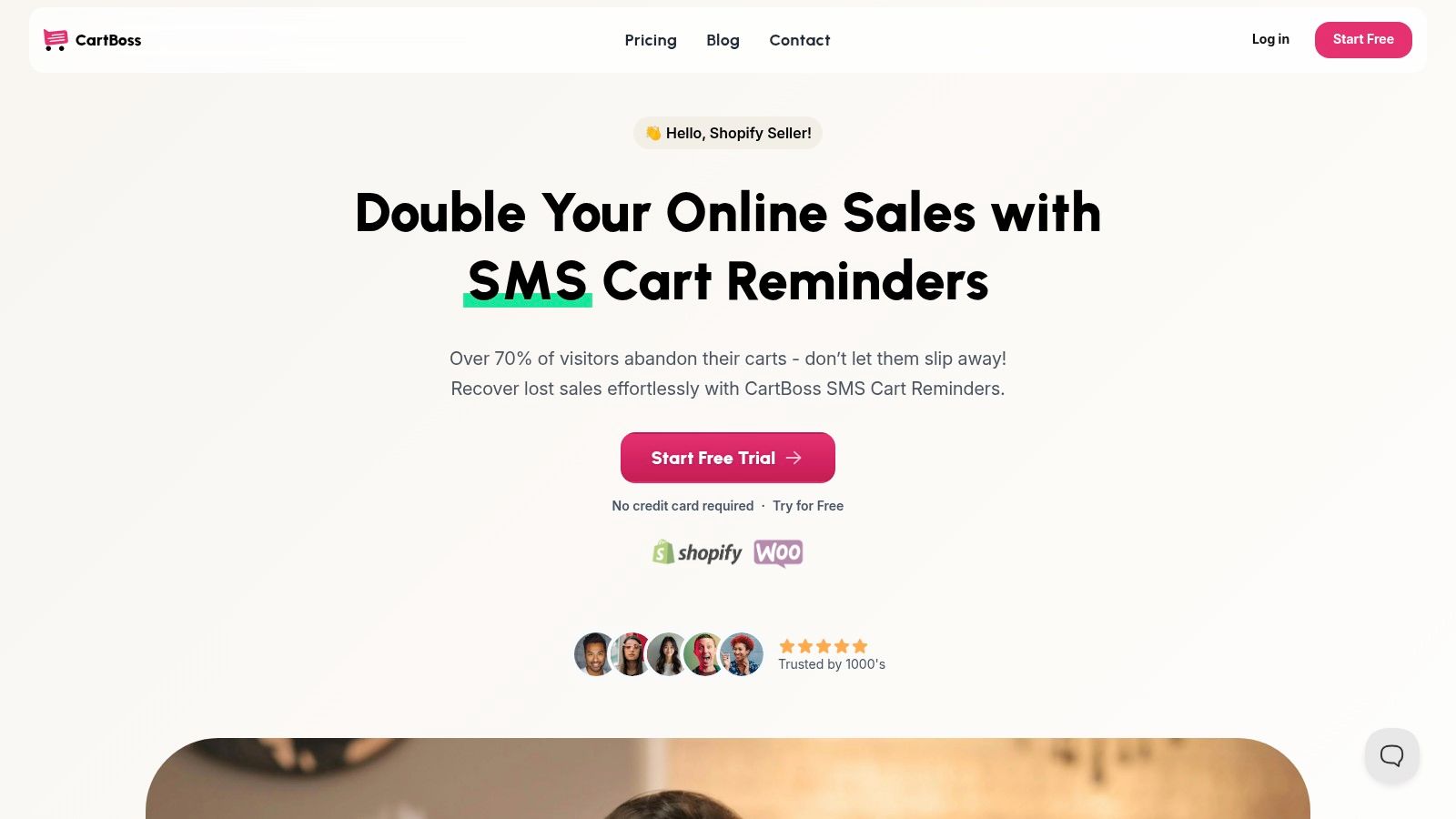
The core strength of CartBoss is its SMS-first approach, leveraging the channel’s exceptional 99% open rate. This direct engagement, far surpassing email, allows personalized messages with timely discounts to reach customers moments after they abandon their cart, often prompting purchase completion. This strategy is credited with boosting sales by up to 50% and recovering over 7 million carts, solidifying its role as an effective abandoned cart solution.
Ease of use is paramount. CartBoss offers a seamless, no-code integration with Shopify and WooCommerce, enabling a full setup in under 2 minutes. This “plug-and-play” system works on autopilot, allowing merchants to focus on growth while CartBoss reclaims revenue. Its simplicity makes powerful cart recovery accessible to all.
Designed for a global market, CartBoss supports over 30 languages with automatic detection, ensuring personalized interactions worldwide. It also prioritizes data privacy, being fully GDPR and CCPA compliant, with features like do-not-disturb modes and easy unsubscribe options, fostering ethical marketing. For insights into crafting effective SMS, Learn more about CartBoss and its messaging strategies.
Customization options further enhance recovery rates. Dynamic discount codes, branded sender IDs, and pre-filled checkout forms create a frictionless path back to purchase. Financially, CartBoss is highly appealing with zero subscription fees and a free trial (no credit card needed). This risk-free start, combined with a reported average 4500% ROAS, highlights its value and efficiency in optimizing marketing spend.
Practical Applications & Key Use Cases:
CartBoss is highly effective for:
- High-Volume Stores: Automating large-scale cart recovery.
- Peak Sales Periods: Maximizing conversions (e.g., Black Friday) with swift SMS.
- Augmenting Email Marketing: Providing a high-engagement alternative.
- International Sellers: Utilizing multilingual features for global personalization.
- Marketing Agencies: Offering clients a simple, results-driven recovery tool.
- Growing SMEs: Benefiting from a risk-free trial as abandonment volume increases.
Technical Requirements, Setup, and Pricing:
CartBoss requires a Shopify or WooCommerce store. The setup is codeless and exceptionally fast, typically under two minutes. A standout feature is its pricing: zero subscription fees and a free trial (no credit card required). This model allows businesses to start recovering sales without upfront costs, making it a transparent and accessible abandoned cart solution where you primarily benefit from its success in reclaiming revenue.
Pros:
- Drives significant sales growth (up to 50%) via automated SMS and dynamic offers.
- Achieves outstanding SMS engagement: 99% open rate, 50%+ click-through.
- Ultra-fast, no-code setup (under 2 minutes) for Shopify and WooCommerce.
- Global-ready with 30+ languages and automatic language detection.
- Ensures GDPR and CCPA compliance with user-centric privacy features.
- Provides detailed analytics for ROI and campaign performance tracking.
- Offers a risk-free entry with a free trial and no ongoing subscription costs.
Cons:
- Most impactful for stores with consistent abandoned cart volume; newer or smaller shops may see a more gradual initial effect.
- SMS regulations and costs differ by region, requiring merchants to manage compliance and budget.
For e-commerce businesses aiming to effectively combat cart abandonment and unlock significant lost revenue, CartBoss presents a compelling, user-friendly, and highly efficient SMS-based abandoned cart solution.
Learn more and start your free trial at the official CartBoss website: https://www.cartboss.io
2. Klaviyo
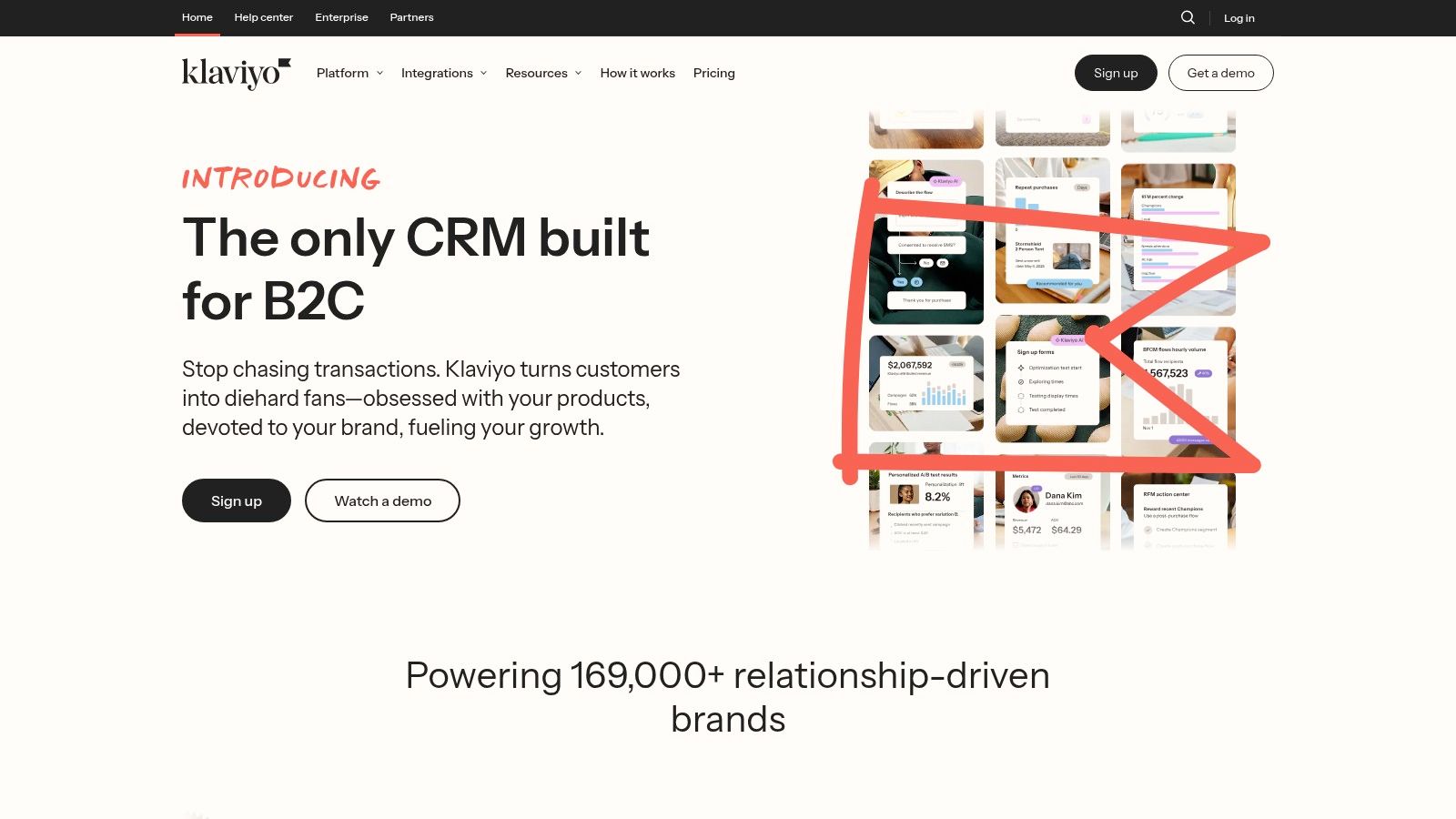
Klaviyo is a comprehensive email and SMS marketing platform, widely recognized as one of the market’s most robust abandoned cart solutions. It empowers e-commerce businesses to recover significant lost revenue by leveraging deep platform integrations, advanced customer segmentation, AI-driven personalization, and intelligent multi-channel automation. Its core strength lies in using customer data and machine learning to predict behavior and optimize send times, making abandoned cart recovery highly effective.
Core Features for Maximizing Cart Recovery:
Klaviyo’s efficacy in converting abandoned carts stems from several key capabilities:
- AI-Powered Predictive Analytics: Uses machine learning to analyze customer data, predicting optimal send times for recovery messages to maximize engagement and conversion for each individual.
- Advanced Segmentation: Enables precise audience targeting based on browsing behavior (e.g., products viewed), purchase history, and cart details (value, items), facilitating highly personalized and relevant messaging.
- Multi-Channel Automated Flows (Email & SMS): Supports sophisticated, automated recovery sequences across email and SMS (with consent), increasing customer touchpoints through strategically timed follow-ups.
- Dynamic Product Content: Recovery emails dynamically display abandoned items and can suggest related products, making reminders highly specific and enticing, often boosting final order value.
Practical Use Cases for E-commerce:
Klaviyo is particularly impactful for online retailers seeking to optimize their sales funnel:
- Targeted Recovery for Shopify/WooCommerce Stores: Merchants on these platforms benefit from seamless integrations, allowing for quick setup of flows that differentiate messaging based on factors like guest vs. logged-in users, cart value, or customer lifecycle stage. This precise targeting improves the effectiveness of abandoned cart solutions.
- Nurturing and Retention Beyond Recovery: Even if an initial cart isn’t recovered, Klaviyo helps build long-term value. Abandonment data enriches customer profiles, enabling future retargeting with relevant offers, thus supporting broader customer retention strategies.
Key Implementation Tips:
To leverage Klaviyo effectively for cart recovery:
- Ensure Deep E-commerce Integration: Connect Klaviyo thoroughly with your store (Shopify, Magento, etc.) for accurate, real-time data syncing of customer and cart events.
- Iterate on Flows: Start with a basic 2-3 step email sequence. Refine it, then layer in SMS, A/B test offers and timing, and explore advanced segmentation.
- Maintain SMS Compliance: For SMS campaigns, strictly obtain explicit user opt-in and adhere to all relevant regulations (e.g., TCPA, GDPR).
Pricing and Technical Considerations:
Klaviyo’s pricing is tiered, based on contact list size and message volume, positioning it as a premium solution. A free plan is available for very small businesses. For specifics, consult their website. Technically, it’s a web-based SaaS platform requiring e-commerce store integration.
When comparing multi-channel tools, especially for SMS, businesses might weigh Klaviyo against specialized platforms. To understand these nuances better, you can Learn more about Klaviyo and its SMS capabilities within the landscape of abandoned cart solutions.
Pros:
- Excellent deliverability rates and spam folder avoidance
- Deep e-commerce integrations with Shopify, Magento, and others
- Sophisticated automation workflows with conditional logic
- Comprehensive analytics and A/B testing capabilities
Cons:
- Higher pricing compared to basic email marketing tools
- Steep learning curve for advanced features
- Can be overwhelming for small businesses with simple needs
In essence, Klaviyo is a top-tier choice for e-commerce brands committed to deploying advanced abandoned cart solutions. Its powerful blend of data intelligence, AI-driven automation, and multi-channel outreach is highly effective at converting abandoned checkouts into completed sales and fostering customer loyalty.
For more information, visit their official website: https://www.klaviyo.com
3. Mailchimp
Mailchimp has long been a household name in email marketing, but its evolution into a comprehensive marketing automation platform has solidified its position as a powerful contender for businesses seeking effective abandoned cart solutions. Known for its user-friendly interface and extensive feature set, Mailchimp offers a robust toolkit specifically designed to help e-commerce businesses recover lost sales from shoppers who leave items in their carts without completing a purchase. It’s particularly favored by small to medium-sized businesses (SMBs) and online retailers who need an intuitive yet capable system to implement cart recovery strategies without a steep learning curve.
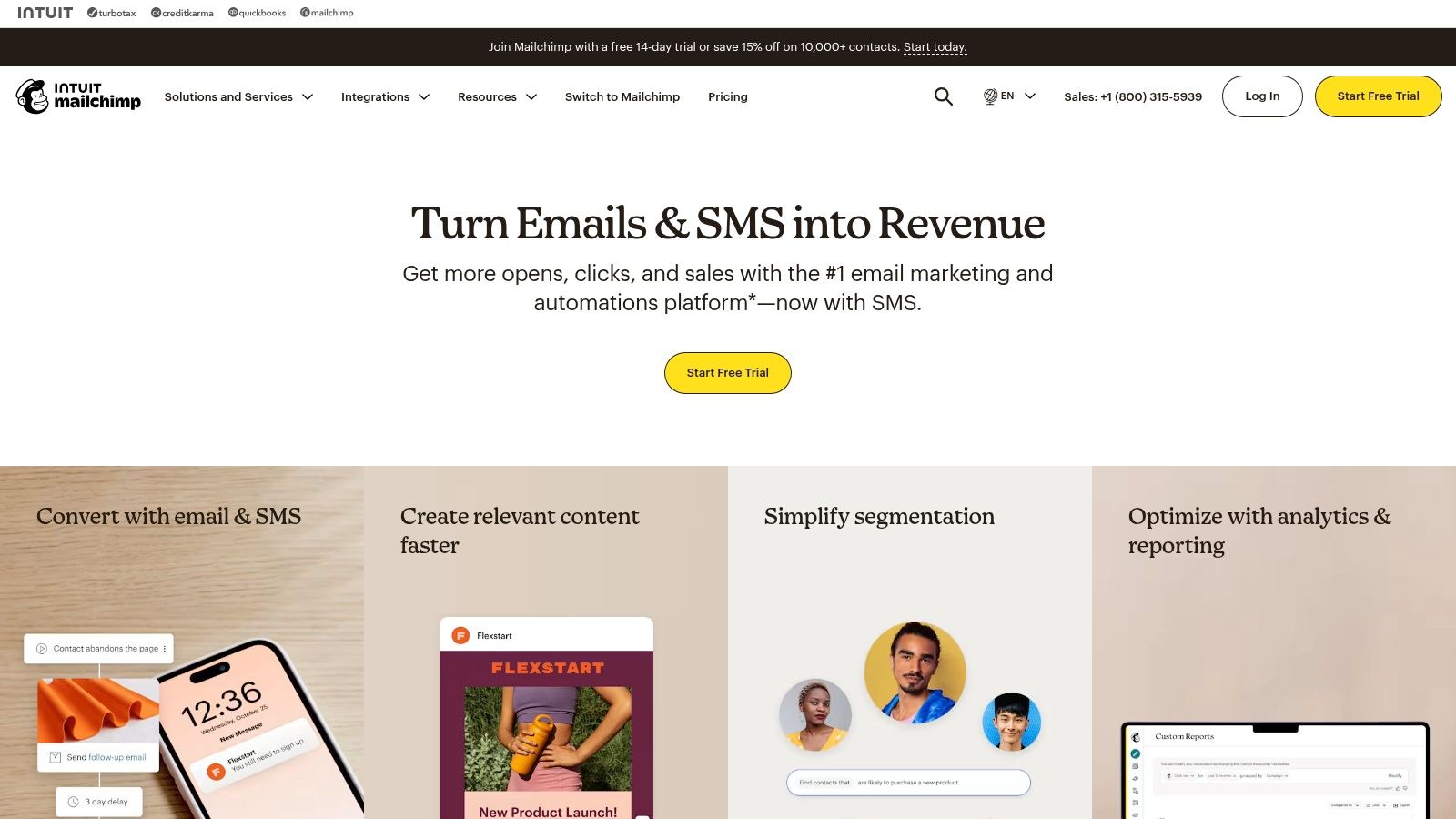
What makes Mailchimp a compelling choice among abandoned cart solutions is its blend of accessibility and power. It democratizes features that were once the domain of larger enterprises or specialized, more complex tools. For e-commerce store owners, especially those on platforms like Shopify or WooCommerce, Mailchimp provides a streamlined way to set up automated email sequences that re-engage potential customers and nudge them towards completing their purchase. This integrated approach means businesses can manage their broader email marketing, customer journeys, and specific abandoned cart campaigns all within one familiar platform.
Key Features for Effective Cart Recovery
Mailchimp’s e-commerce toolkit is packed with features geared towards maximizing cart recovery rates:
- Pre-built Abandoned Cart Email Templates & Drag-and-Drop Editor: Mailchimp shines with its library of professionally designed, pre-built automation templates specifically for abandoned cart scenarios. Users can quickly select a template and customize it using the intuitive drag-and-drop editor. This significantly lowers the barrier to entry, allowing even those with limited design or coding skills to create compelling, on-brand reminder emails. These templates often include placeholders for product images, names, prices, and a direct link back to the cart.
- Behavioral Targeting: The platform allows for behavioral targeting based on a customer’s purchase history and engagement with previous emails or your website. This means abandoned cart emails can be more personalized than a generic reminder. For instance, you could tailor messaging differently for a first-time shopper versus a loyal customer, or segment based on cart value to offer different incentives.
- Integration with 300+ Apps: A cornerstone of Mailchimp’s utility as an abandoned cart solution is its seamless integration with major e-commerce platforms like Shopify, WooCommerce, BigCommerce, Magento, and Squarespace, among others. This direct connection enables Mailchimp to automatically receive cart abandonment data, triggering recovery workflows in real-time. Beyond e-commerce platforms, it integrates with a wide array of other business tools.
- Automated Product Retargeting Campaigns: Mailchimp can automatically populate abandoned cart emails with the specific products a customer left behind. This visual reminder is highly effective. Some plans also facilitate retargeting ads on platforms like Facebook and Instagram, further extending your reach to recover those hesitant buyers.
- Mobile-Responsive Email Designs with Product Carousels: With a significant portion of online shopping and email checking happening on mobile devices, Mailchimp ensures its email templates are mobile-responsive. Features like product carousels within emails allow users to showcase multiple abandoned items attractively, making it easy for shoppers to recall and reconsider their purchase.
Practical Applications & Getting Started
For an SMB e-commerce store, Mailchimp provides a practical pathway to implementing sophisticated abandoned cart solutions. New online retailers can leverage the free tier to set up a basic single-email recovery campaign. As they grow, they can upgrade to create multi-email sequences, perhaps offering a small discount in the second or third email if the initial reminder doesn’t convert.
Implementation Tips:
- Connect Your Store: The first step is to integrate your e-commerce platform with Mailchimp. This is usually a straightforward process via dedicated plugins or API connections found in Mailchimp’s “Integrations” section.
- Choose an Automation: Navigate to the “Automations” section and select a pre-built “Abandoned Cart Email” or “Abandoned Cart Series” template.
- Customize Content: Use the drag-and-drop editor to tailor the email’s branding, messaging, and calls-to-action. Crucially, ensure dynamic content like product images, names, and a link back to the cart are correctly configured using merge tags.
- Set Timing: Configure the timing of your emails. A common strategy is to send the first email 1-4 hours after abandonment, a second after 24 hours, and potentially a third after 48-72 hours. Test what works best for your audience.
- Consider Incentives: Decide whether to include an incentive like free shipping or a small percentage discount. A/B test emails with and without offers to see the impact on conversion rates and overall profitability.
- Monitor and Optimize: Regularly review the performance of your abandoned cart emails—open rates, click-through rates, and recovered revenue. Use these insights to refine your subject lines, email copy, and offers.
Understanding Mailchimp’s Pricing for Abandoned Cart Features
Mailchimp offers several pricing tiers:
- Free Tier: Mailchimp’s free plan is generous, offering up to 2,000 contacts (though subject to Mailchimp’s latest terms, so always verify on their site) and a certain number of email sends per month. Basic single-step abandoned cart automations might be accessible here after connecting your store, making it an excellent starting point for new businesses testing abandoned cart solutions.
- Paid Plans (Essentials, Standard, Premium): To unlock the full power of Mailchimp’s abandoned cart features, such as multi-step automation series (e.g., sending 3 emails over several days), advanced segmentation, A/B testing, and more sophisticated customer journey building, a paid plan is typically required. The “Standard” plan is often a popular choice as it unlocks most of these key e-commerce automation features. Pricing scales with the number of contacts and the feature set.
Technical Considerations
Mailchimp is a web-based platform, so no special software installation is needed beyond a modern web browser. The primary technical requirement for its abandoned cart functionality is having an e-commerce store on a platform that Mailchimp can integrate with to receive cart data.
Pros
- User-friendly interface: Exceptionally easy to navigate and use, making it ideal for beginners and teams without dedicated tech resources.
- Generous free tier: Allows small businesses to start recovering abandoned carts with up to 2,000 contacts without initial investment (verify current limits).
- Strong template library: Offers professionally designed, mobile-responsive templates that save time and effort.
- Reliable customer support and extensive documentation: Provides ample resources for troubleshooting and learning.
- All-in-one platform: Manages email, automations, and some CRM functionalities in one place.
Cons
- Limited advanced segmentation in lower-tier plans: More sophisticated segmentation options crucial for highly targeted abandoned cart flows are often reserved for higher-priced plans.
- Pricing can become expensive as contact list grows: While the free tier is attractive, costs can escalate significantly for businesses with large contact lists or those needing advanced features.
- Less sophisticated automation compared to specialized platforms: While robust for many, businesses needing extremely complex, multi-conditional logic or highly niche automation triggers might find dedicated abandoned cart solutions more powerful.
Mailchimp vs. Specialized Tools
Compared to highly specialized abandoned cart recovery tools, Mailchimp offers a broader marketing suite. It might not have the same depth of niche features or hyper-advanced analytics for cart recovery as some dedicated solutions. However, its strength lies in its all-in-one nature, ease of use, and strong core email marketing capabilities, making it an excellent and often more cost-effective choice for SMBs who want a unified platform.
In conclusion, Mailchimp earns its place as a leading abandoned cart solution due to its accessibility, comprehensive e-commerce features, and user-centric design. It empowers businesses of all sizes, particularly SMBs, to effectively tackle cart abandonment and recover significant revenue with relative ease.
Website: https://mailchimp.com
4. Omnisend
When it comes to comprehensive abandoned cart solutions specifically tailored for the dynamic world of e-commerce, Omnisend stands out as a powerful contender. It’s not just another email marketing tool; Omnisend is an omnichannel marketing automation platform designed from the ground up to help online stores create a unified customer experience across multiple touchpoints. This unified approach is particularly effective in recovering potentially lost sales from abandoned checkouts.
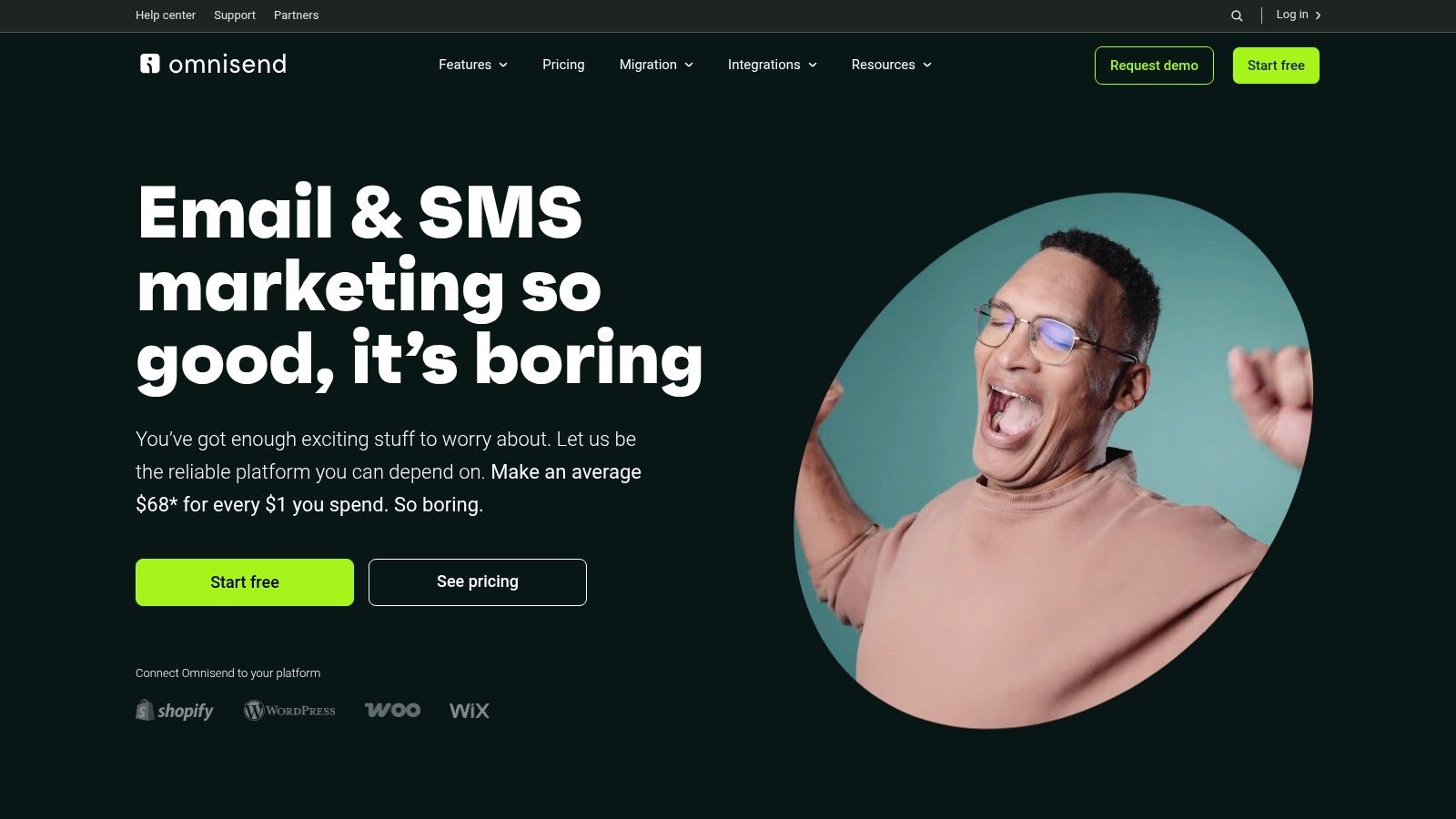
Omnisend earns its spot on this list primarily due to its robust, e-commerce-centric features and its true omnichannel capabilities. In an era where customers interact with brands across various channels, relying solely on email for cart recovery is often insufficient. Omnisend allows businesses to strategically combine email, SMS, and web push notifications into a cohesive recovery sequence. This multi-pronged strategy significantly increases the chances of re-engaging distracted shoppers, no matter where they are or what device they’re using, making it one of the more effective abandoned cart solutions available for online retailers. The platform’s dedication to e-commerce means that features like product recommendations and discount automation are not afterthoughts but core components, deeply integrated to drive conversions.
Key Features and Practical Applications for Abandoned Cart Recovery:
Omnisend’s strength in tackling cart abandonment lies in its intelligently designed features. Here’s how they translate into practical benefits for e-commerce businesses:
- Omnichannel Automation Workflows: This is the heart of Omnisend’s cart recovery power. Its visual workflow builder, complete with pre-made e-commerce templates, allows even non-technical users to design sophisticated recovery sequences.
- Practical Application: Imagine a customer abandons their cart. With Omnisend, you can set up a workflow like this:
- After 1 hour: Send a friendly reminder email featuring the cart items and a compelling subject line.
- After 24 hours (if no purchase): Send an SMS message with a small incentive, like free shipping or a 5% discount. This direct approach can be highly effective for customers who have opted-in for SMS.
- After 48 hours (if still no purchase and opted-in): Trigger a web push notification with a time-sensitive offer to create urgency, visible even if the user isn’t actively browsing your site.
- Benefit: By reaching customers on their preferred channels at strategic intervals, you maximize visibility and the likelihood of them completing their purchase. You can tailor these workflows based on cart value (e.g., a more aggressive discount for higher value carts), customer history, or specific products abandoned. The visual builder makes it easy to see the entire customer journey.
- Practical Application: Imagine a customer abandons their cart. With Omnisend, you can set up a workflow like this:
- Smart Product Recommendations: Omnisend leverages customer browsing behavior and cart contents to suggest relevant products within abandoned cart emails and other marketing messages.
- Practical Application: If a customer abandons a cart containing a particular dress, the recovery email can automatically include recommendations for matching accessories, shoes they previously viewed, or even best-selling items in the same category.
- Benefit: This not only reminds them of their initial interest but also provides additional value and opportunities for upsells or cross-sells, potentially increasing the average order value if they return to purchase. It makes the recovery message more engaging than a simple reminder.
- Automatic Discount Code Generation: Manually creating and managing unique discount codes for cart recovery is time-consuming and prone to errors. Omnisend automates this process seamlessly.
- Practical Application: You can configure workflows to automatically generate unique, single-use discount codes (e.g., “SAVE15CART” for 15% off) and embed them directly into your recovery emails or SMS messages. These codes can be made time-sensitive (e.g., “valid for 24 hours”) to encourage prompt action.
- Benefit: Personalized, automated discounts are a powerful motivator for price-sensitive shoppers who may have abandoned their cart due to unexpected shipping costs or simply because they were comparison shopping. This feature streamlines incentive-based recovery and prevents coupon abuse.
- Real-time Analytics with Revenue Attribution Tracking: Understanding what works is crucial for optimizing any marketing effort, especially for abandoned cart solutions.
- Practical Application: Omnisend’s dashboard provides clear, visual insights into how much revenue your abandoned cart automations are generating. It attributes sales back to the specific email, SMS, or push notification that led to the conversion, and even which workflow performed best.
- Benefit: This data-driven approach allows businesses to A/B test different subject lines, message copy, send times, offers, and channels to continuously refine their strategy and maximize their return on investment. You can quickly identify your most profitable recovery tactics.
Implementation and Setup:
One of Omnisend’s appealing aspects is its user-friendly setup, particularly for stores on major e-commerce platforms. It offers seamless, often one-click, integrations with Shopify, Shopify Plus, BigCommerce, WooCommerce, Wix, and others.
- Setup Tips:
- Connect your store: This typically involves installing the Omnisend app from your platform’s marketplace or using an API key. This allows Omnisend to sync customer data, product catalogs, and order information.
- Utilize pre-built workflows: Start with Omnisend’s extensive library of pre-built abandoned cart templates. These are designed based on e-commerce best practices and can be quickly customized to match your brand’s voice, visuals, and specific offers.
- Segment your audience effectively: For more targeted and impactful messaging, segment customers based on cart value (e.g., offer free shipping for carts over $50, a percentage discount for carts over $100), purchase history (new vs. repeat customers), or browsing behavior.
- Collect SMS and Push Notification Opt-ins: Actively promote opt-ins for SMS and web push notifications through pop-ups, checkout options, and landing pages to leverage Omnisend’s full omnichannel potential. Ensure compliance with consent regulations (e.g., TCPA for SMS).
- A/B Test Relentlessly: Continuously test different elements of your recovery campaigns: email subject lines, SMS copy length, call-to-action button text and color, discount offers, and timing of messages.
Pricing:
Omnisend offers a tiered pricing structure, designed to scale with e-commerce businesses:
- Free Plan: Suitable for new businesses, it includes up to 250 contacts, 500 emails/month, basic email marketing, sign-up forms, and limited automation features (like abandoned cart emails).
- Standard Plan: Starting around $16/month (billed annually, price varies by contact list size), this plan unlocks core automation workflows, including multi-step abandoned cart sequences, SMS marketing credits, and segmentation.
- Pro Plan: Starting around $59/month (billed annually, scales with contacts), this plan adds features like web push notifications, advanced reporting, more SMS credits, and priority support. This is generally the recommended plan to fully leverage Omnisend’s omnichannel abandoned cart recovery capabilities.
It’s always advisable to check the official Omnisend website for the most current pricing details, feature breakdowns, and any promotional offers, as these can evolve.
Technical Requirements:
As a SaaS (Software as a Service) platform, Omnisend is web-based. The primary technical requirements are a modern web browser and a stable internet connection. For full functionality, especially abandoned cart tracking, product data synchronization, and automation, integration with a supported e-commerce platform is essential. Omnisend handles the technical complexities of tracking cart events and customer data once the integration is correctly configured.
Comparison with Similar Tools:
While many email marketing platforms offer basic abandoned cart features, Omnisend differentiates itself with its deep e-commerce focus and true omnichannel integration. Unlike generalist platforms where e-commerce might feel like an add-on, Omnisend is built specifically for online stores. Its synergistic combination of email, SMS, and push notifications within unified, visually-built workflows provides a more holistic and often more effective recovery strategy than tools that might only excel in one channel or offer clunkier integrations. For instance, when specifically evaluating SMS effectiveness for abandoned carts, it’s useful to see how an integrated solution like Omnisend compares to standalone SMS tools; you can Learn more about Omnisend and its specific SMS functionalities in detailed comparative reviews.
Pros:
- True omnichannel approach: Combining email, SMS, and push notifications in automated sequences significantly boosts recovery rates by reaching customers where they are most responsive.
- E-commerce focused: Features like dynamic product recommendations, discount codes, and built-in sales tracking are native and robustly designed for online retail.
- Competitive pricing with good ROI: Offers a strong feature-to-cost ratio, especially for growing e-commerce businesses looking to maximize recovery revenue.
- Easy setup and integration: Provides seamless, often one-click, integration with popular e-commerce platforms like Shopify, WooCommerce, and BigCommerce.
- Intuitive visual workflow builder: Simplifies the creation and management of even complex multi-step, multi-channel automation sequences.
- Actionable analytics and revenue attribution: Clearly shows which recovery efforts, channels, and messages are driving sales, allowing for data-driven optimization.
Cons:
- Primarily for e-commerce: Its specialized nature means it’s not the ideal fit for non-e-commerce businesses or those with very different marketing needs.
- Template library focus: While e-commerce relevant, the library of pre-designed email templates might be perceived as smaller compared to very broad, generalist email marketing platforms.
- Advanced features tied to higher-tier plans: To unlock the full suite of omnichannel tools (like push notifications and more generous SMS credits) and advanced segmentation, a subscription to the Pro plan is typically necessary.
Who is Omnisend For?
Omnisend is particularly well-suited for:
- Small to medium-sized e-commerce businesses (SMEs) searching for powerful, yet user-friendly, abandoned cart solutions.
- Online retailers, especially those using Shopify, WooCommerce, BigCommerce, or Wix, who value seamless integration and e-commerce specific features.
- Brands aiming to implement a sophisticated omnichannel recovery strategy that moves beyond relying solely on email.
- Marketing professionals and e-commerce managers focused on customer retention, improving conversion rates, and maximizing the ROI of their marketing spend.
- Stores that want to personalize the customer journey with dynamic content like tailored product recommendations and behavior-triggered messages.
- Agencies managing marketing for multiple e-commerce clients, due to its robust feature set and clear reporting.
Why Omnisend Deserves its Place:
Omnisend secures its position as a leading abandoned cart solution due to its unwavering commitment to e-commerce needs and its highly effective implementation of omnichannel marketing automation. By enabling businesses to engage customers through multiple, intelligently coordinated touchpoints, it directly addresses the complexities of modern online shopping behavior. Omnisend provides a clear, actionable, and measurable path to recovering significant revenue that would otherwise be lost, making its blend of automation, personalization, and analytics an invaluable asset for any online store serious about optimizing conversions and tackling cart abandonment head-on.
Website:
https://www.omnisend.com
5. CartStack
For e-commerce businesses intently focused on recovering lost sales, CartStack (now part of Listrak) offers a specialized solution. It’s a dedicated cart abandonment recovery platform designed to convert almost-purchases into completed sales. This focus allows it to deploy sophisticated strategies, like machine learning for optimizing emails, making it a key player among advanced abandoned cart solutions for minimizing revenue leakage.
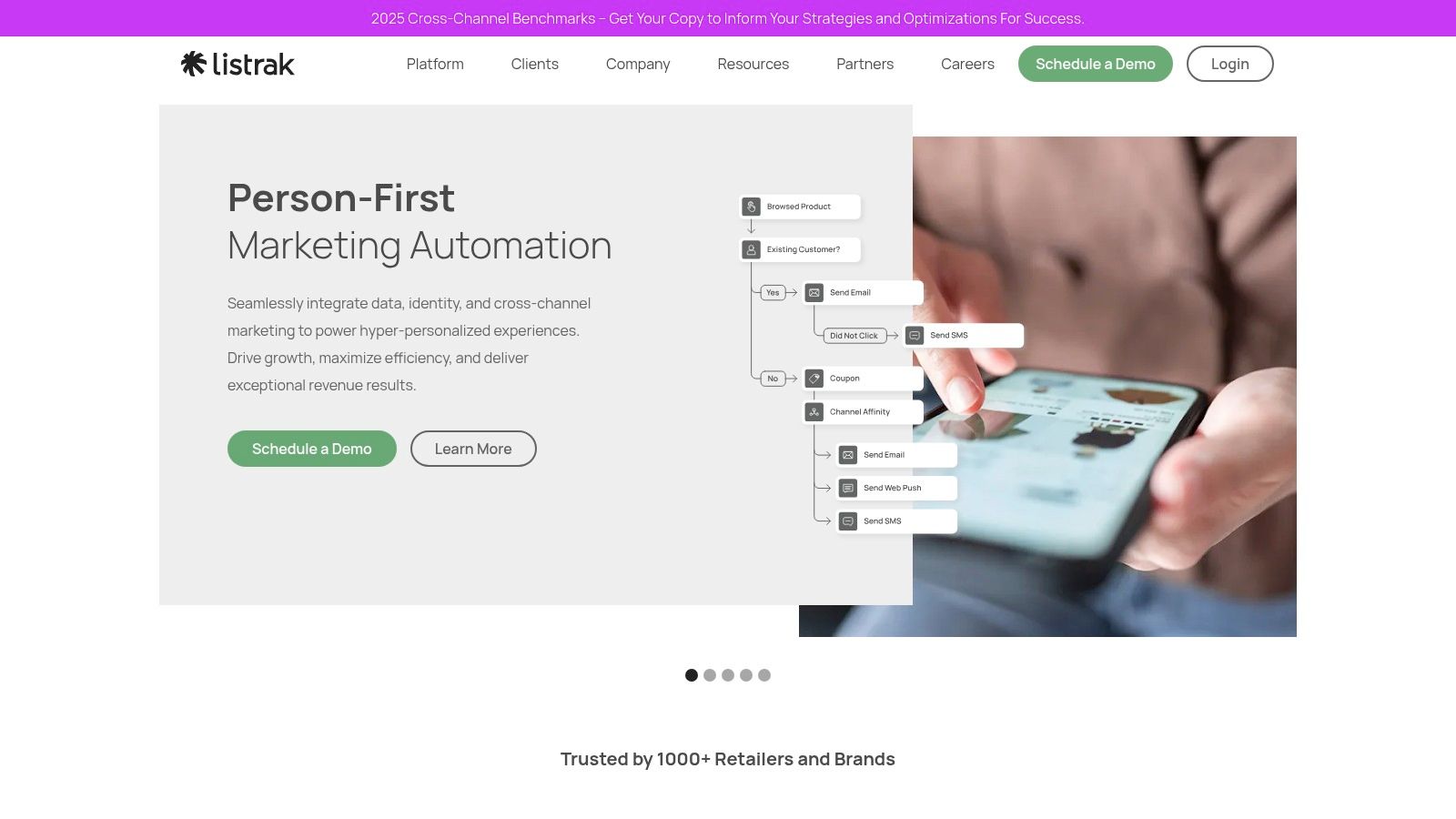
CartStack earns its place among top abandoned cart solutions with its specialized approach and robust technology. Unlike general marketing platforms, CartStack dedicates its entire feature set to this critical e-commerce challenge, often yielding higher recovery rates. Its machine learning for dynamic outreach and cross-device tracking deliver highly relevant, timely interventions to recapture sales.
Deep Dive into Features and Benefits
CartStack’s strength in converting abandoned carts lies in its targeted feature set:
- Machine Learning Optimization: CartStack uses AI to personalize recovery. Machine learning analyzes behavior for optimal email send times and tailors content, possibly with dynamic product suggestions. This targeted approach is vital for effective abandoned cart solutions, adapting to user patterns. For example, an email might be triggered when a user is historically most active online, or content might highlight benefits related to previously viewed items.
- Cross-Device Cart Recovery: Recognizing multi-device use, CartStack tracks users across platforms. A customer might add items to their cart on their mobile during a commute and intend to complete the purchase on a desktop later. CartStack facilitates this by ensuring the cart’s contents are accessible and can trigger reminders on the subsequent device, ensuring seamless continuity and capturing sales from shoppers switching devices.
- Real-Time Exit-Intent Technology: CartStack proactively uses exit-intent pop-ups. By detecting movements indicating a user is about to leave the cart or checkout page (like mouse gestures towards the close button), it triggers on-site messages. These could be an offer to save the cart, a small discount, or a reminder of the items they’re leaving, aiming to retain visitors and reduce the need for email follow-ups.
- Revenue-Focused Analytics: The platform provides detailed analytics on recovered revenue and attribution. This helps businesses see which specific emails, pop-ups, or campaign timings within their abandoned cart solutions strategies are most effective, proving ROI and enabling data-driven optimization. Understanding which touchpoint in a recovery sequence led to a sale is crucial for refining future efforts.
- Key Integrations: CartStack integrates with major e-commerce platforms like Shopify, WooCommerce, BigCommerce, and Magento. This simplifies the initial setup and ensures that cart data, customer information, and product details are accurately synchronized for smooth operation with your existing online store.
Practical Applications and Use Cases
CartStack is ideal for online retailers experiencing high cart abandonment and seeking a dedicated solution to convert these potential losses into revenue. Small to medium-sized e-commerce stores (SMEs) on platforms like Shopify or WooCommerce can leverage its specialized power to compete effectively with larger retailers. For brands prioritizing customer retention, the personalized and timely follow-ups generated by CartStack can significantly enhance the overall customer experience, making shoppers feel valued rather than just remarketed to. Marketing professionals and agencies managing multiple e-commerce clients will also find its focused analytics particularly valuable for demonstrating clear ROI on their abandoned cart solutions initiatives, providing tangible proof of recovered revenue.
Implementation and Setup Tips
CartStack’s implementation is generally user-friendly, largely thanks to its direct integrations with popular e-commerce platforms. The typical setup involves adding a JavaScript tracking snippet to your website’s pages and then configuring your email recovery campaigns within the CartStack dashboard. For optimal results, consider these setup tips:
- Prepare a sequence of 2-3 recovery emails, each with slightly different messaging or offers.
- A/B test crucial elements such as email subject lines, call-to-action buttons, and discount incentives.
- Ensure all communications maintain consistent branding with your main website.
While the technical requirements are minimal, a good understanding of your customer journey and common abandonment points will help you maximize CartStack’s impact.
Pricing
As CartStack is now part of Listrak, a platform that generally targets mid-market and enterprise-level clients, specific pricing details are typically provided upon consultation and request for a quote (visit https://www.listrak.com for more information). Historically, CartStack was positioned as a premium, specialized tool. This approach likely continues under Listrak, potentially meaning a higher cost per feature when compared to the cart abandonment modules within broader marketing suites. However, this investment is often justified by the specialized focus and superior conversion results it can deliver for abandoned cart solutions.
Comparison with Similar Tools
When compared to all-in-one marketing platforms like Klaviyo or Mailchimp, which offer cart abandonment recovery as one feature among many, CartStack’s (now Listrak’s) specialization provides deeper capabilities specifically for this task. While broader platforms offer a wider range of general marketing functions (e.g., newsletters, CRM, broader segmentation), CartStack’s singular mission to recover abandoned carts means its algorithms, features like precise cross-device tracking, and machine learning are often more finely tuned and effective for this specific goal, frequently yielding superior conversion rates from abandonment campaigns.
Pros and Cons
Key advantages and disadvantages of CartStack include:
Pros:
- Specialized Focus: High dedication to cart abandonment often yields superior conversion rates compared to generalist tools.
- Advanced Technology: Machine learning optimization for send times/content and cross-device tracking drive sophisticated recovery campaigns.
- Strong ROI: Revenue-centric analytics and detailed attribution clearly demonstrate the value and impact on sales.
- Easy Integration: Generally straightforward to implement with major e-commerce platforms.
Cons:
- Niche Application: Primarily an abandoned cart solution, not a comprehensive marketing automation suite.
- Potential Cost: As a specialized, premium tool (especially under Listrak), the investment might be higher per feature compared to broader platforms.
- Integration Dependency: While it excels at cart recovery, businesses may still need separate tools for general email marketing or other CRM functionalities.
Understanding Cart Abandonment
Effective use of tools like CartStack, and indeed any abandoned cart solutions, starts with understanding the core reasons why potential customers leave items behind. Various factors, from unexpected shipping costs and lengthy checkout processes to simple distractions or a desire to compare prices, contribute to this common e-commerce challenge. Learn more about why customers abandon their carts and how specialized abandoned cart solutions can help you diagnose and address these critical drop-off points proactively.
Conclusion
In essence, CartStack, now integrated within the Listrak platform, stands out as a powerful and highly specialized tool for e-commerce businesses intent on significantly reducing cart abandonment. Its advanced features, machine learning capabilities, and dedicated focus on this specific revenue recovery challenge make it a strong contender for those seeking impactful abandoned cart solutions and a clear, demonstrable return on investment by converting hesitant shoppers into loyal customers.
6. Privy
Privy stands out in the crowded market of e-commerce tools as a comprehensive conversion optimization platform, particularly effective for businesses seeking robust abandoned cart solutions. It cleverly combines email capture, targeted on-site messaging, and, crucially, cart abandonment recovery tools into a single, user-friendly interface. Designed with e-commerce merchants in mind, Privy’s unique strength lies in its dual approach: it not only helps recover sales from already abandoned carts through automated email sequences but also proactively works to prevent abandonment in the first place using intelligent exit-intent popups and on-site displays.
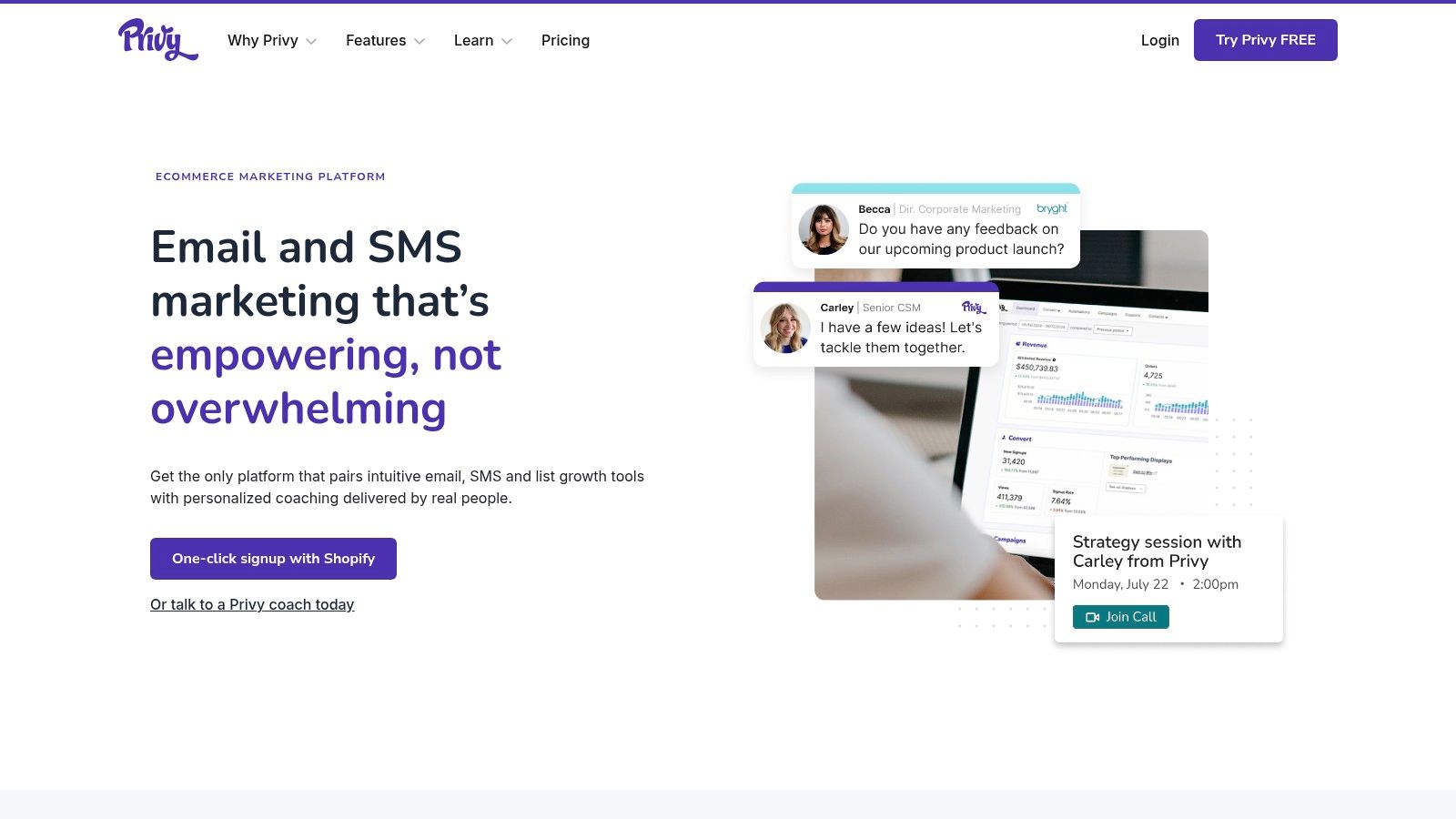
Privy earns its spot on this list because it offers a holistic strategy. Instead of just reacting to lost sales, it empowers online retailers to actively reduce the instances of cart abandonment while simultaneously providing effective tools to win back customers who do leave. This comprehensive approach makes it a valuable asset for small to medium-sized e-commerce stores, especially those built on Shopify, looking to boost conversions without juggling multiple disparate tools.
Practical Applications and Key Features in Action
Privy’s feature set is geared towards tangible results in combating cart abandonment:
- Exit-Intent Popups (Prevention): This is a cornerstone of Privy’s preventative strategy. When a visitor’s mouse movement indicates they are about to leave the cart page or website without completing a purchase, a targeted popup can appear.
- Use Case: Imagine a customer has items in their cart but hesitates and moves to close the tab. An exit-intent popup could instantly offer a 10% discount to complete the purchase now, or free shipping if they finalize their order. Another common use is to capture their email address in exchange for a future discount or an offer to save their cart, turning a potential lost sale into a lead.
- Benefit: This feature directly intervenes at the critical moment of abandonment, providing an incentive or reason for the shopper to reconsider and complete their purchase, thus reducing overall abandonment rates.
- Automated Abandoned Cart Email Sequences (Recovery): For shoppers who do leave despite preventative measures, Privy’s automated email sequences are crucial. These are not just single reminders but can be a series of strategically timed emails.
- Use Case: A typical sequence might involve:
- Email 1 (sent ~1 hour after abandonment): A gentle reminder showing the items left in the cart, perhaps with a simple “Did you forget something?” message.
- Email 2 (sent ~24 hours later): A follow-up that might include social proof (e.g., “Customers love these items!”) or a small incentive like a 5% discount or free shipping.
- Email 3 (sent ~48-72 hours later): A final attempt, possibly with a slightly better, time-sensitive offer to create urgency, or highlighting customer support options to address any lingering concerns.
- Benefit: This sustained, automated follow-up significantly increases the chances of recovering otherwise lost revenue, making it one of the most direct abandoned cart solutions it offers.
- Use Case: A typical sequence might involve:
- On-Site Messaging and Promotional Popups: Beyond exit-intent, Privy allows for various on-site messages like welcome popups for new visitors (great for email list building), promotional banners for site-wide sales, or spin-to-win gamified popups to engage users.
- Use Case: A welcome popup can offer a discount on the first purchase in exchange for an email, building your marketing list. A banner at the top of the page can announce a limited-time free shipping offer, encouraging larger cart values.
- Benefit: These tools enhance overall site conversion rates and customer engagement, contributing indirectly to reducing cart abandonment by creating a more enticing shopping experience.
- Advanced Targeting Options: Privy allows businesses to tailor their popups and emails based on visitor behavior (new vs. returning, pages visited, referral source), cart value (e.g., offering a larger discount for higher-value abandoned carts), or even device type.
- Use Case: You could show a specific popup offering free shipping only to visitors whose cart value exceeds $50, or target returning visitors who abandoned a cart previously with a special “welcome back” offer.
- Benefit: Personalization makes messages more relevant and effective, leading to higher engagement and conversion rates for your abandonment campaigns.
- Built-in A/B Testing: To maximize the effectiveness of popups and email campaigns, Privy includes A/B testing capabilities. Users can test different headlines, offers, calls-to-action, images, or email subject lines to see what resonates best with their audience.
- Use Case: Test two versions of an exit-intent popup: one offering a percentage discount and another offering free shipping, to determine which incentive drives more recovered carts.
- Benefit: Continuous optimization ensures your abandoned cart solutions are performing at their peak, maximizing ROI.
Implementation and Setup Tips
Privy is known for its straightforward integration, especially with Shopify where it functions as a native app. For other platforms like WooCommerce, BigCommerce, or custom sites, setup typically involves adding a JavaScript snippet to your website’s code.
- Setup: Once integrated, you can design popups using a visual editor, customize targeting rules, and set up your automated email sequences.
- Tips for Success:
- Start simple with one or two key campaigns (e.g., an exit-intent popup for cart pages and a basic 2-step abandoned cart email sequence).
- Utilize the A/B testing feature early and often to refine your messaging and offers.
- Pay attention to popup design and triggers to ensure they enhance, rather than detract from, the user experience. Avoid overwhelming visitors with too many popups.
- Optimize images used in popups to prevent any negative impact on site loading speed.
Pricing
Privy offers a compelling pricing structure that includes a robust free plan, making it accessible for businesses just starting out or with limited budgets. The free plan typically covers up to 100 mailable contacts and includes many core features. Paid plans scale based on the number of mailable contacts or pageviews, offering more advanced features and higher limits. For the most current pricing, it’s best to visit their official website.
Pros:
- Dual Approach: Its focus on both preventing abandonment (via popups) and recovering lost sales (via emails) offers a comprehensive strategy.
- Strong On-Site Conversion Tools: Beyond cart recovery, it helps with list building and overall sales conversion.
- Competitive Pricing with Robust Free Plan: Excellent entry point for smaller businesses.
- Easy Integration: Particularly seamless with Shopify, but also supports other major e-commerce platforms.
Cons:
- Primarily Focused on Shopify: While it integrates with other platforms, the depth of integration and ease of use are often best experienced on Shopify. Users on platforms like WooCommerce might find some limitations compared to Shopify users.
- Email Marketing Features Less Advanced than Specialized Platforms: For highly complex, multi-layered email automation or extremely granular segmentation, dedicated email marketing platforms (e.g., Klaviyo, ActiveCampaign) might offer more depth. However, Privy’s email features are generally more than sufficient for effective abandoned cart recovery.
- Can Impact Site Loading Speed (If Not Optimized): Like any script-based tool, improperly configured popups or heavy, unoptimized images within them can potentially slow down page load times. Careful setup and optimization are key.
Why Privy for Your Abandoned Cart Strategy?
Privy is a powerful ally for e-commerce businesses aiming to tackle cart abandonment head-on. Its blend of proactive prevention tools and reactive recovery mechanisms, coupled with user-friendly A/B testing and targeting, provides a well-rounded solution. For brands, especially those on Shopify, seeking an all-in-one platform to capture leads, engage visitors, and effectively recover abandoned carts without breaking the bank, Privy is an excellent choice. Its comprehensive feature set makes it one of the more versatile abandoned cart solutions available.
Learn more and explore its features at https://privy.com.
7. Drip
Drip is an E-commerce Customer Relationship Management (ECRM) platform, laser-focused on empowering online retailers with sophisticated abandoned cart solutions. It excels through its visual workflow builder and advanced personalization engine, enabling businesses to craft highly targeted cart recovery campaigns that turn potential lost sales into conversions.
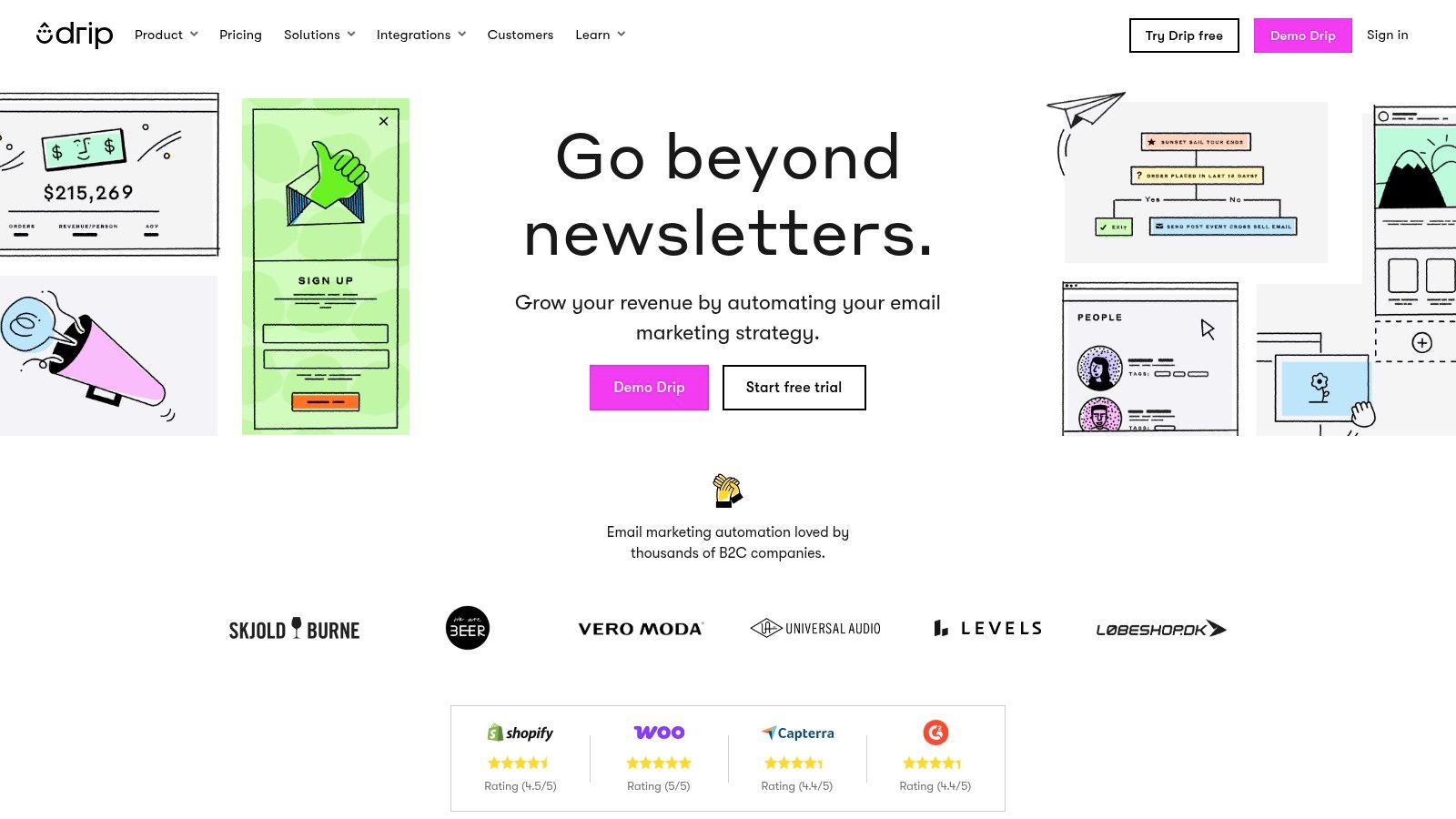
When evaluating abandoned cart solutions, Drip stands out due to its e-commerce-centric design. Unlike generic tools, Drip is built for online stores, offering features that directly address the customer journey’s critical cart abandonment point. It facilitates intricate, multi-step recovery sequences—incorporating emails, SMS, and conditional logic—that adapt to customer actions and go far beyond simple, single-email reminders, making it a powerful ally in recouping revenue.
Key Features and Their Practical Application in Cart Recovery:
- Visual Workflow Builder: Drip’s intuitive drag-and-drop workflow builder is central to its cart recovery prowess. Marketers can design complex, automated sequences without code. For instance, an abandoned cart can trigger a workflow that sends a reminder email after 1 hour, a follow-up with a small incentive if no purchase occurs within 24 hours, and potentially an SMS for high-value carts after 48 hours, all while automatically stopping if a purchase is made. This allows for precisely timed and contextually relevant messaging, crucial for effective cart recovery.
- Advanced Customer Segmentation: Drip’s powerful segmentation engine allows for hyper-targeted recovery messages. Businesses can divide audiences based on purchase history (e.g., first-time vs. repeat customer), lifetime value (LTV), engagement levels, specific products abandoned, or even custom tags created from browsing behavior. This means high-LTV customers who abandon a cart might receive a more personalized offer or a message highlighting loyalty benefits, while first-time abandoners could get a gentle nudge combined with an introductory offer, optimizing the effectiveness of each communication.
- Personalized Product Recommendations & Multi-channel Messaging: Drip enhances recovery emails by dynamically inserting personalized product recommendations—suggesting similar items, complementary products, or best-sellers based on the abandoned cart’s contents or the customer’s browsing history. Beyond email, it integrates SMS into workflows, allowing for high-impact, time-sensitive messages that boast excellent open rates. This multi-channel approach (email and SMS) significantly broadens reach and provides more touchpoints to effectively re-engage customers and recover sales.
- Deep E-commerce Analytics & CLV Tracking: To measure and refine cart recovery strategies, Drip offers robust analytics, clearly attributing revenue to specific automation workflows and campaigns. Crucially, its customer lifetime value (CLV) tracking helps businesses understand the long-term worth of customers recovered through these efforts. This data is invaluable for assessing the ROI of your cart recovery automations and for making informed decisions to focus on high-value customer acquisition and retention.
Implementation and Setup Insights:
Setting up Drip for abandoned cart recovery involves integrating it with your e-commerce platform. Drip offers deep, often one-click, integrations with major platforms like Shopify, WooCommerce, BigCommerce, and Magento. You’ll also need to install Drip’s JavaScript tracking snippet on your website to monitor visitor activity, identify cart additions, and trigger abandonment workflows accurately.
It’s advisable to start by implementing a basic 2-3 step email recovery workflow, perhaps utilizing Drip’s pre-built templates as a foundation. From there, you can progressively add complexity, such as incorporating SMS messages for urgent reminders or developing more granular segmentation based on customer behavior. Consistent A/B testing of elements like subject lines, email copy, call-to-action buttons, message timing, and offer types is key to optimizing performance and maximizing recovery rates.
Pricing Considerations:
Drip’s pricing structure is typically based on the number of active contacts in your account and, for some plans, the volume of emails sent. SMS messaging is usually billed separately based on usage (credits). As of early 2024, Drip’s plans generally start around $39 per month for up to 2,500 contacts, which includes core email automation features. As a premium platform offering a sophisticated suite of tools, its cost reflects the advanced capabilities and e-commerce focus. For the most current and detailed pricing information, including specifics on different tiers and SMS costs, it’s best to consult their official website.
Pros & Cons:
- Pros:
- Highly sophisticated automation and personalization capabilities tailor-made for e-commerce.
- Intuitive visual workflow builder for designing complex customer journeys without coding.
- Excellent customer segmentation based on deep behavioral, transactional, and lifetime value data.
- Strong focus on e-commerce with relevant features like dynamic product recommendations and CLV tracking.
- Multi-channel messaging approach including both email and SMS for broader reach.
- Good email deliverability and performance insights to track campaign success.
- Cons:
- Steeper learning curve compared to simpler email marketing platforms due to its extensive features.
- Higher pricing point, especially as your contact list grows or if you require all advanced features and significant SMS usage.
- May be overly complex or feature-rich for very small businesses with extremely basic cart abandonment needs.
The Drip Advantage for E-commerce:
Drip solidifies its position among leading abandoned cart solutions by equipping e-commerce businesses with the tools for truly intelligent, personalized, and automated recovery strategies. It moves far beyond generic, one-size-fits-all reminders, allowing marketers to build responsive, adaptive customer journeys that react to individual behaviors and preferences. For online retailers who are serious about minimizing lost revenue, understanding customer behavior, and maximizing customer lifetime value, Drip’s comprehensive, e-commerce-focused feature set offers a robust and scalable path to converting abandoned carts and fostering lasting customer relationships.
Learn more and explore its features at their official website: https://www.drip.com
8. Yotpo SMSBump
Yotpo SMSBump is a specialized SMS and email marketing platform that has carved a niche in providing highly effective, mobile-first abandoned cart solutions. Its core strength lies in leveraging the unparalleled immediacy and engagement of SMS marketing to recover sales that would otherwise be lost. In an e-commerce landscape increasingly dominated by mobile shopping, this focus on text messaging, which boasts open rates often exceeding 90%, makes Yotpo SMSBump a particularly potent tool for directly re-engaging customers moments after they leave their carts.
The platform’s design philosophy recognizes that the window to recover an abandoned cart is often brief. By delivering timely, personalized messages straight to a customer’s mobile device, Yotpo SMSBump cuts through digital clutter, significantly increasing the chances of bringing shoppers back to complete their purchases. Its comprehensive suite of features is meticulously designed to automate and optimize this critical recovery process.
Key Features Tailored for Cart Recovery:
- SMS-Focused Cart Abandonment Campaigns: Yotpo SMSBump enables businesses to create and deploy highly effective SMS campaigns. These messages can be personalized with customer names, cart contents, and direct, mobile-optimized links to their abandoned shopping carts, capitalizing on the high visibility of SMS.
- Automated Email and SMS Sequences with Intelligent Timing: Understanding the power of a multi-channel strategy, the platform allows for sophisticated automated sequences combining SMS and email. Intelligent timing ensures messages (e.g., an SMS 30 minutes post-abandonment, followed by an email with an incentive a few hours later) are sent at optimal moments for conversion.
- Mobile-Optimized Checkout Links: Crucially, any recovery links within messages direct customers to a seamless, mobile-optimized version of their pre-filled cart, minimizing friction and boosting completion rates on mobile devices.
- Advanced Automation Triggers: Beyond simple time delays, automation can be triggered by customer behavior and cart attributes like cart value, specific products, or purchase history. This allows for highly segmented and relevant messaging, a hallmark of successful abandoned cart solutions.
- Compliance Tools (TCPA, GDPR): Recognizing the strict regulations governing SMS marketing, Yotpo SMSBump includes built-in tools for managing opt-ins, opt-outs, and consent, helping businesses use SMS compliantly.
Practical Applications & Use Cases:
Yotpo SMSBump can be deployed in various ways to tackle cart abandonment:
- Immediate Recovery Nudges: Send an SMS reminder within 15-60 minutes of cart abandonment.
- Tiered Incentive Flows: Create multi-step sequences offering progressively larger discounts or free shipping via SMS and email if the cart remains unrecovered.
- High-Value Cart Prioritization: Trigger special SMS offers for carts exceeding a specific value to maximize ROI.
- Product-Specific Reminders: Remind customers about unique items left behind, perhaps highlighting benefits or scarcity.
- Welcome Series for New Abandoners: Offer a special first-purchase discount to new customers who abandon their initial cart.
Implementation and Setup Insights:
Setting up Yotpo SMSBump is facilitated by its integrations with major e-commerce platforms like Shopify, WooCommerce, and BigCommerce. Key steps include:
- Install and Integrate: Add the Yotpo SMSBump app/plugin from your platform’s marketplace. The process is typically guided and quick.
- Ethical List Building: Prioritize collecting phone numbers with explicit opt-in consent during checkout or via pop-ups. Yotpo provides tools to help ensure compliance with regulations like TCPA and GDPR.
- Segment Your Audience: Define target groups based on cart value, customer status (new vs. returning), items in the cart, or even browsing behavior.
- Craft Compelling Messages: Write clear, concise, personalized SMS/email copy. Utilize dynamic tags for names and cart items. Always include strong calls-to-action and an easy opt-out mechanism (e.g., “Reply STOP to unsubscribe”).
- Build Automation Flows: Start with simple 1-2 step abandoned cart flows (e.g., an SMS after 1 hour, an email after 24 hours if no purchase). Use Yotpo’s intuitive flow builder to define triggers, timing, conditions, and message content.
- Test and Monitor: Thoroughly test all automation flows before full activation to ensure messages are delivered correctly, links work, and any discounts are applied as expected. Once live, continuously monitor key performance indicators (KPIs) like open rates, click-through rates (CTR), conversion rates, and overall ROI. Utilize Yotpo’s A/B testing features to experiment with different message timings, copy, offers, and channels to continuously refine and optimize your recovery strategies.
Pricing Structure:
Yotpo SMSBump offers a tiered pricing model designed to scale with business needs, typically including a free plan. This entry-level plan is excellent for businesses new to SMS marketing or those wishing to test the platform’s core functionalities, usually offering a limited number of SMS credits and basic features.
For growing businesses and larger enterprises, Yotpo SMSBump provides several paid subscription plans (e.g., Growth, Prime, Powerhouse, or similarly named tiers). These premium plans unlock a greater volume of SMS credits per month, access to advanced features like more sophisticated customer segmentation, unlimited A/B testing capabilities, dedicated customer success managers for personalized support, and more robust analytics and reporting tools. Pricing for these tiers is generally influenced by the number of SMS messages sent and the specific set of features required. It’s always advisable to check the official Yotpo SMSBump website for the most current pricing details, promotions, and to determine which plan best aligns with your specific marketing budget and strategic objectives.
Pros & Cons:
- Pros:
- Extremely high engagement via SMS: SMS messages boast industry-leading open rates, often exceeding 90%, ensuring your cart recovery messages are seen promptly.
- Mobile-first design: Perfectly aligns with modern shopping habits where a significant portion of e-commerce activity occurs on mobile devices.
- Powerful automation: Offers detailed behavioral triggers and multi-step flow capabilities for highly personalized SMS and email campaigns.
- Competitive pricing for SMS features: Provides good value, especially when factoring in the potential ROI from successfully recovered abandoned carts.
- Cons:
- Reliant on customer phone numbers: The efficacy of SMS campaigns hinges on ethically obtaining customer phone numbers and explicit consent.
- Stricter compliance for SMS: SMS marketing is subject to stringent regulations (e.g., TCPA, GDPR), requiring businesses to be diligent in their compliance efforts, though Yotpo provides tools to assist.
- Email features are supportive: While email marketing is included, the platform’s primary strength and deepest feature set lie in SMS. Businesses with highly complex, email-centric marketing automation needs might find it less comprehensive than dedicated email marketing giants.
- May necessitate supplementary email tools: For extensive email marketing strategies beyond cart recovery and basic lifecycle campaigns, some businesses might opt to use Yotpo SMSBump alongside a more specialized email marketing platform.
Comparative Edge:
When searching for potent SMS-based abandoned cart solutions, Yotpo SMSBump stands out for its feature depth, robust automation, and strong focus on compliance. While various platforms exist, some focusing on different payment models or feature sets, Yotpo’s comprehensive approach to SMS campaign management, segmentation, and analytics makes it a strong contender for businesses of all sizes. If you’re comparing options, particularly those with varied pricing structures like pay-as-you-go versus subscription models, you might want to Learn more about Yotpo SMSBump to see how its feature set and capabilities align with specific business needs and objectives.
Why Yotpo SMSBump Deserves a Spot:
Yotpo SMSBump unequivocally earns its place in any list of leading abandoned cart solutions due to its laser focus on leveraging SMS – a high-impact, direct communication channel – to significantly improve cart recovery rates. Its potent blend of intelligent automation, user-friendly interface, essential compliance tools, and seamless integrations with major e-commerce platforms provides businesses with a powerful, mobile-centric strategy. This allows them to effectively reclaim lost revenue, enhance customer engagement, and ultimately boost their bottom line, making it an invaluable asset for any online store serious about optimizing its sales funnel and maximizing conversions.
Visit their website for more details: https://www.yotpo.com/platform/sms-marketing/
Abandoned Cart Solutions Feature Matrix
| Solution | Core Features & Automation ✨ | User Experience & Quality ★ | Value Proposition 💰 | Target Audience 👥 | Unique Selling Points 🏆 |
|---|---|---|---|---|---|
| CartBoss 🏆 | Automated SMS campaigns, multi-language support, GDPR compliant, dynamic discounts, pre-filled checkouts | ★★★★★ 99% SMS open rate, 50%+ CTR | 💰 Zero subscription fees, 4500% average ROAS | 👥 Shopify & WooCommerce sellers, SMBs to agencies | ✨ Plug-and-play, 2-min setup, branded sender ID |
| Klaviyo | AI predictive analytics, multi-channel (email+SMS), advanced segmentation | ★★★★☆ Excellent deliverability | 💰 Higher pricing, advanced features | 👥 Mid-large eCommerce brands | ✨ Machine learning send optimization |
| Mailchimp | Pre-built email templates, behavioral targeting, 300+ integrations | ★★★★☆ User-friendly, strong templates | 💰 Free tier for 2,000 contacts | 👥 Small to mid-sized businesses | ✨ Drag-and-drop editor, free tier |
| Omnisend | Omnichannel (email, SMS, push), discount automation, real-time analytics | ★★★★☆ Good recovery rates | 💰 Competitive pricing, feature-rich | 👥 E-commerce focused businesses | ✨ Omnichannel approach with sales tracking |
| CartStack | Cross-device recovery, exit-intent tech, machine learning optimization | ★★★★☆ High conversion focus | 💰 Higher cost, niche cart abandonment tool | 👥 Businesses focused on cart recovery | ✨ Cross-device tracking, exit-intent alerts |
| Privy | Exit-intent popups, automated cart emails, on-site messaging, A/B testing | ★★★★☆ Strong on-site conversion tools | 💰 Robust free plan, competitive pricing | 👥 Mainly Shopify stores | ✨ Dual prevention & recovery strategy |
| Drip | Visual workflows, advanced segmentation, multi-channel messaging | ★★★★☆ Sophisticated personalization | 💰 Higher pricing, advanced features | 👥 Mid-large eCommerce brands | ✨ Deep e-commerce integrations, customer LTV |
| Yotpo SMSBump | SMS-focused campaigns, automated sequences, compliance tools | ★★★★☆ High SMS engagement | 💰 Competitive for SMS marketing | 👥 Mobile-first eCommerce | ✨ Mobile-optimized, TCPA & GDPR compliance |
Stop Leaving Money on the Table: Act Now!
The journey to recovering lost sales doesn’t end with understanding the problem of cart abandonment; it begins with implementing effective abandoned cart solutions. As we’ve explored, a significant portion of potential revenue is often left uncaptured, but with the right strategies and tools, you can turn this challenge into a substantial growth opportunity.
This article has showcased a range of powerful tools, from comprehensive marketing automation platforms like Klaviyo and Omnisend to more specialized options. Each offers a unique approach to tackling cart abandonment. The most important takeaway is that there isn’t a one-size-fits-all answer; the ideal choice hinges on your specific business requirements, customer base, and technical capabilities. Whether you need sophisticated email sequences, dynamic on-site displays, or direct SMS engagement, the goal remains the same: re-engage hesitant buyers and guide them back to complete their purchase.
Choosing the right abandoned cart solutions requires careful consideration. Evaluate if you need an all-in-one platform or if a focused tool, perhaps excelling in SMS like CartBoss or Yotpo SMSBump, would yield better results. For instance, Privy is well-regarded for its on-site display capabilities, including effective exit-intent popups that help capture potentially lost sales before a visitor even leaves your site. For those exploring a wider range of options or seeking different approaches to this specific feature, looking into alternative exit-intent solutions like those offered by Social Intents can provide additional perspectives and tools to reduce cart abandonment. Beyond features, consider factors like ease of integration with your e-commerce platform (e.g., Shopify, WooCommerce), the level of personalization possible, A/B testing capabilities for optimizing your messages, and compliance with communication regulations.
The power to significantly boost your conversion rates and build a more loyal customer base is within your reach. By proactively addressing cart abandonment with robust abandoned cart solutions, you’re not just recovering sales; you’re optimizing your entire marketing funnel and ensuring your hard-earned traffic converts. Don’t let another potential customer slip through the cracks.
Ready to see a direct impact on your revenue? If you’re seeking a highly effective SMS-based approach to cart recovery, CartBoss offers a specialized and powerful solution. It’s designed to be one of the simplest yet most impactful abandoned cart solutions to implement, helping you connect with customers instantly and convert those near-misses into sales.