



Stop Losing Sales: Reclaim Your Abandoned Carts
Is your cart abandonment rate hurting your bottom line? This article provides seven actionable strategies to reduce cart abandonment and recover lost revenue. Learn how exit-intent popups, targeted email sequences, and a streamlined checkout experience can recapture those almost-sales. We’ll also explore the importance of transparent pricing, security assurances, diverse payment gateways, and effective urgency messaging. Implement these tactics to convert more shoppers and maximize your e-commerce success.
1. Exit-Intent Popups and Recovery Campaigns
One of the most effective ways to combat shopping cart abandonment and boost your bottom line is through strategic implementation of exit-intent popups and recovery campaigns. These tools leverage technology to identify when a user is about to abandon their cart and present them with a compelling reason to stay. This “last-ditch effort” can be surprisingly effective in re-engaging potential customers and recovering otherwise lost sales. This strategy works by tracking mouse movements and browsing behavior to predict when a visitor is about to leave the website. As the user’s cursor moves towards the close button or address bar, a targeted popup appears, offering incentives like discounts, free shipping, or simply a gentle reminder to complete their purchase. This allows you to address potential hesitations or objections right before they abandon their cart. One effective way to recapture abandoning visitors is through exit-intent popups. These popups detect when a user is about to leave your site and present them with a targeted message, such as a discount offer or a reminder of the items in their cart.
Exit-intent popups are relatively easy to implement with various platforms offering seamless integration with popular e-commerce platforms like Shopify and WooCommerce. Features like customizable popup designs, A/B testing capabilities, and integration with email capture tools allow you to tailor your message and optimize for maximum impact. Moreover, sophisticated platforms offer mobile-responsive detection methods, ensuring your popups are effective across all devices.
The benefits of implementing exit-intent popups are numerous. Studies have shown that they can recover 10-15% of abandoning visitors, providing an immediate conversion opportunity. They can also be used to capture email addresses for future marketing efforts, nurturing leads and driving repeat purchases. For example, ASOS successfully uses exit-intent popups offering 10% discounts to entice users to complete their purchase, while ModCloth displays style quizzes in their popups to re-engage users in a fun and interactive way. Casper, on the other hand, reminds users about their sleep trial, addressing a potential concern and encouraging them to proceed with their order.
However, there are some potential downsides to consider. Some users may find exit-intent popups intrusive or annoying, potentially impacting their overall brand experience. They can also trigger ad blockers, rendering them ineffective for a segment of your audience. Furthermore, the effectiveness of exit-intent popups can be diminished on mobile devices due to smaller screen sizes and different user behavior. There’s also the risk of training customers to expect discounts if they attempt to abandon their cart.
The infographic below visualizes some key data points related to the effectiveness and features of exit-intent popups.
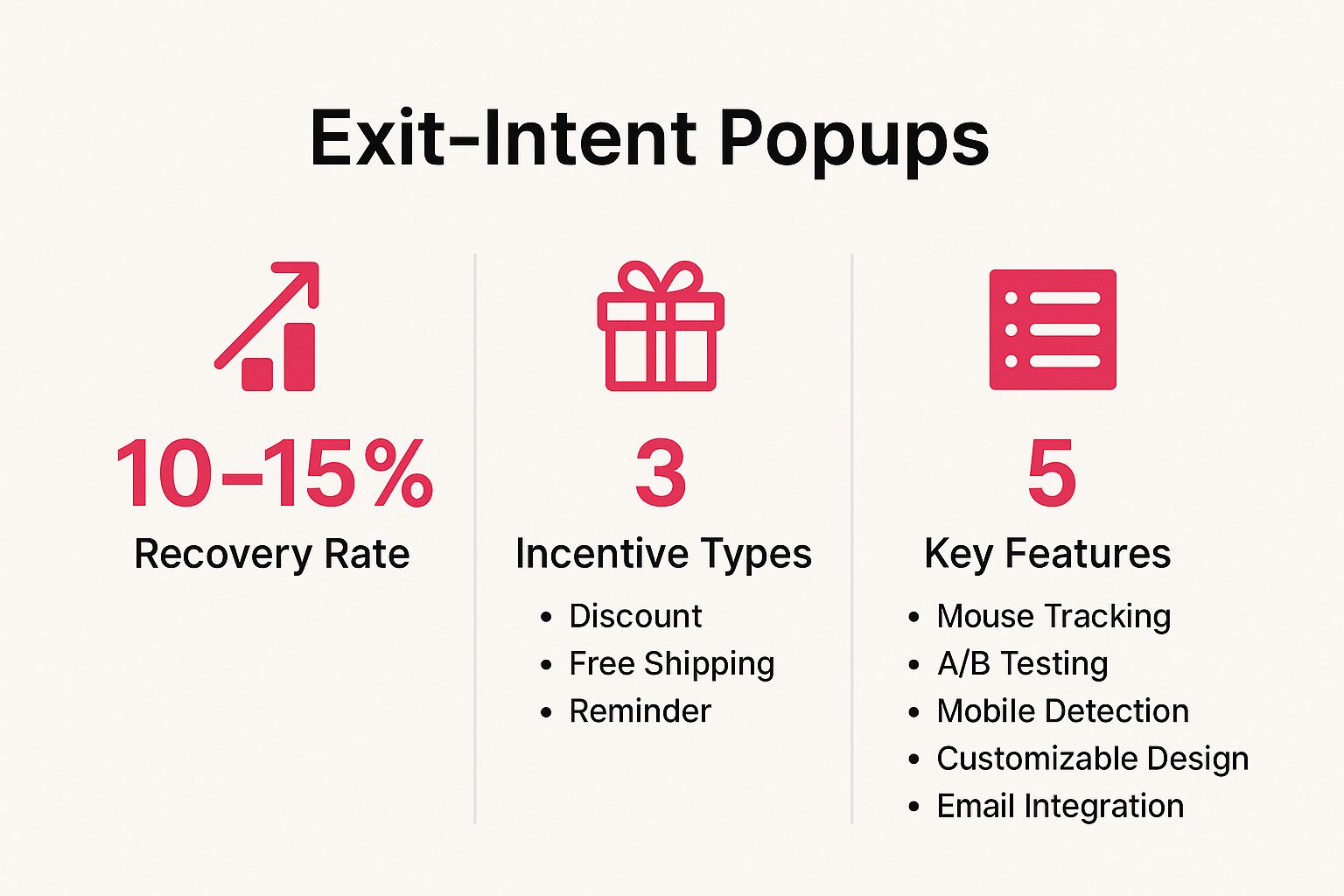
The infographic highlights the significant recovery rate of 10-15%, achievable through utilizing various incentive types. It also showcases the breadth of features that contribute to a successful exit-intent strategy, emphasizing the importance of a holistic approach.
To maximize the effectiveness of your exit-intent popups, consider these tips: offer value beyond just discounts, such as free shipping or extended returns; use compelling copy that addresses specific pain points; test different timing delays and trigger sensitivity; ensure popups are mobile-optimized; and segment offers based on user behavior and cart value. By carefully considering these elements and continuously testing and refining your approach, you can leverage exit-intent popups to significantly reduce cart abandonment and increase conversions.
This video offers additional insights into optimizing exit-intent popups and maximizing their impact on your conversion rates. By understanding the nuances of exit-intent technology and employing best practices, you can transform abandoning visitors into loyal customers and drive sustainable growth for your e-commerce business. Ultimately, exit-intent popups are a powerful tool in your arsenal against cart abandonment and deserve a prominent place in any comprehensive e-commerce strategy.
2. Abandoned Cart Email Sequences
One of the most effective ways to reduce cart abandonment and recover lost sales is through abandoned cart email sequences. This powerful tactic leverages automated email marketing to re-engage shoppers who have added items to their cart but left your website without completing the purchase. These sequences serve as gentle reminders, offering compelling reasons for customers to return and finalize their transactions. Implementing abandoned cart email sequences is a crucial step in optimizing your e-commerce strategy and maximizing revenue. This method deserves its place on any list aiming to combat how to reduce cart abandonment due to its proven high return on investment and its capacity to directly reconnect with potentially lost customers.
Abandoned cart email sequences work by triggering a series of automated emails based on specific customer behavior. When a shopper adds items to their online cart but doesn’t proceed to checkout, their email address (captured earlier in the browsing process) is used to initiate the sequence. These emails typically include images of the abandoned products, customer reviews, product descriptions, and, crucially, incentives to encourage purchase completion.
A typical abandoned cart email sequence consists of 2-4 emails, strategically spaced over several days. The first email is often sent within an hour of abandonment, acting as a friendly reminder. Subsequent emails can introduce escalating incentives like free shipping, discounts, or limited-time offers. This progressive approach maximizes the chance of recovering the sale without devaluing your products.
Features and Benefits of Abandoned Cart Email Sequences:
- Automated Trigger: The entire process is automated, triggered by the cart abandonment event. This eliminates manual intervention and ensures timely follow-up.
- Personalized Product Recommendations: Emails can showcase not only the abandoned items but also related products or personalized recommendations based on browsing history, further enticing the customer.
- Dynamic Product Images and Pricing: Emails automatically display up-to-date product images and pricing, ensuring accuracy and avoiding confusion.
- Progressive Incentive Structures: Offering increasing incentives across the email sequence encourages conversions without immediately resorting to deep discounts.
- Cross-sell and Upsell Opportunities: Abandoned cart emails provide a natural opportunity to introduce complementary products or suggest upgrades, increasing the average order value.
Pros:
- High ROI: Abandoned cart emails boast the highest ROI among email marketing campaigns, averaging $44 per email sent.
- Significant Recovery Rate: They can recover 15-25% of abandoned carts, directly impacting your bottom line.
- Relationship Building: Personalized communication fosters stronger customer relationships.
- Valuable Data: Abandoned cart data provides insights into customer preferences and helps optimize product offerings and marketing strategies.
Cons:
- Email Capture: Requires capturing the customer’s email address before they abandon their cart.
- Email Fatigue: Overuse can lead to email fatigue and unsubscribes.
- Privacy Concerns: Some customers may be hesitant to share their email address or receive follow-up emails.
- Platform Requirements: Implementing effective abandoned cart email sequences requires a sophisticated email automation platform.
Examples of Successful Implementation:
- Amazon: Sends personalized reminders highlighting “items in your cart” and suggesting similar products.
- Sephora: Includes beauty tips and tutorials alongside abandoned product reminders, adding value and encouraging engagement.
- Booking.com: Employs urgency messaging about limited availability and rising prices to prompt immediate action.
Actionable Tips for Optimizing Your Abandoned Cart Emails:
- Send the first email within 1 hour of abandonment: Capitalize on the customer’s recent interest in your products.
- Use clear subject lines mentioning forgotten items: Grab attention and encourage opens. Examples include “Still thinking about it?” or “Did you forget something?”.
- Include high-quality product images and customer reviews: Reinforce the value of the abandoned items and build trust.
- Test different send times and frequency: Experiment to determine what works best for your target audience.
- Gradually increase incentives across the sequence: Maximize recovery potential without sacrificing profit margins.
Learn more about Abandoned Cart Email Sequences for best practices and strategies to recover sales. This resource provides invaluable insights into optimizing your abandoned cart email strategy.
By understanding how to reduce cart abandonment through strategic email sequences, businesses can significantly boost their revenue and cultivate stronger customer relationships. Implementing these tactics and consistently analyzing results will pave the way for a more profitable and engaging e-commerce experience. Remember, every abandoned cart represents a potential sale waiting to be recovered.
3. Simplified Checkout Process
One of the most effective ways to reduce cart abandonment is by simplifying your checkout process. A complicated, multi-step checkout riddled with unnecessary form fields and hurdles is a surefire way to lose customers at the final stage of their purchase journey. Streamlining this experience by reducing the number of steps and potential friction points between adding items to the cart and completing the purchase is crucial for converting potential customers into paying ones. This approach minimizes distractions and makes it easier for customers to complete their purchases quickly and efficiently, directly impacting your bottom line. This is particularly important in today’s fast-paced world where customers expect a seamless and effortless online shopping experience.

A simplified checkout process hinges on several key features: offering single-page or minimal-step checkouts, allowing guest checkout without mandatory registration, implementing auto-fill and address validation, providing clear progress indicators and navigation, and ensuring mobile-optimized forms and buttons. Each of these elements contributes to a frictionless experience that encourages customers to complete their purchase. For example, guest checkout options cater to customers who are hesitant to create an account, removing a significant barrier to conversion. Auto-filling information and using address validation not only saves customers time but also reduces errors and frustration. Progress indicators reassure customers about where they are in the process and how much more is left, fostering a sense of control and reducing anxiety.
The benefits of a simplified checkout are numerous. Studies show that streamlining the checkout process can reduce cart abandonment by up to 35%. It significantly improves the user experience and customer satisfaction, leading to increased loyalty and repeat purchases. Furthermore, a simplified checkout optimized for mobile devices drastically improves mobile conversion rates, catering to the growing number of shoppers who prefer to shop on their smartphones. Finally, a clear and efficient checkout process reduces customer service inquiries related to checkout issues, freeing up valuable resources.
Examples of successful implementations abound. Apple’s one-click purchasing with stored payment methods is a prime example of simplicity and convenience. Similarly, Amazon’s patented 1-Click ordering system revolutionized online shopping by allowing customers to purchase with a single button press. Shopify’s Shop Pay provides expedited checkout across multiple merchants, creating a consistent and seamless experience for customers. Even traditional retailers like Target have embraced this approach with wallet-free checkout options using their RedCard.
While the advantages are clear, there are some potential drawbacks to consider. Implementing a simplified checkout process may require significant development resources, especially for older or complex e-commerce platforms. Simplifying data collection during checkout may also mean reduced customer data acquisition, which can be valuable for marketing and personalization efforts. There are also potential security considerations with simplified processes, requiring careful implementation and security measures. Finally, striking a balance between simplicity and collecting necessary information for order fulfillment and customer service is crucial.
To implement a simplified checkout process effectively, follow these tips: Limit form fields to only essential information. Implement address autocomplete and validation to minimize errors and frustration. Display security badges and trust signals to build customer confidence. Thoroughly test the checkout flow on multiple devices and browsers to ensure compatibility and a consistent user experience. Finally, provide clear error messages and correction guidance to help customers easily resolve any issues. Learn more about Simplified Checkout Process
A simplified checkout process is a critical component of any successful e-commerce strategy. By prioritizing ease of use and minimizing friction, you can significantly reduce cart abandonment, improve customer satisfaction, and ultimately, boost your bottom line. The investment in streamlining your checkout process will pay off in increased conversions and a more positive brand perception. Companies like Amazon, Apple Pay, PayPal Express Checkout, and Shopify have popularized this approach, demonstrating the power of a frictionless checkout experience in driving sales. By implementing the tips and considering the examples above, you can create a checkout process that is both secure and user-friendly, leading to a significant improvement in your conversion rates and a decrease in how to reduce cart abandonment.
4. Transparent Pricing and Shipping Costs
One of the most effective strategies to reduce cart abandonment is surprisingly straightforward: be upfront about your pricing. Unexpected costs are the leading cause of cart abandonment, with a staggering 58% of users citing it as their reason for leaving. Addressing this head-on through transparent pricing and shipping costs builds trust, improves customer satisfaction, and ultimately boosts conversions. This means displaying all costs, including taxes, fees, and shipping charges, early in the shopping process, rather than springing them on customers at the checkout. This approach eliminates unpleasant surprises and empowers customers to make informed decisions, fostering a positive shopping experience and significantly reducing cart abandonment rates.
This strategy involves more than just listing a flat shipping rate. It requires a comprehensive approach that incorporates features like upfront shipping cost calculators, clear free shipping thresholds, and dynamic tax calculations based on location. No hidden fees, no surprise charges – just honest, transparent pricing from the moment a customer adds an item to their cart. Providing multiple shipping options with clear timelines further enhances transparency and allows customers to choose the service that best suits their needs and budget. For example, offering express delivery alongside standard shipping provides valuable choices and caters to different customer priorities.
Several successful brands have demonstrated the power of transparent pricing. Zappos, for instance, built its brand on the foundation of free shipping and returns, cultivating customer loyalty and establishing a reputation for exceptional service. Patagonia, on the other hand, takes transparency a step further by showcasing not only shipping costs but also the environmental impact of each shipping option, appealing to environmentally conscious consumers. Warby Parker effectively incorporates all costs into their product pricing, offering free shipping and simplifying the purchase process. REI, a popular outdoor retailer, clearly displays shipping costs and delivery timeframes directly on product pages, ensuring customers are well-informed before proceeding to checkout. These examples highlight the diverse ways in which transparent pricing can be implemented to enhance the customer experience and drive sales.
So, how can you implement transparent pricing in your own e-commerce store? Here are some actionable tips:
- Show shipping costs on product pages or early in the cart: Don’t wait until checkout to reveal shipping costs. Displaying them upfront allows customers to factor shipping into their purchase decision early on.
- Use progress bars to show free shipping thresholds: If you offer free shipping above a certain order value, visually represent this with a progress bar. This incentivizes customers to add more items to their cart to reach the free shipping threshold, potentially increasing your average order value.
- Offer multiple shipping options with clear delivery dates: Provide choices, such as standard, express, and overnight shipping, with clearly stated delivery dates for each option. This empowers customers and allows them to select the service that best aligns with their needs.
- Consider building shipping costs into product prices: While this might initially seem counterintuitive, incorporating shipping costs into product prices can simplify the checkout process and reduce the risk of cart abandonment due to unexpected shipping fees.
- Provide a shipping cost calculator on product pages: Allow customers to calculate shipping costs based on their location directly on the product page. This eliminates guesswork and provides instant clarity.
Implementing these strategies can greatly reduce cart abandonment and boost your bottom line. While there are some potential drawbacks, such as potentially discouraging price-sensitive customers initially and the need for complex calculation systems for accurate real-time pricing, the benefits of increased trust, improved customer satisfaction, and higher conversion rates far outweigh the challenges. The increased complexity of international shipping scenarios also presents a challenge, demanding careful consideration and planning. However, by strategically addressing these challenges, businesses can leverage transparent pricing to create a more positive and profitable online shopping experience.
Learn more about Transparent Pricing and Shipping Costs
This approach deserves a prominent place in any list of cart abandonment reduction strategies because it directly addresses the primary reason customers abandon their carts: unexpected costs. By prioritizing transparency and providing customers with clear, accurate pricing information throughout their shopping journey, businesses can build trust, enhance customer satisfaction, and ultimately, drive sales. This strategy is crucial for e-commerce businesses of all sizes, particularly those struggling with high cart abandonment rates. Whether you’re a small Shopify store or a large multi-national brand, implementing transparent pricing is a crucial step towards optimizing your checkout process and maximizing your revenue.
5. Trust Signals and Security Assurance
One of the most significant hurdles to overcome in reducing cart abandonment is building customer trust. Shoppers are hesitant to enter their personal and financial information on websites they don’t fully trust. Addressing this hesitation head-on by implementing robust trust signals and security assurance throughout the shopping experience is crucial for converting potential customers into paying ones. This involves incorporating visual and textual elements that reassure customers about the security and legitimacy of their transactions, ultimately reducing anxiety and encouraging them to complete the purchase. Essentially, you want to create a safe and secure environment where customers feel comfortable sharing their information.
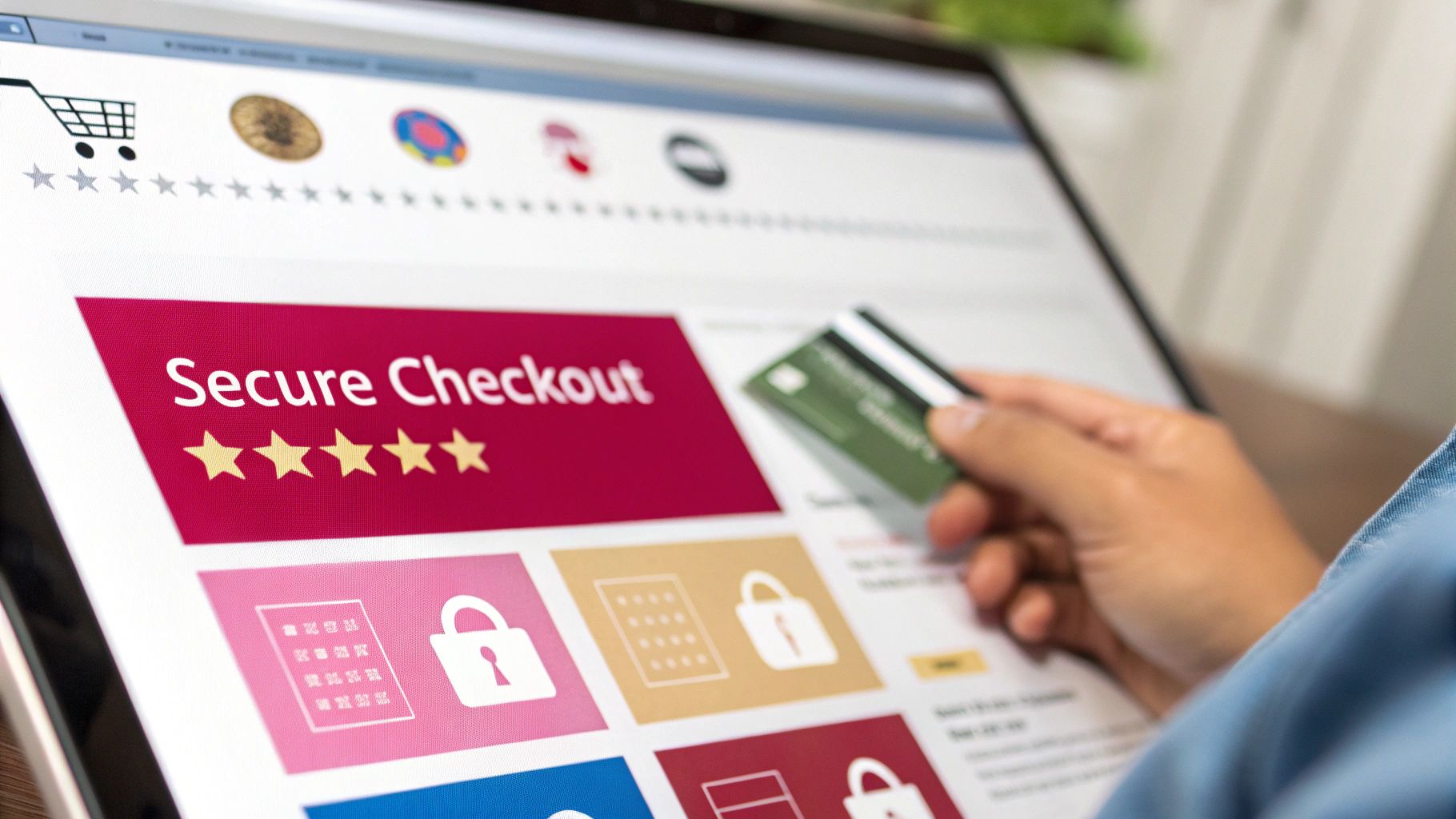
This approach encompasses a variety of elements, including easily recognizable SSL certificates and security badges from reputable companies like Norton or McAfee. Displaying customer reviews and ratings prominently showcases social proof and builds confidence. Clear and accessible return and refund policies alleviate concerns about potential issues post-purchase. Readily available contact information and customer service options provide reassurance that help is readily available if needed. Finally, displaying industry certifications and awards further reinforces your brand’s credibility and commitment to quality.
Successfully implementing trust signals can significantly increase conversion rates. Studies have shown that displaying trust badges can boost conversions by up to 42%. For instance, Shopify stores displaying Norton Secured badges often see a 15% higher conversion rate. Similarly, Airbnb’s comprehensive review system and host verification process contribute significantly to their success by building trust within their community. Stripe, a popular payment gateway, uses security documentation and compliance badges to reassure businesses using their platform. Even large retailers like Best Buy leverage trust signals, using their Geek Squad certification and service guarantees to instill confidence in their customers. Learn more about Trust Signals and Security Assurance to understand how these elements contribute to a more trustworthy online experience.
To effectively implement trust signals and security assurance on your own e-commerce platform, consider these actionable tips: Strategically place security badges near payment forms and checkout buttons where customers are most likely to be concerned about security. Display recent customer reviews and ratings prominently on product pages and throughout the checkout process. Ensure your return policies and satisfaction guarantees are clear, concise, and easily accessible. Provide multiple contact methods, including live chat or email, for quick and convenient customer support. Finally, utilize trust badges from well-recognized security companies to maximize their impact.
While the benefits of trust signals are substantial, there are a few potential drawbacks to consider. Some security badges require ongoing subscription costs. Negative reviews, if not managed properly, can actually hurt conversion rates. Over-displaying badges can clutter your website and appear desperate, potentially having the opposite of the intended effect. Finally, maintaining and updating trust signals requires ongoing effort to ensure they remain relevant and effective.
Trust signals and security assurance deserve a prominent place in any cart abandonment reduction strategy because they directly address a core customer concern: online security. By proactively addressing these concerns, you not only increase conversions but also foster long-term brand credibility and reduce customer service inquiries related to security. This contributes to a smoother, more positive customer experience, ultimately benefiting your bottom line and building a loyal customer base. This is especially critical for e-commerce businesses, marketing professionals, online retailers struggling with high cart abandonment rates, small to medium-sized e-commerce stores, brands operating in multiple languages, Shopify and WooCommerce store owners, brands focused on customer retention, online stores seeking to optimize marketing spend, and agencies managing multiple e-commerce clients. By prioritizing trust and security, you lay the foundation for a thriving online business.
6. Multiple Payment Options: Smooth Transactions, Happy Customers
One of the most frustrating experiences for online shoppers is reaching the checkout only to find their preferred payment method isn’t available. This friction can easily lead to cart abandonment, costing you sales and potential customers. Offering multiple payment options is a crucial step in optimizing your checkout process and reducing cart abandonment rates. By providing a diverse range of payment choices, you cater to different customer preferences, regional habits, and demographics, effectively removing a significant barrier to purchase completion. This seemingly simple adjustment can significantly impact your bottom line, contributing to a smoother, more inclusive customer journey.
This approach involves integrating various payment gateways and processors into your e-commerce platform to accommodate a wide spectrum of payment methods. Think beyond the standard credit and debit card processing. Integrating digital wallets like Apple Pay, Google Pay, and PayPal streamlines the checkout process, especially for mobile shoppers. Offering buy-now-pay-later (BNPL) services such as Klarna and Afterpay can attract customers hesitant about large upfront payments, particularly for higher-value items. Don’t forget the importance of supporting traditional bank transfers and ACH payments, and if you operate internationally, integrating region-specific payment methods like Alipay (China) or SEPA (Europe) is essential. Even exploring cryptocurrency options can cater to a growing segment of tech-savvy consumers.
The benefits of implementing multiple payment options are compelling. Studies show that offering a diverse range of payment methods can increase conversion rates by 20-30%. This directly translates to more completed purchases and increased revenue. By accommodating international customers with their preferred local payment methods, you expand your market reach and unlock global growth potential. The seamless integration of mobile wallets reduces friction for the ever-growing number of mobile shoppers, leading to a more convenient and user-friendly checkout experience. Furthermore, offering various payment options appeals to different demographic preferences, ensuring inclusivity and maximizing your customer base.
Several successful businesses demonstrate the power of this strategy. Shopify stores offering multiple payment options see a 27% higher conversion rate on average, highlighting the direct correlation between payment flexibility and sales. Global fashion retailer ASOS offers over 15 payment methods, including region-specific options, catering to its diverse international customer base. Sephora, a leading beauty retailer, seamlessly integrates Apple Pay, PayPal, and Klarna, addressing the varied needs of its customer segments. Adidas utilizes Stripe to offer an impressive 135+ payment methods globally, showcasing a commitment to removing payment barriers and maximizing global reach.
While the advantages are significant, it’s crucial to be aware of the potential drawbacks. Integrating multiple payment gateways can lead to increased transaction fees and processing costs. You’ll also need to implement more complex fraud prevention measures to secure transactions across various platforms. The integration and ongoing maintenance of multiple systems can also add complexity to your operations. Finally, managing security vulnerabilities across multiple payment systems requires careful consideration and robust security protocols.
To effectively implement multiple payment options for reducing cart abandonment, consider these actionable tips:
- Research: Thoroughly research the most popular payment methods in your target markets. This ensures you’re offering the options your customers actually want and expect.
- Clear Display: Prominently display accepted payment methods on product pages and throughout the checkout process. This transparency builds trust and reduces surprises at the final stage.
- Mobile Optimization: Prioritize mobile-friendly payment methods like digital wallets to cater to the growing number of mobile shoppers.
- BNPL Consideration: Consider offering buy-now-pay-later options for higher-value items to reduce purchase hesitation and increase affordability.
- Testing & Optimization: A/B test different payment option arrangements and displays to identify the most effective layout and presentation for your target audience.
By strategically implementing multiple payment options, you address a key pain point in the customer journey, transforming a potential point of friction into a seamless and positive experience. This, in turn, contributes significantly to reducing cart abandonment and driving revenue growth for your e-commerce business. Leading payment providers like PayPal, Stripe, Square, Klarna, and Apple Pay offer comprehensive solutions for businesses seeking to implement this strategy.
7. Real-time Inventory and Urgency Messaging
One of the most effective ways to combat cart abandonment is by implementing real-time inventory and urgency messaging. This strategy taps into fundamental psychological principles – scarcity and social proof – to nudge customers towards completing their purchases. By showcasing live inventory levels, recent purchase activity, and time-sensitive offers, you create a sense of urgency that motivates immediate action, effectively reducing hesitation and encouraging faster decision-making. This prevents customers from wandering off to comparison shop or simply procrastinating, ultimately increasing your conversion rates and boosting sales.
This approach works on the premise that perceived scarcity increases desirability. When customers see that an item is in low stock or that others are actively purchasing it, they’re more likely to perceive it as valuable and want to secure it before it’s gone. Similarly, limited-time offers create a sense of urgency, prompting customers to act quickly to avoid missing out on a deal. This strategy is especially effective in competitive markets where customers have numerous options and are prone to delaying purchase decisions.
Successful implementation hinges on using authentic and accurate data. Features like live inventory count displays (“Only 3 left!”), recent purchase notifications (“2 people just bought this!”), limited-time offer countdowns (“Sale ends in 2 hours!”), stock level warnings (“Low stock – order now!”), and social proof indicators (“50 people have this in their cart”) are all powerful tools in this arsenal. Consider the example of Booking.com, which masterfully employs this technique by displaying real-time information like “X people looking at this property” and recent bookings. Similarly, Fashion Nova showcases live inventory counts and recent purchases, fueling a sense of urgency and popularity. Ticketmaster utilizes countdown timers and seat availability warnings, while Hotels.com effectively employs the classic “Only 2 rooms left” message. These are all prime examples of how to use real-time information to drive conversions.
For e-commerce businesses grappling with high cart abandonment rates, incorporating real-time inventory and urgency messaging is a game-changer. Small to medium-sized businesses, particularly those operating on platforms like Shopify and WooCommerce, can greatly benefit from these tactics. For brands operating in multiple languages, adapting these messages to reflect cultural nuances is crucial for maximizing impact. Agencies managing multiple e-commerce clients should consider this a core strategy for optimizing marketing spend and boosting client ROI. This approach is highly relevant for brands focused on customer retention, as it can encourage immediate purchases and reduce the likelihood of customers churning.
To effectively integrate this strategy into your e-commerce business, consider the following actionable tips:
- Use Authentic Data: The cornerstone of this strategy is credibility. Avoid using fake urgency messages, as this can erode trust and damage your brand reputation. Transparency is key.
- Test Different Styles and Placements: Experiment with different message styles, wording, and placements to determine what resonates best with your target audience. A/B testing is your friend.
- Combine Scarcity with Social Proof: For maximum impact, leverage both scarcity and social proof principles. For example, combine a low stock warning with a recent purchase notification.
- Ensure Accurate Real-time Inventory: Inaccurate inventory data can lead to frustration and lost sales. Ensure your data is accurate and updates in real-time.
- Use Urgency Sparingly: Overusing urgency tactics can desensitize customers and diminish their effectiveness. Use them strategically and sparingly to maintain credibility.
While this strategy offers significant benefits, including potential conversion increases of 15-20%, a reduction in comparison shopping behavior, and the creation of psychological urgency, it’s important to be aware of the potential downsides. It can backfire if perceived as manipulative, requiring careful implementation and accurate real-time inventory management. Some customers may find the pressure off-putting, so finding the right balance is crucial. There’s also the inherent risk of showing out-of-stock status, which can lead to lost sales if not handled properly.
Ultimately, real-time inventory and urgency messaging is a powerful tool for reducing cart abandonment and increasing conversions. By understanding the psychology behind it and implementing it strategically, you can significantly improve your bottom line. Learn more about Real-time Inventory and Urgency Messaging. By leveraging these tactics responsibly and ethically, you can create a sense of urgency that benefits both your customers and your business.
7 Strategies to Reduce Cart Abandonment
| Strategy | Implementation Complexity 🔄 | Resource Requirements ⚡ | Expected Outcomes 📊 | Ideal Use Cases 💡 | Key Advantages ⭐ |
|---|---|---|---|---|---|
| Exit-Intent Popups and Recovery Campaigns | Low to Medium (mouse tracking, popups) | Moderate (design, A/B testing, email integration) | 10-15% visitor recovery | E-commerce sites aiming to reduce last-moment abandonment | Immediate conversion, email capture |
| Abandoned Cart Email Sequences | Medium to High (automation platforms) | High (email automation and personalization) | 15-25% cart recovery | Businesses with email lists wanting personalized follow-up | High ROI, relationship building |
| Simplified Checkout Process | Medium to High (development effort) | High (UX design, testing, mobile optimization) | Checkout abandonment reduction up to 35-69% | Sites needing smoother user flow, mobile optimization | Significantly reduces friction |
| Transparent Pricing and Shipping Costs | Medium (cost calculators, display logic) | Medium (pricing systems, real-time calculations) | Reduces abandonment due to unexpected costs (58% cited) | Sites focusing on trust and upfront cost clarity | Builds trust, increases order value |
| Trust Signals and Security Assurance | Medium (integration of badges, reviews) | Medium (security services, review management) | Up to 42% increase in conversions | Sites needing to boost buyer confidence | Reduces anxiety, builds credibility |
| Multiple Payment Options | Medium to High (payment gateway integration) | High (maintenance, fraud prevention) | 20-30% increase in conversion | International and diverse customer base | Reduces friction, increases inclusivity |
| Real-time Inventory and Urgency Messaging | Medium (live data integration) | Medium (inventory management, UI updates) | 15-20% increase in conversions | Retailers wanting psychological urgency to speed decisions | Creates urgency, adds social proof |
Turn Abandoned Carts into Conversions
Reducing cart abandonment is crucial for any e-commerce business striving for sustainable growth. We’ve explored seven key strategies to help you tackle this challenge head-on: exit-intent popups and recovery campaigns, abandoned cart email sequences, a simplified checkout process, transparent pricing and shipping, trust signals and security assurance, multiple payment options, and real-time inventory updates coupled with urgency messaging. By mastering these approaches, you’re not just patching holes in your sales funnel; you’re building a more customer-centric experience that fosters trust and encourages conversions. This translates directly to increased revenue and a stronger bottom line, allowing you to reinvest in your business and further optimize your customer journey. Remember, every abandoned cart represents a potential customer waiting to be re-engaged.
The key takeaway here is that addressing the root causes of cart abandonment, from complex checkouts to unexpected costs, allows you to create a seamless and enjoyable shopping experience. Implementing these tactics helps build a stronger relationship with your customers, turning hesitant shoppers into loyal brand advocates. How to reduce cart abandonment effectively becomes less of a problem and more of an opportunity to optimize your sales strategy and boost your revenue.
Ready to take your cart recovery efforts to the next level? Explore how CartBoss can automate your SMS marketing and recover lost sales with targeted, personalized messages. CartBoss offers advanced features designed specifically for e-commerce businesses seeking to minimize cart abandonment and maximize conversions.