


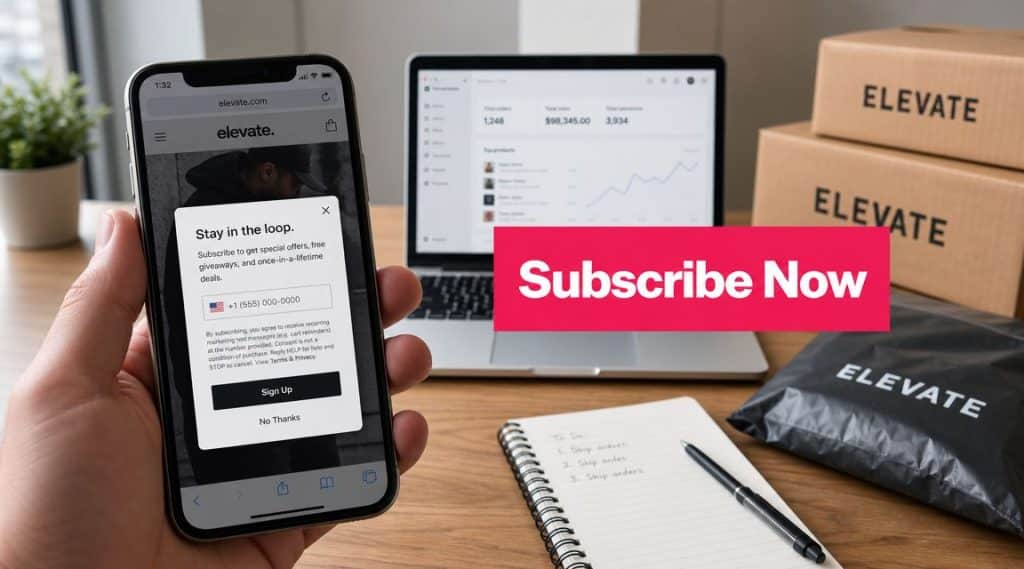
91% of consumers are interested in signing up for texts from brands, and 81.2% are already opted in to at least one brand text program according to Attentive’s texting statistics. That changes how store owners should think about SMS.
A subscribe text message isn’t a checkbox you add because every app tells you to. It’s a revenue asset. If you collect consent well, ask at the right moment, and follow through with relevant automations, you build a list that can recover carts, drive repeat orders, and shorten the path from product interest to purchase.
Most stores underperform here for one simple reason. They treat opt-in as a legal formality instead of a conversion flow. The form is vague, the incentive is weak, the timing is off, and the follow-up is inconsistent. The result is predictable. Low list growth, weak engagement, and missed revenue.
The stores that win with SMS usually do two things better. First, they build cleaner first-party data collection across channels, which matters well beyond email and SMS, especially if you’re also improving first-party data for PPC success. Second, they treat the subscribe text message itself as part of the customer journey, not a popup afterthought.
If you want the broader business case, CartBoss also breaks down the benefits of SMS marketing for e-commerce. The short version is simple. SMS works when the subscription process works.
Why SMS Subscriptions Are a Goldmine for Your Store
SMS earns attention in a way most channels don’t. By 2025, 72% of people had made a purchase after receiving a text from a brand, according to Klaviyo’s SMS statistics. That matters because a subscriber isn’t just reachable. They’re commercially responsive.
A good SMS list also solves a practical e-commerce problem. Email is useful for depth, but cart recovery and time-sensitive nudges often need speed. Text is better suited for that moment. When someone leaves with products in cart, delay kills intent.
What makes SMS subscribers so valuable
Two things stand out in practice:
- Intent is already present: A shopper who shares a phone number and confirms consent is usually closer to action than a casual visitor.
- Utility drives opt-in: People don’t only want discounts. Many subscribe because they want updates, reminders, and fast answers.
- The channel is immediate: SMS is built for short, urgent messages that remove friction fast.
- Revenue impact is direct: Once someone is subscribed, abandoned cart reminders, shipping prompts, and limited-time offers can move them back to checkout quickly.
Practical rule: Build your SMS list around usefulness first and promotions second. Utility gets the opt-in. Relevance keeps it.
Why many stores still leave money on the table
The mistake isn’t failing to install SMS software. It’s failing to design the subscription experience.
Common problems include weak value propositions, hidden consent language, generic welcome texts, and zero segmentation after signup. Stores ask for a phone number without answering the shopper’s real question: why should I let you text me?
A stronger subscribe text message strategy does the opposite. It makes the benefit obvious, keeps the form short, and asks at moments when the customer already has buying intent, especially during checkout and cart activity.
The Unskippable Rules of SMS Compliance
Compliance is where a profitable SMS program starts. If consent is shaky, everything built on top of it is shaky too.
In the U.S., businesses need prior express written consent for marketing texts under TCPA-related rules, as covered in this reporting on texting consent and federal rules. That’s the standard to design around, especially because cart recovery can drift from transactional into promotional language very quickly.
If you want a practical compliance walkthrough designed for store owners, CartBoss has a useful guide to SMS marketing compliance.
What compliant consent looks like
A compliant flow is usually simple, but it has to be deliberate.
- Separate the consent action: Don’t bury SMS consent inside general terms and conditions.
- State what the user is agreeing to: Say they’ll receive marketing texts, not just “updates.”
- Make the opt-in explicit: Pre-checked boxes are a bad idea.
- Use double opt-in when possible: It creates a cleaner audit trail and confirms real intent.
- Keep records: You need to know when and how consent was collected.
SMS Compliance Quick Reference
| Do ✅ | Don’t ❌ |
|---|---|
| Use clear checkbox language that mentions marketing texts | Bundle SMS consent into a broader privacy acceptance |
| Trigger a confirmation step before promotional sends | Start promotional campaigns immediately without confirmed consent |
| Keep proof of opt-in including source and timing | Assume a prior purchase equals text marketing permission |
| Explain value upfront such as offers, alerts, or reminders | Use vague wording like “stay in touch” |
| Differentiate transactional and promotional messages in your flows | Treat cart recovery as automatically exempt from marketing consent rules |
Cart recovery is where many teams get sloppy. A message about an order is usually different from a message trying to close a sale.
The trade-off most brands get wrong
Some marketers worry that stricter consent lowers list growth. In reality, loose consent usually creates bigger problems later: higher complaints, more unsubscribes, lower trust, and weaker deliverability. Clean opt-in lists outperform messy ones because the audience wants the messages.
Double opt-in is especially useful if your checkout flow is busy or your site gets low-intent traffic from giveaways, paid social, or coupon traffic. It filters noise early.
A simple compliance checklist before launch
- Audit every opt-in point on your site.
- Rewrite consent language so it is plain and specific.
- Add confirmation messaging before any promotional sequence begins.
- Review cart recovery copy and remove wording that blurs consent lines.
- Store consent records in the platform you use for SMS.
How to Write Subscribe Messages That Actually Work
A small change in wording can lift opt-ins faster than a bigger discount. I’ve seen stores improve signup rates by stating the value clearly, setting expectations, and matching the message to the moment.
Your subscribe text message does more than collect a phone number. It sets the tone for the entire SMS lifecycle, from consent quality and first-message engagement to downstream revenue, unsubscribe rate, and how cleanly you can test and optimize later. If the opt-in promise is vague, every campaign after it gets harder to improve.
A lot of the same persuasion principles used in landing pages and ads apply here. If you want a useful refresher on messaging fundamentals, these effective copywriting strategies are worth reviewing.

For more examples you can adapt, CartBoss has a solid collection of SMS opt-in messages for e-commerce.
What strong opt-in copy includes
High-performing subscribe prompts usually do four jobs at once:
- Lead with a concrete benefit: early access, restock alerts, cart reminders, or subscriber-only offers
- Ask for one clear action: enter a number, check a box, or text a keyword
- Set message expectations: say what they will get so the first campaign feels consistent
- Support future performance: attract subscribers who actually want SMS, not people chasing a one-time coupon and ready to churn
That last part matters. Good opt-in copy pre-qualifies the list. A message promising only a discount may grow volume faster, but a message that also signals ongoing value usually produces better click quality and lower unsubscribe rates after the welcome flow.
Weak: Sign up for texts.
Stronger: Get early sale alerts, back-in-stock texts, and subscriber-only offers.
Three templates that work in real stores
Popup template
Get early access to sales, restock alerts, and occasional offers by text. Enter your mobile number to sign up.
Use this when traffic is broad and visitor intent is mixed. It gives people enough reason to subscribe without boxing your program into discount-only messaging later.
Checkout opt-in template
Text me cart reminders, order updates, and occasional offers.
This works because it matches the shopper’s current context. It also gives you a better starting point for segmenting subscribers who joined close to purchase.
Keyword signup template
Text JOIN for new drop alerts, restock notices, and exclusive deals.
This format works well in social, packaging inserts, and post-purchase touchpoints where the customer already knows the brand. It is also easy to track by source, which makes later A/B testing cleaner.
Later in the setup process, this walkthrough can help your team see how concise SMS copy should feel in practice:
What usually fails
Weak opt-in copy usually breaks for one of these reasons:
- It leads with the brand instead of the payoff
- It bundles too many asks into one prompt
- It sounds stiff and legal before it sounds useful
- It promises generic “updates” instead of specific message types
- It attracts the wrong subscriber with a broad incentive and no expectation setting
The fix is simple. Write the opt-in message like a strategic input, not a form label. Promise value you can deliver, align that promise with the automations and campaigns that follow, and test one variable at a time. In CartBoss, that means you can compare offer-led copy against utility-led copy, track which source brings better subscribers, and keep improving the full SMS program instead of only chasing list size.
Where and When to Ask for the Opt-In
Placement changes performance more than is often anticipated. The same offer can feel helpful in one moment and intrusive in another.
The goal isn’t to put a subscribe text message form everywhere. The goal is to put it where intent is strongest and friction is lowest.

If you’re deciding where to start, CartBoss covers several practical options for text sign-up placements on e-commerce sites.
Comparing the main opt-in touchpoints
Checkout
Checkout is usually the cleanest place to collect SMS consent. The shopper already trusts you enough to share contact details and is actively trying to buy.
The downside is volume. If you only ask at checkout, you miss visitors who browse, add to cart, and leave before they reach that step.
Popup or slide-in
Popups can capture more visitors earlier. They’re useful for list growth, especially when paired with a clear value exchange.
The trade-off is user experience. Trigger too fast and you interrupt product discovery. Trigger too late and you lose the chance to capture the lead.
Footer or sitewide sign-up page
These placements are low pressure and always available. They’re fine as support channels, but they rarely carry the full load for list growth.
Post-purchase and thank-you page
This is a smart secondary touchpoint. Customers who just bought are often willing to subscribe for shipping updates, reorder reminders, or VIP access. It’s also a clean way to invite continued engagement without interrupting the sale.
A practical timing framework
- Use popups after engagement: Ask after product views or time on site, not on instant page load.
- Ask at checkout with minimal friction: Keep the checkbox visible and the benefit clear.
- Use post-purchase for utility: Focus on order visibility, restocks, and future offers.
- Avoid repeated prompts: If a shopper closes the form, don’t hammer them across every page.
The right moment is usually when the shopper already wants something from you. Speed, savings, updates, or convenience.
Measure and Optimize Your SMS Opt-In Rate
Launching your form isn’t the finish line. It’s the start of testing.
Here, many brands stall. They install a popup, write one checkbox line, and assume the system will improve itself. It won’t. Subscribe flows respond to small changes in wording, placement, timing, and incentive. If you don’t test them, you’re guessing.
Industry data compiled by MessageDesk’s text messaging statistics shows SMS click-through rates range from 20% to 35%. In practice, getting closer to the top of that range depends on steady A/B testing.

What to test first
Start with variables that directly affect signup intent:
- Offer angle: discount versus exclusive access
- Message framing: savings versus convenience
- Placement timing: exit intent versus delayed trigger
- Form length: phone number only versus added fields
- CTA language: “Get offers” versus “Join by text”
Don’t test five things at once. Change one variable, let it run, then compare.
The metrics that matter
Many teams focus too much on raw signups. That’s not enough. Watch the downstream quality of those subscribers too.
Look at:
- Opt-in rate
- Click-through rate from SMS
- Conversion after click
- Unsubscribe rate
- Revenue from subscriber-driven flows
Bench view: A high opt-in rate with weak downstream engagement often means your incentive attracted the wrong subscribers.
What a good testing rhythm looks like
Run one test on copy, one on placement, and one on timing over a defined period. Keep a log of what changed, what happened, and what you learned. That discipline matters more than fancy dashboards.
The biggest gains usually come from removing friction, not adding complexity. Cleaner copy, better timing, stronger value, and tighter follow-up beat bloated forms every time.
Turn Your Subscribers into Revenue with Automation
A new SMS subscriber has value only if the next message is mapped before the opt-in goes live. The subscribe text message is the front door. Revenue comes from the sequence behind it.
That means automation should be part of the subscription strategy, not an afterthought. Before launching any opt-in, define three things: which flow the subscriber enters first, what event triggers the next message, and when that subscriber should be suppressed from promotional sends. Teams that skip this setup usually collect numbers faster than they generate sales.
The automations worth building first
Start with flows tied to clear buying intent and short time-to-conversion:
-
Welcome confirmation flow
Confirm the signup, deliver the promised incentive if there is one, and set message expectations. This is also where list quality gets protected. If engagement is weak from the first message, adjust the source, offer, or timing of the opt-in. -
Abandoned cart reminders
These should go out while purchase intent is still high. Keep the copy short, send shoppers back to checkout fast, and cap frequency so reminders do not turn into pressure. -
Price drop or back-in-stock alerts
These messages work well because the subscriber already signaled product interest. Relevance does the heavy lifting. -
Post-purchase utility messages
Use SMS for updates, care tips, replenishment reminders, or review requests when they fit the product. Good post-purchase flows raise repeat purchase rate and make future promotional texts feel more welcome.
The rule is simple. Every automation should remove friction, increase intent, or do both.
Why systems beat one-off campaigns
Manual sends can drive bursts of revenue, but they rarely produce consistent SMS performance. Stores need timing rules, audience filters, suppression logic, and a way to see which flows bring in purchases instead of just clicks. The teams that treat SMS as an operating system usually outperform the teams that treat it like a broadcast channel.
The setup matters as much as the copy. These insights from Sensoriium on marketing automation make that point well. Good automation is built around behavior, not hope.
For stores focused on cart recovery, CartBoss SMS marketing automation provides a clear example. The platform handles automated cart recovery texts, pre-filled checkout links, and message delivery controls, which helps teams move from subscriber collection to recovery flows faster.
Final checklist
- Map each opt-in source to a specific automation
- Send the first message while intent is fresh
- Use suppression rules to avoid over-messaging
- Track revenue by flow, not just subscriber growth
- Review unsubscribe and conversion rates after each change
- Keep testing copy, delay timing, and recovery sequence logic
If you want to turn more abandoned carts into completed orders, CartBoss gives you a direct way to put SMS recovery on autopilot. It helps e-commerce stores send compliant cart reminder texts with pre-filled checkout links and built-in automation, so your new subscribers can become revenue instead of sitting idle in a list.