



The Customer Retention Strategy Blueprint That Works
Building a successful customer retention strategy requires more than simply reacting to customer issues. It demands a proactive approach, consistently adding value and nurturing relationships for lasting loyalty. This involves understanding the core drivers of customer loyalty and recognizing the difference between reactive and proactive retention methods. Leading brands grasp this, actively monitoring their retention metrics and benchmarking against industry standards. They prioritize identifying predictive indicators of customer behavior, enabling them to anticipate needs and proactively address potential churn factors.
Understanding Your Customer Retention Metrics
Before building a robust customer retention strategy, you must understand your current performance. The infographic below illustrates key data points essential for evaluating your retention efforts:
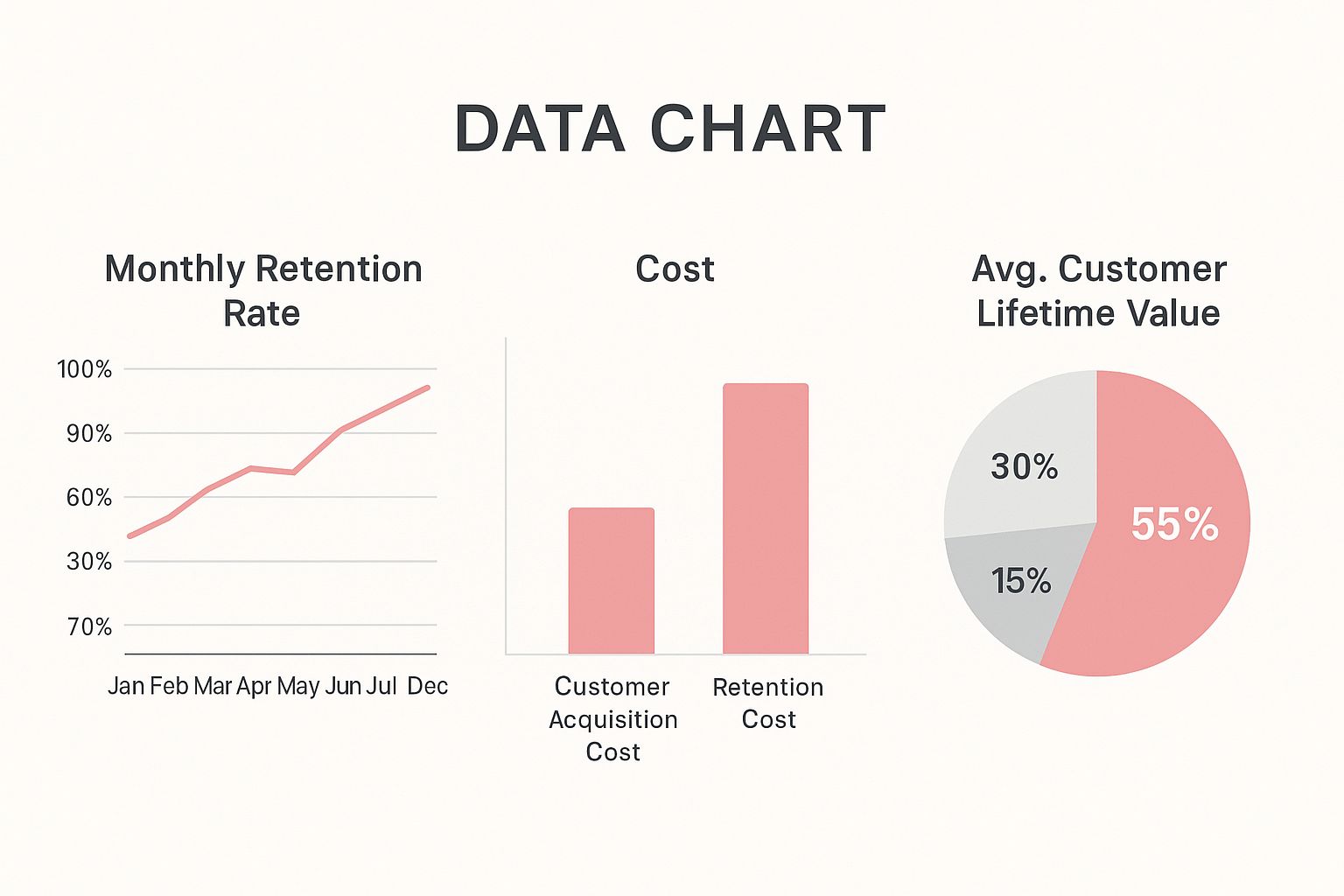
This infographic highlights the relationship between monthly retention rate, the relative costs of acquisition vs. retention, and the segmentation of customer lifetime value. The data shows that prioritizing retention results in lower costs and higher customer lifetime value, underscoring the importance of a strong customer retention strategy. Tracking monthly retention rates also helps identify areas for improvement and measure the effectiveness of your strategies.
Proactive vs. Reactive Retention
Reactive retention addresses issues after they occur. This might involve handling complaints, issuing refunds, or providing reactive customer support. While necessary, a solely reactive approach often misses the underlying causes of customer churn.
Proactive retention, on the other hand, anticipates customer needs and consistently provides value. This can involve personalized email campaigns through services like Mailchimp, loyalty programs, exclusive content, or proactive customer service. For instance, sending a personalized email with product recommendations based on past purchases demonstrates that you understand your customers’ needs and appreciate their business. Loyalty programs can also encourage repeat purchases and strengthen customer relationships.
To understand how your retention efforts compare to others in your field, let’s take a look at industry benchmarks.
To help illustrate these industry differences, let’s examine the following table:
Industry Retention Rate Comparison
This table compares customer retention rates across different industries, highlighting which sectors excel and which struggle with customer loyalty.
| Industry | Average Retention Rate | Key Success Factors |
|---|---|---|
| Media & Professional Services | 84% | Strong client relationships, specialized expertise, recurring contracts |
| Online Retail | 65% | Personalized experiences, loyalty programs, effective email marketing |
| Hospitality, Travel & Restaurants | 55% | Exceptional customer service, loyalty rewards, unique experiences |
As you can see, different industries face unique challenges and opportunities in retaining customers. This data underscores the importance of adapting your strategy to your specific industry and understanding the factors influencing customer loyalty within that sector.
The Power of Email in Customer Retention
Across all industries, email remains a vital tool for customer retention, with 89% of businesses using it to connect with customers. Research shows that customers with positive experiences are likely to spend 140% more than those with negative experiences. This highlights the significant long-term return on investment from positive customer interactions. Learn more about customer retention rates here. This emphasizes the importance of prioritizing every customer interaction and fostering positive experiences that build long-term loyalty and boost spending. By 2025, media and professional services are predicted to have the highest retention rates, reaching 84%. However, sectors like hospitality, travel, and restaurants face greater challenges, with an average retention rate of just 55%.
Why Customer Retention Strategy Outperforms Acquisition

In the competitive e-commerce landscape, acquiring new customers is vital. But what happens after they make that first purchase? That’s where a strong customer retention strategy comes into play. This strategy centers around transforming first-time buyers into loyal, returning customers.
This shift from acquisition to retention isn’t simply a smart move; it’s essential for long-term profitability and sustainable business growth.
The Financial Impact of Retention
Retention surpasses acquisition in cost-effectiveness. Acquiring new customers demands significant investment in marketing, advertising, and sales. Retaining existing customers, however, builds upon your previous investment and existing relationships.
This means more of your resources can go toward improving customer experience and building loyalty, rather than constantly searching for new leads. The result is a healthier bottom line. Plus, retained customers tend to spend more over time, increasing their average order value.
The Power of Loyalty and Advocacy
Prioritizing retention taps into the power of loyal customers. These customers naturally become advocates for your brand. They provide positive word-of-mouth referrals and generate organic growth.
Essentially, a satisfied customer acts as free advertising. Their recommendation carries more weight than any marketing campaign. They become brand ambassadors, sharing positive experiences with their network. This organic growth is not only cost-effective but strengthens your brand’s reputation and builds trust. To build an effective customer retention plan, understanding the various types of strategies is beneficial. Check out this resource on customer retention strategies.
The Rising Cost of Churn
Neglecting customer retention can have serious consequences. U.S. brands lose an estimated $168 billion annually due to customer attrition. This staggering loss highlights the need for effective retention strategies.
The hospitality, travel, and restaurant industry saw a 20% drop in customer retention rates in 2024 alone, falling to just 55%. This decline reflects wider industry challenges as customer expectations increase.
To better understand the financial ramifications of customer churn, let’s take a closer look at the following table:
The following table outlines the potential costs associated with losing customers and provides strategies to mitigate these losses.
| Impact Area | Financial Consequence | Preventative Retention Strategy |
|---|---|---|
| Lost Revenue | Decreased sales due to fewer customers | Implement a loyalty program to reward repeat purchases |
| Marketing Costs | Increased spending to acquire new customers | Personalized email campaigns targeted at customer preferences |
| Reputational Damage | Negative word-of-mouth and online reviews | Proactive customer service and prompt issue resolution |
| Reduced Customer Lifetime Value | Less revenue generated from each customer over time | Exclusive offers and early access to new products for loyal customers |
This table clearly demonstrates the financial impact of customer churn across various business metrics, emphasizing why investing in retention is so crucial. Focusing on positive customer experiences and strong relationships is vital in today’s competitive market. Learn more about customer experience-informed strategies here. Also, you might find these Proven Customer Retention Strategies to Drive Loyalty helpful.
Building Your Data-Driven Retention Framework
Stop guessing what makes your customers stick around – it’s time to know. This section explains how to build a customer retention strategy specifically designed for your customer base. This includes understanding customer segmentation, mapping their journey, implementing early warning systems for potential churn, gathering feedback, and creating informative retention dashboards.
Understanding Customer Segmentation
Effective retention begins with understanding who your customers are and what they find important. Customer segmentation groups your customers based on common characteristics. These can include demographics like age or location, purchase behavior such as frequency and average order value, or engagement patterns like email opens and website visits. This allows you to personalize your retention efforts, targeting specific segments with relevant messages and offers. For example, high-value customers may appreciate exclusive early access to new products, while budget-conscious customers may respond better to targeted discounts.
Mapping the Customer Journey
The customer journey is the full experience a customer has with your brand, from their initial discovery to, ideally, long-term loyalty. Mapping this journey involves identifying all touchpoints a customer has with your business, both online (website visits, email interactions) and offline (in-store visits, customer support calls). By carefully tracking these interactions, you can pinpoint critical moments that influence retention. This can reveal pain points that drive customers away or highlight opportunities to improve the customer experience.
Implementing Early Warning Systems
Much like a smoke detector alerts you to danger, early warning systems in customer retention identify at-risk customers before they churn. These systems use data analysis to find patterns indicating a customer is likely to leave. Red flags might include decreased purchase frequency, lower engagement with marketing emails, or negative feedback in surveys. Check out this helpful article: How to Reduce Customer Churn. Early identification allows for proactive intervention with personalized offers, proactive customer support, or simply reaching out to understand their needs.
Gathering and Analyzing Customer Feedback
Customer feedback is essential for improving retention. Gathering feedback at scale involves implementing systematic collection methods. This could include regular customer surveys, feedback forms on your website, or analyzing social media sentiment. Simply collecting feedback isn’t enough; you need to analyze it effectively. This involves identifying recurring themes and trends in customer responses, transforming qualitative feedback into actionable insights. For example, multiple complaints about a confusing checkout process pinpoint a clear area for improvement. The global average customer retention rate in retail is 63% (2025 data). Retailers find loyalty programs, personalized recommendations, and omni-channel experiences significantly impact repeat purchases. Meanwhile, the banking sector boasts a higher average of 75%. More detailed statistics can be found here. Despite varying rates, all industries face pressure to innovate and meet evolving customer expectations.
Creating Retention Dashboards
Finally, retention dashboards make key metrics visible and actionable across your organization. These dashboards track key performance indicators (KPIs) related to retention, like churn rate, customer lifetime value, and repeat purchase rate. Presenting this data clearly allows you to monitor your retention strategy’s effectiveness and identify areas for improvement. A good dashboard not only displays data but provides context and insights, explaining why certain metrics are trending in a particular direction. This empowers data-driven decisions about your retention efforts and continuous optimization for maximum impact.
Personalization Strategies That Actually Drive Loyalty

Generic experiences don’t build loyalty. They create easily replaceable relationships. This section explores how leading brands are using personalization to retain customers. We’ll look at how businesses ethically leverage customer data to create experiences that resonate with individual needs and preferences.
Personalized Communication Cadences
Effective personalization starts with communication. Building a personalized communication cadence means respecting customer boundaries while keeping them engaged. This requires tailoring both the frequency and the content of your messages.
Some customers might prefer weekly email updates. Others might only want monthly newsletters. Using data from your CartBoss SMS campaigns offers valuable insights into preferred communication channels and frequency. This allows for a truly personalized approach.
Tailored Product Recommendations
Successful businesses go beyond generic product suggestions. They use data to tailor recommendations by analyzing actual usage patterns instead of relying on broad demographics.
Imagine a customer frequently buys running shoes from your online store. A personalized approach would recommend related items like running socks, hydration packs, or specific running apparel, not generic athletic wear. This targeted approach increases conversions and shows you understand the customer’s individual needs.
Customized Service Approaches
Different customer value tiers deserve different service approaches. A high-value customer might receive prioritized support and exclusive access to customer service representatives. A new customer, on the other hand, might benefit from automated onboarding and helpful FAQs.
This tiered approach efficiently allocates resources, providing premium experiences to your most valuable customers.
Balancing High-Tech and High-Touch
Personalization requires a balance between high-tech automation and high-touch human connection. Automation efficiently delivers personalized messaging and recommendations. However, maintaining opportunities for human interaction is essential.
For example, automated abandoned cart SMS messages from CartBoss can be followed up with a personalized email from a customer service representative, offering support and addressing any specific questions.
Implementing Progressive Personalization
True personalization grows and evolves with the customer relationship. Progressive personalization means consistently gathering data and using it to refine the customer experience.
As customers interact with your brand, their preferences and behaviors become clearer. This data further personalizes communication, product recommendations, and service interactions, strengthening the relationship and building long-term loyalty. This ongoing refinement creates valuable personalized experiences.
Creating Loyalty Programs Worth Staying For
Loyalty programs are essential for customer retention, yet many fall short. They often devolve into simple discounts for customers who are already loyal. This defeats the purpose. This section explores what truly makes a loyalty program effective, going beyond surface-level discounts to build authentic, lasting customer relationships. Learn more in our article about How to create a customer loyalty program.
Beyond Points: Exploring Different Loyalty Structures
Not all loyalty programs are the same. Points-based systems are widespread, but they aren’t always the best fit. Some businesses see more success with tiered memberships, which offer increasing benefits as customers engage more.
For example, a coffee shop might offer a free drink after ten purchases (points-based). A clothing retailer, on the other hand, might offer tiered benefits like free shipping, early access to sales, or personalized styling advice based on spending (tiered). Analyzing successful and unsuccessful programs across industries can help you determine the structure best suited to your business and customers.
The Psychology of Effective Rewards
Understanding reward psychology is critical. Some incentives genuinely motivate, while others don’t. A generic “10% off” coupon might not be exciting. But early access to a new product or an invitation to an exclusive event feels much more rewarding.
The key is to offer rewards that feel valuable and personal, fostering an emotional connection, not just a transactional one. This means creating incentives that change behavior and strengthen the customer relationship without always resorting to price cuts.
Measuring Program Effectiveness: Beyond Enrollment
Simply tracking enrollment numbers isn’t enough. True program effectiveness is about how it changes customer behavior. Are enrolled customers buying more often? Is their average order value higher? Are they referring new customers? Tracking these key metrics reveals your program’s real impact.
Gamification and Enhanced Engagement
Gamification can transform your loyalty program from a basic rewards system into an engaging experience. Elements like progress bars, badges, or challenges can tap into customers’ competitive side and encourage continued participation.
For example, a fitness studio could award badges for attending a certain number of classes or reaching specific fitness goals. These small additions increase engagement and make the program more fun and interactive.
Creating Exclusivity and Unforgettable Experiences
The most effective loyalty programs offer something unique: exclusive experiences. This could be personalized consultations, early access to new products, or invites to VIP events. These create a sense of belonging and deepen loyalty beyond transactional rewards. By offering unique value and fostering emotional connections, you build a robust customer retention strategy that truly delivers.
Retention Technology That Delivers Real Results

The right technology can significantly improve your customer retention strategy. Instead of simply reacting to problems, you can use technology to predict and address them proactively. This involves integrating various tools, from powerful CRM systems like Salesforce to advanced predictive analytics platforms. The goal is to build a cohesive system that boosts your retention efforts.
Leveraging AI for Predictive Retention
Many leading companies are using artificial intelligence (AI) to anticipate customer needs. AI can identify potential churn risks early on and automate personalized engagement at scale. For example, by analyzing past purchases and browsing history, AI can predict future buying behavior and recommend relevant products.
This proactive approach not only enhances the customer experience but also drives sales. AI can also analyze factors like decreased purchase frequency or negative feedback to identify at-risk customers, enabling businesses to intervene proactively. For more strategies, check out this helpful resource: How to master SMS marketing for customer retention.
Implementing Customer Success Platforms
Customer success platforms like Gainsight track important health scores. These scores give businesses valuable insights into customer satisfaction and engagement levels. These platforms also enable automated retention workflows.
This means specific actions, such as sending a personalized email or offering a discount, can be triggered based on a customer’s health score. If a score drops below a certain threshold, an automated email from customer service could be sent, offering assistance. This targeted approach helps prevent churn and build stronger customer relationships.
Utilizing Sentiment Analysis for Deeper Understanding
Sentiment analysis helps businesses go beyond traditional metrics. It allows you to understand the emotional aspects of your customer relationships. This technology analyzes customer feedback, reviews, and social media activity to gauge sentiment toward your brand.
This provides valuable insights that inform your retention strategy. You can address the emotional drivers of customer behavior, leading to more effective communication and personalized experiences. If sentiment analysis reveals negativity around a new feature, you can address concerns and improve the product accordingly, fostering stronger relationships.
Measuring What Matters: Retention Strategy Optimization
The most effective customer retention strategies are constantly adapting and improving through measurement. This means ongoing optimization is essential for success. This section offers a framework for evaluating your retention efforts and using data to make them better. We’ll look at both leading indicators, which predict future issues, and lagging indicators, which confirm if your strategies are working.
Utilizing Key Retention Metrics
Knowing which metrics are important is the first step. While your overall customer retention rate is crucial, it’s a lagging indicator. It tells you what has happened, not what will happen. That’s where leading indicators come in. Metrics like customer satisfaction scores (CSAT), Net Promoter Score (NPS), and customer effort score (CES) offer valuable insights into the customer experience. These can help predict future churn. For example, a drop in your CSAT score might signal growing dissatisfaction, potentially leading to churn if not addressed.
Analyzing metrics like purchase frequency and average order value also unveils important trends. You can use this data to segment your customers and create targeted solutions. This means understanding not just how many customers return, but also how often and how much they spend. This detailed view gives you more actionable information.
Cohort Analysis: Unveiling Hidden Patterns
Cohort analysis involves grouping customers with shared traits, like their acquisition date, and tracking their behavior. This powerful technique reveals patterns within these groups. You might find, for example, that customers acquired from social media have a lower retention rate than those from email marketing. This allows you to refine your acquisition and onboarding processes.
Predictive Modeling: Anticipating Churn
Predictive modeling uses statistics to find at-risk customers before they churn. Analyzing past data helps you identify factors that correlate with churn and build models to predict which customers are most likely to leave. This lets you step in proactively with targeted offers or personalized communication. Think of it like how streaming services use viewing habits to suggest content—but here, we’re predicting which customers need extra care.
Lifetime Value Forecasting: Quantifying Retention’s Impact
To optimize your retention strategy, you need to understand its financial impact. Lifetime value (LTV) forecasting calculates the long-term value of each customer and how retention efforts increase that value. By projecting future revenue from retained customers, you can justify investments in retention and show the return on investment (ROI) of your strategies. Learn more in our article about How to master customer retention rate calculators for business growth.
Building a Testing Culture
A culture of improvement requires experimentation. A/B testing different retention strategies proves their effectiveness. This might include testing different email subject lines, experimenting with loyalty program rewards, or comparing various customer service methods.
By consistently testing and refining your strategies, you ensure your efforts are data-driven and optimized for maximum effect. This “testing culture” means seeing every interaction as a learning opportunity.
Retention Scorecards and Communication
Finally, retention scorecards put your key metrics into an easy-to-understand format. These scorecards clearly show progress to stakeholders, highlighting both successes and areas needing improvement. Regular reports and clear communication ensure everyone in your organization understands the value of customer loyalty and is on the same page with your retention goals.
Boost your customer retention with CartBoss! Turn abandoned carts into profit with SMS. Sell up to 50% more. Convert lost visitors into customers with our SMS cart recovery tool on autopilot. Learn more and reclaim lost revenue!