

You’re paying to bring shoppers into your store, but the orders aren’t keeping up. Visitors leave without subscribing. Shoppers reach checkout and disappear. Customers buy once, then never return, even though you keep paying to reach them again.
Buying more software won’t automatically fix those problems. You need ecommerce marketing tools matched to the revenue you’re losing, not another dashboard with overlapping automations and a growing monthly bill.
Cart abandonment alone deserves attention. Baymard Institute’s synthesis of cart-abandonment studies places the global average at approximately 71.72%, while 42% of U.S. online shoppers said they abandoned because they were browsing or weren’t ready to buy. A reminder can help an interested shopper return, but it can’t manufacture purchase intent.
Think of your stack as ten tools serving four revenue jobs:
- Recover checkout revenue: Use dedicated cart recovery or behavior-triggered messaging.
- Capture and retain customers: Connect list growth with welcome, post-purchase, and win-back messages.
- Build confidence and repeat purchases: Add reviews, loyalty, and referral programs.
- Acquire customers through partners: Track affiliates and pay commissions against qualifying sales.
The important comparison isn’t just features. It’s what happens to your bill when your contact list grows, your sending frequency increases, or you expand internationally. Start with the job you need done, then compare integrations, operating effort, and the full cost of using it.
Table of Contents
- 1. CartBoss
- 2. Klaviyo
- 3. Omnisend
- 4. Attentive
- 5. Postscript
- 6. Privy
- 7. Brevo
- 8. Mailchimp
- 9. Yotpo
- 10. Refersion
- How the ten ecommerce marketing tools compare on best use, pricing model, and free options
- Start With the Leak That Costs You the Most This Quarter
1. CartBoss
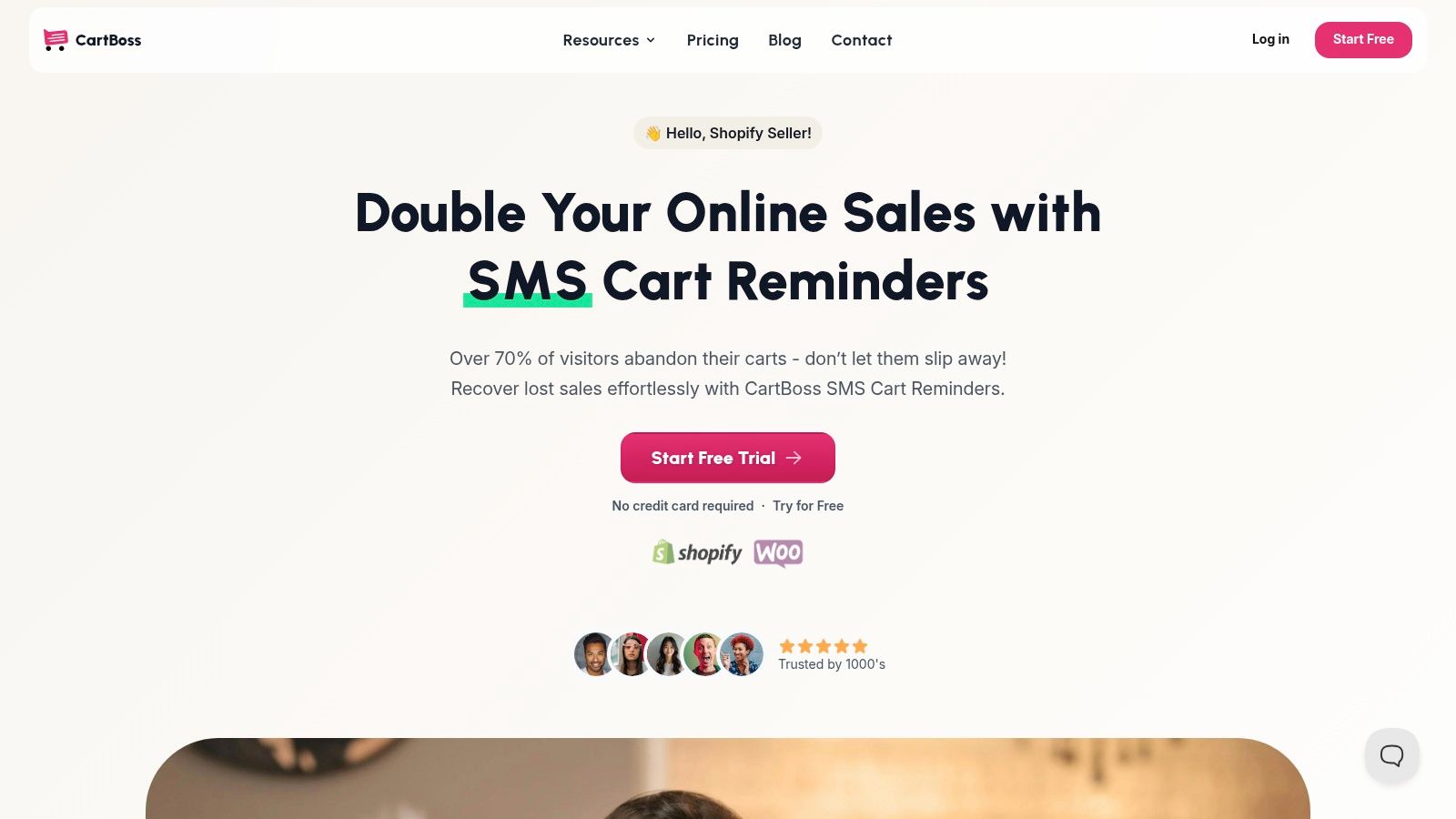
Best for recovering abandoned checkouts through automated SMS on Shopify and WooCommerce.
Our platform focuses on a specific task: send an eligible shopper a reminder and return them to their cart, with an optional discount already applied. That makes it a focused addition when you already have email marketing but need a dedicated SMS recovery workflow.
Prewritten, translated messages, automatic language detection, prefilled checkout forms, branded sender IDs, and reporting reduce the work involved in launching recovery campaigns. You can customize messages and incentives rather than treating every abandoned checkout identically.
Calculate the actual sending cost
Our published pricing lists one SMS to the United States at €0.025, Germany at €0.1484, and France at €0.102. Those destination differences matter when you forecast an international campaign, and the first cart we recover for your store is free.
- Strength: A focused recovery workflow without rebuilding your entire retention stack.
- Trade-off: SMS spending depends on where you send and how much you send. A longer sequence needs a margin-based justification.
- Integration check: Test the returned cart, currency, coupon, and checkout on a phone before enabling production messages.
Use our free SMS Character Counter & Segment Calculator to review message length, and the SMS Cart Recovery ROI Calculator to model potential costs against order economics.
Practical rule: Start with a useful reminder, not an automatic discount. Add an incentive only when the additional gross profit justifies it.
Do-not-disturb controls and unsubscribe options support a better customer experience, but they don’t replace appropriate consent collection. Judge the workflow by completed purchases and contribution after messaging costs, not by an advertised open rate.
2. Klaviyo
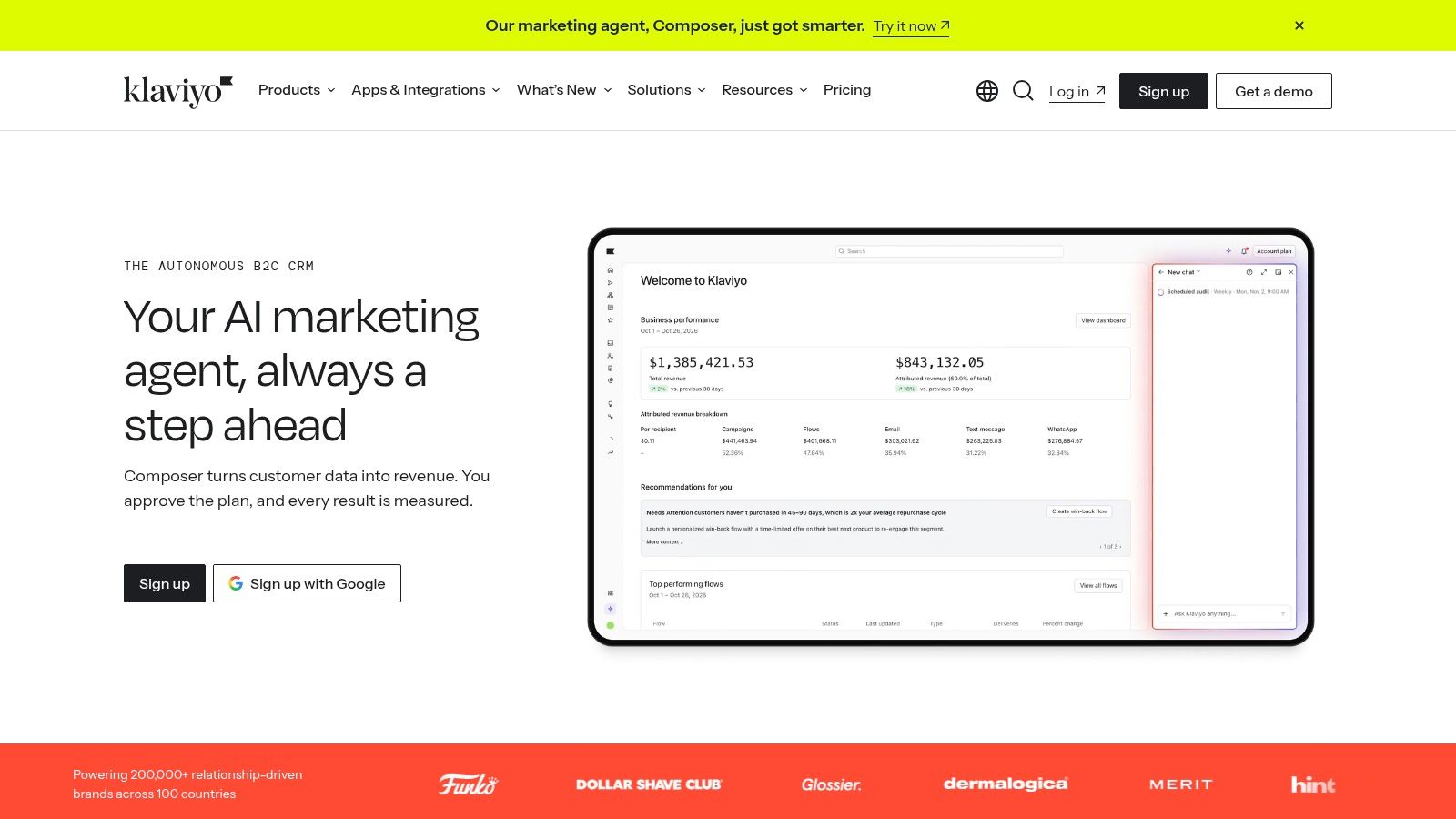
Best for coordinating retention messaging around customer and shopping behavior.
Klaviyo combines email, SMS, customer profiles, segmentation, and automation. Choose it when your problem extends beyond checkout recovery into welcome journeys, post-purchase education, replenishment, and win-back campaigns.
Its breadth is useful only when your store events arrive correctly. A purchase event that syncs late can leave a customer receiving a cart reminder after they’ve already ordered.
Pay for usable audiences, not neglected profiles
Contact-based pricing and separate SMS charges require different budget checks. Review which profiles count toward your plan, then forecast SMS usage separately rather than assuming the email subscription covers both channels.
- Strength: Customer and shopping data can support targeted lifecycle journeys.
- Trade-off: Setup takes thought. Segments, exclusions, attribution, and overlapping flows need an owner.
- Cost trap: Growing the database without cleaning or segmenting it can increase spending without improving revenue.
For reporting, Klaviyo’s SMS campaign benchmarks classify a click rate of 14.6% or higher and a conversion rate of 2.1% or higher as “great.” Treat those as platform benchmarks, not promises for your abandoned-cart flow.
Read the dedicated recovery versus lifecycle-platform comparison before adding another tool. Keep a broad platform when you’ll use its targeting capabilities. Don’t buy that complexity solely to send a straightforward reminder.
3. Omnisend
A growing store might need welcome emails, promotional SMS, and web push without maintaining separate campaign systems. Omnisend fits that ecommerce retention messaging job with campaigns, segmentation, and prebuilt workflows.
The practical advantage is coordination. You can plan channels around the same shopping journey instead of letting disconnected tools send competing offers.
- Works well for: Small and midsize teams that want common ecommerce workflows in a shared platform.
- Works less well for: Stores that need highly specialized data handling or extensive workflow customization.
- Budget watch: Contact tiers, plan-specific send limits, and destination-dependent SMS usage can change the total.
Test the journey, not just the template
Start with a welcome flow and an abandoned-checkout flow. Check that completed orders stop recovery, unsubscribed shoppers stay excluded, and mobile links return to the expected cart.
Klaviyo’s SMS conversion guidance identifies mobile checkout friction as a potential cause of weak conversion. Apply that diagnostic principle regardless of your platform: a click that lands on a difficult checkout isn’t a messaging success.
Omnisend’s free tier can help you test the interface, but it won’t tell you the cost of your mature program. Forecast campaigns and automated messages together before choosing a paid plan.
The SMS abandoned-cart platform comparison is useful if you’re deciding between a multichannel retention system and a narrower recovery tool.
4. Attentive
Choose Attentive for a developed messaging program, not just because you need cart reminders.
Attentive offers SMS, email, push, and RCS alongside cross-channel journeys, segmentation, testing, and analytics. Strategic and onboarding support can be valuable when a team needs help coordinating a larger program.
The trade-off is purchasing and operating complexity. Custom pricing means you need a quote based on your actual channels, list, sending volume, and required features, not a headline subscription comparison.
Make the quote comparable
Give vendors the same operating assumptions. Include current audience size, expected audience growth, destination markets, campaign frequency, and automated journeys.
- Request a breakdown: Separate platform access, messaging usage, onboarding, and optional services.
- Demonstrate exclusions: Ask how purchases, opt-outs, and channel preferences update across journeys.
- Assign ownership: Name who approves campaigns, monitors replies, and reviews complaints.
International programs need more than translated copy. DHL’s business ecommerce report reports that only 62% of retailers offer local-language and local-currency options across all international markets.
Check the complete journey: message language, currency, delivery promise, sender identity, and checkout destination. Apply market-appropriate consent and quiet-hour controls.
Attentive makes more sense when those coordination needs justify its scope. A small team with a straightforward recovery problem may be better served by a focused tool that requires less ongoing management.
5. Postscript
Postscript is a strong candidate for Shopify merchants building a dedicated SMS channel. Its tools cover subscriber acquisition, campaigns, segmentation, and automated journeys such as cart abandonment, browse abandonment, welcome, and post-purchase messaging.
That focus is also its boundary. It isn’t a replacement for a full email-marketing system, so compare the combined stack cost if you’ll retain another platform.
A low advertised message rate isn’t the same as a low monthly bill. Include carrier fees, platform charges, and any minimum spending commitment.
Build the audience before scaling broadcasts
Start with clear signup language and a welcome journey that delivers what the form promised. Collecting a phone number at checkout shouldn’t automatically enroll someone in every promotional campaign.
Use the Postscript setup and usage guide to plan the operational details, especially subscriber collection and automated journeys.
- Strength: Shopify-oriented segmentation and SMS workflows keep the platform close to ecommerce behavior.
- Trade-off: Your team still needs to handle replies, exclusions, and campaign planning.
- Integration check: Verify purchase suppression and consent status before enabling browse or cart reminders.
- Cost trap: Usage-based billing can rise quickly when you combine regular broadcasts with multiple automated flows.
For a store with an engaged SMS audience and frequent product launches, that dedicated channel focus can make sense. For a merchant who only wants checkout recovery, compare the operating effort against a narrower automation tool.
6. Privy
When visitors leave without identifying themselves, recovery tools have little to work with. Privy addresses that earlier problem by combining popups and signup forms with email and SMS follow-up.
It suits a store that needs to connect onsite list growth with welcome messages, cart reminders, and post-purchase communication. The important question is whether you’re collecting useful subscribers, not merely generating form submissions.
Match the form to the visitor
Say a skincare store offers a product-selection guide. A relevant signup form can lead into educational emails, while shoppers who explicitly choose promotional texts enter the SMS audience.
Don’t show the same aggressive discount popup to every visitor. Existing subscribers, returning buyers, and shoppers already checking out need different treatment.
- Strength: List capture and messaging live in the same platform.
- Trade-off: Specialized data requirements or complicated journeys may call for a more advanced system.
- Cost trap: Contact-based pricing and SMS credits can make a successful acquisition campaign more expensive to maintain.
- Integration check: Confirm that consent, customer status, and order events sync correctly with your store.
Measure opt-in quality through subsequent purchases, engagement, and unsubscribes. A form that attracts discount seekers who never buy again can look successful while adding little value.
Before upgrading, estimate the contact tier you’ll reach after sustained list growth. Compare that cost with the contribution those subscribers generate, including any signup incentive.
7. Brevo
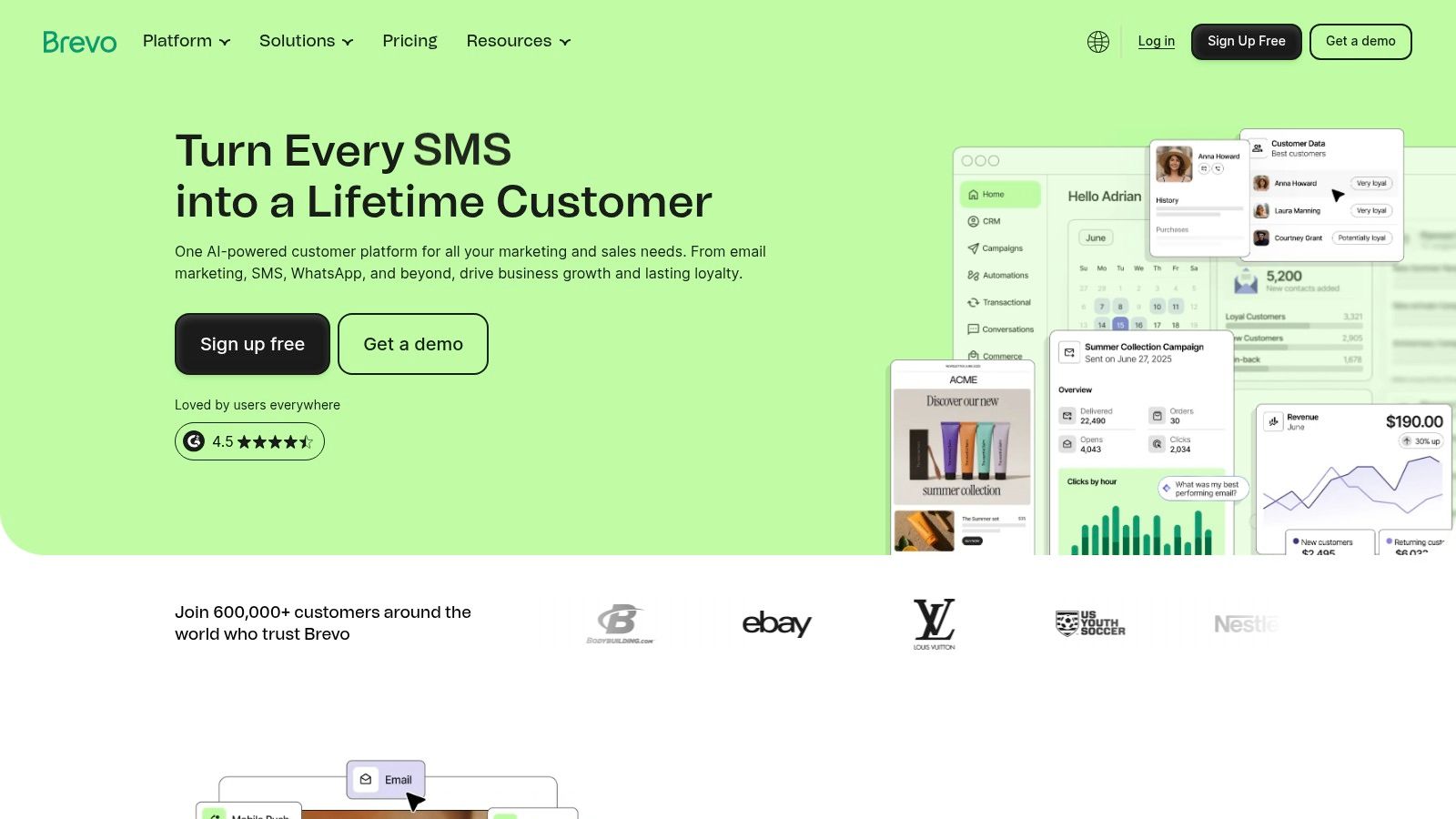
Brevo suits businesses that need customer communication and CRM-style tools together.
Brevo offers email, SMS, WhatsApp, web push, marketing automation, and sales features. It can be useful when your ecommerce operation also involves sales conversations or customer relationships that don’t fit neatly into promotional campaigns.
Its broader scope requires more validation for store-specific workflows. Don’t assume an integration delivers every event or cart detail an automation needs.
Prove the ecommerce connection first
Run a test checkout through the entire system. Confirm that the customer profile receives the relevant cart event, that the recovery message contains the right destination, and that a completed order stops further reminders.
- Strength: Multiple communication channels and CRM features under one account.
- Trade-off: Ecommerce automation may require more setup than a store-focused platform.
- Budget watch: Contact storage and email sending are structured differently from contact-only models, while SMS and other channels can carry separate costs.
- Plan limit: Advanced capabilities may require a higher-priced subscription.
A free plan is useful for exploring campaign creation, but evaluate the paid workflow you need before migrating customer data. Missing event support is more consequential than an attractive starting subscription.
I’d shortlist Brevo when the CRM and communication features solve a real operational need. If your only problem is checkout abandonment, those extra capabilities may add work without improving recovery.
8. Mailchimp
Keeping an existing email platform can be more sensible than migrating for features you won’t use. Mailchimp is an email-first option with campaigns, automation, audience tools, and ecommerce integrations.
It can support a store’s newsletters and lifecycle messaging, with an SMS add-on available in selected markets. SMS requires approval, so don’t build a launch plan around access you haven’t confirmed.
- Best fit: Teams whose main requirement is email marketing and whose store integration supports the necessary journeys.
- Main limitation: Ecommerce workflow depth, feature availability, and sending limits vary by plan.
- Cost trap: Contact-based pricing can become significant as audiences grow, before accounting for SMS.
- Migration check: Verify how subscribed, unsubscribed, and duplicate records will be handled.
Audit the existing account before replacing it
Check whether weak results come from the platform or the setup. Missing purchase data, generic segments, and broken product links won’t disappear just because you move providers.
For SMS, Klaviyo’s ecommerce messaging page cites research with Recharge finding that nearly 18% of customers prefer abandoned-cart notifications by SMS. That supports offering channel choice, not replacing email for everyone.
Mailchimp’s restricted free offering can help with initial testing. Before committing, map your required welcome, recovery, and post-purchase journeys to the plan that includes them, then model costs against your expected audience size.
9. Yotpo
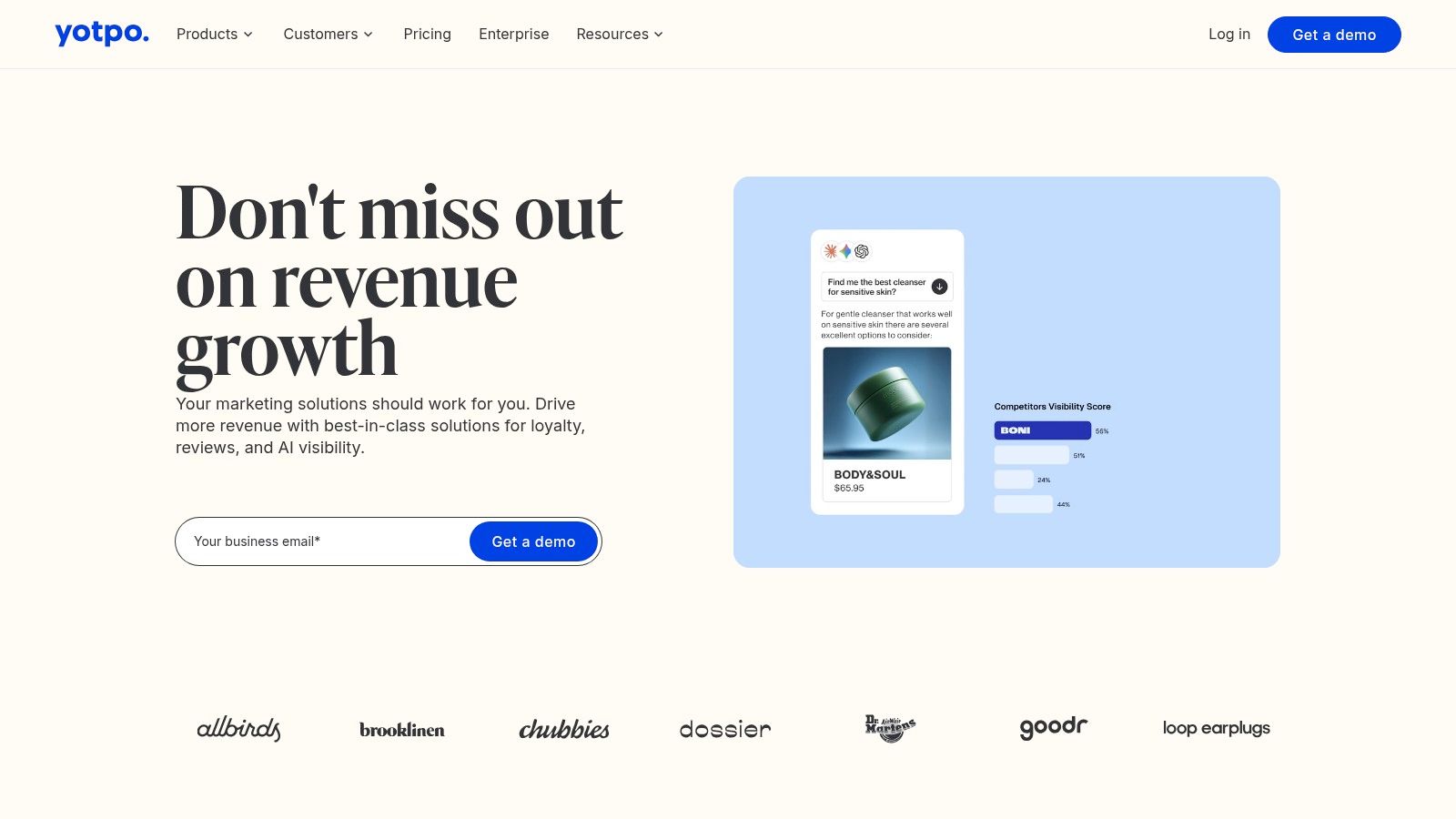
Some shoppers don’t need another reminder. They need evidence that the product fits, works, or matches its description.
Yotpo addresses customer confidence and repeat purchasing through reviews, user-generated content, loyalty, and referral products. Those jobs complement cart recovery rather than replacing it.
Baymard’s checkout usability findings identify unexpectedly high additional costs for 40% of U.S. shoppers and lack of trust in the site with payment details for 19% as abandonment reasons. Reviews can support confidence, but they won’t fix hidden shipping charges or an unclear payment experience.
Buy the module that matches the problem
Start with reviews if product pages lack credible answers to purchase questions. Consider loyalty when customers have a natural reason to reorder and the reward economics make sense.
- Strength: Addresses conversion and retention beyond email and SMS.
- Trade-off: Separate products need separate implementation decisions.
- Cost trap: Paid modules and order-volume pricing can accumulate across the stack.
- Integration check: Verify product matching, review display, reward redemption, and customer identification.
Margin check: A repeat order isn’t automatically a profitable loyalty outcome. Subtract rewards, discounts, and servicing costs before celebrating the revenue.
Free entry-level options exist for some products, while premium pricing may require a sales conversation. Request a forecast based on expected order volume and the specific modules you intend to use, not the entire product suite.
10. Refersion
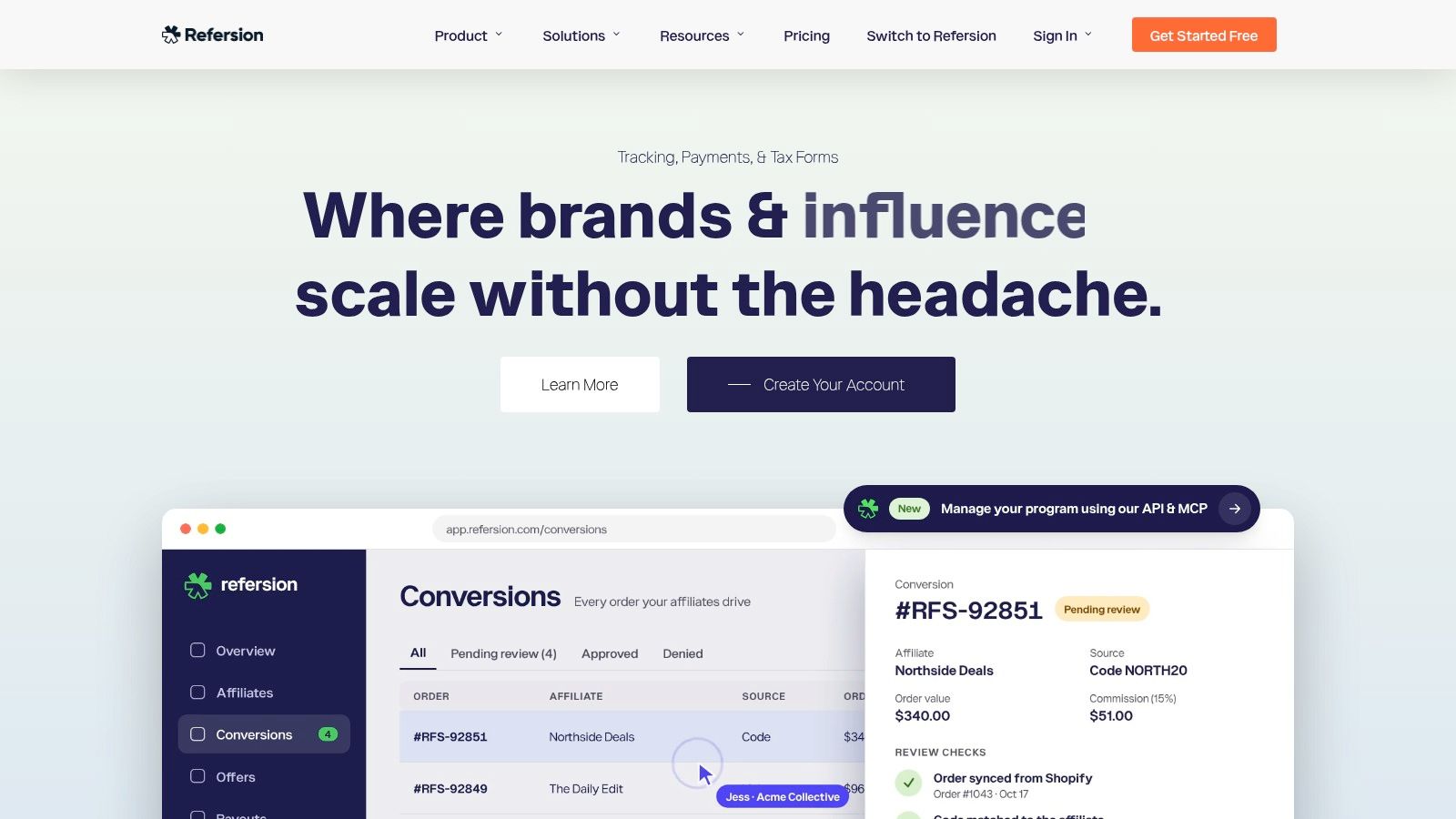
Refersion handles a different revenue job: acquiring customers through affiliates. It helps brands manage partners, track referred sales, structure commissions, and handle payouts.
Choose it when you have a credible partner-recruitment plan. Affiliate software can track a program, but it won’t recruit suitable publishers or creators for you.
Set commission rules before recruiting
Define which sales qualify, how returns affect commissions, and whether existing customers count. Specify coupon usage and promotional restrictions so partners understand what they can promise.
The guide to referral incentives can help you think through rewards, although affiliate commissions and customer referral offers require different operating rules.
- Strength: Dedicated affiliate relationship management and performance tracking.
- Trade-off: Recruiting, approving, and supporting partners remains your responsibility.
- Cost trap: Some plans add a percentage fee on affiliate-driven sales alongside platform costs and partner commissions.
- Integration check: Test attribution, refunds, cancellations, and payout eligibility before expanding the program.
Evaluate partner performance using new-customer contribution, not attributed revenue alone. A coupon partner that intercepts shoppers already at checkout may create less incremental value than a niche publisher introducing new buyers.
Published entry and growth pricing can make initial comparisons easier, but model the entire acquisition cost. Include commissions, platform charges, applicable sales-based fees, samples, and the time needed to support affiliates. Refersion isn’t a substitute for messaging or recovery software.
How the ten ecommerce marketing tools compare on best use, pricing model, and free options
Each tool addresses a different revenue job, and its billing model affects the cost as your program grows. SMS tools may charge by message or usage; email platforms can price by contacts, plans, or both. Compare the free option and the likely bill at your expected volume.
| Item | Best for | Pricing model | Free option |
|---|---|---|---|
| CartBoss | Shopify and WooCommerce stores seeking automated SMS cart recovery | Per-SMS rates by destination, including €0.025 to the US, €0.1484 to Germany, and €0.102 to France; first recovered cart is free | First recovered cart free |
| Klaviyo | Ecommerce teams coordinating email, SMS, and customer journeys | Based on audience and usage; SMS charged separately | Free plan |
| Omnisend | Small and midsize stores combining email, SMS, and web push | Plan-based, with additional SMS usage costs | Free plan |
| Attentive | Larger brands running personalized, cross-channel messaging | Custom pricing based on list size, volume, channels, and features | No free plan; custom quote |
| Postscript | Shopify merchants building a dedicated SMS program | Usage-based, with possible platform fees and carrier charges | No free plan; usage-based billing |
| Privy | Stores combining list-building popups with email and SMS | Contact-based pricing and SMS credits | 15-day trial |
| Brevo | Businesses seeking multiple messaging channels and CRM tools | Plan-based, with separate channel costs or limits | Free plan |
| Mailchimp | Businesses focused on email marketing with optional SMS | Plan and contact-based; SMS is a paid add-on in select markets | Restricted free plan |
| Yotpo | Ecommerce brands seeking reviews, loyalty, and referrals | Per-module pricing, with order-volume tiers | Free entry-level options for some products |
| Refersion | Ecommerce brands managing affiliate programs and commissions | Plan-based; some plans add fees on affiliate-driven sales | Free marketplace listing |
Start With the Leak That Costs You the Most This Quarter
Pick one revenue job before you pick one tool. If abandoned checkouts are your biggest loss, start with focused recovery. If visitors never subscribe, fix list capture. If buyers don’t return, investigate the product experience and retention journey before launching more promotions.
For cart recovery, run a 30-day evaluation as a practical starting point, extending it if order volume is too low for a useful comparison. Track recovered revenue, but don’t treat every platform-attributed order as a sale the message caused.
Measure behavior change, not just attribution
A Marketing Beat report on incremental attribution explains why click-based reporting and incrementality can lead advertisers to different conclusions about campaign value. Apply that distinction to recovery messages with a simple testing process:
- Define eligibility: Include shoppers with appropriate consent, a valid contact method, and an available cart.
- Randomize before sending: Assign comparable eligible shoppers to messaging and holdout groups.
- Keep checkout conditions consistent: Avoid changing shipping offers or checkout design for only one group.
- Compare revenue per eligible cart: Include everyone assigned to each group, not just message clickers.
- Calculate contribution: Subtract product costs, discounts, messaging charges, and relevant variable costs.
Keep first-time and returning shoppers separate in the analysis. They may respond differently, and combining them can hide an expensive discount strategy.
Use the same discipline when choosing broader ecommerce marketing tools. Add a lifecycle platform when your list, send volume, and targeting needs justify it. Add reviews or loyalty when those features address a demonstrated obstacle, not because they’re available in a bundle.
Check the bill and the handoff
Before committing, review the operational details that affect both cost and customer experience:
- Usage charges: Include SMS destination rates, carrier fees where applicable, and message segmentation.
- Audience limits: Understand billable contacts, suppression rules, and the next pricing tier.
- Sending limits: Forecast campaigns and automated journeys together.
- Integration support: Test purchases, cart restoration, discounts, consent, and opt-out synchronization.
- Channel coordination: Make sure email and SMS don’t send conflicting incentives.
For email copy and sequence ideas, browse abandoned cart email examples, then adapt them to your shipping policies and customer questions.
Choose the smallest stack that can solve the current problem and produce a trustworthy result. Expand when the additional contribution supports the additional cost.
CartBoss offers automated SMS cart recovery for Shopify and WooCommerce, with localized messages and links that return shoppers to their carts. Visit CartBoss to explore the recovery workflow and free calculators, then evaluate it against your store’s abandoned-checkout volume and margins.