

Shoppers leave after they have already said yes. Baymard’s large-scale checkout research puts the average ecommerce abandonment rate at about 70% once products are in the cart. Shipping, an account wall, or a long form is usually what stops the order, not a lack of interest.
The Shopify App Store is far past a short list of extras. It holds thousands of apps, and a typical store only needs a handful that cover recovery, trust, marketing, design, support, and fulfillment. Treating every “best Shopify apps” roundup as a shopping list is how you pay for overlapping tools and slow the theme down.
What follows is seven apps, sorted by the store problem they solve. Each one has the revenue job, the trade-off, a pricing signal, and a best for verdict. Build a stack that pays for itself. Don’t install the whole category.
Table of Contents
- 1. CartBoss
- 2. Judge.me Product Reviews
- 3. Klaviyo Email Marketing and SMS
- 4. Omnisend
- 5. PageFly
- 6. Gorgias AI Helpdesk and Chat
- 7. Printful Print on Demand
- Top 7 Shopify Apps: Features Comparison
- Build a Lean App Stack That Pays for Itself
1. CartBoss
Recovery touches money after the shopper has already said yes. CartBoss sends automated SMS reminders when a Shopify or WooCommerce cart goes quiet, so the team is not chasing checkouts by hand or paying a developer to wire a flow.
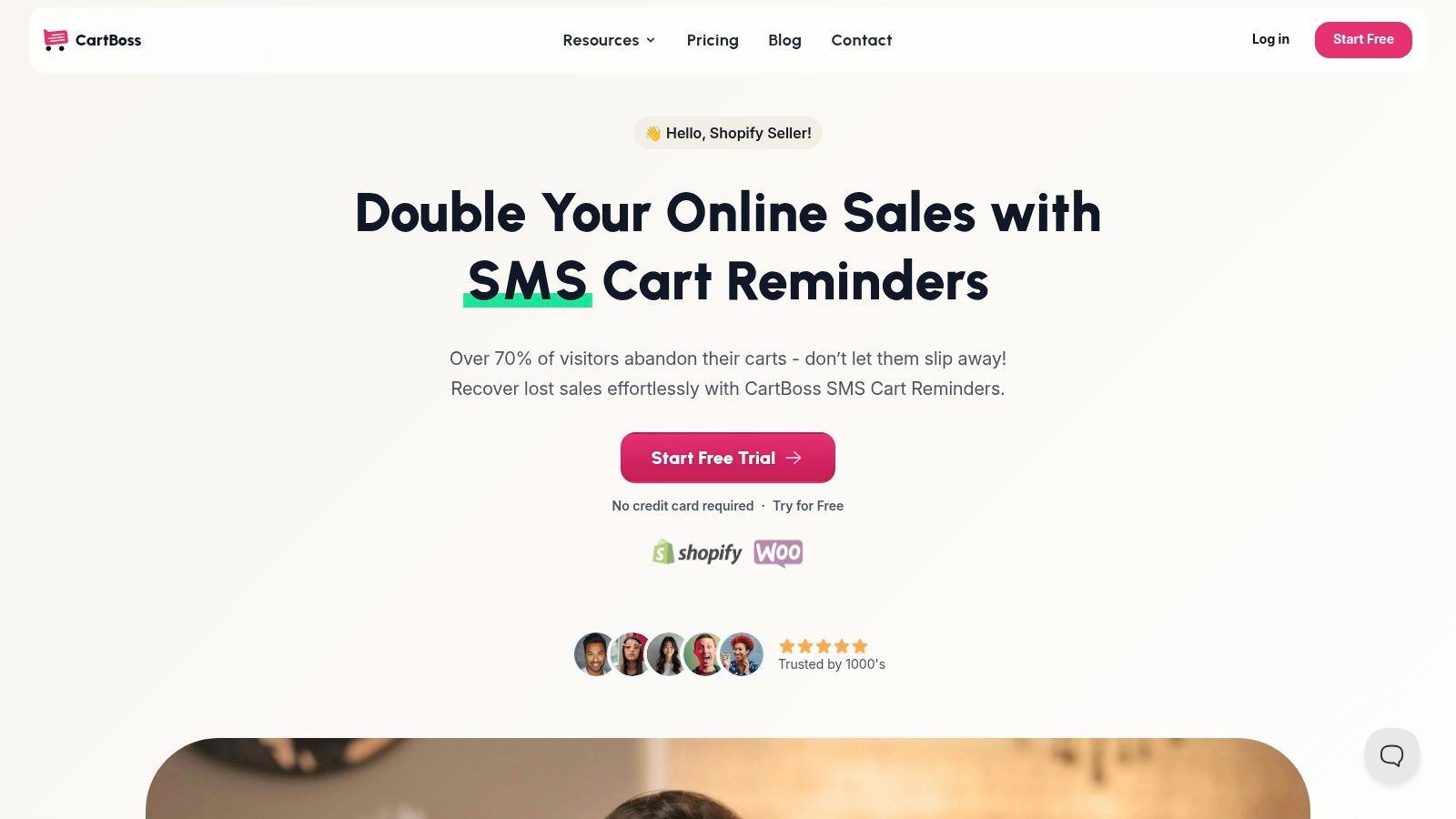
Setup is no-code: pre-written messages, editable timing, optional discounts, and automatic language detection with localized copy in 30+ languages. The return link opens a pre-filled checkout, with the offer applied when one is active. Branded sender IDs and analytics show which texts produced orders.
On its site, CartBoss reports a 99% SMS open rate, a 50%+ click rate, more than 7 million carts recovered, and an average 4,500% ROAS. Treat those as vendor figures rather than a forecast. Consent rate, offer strength, and margin decide whether your own analytics look anything like them.
Shopify’s summary of Baymard research is why the text has to be specific. 40% of shoppers abandon because extra costs are too high, 20% because delivery is too slow, and 18% because they do not want an account. A reminder that hides shipping, or forces account creation, repeats the reason they left. Point the SMS at guest checkout and the total.
Price the texts against recovered margin
The offer is a free start, no credit card, the first recovered cart free, and no subscription fees. The unclear line is the SMS bill. Per-message cost changes by country and volume, so model it before a holiday spike turns a cheap test into an expensive reminder.
Best for: stores that already capture a phone number at checkout, especially multi-language catalogs that want cart recovery without a full marketing suite.
- Less manual follow-up: reminders, unsubscribe handling, and do-not-disturb hours run without a daily send list.
- Compliance is part of performance: GDPR and CCPA controls matter because SMS consent rules differ by market. France requires explicit opt-in, and notice-at-collection gaps show up for Australia, Singapore, and Hong Kong.
- Results stay conditional: consent, list quality, and the offer decide whether those headline rates show up in your own analytics.
Practical rule: An unconsented phone number is unusable, even when the template is already written.
If Klaviyo or Omnisend already texts abandoned carts, pick one sender. Two apps messaging the same checkout is how you buy complaints.
2. Judge.me Product Reviews
A store with zero reviews asks every visitor to take the first risk. Judge.me Product Reviews removes that ask. It collects and displays product and store reviews, including photo and video, and holds a 5.0 rating on the Shopify listing.
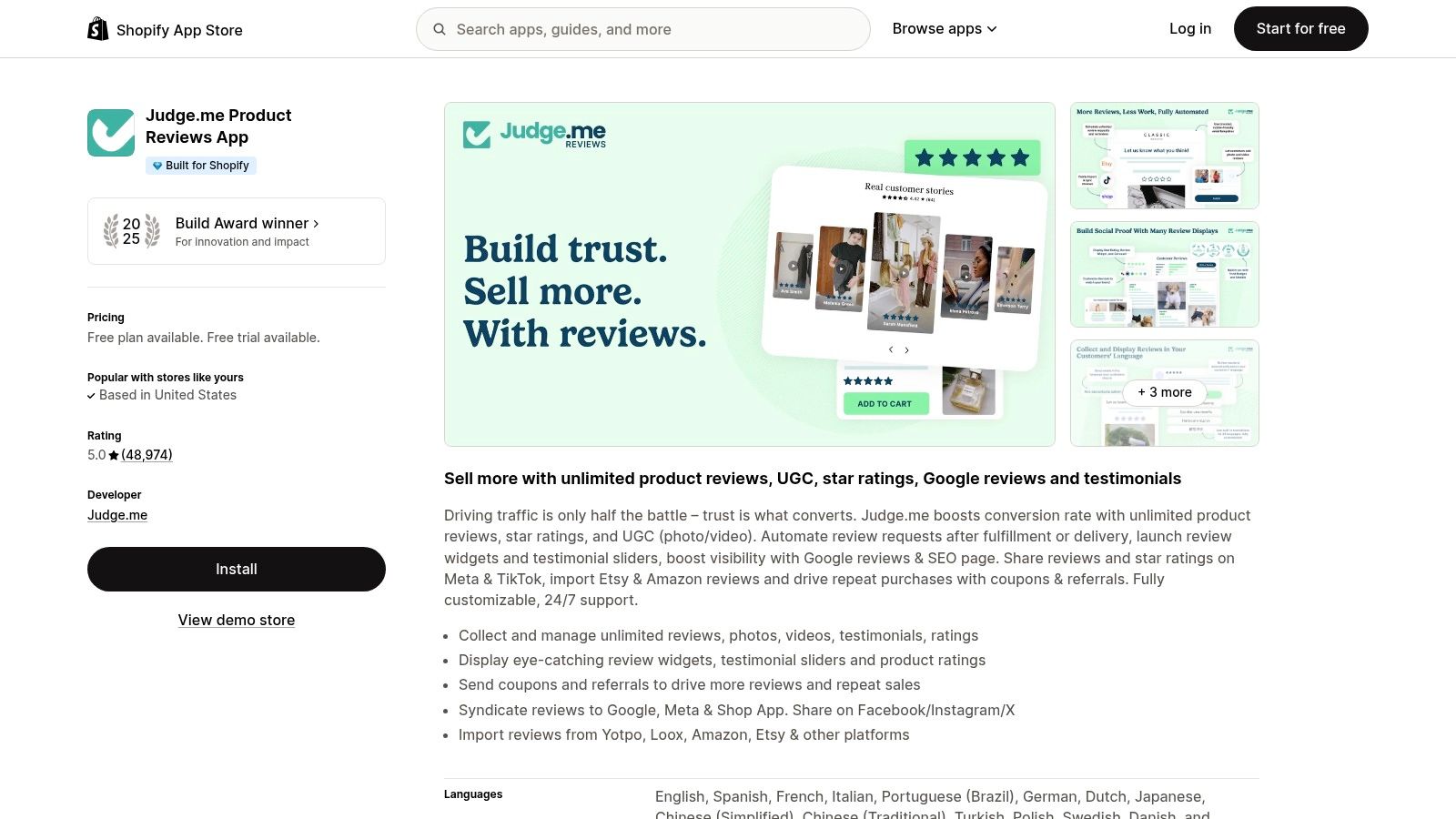
The free plan covers unlimited product and store reviews, which is rare at this price point. Automated requests, widgets, star ratings, testimonial carousels, Google review sync, rich snippets, imports, and connections to Klaviyo and Gorgias handle day-one social proof. The paid plan adds widgets, integrations, and tighter control over how reviews display.
Photo reviews do the heavy lifting for apparel, beauty, and anything where fit or finish is the buyer’s real question. The impact of reviews on sales is real, though a widget pasted on every template does not guarantee incremental revenue. Measure placement before you multiply it.
Replies matter as much as the stars. Answering in your own voice beats a template, and these positive review response examples show what a human reply sounds like. Merchants praise the setup, value, and support, but expect some time in the settings, and the visual polish sits on the paid tier.
A five-star carousel that slows the product page costs more trust than it creates.
Best for: newer or lean Shopify stores that want social proof without a large monthly commitment.
Pricing signal: stay on the free tier until the extra widgets pay for themselves.
3. Klaviyo Email Marketing and SMS
Use Klaviyo when the revenue gap is lifecycle coverage: welcome, browse abandonment, cart, post-purchase, and winback messages all need the same Shopify customer record. It joins email, SMS, WhatsApp, and behavioral triggers, and the Shopify listing shows a 4.7 rating.
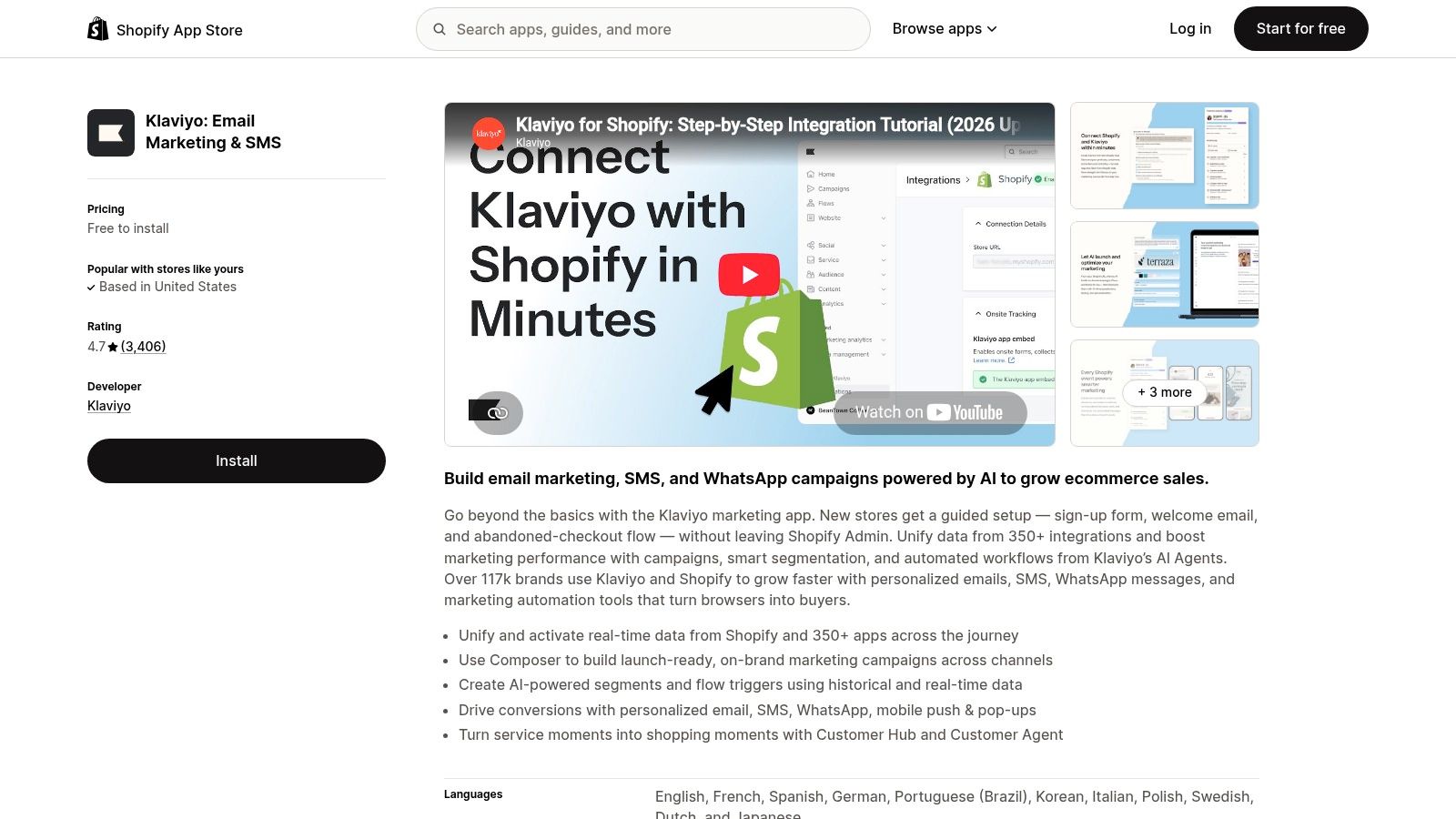
The value is control over timing and audience. Segments can key off what shoppers viewed, bought, or ignored; flows can branch by order value or product; tests can settle subject lines and send windows before you scale spend. The free tier fits smaller lists and limited sending, which makes a first welcome series low risk.
Cost is the trade-off. Paid billing tracks contacts and message volume, so a big import or an SMS-heavy holiday calendar can move the bill before revenue catches up. For a small catalog, the full setup can be more platform than the team will run. If cart SMS already sits with a dedicated sender such as CartBoss, keep one owner for that flow and avoid paying twice to text the same cart.
Best for: stores building one connected email and SMS lifecycle program, with enough list size to justify the learning curve.
Pricing signal: start free, audit contact count monthly, and budget for tier jumps plus message fees.
4. Omnisend
List capture is the problem Omnisend solves first: forms, popups, and email automation live in one Shopify app, with a 4.7 rating on the listing. It fits stores that need steady list growth before they need a heavier data stack.
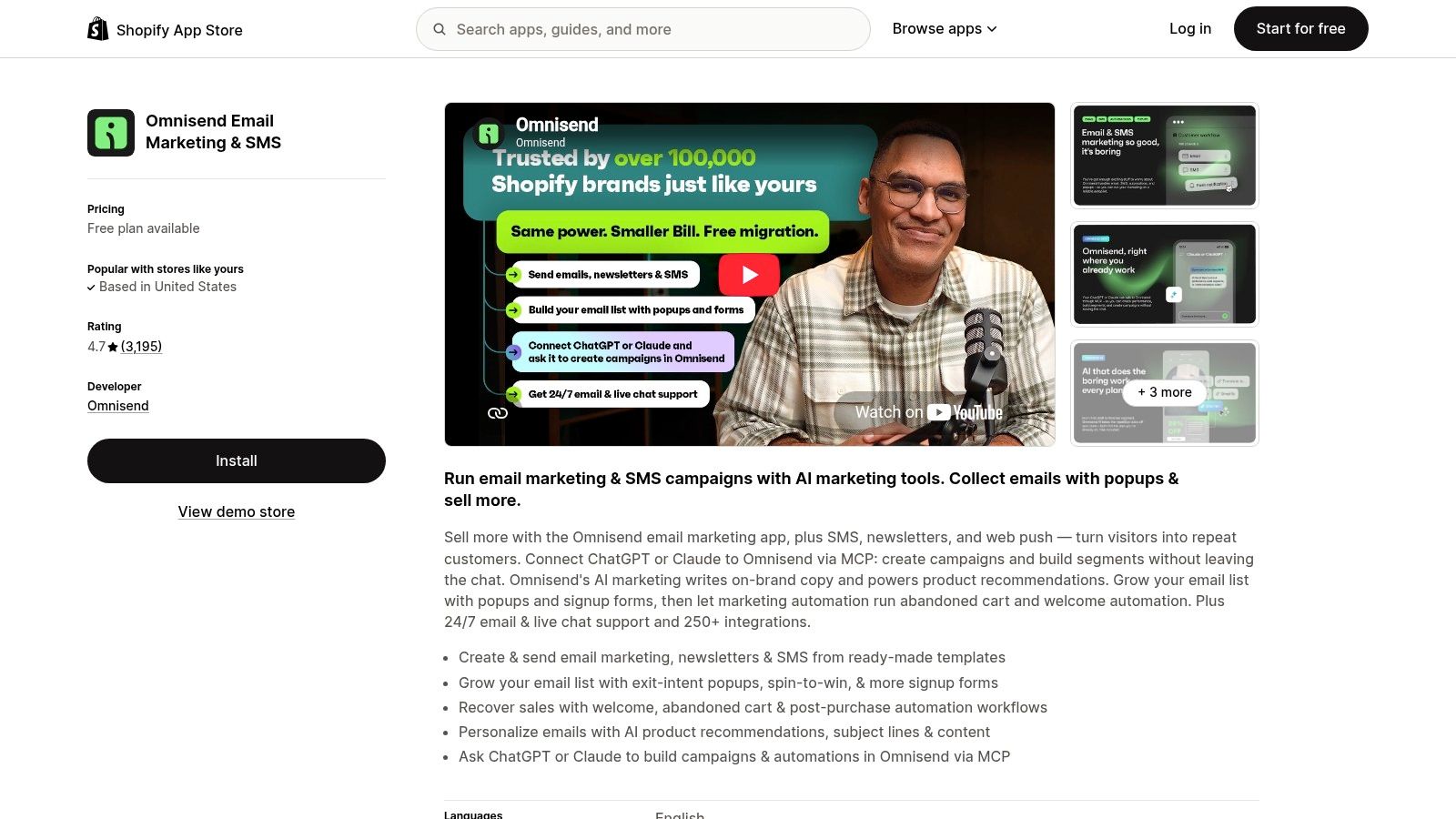
The free plan covers core list tools and automation, and the listing says it includes 24/7 support. Start with welcome, browse, and cart emails, then add SMS or web push only when those flows are already converting. Paid tiers rise with contact volume, advanced reporting sits higher up, and SMS is billed as usage rather than bundled unlimited sends.
Running it beside Klaviyo usually creates two inboxes and two bills while the same carts get mailed twice. If SMS cart recovery is the only gap, this CartBoss vs Omnisend review helps decide whether a focused sender beats another all-in-one login.
Best for: small and mid-size stores that want popups, forms, and email automation in one lighter tool, with SMS added later.
Pricing signal: the free plan is usable. Model the next contact tier plus message fees before a seasonal popup fills the list.
5. PageFly
A focused landing page can make a campaign offer clearer than a crowded theme template. PageFly lets merchants build landing, product, collection, and other pages with drag-and-drop controls. Its Shopify listing shows a 4.9 rating, and the product includes AI-assisted creation.
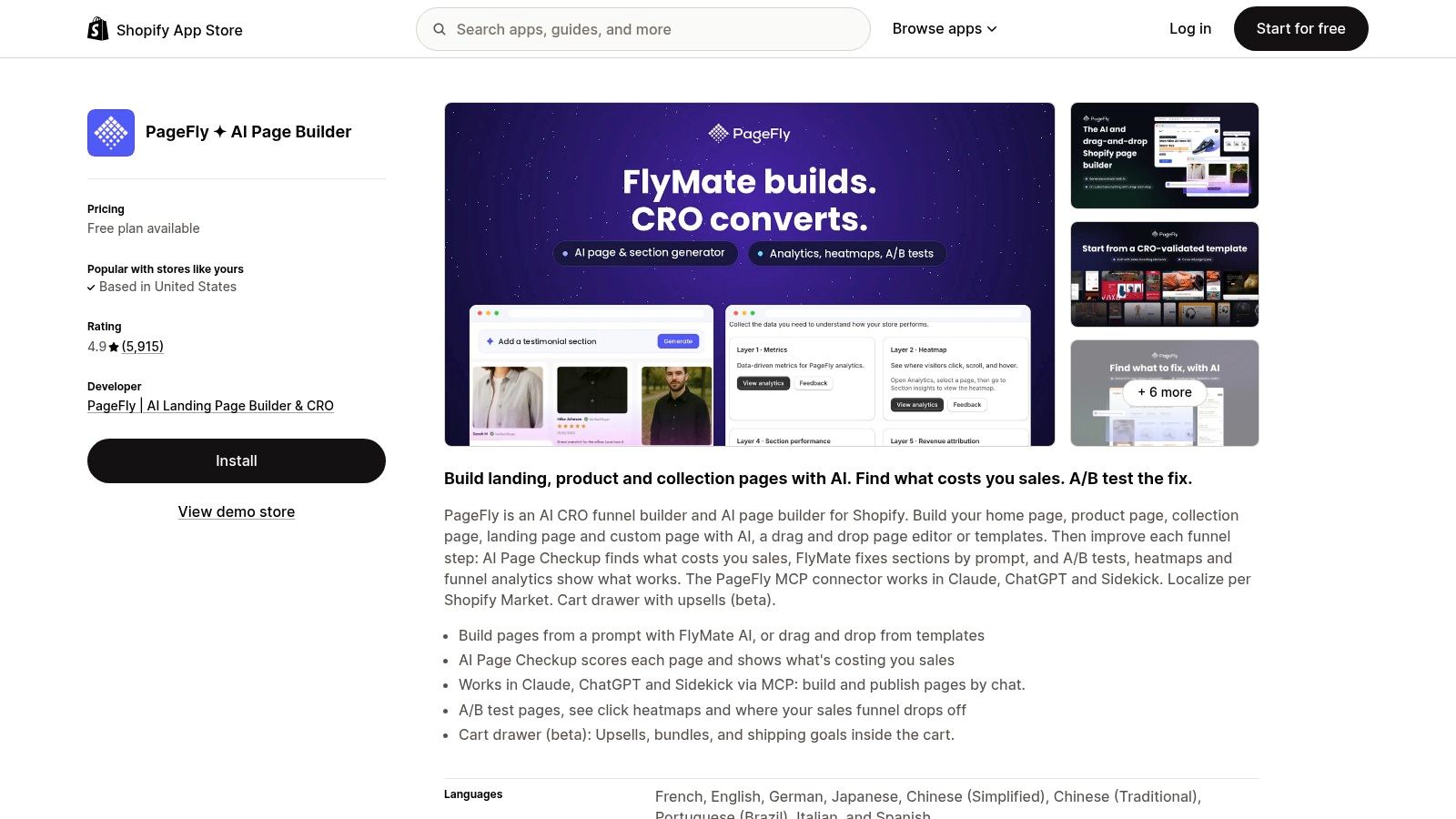
The free plan lets you publish one page or section. Paid plans add publishing slots and tools such as A/B testing and funnel analytics. Templates and integrations speed up production, though custom sections need testing after theme updates.
PageFly suits stores running frequent promotions or testing distinct offers. Before publishing, check mobile speed: an analysis of Shopify store speed scores found lower average mobile performance among stores with at least 10 detected apps than among stores with none detected. Use this guide to optimizing landing pages to review the page after building it.
Best for: campaign-led stores that need more page control than their theme offers and can manage the added testing.
Pricing signal: the free plan covers one page or section. Stores building multiple campaign pages will need a paid tier.
6. Gorgias AI Helpdesk and Chat
Order questions can consume support time that should go to complex cases. Gorgias brings email, live chat, social, SMS, and voice into one workspace, with Shopify order details alongside conversations. Its Shopify listing shows a 4.3 rating, and pricing is ticket-based.
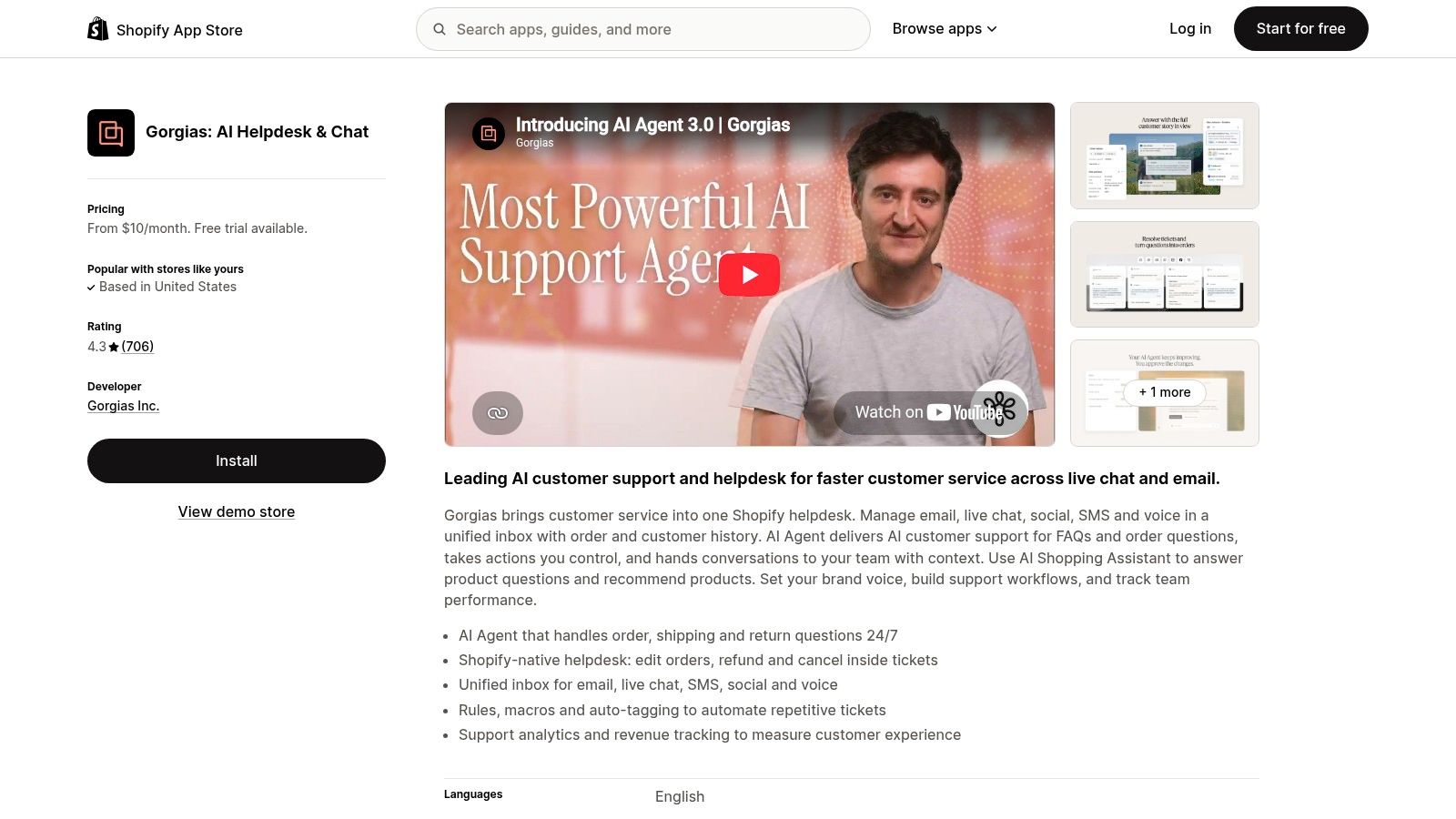
Agents can review order history without switching between tools, while AI can handle common questions. Live chat, reporting, and workflows vary by plan. The entry tier may suit a small support queue; costs rise as ticket volume exceeds the included allowance, and higher tiers can stretch a small team’s budget.
Check data access before connecting the app. Shopify’s app guidance explains that recent-order access covers the last 60 days, while all-order access can include past and future orders and is reviewed for necessity. App listings must also include a privacy policy explaining access, correction, and deletion. For stores using SMS, keep customer-service messages distinct from promotional recovery texts.
Best for: stores managing enough support tickets to need a shared inbox and Shopify order context.
Pricing signal: compare the plan allowance with your expected ticket volume, then account for the cost of moving to a higher tier.
7. Printful Print on Demand
Fulfillment is the job when you want new products without a stockroom. Printful lets you add custom-designed goods, then prints, packs, and ships after the customer pays. The Shopify listing shows a 4.8 rating. You aren’t buying inventory up front.
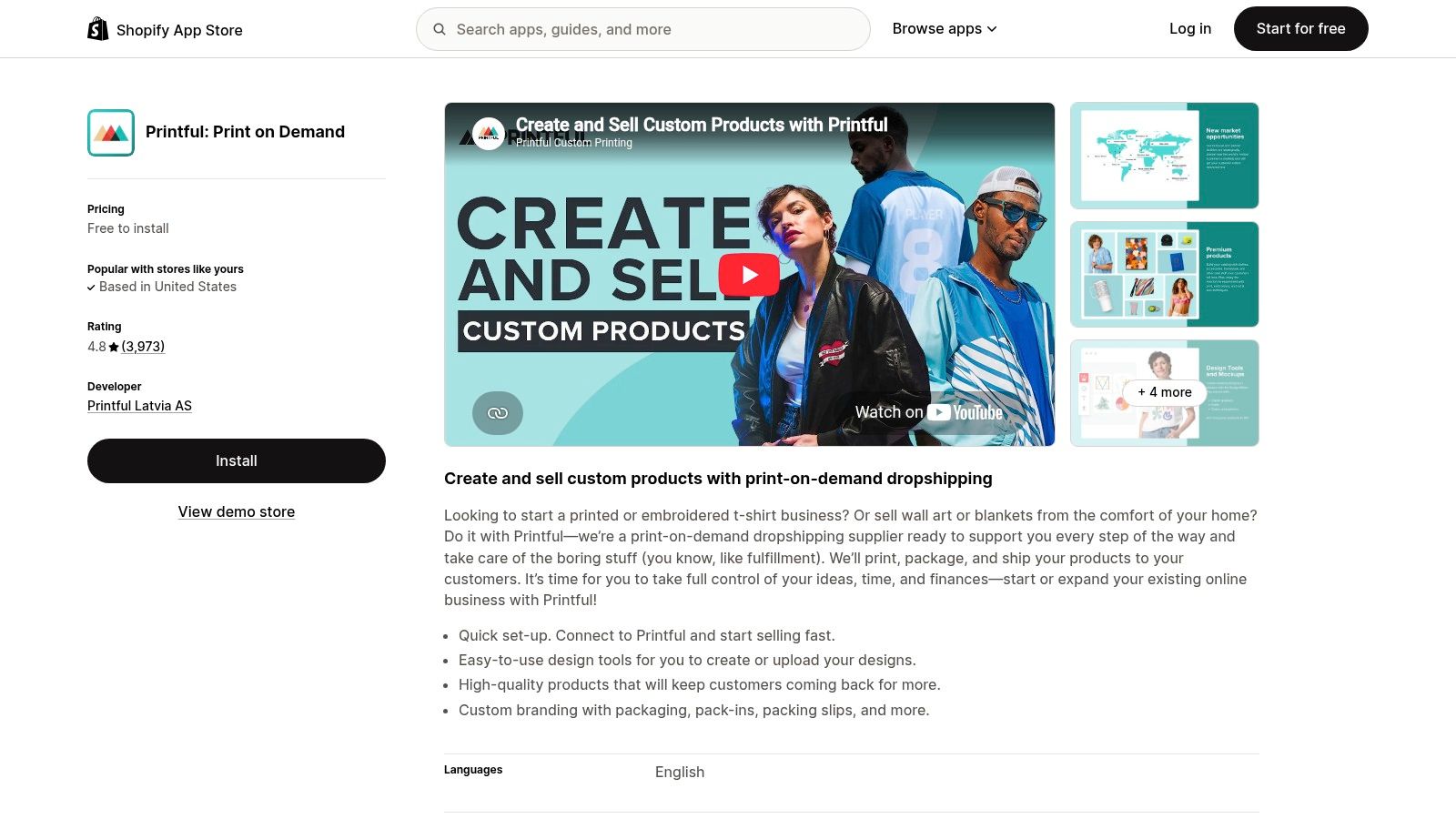
The catalog covers apparel, accessories, home goods, and more. Design tools and a mockup generator help you list faster. Orders sync from Shopify for fulfillment, and you can add custom packaging and pack-ins. That is the right shape for a creator testing merch or a brand extending a catalog without a warehouse bet.
The trade-off is margin and control. Product cost plus shipping sits inside every sale, so a pretty mockup can still be a bad SKU. You also don’t control the floor the way you do with stocked inventory. Quality and delivery vary by item and by the location that prints it. Order samples before you advertise a ship window you can’t keep.
Best for: creators and brands testing merchandise, or stores adding a side catalog without upfront inventory.
Pricing signal: the app plan can be free to start. Your real cost is base product plus shipping on every order. Price the retail number from that, not from the mockup.
Top 7 Shopify Apps: Features Comparison
| Tool | 🔄 Implementation complexity | ⚡ Resource and cost considerations | 📊 Expected outcome | ⭐ Ideal use case and key advantage |
|---|---|---|---|---|
| CartBoss | Low; no-code setup for Shopify and WooCommerce | Messaging costs may vary; pricing details are not fully specified | Automates SMS cart reminders; recovery results vary and are not guaranteed | Abandoned-cart recovery with localized messages and pre-filled checkouts |
| Judge.me Product Reviews | Moderate; review settings and features may take time to learn | Free plan includes unlimited reviews; some advanced features require a paid plan | Collects and displays product and store reviews, including photo and video reviews | Building shopper trust with reviews and social proof |
| Klaviyo: Email Marketing & SMS | Moderate to high; broad automation and segmentation capabilities | Free entry tier; costs can rise with contact count and message volume | Runs coordinated, personalized campaigns and automated customer journeys | Lifecycle marketing across email, SMS, and other channels |
| Omnisend | Moderate; combines campaigns, forms, and automations | Free plan available; contact-based pricing and additional SMS costs | Supports list growth and automated welcome and cart messages | Ecommerce email marketing with the option to add SMS |
| PageFly | Moderate; drag-and-drop editing, with added page maintenance | Free plan permits one published page or section; advanced tools require paid plans | Creates customized storefront pages; testing and analytics can support optimization | Building flexible landing, product, or collection pages without coding |
| Gorgias: AI Helpdesk & Chat | Moderate; setup depends on support channels and workflows | Ticket-based pricing; costs may rise with support volume | Centralizes support conversations and provides Shopify order context | Managing multichannel customer support in a shared workspace |
| Printful: Print on Demand | Low to moderate; connect products and configure fulfillment | No upfront inventory purchase; product and shipping costs affect margins | Produces and fulfills orders on demand without stocking products | Testing or expanding merchandise with automated order syncing |
Build a Lean App Stack That Pays for Itself
Start with one app for one measurable store problem. Cart recovery, reviews, lifecycle marketing, design, support, and fulfillment each have a different job. Two apps sending messages to the same shoppers or building the same pages add cost and maintenance without adding a new function.
Shopify reported 21 million app installs in 2025, up 19.5% from 2024. A popular app still needs to earn its place. Each month, compare its subscription and usage fees with the margin or time it helps recover. If you cannot name the metric it affects, pause it or remove it.
Test one app at a time. Choose a target metric, leave the rest of the stack unchanged, then review results after 30 days. Track recovered margin, review-driven conversion, email revenue, page speed, support time, or product margin, depending on the app’s job. If the result does not justify the cost, cut the app, including one that was free to install.
Start with cart recovery when abandoned checkouts are the clearest source of lost orders. Design changes, loyalty features, and extra popups can wait until you know the checkout path works. Send new campaign traffic only after checkout and recovery messages are in good shape. Otherwise, more visitors can mean more abandoned carts.
For a recovery test, set up one consent-based SMS flow that sends shoppers to a prefilled guest checkout. Judge it by recovered margin after message costs, not the number of texts sent. If the result is negative, fix the offer or checkout experience before adding another marketing app.
CartBoss automates SMS cart recovery for Shopify and WooCommerce, with localized messages, prefilled checkouts, and consent controls. It can suit a store whose main priority is recovering abandoned orders; check the plan and message costs against your expected recovered margin before adding it.