


In the hyper-competitive world of online retail, the customer journey doesn’t conclude at checkout; it ends when the package is safely in their hands. A slow, expensive, or confusing shipping experience is one of the fastest ways to lose a customer for life and fuel cart abandonment. Conversely, a seamless, transparent, and efficient shipping operation builds trust, encourages repeat business, and becomes a powerful competitive advantage. But navigating the complexities of logistics, from rising carrier costs to ever-increasing customer expectations for speed, can feel overwhelming.
This guide cuts through the noise. We’ve compiled a definitive list of nine ecommerce shipping best practices designed to give you a clear roadmap. These aren’t just abstract theories; they are actionable, proven strategies used by top-tier brands to turn their fulfillment process into a profit-driving machine. You will learn precisely how to implement tactics that directly impact your bottom line and customer satisfaction.
Inside, we will cover critical areas such as:
- Optimizing your checkout with multiple carrier options and accurate delivery dates.
- Implementing strategic free shipping thresholds that boost average order value.
- Reducing costs through intelligent packaging and carrier diversification.
- Streamlining your returns process to build loyalty and retain customers.
- Expanding your reach with optimized international shipping strategies.
From cost-saving packaging hacks to sophisticated fulfillment automation, get ready to transform your shipping from a necessary expense into your secret weapon for growth. This collection of ecommerce shipping best practices will provide the specific, detailed insights you need to upgrade your entire operation.
1. Offer Multiple Shipping Options at Checkout
One of the most effective ecommerce shipping best practices is to empower customers with choice right at the checkout. Instead of a one-size-fits-all shipping policy, providing a variety of delivery options allows shoppers to select the service that best aligns with their needs for speed and budget. This simple act of giving control can significantly boost conversion rates and customer satisfaction.

When customers can choose between options like affordable standard ground, faster expedited shipping, or premium next-day delivery, they are less likely to abandon their cart due to shipping constraints. This flexibility caters to every type of buyer, from the price-sensitive planner to the last-minute gift shopper. This strategy transforms shipping from a potential friction point into a feature that enhances the user experience.
How to Implement Multiple Shipping Options
Successfully integrating this practice involves more than just adding rates. It requires a thoughtful approach to presentation and clarity to avoid overwhelming the customer.
- Limit Choices Strategically: Offer 3-4 distinct options to prevent decision paralysis. A good starting point is Standard, Expedited, and Express/Overnight.
- Use Clear Naming Conventions: Avoid carrier-specific jargon. Use simple, descriptive names like “Standard (5-7 Business Days)” or “2-Day Shipping” so customers know exactly what they are selecting.
- Display Estimated Delivery Dates: Show a specific date range (e.g., “Arrives by Oct 26-28”) instead of vague timeframes like “3-5 business days.” This provides concrete information and manages expectations effectively.
- Incorporate In-Store Pickup: For retailers with physical locations, offering a “Click and Collect” or “In-Store Pickup” option provides a free, fast alternative that also drives foot traffic.
This tactic is a cornerstone of a customer-centric checkout process. By giving shoppers control over their delivery, you not only improve the immediate transaction but also build long-term loyalty. To explore this topic further, you can get more information on how to enhance the checkout process on CartBoss.io.
2. Implement Real-Time Order Tracking
A crucial ecommerce shipping best practice is to provide customers with transparent, real-time order tracking. This goes beyond simply sending a tracking number; it involves offering detailed, up-to-date information about an order’s journey, from the moment it is processed to the second it arrives at their doorstep. This proactive communication alleviates post-purchase anxiety and significantly reduces “Where Is My Order?” (WISMO) inquiries, freeing up your customer service team.
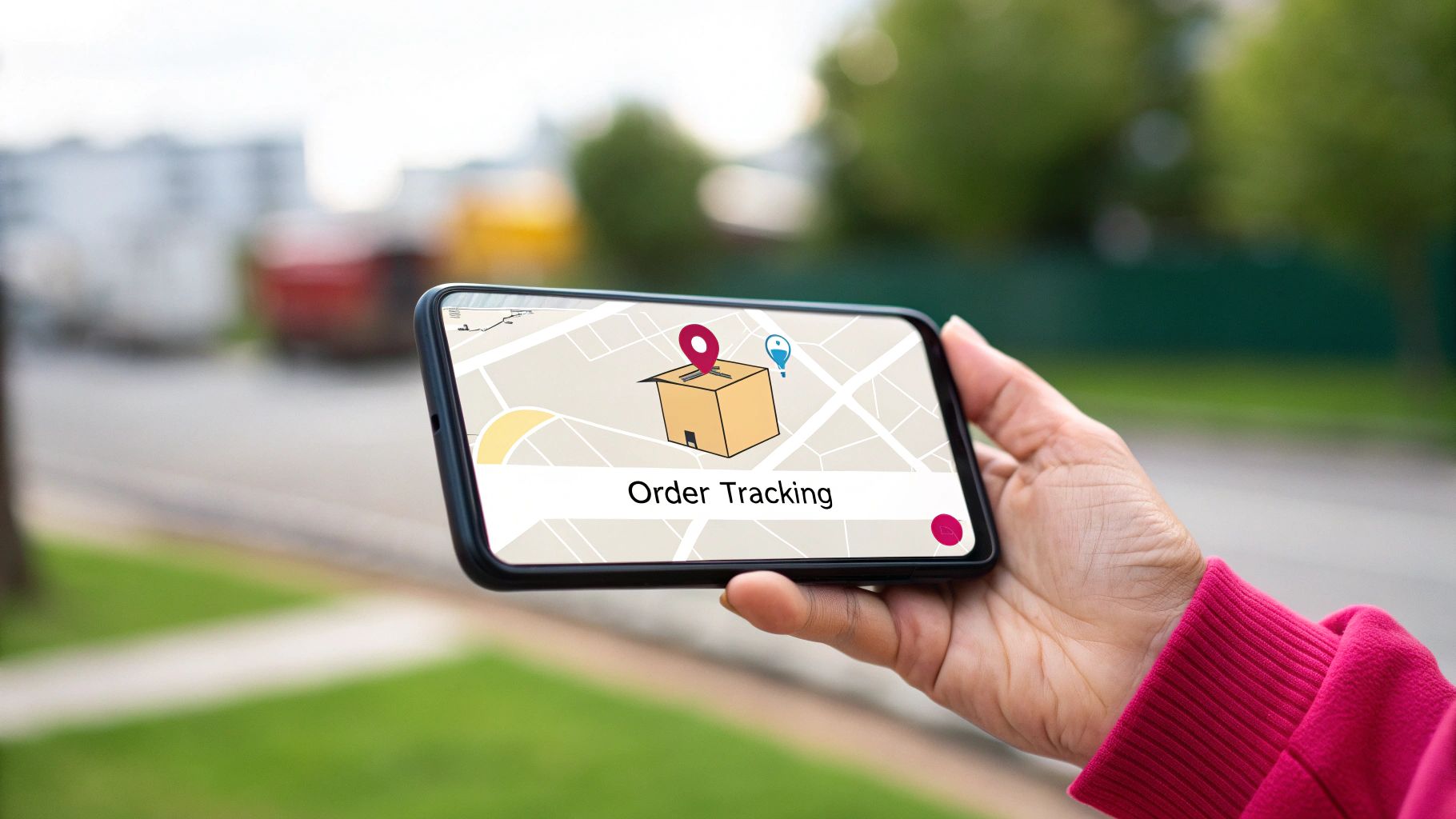
When customers can independently monitor their shipment’s progress, their confidence in your brand grows. Companies like Nike and ASOS have set the standard by offering detailed tracking interfaces that show every step, from fulfillment to transit. This level of transparency transforms the waiting period into an engaging part of the customer experience, turning a potential point of frustration into an opportunity to build trust and anticipation.
How to Implement Real-Time Order Tracking
Integrating effective tracking requires more than just a link. It’s about creating a seamless and informative experience that keeps the customer engaged with your brand post-purchase.
- Send Proactive Notifications: Don’t wait for customers to ask. Automate email or SMS alerts for key milestones like “Shipped,” “Out for Delivery,” and “Delivered.” This keeps them informed every step of the way.
- Provide Easy Access: Embed a clear tracking link directly within order confirmation and shipping notification emails. This removes friction and allows customers to check their order status with a single click.
- Use Branded Tracking Pages: Instead of sending customers to a generic carrier website, use a branded tracking page. Platforms like AfterShip or Route allow you to create a custom page that maintains your brand’s look and feel, and you can even use it to showcase new products or promotions.
- Include Estimated Delivery Windows: In all communications, clearly state the estimated delivery date or window. This manages expectations effectively and provides the certainty customers crave.
This approach is fundamental for building long-term customer relationships. By keeping shoppers informed and in control, you demonstrate a commitment to their experience that extends well beyond the checkout, making it one of the most impactful ecommerce shipping best practices you can adopt.
3. Strategic Free Shipping Thresholds
A powerful ecommerce shipping best practice is to leverage free shipping not as a blanket giveaway, but as a strategic tool to increase your average order value (AOV). By setting a minimum purchase amount to qualify for free shipping, you create a compelling incentive for customers to add more items to their cart. This pricing strategy directly addresses the primary motivation for many shoppers, transforming shipping from a cost center into a profit driver.
This approach, popularized by retail giants like Target with its $35 threshold, encourages customers to spend just a little more to unlock a valuable perk. The psychological effect is significant; shoppers perceive the extra item as a better deal than paying for shipping. When implemented correctly, this tactic can dramatically reduce cart abandonment while simultaneously boosting your overall revenue and profitability.
How to Implement a Free Shipping Threshold
Setting the right threshold requires a data-driven approach to ensure you encourage larger purchases without eroding your profit margins.
- Calculate Your Threshold: Analyze your current AOV and set your free shipping threshold about 20-30% higher. If your AOV is $50, a threshold of $60 or $65 is a great starting point.
- Prominently Display Progress: Use a dynamic banner or message in the cart and at checkout that shows customers how close they are to qualifying. For example, “You’re only $12 away from free shipping!”
- A/B Test Different Amounts: Don’t settle on the first number. Continuously test different thresholds (e.g., $50 vs. $60) to find the sweet spot that maximizes AOV and conversion rate for your specific audience.
- Offer Product Suggestions: When a customer is close to the threshold, recommend relevant, low-cost items that can help them reach the minimum, making the decision to add more even easier.
A well-planned shipping threshold is a cornerstone of modern ecommerce strategy. It perfectly balances customer desire for value with the business’s need for profitability. To understand more about how shipping policies impact customer behavior, you can find further information on how shipping costs influence cart abandonment rates on CartBoss.io.
4. Optimize Packaging for Cost and Protection
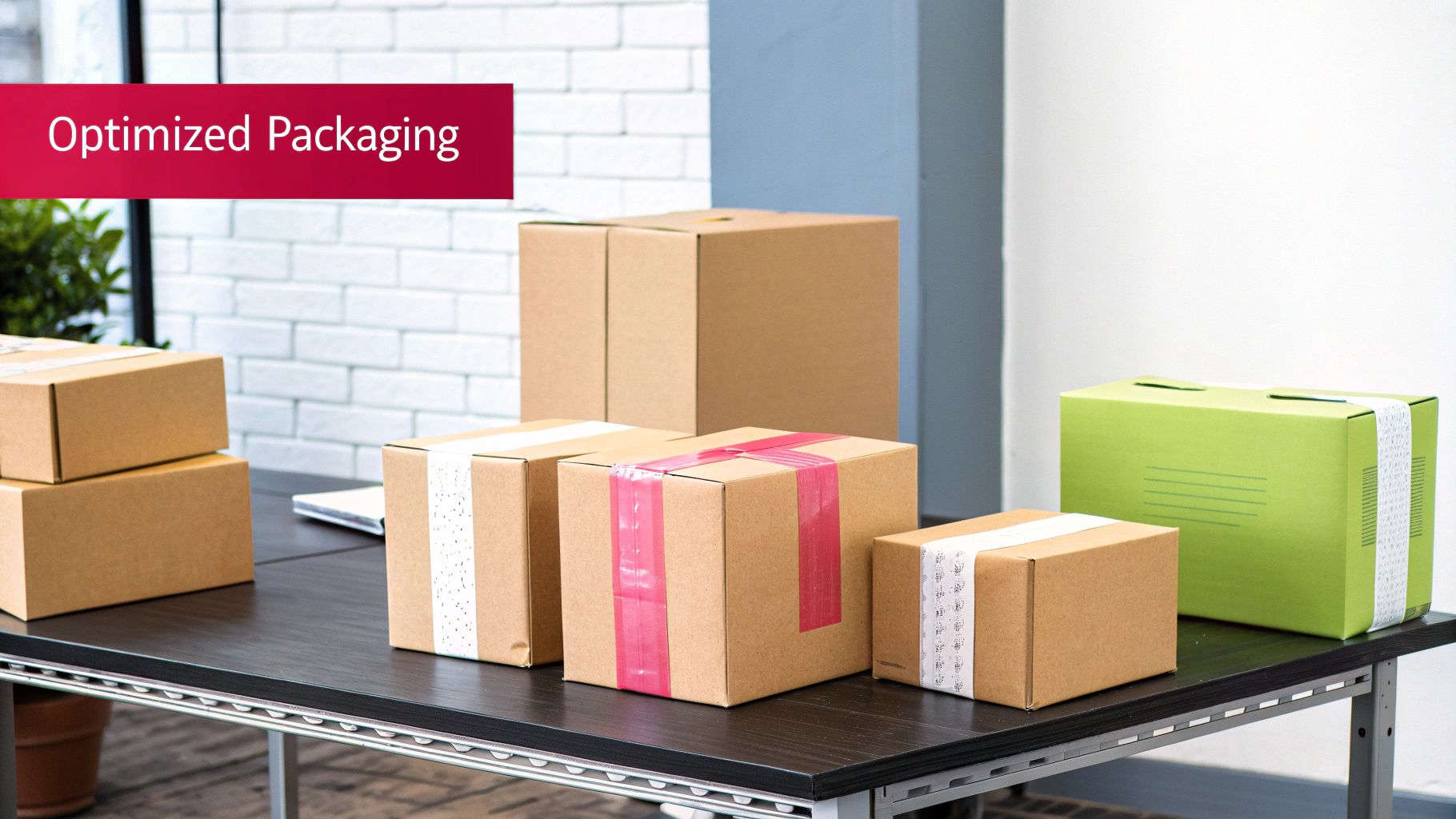
One of the most impactful ecommerce shipping best practices is optimizing your packaging for both cost-efficiency and product safety. Effective packaging goes beyond just a box; it’s a strategic balance that minimizes shipping expenses by reducing dimensional weight while guaranteeing your products arrive in perfect condition. This thoughtful approach can dramatically lower your operational costs and elevate the customer’s unboxing experience.

Shipping carriers often charge based on dimensional weight (DIM weight), which considers the size of a package, not just its actual weight. Using oversized boxes with excessive filler material means you are paying to ship empty space. By selecting right-sized packaging, you can slash these costs, reduce waste, and reinforce a positive brand image. This strategy transforms packaging from a mere expense into a competitive advantage.
How to Implement Optimized Packaging
Successfully optimizing your packaging requires a data-driven approach to materials, box sizes, and protection. It’s about creating a system that is both lean and resilient. Beyond just design, understanding comprehensive packaging operations best practices can significantly enhance your shipping process.
- Invest in Multiple Box Sizes: Maintain an inventory of several standard box sizes that closely match your product dimensions. This minimizes the need for void fill like air pillows or packing peanuts, directly cutting down on DIM weight charges.
- Use Packaging Software: Leverage software to determine the most efficient box size for any given order, especially for multi-item shipments. These tools can analyze product dimensions and recommend the optimal packaging combination.
- Conduct Durability Tests: Don’t assume your packaging is strong enough. Simulate the shipping environment with drop tests and vibration tests to ensure your products are adequately protected against the rigors of transit.
- Consider Branded Packaging: Turn your package into a marketing tool. Custom-branded boxes, tape, or tissue paper can create a memorable and premium unboxing experience, reinforcing brand loyalty. Amazon’s Frustration-Free Packaging and Apple’s minimalist designs are prime examples of this in action.
5. Implement Zone Skipping and Distributed Fulfillment
As your business scales, shipping from a single location becomes increasingly inefficient and expensive. One of the most powerful ecommerce shipping best practices for growth-stage businesses is implementing a distributed fulfillment strategy. This involves strategically placing inventory in multiple warehouses across the country or globe, closer to your customer concentrations. This approach dramatically reduces shipping distances, which in turn lowers costs and accelerates delivery times.
This model, popularized by giants like Amazon, leverages a network of fulfillment centers to minimize travel across shipping zones. By shipping orders from the warehouse closest to the end customer, you can bypass expensive, long-haul shipments, a practice known as zone skipping. This not only cuts down on carrier fees but also enables you to offer competitive 2-day shipping without absorbing crippling costs, meeting modern customer expectations.
How to Implement Distributed Fulfillment
Transitioning to a multi-warehouse system requires careful planning and robust technology. The goal is to make your fulfillment network a competitive advantage rather than an operational headache.
- Analyze Customer Data: Use your historical order data to identify geographic clusters of customers. Start by selecting 2-3 strategic locations that cover the largest segments of your customer base, such as one on each coast of the United States.
- Utilize a 3PL Network: For most businesses, building your own warehouses is impractical. Instead, partner with a third-party logistics (3PL) provider that already has a distributed network of fulfillment centers. This allows you to tap into existing infrastructure without the massive capital investment.
- Deploy Inventory Management Software: Centralized software is critical for managing a distributed inventory. A robust inventory management system (IMS) will sync stock levels across all locations, automatically route orders to the optimal fulfillment center, and prevent stockouts or overselling.
- Start Small and Scale: You don’t need a dozen warehouses overnight. Begin with two locations to test the model. As you gather data on shipping savings and delivery speed improvements, you can strategically expand your fulfillment footprint.
Adopting a distributed fulfillment strategy is a game-changing move that directly impacts your bottom line and customer satisfaction. By bringing your products closer to your customers, you can offer faster, cheaper shipping that rivals the biggest names in ecommerce.
6. Carrier Diversification and Rate Shopping
Relying on a single shipping carrier can expose your business to significant risks, including price hikes, service disruptions, and limited delivery options. One of the most strategic ecommerce shipping best practices is to diversify your carrier mix and actively shop for the best rates on a per-order basis. This approach ensures you are not overly dependent on one provider and can consistently secure the most efficient and cost-effective shipping for every package.
This strategy moves beyond simply having a backup plan. It involves integrating multiple carriers into your daily operations and using technology to automatically compare services. By doing so, you can dynamically select the optimal carrier for each specific shipment based on real-time data for factors like destination, package weight, and required delivery speed. This flexibility is key to optimizing both shipping costs and customer satisfaction.
How to Implement Carrier Diversification and Rate Shopping
Putting this practice into action requires a systematic approach to managing your carrier relationships and leveraging the right technology to automate decision-making.
- Integrate a Multi-Carrier Shipping Platform: Use shipping software like ShipStation, Shippo, or EasyPost that connects to multiple carriers through a single interface. These platforms automatically pull in your negotiated rates and compare them in real-time, allowing you to choose the best option for each order with a single click.
- Negotiate Volume Discounts with Multiple Carriers: Don’t limit your negotiations to a single provider. By spreading your shipping volume across two or three primary carriers (e.g., UPS, FedEx, USPS), you can often secure competitive rates from each. This gives you more leverage and better pricing options.
- Establish a Carrier Performance Scorecard: Regularly track key metrics for each carrier you use, such as on-time delivery rates, damage claims, and tracking accuracy. This data will help you make informed decisions about which carriers to prioritize for certain routes or service levels.
- Set Up Automated Shipping Rules: Configure your shipping software to automate carrier selection based on preset rules. For example, you can create a rule to automatically select USPS for packages under one pound, FedEx for 2-day domestic deliveries, and DHL for international shipments. This saves time and ensures consistent cost savings.
By diversifying your carrier portfolio and actively rate shopping, you build a more resilient and efficient shipping operation. This proactive method is a cornerstone of modern ecommerce shipping best practices, protecting your business from unforeseen disruptions while actively reducing overhead.
7. Accurate Delivery Date Estimation
One of the most crucial ecommerce shipping best practices is setting crystal-clear expectations with accurate delivery date estimates. Vague timeframes like “ships in 3-5 days” create uncertainty and can deter potential buyers. Instead, providing a specific delivery window, such as “Arrives between Oct 26-28,” gives customers the confidence they need to complete their purchase. This transparency is fundamental to building trust and reducing pre-purchase anxiety.
This practice moves beyond simply quoting carrier transit times. It requires a holistic calculation that includes your internal order processing time, warehouse-to-carrier handoff, and the final delivery leg. When done correctly, accurate delivery estimates prevent “Where is my order?” inquiries, minimize cart abandonment, and significantly improve the overall customer experience, as popularized by logistics leaders like Amazon and FedEx.
How to Implement Accurate Delivery Date Estimation
Calculating and displaying precise delivery dates requires connecting your operational realities with your checkout interface. A systematic approach ensures the dates you promise are the dates you can meet.
- Factor in Total Fulfillment Time: Your estimate must include both your internal processing time (the time it takes to pick, pack, and prepare an order) and the carrier’s transit time. Clearly communicate your daily order cut-off times, for example, “Order by 2 PM for same-day shipping.”
- Use Dynamic, Geolocation-Based Estimates: Leverage technology that calculates delivery dates based on the customer’s shipping address in real-time. This provides a much more precise and personalized estimate than a single, static timeframe for all customers.
- Build in a Buffer: It’s wise to add a small buffer (e.g., one day) to your estimates, especially during peak seasons or for destinations known for delays. This under-promises and over-delivers, leading to higher customer satisfaction when an order arrives earlier than expected.
- Account for Non-Business Days: Ensure your calculation logic automatically excludes weekends and public holidays for both your warehouse operations and carrier transit, preventing inaccurate promises.
Mastering this practice is a powerful way to enhance your checkout process and build a reputation for reliability. By giving shoppers a clear and trustworthy delivery timeline, you directly address a key concern and make the buying decision easier. You can discover more strategies on how to improve the customer journey on CartBoss.io’s checkout optimization guide.
8. Streamline Your Returns and Exchanges Process
A customer-friendly returns process is a critical, yet often overlooked, component of ecommerce shipping best practices. Far from being just a cost center, a hassle-free return policy builds immense customer trust and can be a powerful differentiator. When shoppers know they can easily return or exchange an item, they feel more confident making a purchase, which directly impacts conversion rates and encourages repeat business.
Companies like Zappos and Nordstrom built their reputations on liberal, no-questions-asked return policies. This approach transforms a potentially negative experience, a return, into a positive brand interaction. By removing friction with features like prepaid labels and clear instructions, you show customers you value their satisfaction even after the sale is complete, fostering long-term loyalty. A difficult returns process, on the other hand, can quickly sour a customer relationship permanently.
How to Implement a Streamlined Returns Process
Creating an efficient and customer-centric returns system requires a balance between convenience for the shopper and cost control for your business. The goal is to make it as easy as possible without opening the door to abuse.
- Offer Prepaid Return Labels: Including a prepaid, pre-addressed return shipping label in the original package or making one easy to download removes the biggest barrier for customers. This simple step significantly improves the customer experience.
- Provide Multiple Return Options: Cater to different customer needs by offering choices. Options could include mail-in returns via a specific carrier, drop-offs at carrier locations, or even in-store returns for omnichannel retailers.
- Communicate Your Policy Clearly: Your return policy should be easy to find, read, and understand. Use simple language and clearly state the return window, condition of items, and the refund or exchange process.
- Consider “Returnless Refunds”: For low-cost items where the shipping cost of a return would exceed the product’s value, consider issuing a refund without requiring the customer to send the item back. This can save money and create significant customer goodwill.
Implementing a seamless returns process is a strategic investment in customer retention. By reducing the perceived risk of a purchase, you can not only secure the initial sale but also improve overall customer lifetime value. To discover how a smooth post-purchase experience can impact conversions, you can get more information on strategies to reduce cart abandonment on CartBoss.io.
9. International Shipping Optimization
Expanding your business across borders is a powerful growth strategy, but it introduces significant logistical complexities. One of the most critical ecommerce shipping best practices is mastering international shipping optimization. This involves efficiently managing cross-border logistics, from selecting the right carriers to handling customs and duties, to ensure a seamless experience for global customers.
Successfully navigating international shipping can transform your brand from a local player into a global powerhouse. When done correctly, it minimizes delays, prevents unexpected fees for your customers, and builds trust in new markets. This practice turns a potential operational nightmare into a key competitive advantage, unlocking access to a much larger audience.
How to Implement International Shipping Optimization
A proactive and transparent approach is essential for managing the challenges of cross-border commerce. This involves careful planning around documentation, costs, and compliance.
- Partner with Specialists: Don’t go it alone. Work with carriers like DHL or services like Borderfree that specialize in international ecommerce. They provide the infrastructure, expertise, and tools needed to navigate complex global shipping networks and customs procedures.
- Communicate Duties and Taxes Clearly: This is non-negotiable. Use a Delivered Duty Paid (DDP) shipping option or a calculator at checkout to show customers the total landed cost, including all taxes and fees. Transparency prevents sticker shock, reduces refused deliveries, and improves customer satisfaction. For merchants operating internationally, a deep understanding of VAT management is essential to avoid surprises and optimize margins. For French-speaking entrepreneurs, it’s worth reviewing how to handle la TVA sur les frais de port to ensure compliance and profitability.
- Automate Customs Documentation: Manually filling out customs forms (like the CN22 or CN23) is time-consuming and prone to error. Use shipping software that automatically generates and populates these documents with the correct product information and HS codes to expedite customs clearance.
- Consider Regional Fulfillment: For high-volume international markets, storing inventory in regional fulfillment centers can dramatically reduce shipping times and costs. This localization strategy places your products closer to the end customer, creating a more domestic-like delivery experience.
By optimizing your international shipping processes, you make your products accessible and appealing to a global customer base. To explore this topic further, you can learn more about how to create an effective localization strategy on CartBoss.io.
Best Practices Comparison for 9 Ecommerce Shipping Strategies
| Strategy | Implementation Complexity 🔄 | Resource Requirements ⚡ | Expected Outcomes 📊 | Ideal Use Cases 💡 | Key Advantages ⭐ |
|---|---|---|---|---|---|
| Offer Multiple Shipping Options at Checkout | High 🔄🔄 | Moderate ⚡ | Reduced cart abandonment, higher satisfaction 📊📊 | E-commerce with diverse customer preferences | Customer choice, revenue increase, satisfaction ⭐⭐ |
| Implement Real-Time Order Tracking | High 🔄🔄 | Moderate to High ⚡ | Fewer support queries, trust building 📊📊 | Stores needing transparency and proactive support | Increased trust, improved experience ⭐⭐ |
| Strategic Free Shipping Thresholds | Moderate 🔄 | Low to Moderate ⚡ | Higher average order value, competitive pricing 📊 | Retailers seeking order size growth | Boosts AOV, pricing clarity, cost barrier reduction ⭐⭐ |
| Optimize Packaging for Cost and Protection | Moderate to High 🔄🔄 | Moderate to High ⚡ | Lower shipping costs, less damage, sustainability 📊 | Businesses focusing on cost and eco-friendly packaging | Cost savings, brand image, damage reduction ⭐⭐ |
| Zone Skipping and Distributed Fulfillment | Very High 🔄🔄🔄 | High ⚡⚡ | Reduced shipping times/costs, better service 📊📊 | Large-scale operations with broad customer base | Faster delivery, cost efficiency, redundancy ⭐⭐ |
| Carrier Diversification and Rate Shopping | High 🔄🔄 | Moderate to High ⚡ | Optimized costs and delivery quality 📊 | Businesses wanting carrier flexibility | Cost savings, risk reduction, improved performance ⭐ |
| Accurate Delivery Date Estimation | Moderate 🔄 | Moderate ⚡ | Increased satisfaction, fewer inquiries 📊 | Any e-commerce needing precise delivery promises | Trust building, better planning ⭐⭐ |
| Streamlined Returns and Exchanges Process | Moderate 🔄 | Moderate ⚡ | Increased loyalty and repeat sales 📊 | Retailers emphasizing customer service | Customer confidence, reduced support load ⭐⭐ |
| International Shipping Optimization | High 🔄🔄 | High ⚡⚡ | Market expansion, competitive edge 📊 | Cross-border sellers | Global reach, revenue growth, compliance ⭐⭐ |
From Shipped to Sold: Your Next Steps in Fulfillment Mastery
Navigating the complex world of ecommerce shipping can feel like a monumental task, but as we’ve explored, it’s a journey of strategic, incremental improvements. The nine pillars we’ve detailed, from checkout options to international logistics, aren’t just a checklist; they are the fundamental building blocks of a modern, resilient, and customer-centric retail operation. Moving beyond a purely operational view of fulfillment is the first and most critical step. Shipping is no longer a cost center to be minimized but a strategic lever for growth, customer loyalty, and brand differentiation.
By mastering these ecommerce shipping best practices, you transform a logistical necessity into a powerful competitive advantage. Each package that leaves your warehouse is a direct touchpoint with your customer, a physical manifestation of your brand promise. A well-executed shipping strategy ensures that this final interaction is as positive and memorable as the first click on your website.
Synthesizing Your Strategy: Key Takeaways
The path to fulfillment mastery doesn’t require a complete overhaul overnight. Instead, it involves a focused, iterative approach. Let’s distill the core principles into actionable takeaways:
- Customer-Centricity is Non-Negotiable: Every practice, from offering multiple shipping options and clear tracking to providing accurate delivery dates, revolves around managing customer expectations. A transparent, reliable, and flexible shipping experience builds trust and encourages repeat business.
- Cost Optimization is a Game of Inches: True savings aren’t found in a single silver bullet. They are accumulated through a combination of optimized packaging, strategic carrier diversification, real-time rate shopping, and intelligent fulfillment models like zone skipping. Each small adjustment contributes to a healthier bottom line.
- Efficiency is Driven by Technology and Process: Manual processes are the enemy of scale. Implementing automation for tasks like rate shopping and order tracking, alongside creating a streamlined returns process, frees up valuable resources and minimizes human error. This allows you to focus on strategy rather than day-to-day firefighting.
Your Action Plan for Implementation
Feeling overwhelmed by the possibilities? Don’t be. The key is to prioritize based on your specific business needs and customer feedback. Here’s a simple framework to get started:
- Audit Your Current Process: Begin by analyzing your existing shipping data. Where are your highest costs? What are the most common customer complaints? Are your cart abandonment rates tied to shipping costs or delivery times? This data-driven audit will reveal your biggest opportunities.
- Target the Low-Hanging Fruit: Identify one or two practices that will deliver the most immediate impact. For many businesses, this could be implementing a strategic free shipping threshold or renegotiating carrier rates. For others, it might be simply improving the clarity and accessibility of order tracking information.
- Measure, Iterate, and Expand: Once you’ve implemented a change, track its performance obsessively. Did your conversion rate improve? Did shipping-related support tickets decrease? Use these insights to refine your approach and then move on to the next area of opportunity. Consistently applying these ecommerce shipping best practices will compound your results over time.
Ultimately, the goal is to create a fulfillment engine that is not just efficient but also delightful. In a marketplace where consumers have endless choices, the brand that delivers on its promises, literally and figuratively, is the one that wins. Your shipping strategy is your final handshake with the customer. Make it a firm, confident, and reassuring one.
Tired of losing sales after the “Add to Cart” click? CartBoss helps you recover abandoned carts and re-engage customers using automated, personalized SMS and WhatsApp messages, which can even include updates on shipping options to bring them back. Bridge the gap between interest and purchase by visiting CartBoss to see how you can turn abandoned carts into revenue.