



So, what exactly is an SMS marketing campaign? It’s simply using text messages to send promotions, updates, and special offers directly to customers who’ve given you the green light to contact them. It’s an incredibly effective strategy because it completely cuts through the digital noise, landing your message right on the device people are glued to all day.
This direct line to your customer’s pocket is what drives immediate engagement and sales in a way that few other channels can even touch.
Why SMS Marketing Is a Must-Have Channel
In a world of overflowing email inboxes and ever-changing social media algorithms, SMS marketing is a breath of fresh air. It offers a direct, personal connection to your audience that feels like a one-on-one conversation in a packed room.
While email is fantastic for longer stories and newsletters, SMS is the king of creating urgency and getting people to act now. That makes it an absolutely essential tool for any online store looking to boost sales.
And this isn’t just a fleeting trend. It’s a real shift in how shoppers want to hear from brands they like. The numbers don’t lie. Global spending on SMS marketing is set to blow past $327 billion. Here in the United States, the market is expected to hit $12.6 billion by 2025.
What’s fueling this growth? Pure performance. SMS boasts an unbelievable 98% open rate and a 45% response rate. Those are figures that leave traditional email marketing in the dust.
To really grasp the difference, let’s put the two channels side-by-side.
SMS vs Email Marketing Engagement at a Glance
This table offers a quick comparison of key performance metrics between SMS and traditional email marketing. It really highlights the distinct advantages of text-based communication.
| Metric | SMS Marketing | Email Marketing |
|---|---|---|
| Open Rate | 98% | ~21% |
| Response Rate | 45% | ~6% |
| Click-Through Rate | 19% | 2.6% |
| Time to Open | Within 3 minutes | 90 minutes+ |
As you can see, the numbers for SMS are in a different league entirely. This isn’t about replacing email, but about understanding where each channel shines. For immediate impact, SMS is the clear winner.
The Power of Immediacy and Personalization
What makes a simple text so powerful? Its speed. Most text messages are read within just a few minutes of landing on a phone. This opens up a ton of opportunities for time-sensitive promotions that get real results, fast.
Think about it: a “Flash sale for the next 3 hours!” text is way more likely to convert than an email that might not even be seen until the next day.
This power gets even stronger when you add personalization into the mix. A great SMS campaign doesn’t feel like a mass broadcast; it feels like a helpful tip from a friend. Using the data you have, you can send super-relevant offers like:
- Abandoned Cart Reminders: A gentle nudge to shoppers who left items behind.
- Back-in-Stock Alerts: Letting someone know the product they wanted is finally available again.
- Post-Purchase Follow-Ups: A quick “thank you” or a request for a review.
By speaking directly to a customer’s recent actions or interests, you transform a simple text into a valuable, revenue-generating interaction. It’s this blend of speed and relevance that builds lasting customer relationships.
Expanding Your Direct Messaging Strategy
While SMS is the cornerstone of a solid direct-to-customer messaging plan, it’s smart to think about other platforms where your audience hangs out. Different channels can play different roles.
As you build out your SMS strategy, it’s worth exploring how to master WhatsApp Business for customer service. Adding another direct channel can complement your efforts and create a more seamless experience for your customers, no matter where they prefer to chat.
Building Your Subscriber List the Right Way
A powerful SMS marketing campaign starts long before you ever hit “send” on that first text. It all begins with building a list of subscribers who genuinely want to hear from you. This isn’t just about collecting phone numbers; it’s about earning trust and making sure every single person on your list gave you explicit permission to be there.
The absolute foundation of a healthy, high-converting list is consent. Without it, you’re not just annoying potential customers—you’re stepping into some serious legal territory. Regulations like the Telephone Consumer Protection Act (TCPA) in the US and GDPR in Europe have strict rules about how you can contact consumers via text.
Think of it this way: their phone’s notification screen is personal space. You need a direct invitation to show up there. That means no pre-checked boxes or murky language. Your opt-in process has to be crystal clear.
Effective and Compliant Opt-In Methods
So, how do you get that invitation? By making it easy and valuable for customers to say “yes.” Instead of just asking for a number, you need to offer a compelling reason for them to hand it over.
Here are a few proven strategies I’ve seen work time and time again:
- Website Pop-Ups: A well-timed pop-up offering a 15% discount on their first order in exchange for their phone number is a classic for a reason. It’s an immediate, tangible reward.
- Checkout Opt-Ins: The checkout page is a high-intent moment. Adding a simple, unchecked box that says something like, “Text me with shipping updates and exclusive offers” works wonders.
- QR Codes in Physical Spaces: If you have a brick-and-mortar store or go to events, plaster QR codes on your packaging or signage. A quick scan can take people directly to your sign-up form.
The key is to weave these opt-in points naturally into the customer journey. You’re not trying to trick anyone; you’re presenting an opportunity they’ll actually want to take.
Key Takeaway: Always prioritize quality over quantity. A smaller list of highly engaged subscribers who willingly opted in will always crush a massive list of unconsenting contacts. This quality list is your single biggest asset.
Crafting the Perfect Opt-In Invitation
The language you use to invite people matters. A lot. It needs to be painfully clear about what they’re signing up for and what they get in return. Vague promises just don’t cut it.
If you need some inspiration, check out these high-converting SMS opt-in messages that can help you find the perfect wording for your brand.
Here’s a practical example of strong opt-in language for a website pop-up:
“Join the VIP Club!
Get 20% off your order today + exclusive access to future sales. Enter your phone number to get your code.”
This copy is effective because it:
- Offers an immediate, tangible benefit: a 20% discount right now.
- Promises future value: they’ll get “exclusive access” later on.
- Sets clear expectations: they know what kind of messages are coming.
By focusing on consent and value from day one, you build a subscriber list that’s not only compliant but also primed for engagement and sales. These are the people who will actually look forward to your texts, making every campaign you run that much more successful.
Crafting SMS Messages That Actually Convert
Writing for SMS is a completely different ballgame than email. You’ve only got 160 characters to work with, which means every single word has to earn its spot. There’s no room for fluff—just clear, punchy copy that gets someone to take action, and fast.
The best SMS messages I’ve seen feel personal and create a bit of urgency, but they never feel spammy. It’s a delicate balance. You want your subscriber to feel like they’re getting an exclusive insider tip, not just another marketing blast. The key is nailing three things: a clear value proposition, a sense of immediacy, and a powerful call-to-action (CTA).
Writing Copy That Clicks
To make your texts impossible to ignore, lead with the good stuff. What’s in it for the customer? Is it a discount? Early access? A solution to their problem? Whatever it is, put it front and center. Don’t bury the lead.
Next, you need to add a little urgency. Phrases like “Ends tonight,” “Limited stock,” or “Just for you” nudge people to act now instead of later. The trick is to be authentic. If a sale genuinely ends at midnight, saying so is great marketing. If you’re just making it up, you’ll burn through your audience’s trust pretty quickly.
Finally, your CTA has to be unmistakable. Vague instructions like “Check it out” just don’t cut it. You need strong, action-oriented language that tells them exactly what to do next.
Here are a few CTAs that get the job done:
- “Shop the flash sale now” is direct and leaves no room for confusion.
- “Claim your 25% off here” puts the focus on the benefit they’re about to get.
- “Finish your order before it’s gone” combines a clear action with a touch of FOMO (fear of missing out).
Pro Tip: Always, always include a direct link to the specific product or landing page. Forcing a customer to hunt for the deal is the fastest way to lose a sale. A tool like CartBoss handles this automatically by sending pre-filled checkout links, which cuts out a ton of friction for the buyer.
Real-World SMS Examples for Different Scenarios
The perfect message always depends on the situation. You wouldn’t send the same text for an abandoned cart that you would for a new product launch. To get a feel for different copywriting angles, I highly recommend checking out these SMS marketing message examples and templates. You’ll find something to fit just about any campaign you can dream up.
Let’s walk through a few common scenarios.
1. The Flash Sale Announcement
This one is all about hitting them with value and urgency.
- Example: “VIP ALERT! Our Summer Collection is 40% OFF for the next 4 hours only. Don’t miss out! Shop now: [link]”
2. The Abandoned Cart Reminder
The goal here is to be helpful, not pushy. Just a gentle nudge about what they left behind.
- Example: “Hey [Name], still thinking it over? The items in your cart are waiting for you. Complete your order before they sell out: [link]”
3. The Product Launch Teaser
This is where you build some hype and make your subscribers feel like insiders.
- Example: “Psst… Something amazing is dropping tomorrow at 9 AM EST. As a VIP, you get first dibs. Be ready!”
Choosing Between SMS and MMS
While standard SMS is just plain text, MMS (Multimedia Messaging Service) lets you send images, GIFs, or even short videos. For products that need to be seen to be believed, this can be a total game-changer.
So when should you use which?
Use MMS when:
- You’re dropping a new product and need to show it off. A picture is worth a thousand words, right?
- You’re running a sale on a visually stunning collection, like clothing or home decor.
- A fun GIF can inject some personality or humor that you just can’t get with text alone.
Stick with SMS when:
- The message is purely functional, like a shipping update.
- You’re going for a clean, minimalist vibe.
- Your goal is a simple, powerful call-to-action without any visual distractions.
Making the right choice here ensures your message lands with the biggest impact possible, every single time.
Putting Your SMS Marketing on Autopilot
Once you’ve nailed crafting individual messages, it’s time to unlock the real power of SMS: automation. This is where you build systems that engage customers and drive sales around the clock—even while you’re sleeping or focused on other parts of your business.
It’s all about creating timely, relevant touchpoints that feel personal but run entirely on their own.
These automated workflows, often called “flows” or “sequences,” get triggered by specific things your customers do. A new subscription, an item added to a cart, or a completed purchase can all kick off a pre-planned series of messages. This approach turns your SMS strategy from a bunch of one-off blasts into a smart, responsive system that just works.
The Essential Automated Workflows
While you can get creative and automate almost any scenario, there are three core workflows every online store absolutely needs to have in place. These sequences cover the most critical points in the customer journey and deliver a massive return. If you’re new to automation, start right here.
- The Welcome Series: This is your first impression. The moment someone subscribes, an automated welcome text should hit their phone. This is where you deliver their promised discount and set the stage for what kind of messages they can expect from you.
- Abandoned Cart Reminders: This is, without a doubt, the most profitable automation you’ll ever set up. A strategically timed text can bring back a huge chunk of would-be lost sales. CartBoss, for example, is brilliant at this—it sends perfectly timed reminders with pre-filled checkout links, making it ridiculously easy for shoppers to finish their purchase.
- Post-Purchase Follow-Ups: The conversation shouldn’t stop at checkout. Use automated texts to thank customers, ask for a review, or maybe slide in a discount for their next purchase to keep them coming back.
To get an even better handle on setting these up, check out a comprehensive guide to SMS marketing automation for some more advanced strategies.
The Rise of AI-Powered Personalization
Automation is getting even smarter with the help of AI. The trend is obvious, as businesses globally are pouring more money into SMS marketing. Around 67% of companies plan to increase their SMS budgets, simply because it works.
It’s not just about sending more texts, though. Over half of businesses (50.4%) are now using AI tools to make their campaigns more personal, and a staggering 81% of them report seeing better results because of it.
Instead of sending the same static message to everyone, AI can dynamically adjust offers, timing, and even tone based on a customer’s real-time behavior. This means your automated SMS campaign is constantly learning and adapting to send the right message at the perfect moment. For a deeper dive, you can learn more about https://www.cartboss.io/blog/sms-marketing-automation/ on our blog.
Key Insight: The goal of automation isn’t to sound like a robot; it’s to create consistently personal experiences at scale. A great workflow feels less like marketing and more like helpful, one-on-one customer service.
This infographic breaks down the core metrics you should be tracking to optimize your automated campaigns, from that first text all the way to the final sale.
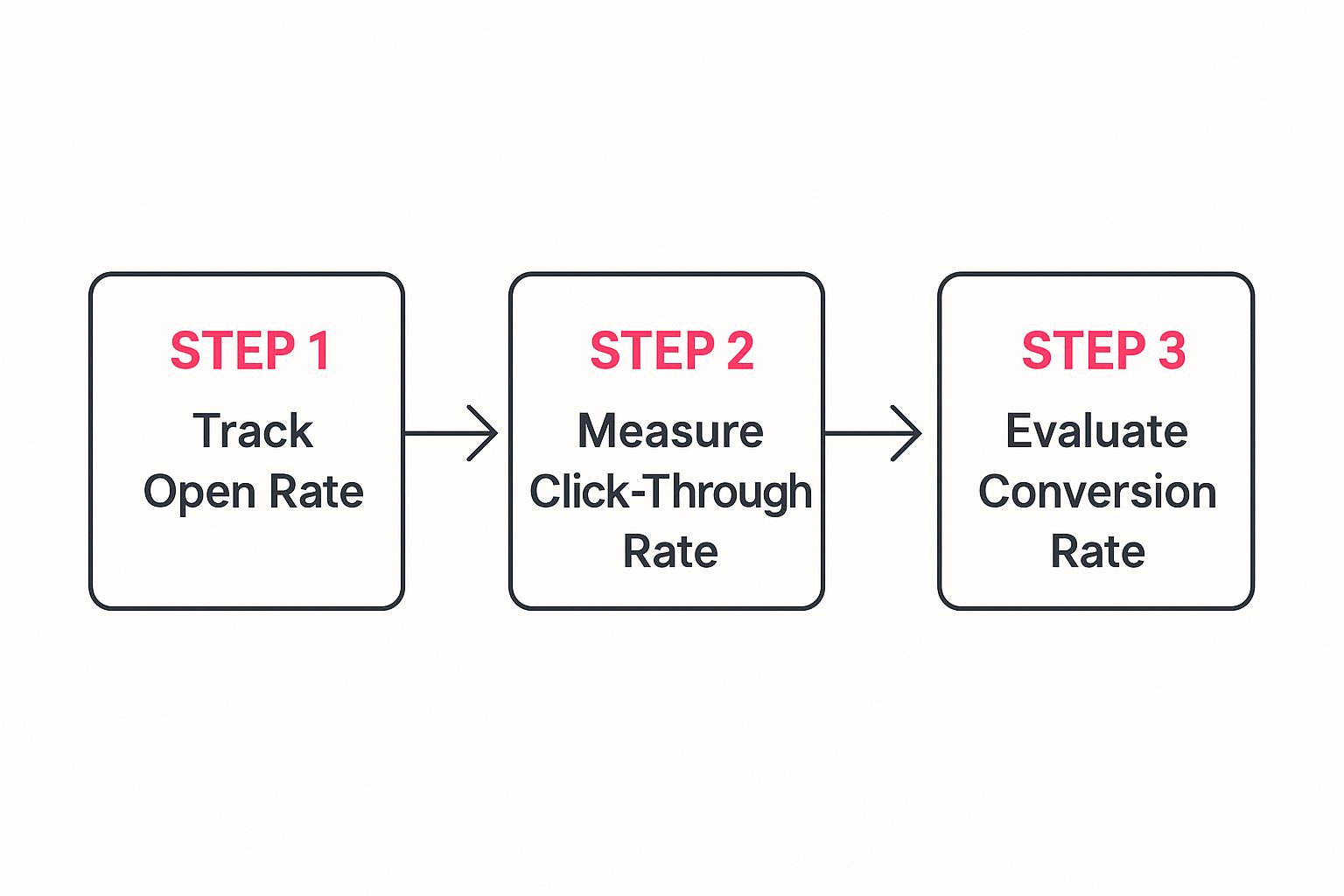
As you can see, success isn’t just about getting people to open the message. It’s about guiding them to click that link and, ultimately, make a purchase.
How to Measure and Optimize Your Campaigns
https://www.youtube.com/embed/gXVsYaEikSU
Launching your SMS marketing campaign is just the first step. The real magic happens when you start digging into the data and making smart adjustments based on what you find.
Without tracking performance, you’re basically flying blind. You end up wasting time and money on messages that just aren’t hitting the mark. True optimization is a cycle: you measure, you learn, and you refine. By focusing on the right numbers, you can turn a good campaign into a great one that consistently brings in revenue for your store.
Key Performance Indicators That Matter
Don’t get bogged down in a sea of vanity metrics. For SMS marketing, you need to zero in on the numbers that directly tie to engagement and, most importantly, profit.
Here are the essential KPIs to start tracking:
- Click-Through Rate (CTR): This is the percentage of subscribers who actually clicked the link in your message. A high CTR tells you the copy and offer were compelling enough to grab their attention.
- Conversion Rate: This tracks the percentage of people who completed a desired action—like making a purchase—after clicking your link. It’s the ultimate measure of whether your message worked.
- Unsubscribe Rate: This shows how many people opted out after getting your text. If you see a sudden spike, it could be a red flag that your messages are too frequent or not relevant enough.
- Return on Investment (ROI): This is the big one. It tells you exactly how much revenue you’re making for every dollar you spend on your SMS campaigns.
For a deeper dive into evaluating performance, check out our guide on how to measure marketing campaign success. It provides a solid framework for making sense of these numbers.
The Power of A/B Testing Your Messages
Once you have your baseline metrics, it’s time to start experimenting. A/B testing, also known as split testing, is your best friend for making steady improvements. The concept is simple: send two slightly different versions of a message to small, separate groups of your audience and see which one performs better.
The goal of A/B testing is to make small, data-driven changes that lead to significant gains over time. Never assume you know what will work best—let your customers’ actions tell you.
Try testing these elements one at a time to get clean results:
- Message Copy: Experiment with different tones, lengths, or value propositions.
- Call-to-Action (CTA): Test something simple like “Shop Now” against “Grab Your Deal.”
- Offer: Does a 20% discount pull better numbers than an offer for free shipping?
- Send Time: See if your audience is more active at 12 PM versus 6 PM.
It’s worth noting that in 2025, the Americas region has become a leader in SMS marketing, with usage soaring by 42%. A key stat from this growth is the incredible 12% click-through rate, which is roughly five times more effective than email. This success is directly tied to using SMS for timely promotions—a strategy you can perfect with diligent A/B testing. You can explore the full report on SMS marketing trends in the Americas.
Got Questions About SMS Marketing? We’ve Got Answers
Even the best-laid plans run into questions, especially when you’re diving into a new SMS marketing campaign. It’s totally normal. So, let’s clear up some of the most common things people ask before they hit “send.”
Think of this as your quick-reference guide to handling the practical details that can make or break your entire strategy.
What’s the Best Time to Send a Campaign Text?
This is easily the biggest question we get. While every audience has its own quirks, we’ve analyzed billions of messages, and the data points to a very clear sweet spot.
The absolute peak time to send an SMS marketing campaign for maximum revenue is between 11 AM and 4 PM. This window is golden because you’re catching people on their lunch breaks or as their workday is winding down. They’re more likely to be on their phones and ready to shop.
How Often Should I Be Texting My Subscribers?
This is a delicate dance. You want to stay on their radar, but you definitely don’t want to become that annoying brand that won’t stop buzzing their phone.
A great starting point for your main subscriber list is sending one to two messages per week. This keeps your brand front and center and gives you space to promote your best offers without causing message fatigue. If you start pushing past eight messages a month, you’ll likely see your opt-out rates climb.
Of course, rules are made to be broken. For a huge event like a Black Friday flash sale, you might send a couple of texts in a shorter window—say, one to announce the sale and another for a “last chance” reminder.
What’s the Real Difference Between SMS and MMS?
This one comes up all the time, and the answer is pretty simple: it’s all about the media you’re sending.
- SMS (Short Message Service) is your standard, text-only message. It’s capped at 160 characters and is perfect for quick alerts, simple calls-to-action, or transactional updates.
- MMS (Multimedia Messaging Service) is where the visuals come in. It lets you include images, GIFs, or even short video clips. You’ll want to use this when you have a killer product shot to show off, like a new pair of sneakers or a stunning piece of jewelry.
Keep in mind that while MMS is often more engaging, it also costs more to send. Use it strategically, saving it for moments when a picture will truly make your message pop and drive more sales.
Finally, you can’t talk about SMS without talking about the rules. Staying compliant isn’t just a good idea—it’s non-negotiable. It’s crucial to understand the regulations that govern your campaigns. For a deep dive, you can learn more about SMS marketing compliance to make sure you’re always playing by the book.
Ready to turn those abandoned carts into your biggest revenue source? CartBoss uses the power of automated SMS to bring lost customers back and boost your sales on autopilot. Start recovering sales today!