


If you’re looking to seriously ramp up your ecommerce sales, it’s not about finding some single magic bullet. It’s about getting three things right: bringing back shoppers who bail on their carts, making the shopping experience feel personal, and fine-tuning every single customer touchpoint so it screams “buy now.”
Nail these strategies—especially with powerful tactics like SMS cart recovery—and you can start turning more window shoppers into paying customers almost immediately.
The Real Opportunity in Today’s Ecommerce Market
It’s easy to get bogged down by the headlines shouting about the multi-trillion-dollar ecommerce industry. Those numbers are huge, but they don’t really help when you’re in the trenches, trying to run your store day-to-day.
The real opportunity isn’t just knowing the market is big; it’s about figuring out how to carve out your slice of the pie. Forget the generic fluff. We’re diving straight into actionable steps that will give you a real competitive edge.
Understanding the Shifting Retail Environment
The worldwide move to online shopping isn’t just a passing trend—it’s a massive shift in how people buy things, and it creates a huge opening for stores that are ready to adapt.
The global ecommerce market is doing more than just growing; it’s accelerating. Projections show global sales rocketing from $6.56 trillion in 2025 to a staggering $8.09 trillion by 2028. Think about that. By 2027, more than 20% of all retail sales on the planet will happen online. You can get a deeper look at these ecommerce growth trends to see just how big this is.
Key Takeaway: The market is flooded with potential customers. Your job is to convert that traffic into loyal buyers by creating a fantastic experience from their first click to the final checkout confirmation.
This isn’t just about listing products online anymore. It’s about mastering the art of the digital sale.
Before we dive into the specific tactics, it’s helpful to see how these strategies fit together to drive real growth.
| Strategy Area | Primary Goal | Key Action |
|---|---|---|
| Smart Cart Recovery | Recapture lost sales | Use timely SMS messages to re-engage shoppers |
| Strategic Personalization | Increase order value & loyalty | Recommend relevant products and tailor offers |
| Conversion Optimization | Reduce friction & guide purchases | Streamline the checkout and mobile experience |
This table gives you a bird’s-eye view of our game plan. By focusing on these core areas, you’re not just participating in the ecommerce boom—you’re actively driving it for your own business. Now, let’s break down exactly how to do it.
Winning Back Lost Sales with Smart Cart Recovery
Think about it: every abandoned cart is a customer who was this close to buying. They liked your product enough to add it to their cart, but something stopped them. Maybe it was unexpected shipping costs, a confusing checkout, or maybe their boss just walked by their desk.
The good news? This isn’t a dead end. It’s actually one of the biggest opportunities you have to increase ecommerce sales by winning back shoppers who have already shown serious intent.
The trick is to stop thinking of it as a pushy sales follow-up and start seeing it as helpful customer service. A well-timed, personal message can be the exact nudge they need to come back and finish what they started. This is where moving beyond the crowded email inbox and into the immediate, personal space of SMS can make a huge difference.
The Power of Timing in Cart Recovery
When it comes to recovering a sale, the clock is ticking. Fast. An email sent a day later is often too little, too late, buried under a mountain of other messages. To really get results, you need a smart, multi-step approach that creates a little urgency without being annoying.
Here’s a timeline we’ve seen work wonders for our clients:
- The 60-Minute Nudge: The first message, ideally an SMS, should land about an hour after they leave. The purchase is still fresh in their mind. A simple, “Hey [Name], did you forget something? Your items are waiting for you!” is often all it takes.
- The 24-Hour Follow-Up: If the first nudge didn’t seal the deal, send a follow-up message the next day. This is the perfect time to add a small incentive, especially for a brand-new customer.
- The Final Offer: A third and final message after 48-72 hours can be your last shot. You can try a slightly better offer or create some scarcity by letting them know their items will be returned to stock soon.
The goal isn’t to bombard them. It’s about providing timely, helpful reminders that guide them back to their cart. Each message should add value, whether it’s a simple reminder, a discount, or a little bit of FOMO.
Crafting Messages That Actually Convert
Generic, robotic messages are a one-way ticket to being ignored. To actually recover the sale, your messages need to feel personal. This is where segmentation is your best friend. You wouldn’t talk to a first-time shopper the same way you’d talk to a loyal customer who buys from you every month.
But before you even think about sending messages, make sure your house is in order. A clunky user experience is a major reason people bail in the first place.
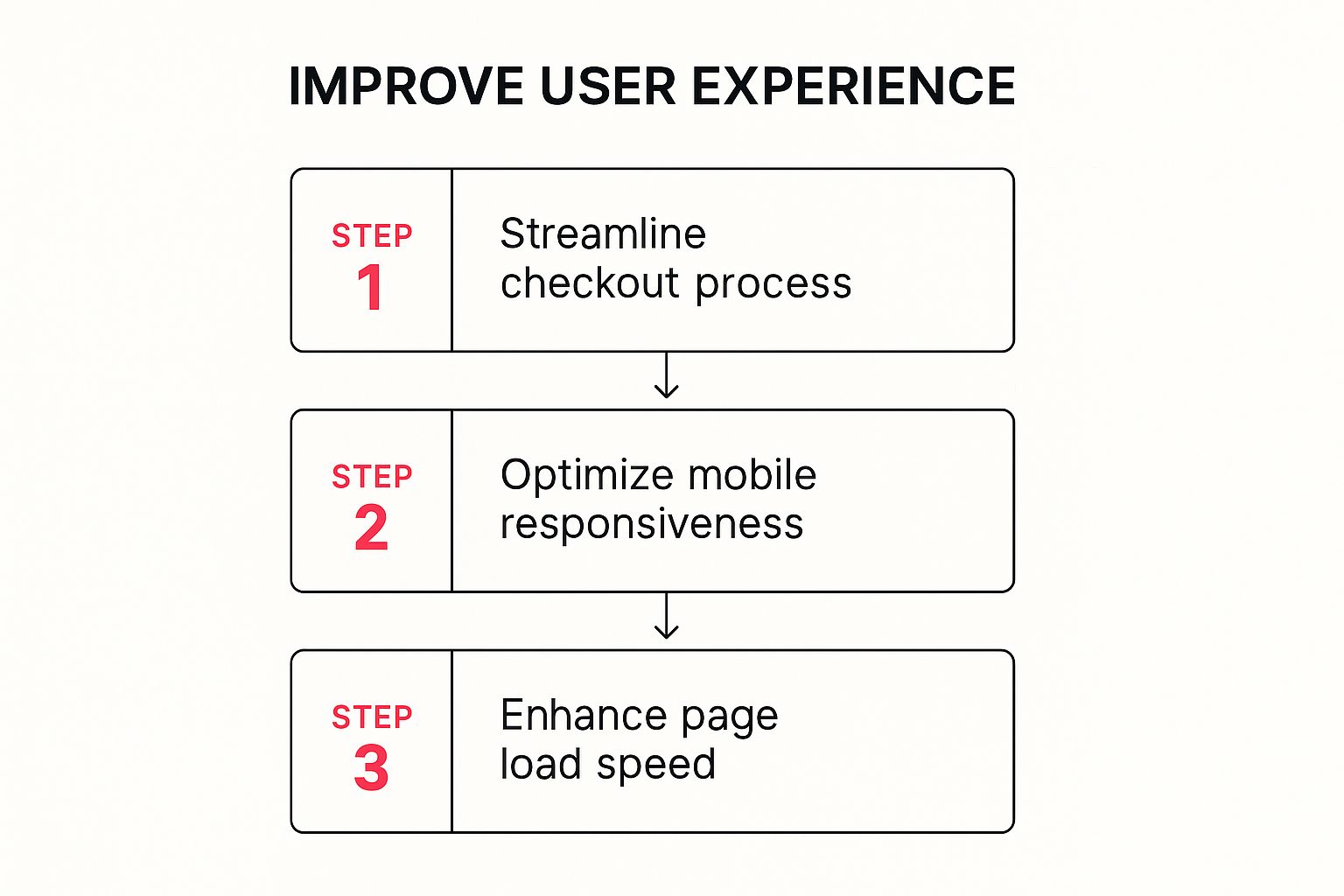
This graphic says it all—a smooth checkout, a mobile-friendly site, and fast load times are non-negotiable. They’re the foundation for preventing abandonment from the get-go.
Once that’s solid, here’s how to tailor your recovery messages:
- For New Customers: Give them a little something to get them over the hump. A 10% off code or free shipping is often the perfect incentive to turn a hesitant browser into a first-time buyer.
- For Returning Customers: They already know and trust you, so a simple reminder might be enough. Instead of a discount, you could mention the loyalty points they’ll earn or just ask if they ran into any issues.
- For High-Value Carts: When a big order is on the line, you can justify a bigger incentive. A 15% off discount or a free gift is a small price to pay to lock in a large sale.
These tactics have become absolutely essential. The pandemic fast-forwarded the shift to online shopping, with e-commerce growing by a staggering $897 billion in 2020 alone. While that growth has leveled out to around 17.4% in 2021, it cemented one thing: digital commerce is the new standard, and retailers have to master their online sales game to compete.
Legal and Compliance Guardrails
SMS is incredibly powerful, but with great power comes great responsibility. It’s a highly regulated channel. Before you hit “send” on any campaign, you must be compliant with rules like TCPA in the U.S. and GDPR in Europe.
This means getting explicit, undeniable consent from customers to text them. Don’t panic—most modern e-commerce platforms and SMS tools have this baked right into the checkout process.
For great copy ideas, check out these proven abandoned cart email examples—the core principles translate perfectly to SMS. You can also get our full strategy in our guide on https://www.cartboss.io/blog/recover-abandoned-cart/.
And always, always include a clear and easy way to opt out, like replying “STOP.” It’s not just about staying compliant; it’s about building trust and respecting your customers’ inboxes.
Using Personalization to Increase Order Value
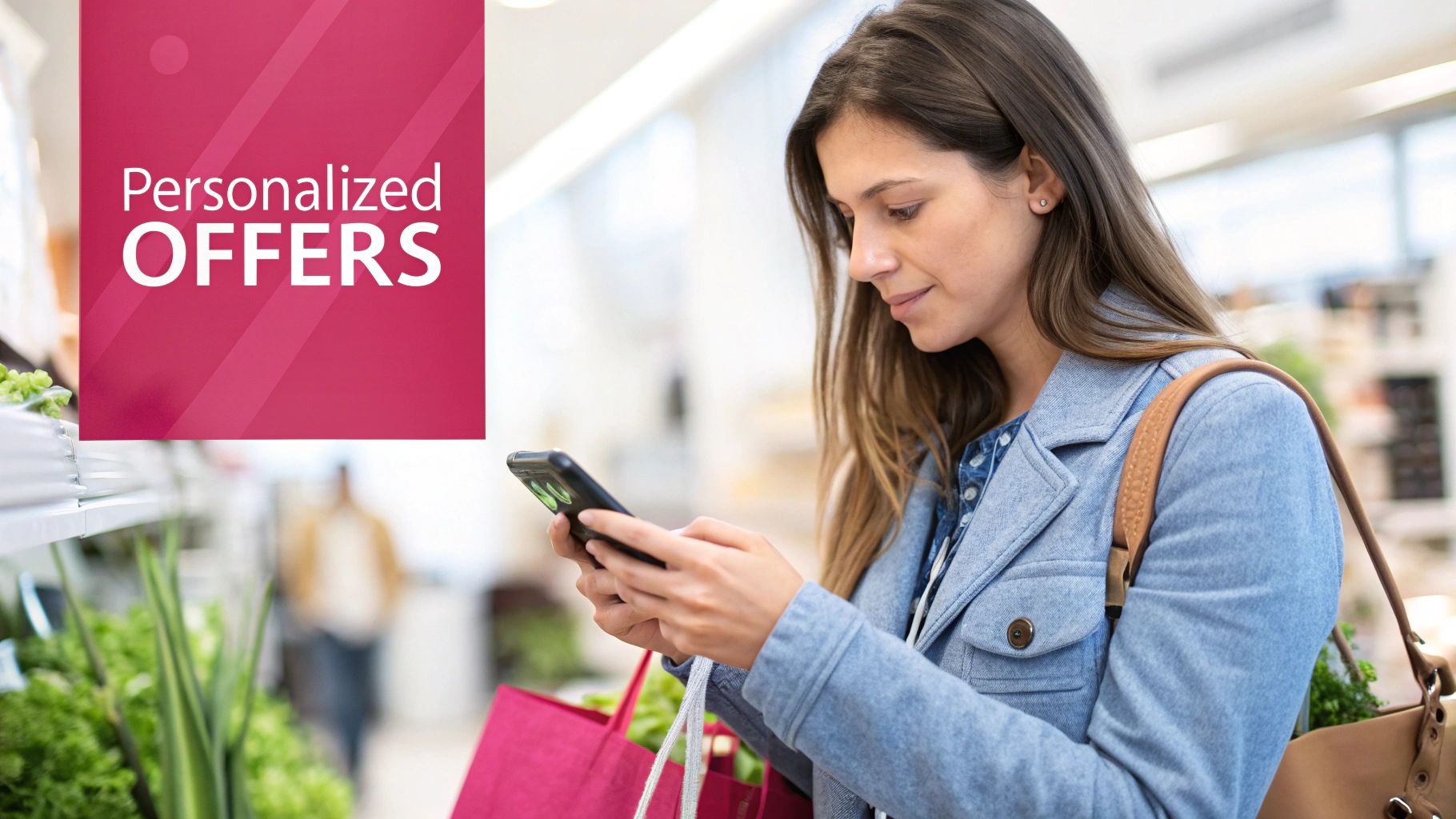
While recovering abandoned carts is a great defensive play, the best offense is getting every customer who’s ready to buy now to spend a little more. This is where personalization shines. It’s the art of making each shopper feel like you genuinely get them, shifting the interaction from a simple transaction to a helpful, guided experience.
Forget just slotting a first name into an email template. Real personalization uses customer data to figure out what they need and suggest products that actually make sense. This doesn’t just bump up your revenue per sale; it builds the kind of trust that creates repeat customers. When you help people find products they’ll love, you’re not just making a sale, you’re building a loyal base.
From Browsing History to Smarter Upsells
One of the most straightforward ways to personalize the shopping journey is to look at a customer’s browsing data. Every click, every view—it’s all a breadcrumb trail leading to what that customer truly wants. If you pay attention, you can offer up relevant upsells and cross-sells that feel like smart recommendations, not a pushy sales pitch.
Think about it. If a customer is eyeing a pair of high-end running shoes, a generic pop-up for your “bestselling t-shirts” is going to feel completely random and probably get ignored. A smarter play is to show them products that complete or enhance their original choice.
- On the Product Page: Add a “Frequently Bought Together” section. Bundle those running shoes with performance socks and anti-chafe balm.
- In the Cart: Once the shoes are added, use a “You Might Also Like” feature to suggest a runner’s waist pack or a GPS watch.
- After the Purchase: Follow up a week later with an email showcasing new athletic apparel that fits the style they’ve already shown interest in.
This kind of specific, thoughtful approach shows you’re actually paying attention. It’s a simple strategy, but it’s incredibly effective at lifting your order sizes. If you want to go deeper on this topic, you might be interested in our full guide on how to increase average order value.
Pro Tip: Keep your recommendations laser-focused. Suggesting a winter coat to someone buying a swimsuit shatters the illusion of personalization and can damage trust. The goal is to be helpful, not just to sell more stuff.
Tap Into a Massive, Growing Market
The opportunity here is huge, and it’s only getting bigger. The global e-commerce market is expanding at a wild pace. By 2025, there will be an estimated 2.77 billion online shoppers worldwide—that’s a third of the entire global population. And that number is expected to climb to 2.86 billion by 2026.
This isn’t just a trend; it’s a fundamental shift in how people shop, driven by better tech and a growing expectation for personalized marketing. Staying on top of these ecommerce shopping trends is key to adapting and thriving.
Build Trust Through Ethical Data Use
Of course, using customer data is a big responsibility. Shoppers are savvier than ever about how their information is collected and used. Being transparent and ethical isn’t just good practice; it’s essential for building the long-term trust you need to increase ecommerce sales for years to come.
Be upfront about what data you collect and why. Make sure your privacy policy is easy to find and even easier to understand. When you give customers control—like the ability to manage their preferences or opt-out—you build confidence. When they trust you, they’re more willing to share the information you need to create those killer personalized experiences. It’s a win-win: better data leads to better recommendations, which leads to happier, more loyal customers who spend more.
Turning Product Pages into Conversion Engines
When a visitor lands on your product page, it’s the moment of truth. They’re interested, sure, but they haven’t pulled out their wallet yet. This is your make-or-break opportunity to either seal the deal or accidentally introduce the hesitation that leads to an abandoned cart. If you want to increase ecommerce sales, turning these pages into high-performance assets isn’t just a good idea—it’s essential.
It all begins with a simple shift in mindset: stop just listing features and start selling the benefit. A technical spec is just data. But a story about how that spec saves someone time or brings them joy? That’s what connects with a buyer on an emotional level and gets them to click “Add to Cart.”
Capture Attention With Compelling Visuals
In ecommerce, your customers can’t touch, feel, or try on your product. Your visuals have to do all the heavy lifting. This is why investing in high-resolution photography and video isn’t a luxury; it’s a fundamental cost of doing business online.
Shoppers want to see your product from every possible angle. They need to zoom in on the details and imagine it in their own hands or their own home. If they’re met with blurry or generic stock photos, it creates doubt and makes your store look unprofessional.
- Show Every Angle: Don’t be shy. Include front, back, side, and detailed close-up shots.
- Use Lifestyle Photos: A picture of a backpack on a white background is fine. A picture of that same backpack on a hiker exploring a mountain trail is compelling. It tells a story.
- Add Short Video Demos: A quick 30-second video showing your product’s key feature in action can answer questions and build confidence much faster than a wall of text ever could.
These visual elements are what bridge the gap between the digital and physical worlds, giving customers the certainty they need to click “buy.”
Build Instant Trust With Social Proof
Let’s be honest—people are heavily influenced by what others do. When shoppers see that other people have bought and, more importantly, loved a product, it acts as a powerful stamp of approval. This is the simple psychology behind social proof, and it’s a critical tool for your product pages.
Don’t bury your reviews on a separate, hard-to-find page. You need to integrate them right where the buying decision is happening. A prominent star rating directly under the product title is non-negotiable.
People are far more likely to buy something when they see others want it too. Showing that a product is popular creates a sense of urgency and reassures hesitant buyers that they’re making a good choice.
Showcasing what real customers think builds a layer of trust that you just can’t manufacture on your own. It’s an authentic, third-party endorsement that speaks volumes. For example, displaying customer-submitted photos provides a real-world glimpse of your product that is often more persuasive than even your most polished professional shots.
Create Urgency and Drive Action
Even if a shopper is totally convinced, it doesn’t guarantee they’ll buy right now. The internet is full of distractions. Creating a subtle, genuine sense of urgency can be the nudge they need to take immediate action.
This isn’t about using fake scarcity tactics; it’s about being transparent. If an item is genuinely low in stock, a simple message like “Only 3 left!” can be incredibly effective. Likewise, a countdown timer for a shipping deadline (“Order within 2 hours for tomorrow delivery”) provides a clear and tangible reason to complete the purchase without delay.
Key Page Elements for Conversion:
| Element | Purpose | Impact on Sales |
|---|---|---|
| Clear Call-to-Action (CTA) | Guides the user to the next step | A visible, compelling “Add to Cart” button is crucial |
| Fast Page Load Speed | Prevents frustration and bounces | Every second of delay reduces conversion rates |
| Mobile-First Design | Ensures a seamless experience on any device | Over half of all ecommerce traffic is mobile |
Of course, a perfect product page is only half the battle. It needs to work hand-in-hand with your checkout process. A flawless page means nothing if the final steps are clunky or confusing. For more on that, our guide on ecommerce checkout optimization dives deep into creating a truly frictionless path to purchase.
Building a Loyalty Program That Creates Superfans
Getting a new customer is tough, and it’s expensive. In fact, it can cost five times more to attract a new buyer than to keep an existing one. Yet so many loyalty programs feel like a total afterthought, just slinging generic discounts that don’t inspire anyone to stick around.
If you really want to increase ecommerce sales for the long run, you need to build something your customers are actually excited to be a part of.
The real goal here is to move past one-off transactions and start building a community. A great loyalty program makes your best customers feel seen and appreciated—like they’re part of an exclusive club. These are the people who will buy more often and become your most powerful brand advocates.
Designing a Program with Real Value
The quickest way to fail is to create a program that only benefits you. Customers can smell a self-serving scheme a mile away. For your program to actually work, it needs to offer real, desirable perks that go way beyond a simple “spend more, save more” setup.
Put yourself in your customer’s shoes. What do they really care about? Is it getting things faster? Exclusive access? More convenience? When you build rewards around those desires, you create a program that has serious staying power.
Think beyond discounts and consider perks like these:
- Early Access: Let your top members shop new products or sales 24 hours before anyone else. This costs you absolutely nothing but creates a huge sense of value and exclusivity.
- Birthday Rewards: A simple, personalized gift or a special bonus on their birthday is a small touch that makes a customer feel genuinely recognized and valued.
- Dedicated Support: Offer your most loyal customers a priority support line or email. For brands with high-value or complex products, this is a seriously powerful perk.
A loyalty program shouldn’t just be another marketing tactic; it should be a core part of your customer experience. The best ones make customers feel like insiders, rewarding their loyalty with status and access—not just coupons.
Choosing the Right Loyalty Model
Not all loyalty programs are built the same. The model you pick should feel right for your brand and match how your customers shop. A basic points system might be perfect for a store selling coffee or cosmetics, where purchases are frequent. On the other hand, a tiered system is better for building long-term excitement.
Comparing Popular Loyalty Program Models
| Model Type | How It Works | Best For |
|---|---|---|
| Points-for-Purchase | Customers earn points for every dollar they spend, which they can redeem for discounts or freebies. | Brands with high purchase frequency, like coffee or cosmetics. |
| Tiered VIP Club | Customers unlock new perk levels (e.g., Bronze, Silver, Gold) as their spending grows. | Aspirational brands selling fashion, electronics, or luxury goods. |
| Value-Based Program | Customers get rewarded for actions that align with your brand’s values, like donating to a charity partner. | Mission-driven brands building a community around a shared cause. |
A tiered VIP club, for instance, is brilliant because it gamifies the shopping experience. Customers want to climb the ladder to unlock better rewards, which encourages them to consolidate their spending with your store. This can give your customer lifetime value (CLV) a massive boost.
If you want a more detailed roadmap, our post on how to create a customer loyalty program breaks it all down for you.
Measuring Success and Driving Growth
Launching the program is just the start. To make sure it’s actually helping you increase ecommerce sales, you have to track the right metrics. Keep a close eye on KPIs like repeat purchase rate, average order value (AOV) for members vs. non-members, and overall customer lifetime value.
Are members spending more? Are they coming back more often? The data will give you the answers. Use those insights to tweak your perks, adjust your tier requirements, and keep the program feeling fresh. After all, an engaged, loyal customer base is one of the most stable assets your business can have.
Frequently Asked Questions About Increasing Sales
Even with a rock-solid game plan, you’re bound to run into questions as you work to grow your online store. Getting straight, practical answers to these common hurdles is a huge part of increasing ecommerce sales successfully. Let’s dig into some of the most frequent questions we hear from store owners.
How Quickly Can I Expect to See Results?
This is the big one, isn’t it? Every store owner wants to know when the magic happens. The honest answer is: it depends entirely on the strategy you’re using. Results don’t all show up on the same timeline.
Some tactics give you that almost instant gratification. For example, setting up a sharp SMS cart recovery flow or making your “Add to Cart” button more obvious can produce a real, measurable lift in just a few days. These are your quick wins—they fix immediate friction points your customers are experiencing.
But other powerhouse strategies are more of a long game. Building out a proper loyalty program or seeing the true effects of deep personalization doesn’t happen overnight. These efforts build momentum over months, creating a foundation for sustainable growth, not just a temporary sales spike.
The Key Insight: Don’t get discouraged if a strategy doesn’t deliver immediate success. The name of the game is to implement, measure, and then tweak your approach based on what the data is telling you. A healthy mix of quick wins and long-term investments is the most reliable path to growth.
Should I Offer a Discount for Every Abandoned Cart?
It’s incredibly tempting to just throw a coupon at every single person who leaves your checkout. But be careful—this can become a dangerous habit. If you do it too often, you can cheapen your brand and train your customers to always abandon their carts, knowing a discount is coming.
A much smarter way to go about it is to get strategic with segmentation. This lets you use your discounts where they’ll have the biggest bang for your buck, without slicing into your profit margins on every order. It’s like using a scalpel instead of a sledgehammer.
Think about these scenarios:
- For High-Value Carts: If someone abandons a cart worth hundreds of dollars, sending them a 10% discount is a tiny price to pay to lock in a major sale.
- For First-Time Shoppers: A small incentive can be the perfect nudge to get them over that initial hump and convert them into a loyal customer.
- For Returning Customers: These shoppers already know you. Oftentimes, a simple reminder or a non-cash perk like free shipping is all it takes to bring them back without you having to sacrifice on price.
What Is the Single Most Important Element on a Product Page?
While every part of your product page has a job to do—from your copy to your calls-to-action—the single element that consistently makes the biggest impact is your visuals. In an online world, high-quality images and video do all the heavy lifting.
Your customers can’t touch, feel, or try on your product. Your visuals have to fill that sensory gap. They are your best shot at answering unasked questions, building instant trust, and helping a shopper imagine that product in their own life. If you have a limited budget, put it into professional-level photography and short, punchy demo videos. It’s the foundation for turning casual browsers into buyers.
Can Small Stores Realistically Implement Personalization?
Absolutely. There’s a huge misconception that personalization is only for giant retailers with massive data science teams. The reality is, personalization can start incredibly simple and scale right alongside your business.
Many ecommerce platforms like Shopify and popular email tools have basic personalization features baked right in. You don’t need some complex, fancy algorithm to get started.
You can begin with simple tactics that pack a punch:
- Using a customer’s first name in an email subject line.
- Sending a “Happy Birthday” email with a small gift.
- Recommending products based on what they bought last time.
These small, human touches show you’re paying attention and can make a huge difference in how customers feel about your brand. Start with what you can manage, and grow your personalization efforts from there. For more answers to common questions, you can find a detailed FAQ about increasing sales right here.
Ready to stop losing sales and start recovering revenue on autopilot? CartBoss is the #1 SMS recovery tool designed to turn your abandoned carts into profit. Set it up in minutes and watch as our automated, personalized text messages bring customers back to complete their purchase. Join thousands of stores boosting their sales effortlessly. Get started with CartBoss today.