


Improving customer retention isn’t some dark art. It really boils down to a handful of common-sense principles: creating a smooth start for new customers, building real relationships through smart communication, rewarding your loyal fans, and actively listening to feedback to stay ahead of their needs.
When you get this right, customers feel valued every step of the way.
Why Customer Retention Is Your Biggest Growth Lever
Let’s cut to the chase: focusing on the customers you already have is one of the most profitable moves you can make for your business. This isn’t just about creating warm, fuzzy feelings; it’s a cold, hard strategy that directly pumps up your bottom line.
Think about it. Acquiring a brand-new customer can cost five times more than keeping an existing one. That alone makes retention a much smarter, more efficient way to grow.
The financial upside is staggering. A tiny 5% boost in customer retention can crank up your profits by 25% to 95%. This isn’t magic. It happens because loyal customers buy from you more often, spend more when they do, and are simply less expensive to market to than total strangers.
To get your retention strategy right, you need a solid foundation. Here’s a quick look at the core pillars that should be holding up your efforts.
Core Pillars of a Modern Retention Strategy
| Strategy Pillar | Primary Goal | Key Actions |
|---|---|---|
| Seamless Onboarding | Make the first experience flawless and valuable. | Guide new users through key features, provide clear instructions, and deliver immediate wins. |
| Personalized Communication | Build genuine relationships, not just transactions. | Segment your audience, use their data to send relevant messages, and communicate on their preferred channels. |
| Loyalty & Rewards | Make your best customers feel seen and appreciated. | Implement a points system, offer exclusive perks, and surprise top customers with unexpected rewards. |
| Proactive Feedback | Solve problems before they happen. | Regularly survey customers, monitor reviews and social media, and make it easy for them to share their thoughts. |
Nailing these four areas creates a powerful loop where customers feel understood and valued, which in turn fuels their loyalty and your growth.
The True Value of a Loyal Customer
The first sale is just the beginning. The real growth comes from increasing the total amount a customer spends with you over their entire relationship with your brand. We call this Customer Lifetime Value (CLV), and it’s a powerful health metric for your business. A high CLV is a clear sign you’re building strong, lasting relationships.
Every single interaction matters here. The data doesn’t lie: customers who have positive experiences are proven to spend 140% more than those who have a bad time. This just drives home the point that you’re not just selling a product; you’re delivering an experience.
If you’re ready to really dig into this metric, our guide on how to calculate customer lifetime value is the perfect place to start.
This chart really puts the key retention metrics into perspective, showing how churn, lifetime value, and repeat purchases are all connected.
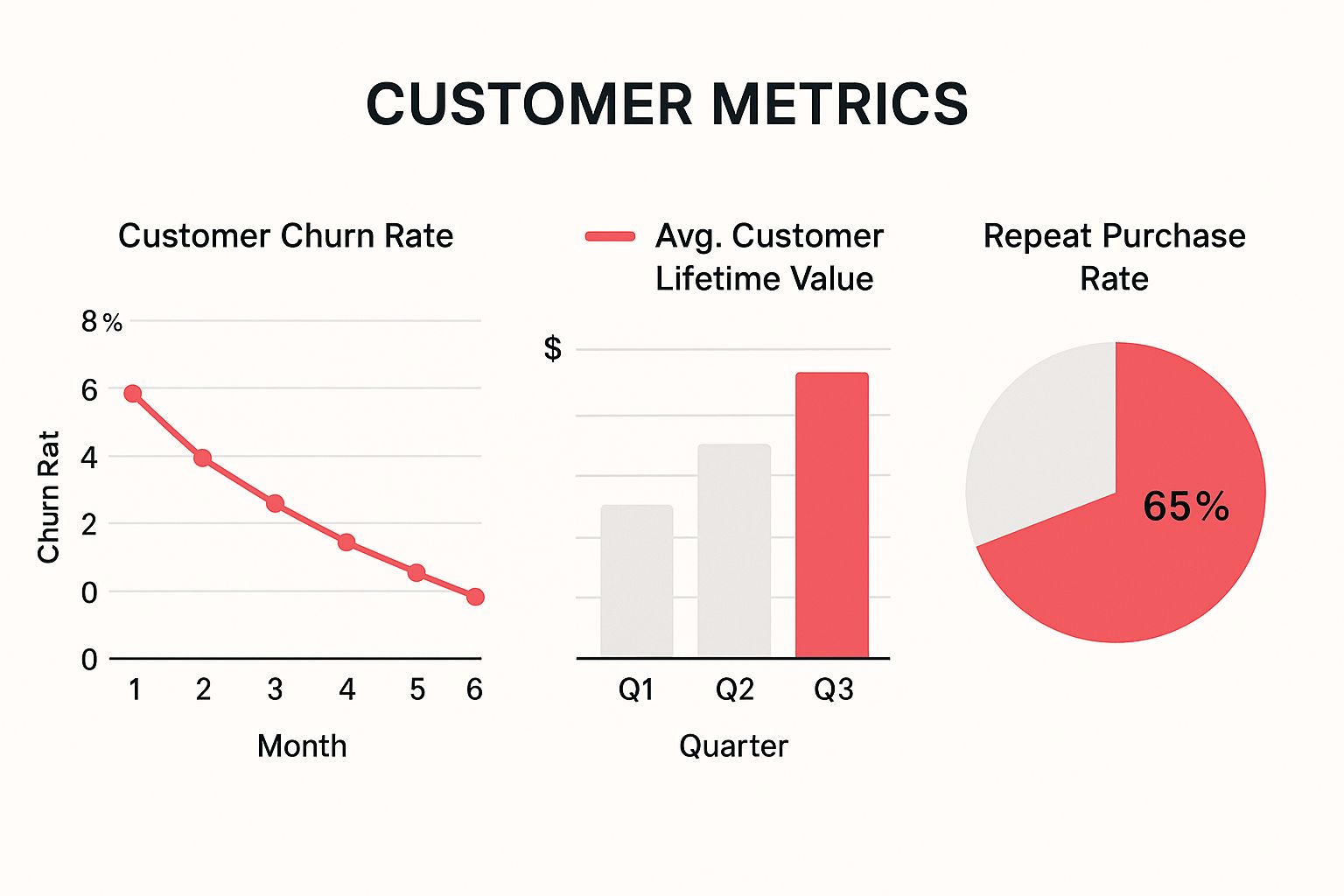
As you can see, even a small drop in churn has a direct, positive impact on both your CLV and the rate of repeat purchases. They all work together.
Integrating Retention Into Your Marketing
A great retention plan can’t exist on an island. For it to truly work, it needs to be woven into a complete full-funnel marketing strategy. This approach ensures your customer acquisition and retention efforts are working in harmony, creating a smooth journey from that very first ad click to becoming a lifelong fan.
The core of improving customer retention rests on a few key pillars: a flawless start with great onboarding, real relationships built on personalized communication, making customers feel special with rewards, and actively listening before problems escalate.
This guide will give you the roadmap. Now, let’s get into the actionable steps.
Nailing the First Impression with Flawless Onboarding
You often win or lose a customer in those first few days. That initial experience sets the tone for the entire relationship. If they feel confused, overwhelmed, or flat-out ignored after buying from you, you’ve basically paved their way to the unsubscribe button.

The real goal of onboarding is to get way beyond a generic “welcome” email. You need to design an experience that makes new customers feel confident and valued. This is your chance to prove their purchase was a smart decision and show them exactly how to get the most out of what they just bought.
It’s More Than a Welcome Email
Relying on a single email is a rookie mistake. A multi-channel approach is so much more effective because you’re reinforcing your message and meeting customers where they are.
Here are a few powerful onboarding tactics we’ve seen work wonders:
- A Welcome SMS Series: Fire off a short series of texts during that first week. The first can be a simple thank you. The second can be a killer tip for using the product. The third? Just a quick check-in to see if they need anything.
- Simple In-App or Product Tutorials: For software or more complex products, guided tours that highlight the most important features are a must. Don’t show them everything at once. Focus on the core actions that deliver that “aha!” moment.
- Follow-Up Surveys: A quick, one-question survey a few days after their purchase gives you invaluable feedback. More importantly, it shows you actually care about their experience.
The key is to make the customer feel successful right away. That initial win builds momentum and makes them far more likely to stick around for the long haul.
Onboarding That Actually Works
Let’s look at how this plays out in the real world.
Imagine a SaaS company. Instead of a bland, generic product tour, they could send a short, personalized video walkthrough based on the goals the user selected during signup. Boom. The user immediately sees how the tool solves their specific problem.
Or think about a fashion retailer. After a customer’s first purchase, they could send a digital style guide showing three different ways to wear the item they bought. This adds immediate value beyond just the product, turning the brand into a helpful style partner.
The best onboarding isn’t about teaching customers how to use your product; it’s about helping them achieve their goal with your product as fast as possible.
This subtle shift in perspective—from being product-focused to customer-focused—is what separates a forgettable onboarding process from one that builds loyalty from day one.
To really get this right, you need to map out every single touchpoint. We highly recommend using a customer journey mapping template to visualize and nail these critical early interactions.
Actionable Onboarding Tips You Can Use Today
You don’t need a massive overhaul to see results. Start improving your onboarding flow today with a few smart tweaks.
- Deliver an Immediate “Win”: Figure out the single most important action a new customer can take to see value. Make that the absolute priority of your entire onboarding flow.
- Personalize That First Message: Use their name and reference what they just bought. A simple, “Hi Sarah, we hope you’re loving your new running shoes!” works so much better than a generic greeting.
- Set Clear Expectations: Let them know what’s coming next. Will they get shipping updates via SMS? Will you send helpful content? A clear roadmap gets rid of uncertainty and builds trust from the get-go.
Using Personalized SMS to Build Real Connections
Let’s talk about a channel that lands directly in your customers’ pockets: SMS. With a staggering 98% open rate, text messages cut through the noise like nothing else. But this is an intimate channel. You can’t just blast generic promos and expect results; it demands relevance.
Your secret weapon here is segmentation. When you group customers based on their behavior—like recent purchases or browsing history—you can send messages that feel less like a brand shouting and more like a helpful text from a friend.
Nail Your Segmentation Strategy
Think of your audience in clear buckets. This makes it so much easier to craft messages that actually resonate.
Here are a few proven segments to start with:
- Lapsed Shoppers: Got customers who haven’t purchased in 90 days? A simple “We miss you!” text with a small, exclusive discount can be just the nudge they need to come back.
- VIP Customers: These are your top spenders, so treat them like it. Give them early access to sales or exclusive previews of new products. It’s a small gesture that makes them feel genuinely valued for their loyalty.
- Browsing Enthusiasts: Ever notice someone viewing the same product multiple times in a week? That’s a strong buying signal. Hit them with a time-sensitive flash deal on that exact item to create a sense of urgency.
It’s All in the Timing
Sending the right message is only half the battle; sending it at the right time is what seals the deal. We’ve seen that midweek afternoons, for instance, tend to get the highest engagement. Sending texts around dinnertime can also work wonders, catching people when they’re finally relaxing.
But don’t just rely on the calendar. The real magic happens with behavior-based automated triggers. A cart abandonment text sent within 30 minutes of a customer leaving your site can recover up to 20% of what would have been lost sales. That’s a huge lift compared to waiting until the end of the day.
“Triggering the right message at the right moment can double your click-through rates.”
Here’s a quick look at what we’ve seen works best:
| Day of Week | Best Time Slot | Open Rate Impact |
|---|---|---|
| Tuesday | 2–4 PM | +12% |
| Thursday | 6–8 PM | +9% |
| Saturday | 10–11 AM | +7% |
A Glimpse into the CartBoss Dashboard
This is where you can bring all these ideas to life. The CartBoss interface lets you build out these automated flows and see exactly how they’re performing in real time.
From this one dashboard, you can track everything—SMS performance, recovered carts, and analytics for each customer segment—so you know exactly what to tweak for better results.
For a deeper dive into writing messages that actually turn abandoned carts into sales, don’t miss our guide on how to personalize SMS campaigns for maximum cart recovery success.
Putting CartBoss Automations to Work
The beauty of a tool like CartBoss is that it automates these complex workflows without you needing to write a single line of code. Post-purchase check-ins, VIP rewards, and win-back campaigns can all run on autopilot.
Here are a few essential triggers you should set up:
- Post-Purchase Follow-Up: A simple text confirming their order status and asking for quick feedback goes a long way.
- Abandoned Cart Reminder: Set up a sequence of a few texts, maybe sweetening the deal with a dynamic discount code in the second or third message.
- VIP Upsell Invitation: Reward your best customers with early access and exclusive perks to keep them coming back.
The key is to not just “set it and forget it.” Regularly check your performance, tweak the message copy, and play with the timing for each trigger. This constant refinement is what turns a good SMS strategy into a great one, driving more repeat buyers with less manual effort.
To boost repeat orders, consistency and personalization in SMS workflows are non-negotiable.
Understanding the Performance Landscape
Data shows just how much retention can vary by industry. Media and professional services lead the pack with an average customer retention rate of 84%, while industries like hospitality and travel hover around 55%. What’s more, a whopping 89% of businesses still rely heavily on email for retention. This creates a massive opportunity for brands willing to use direct, personal channels like SMS to stand out.
By combining smart, data-driven segmentation with the power of CartBoss automation, you can turn SMS into an engine for repeat business. It’s those personal touches, clever timing, and continuous refinement that will transform your one-time buyers into loyal brand advocates.
Designing Loyalty Programs That Customers Actually Love
Let’s be honest, so many loyalty programs feel like a complete afterthought. They’re often just a complicated points system with rewards nobody actually wants. If you’re serious about improving customer retention, your program needs to feel less like a marketing gimmick and more like a genuine thank you.
The goal is pretty simple: make your best customers feel seen and appreciated. When you get it right, a loyalty program becomes a core part of the customer experience, actively encouraging them to choose you every single time. It’s a powerful tool, which is why 59% of sales leaders see loyalty programs as their single most effective retention strategy. You can dig into more stats about this over at The Sales Collective.
This approach shifts the dynamic from a purely transactional relationship to one built on mutual value. It’s about giving people a compelling reason to stick with your brand that goes beyond just the products you sell.
Choosing the Right Loyalty Model
Not all loyalty programs are created equal. The best model for your business depends entirely on your products and, more importantly, how your customers shop.
Here’s a quick breakdown of the most common models I’ve seen work:
| Program Type | Best For | Example Scenario |
|---|---|---|
| Points-for-Purchase | Businesses with frequent, smaller transactions. | Think of a coffee shop where every 10th coffee is free. It’s simple, immediate, and easy to grasp. |
| Tiered VIP Programs | Brands that want to reward their top spenders and create a sense of aspiration. | A cosmetics brand offering exclusive access to new products, a personal shopper, and free shipping to its “Diamond” members. |
| Paid Membership | Businesses that can offer significant, ongoing value that justifies a fee. | An online retailer offering unlimited express shipping and exclusive member-only discounts for an annual fee, like Amazon Prime. |
| Value-Based | Companies with a strong social or environmental mission. | A sustainable clothing brand that lets members donate a portion of their points to environmental charities. |
The key is to align the program structure with your customers’ natural buying habits. If you want to go deeper on this, we’ve put together a complete guide on how to create a customer loyalty program that really fits your brand.
Rewards That Offer Real Value
The success of your entire program really hinges on the rewards themselves. Forget the generic 10% off codes that anyone can find online. Your most loyal customers deserve way better.
The most effective rewards aren’t always the most expensive; they’re the ones that make a customer feel special and solve a real pain point for them.
Try thinking about perks that offer genuine utility or a touch of exclusivity.
- Convenience Boosters: Free or upgraded shipping is a perennial favorite. Why? Because it removes a common friction point in the online shopping experience. It just makes life easier.
- Exclusive Access: Granting early access to new product launches or holding members-only sales makes your loyal customers feel like insiders. It creates a “club” they want to be a part of.
- Experiential Rewards: Think outside the box. Offer exclusive content like a behind-the-scenes video, a digital style guide, or an invitation to a special online Q&A session.
By focusing on rewards that offer tangible value and a bit of exclusivity, you create a program people are genuinely excited to join. It transforms from a simple retention tool into a powerful community-building engine that keeps your best customers coming back for more.
Build Proactive Communication and Feedback Loops
If you’re waiting for a customer to complain, you’re already behind. By the time they reach out with a problem, the damage is often done, and you’re stuck playing defense. The best retention strategies flip this model on its head.
It’s all about creating systems for proactive communication. Instead of just reacting to issues, you get ahead of them. When you actively ask for feedback, you’re sending a powerful message: “Your experience matters to us.” This small shift can turn customer service from a cost center into a powerful loyalty-building machine.
Gauge Satisfaction in the Moment
The absolute best time to ask for feedback is right after a key interaction, while the experience is still fresh in your customer’s mind. Setting up simple, automated surveys at these critical touchpoints is an incredibly effective way to keep a finger on the pulse of customer sentiment.
Here are a few high-impact tactics to get you started:
- Post-Purchase Surveys: A day or two after an order is delivered, shoot them a quick CSAT (Customer Satisfaction Score) survey. A simple “How did we do?” can tell you volumes about your fulfillment process and product quality.
- Net Promoter Score (NPS): Once a customer has had some time to actually use the product, hit them with the classic question: “How likely are you to recommend us?” This metric is a gold standard for predicting long-term loyalty.
Don’t just collect data; act on it. If someone leaves a low score, that’s your cue. Trigger an automated follow-up or a notification to your support team to jump in. This proves you’re not just listening—you’re ready to make things right.
By building a solid process around this, you can turn raw feedback into real, actionable insights. To do this effectively, you’ll eventually want to build a proper customer feedback management system that helps you organize, prioritize, and act on every response.
Get Ahead of Potential Problems
Proactive communication goes beyond just surveys. It’s about anticipating what your customers might need and reaching out before they even think to ask. This demonstrates a level of care that builds incredible trust and makes customers feel genuinely valued.
Think about these real-world scenarios:
- Subscription Renewals: A week before a subscription renews, send a friendly email or SMS with a few tips on how to get more value from their plan. It’s a great way to remind them of the product’s benefits right before they see another charge.
- Delivery Confirmations: Don’t just send a tracking number and call it a day. Once the package is marked as delivered, send a quick message. Something as simple as, “Looks like your order arrived! We hope you love it,” can open the door for immediate feedback if a package was stolen or an item was damaged.
These small, thoughtful touchpoints are what separate good brands from great ones. They take minimal effort to automate but have a massive impact on how customers see your company, turning routine interactions into opportunities to build a stronger relationship.
Got Questions About Customer Retention? We’ve Got Answers.
Even when you have a solid game plan, you’re bound to run into a few questions when you start putting it all into practice. Let’s tackle some of the most common hurdles we see businesses face when they’re trying to figure out customer retention.
Think of this as your quick-start FAQ, with straightforward answers to get you moving forward.
What’s the Absolute First Thing I Should Do to Improve Retention?
Before you even think about launching a loyalty program or a new email campaign, you need to dig into your customer data. It’s so tempting to jump straight into the fun stuff, but without a clear target, you’re just guessing.
The most effective first step is to figure out who your most valuable customers are—the ones with the highest Customer Lifetime Value (CLV). These are the people you absolutely want to keep around.
Once you know who you’re trying to keep, take a look at their journey. Map out their typical path and find the exact moments where they tend to drop off. Is it right after that first purchase? Before a second subscription renewal? Knowing where the leaks are in your customer lifecycle tells you exactly where to focus your energy for the biggest wins.
The goal isn’t just to stop churn; it’s to understand why it’s happening. Your data holds all the clues you need to solve the right problems—whether that means a better onboarding experience or more proactive post-purchase support.
How Do I Know If My Retention Strategies Are Actually Working?
Simple: you can’t improve what you don’t measure. You need to be tracking a few key performance indicators (KPIs) to see if your efforts are actually making a difference.
Don’t overcomplicate it. Just focus on these core metrics:
- Customer Retention Rate (CRR): This is the big one. It shows you the percentage of customers you’re keeping over a specific time.
- Customer Churn Rate: The flip side of CRR, this tracks the percentage of customers you’re losing. If this number is going down, you’re doing something right.
- Customer Lifetime Value (CLV): Is the total revenue you get from a single customer going up? If it is, your strategies are successfully building more valuable, long-term relationships.
- Repeat Purchase Rate: This one’s pretty straightforward. It shows how many customers are coming back for a second, third, or fourth purchase.
Watching these numbers trend in the right direction is the clearest sign that what you’re doing is having a real financial impact on your business.
Are These Strategies Realistic for a Small Business?
Absolutely. In fact, as a small business, you have a secret weapon: the ability to be incredibly personal and authentic. You don’t need a massive budget or a complicated tech setup to make a real difference.
Honestly, it’s often the simple, genuine actions that have the biggest impact on customer loyalty.
Think about it. A handwritten thank-you note, a personal email to check in on a top client, or using an affordable tool for targeted SMS campaigns—these things create powerful connections that big corporations just can’t replicate. Your ability to build real relationships is your superpower.
The key is to start small. Don’t try to fix everything at once. Just pick one thing—like your welcome email series or your post-purchase follow-up—and make it exceptional.
Ready to turn abandoned carts into loyal customers on autopilot? CartBoss uses the power of SMS to re-engage shoppers at the perfect moment, recovering lost sales and boosting your revenue. See how it works at https://www.cartboss.io.