

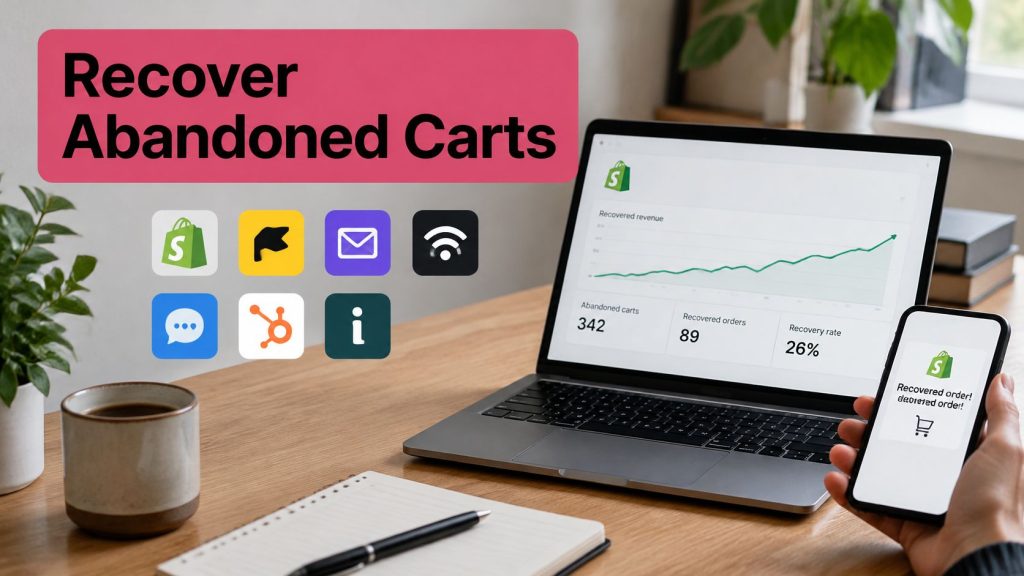
In 2026, the global online shopping cart abandonment rate reached 70.22%, more than 10 percentage points above the start of Statista’s long-run series. Seven carts in ten still die before payment.
Emails get ignored. SMS lands on the lock screen, but it only pays when consent, timing and the return link are right. Shoppers leave for ordinary reasons: surprise fees, forced accounts, missing payment options, or browsing with no intent. The best Shopify abandoned cart app fits your traffic, opted-in list and send cost.
I score the seven apps below on follow-up speed, channel mix, pricing model and best-for fit. Use urgency carefully: Scarcity offers for abandoned carts work as a later nudge, while recovery still depends on landing the shopper back in a saved cart.
Check this before you install:
- Consent: Prove SMS opt-in apart from checkout.
- Return path: Land shoppers in the saved cart, not the homepage.
- Stop rule: End the sequence when the order is placed.
- True cost: Subscription, per-text fees, and carrier charges.
- Revenue: Count finished orders after discounts, not clicks.
Table of Contents
- 1. CartBoss
- 2. Klaviyo
- 3. Omnisend
- 4. Postscript
- 5. TxtCart AI
- 6. Recapture Abandoned Carts
- 7. Brevo PushOwl
- Shopify Abandoned Cart Apps at a Glance
- How to Pick Your App and Recover More Carts This Week
1. CartBoss
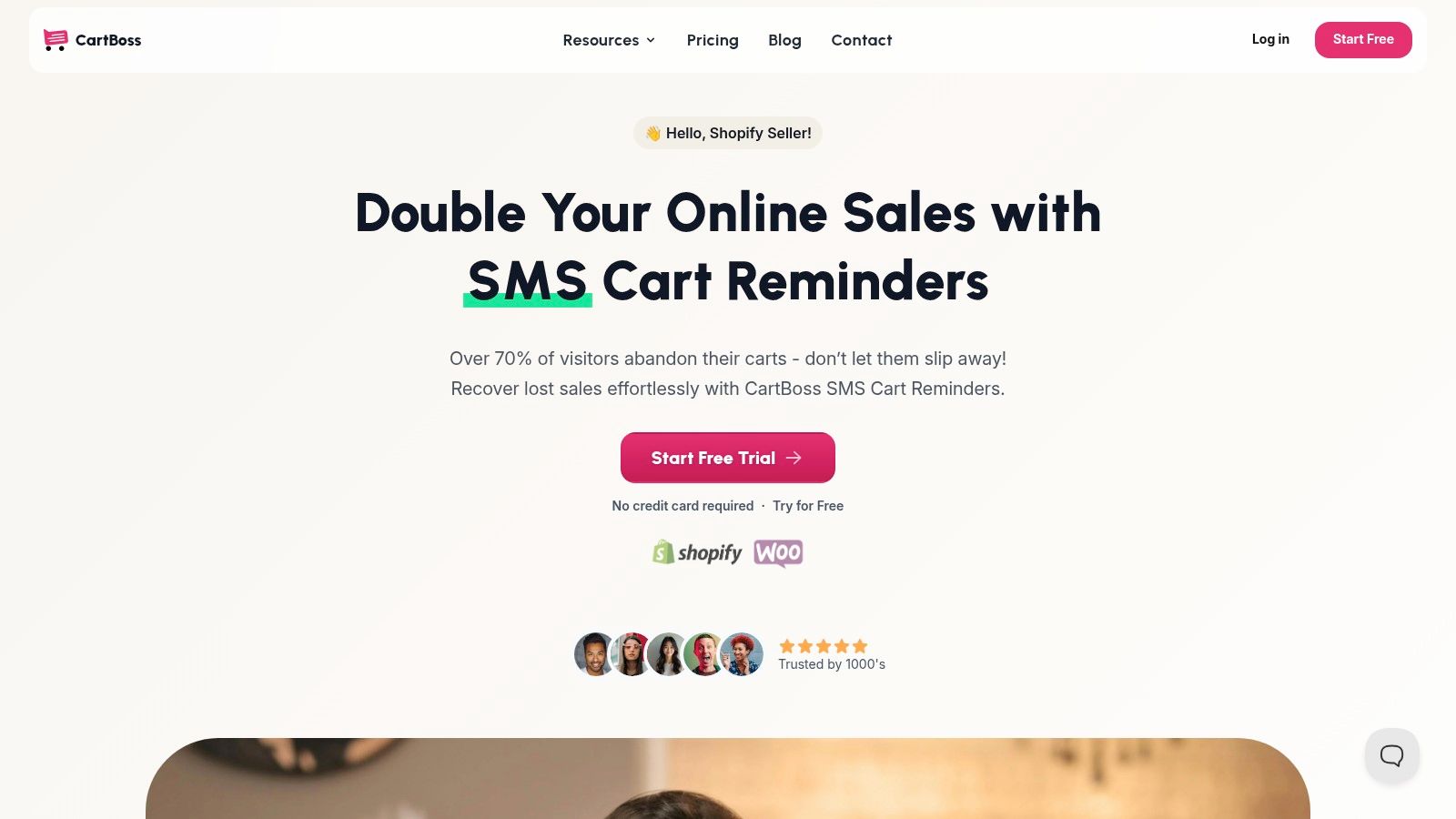
Best for: Shopify and WooCommerce stores that want SMS recovery in minutes, billed per message, without a marketing suite.
CartBoss fits when the job is one thing: text the person who left, with the cart still intact. Setup is plug-and-play, timed reminders go out on their own, and each text can carry an optional discount plus a link to a pre-filled checkout. The first SMS goes out 15 minutes after the visitor leaves. A second reminder follows 3 hours later, and if they still haven’t ordered, that text can include a discount. A tap brings them back to the cart with the discount already applied.
Copy ships pre-written in more than 30 languages, with automatic language detection, a branded sender ID, do-not-disturb hours, and unsubscribe tools aimed at GDPR and CCPA. You set the discount each reminder carries, or keep the offer simple. Once it’s live, reminders keep sending around the clock, and post-purchase or win-back texts sit on the same per-message bill. There is no subscription fee, and the first recovered cart is free.
How I read the advertised results
The site cites a 99% SMS open rate, a 50%+ click rate, more than 7 million carts recovered, 4,500% average ROAS, and sales increases of up to 50%. I wouldn’t budget next month on those figures. They move with traffic, consent, and whether payment still surprises people. Treat them as a ceiling you have to earn.
Practical rule: Keep the 15-minute text free of a discount. Put the offer on the three-hour text so browsers aren’t trained to wait.
- Pricing: One SMS to the United States costs 0.025 €, Germany 0.1484 €, and France 0.102 €. Check margin before you text high-cost countries at volume.
- Who it suits: Small and mid-size stores, plus agencies that want the same SMS logic on Shopify and WooCommerce.
- What it won’t do: It won’t replace email lifecycle, popups, or a support inbox.
2. Klaviyo
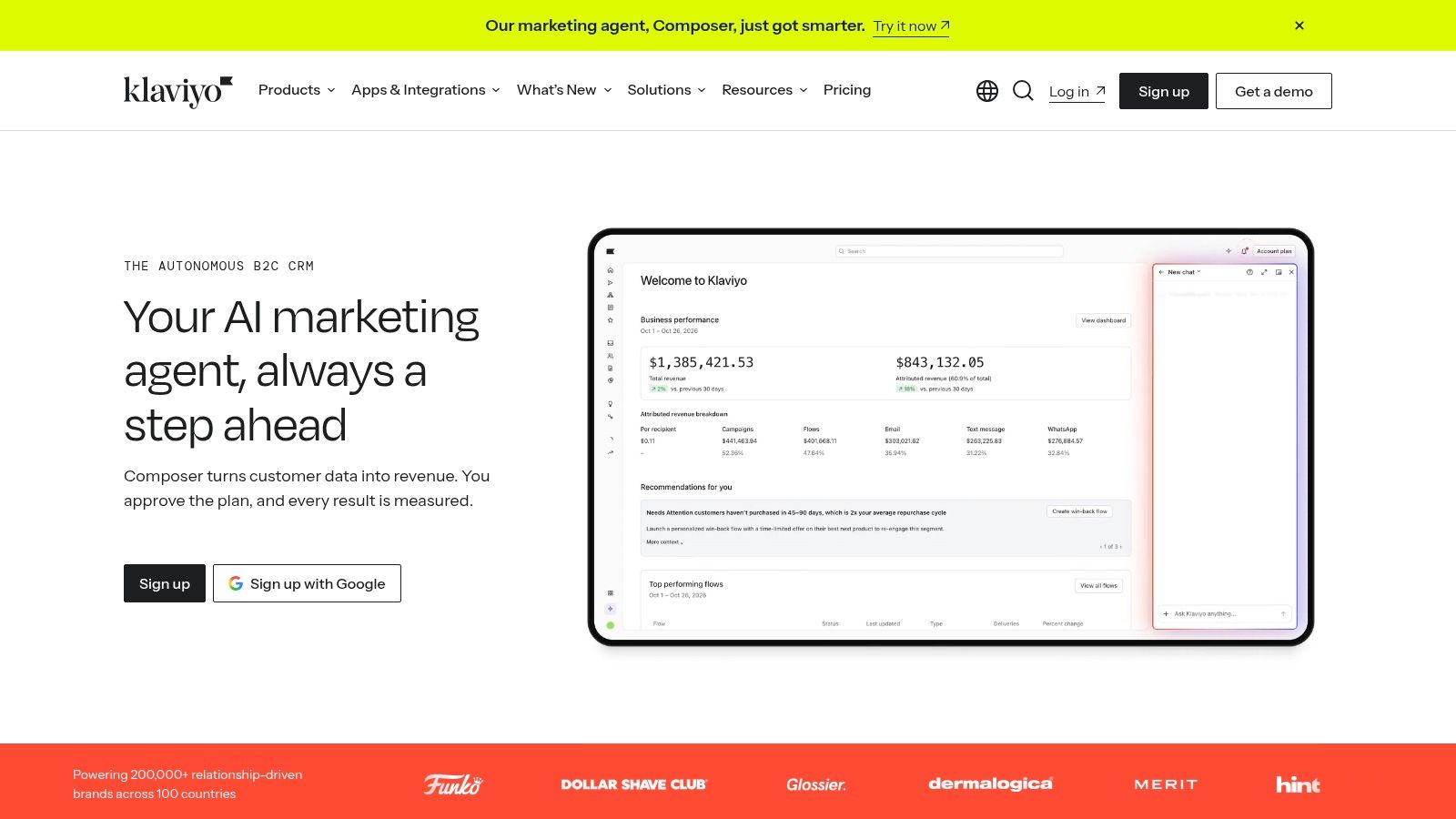
Best for: Teams that already run retention and want cart recovery as one flow inside a larger lifecycle program.
Klaviyo is the heavy option. Abandoned-cart email and SMS sit beside welcome, win-back, and post-purchase flows, with segmentation on Shopify customer and order data, templates, forms, reporting, and A/B tests. The Shopify app is widely reviewed, and merchant feedback tends to center on segmentation and reporting rather than one-click recovery.
Recovery fit is strong once the account is built, slower on day one. The channel mix leans email first, with SMS as a paid layer, so it suits stores with a real subscriber base and someone who will maintain lists, events, suppressions, and tests. A small shop that only wants a cart text will spend its first week on setup before it earns anything back.
Consent is the part to get right. Klaviyo’s U.S. compliance guidance says marketing texts need express consent, through a written agreement or an SMS opt-in such as a form or keyword, and describes double opt-in before messages go out. Keep phone number, timestamp, source, disclosure, and terms on the profile. An abandoned checkout is not blanket permission for a promo text.
Build the email leg with abandoned cart email best practices so the reminder is specific to the cart, not a generic nudge.
- Strength: One profile for email, SMS, and later campaigns.
- Trade-off: Steeper setup, and cost rises with list size and message volume.
- Fit: Mid-size and larger stores with a marketer who will use the segments.
See it at Klaviyo.
3. Omnisend
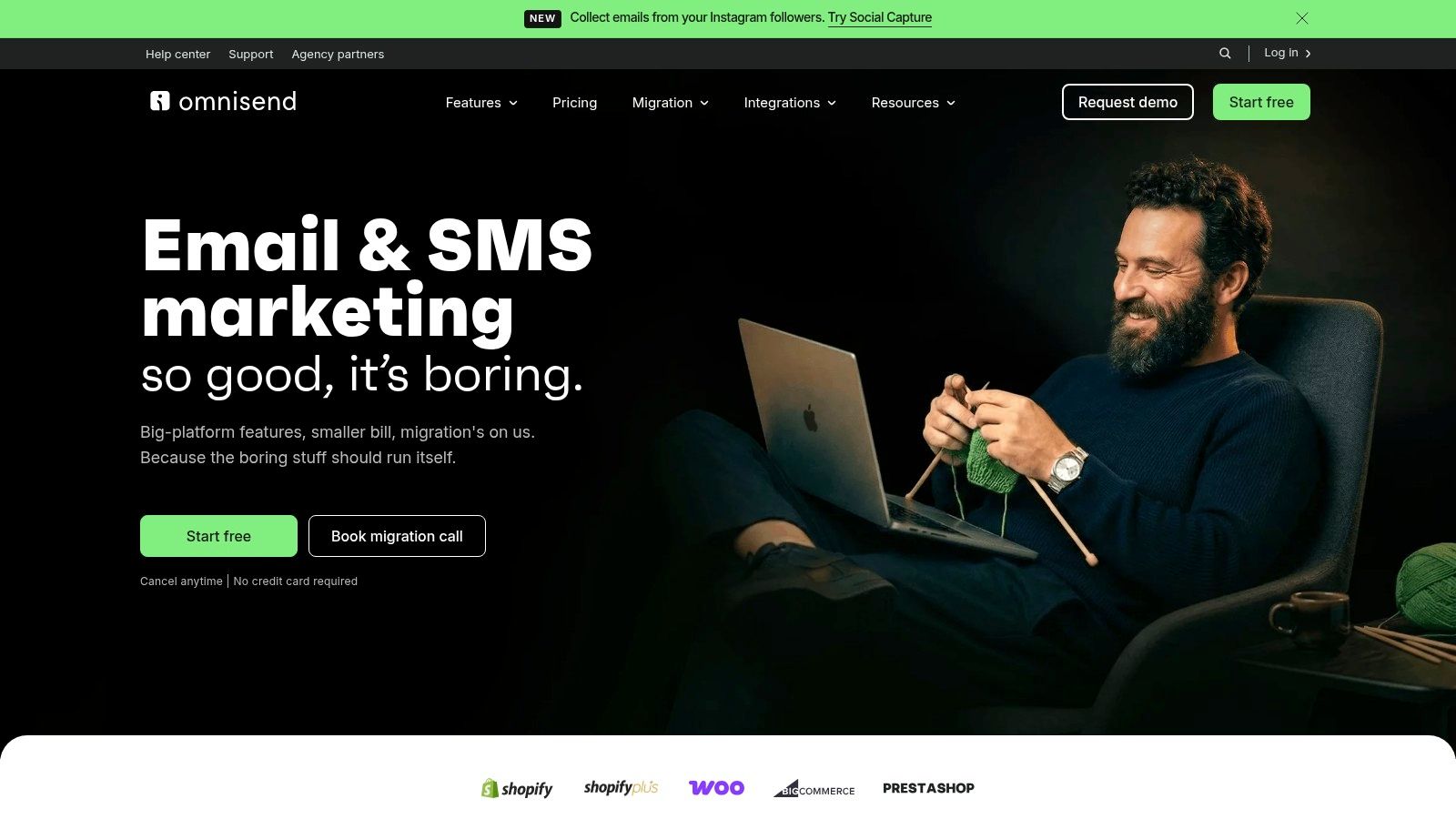
Say you send a few hundred orders a month and still write the campaigns yourself. Omnisend puts email, SMS, and web push in one dashboard, with forms, popups, prebuilt cart and welcome workflows, segmentation, and reporting. Merchants on the Shopify App Store often praise its ease of use, and the free tier includes abandoned-cart email, which is a sane start for a small or mid-size store.
Email does the heavy lifting here. The prebuilt cart workflow gets a first reminder out without you building automation from scratch, and web push is worth switching on because it reaches shoppers who never handed over a phone number. SMS joins the same flow if you turn it on, but it carries extra usage costs, and stronger reporting sits on a higher plan.
If you only want texts, you’re paying for channels you won’t touch.
The reminder still loses if checkout is a form marathon. Shopify’s summary of Baymard research says the average U.S. checkout shows 23 form elements, while a usable one can run on about 12 to 14. Cut optional fields, turn on guest checkout and address autocomplete, then point the Omnisend link at that shorter path.
Best for: Stores that want email now and SMS or push later, without Klaviyo’s learning curve.
Start at Omnisend.
4. Postscript
Best for: Brands that already have opted-in SMS subscribers and can clear a monthly minimum.
Postscript is SMS-first. Cart flows, signup popups, segmentation, tests, two-way conversations, reporting, and compliance tools all live in one dashboard, and everything runs on texts. Its Shopify listing draws strong praise for setup and support, but the entry tier carries a monthly minimum spend, and messaging plus carrier fees still apply on top. It doesn’t replace a separate email tool, so low volume makes that floor feel expensive fast.
Consent isn’t a single checkbox you copy across borders. Rules differ in the United States, the European Union, Canada, and Australia, and U.S. texts can involve TCPA, FCC, and carrier requirements, which the Insider One SMS compliance guide walks through in operational terms. That guide also notes DHL’s 2025 finding that slow delivery was the top abandonment reason in Thailand, China, and Malaysia, affecting roughly half of shoppers in each market. An urgent Postscript text promising fast shipping to those shoppers costs you trust.
Read how to use Postscript before you clone a U.S. flow into three other countries.
Quiet hours and a local sender matter more than a clever code.
The product site is Postscript.
5. TxtCart AI
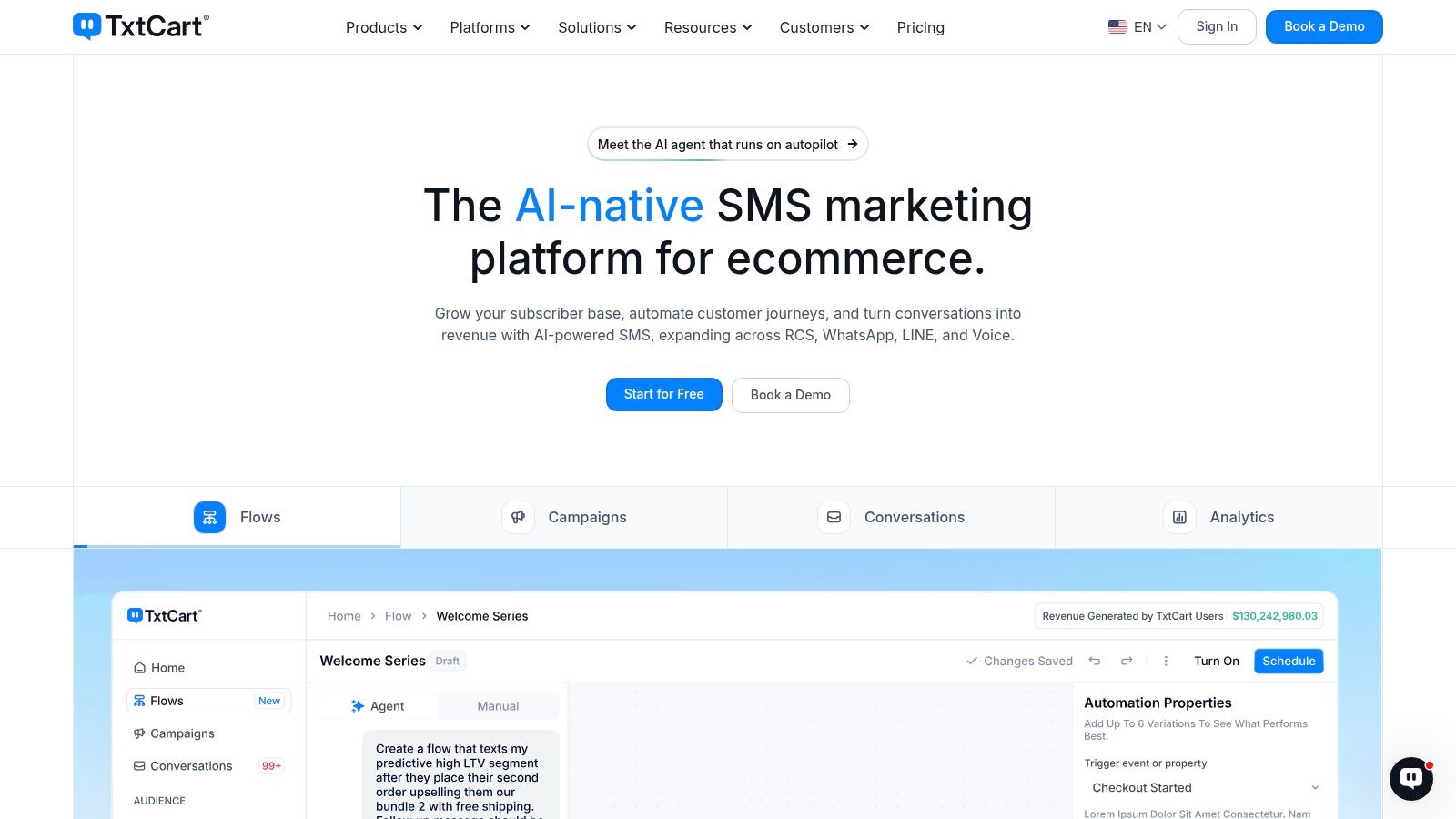
TxtCart AI is for carts that stall on a question rather than a delay. It sends abandoned-cart and checkout SMS, then an AI agent can answer replies, recommend products, and push the shopper back to checkout. Around that core sit SMS and MMS campaigns, flow templates, an inbox, popups, segmentation, and revenue reporting.
The fit is narrower than a plain reminder. Extra costs such as shipping, tax, or fees are a major reason shoppers leave, per Baymard’s cart abandonment research; an agent that can quote delivery cost or explain sizing has something to fix. If most exits are casual browsing, a paid conversation will not create intent.
Carrier fees are extra, some AI usage bills separately, and higher plans get heavy for a small catalog. The difference between an agent and a timed nudge is mapped in what agentic automation is.
- Use it if: sizing, bundles, or delivery questions are what stall checkout.
- Skip it if: you want one reminder and nothing else.
Best for: Consented lists that reply. Details are on TxtCart AI.
6. Recapture Abandoned Carts
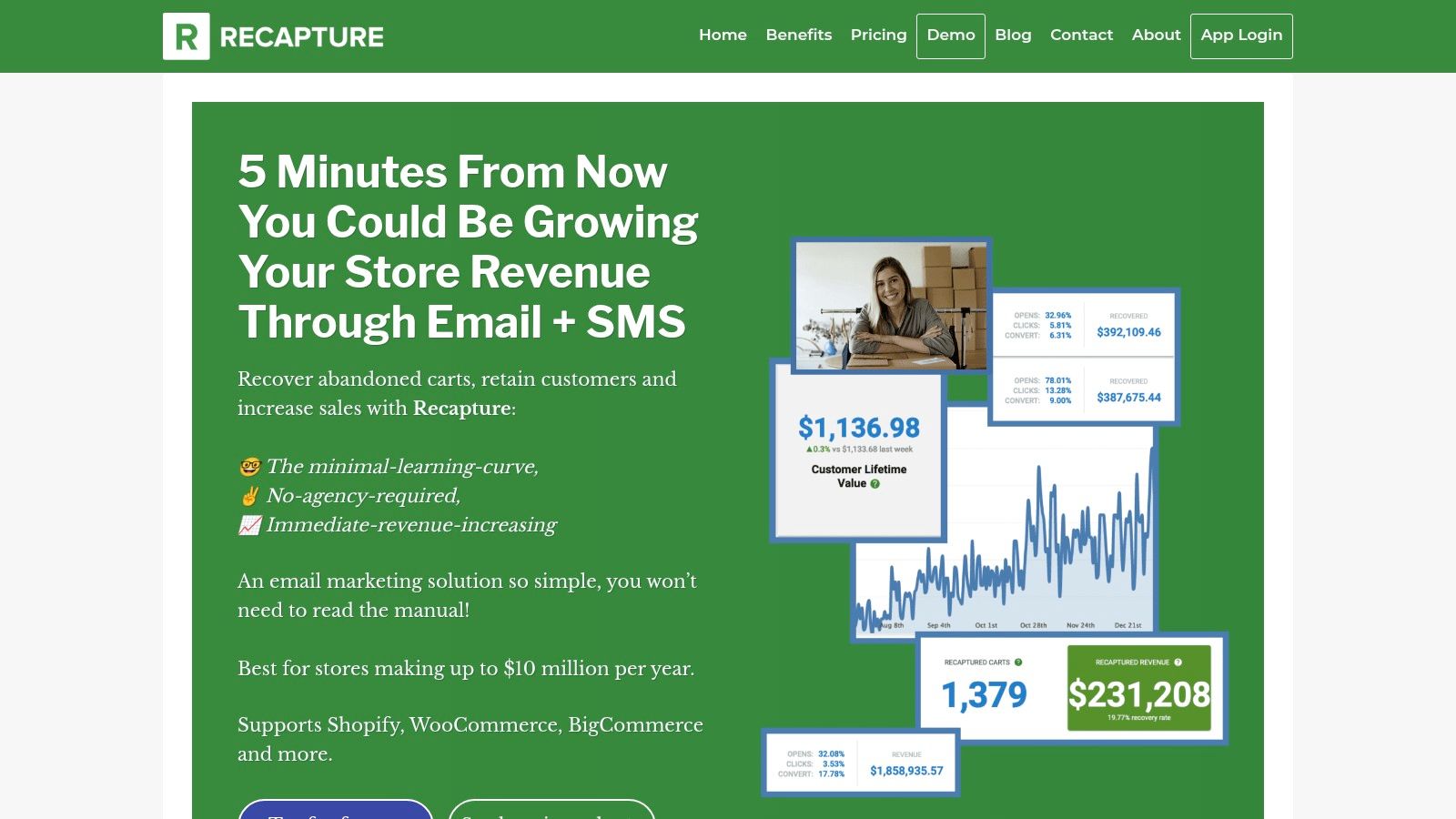
Email first, SMS second. Recapture builds its recovery flow around abandoned cart and checkout email, then layers on welcome, post-purchase, and win-back campaigns. The listing describes AI-assisted campaign setup, popups, and a light configuration. SMS sits on paid plans as an add-on, so you only pay for texts once the email path proves itself. A free tier lets you run email recovery before spending anything.
Reviews on the Shopify listing mention support and value, but small review counts swing quickly, so check the current listing before you install. Paid pricing can scale with recovered revenue, which means a strong month costs more than a quiet one.
Shopify’s abandoned checkout guide counts a recovery only when the customer completes the order after the recovery link. Apply the same cut inside Recapture: a reopened session or a click without a purchase is activity, not recovered revenue. Track sent, delivered, clicks, completed orders, discounts used, and opt-outs, and stop the sequence after purchase so buyers don’t get a “you left this” text.
A tighter look at focused recovery apps is in this abandoned cart recovery Shopify app guide.
Best for: Merchants who want email recovery first and SMS only after that path pays for itself. The site is Recapture.
7. Brevo PushOwl
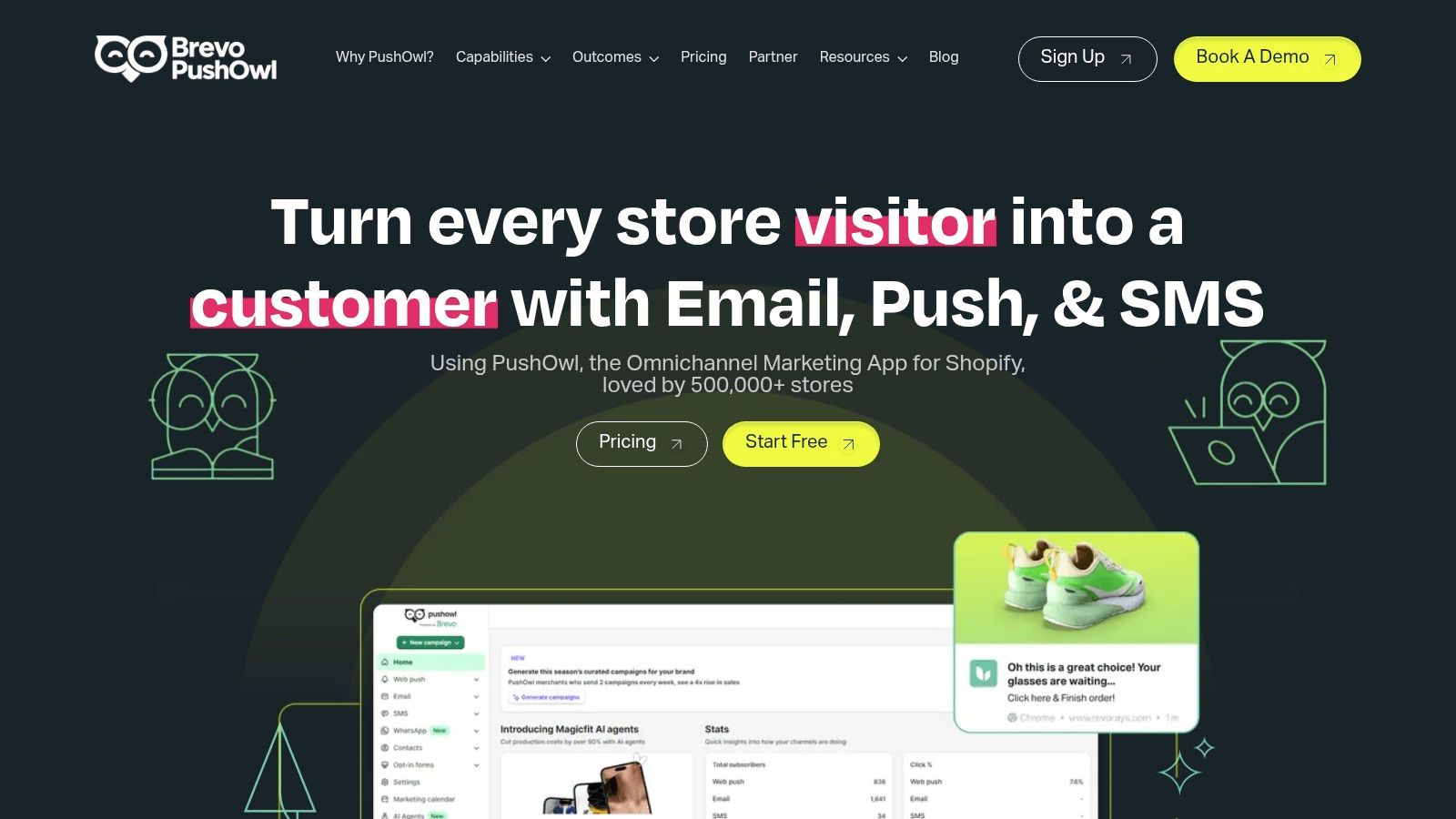
Best for: Stores adding web push on top of email, not an SMS-only stack.
PushOwl, now under Brevo, reaches shoppers in the browser, so it never needs a phone number to follow up. Email and SMS sit alongside push in the same app. The free plan covers push campaigns and basic email. Abandoned-cart automation requires the paid Plus bundle, which also brings popups, back-in-stock alerts, and price-drop alerts. Higher tiers add browse-abandonment automation and segmentation.
Reviews are generally positive, though some mention account or support issues, so read recent comments before you move a list.
PayPal’s 2024 commerce analysis puts mobile devices at 68% of ecommerce sessions with an 85.65% cart-abandonment rate. Push fits that traffic well, since one click opts a visitor in with no form fields. The trade-off is reach: only opted-in visitors ever see the notification, a smaller pool than your total sessions, and push does nothing about shipping costs that appear at payment.
For timing and frequency tactics on this channel, see the guide to push notifications for ecommerce.
The product lives at Brevo PushOwl.
Shopify Abandoned Cart Apps at a Glance
| App | Primary channel | Pricing model | Best for |
|---|---|---|---|
| CartBoss | SMS | Free to start; SMS charges may apply, no subscription fee advertised | Simple, automated cart recovery for Shopify and WooCommerce |
| Klaviyo | Email and SMS | Free entry tier; costs scale with contacts and usage | Merchants building data-driven, multichannel marketing |
| Omnisend | Email, SMS, and web push | Free tier; paid plans and usage-based SMS | Small-to-medium stores wanting multichannel automations |
| Postscript | SMS | $49 monthly minimum spend; messaging and carrier fees apply | Shopify brands focused on SMS marketing |
| TxtCart AI | SMS and AI conversations | Paid plans; SMS, carrier, and some AI usage fees | Shopify brands seeking conversational cart recovery |
| Recapture Abandoned Carts | Email, with SMS add-on | Free option; paid pricing may scale with recovered revenue | Merchants prioritizing cart recovery and email follow-ups |
| Brevo PushOwl | Web push, email, and SMS | Free plan for push and basic email; cart automation requires paid Plus plan | Stores adding web push to their recovery channels |
How to Pick Your App and Recover More Carts This Week
Match the tool to the list you have and the bill you can defend. A dedicated SMS tool fits when you want a fast, pay-as-you-go reminder and you already capture phone consent. A full suite such as Klaviyo or Omnisend fits when recovery is one piece of retention and someone on your team will maintain the flows. Push belongs beside those channels, not instead of a checkout link. Email-first tools such as Recapture make sense when your list is addresses, not numbers.
Mobile shoppers tend to abandon carts at higher rates than desktop shoppers, so test every recovery link on a phone before you scale the send. A reminder that opens a broken checkout loses the cart a second time.
Do this in the next week:
- Measure abandonment on your own store with a cart abandonment rate calculator, split by mobile and desktop if you can.
- Pick one app that matches the channel you can legally message today.
- Set timing so the first touch lands within minutes, a later touch can carry the offer, and a purchase stops the rest. CartBoss, for reference, sends its first SMS reminder 15 minutes after abandonment and a second one 3 hours later, which can include a discount.
- Test one discount against a no-discount holdout, and keep the final price visible.
- After 30 days, count completed orders and net revenue after discounts and message cost. Per-message pricing keeps that math concrete: one SMS costs 0.025 € to the United States, 0.1484 € to Germany, and 0.102 € to France. An SMS cart recovery ROI calculator keeps the tally honest.
For that test, CartBoss is the low-risk starting point I’d use. It’s pay-as-you-go SMS recovery with no subscription fees, reminders return shoppers to a pre-filled cart with an optional discount already applied, and the first recovered cart is free. The Cart Abandonment Rate Calculator, SMS Cart Recovery ROI Calculator, and Klaviyo SMS Savings Calculator give you the baseline before you spend.
CartBoss sends automated SMS reminders that bring Shopify and WooCommerce shoppers back to a pre-filled cart, with optional discounts and no subscription fee. If abandoned checkouts are the leak you’re trying to close, start with one sequence and judge it on completed orders. Visit CartBoss and send the first recovery text this week.