



Conversational text messaging is all about having a two-way dialogue with your customers through SMS. Forget those generic, one-way blasts you’re used to seeing. This is more like having a helpful store assistant in your pocket—it’s personal, interactive, and built for real conversations.
Understanding Conversational Text Messaging
At its core, conversational SMS ditches the old-school approach of just shouting promotions into the void. Instead of simply sending out discount codes and hoping for the best, this strategy is about creating a genuine back-and-forth. The goal? To build relationships by offering immediate support and guidance, right on a customer’s phone.
Let’s say a customer leaves something in their cart. A standard text might just say, “You left something behind!” But a conversational message opens a door: “Hey Alex, we saw you left the Blue Performance Hoodie in your cart. Any questions about sizing or shipping? Just reply here!” This small tweak turns a forgettable reminder into a helpful, personal touchpoint.
Even when it’s powered by smart automation, this approach feels authentic. If you want to dive deeper into how this differs from broader strategies, check out our guide on what SMS marketing is. By putting dialogue first, you create an experience that feels less like a marketing pitch and more like great customer service.
The Key Pillars of Conversational Texts
Making a text message feel conversational isn’t just about letting people reply; it’s about designing the whole interaction to feel human. This approach stands on a few key pillars that set it apart from typical SMS marketing:
- Human-Like Tone: The language is casual and friendly, not stuffed with corporate jargon. It goes beyond using just a first name to create a real sense of connection.
- Immediate Value: Every message is designed to help. Whether it’s answering a quick question, clarifying a detail, or offering a useful solution, it provides value on the spot.
- Contextual Relevance: The conversation is always timely and directly related to what the customer was just doing, like looking at a specific product or ditching their cart.
The real magic here is its ability to mimic a natural, in-person sales conversation. It lets you tackle a customer’s hesitation in real-time, clearing up any doubts and building the confidence they need to hit “buy.”
Ultimately, this is about meeting your customers where they already are—on their phones—and talking to them in a way they actually prefer. The numbers don’t lie: SMS open rates hover around 98%, and a whopping 45% of people reply to brand text messages. That’s a massive opportunity to cut through the noise of a crowded email inbox. Moving from simple alerts to genuine conversations isn’t just a nice idea anymore; it’s essential for any modern store.
Why SMS Is a Game-Changer for Cart Recovery
Let’s connect the dots between a conversational approach and its most powerful use case: recovering abandoned carts. It’s here you can really see just how big of an impact this strategy can have. While your standard email reminders often drown in a sea of promotions or get lost in cluttered inboxes, a well-timed text message cuts right through the noise.
Think of it as the digital version of a friendly, helpful tap on the shoulder.
Imagine a customer is about to buy a new pair of hiking boots but gets cold feet at the last second. Maybe they’re wondering about the return policy or have a quick question about shipping times. An email sent hours later is probably too late. But a conversational text messaging prompt sent within minutes can reopen that door right away. It creates a direct, personal line to solve the exact problem that made them pause.
This isn’t just about sending a bland reminder; it’s about starting a real dialogue. By inviting a reply, you transform a potentially lost sale into a fantastic customer service opportunity.
The Unbeatable Immediacy of SMS
The biggest advantage of using text messages for cart recovery comes down to its incredible speed and visibility. Unlike pretty much any other channel out there, SMS demands immediate attention. This makes it the perfect tool for tackling cart abandonment, a problem where every second counts.
The engagement numbers for SMS really do speak for themselves, showing just how fast and effectively you can reach your customers. The stats on open rates, response rates, and how quickly people reply are just staggering.
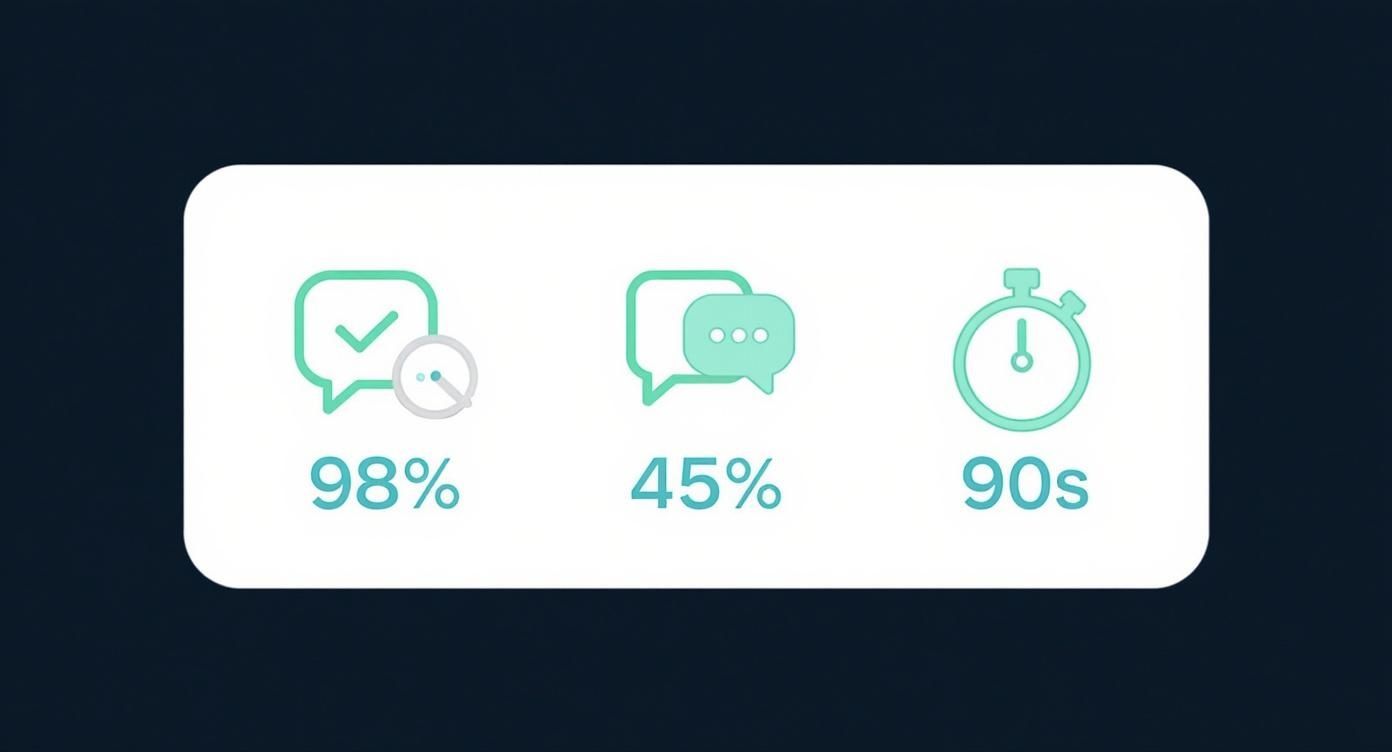
This data proves it: with a 98% open rate and a 90-second average response time, text messaging is one of the most direct and interactive ways to talk to your customers today.
When you stack SMS engagement up against other marketing channels, it’s almost comical. A whopping 98% of all SMS messages are opened and read globally—a figure that completely dwarfs the average email open rate. This is paired with lightning-fast response times; on average, people reply to a text in just 90 seconds. On top of that, SMS boasts a 45% response rate, making it a highly interactive way to re-engage shoppers who were just a click away from buying.
Let’s quickly compare the two channels head-to-head.
SMS Engagement vs Traditional Email for Cart Recovery
| Metric | Conversational Text Messaging (SMS) | Traditional Email |
|---|---|---|
| Open Rate | 98% | ~21% |
| Average Response Time | 90 seconds | 90 minutes |
| Click-Through Rate | Up to 45% | ~2.5% |
| Customer Perception | Personal, immediate, helpful | Often seen as promotional or spam |
| Interaction Style | Two-way dialogue | One-way broadcast |
The numbers make it clear. For the kind of immediate, personal follow-up needed to recover a sale, SMS is in a league of its own.
Building Trust Through Two-Way Dialogue
A conversational text does more than just remind—it offers genuine help. When a customer gets a message like, “Hey Sarah, noticed you left the ArcFlex Tent in your cart. Have any questions about setup or weather resistance? I’m here to help!”, it completely reframes the interaction.
Suddenly, you’re not just another brand pushing for a sale; you’re a helpful expert.
This simple shift builds a foundation of trust and shows you’re committed to the customer’s experience. By addressing their specific worries, you can dissolve that last-minute hesitation and guide them confidently toward finishing their purchase. This personal touch not only recovers the sale but also fosters loyalty, making it much more likely they’ll come back. If you want to really nail this technique, our article on the power of abandoned cart messages dives even deeper.
By turning an automated reminder into a chance for a genuine conversation, you’re not just recovering a cart—you’re building a relationship. This proactive support is what separates a good customer experience from a great one.
While SMS is a powerhouse for immediate re-engagement, the best results come from a well-rounded approach. Check out this complete strategy guide to recover abandoned carts to see how it all fits together. Integrating conversational SMS into a broader recovery plan ensures you cover all your bases, from instant outreach to longer-term follow-ups. The goal is always to make the customer feel valued and supported, turning a moment of doubt into a confident purchase.
Crafting Conversations That Actually Convert
Knowing that conversational texts work is one thing. Actually making them work for your store is another beast entirely. The secret isn’t some complex algorithm or an aggressive sales script. It’s all about writing messages that feel genuinely human and helpful, turning a simple notification into a real interaction that guides customers back to their carts.
Think of yourself as a great retail associate. You wouldn’t just yell, “Hey, you forgot this!” as a customer walks out the door. Instead, you’d approach them with a friendly question: “Did you have any questions about that jacket? The sizing can be a bit tricky.” That’s the exact mindset you need for your SMS strategy.
The goal is to move past those robotic, one-size-fits-all reminders and create an actual dialogue. This means leading with empathy, trying to anticipate what your customer needs, and giving them a super simple next step to finish their purchase.
Personalization That Goes Beyond a Name
Real personalization is so much more than just dropping a customer’s first name into a template. Sure, using their name is a good start, but deep personalization comes from showing you understand their specific situation. It’s all about acknowledging the context of why you’re reaching out.
So what does this look like in the real world? It means referencing the exact item they left behind. A message like, “Hey Sarah, still thinking about the Trailblazer Pro Tent?” is instantly more relevant than a generic, “You left items in your cart.” It cuts through the noise.
This little detail shows you’re paying attention. It makes the customer feel seen, not just like another number in your marketing funnel. This is the first step to building the trust you need to get them to come back.
- Acknowledge Their Cart: Mention the specific product by name.
- Reference Past Behavior: If they’re a returning customer, you could even mention it.
- Anticipate Their Needs: Selling clothes? Offer sizing help. Selling tech? Ask if they have compatibility questions.
Finding the Perfect Tone of Voice
Your brand’s voice is its personality, and it absolutely needs to shine through in your texts. A conversational tone is the name of the game, but it has to feel authentic to your brand. Are you playful and witty? Or are you more professional and reassuring? Whatever your style, you have to be consistent.
The right tone is always approachable, never aggressive. Ditch the overly salesy language, walls of emojis, or pushy calls-to-action. Focus on being helpful and supportive. The message should feel like it’s from a person who genuinely wants to help, not a bot programmed to close a sale.
Your tone should build a bridge, not a wall. The goal is to invite a reply by being friendly and open, making the customer feel comfortable asking a question or sharing a concern.
By 2025, an estimated 5.9 billion people will be sending and receiving text messages. With 75% of consumers saying they want to get offers via SMS, the demand is clearly there. The trick is to meet that demand with a voice that actually connects with people.
Timing Is Everything
A perfectly written message sent at the wrong time is just as useless as a poorly written one. The timing of your cart recovery text is absolutely critical. Send it too soon, and you might annoy a customer who was already planning to come back. Send it too late, and the moment is gone forever.
So, where’s the sweet spot?
- The First Nudge (30-60 Minutes Post-Abandonment): This is your golden window. The purchase is still fresh in their mind. A gentle, helpful reminder right here can be incredibly effective.
- The Follow-Up (24 Hours Later): If the first text didn’t seal the deal, a follow-up a day later can work wonders. This is a great time to introduce a small incentive, like a discount code or free shipping, to give them that final nudge.
And a pro tip: avoid sending messages late at night or super early in the morning. Respecting your customer’s time is a huge part of building a good relationship and keeping your brand out of the spam folder.
Mastering these messages takes practice. If you’re looking for some inspiration, our collection of SMS marketing message examples and templates is a fantastic starting point. For an even more direct line of communication, integrating Shopify live chat tools can also create immediate conversational pathways that drive sales.
Putting Your Strategy into Action with CartBoss
Alright, theory is great, but let’s be honest—results only come from action. Moving from understanding conversational SMS to actually using it can feel like a huge leap. But it doesn’t have to be. With the right setup, you can launch a smart, human-like dialogue without touching a single line of code or getting lost in a technical manual.
This is where your strategy turns into actual sales. We’ll walk through exactly how to get your first conversational cart recovery flow up and running with CartBoss. You’ll see how to create that crucial first message, set up smart replies for common questions, and build an experience that feels totally natural for your customers.
The goal? A system that works for you 24/7, turning abandoned carts into completed orders while you sleep. Let’s build your first flow.
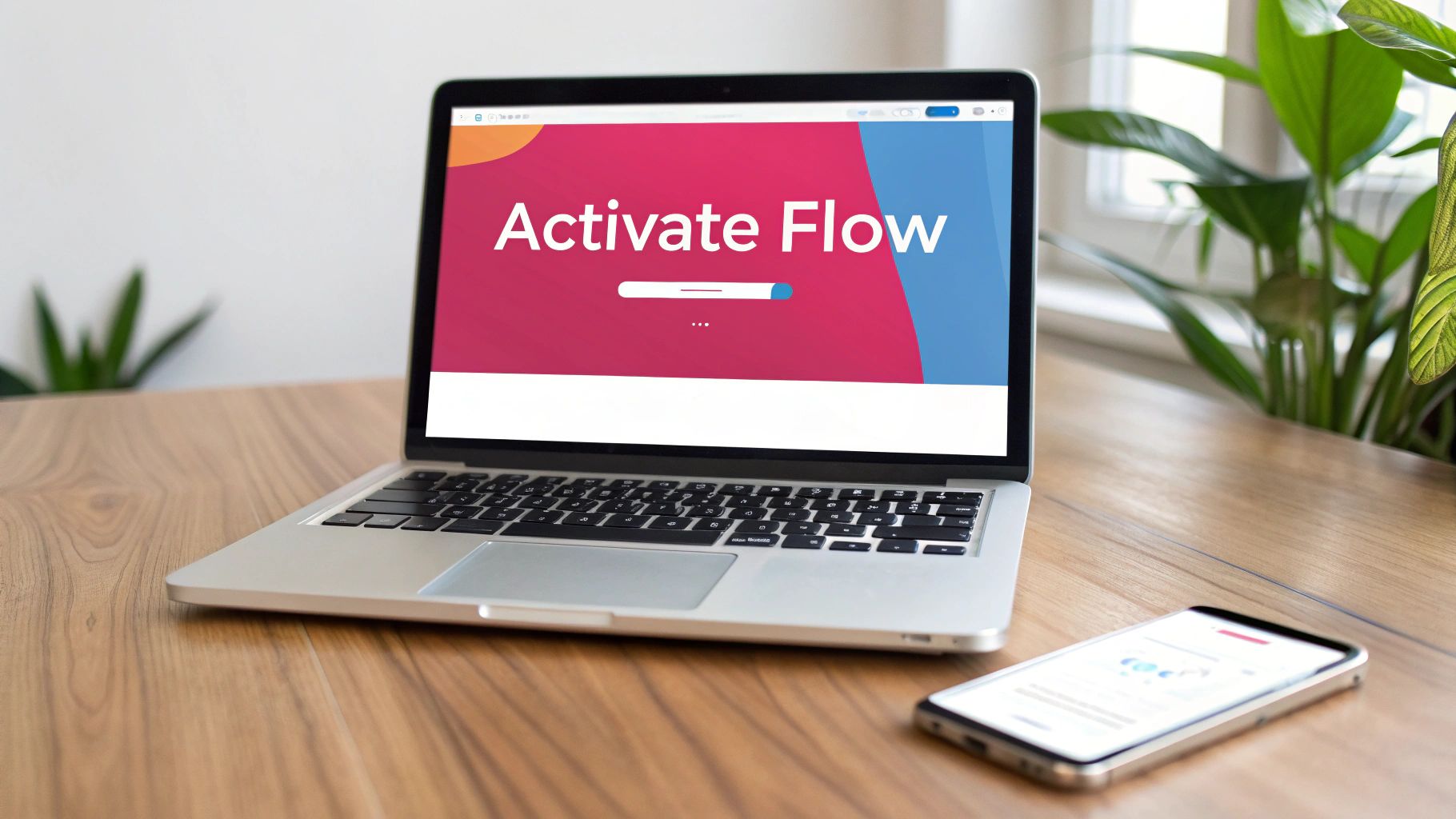
This simple dashboard is your command center. From here, you can build powerful, automated SMS conversations that just work.
Step 1: Crafting Your Initial Outreach Message
Your first text is everything. It needs to be timely, personal, and—most importantly—open the door for a real chat. With CartBoss, you can lean on pre-written, translated templates that are already optimized for engagement, so you’re not starting from a blank slate.
A solid first message has to do three things:
- Acknowledge the Context: Gently remind the customer about the item they left behind. Just mentioning the product by name makes the message instantly relevant.
- Ask an Open-Ended Question: This is key. Instead of just blasting a link, invite a reply. A simple “Any questions about it?” or “Need help with sizing?” is all it takes to start a conversation.
- Provide an Easy Way Back: Always include a pre-filled checkout link. This removes all the friction, letting them finish their purchase in one click if they’re ready.
For instance, a great first message might look like this:
“Hey [Customer Name], we saw you left the Summit Adventure Backpack in your cart. It’s one of our best-sellers! Just wondering if you had any questions about it? You can finish your order here: [Short Link]”
See how that works? It’s friendly, specific, and not pushy at all. It feels less like a marketing blast and more like a helpful store associate checking in, which is the whole point of conversational text messaging.
Step 2: Setting Up Smart Automated Replies
The real magic kicks in when a customer actually replies. This is where your automated system needs to feel genuinely human. They might ask about shipping costs, return policies, or if there’s a discount code. Answering every single one by hand? Impossible to scale.
That’s why setting up automated replies for common keywords is a game-changer. Inside CartBoss, you can create simple “if-then” rules that trigger specific responses based on what the customer texts back. This feature is the engine behind a powerful auto SMS responder.
Think about the most common questions you get day in and day out:
- Shipping: If a customer’s reply contains words like “shipping,” “delivery,” or “free,” you can trigger an automatic response that explains your shipping policy and links to more details.
- Discounts: For words like “coupon,” “discount,” or “sale,” you can automatically send them an exclusive code to sweeten the deal and close the sale.
- Returns: Queries with “return” or “exchange” can fire off a message explaining your policy, building the trust they need to buy with confidence.
Setting this up is dead simple. You define the keywords, then write the reply you want to send. This ensures customers get instant, accurate answers, clearing the path to purchase without any frustrating delays. To see just how powerful this can be, you can learn more about how an auto SMS responder can revolutionize your customer communication.
Step 3: Creating a Seamless and Natural Experience
The final piece of the puzzle is making sure the entire interaction feels smooth and, well, human. A great conversational flow doesn’t just answer questions—it guides the customer back to their cart without being pushy. The language should always be helpful and empathetic.
And what happens if your system doesn’t recognize a keyword? Have a fallback message ready to go. Something simple like, “I’m not sure I understand, but one of our team members will get back to you shortly!” ensures the customer never hits a dead end. This little safety net keeps the experience positive, even when automation can’t solve the problem on its own.
Remember, the ultimate goal here is to remove friction. Every single message, from the first hello to the final confirmation, should make the customer’s journey easier. By using a tool like CartBoss to automate these conversations, you’re not just recovering sales—you’re building customer loyalty and delivering an exceptional experience every time. Your brand becomes more than just a store; it becomes a trusted, helpful resource.
Best Practices and Common Mistakes to Avoid
Rolling out a conversational text messaging strategy isn’t just about writing clever messages. It’s a whole approach built on respect, being clear, and playing by the rules. Nail this, and your SMS channel becomes a trusted way to talk to customers. Mess it up, and you risk hurting your brand and even getting into legal hot water.
Think of it like being invited into someone’s personal space. Text messages are direct and personal, so the way you communicate needs to reflect that. The goal is to walk that fine line between being helpful and available without ever crossing over into being annoying.
This means you need some clear ground rules right from the start. From getting proper consent to making it a breeze to opt-out, these practices are absolutely essential for building a strategy that not only recovers sales but also creates loyal customers for the long haul.
The Golden Rules of Ethical Texting
Before you hit “send” on a single message, you have to build a foundation of trust. This isn’t just good business sense—it’s a legal must-have. Violating regulations like the TCPA in the US or GDPR in the EU can lead to some seriously hefty fines.
The most important first step is getting explicit consent. A customer has to knowingly and willingly agree to get texts from you. You can do this with a checkbox at checkout (that is not pre-checked) or a straightforward opt-in form.
Once you have permission, that very first message is your chance to set the right tone. It should always:
- Confirm the Subscription: “Hey [Name], you’re all set to receive updates from [Your Brand]!”
- State the Frequency: Let them know roughly how often you’ll be in touch.
- Provide an Easy Opt-Out: Clearly state, “Reply STOP to unsubscribe at any time.”
This first interaction shows you respect their inbox and builds confidence right away.
Common Pitfalls That Kill Engagement
Even with the best intentions, it’s surprisingly easy to make mistakes that can tank your whole SMS strategy. One of the biggest offenders is sending way too many messages. Bombarding customers with daily texts is a surefire way to get them to hit that “STOP” button. Stick to a reasonable schedule that adds real value, not just noise.
Another major mistake is sounding like a robot. Conversational text messaging is supposed to feel natural and human. Drop the corporate jargon and use friendly, clear language that sounds like your brand. If a message reads like it was written by a machine, people will treat it like one.
The goal is to make every text feel like a helpful, one-on-one dialogue, not a mass-produced advertisement. A message that’s personal and relevant is welcomed; a generic blast is just spam.
Finally, never, ever make it hard to opt out. Hiding the unsubscribe instructions or ignoring requests is not only a terrible experience for the customer but also illegal. A simple, clear process shows you respect their choice and helps keep your contact list full of engaged people who actually want to hear from you. To dive deeper into what to avoid, check out our guide on common mistakes in SMS cart recovery.
Balancing Automation with a Human Touch
Automation is your best friend for scaling your SMS efforts, but you have to know when a real person needs to jump in. Your system should be smart enough to handle common questions about shipping or discounts, but more complex or emotional issues need a personal touch.
Make sure you have a clear process for escalating conversations to a live agent. If your automated flow can’t understand a reply or senses frustration, it should immediately flag it for a team member to take over. This makes sure no customer feels like they’re stuck talking to a wall.
This hybrid approach gives you the best of both worlds. You get the efficiency of automation for the routine stuff and the empathy of a real person for the moments that truly matter. That’s how you build strong customer relationships that last.
Got Questions About Conversational Text Messaging? We’ve Got Answers.
Jumping into something new like conversational text messaging is bound to bring up a few questions. That’s a good thing. It means you’re thinking seriously about how to connect with your customers in a better way.
Let’s clear up some of the most common questions we hear from store owners. We’ll tackle the real-world stuff—costs, what happens when automation gets stumped, and what really makes this different from any old marketing text.
Is This Actually Affordable for a Small Shop?
One of the biggest misconceptions out there is that a smart SMS strategy is only for the big players with deep pockets. That couldn’t be further from the truth. Modern tools have made this approach incredibly budget-friendly, especially when you look at the return you get.
Unlike paying for ads where you’re charged for clicks that might go nowhere, conversational SMS often works on a pay-for-performance basis. You’re typically only paying when the system does its job and recovers a sale. This takes a ton of financial risk off the table.
Think about it this way: what’s the cost of a lost sale compared to the tiny cost of a single text that brings that customer right back? The math almost always pencils out, especially when a few recovered carts can make a huge difference to your monthly numbers.
For example, spending $5 on texts to recover a $150 abandoned cart is a no-brainer. That’s a massive return that’s tough to find anywhere else, making it one of the smartest moves a growing business can make.
What if the Automation Doesn’t Understand a Customer’s Reply?
This is a great question because, let’s be real, no automated system is flawless. Customers are unpredictable. They’ll ask weird questions, use slang, or type something your automated flow just doesn’t recognize. So, what then?
A well-built conversational text messaging platform doesn’t just throw up its hands and quit. It has a smart backup plan.
- It Sends a Fallback Message: The system can fire off a polite, human-sounding reply like, “I’m not quite sure I follow, but I’ve flagged this for our support team. They’ll get back to you shortly!”
- It Escalates to a Human: That confusing message instantly gets forwarded to a real person on your team. This creates a smooth handoff from bot to human, so the customer never feels like they’re stuck talking to a wall.
This hybrid model gives you the best of both worlds: you get the speed and scale of automation for the easy stuff, plus the empathy and smarts of a real person for everything else. No matter what a customer throws at you, they get a good experience.
How Is This Different From a Regular Marketing Blast?
This is probably the most important thing to get your head around. While both use text messages, they’re as different as a megaphone and a telephone.
A generic marketing blast is a one-way street. It’s a broadcast you shout out to a massive list to announce something, like a flash sale or a new product drop. The brand is talking at everyone.
Conversational text messaging, however, is all about starting a two-way dialogue.
| Feature | Generic SMS Blast | Conversational Text Messaging |
|---|---|---|
| Goal | To inform or announce (one-way) | To engage and assist (two-way) |
| Timing | Scheduled for a mass send | Triggered by a specific customer action |
| Content | The same message for everyone | Personal, relevant, and based on what they just did |
| Tone | Usually promotional or salesy | Helpful, supportive, and feels human |
| Call to Action | “Shop Now!” or “Click Here!” | “Any questions?” or “How can I help?” |
At the end of the day, a blast is built for reach, but a conversation is built for connection. This approach zeroes in on what an individual customer needs right now, using their recent action (like abandoning their cart) as the reason to start a helpful chat. That personal touch is what turns a simple text into a powerhouse for building trust and recovering sales.
Ready to see how simple and effective this can be for your store? With CartBoss, you can launch a powerful conversational SMS strategy in minutes. Stop losing sales to abandoned carts and start turning those missed opportunities into loyal customers, all on autopilot. Get started with CartBoss and watch your revenue grow.