


At its core, the difference between SMS and MMS is simple: SMS (Short Message Service) is for text-only messages, while MMS (Multimedia Messaging Service) handles rich media like images, videos, and GIFs. Think of SMS as the classic, get-the-point-across text and MMS as its more vibrant, visual cousin.
A Clear Look at SMS vs MMS
To really get why these two are different, you have to look at how they started. Their separate development paths explain why one became the go-to for quick alerts and the other for eye-catching, media-heavy campaigns. The tech behind each one dictates everything from character limits to how much they cost.
Core Distinctions and Capabilities
SMS was born in the mid-80s, with the first message sent in 1992. It quickly became the standard for simple, reliable text communication. MMS showed up about a decade later, bringing the ability to send pictures and much longer messages along with it. This fundamental difference is what shapes how we use them for marketing today.
Here’s a quick breakdown of what sets them apart:
- Content Type: SMS is strictly for plain text, numbers, and basic symbols. MMS is where you can pack in images (JPEG, PNG), GIFs, audio clips, and short video files (MP4).
- Message Length: SMS is famous for its 160-character limit. Anything longer gets chopped up into multiple messages, which can bump up your costs and sometimes mess with delivery. If you want to dive deeper, you can learn more about why the SMS character limit is 160 characters. MMS, on the other hand, gives you way more room to play, often up to 1,600 characters in a single send.
- How They Get There: SMS messages use the standard cellular network’s control channel. This means they don’t need an internet or data connection to be delivered, which is why they’re so reliable. MMS messages are sent over a cellular data network, which is the main reason they cost more and can have slight hiccups in deliverability.
Quick Comparison of SMS vs MMS at a Glance
For a straightforward overview, this table sums up the key differences between SMS and MMS. It’s a handy reference for deciding which format fits your needs.
| Feature | SMS (Short Message Service) | MMS (Multimedia Messaging Service) |
|---|---|---|
| Media Support | Text and links only. | Images, GIFs, videos, audio files, and text. |
| Character Limit | 160 characters per message segment. | Up to 1,600 characters. |
| Primary Use Cases | Urgent alerts, confirmations, 2FA codes, quick updates. | Product showcases, promotions, abandoned cart visuals. |
| Typical Cost | Lower cost per message. | Higher cost per message (typically 2-3x more). |
Ultimately, both have their place. SMS is perfect for speed and reliability, while MMS is your best bet for making a strong visual impact.
A Detailed Technical and Financial Comparison
On the surface, the difference between SMS and MMS seems simple: one is for text, the other is for media. But when you dig a little deeper, you’ll find critical technical and financial distinctions that can make or break your marketing budget and campaign results. Getting these details right is key to making smart, cost-effective decisions for your brand.
The biggest technical difference is how the messages are actually sent. SMS messages travel over a cellular network’s control channel. Think of it as a highly reliable, dedicated pathway that doesn’t even need a data connection to work. This is why SMS delivery is practically universal.
MMS, on the other hand, is completely dependent on a mobile data connection. This makes it vulnerable to things like bad reception or a customer simply having their mobile data turned off.
Analyzing the Cost Structures
From a purely financial standpoint, the infrastructure needed to handle media files makes MMS inherently more expensive. That extra data transmission and carrier processing adds up, resulting in a higher price tag for every single message you send—a crucial detail when you’re planning campaigns at scale. You can get a full rundown of the ROI in our article on the costs of sending text messages and the results they bring.
This cost gap is pretty significant. SMS messages usually cost between $0.01 and $0.05 each. MMS messages are often three times that, typically ranging from $0.04 to $0.20 per message.
While MMS lets you send much richer content with up to 1,600 characters plus media, SMS continues to dominate because of its lower cost and pure simplicity. It’s a powerhouse tool for businesses. When you consider that over 2.1 trillion combined SMS and MMS messages are sent each year in the U.S. alone, that cost difference becomes a major strategic factor.
Key Takeaway: The price difference boils down to the delivery method. SMS uses a low-cost, universal cellular channel, while MMS needs more expensive data infrastructure. This directly impacts the price you pay per message.
Here’s a quick table to break down the technical specs and costs side-by-side.
Technical Specifications and Cost Breakdown
This table gives a clear overview of the key differences you need to consider when choosing between SMS and MMS for your campaigns.
| Specification | SMS Details | MMS Details |
|---|---|---|
| Character Limit | 160 characters (GSM-7) / 70 (Unicode) | Up to 1,600 characters |
| Media Support | Text and links only | Images, GIFs, videos, audio |
| Typical Cost | $0.01 – $0.05 per message | $0.04 – $0.20 per message |
| Delivery Method | Cellular control channel (no data needed) | Mobile data connection (required) |
| File Size Limit | N/A | Up to 3.75MB (carrier limits vary) |
Understanding these limits is essential for crafting messages that not only look good but also get delivered without blowing your budget.
Technical Limitations and Delivery Prerequisites
Beyond the cost, there are some specific technical limits that define how you can use each format. For SMS, the big one is character encoding. Messages using the standard GSM-7 encoding (your basic letters and numbers) fit nicely into the 160-character limit.
But here’s the catch: if you add just one special character or an emoji, the message flips to Unicode encoding. This instantly drops the character limit to just 70 characters per message segment. If you’re not careful, this can unexpectedly triple your sending costs.
For MMS, the main hurdle is file size. While the official standard supports files up to 3.75MB, most carriers enforce their own, much smaller limits—usually somewhere between 500KB and 1MB. This means you have to get good at optimizing your images and videos to make sure they actually get delivered.
And don’t forget about other nuances like international text message costs, which can add another layer of complexity to your financial planning.
How SMS and MMS Actually Impact Customer Engagement
The choice between SMS and MMS isn’t just a technical one—it completely changes how customers feel about and interact with your brand. Each format has a distinct psychological effect. One drives urgency, and the other creates a memorable, immersive experience. Getting this difference right is the key to building campaigns that actually work.
SMS feels personal and immediate. Its simplicity and short format demand attention, making it the perfect tool for time-sensitive info that needs a quick response. This directness creates a sense of importance that visuals can sometimes water down.
On the other hand, MMS messages are built for storytelling and visual appeal. By including images, GIFs, or short videos, you turn a simple notification into an engaging piece of content. This format is brilliant for showcasing products, showing off your brand’s personality, and making promotional offers feel more substantial and exciting.
Driving Action vs. Building a Connection
The real difference in engagement between SMS and MMS comes down to what you want the customer to do. Are you pushing for an immediate click, or are you trying to build a lasting brand impression?
- SMS for Urgency: This is your go-to for flash sale alerts, shipping notifications, and appointment reminders. The text-only format cuts through the digital noise and gets people to act now.
- MMS for Immersion: Perfect for new product launches, seasonal promos, and abandoned cart reminders where seeing the product can spark that desire all over again.
Think about a special offer campaign. A plain-text SMS saying “20% off today only!” is effective and straight to the point. But an MMS showing a gorgeous, vibrant image of the product with the same offer can create an emotional connection, making the deal far more tempting. In fact, research shows MMS campaigns can pull in 15% to 20% higher engagement than standard SMS.
A visually compelling MMS can dramatically lift click-through rates and brand recall compared to a text-only message. The ability to see a product or a creative graphic makes the offer more tangible and memorable for the customer.
Matching the Format to Your Campaign Goals
At the end of the day, the best strategies match the message format to what you’re trying to achieve. For transactional messages where speed and clarity are everything, SMS is the undisputed champ. Its sky-high open rates ensure critical information is seen almost instantly. You can learn more about why consumers are so receptive to business texts by checking out these key SMS marketing statistics.
But for marketing campaigns designed to inspire, delight, and persuade, MMS gives you the creative canvas you need to capture attention. A well-designed MMS can feel less like a notification and more like a personalized piece of branded content, building a deeper connection with your audience and driving better-quality engagement over time.
Choosing the Right Message for E-commerce
Knowing the technical difference between SMS and MMS is one thing; understanding how to use them to actually drive e-commerce sales is a completely different ballgame. The format you choose can make or break a campaign, turning a simple notification into a powerful conversion tool. Your choice should always come back to a specific business goal—are you aiming for immediate action or visual persuasion?
For the essential, time-sensitive stuff, SMS is the undisputed champion. Its high deliverability and urgent feel make it perfect for the transactional messages customers are actually waiting for. On the flip side, MMS gives you a rich canvas for marketing, letting you show off products and create a more compelling brand experience that builds desire.
When to Use SMS for Maximum Impact
SMS shines when your message has to be seen and acted on immediately. Its concise, text-only nature cuts straight through the digital noise, making it the ideal choice for high-priority updates.
You’ll want to use SMS for:
- Order Confirmations: Instantly reassure customers that their purchase went through with a quick, professional text. No fluff needed.
- Shipping Updates: Keep buyers in the loop with real-time tracking alerts. This builds trust and massively cuts down on “where is my order?” support tickets.
- Flash Sale Announcements: Create a powerful sense of urgency for limited-time offers that demand an immediate response.
Key Insight: Think of SMS as your reliable workhorse for speed and clarity. Use it when getting the message across instantly is more important than visual flair. Its near-perfect open rates guarantee your most critical messages get seen.
Driving Conversions with MMS
When your goal is to persuade and entice, MMS is where you’ll get the most bang for your buck. The ability to include images, GIFs, and even short videos transforms a simple promotion into an engaging interaction that can seriously boost your revenue. For a deeper look at crafting these campaigns, check out our ultimate guide to SMS message types and strategies.
Deploy MMS for these high-conversion opportunities:
- Abandoned Cart Recovery: Send a message with a high-quality image of the exact item left behind. This is a powerful visual reminder that can reignite a customer’s initial interest and pull them right back to the checkout.
- New Product Launches: Announce your latest arrivals with a vibrant image or a short, exciting video. Actually showing the product in action is far more compelling than trying to describe it with text.
- Seasonal Promotions: Capture the holiday spirit with an eye-catching GIF or a beautifully designed graphic. Visuals make your offers feel more special and can increase click-through rates by over 50%.
Ultimately, the most effective strategy uses both. Lean on SMS for your urgent, functional messages and unleash MMS for visually-driven marketing campaigns. This balanced approach will maximize both customer satisfaction and your sales numbers.
Deliverability and Compliance: Getting It Right
Beyond the basics of cost and character counts, what really determines the success of your text campaigns are two things: deliverability and compliance. The technology behind SMS and MMS directly affects how reliably your messages land in your customers’ inboxes and the legal hoops you need to jump through. Getting this wrong isn’t an option.
SMS is the old reliable. It works on the core cellular network, not a data connection, which gives it near-universal deliverability. This is its superpower. Your message can reach almost any mobile phone out there, whether it’s a brand new smartphone or an old feature phone with data turned off.
MMS, on the other hand, has a few more hurdles to clear. For a customer to receive your message, they need a compatible phone, an active mobile data plan, and a decent signal. On top of that, mobile carriers can be a bit more aggressive with filtering multimedia content, which means there’s a slightly higher chance your message might not make it through.
Staying on the Right Side of the Law
This is the part you absolutely have to pay attention to. Both SMS and MMS marketing are governed by strict rules designed to protect people from spam. Ignoring them can lead to massive fines and serious damage to your brand’s reputation.
Here are the big ones you need to know:
- Telephone Consumer Protection Act (TCPA): This is the key US law. It requires you to get clear, written consent from a customer before you send them any marketing texts.
- General Data Protection Regulation (GDPR): If you’re messaging anyone in the European Union, GDPR’s strict data privacy and consent rules apply just as much to text marketing as they do to email.
Crucial Takeaway: Consent is everything. You must have a rock-solid record of how and when every single customer opted in to receive your messages. It’s your best defense and a cornerstone of building customer trust.
To keep your campaigns compliant, you also have to provide a dead-simple way for people to opt out, like replying with “STOP.” For a deeper dive into the specifics, check out our guide on how the TCPA impacts your text message campaigns. Following these rules isn’t just about avoiding penalties; it’s about respecting your customers, which is priceless.
Building Your Messaging Strategy
Deciding between SMS and MMS isn’t about picking one over the other forever. The real secret is building a flexible playbook that uses both. A smart strategy mixes their unique strengths, deploying the right message at the right time to get the best engagement and, ultimately, more sales.
It all starts with your goal. What are you trying to achieve with this specific message? If you need a customer to take immediate action—like confirming an order or tracking a shipment—the raw speed and 98% open rates of SMS are unbeatable. It’s direct, it’s urgent, and it gets seen.
A Hybrid Approach for Maximum ROI
But what about more persuasive campaigns, like abandoned cart recovery? This is where a hybrid strategy really shines. Don’t jump straight to the expensive option.
Start with a simple, cost-effective SMS to gently nudge the customer back. If they don’t bite after a few hours, then you can follow up with a visually striking MMS showing them exactly what they left behind.
This tiered approach is powerful because it respects the customer’s attention while escalating the persuasion. The first SMS is a low-cost reminder. The follow-up MMS uses a great product image to reignite that initial spark of desire.
This decision tree breaks down the very first question you should ask: is guaranteed delivery my absolute top priority?
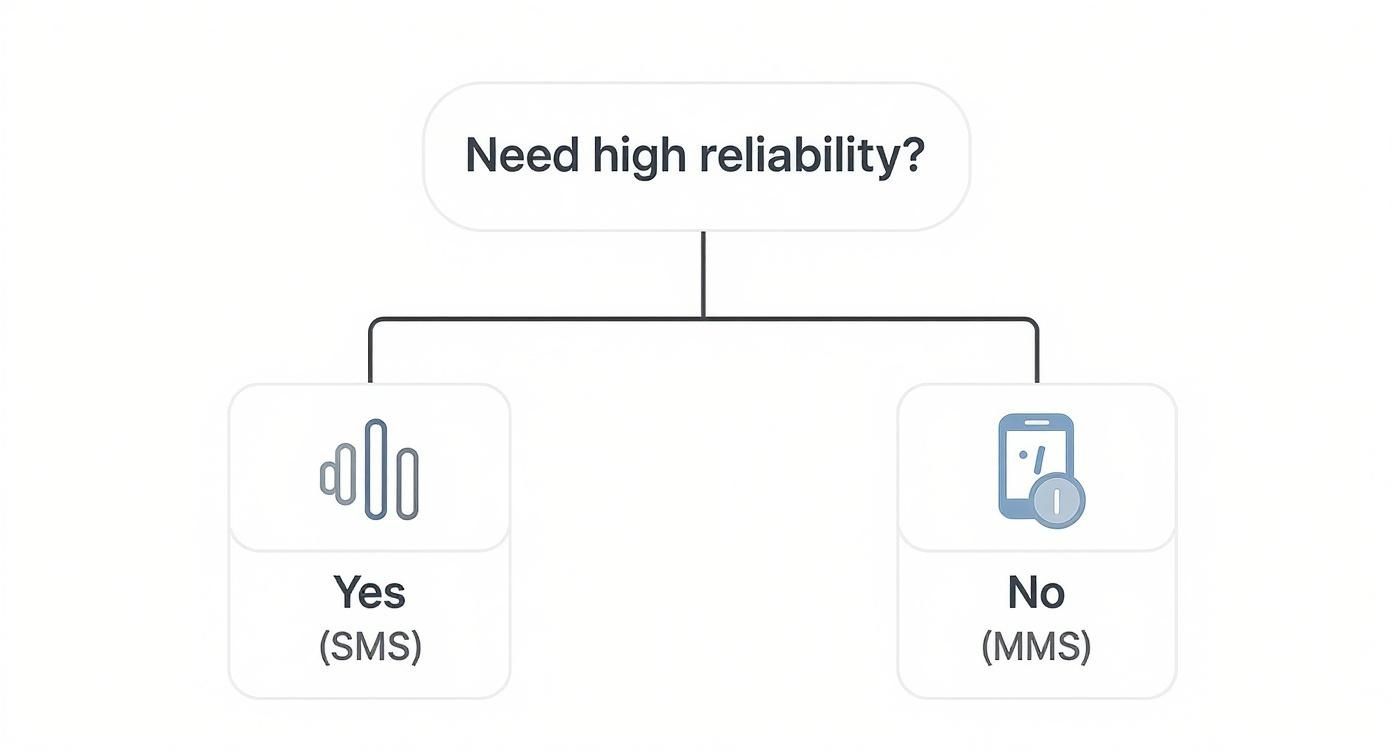
As you can see, when a message absolutely, positively has to get through, SMS is the clear winner. Its independence from mobile data gives it a huge reliability advantage.
Finally, think about your audience. Where do they live and what tech do they use? In places like the USA and Canada, SMS is king. But in countries where apps like WhatsApp are dominant, the effectiveness of SMS and MMS can dip. For any international brand, understanding these global trends is crucial. You can dig into more data on how messaging app penetration impacts SMS and MMS usage worldwide to inform your strategy.
By weighing your campaign goal, your audience, and your budget, you can move beyond a simple SMS vs. MMS debate and build a smarter messaging strategy that actually gets results.
Frequently Asked Questions
Digging into the details between SMS and MMS is how you sharpen your messaging strategy. Let’s tackle some of the most common questions that pop up when marketers are deciding which format to send.
What Happens If an MMS Is Sent to a Non-Supported Phone?
This is a big one, especially when you’re counting on every message to land perfectly. If you fire off an MMS with a killer GIF to a phone that can’t handle it—think older flip phones or even a smartphone with data turned off—the carrier has a fallback plan.
Instead of seeing the media, your customer gets a plain text SMS with a link. Clicking it opens a browser where they can view the image or GIF. It gets the job done, sure, but it does add an extra step for the user and softens that immediate visual punch you were going for.
Which Is Better for Abandoned Cart Recovery?
Honestly, neither one is the “best.” The real magic happens when you use them together. The most effective play is to lead with a simple, high-impact SMS as your first reminder. It’s urgent, it gets read almost instantly, and it’s the perfect low-cost nudge to get things started.
But what if that first text doesn’t seal the deal? That’s when you bring out the big guns. Follow up with an MMS that puts a picture of the abandoned product right in front of them. Seeing that item again can be just the push they need to head back to checkout.
How Does Message Length Affect My SMS Costs?
This is where you need to pay close attention, because message length hits your budget directly. A standard SMS gives you 160 characters to work with. Go over that limit, and your message gets chopped into multiple segments, and guess what? You get billed for each one like it’s a separate text.
It gets even trickier with emojis. Toss just one non-standard character (like an emoji) into your message, and the encoding switches to Unicode. This slashes your character limit per segment all the way down to just 70. A message that looks short can quickly turn into three or four billable texts, so always keep an eye on your character count to keep costs in check.
Ready to turn abandoned carts into your biggest revenue source? CartBoss uses a smart, automated combination of SMS and MMS to recover lost sales on autopilot. Start recovering sales today with CartBoss.