



Ready to Supercharge Your Online Store?
Want to boost sales and outperform competitors? This listicle delivers 10 proven e-commerce growth strategies to elevate your online store in 2025. Learn how to leverage Search Engine Optimization (SEO), Conversion Rate Optimization (CRO), social media, email automation, personalization, mobile optimization, customer loyalty programs, omnichannel integration, influencer marketing, and data analytics to drive growth. These core strategies are essential for increasing revenue, improving customer engagement, and achieving sustainable success in the competitive e-commerce landscape. Let’s get started!
1. Search Engine Optimization (SEO)
Search Engine Optimization (SEO) is a cornerstone of any successful e-commerce growth strategy. It’s the process of optimizing your online store to rank higher in search engine results pages (SERPs) like Google, Bing, and others. By improving your visibility in organic (non-paid) search results, you drive more qualified traffic to your website, ultimately increasing sales and revenue. E-commerce SEO isn’t just about getting any traffic; it’s about attracting potential customers actively searching for products like yours. This targeted approach makes organic traffic highly valuable, often converting at a higher rate than traffic from other sources. For e-commerce businesses, this means attracting customers who are already in the buying mindset.

SEO encompasses a range of techniques, all working together to improve your search engine rankings. This includes technical aspects, such as optimizing your website’s speed and mobile responsiveness, as well as content optimization, where you craft product descriptions and blog posts that resonate with both search engines and users. A crucial component is keyword research, identifying the terms your target audience uses when searching for products. By strategically incorporating these keywords into your website content, you signal to search engines the relevance of your offerings. Link building, another key element, involves acquiring backlinks from reputable websites, which acts as a vote of confidence in the eyes of search engines. For e-commerce specifically, this translates to optimizing product pages and category structures to align with user search intent.
Successful e-commerce SEO implementation can be seen in industry leaders like Wayfair, known for its detailed product descriptions and customer reviews, which provide valuable content and build trust. Home Depot excels in local SEO, ensuring their physical store locations appear prominently in local search results. Etsy leverages long-tail keyword optimization, targeting niche product searches and capturing a specific audience. These examples showcase the diverse applications of SEO within the e-commerce landscape.
Implementing effective SEO for your e-commerce store requires a multi-faceted approach. Start by focusing on long-tail keywords. These are longer, more specific phrases that reflect the actual search queries of your target audience. For instance, instead of targeting “shoes,” you might optimize for “women’s running shoes size 8.” Optimize product images with descriptive alt text, providing context for search engines and improving accessibility. Create category pages that target broader keywords, organizing your products and simplifying navigation for users. Implementing customer reviews is a powerful way to generate fresh content and build social proof. Tools like Google Search Console are invaluable for monitoring your website’s performance in search results and identifying areas for improvement.
The advantages of SEO are numerous. It’s a highly cost-effective way to generate long-term traffic. Compared to paid advertising, organic traffic represents a sustainable source of leads and customers. Organic search often yields higher conversion rates because users actively searching for specific products are more likely to purchase. SEO also builds brand credibility and trust. Ranking high in organic search results positions your brand as an authority in your industry. Over time, consistent SEO efforts can build a sustainable competitive advantage, making it harder for new competitors to overtake your position.
However, SEO is not without its challenges. It takes time to see significant results, typically 3-6 months. It requires ongoing effort and expertise to stay ahead of algorithm changes and maintain rankings. The landscape is highly competitive, especially for popular keywords. Algorithm changes can impact your rankings, requiring adaptation and refinement of your strategies.
Despite the challenges, the benefits of SEO for e-commerce growth are undeniable. By driving organic traffic, building brand authority, and generating sustainable leads, SEO establishes a strong foundation for long-term success. Learn more about Search Engine Optimization (SEO) and start implementing these strategies today to unlock the full potential of your e-commerce business. This approach deserves its place in any e-commerce growth strategy list because it tackles the core challenge of visibility and drives qualified, high-converting traffic, leading to sustainable growth and a stronger online presence.
2. Conversion Rate Optimization (CRO)
Conversion Rate Optimization (CRO) is a crucial e-commerce growth strategy focusing on maximizing the percentage of website visitors who complete desired actions—primarily making a purchase. Instead of simply driving more traffic to your site, CRO focuses on getting more value from your existing visitors. It’s a systematic process involving analyzing user behavior, rigorously testing different elements of your website, and making data-driven improvements to enhance the shopping experience and ultimately boost sales. Why does this deserve a spot on the list of top e-commerce growth strategies? Because it directly addresses the bottom line by turning browsers into buyers, leading to more efficient use of marketing budgets and a better return on investment.
CRO encompasses a range of tactics, including A/B testing of product pages and checkout flows, user experience (UX) analysis and improvements, cart abandonment reduction strategies, mobile optimization, and increasingly, personalization based on user behavior. Imagine a leaky bucket: instead of pouring more water (traffic) into the bucket, you fix the leaks (conversion issues) to retain more of what you already have.
For instance, A/B testing might involve comparing two versions of a product page with different call-to-action buttons to see which performs better. UX analysis could reveal navigation issues that hinder users from finding desired products. Cart abandonment strategies often utilize exit-intent popups or email reminders to recapture lost sales. Mobile optimization ensures a seamless experience for users on smartphones and tablets, recognizing the growing dominance of mobile commerce. Finally, personalization tailors the shopping experience to individual users based on their browsing history or purchase patterns.
Several well-known e-commerce giants effectively use CRO. Amazon’s one-click purchasing drastically simplifies the checkout process, minimizing friction and encouraging impulse buys. Their recommendation engine, powered by sophisticated algorithms, also boosts sales by suggesting relevant products based on user behavior. Shopify is renowned for its streamlined checkout process, allowing customers to purchase quickly and easily. Booking.com uses urgency indicators (“Only 2 rooms left!”) and social proof (“10 other people are looking at this hotel”) to nudge hesitant visitors towards conversions.
The benefits of CRO are substantial. It offers an immediate impact on revenue without the need to increase traffic, essentially making your existing marketing efforts more profitable. It also improves return on advertising spend (ROAS) by ensuring that the traffic you pay for converts at a higher rate. By relying on data and analysis, CRO reduces guesswork and allows for informed decisions. Furthermore, a focus on user experience inherently enhances the overall customer journey, fostering loyalty and positive brand perception.
However, CRO isn’t without its challenges. It requires statistical significance for accurate A/B testing, meaning you need sufficient data to ensure your results aren’t due to chance. Running proper tests can be time-consuming, especially for complex websites with multiple variables. You might need specialized tools and expertise to conduct thorough analyses and implement changes. Finally, some changes aimed at improving one metric could negatively impact others, requiring careful monitoring and adjustment.
To get started with CRO, focus on high-traffic pages for faster test results. Test one element at a time for clear insights, avoiding the confusion of multivariate testing initially. Prioritize reducing friction in the checkout process, as this is where many potential sales are lost. Use heat maps to understand user behavior, visualizing where they click, scroll, and linger on your pages. Implement exit-intent popups to recover abandoning visitors by offering incentives or addressing their concerns. Learn more about Conversion Rate Optimization (CRO)
The following infographic visually represents the potential impact of CRO on key metrics.
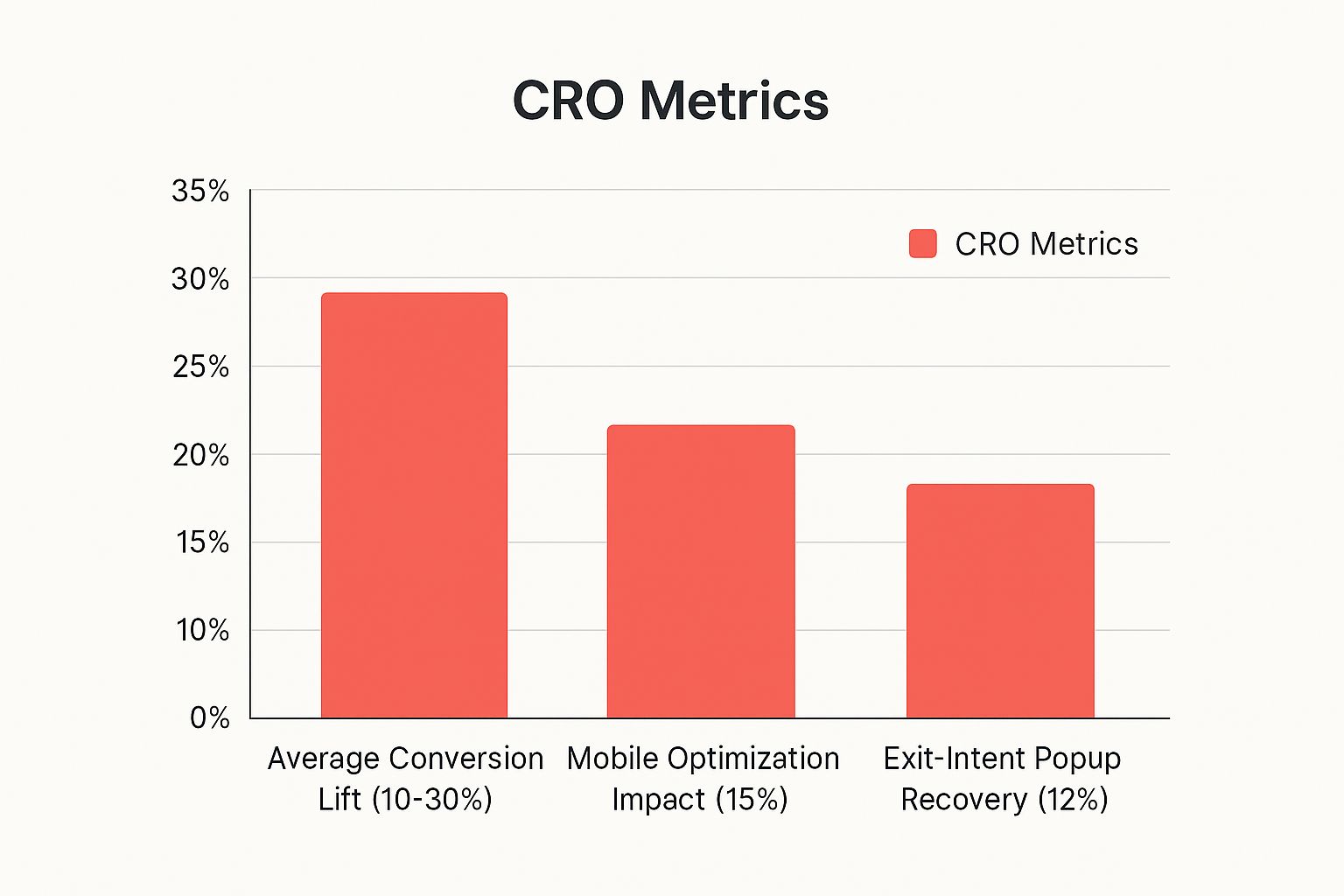
This bar chart demonstrates the potential gains achievable through focused CRO efforts, including an average conversion lift of 10-30%, a 15% increase from mobile optimization, and a 12% recovery rate from exit-intent popups. These improvements, even seemingly small, can compound to create significant revenue gains over time.
By focusing on CRO, e-commerce businesses can significantly improve their profitability and build a sustainable growth strategy. It’s not just about attracting more visitors; it’s about making the most of every visitor who lands on your website, converting them from passive browsers into loyal customers.
3. Social Media Marketing
Social media marketing is a cornerstone of modern e-commerce growth strategies. It leverages the power of platforms like Instagram, Facebook, TikTok, and Pinterest to connect with potential customers where they already spend a significant amount of their time. This approach goes beyond simply posting product photos; it involves building brand awareness, engaging with customers, and driving sales through a combination of organic content and paid advertising campaigns. It’s a vital strategy for any e-commerce business aiming to expand its reach and boost sales in today’s competitive digital landscape.

Social media marketing offers a wealth of features specifically designed for e-commerce. These include integrated shopping tags that allow customers to purchase products directly within the platform, simplifying the buying process. Influencer partnerships and collaborations provide access to engaged audiences and build trust through social proof. User-generated content campaigns encourage customers to share their experiences, creating authentic and relatable content that resonates with potential buyers. Furthermore, social media advertising offers precise targeting options, enabling you to reach specific demographics and interests. This level of granularity helps optimize ad spend and ensures your message reaches the right people. Finally, and perhaps most importantly, social media facilitates community building and customer engagement, fostering loyalty and driving repeat business.
One of the key advantages of social media marketing is its ability to provide direct access to engaged audiences. Platforms like Instagram and TikTok are built on communities of users actively seeking information, entertainment, and connection. This presents a unique opportunity for e-commerce businesses to tap into pre-existing networks and connect with potential customers on a personal level. Visual storytelling opportunities are another powerful aspect of social media. High-quality images and videos can showcase products in a compelling way, highlighting their features and benefits and driving desire. Moreover, social media enables real-time customer feedback and interaction. This two-way communication allows businesses to address concerns, build relationships, and gather valuable insights into customer preferences. For businesses targeting younger demographics, social media offers cost-effective reach compared to traditional advertising methods.
However, social media marketing isn’t without its challenges. Algorithm changes can significantly impact organic reach, making it more difficult for your content to be seen without paid promotion. It also requires consistent content creation, which can be time-consuming and resource-intensive. Negative feedback and customer service issues can spread rapidly on social media, requiring proactive reputation management. Finally, accurately measuring the return on investment (ROI) of social media campaigns can be complex, requiring careful tracking and analysis.
Several brands have successfully leveraged social media marketing to drive e-commerce growth. Glossier, for instance, built its brand almost entirely through an Instagram-first strategy, focusing on user-generated content and community engagement. Fashion Nova’s influencer-driven growth demonstrates the power of leveraging social media personalities to reach a wider audience. Warby Parker’s try-at-home campaigns, heavily promoted on social media, encouraged customer participation and generated buzz around their products.
As your e-commerce business grows, you’ll likely expand your presence across various social media platforms. Effectively juggling these accounts is crucial for maintaining a consistent brand image and maximizing your reach. For practical tips and strategies on streamlining your social media workflow, check out this guide on managing multiple social media accounts.
To maximize your e-commerce growth strategies using social media, consider the following tips: Choose the platforms where your target audience is most active. Don’t spread yourself too thin. Focus your efforts where they will have the greatest impact. Post consistently and engage authentically with your followers. Build relationships, respond to comments and messages, and foster a sense of community. Use high-quality visuals that showcase your products effectively. Invest in professional photography or videography to create engaging content. Leverage user-generated content for social proof and build trust with potential customers. Finally, track relevant social commerce metrics that go beyond vanity metrics like likes and followers. Focus on metrics that directly impact your bottom line, such as website clicks, conversions, and revenue generated through social media channels. By implementing these e-commerce growth strategies, you can leverage the power of social media to connect with your target audience, build brand loyalty, and drive significant business growth.
4. Email Marketing Automation
Email marketing automation is a powerful e-commerce growth strategy that leverages triggered, personalized email sequences to nurture leads, recover abandoned carts, retain customers, and ultimately increase customer lifetime value. It stands as a crucial component of any successful online business, offering a direct line of communication to engage shoppers and drive conversions. This approach moves beyond generic email blasts and focuses on delivering the right message, to the right person, at the right time, based on individual customer behavior and preferences. This personalized approach makes email marketing automation an essential strategy for anyone seeking effective e-commerce growth.
At its core, email marketing automation works by setting up predefined triggers based on specific customer actions or attributes. These triggers then initiate automated email sequences designed to achieve a particular goal. For example, when a new visitor subscribes to your newsletter, they might be automatically enrolled in a welcome series. Alternatively, if a customer adds items to their cart but doesn’t complete the purchase, an abandoned cart recovery sequence can be triggered. This targeted approach allows for highly personalized messaging that resonates with customers and encourages desired actions.
The features that enable this powerful automation are diverse and impactful. A welcome series for new subscribers helps build rapport and introduce your brand. Abandoned cart recovery sequences recapture lost sales by reminding customers of their forgotten items and often offering incentives to complete the purchase. Post-purchase follow-up campaigns can solicit reviews, offer product recommendations, or promote related products, further enhancing customer lifetime value. Segmentation based on purchase behavior allows you to tailor messages to specific customer groups, like those interested in particular product categories or those who haven’t purchased in a while. And personalized product recommendations, based on past browsing history or purchase data, can significantly boost sales by showcasing relevant items.
The benefits of incorporating email marketing automation into your e-commerce growth strategies are numerous. It boasts a high return on investment (ROI), with an average return of $42 for every $1 spent. Automated nurturing saves valuable time and resources, allowing you to focus on other aspects of your business. The highly targeted and personalized messaging resonates with customers, leading to increased engagement and conversions. Furthermore, the results of email marketing automation are easily measurable with detailed analytics, providing insights into campaign performance and areas for improvement.
However, like any strategy, email marketing automation has its drawbacks. If not implemented thoughtfully, it can be perceived as spam, damaging your brand reputation. Maintaining a clean and up-to-date email list is essential to avoid deliverability issues and ensure your messages reach the intended recipients. The initial setup can also be somewhat complex, requiring careful planning and integration with your e-commerce platform.
Several successful e-commerce businesses exemplify the power of email marketing automation. Dollar Shave Club’s engaging welcome series effectively introduces their brand and sets the tone for a positive customer relationship. Sephora uses personalized product recommendations to entice customers with relevant items, increasing sales and customer satisfaction. Airbnb leverages location-based and behavioral triggers to send targeted offers and travel suggestions, driving bookings and enhancing the user experience.
To maximize the effectiveness of your email marketing automation, consider these actionable tips: Segment your email list based on customer behavior to deliver more relevant messages. Craft compelling subject lines to improve open rates. Include clear calls-to-action in every email to guide recipients towards desired actions. Test different send times and frequencies to optimize engagement. And finally, maintain list hygiene by regularly removing inactive subscribers to ensure deliverability and improve your overall metrics. Learn more about Email Marketing Automation to further refine your strategy.
Email marketing automation is a must-have for e-commerce businesses seeking to enhance their growth strategies. It offers a highly effective way to nurture leads, recover abandoned carts, retain customers, and ultimately increase lifetime value. By implementing the tips outlined above and learning from industry leaders, you can harness the power of email marketing automation to drive significant results for your online business. This strategy is particularly valuable for businesses with high cart abandonment rates, those operating in multiple languages, and those utilizing platforms like Shopify and WooCommerce. By automating personalized communications, you can optimize your marketing spend, enhance customer retention, and scale your business effectively, making it a deserving and valuable addition to any e-commerce growth strategy arsenal.
5. Personalization and Recommendation Engines
In today’s competitive e-commerce landscape, simply offering a wide selection of products is no longer enough to drive significant growth. Customers expect personalized experiences that cater to their individual needs and preferences. This is where personalization and recommendation engines come into play, making them a crucial e-commerce growth strategy. These powerful tools leverage customer data, browsing behavior, and purchase history to create tailored shopping experiences that boost engagement, increase average order value, and foster customer loyalty. This personalized approach includes features like product recommendations, customized content, and individualized offers. By anticipating customer needs and offering relevant suggestions, you can transform your online store from a simple product catalog into a personalized shopping advisor.
Personalization works by collecting and analyzing various data points about your customers. This data can include demographics, browsing history, past purchases, product ratings, and even social media activity. Sophisticated algorithms then process this information to identify patterns and predict future behavior. This enables your e-commerce platform to deliver targeted product recommendations, display relevant content, and offer personalized promotions. For instance, if a customer frequently purchases running shoes and views fitness apparel, the engine might recommend related items like running socks, workout leggings, or fitness trackers. This level of personalization creates a more engaging and relevant shopping experience, leading to increased conversions and customer satisfaction.
Examples of successful personalization and recommendation engine implementation abound. Amazon’s “Customers who bought this also bought” feature is a classic example of cross-selling and upselling through personalized recommendations. This feature leverages collaborative filtering, analyzing the purchase patterns of similar customers to suggest complementary or related products. Netflix’s content recommendation algorithm, another prime example, uses a combination of collaborative and content-based filtering to suggest movies and shows based on user viewing history and preferences. Similarly, Spotify utilizes personalized playlists and discovery features to offer users a curated music experience tailored to their individual tastes. These companies have demonstrated the power of personalization in driving engagement and retaining customers, making it a clear example of a powerful e-commerce growth strategy.
To effectively implement personalization and recommendation engines in your own e-commerce strategy, consider the following actionable tips:
- Start Simple: Begin with basic product recommendations, such as “related products” or “recently viewed items,” before implementing more advanced features like personalized search results or dynamic content. This allows you to gradually introduce personalization and gather data to refine your strategy.
- Utilize Multiple Filtering Methods: Employ both collaborative filtering (based on similar user behavior) and content-based filtering (based on product attributes) to offer a wider range of relevant recommendations.
- Ensure Relevance and Timeliness: Recommendations should be pertinent to the customer’s current needs and interests. Consider the timing of recommendations, offering seasonal products or promotions at the appropriate moment.
- A/B Test Different Algorithms: Experiment with various recommendation algorithms to identify which ones perform best for your specific customer base and product catalog. Continuously optimize your algorithms based on data and performance metrics.
- Prioritize User Privacy: Be transparent about your data collection practices and offer clear opt-out options for customers who prefer not to share their information. Comply with all relevant privacy regulations (e.g., GDPR, CCPA).
While personalization offers numerous benefits, it’s essential to be aware of the potential drawbacks. Implementing these systems requires significant customer data collection, which raises privacy concerns. Compliance with data privacy regulations is crucial. There’s also the technical complexity and associated implementation costs to consider. Finally, over-personalization can create “filter bubbles,” limiting customer exposure to new products and potentially hindering discovery.
Despite these challenges, the benefits of personalization far outweigh the risks. Studies show that personalized recommendations can increase average order value by 10-30% and significantly improve customer satisfaction and loyalty. By reducing decision fatigue for customers, personalization enhances the overall shopping experience, making it easier for them to find what they need and discover new products they might love. This is particularly relevant for e-commerce businesses with high cart abandonment rates, as personalized product suggestions and targeted offers can encourage customers to complete their purchases. For small to medium-sized e-commerce stores, personalization provides a competitive edge, enabling them to offer a more engaging and tailored experience akin to larger retailers. Therefore, incorporating personalization and recommendation engines into your e-commerce growth strategy is not just a trend; it’s a necessity for businesses looking to thrive in the increasingly competitive digital marketplace.
6. Mobile Commerce Optimization
Mobile commerce, or m-commerce, is no longer a trend; it’s a dominant force in the e-commerce landscape. More than half of all e-commerce traffic now originates from mobile devices, making mobile commerce optimization a crucial e-commerce growth strategy. This involves tailoring the entire shopping experience, from browsing to checkout, specifically for smartphones and tablets. Ignoring mobile optimization means alienating a significant portion of your potential customer base and hindering your business growth. This section will delve into the essential aspects of mobile commerce optimization, outlining how it works, its benefits, potential drawbacks, and actionable steps you can take to leverage its power.
Mobile commerce optimization goes beyond simply having a website that’s viewable on a phone. It’s about creating a seamless and intuitive experience that caters specifically to mobile user behavior. This encompasses several key features:
- Responsive Web Design: Your website must adapt flawlessly to different screen sizes, from small smartphones to larger tablets. Content should reflow and resize automatically, ensuring readability and a consistent user experience across all devices.
- Mobile-First Checkout Processes: Streamlining the checkout process for mobile users is paramount. Minimize the number of steps required to complete a purchase, and offer guest checkout options to reduce friction.
- Touch-Friendly Navigation and Buttons: Navigation menus and buttons should be designed with finger taps in mind. Larger touch targets and intuitive gestures enhance usability and prevent accidental clicks.
- Mobile Payment Options: Integrating mobile payment gateways like Apple Pay and Google Pay simplifies the payment process and enhances security, catering to the preferences of mobile shoppers.
- Progressive Web Apps (PWAs): Consider developing a Progressive Web App (PWA). PWAs offer the convenience of an app-like experience without requiring users to download and install anything, combining the best of both web and mobile app functionalities.
The advantages of prioritizing mobile commerce optimization are numerous:
- Capture the Growing Mobile Market: As mentioned, over 50% of e-commerce traffic comes from mobile devices. Optimizing for mobile allows you to tap into this vast and growing market segment.
- Improved User Experience: A seamless mobile experience leads to higher customer satisfaction and encourages repeat purchases.
- Location-Based Marketing Opportunities: Mobile devices enable location-based marketing, allowing you to target customers with personalized offers and promotions based on their geographic location.
- Support Impulse Purchasing Behavior: The convenience of mobile shopping caters to impulse purchases, especially with streamlined checkout processes and readily available payment options.
However, mobile commerce optimization also presents some challenges:
- Smaller Screen Real Estate: Designing for smaller screens requires careful consideration of content prioritization and layout. You need to convey essential information concisely and effectively.
- Shorter Attention Spans: Mobile users tend to have shorter attention spans than desktop users. Your website needs to load quickly and provide a clear and concise path to purchase.
- Technical Challenges with Payment Processing: Ensuring secure and reliable payment processing on mobile devices can be technically challenging.
- Higher Cart Abandonment Rates on Mobile: Cart abandonment rates are generally higher on mobile devices due to various factors like distractions and technical issues. Optimizing the checkout process is crucial to mitigating this.
Many successful businesses have effectively implemented mobile commerce optimization strategies. Starbucks, for example, offers a seamless mobile app experience that allows users to order and pay for their beverages ahead of time. Domino’s Pizza has prioritized mobile ordering, making it incredibly easy for customers to order pizza from their smartphones. ASOS, a fashion retailer, utilizes visual search features in their mobile app, allowing users to find products based on images.
To effectively optimize your e-commerce store for mobile, consider these actionable tips:
- Prioritize Page Load Speed: Mobile users expect fast loading times. Optimize images, minimize HTTP requests, and leverage browser caching to improve page load speed.
- Simplify Navigation with Thumb-Friendly Design: Ensure that navigation menus and buttons are easily accessible and tappable with a thumb.
- Implement One-Click Checkout Options: Reduce friction during the checkout process by offering one-click or express checkout options.
- Use Large, Clear Product Images and Descriptions: Showcase your products with high-quality images and detailed descriptions that are easily viewable on smaller screens.
- Test the Mobile Experience Regularly Across Devices: Test your website on various devices and operating systems to ensure a consistent and optimal experience for all users.
Learn more about Mobile Commerce Optimization for in-depth strategies specifically focusing on checkout optimization.
By understanding the nuances of mobile user behavior and implementing these strategies, you can effectively leverage mobile commerce optimization as a powerful e-commerce growth strategy. This is not just about keeping up with the times; it’s about reaching a larger audience, improving customer experience, and ultimately driving sales.
7. Customer Retention and Loyalty Programs
Customer retention is the bedrock of sustainable e-commerce growth strategies. While attracting new customers is essential, nurturing existing ones is significantly more cost-effective and contributes directly to increased profitability. It’s estimated to be five times cheaper to retain a customer than acquire a new one. This is where customer loyalty programs step in, acting as a powerful engine for driving repeat business and fostering lasting relationships. They help transform one-time buyers into brand advocates, boosting your bottom line and solidifying your market presence. For e-commerce businesses, especially those facing high cart abandonment rates or operating in competitive niches, a robust loyalty program is no longer a luxury, but a necessity.
Customer loyalty programs work by rewarding customers for their continued engagement and purchases. This can take many forms, from simple points-based systems to elaborate tiered memberships with exclusive perks. By offering tangible benefits and recognizing customer loyalty, these programs encourage repeat purchases, increase customer lifetime value, and foster a sense of community around your brand. This translates into a more predictable revenue stream and strengthens your business against market fluctuations. Whether you’re a small Shopify store or a large WooCommerce enterprise, incorporating this e-commerce growth strategy can significantly impact your success.
One of the most compelling features of a loyalty program is its versatility. You can implement a points-based system where customers earn rewards for every purchase, which they can then redeem for discounts or free products. Tiered membership programs take this a step further, offering escalating benefits at each level, encouraging customers to spend more to unlock exclusive perks. Subscription services are another excellent option, creating recurring revenue streams and ensuring consistent customer engagement. Personalized customer service experiences and VIP programs for high-value customers can further enhance loyalty and create a truly differentiated experience. Learn more about Customer Retention and Loyalty Programs](https://www.cartboss.io/blog/how-to-create-customer-loyalty-program/) to explore different program structures and identify the best fit for your business.
Consider the success stories of giants like Amazon, Starbucks, and Sephora. Amazon Prime, with its comprehensive membership benefits, has revolutionized online shopping and fostered unparalleled customer loyalty. Starbucks Rewards’ mobile-integrated point system seamlessly integrates into customers’ daily routines, encouraging repeat visits and purchases. Sephora’s Beauty Insider tiered program offers escalating rewards and exclusive experiences, driving significant customer engagement and spend. These examples highlight the power of well-executed loyalty programs in driving e-commerce growth.
While the benefits are compelling, it’s crucial to acknowledge the potential drawbacks. Running a successful loyalty program requires ongoing investment in customer service and program administration. Loyalty program costs, including reward redemption and operational expenses, can erode profit margins if not carefully managed. There’s also the risk of customers gaming the system to maximize rewards without genuine loyalty. Furthermore, in today’s crowded market, differentiating your loyalty program and making it stand out from the competition can be challenging.
Despite these challenges, the potential benefits of a well-designed loyalty program far outweigh the risks. By adhering to some key best practices, you can maximize the effectiveness of your loyalty program and drive significant e-commerce growth.
Tips for implementing a successful loyalty program:
- Simplicity is key: Make your program easy to understand and participate in. Complex rules and redemption processes can deter customers.
- Meaningful rewards: Offer rewards that genuinely resonate with your target audience. Consider what your customers value most and tailor your rewards accordingly.
- Personalization: Leverage customer data to personalize the loyalty experience. Targeted offers and communications based on purchase history and preferences can significantly enhance engagement.
- Exceptional customer service: Provide seamless and efficient customer service at every touchpoint. A positive customer experience reinforces loyalty and encourages repeat business.
- Consistent communication: Regularly communicate the value of your loyalty program and show appreciation to your members. This reinforces their commitment and encourages continued participation.
By incorporating these tips and focusing on delivering genuine value to your customers, you can leverage customer retention and loyalty programs as a powerful e-commerce growth strategy, turning one-time buyers into loyal brand advocates and driving sustainable business success. This approach is particularly beneficial for online retailers seeking to optimize their marketing spend and build long-term relationships with their customers. Whether you’re targeting specific demographics or operating in multiple languages, a well-crafted loyalty program can be a game-changer for your e-commerce business.
8. Omnichannel Marketing Integration
Omnichannel marketing integration is a crucial e-commerce growth strategy that focuses on creating a cohesive and seamless customer experience across all available channels and touchpoints. This approach recognizes that today’s consumers interact with brands through a variety of platforms, including websites, social media, email, mobile apps, and even physical stores. By integrating these channels, businesses can deliver consistent messaging, personalized interactions, and a unified brand experience that fosters customer loyalty and drives sales. This strategy is particularly relevant for e-commerce growth as it directly addresses key challenges like cart abandonment, customer retention, and optimizing marketing spend, making it a valuable tool for online retailers, especially those operating across multiple platforms or targeting diverse customer segments.
How Omnichannel Marketing Works:
At its core, omnichannel marketing revolves around the customer. It starts with understanding the customer journey, mapping out all the potential touchpoints a customer might have with your brand. This could include browsing your website on their desktop, adding an item to their cart on their mobile phone, receiving an email reminder about their abandoned cart, seeing a targeted ad on social media, and finally making the purchase in-store.
Omnichannel integration utilizes technology to unify customer data collected across all these different channels. This single view of the customer allows businesses to personalize interactions at every touchpoint. For example, if a customer abandons a cart with a specific product, a targeted email showcasing similar items or offering a discount on the abandoned product can be automatically sent. Similarly, if a customer browses a particular product category on the website, they might see personalized ads for related products on their social media feed.
Successful Examples of Omnichannel Integration:
Several prominent brands have successfully implemented omnichannel strategies to drive growth. Disney, for instance, provides a seamless experience from their website to their theme parks. Guests can plan their entire trip online, purchase tickets, book dining reservations, and even manage their itinerary through the mobile app, creating a consistent and convenient experience. Nike’s integration of their app, website, and retail stores allows customers to browse online, check in-store availability, reserve items for pickup, and even personalize their shoes, creating a unified and interactive brand experience. Target’s buy-online-pickup-in-store (BOPIS) capability exemplifies how online and offline channels can be integrated to provide customers with flexibility and convenience.
Actionable Tips for Implementing Omnichannel Marketing:
- Customer Journey Mapping: Start by thoroughly mapping out the customer journey across all potential touchpoints. Identify the channels your customers use most frequently and how they interact with your brand at each stage.
- Invest in Integrated Technology: Implementing an omnichannel strategy requires robust technology platforms that can collect, analyze, and share customer data across different channels. Consider Customer Relationship Management (CRM) systems, marketing automation tools, and e-commerce platforms that offer omnichannel functionalities.
- Train Your Staff: Ensure your staff, both online and offline, are trained to provide consistent experiences across all channels. This includes understanding customer data, personalizing interactions, and resolving customer queries effectively.
- Unified Customer Data for Personalization: Leverage the unified customer data to personalize interactions at every touchpoint. This includes personalized product recommendations, targeted email campaigns, and customized offers based on individual customer preferences.
- Regularly Audit and Optimize Channel Performance: Continuously monitor the performance of your different channels and optimize your strategy based on data and customer feedback. Analyze metrics such as conversion rates, customer lifetime value, and channel attribution to identify areas for improvement.
Pros and Cons of Omnichannel Marketing:
Pros:
- Superior Customer Experience: Creates a cohesive and personalized experience that fosters customer loyalty.
- Increased Customer Lifetime Value: Studies show omnichannel customers have a 30% higher lifetime value than single-channel customers.
- Improved Brand Consistency and Recognition: Consistent messaging and branding across all channels reinforces brand identity.
- Better Customer Data Collection and Insights: Enables businesses to gather valuable customer data and gain deeper insights into customer behavior.
Cons:
- Complex Technology Integration Requirements: Integrating different systems can be technically challenging and require significant investment.
- High Implementation and Maintenance Costs: Omnichannel solutions can be expensive to implement and maintain, requiring ongoing investment in technology and training.
- Requires Organizational Alignment Across Departments: Successful implementation requires collaboration and alignment across different departments, including marketing, sales, and customer service.
- Data Privacy and Security Challenges: Handling large amounts of customer data requires robust data privacy and security measures to comply with regulations and protect customer information.
Omnichannel marketing integration is more than just a trend; it’s a fundamental shift in how businesses interact with their customers. By embracing this e-commerce growth strategy, businesses can create a truly customer-centric approach, fostering loyalty, driving sales, and achieving sustainable growth in the competitive online marketplace. For businesses struggling with high cart abandonment rates, seeking to optimize marketing spend, or aiming to improve customer retention, omnichannel marketing offers a powerful solution to connect with customers on their terms and build lasting relationships.
9. Influencer Marketing and Partnerships: Tap into Existing Communities for E-commerce Growth
Influencer marketing and strategic partnerships are powerful e-commerce growth strategies that leverage the reach and credibility of established voices and platforms to connect with new customers and drive sales. This approach recognizes that building trust and awareness can be significantly accelerated by tapping into pre-existing communities and engaged audiences, making it an essential strategy for businesses looking to scale their e-commerce operations. For online retailers, particularly those seeking to optimize marketing spend and improve customer retention, influencer marketing and partnerships offer a compelling blend of targeted reach and authentic engagement.
Influencer marketing works by partnering with individuals who have a dedicated following on social media or other online platforms. These individuals, known as influencers, can range from micro-influencers with a few thousand highly engaged followers to macro-influencers and celebrities with millions. The core principle is that their recommendations and endorsements carry weight with their audience, leading to increased brand visibility, product interest, and ultimately, purchases. Strategic partnerships, on the other hand, involve collaborations with complementary brands or platforms to cross-promote products and services to a wider, yet still relevant, audience. This strategy can be particularly effective for brands operating in multiple languages or seeking to expand into new markets.
How Influencer Marketing and Partnerships Drive E-commerce Growth:
This strategy functions on several levels:
- Authentic Endorsements: Influencers create authentic content featuring your products, offering genuine reviews and testimonials that resonate with their followers. This builds trust and social proof, which is crucial for overcoming purchase hesitancy.
- Targeted Reach: Influencers provide access to niche audiences that are already interested in products or services similar to yours. This targeted approach minimizes wasted ad spend and maximizes the potential for conversion.
- Increased Brand Awareness: Collaborations amplify your brand message and introduce your products to a wider audience, generating buzz and excitement around your offerings.
- Improved Brand Credibility: Association with a respected influencer or established brand enhances your own brand’s credibility and reputation, making your products more appealing to potential customers.
- Enhanced Content Strategy: Influencer-generated content can supplement your existing marketing efforts, providing fresh and engaging material for your social media channels and website. User-generated content campaigns, stimulated by influencer activity, further enhance authenticity and social proof.
Features of Effective Influencer Marketing and Partnerships:
- Micro and Macro Influencer Collaborations: Tailoring your influencer selection based on your budget and target audience size.
- Affiliate Marketing Programs with Performance Tracking: Utilizing affiliate links and promo codes to measure the direct impact of influencer promotions and optimize campaign performance. This is vital for agencies managing multiple e-commerce clients as well as for individual businesses looking to track ROI accurately.
- Brand Partnership Cross-Promotions: Partnering with complementary brands for joint marketing initiatives, expanding reach and creating mutually beneficial campaigns. This is particularly relevant for Shopify and WooCommerce store owners looking to leverage existing platforms and communities.
- User-Generated Content Campaigns: Encouraging customers to create and share their own content featuring your products, further amplifying social proof and brand authenticity.
- Celebrity Endorsements and Sponsorships: For larger brands, partnering with celebrities can generate significant brand awareness and reach a massive audience.
Pros and Cons:
Pros:
- Access to engaged, targeted audiences
- Authentic product endorsements and social proof
- Cost-effective compared to traditional advertising
- Builds brand awareness and credibility quickly
Cons:
- Influencer scandals can damage brand reputation
- Difficult to measure direct ROI accurately (although affiliate marketing and tracking links mitigate this)
- Fake followers and engagement fraud (mitigated by careful influencer vetting)
- Dependence on third-party content creators
Examples of Successful Implementation:
- Daniel Wellington: Leveraged micro-influencers to build a massive following for their watches, demonstrating the power of authentic and targeted reach.
- Gymshark: Created a strong fitness influencer community, fostering long-term relationships and building brand loyalty. This illustrates the effectiveness of long-term partnerships over one-off campaigns.
- HelloFresh: Partnered with food bloggers and YouTubers to showcase their meal kits, driving awareness and sales through engaging content.
Actionable Tips for E-commerce Businesses:
- Choose influencers whose audience aligns with your target market: Detailed audience analysis is crucial for maximizing ROI.
- Focus on engagement rates rather than follower counts: High engagement signifies a more active and receptive audience.
- Provide creative freedom while maintaining brand guidelines: Authenticity resonates, but brand consistency is essential.
- Use tracking links and promo codes to measure performance: Data-driven insights inform campaign optimization.
- Build long-term relationships rather than one-off campaigns: Ongoing collaborations cultivate stronger brand advocacy and deeper audience connection.
Influencer marketing and partnerships represent a crucial element of a comprehensive e-commerce growth strategy. By leveraging the power of existing communities and authentic voices, businesses can achieve significant gains in brand awareness, customer engagement, and ultimately, sales. It’s a strategy that, when implemented effectively, can be a game-changer for e-commerce businesses of all sizes.
10. Data Analytics and Business Intelligence
In the fiercely competitive landscape of e-commerce, sustainable growth isn’t achieved through guesswork. It requires a deep understanding of your customers, market trends, and the performance of your own operations. This is where data analytics and business intelligence (BI) become indispensable e-commerce growth strategies. Data analytics involves the systematic collection, analysis, and interpretation of data related to customer behavior, sales metrics, and market dynamics. By leveraging the insights gleaned from this data, e-commerce businesses can make informed decisions about inventory management, pricing strategies, marketing campaigns, and overall business strategy, driving sustainable growth and maximizing profitability.
How Data Analytics Fuels E-commerce Growth
The power of data analytics lies in its ability to transform raw data into actionable insights. Imagine being able to predict what products your customers are likely to purchase next, optimize your pricing in real-time based on demand fluctuations, or personalize marketing messages to resonate with individual customer preferences. These are just a few examples of what’s possible with a robust data analytics strategy.
Data analytics encompasses a range of techniques and tools, including:
- Customer Behavior Tracking and Analysis: Understanding how customers interact with your website, which products they view, and what influences their purchase decisions is crucial for optimizing the customer journey and increasing conversions. Tools like Google Analytics provide a wealth of information about user behavior, allowing you to identify areas for improvement and personalize the shopping experience.
- Sales Performance and Trend Analysis: Analyzing sales data helps you identify top-performing products, understand seasonal trends, and track the effectiveness of marketing campaigns. This information can be used to optimize inventory levels, adjust pricing strategies, and refine marketing efforts.
- Predictive Analytics for Demand Forecasting: By analyzing historical sales data and market trends, predictive analytics can forecast future demand, enabling you to proactively manage inventory and avoid stockouts or overstocking.
- A/B Testing and Experimentation Frameworks: A/B testing allows you to compare different versions of website elements (e.g., headlines, images, call-to-action buttons) to determine which performs best in terms of conversions and other key metrics.
- Real-time Dashboards and Reporting: Real-time dashboards provide an up-to-the-minute view of key performance indicators (KPIs), enabling you to monitor business performance and react quickly to changing market conditions.
Success Stories: E-commerce Giants Leveraging Data
Several e-commerce giants have successfully implemented data analytics to drive remarkable growth:
- Walmart: The retail behemoth leverages big data to optimize its complex supply chain, predicting demand, managing inventory, and ensuring efficient delivery to its vast network of stores and online customers.
- Zara: Known for its fast fashion model, Zara uses data analytics to track real-time sales data and quickly adapt its inventory to meet changing consumer preferences, minimizing waste and maximizing profits.
- Uber: The ride-sharing giant utilizes dynamic pricing based on real-time demand analytics, adjusting fares to balance supply and demand and maximize efficiency.
Actionable Tips for Implementing Data Analytics
While the potential benefits of data analytics are immense, successful implementation requires a strategic approach:
- Start with KPIs: Identify the key performance indicators that are most relevant to your business goals. Focus on metrics that directly impact revenue, customer acquisition, and profitability.
- Prioritize Data Quality: Ensure the data you collect is accurate, consistent, and complete. Invest in data integration tools to consolidate data from different sources.
- Visualize Your Data: Use data visualization tools to make data accessible and understandable to all stakeholders. Charts, graphs, and dashboards can effectively communicate complex data insights.
- Set Up Automated Alerts: Configure automated alerts for significant changes in key metrics, enabling you to proactively address potential issues or capitalize on emerging opportunities.
- Regularly Review and Adjust: Data analytics is not a one-time project. Regularly review your analytics strategies, refine your approach, and adapt to changing market conditions.
Pros and Cons of Data Analytics
Pros:
- Enables data-driven decision making
- Identifies growth opportunities and bottlenecks
- Improves inventory management and reduces waste
- Optimizes marketing spend and ROI
Cons:
- Requires technical expertise and tools
- Data quality and integration challenges
- Privacy regulations and compliance requirements
- Can lead to analysis paralysis if not approached strategically
Data analytics and business intelligence are essential e-commerce growth strategies in today’s data-driven world. By leveraging the power of data, e-commerce businesses can gain a competitive edge, optimize their operations, and achieve sustainable growth. Don’t let your data sit idle; transform it into actionable insights and propel your e-commerce business to new heights.
Top 10 E-commerce Growth Strategies Comparison
| Strategy | 🔄 Implementation Complexity | 🛠️ Resource Requirements | 📊 Expected Outcomes | 💡 Ideal Use Cases | ⭐ Key Advantages |
|---|---|---|---|---|---|
| Search Engine Optimization (SEO) | Medium – ongoing technical and content work | SEO expertise, content creators, time | Long-term organic traffic growth (3-6 months) | Businesses aiming for sustainable visibility | Cost-effective, builds trust, high conversions |
| Conversion Rate Optimization (CRO) | Medium to High – requires testing & analysis | Data analytics tools, UX expertise, testing time | Immediate revenue increase (10-30% uplift) | High-traffic sites seeking better conversions | Data-driven improvements, enhances UX |
| Social Media Marketing | Medium – continuous content creation | Social media managers, ad budgets, creatives | Brand awareness, audience engagement | Brands targeting younger, engaged audiences | Direct customer interaction, visual storytelling |
| Email Marketing Automation | Medium – setup of workflows and segmentation | Automation tools, copywriters, data management | High ROI ($42 per $1 spent), strong engagement | Customer retention and lead nurturing | Personalized, scalable, measurable results |
| Personalization & Recommendation Engines | High – technical integration, data handling | AI/ML tools, data scientists, infrastructure | 10-30% increase in average order value | Businesses with rich customer data | Boosts AOV, improves loyalty & experience |
| Mobile Commerce Optimization | Medium – requires responsive design & features | Mobile UX designers, developers | Captures 50%+ mobile traffic, improves UX | Mobile-first or mobile-heavy customer bases | Enhances mobile buying, supports impulse buys |
| Customer Retention & Loyalty Programs | Medium – program design and continuous management | CRM tools, customer service resources | Increases profits by 25-95% via retention | Businesses focusing on repeat customers | Cost-effective retention, predictable revenue |
| Omnichannel Marketing Integration | High – complex tech & org alignment | Integrated platforms, cross-team collaboration | 30% higher customer lifetime value | Brands with multiple sales channels | Seamless experience, consistent branding |
| Influencer Marketing & Partnerships | Medium – managing relationships & campaigns | Influencer fees, marketing managers | ROI ~$5.78 per $1 spent, fast brand growth | Consumer brands targeting niche or mass markets | Authentic endorsements, targeted reach |
| Data Analytics & Business Intelligence | High – requires tools & skilled analysts | Analytics platforms, data engineers | Improved decision-making, optimized ROI | Businesses needing data-driven strategies | Identifies bottlenecks, guides growth |
What’s Next for Your E-Commerce Empire?
This article has explored a range of powerful e-commerce growth strategies, from foundational elements like SEO and CRO to advanced tactics like personalization, omnichannel integration, and leveraging data analytics. Mastering these concepts is crucial for not only surviving in today’s competitive online landscape but also for thriving and achieving sustainable growth. By focusing on optimizing your website for search engines, improving conversion rates, engaging customers across multiple platforms, and building strong relationships, you can significantly increase revenue, reduce customer churn, and maximize your marketing ROI. Remember, effective implementation is key. Start by prioritizing the strategies that best align with your current business needs and resources, then consistently analyze, adapt, and refine your approach based on data-driven insights.
These e-commerce growth strategies are interconnected and work synergistically to create a powerful growth engine for your business. Implementing them effectively can lead to increased brand visibility, higher customer lifetime value, and ultimately, a more profitable and resilient online presence. Don’t let lost sales slip through the cracks. Recapture abandoned carts and accelerate your e-commerce growth with targeted SMS campaigns using CartBoss. Visit CartBoss today to learn more and start recovering lost revenue.