


Understanding Where You Stand: Current Conversion Benchmarks
Before you begin optimizing your website and A/B testing every element, it’s essential to grasp your current ecommerce conversion rate. Understanding this metric within your industry context helps identify areas for improvement and establish realistic goals. Consider exploring effective Shopify conversion optimization tactics as part of your research.
Industry Benchmarks and Your Position
Conversion rates vary significantly across industries. Factors like product type, average order value, and customer behavior all contribute to these differences. For example, fashion often has lower average conversion rates than beauty products due to sizing and individual style preferences. This means comparing your performance solely against a global average can be misleading; a more granular, niche-specific understanding is necessary.
The infographic below visualizes average ecommerce conversion rates across three key industries: Fashion, Electronics, and Beauty.
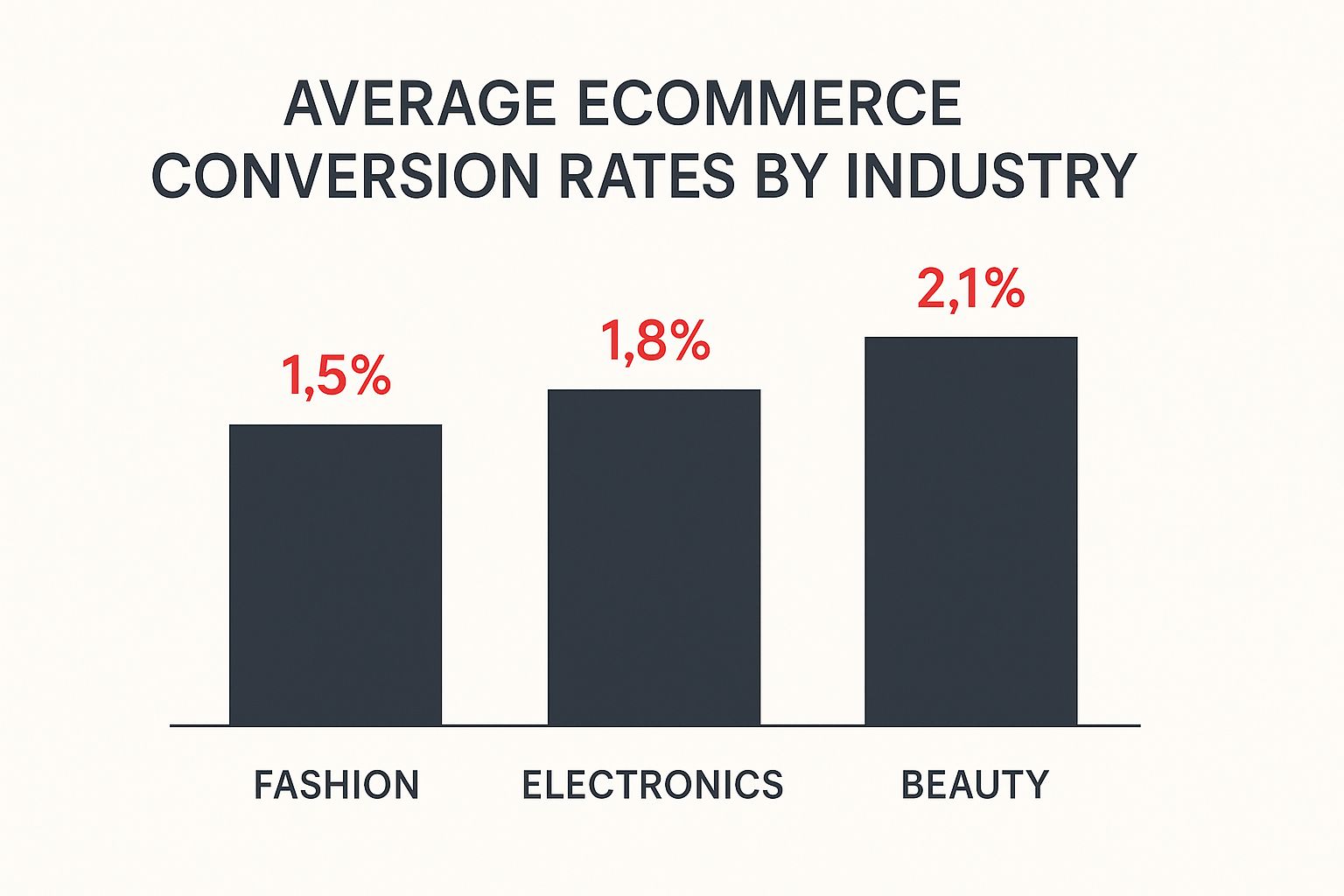
As illustrated, beauty typically enjoys higher conversion rates (2.1%) compared to electronics (1.8%) and fashion (1.5%). Benchmarking against your direct competitors is crucial. Ecommerce conversion rates vary by industry and market, but the global average generally ranges from 2% to 4%. The beauty and skincare sector achieved the highest reported rate, reaching exceptional figures in Q1 2025. Food and beverage followed closely at 3.1% in Q4 2024. You can find more information about ecommerce conversion rates by industry.
The following table provides a more detailed breakdown of conversion rates by industry sector:
Conversion Rates by Industry Sector
Comparison of average conversion rates across major ecommerce industries
| Industry | Average Conversion Rate | Performance Level |
|---|---|---|
| Beauty & Skincare | 2.1% | High |
| Food & Beverage | 3.1% | High |
| Fashion & Apparel | 1.5% | Low |
| Electronics | 1.8% | Medium |
This table highlights the significant differences in conversion rates between sectors like beauty and fashion. Understanding these differences is critical for setting realistic expectations.
Factors Influencing Your Baseline
Beyond industry averages, other factors influence your baseline conversion rate. Geographic location plays a role, with cultural differences and purchasing power impacting online shopping. Traffic sources also matter significantly. Paid advertising may have a higher conversion rate than organic search due to targeted user intent. However, organic traffic can become a powerful long-term driver of conversions.
Seasonal patterns also contribute to fluctuations. Expect spikes during peak seasons like Black Friday and Cyber Monday, while other periods may experience a natural dip. Analyzing data over time is crucial to identify trends and adjust strategies accordingly.
Setting Achievable Goals
Understanding your conversion rate’s position relative to industry benchmarks and influencing factors allows you to set achievable goals. Don’t strive for drastic overnight changes; focus on incremental gains. For example, if your rate is 1.5% and the industry average is 2%, a realistic short-term goal might be 1.7%. This allows you to track progress, celebrate small wins, and maintain momentum in your optimization efforts. By understanding benchmarks and your current position, you can build a stronger foundation for improvement.
Winning Back Lost Sales: Mastering Cart Abandonment Recovery

Picture this: a potential customer journeys through your online store, adding items to their cart, only to vanish before completing the purchase. This is the all-too-common scenario of cart abandonment, a significant hurdle for ecommerce businesses striving to improve conversion rates. Data shows that these abandonment rates have soared past 70% in 2024. In the United States, unexpected costs like shipping, taxes, and other fees are leading culprits. For a deeper dive into these statistics, check out this resource: Global Cart Abandonment Statistics. This highlights the critical need to tackle cart abandonment proactively. But within this challenge lies a golden opportunity to reclaim lost revenue and boost your bottom line.
Understanding the Why Behind Abandoned Carts
Before devising recovery strategies, it’s essential to understand the motivations behind cart abandonment. It’s not simply a technical glitch; it often stems from customer behavior. Sometimes, shoppers add items to their cart as a way to bookmark them for later, without any immediate intent to buy. Other times, unforeseen costs, a complex checkout process, or limited payment options can deter customers at the final stage. Grasping these pain points is the first step in developing effective recovery tactics.
Effective Cart Abandonment Recovery Tactics
Several proven strategies can help you win back these lost sales and improve your conversion rates. Exit-intent technology, for instance, recognizes when a user is about to leave your website and presents a targeted pop-up. This pop-up might offer a discount, free shipping, or simply remind them of the items waiting in their cart.
- Personalized Email Sequences: Automated emails tailored to the abandoned cart’s contents can be highly effective. A first email could simply remind the customer about their cart. Subsequent emails might offer incentives or highlight product benefits. This personalized touch shows you care and encourages them to complete the purchase. For more on this topic, see: How to master cart abandonment recovery.
- Streamlined Checkout Process: A complicated checkout is a major contributor to cart abandonment. Simplify the process with guest checkout options, minimizing required form fields, and offering various payment methods. This reduces friction and encourages purchase completion.
- Transparency in Pricing: Clearly display all costs, including shipping and taxes, before the customer reaches checkout. This prevents unpleasant surprises and builds trust. Visible trust badges and security information further reinforce customer confidence.
Turning Abandonment Into Advantage
Cart abandonment recovery is more than just plugging a leak in your sales funnel. It’s about cultivating stronger customer relationships. By understanding why customers abandon their carts and implementing targeted recovery strategies, you can turn a potential loss into a valuable opportunity to engage with them and ultimately improve your ecommerce conversion rates. This proactive approach not only recovers sales but also fosters customer loyalty and strengthens your bottom line.
Checkout Optimization That Actually Converts
Your checkout process is the final hurdle between browsing and buying. It’s where potential customers make the crucial decision to complete their purchase or abandon their cart. Optimizing this critical stage can significantly impact your ecommerce conversion rates. Let’s explore how to turn your checkout into a sales powerhouse.
Streamlining the Checkout for Higher Conversions
A complicated checkout process is a major contributor to cart abandonment. Imagine a long, winding line at a brick-and-mortar store – many shoppers would simply give up. A smooth, intuitive online checkout, on the other hand, encourages customers to complete their purchase. This means minimizing friction at every point in the process.
- Guest Checkout: Requiring account creation can deter first-time buyers. Offering a guest checkout option allows for quicker purchases without the need for registration. Customers can always create an account later.
- Payment Options: Providing a variety of payment methods, from traditional credit cards and PayPal to digital wallets like Apple Pay and Google Pay, caters to a broader audience and removes a potential barrier to completing a purchase.
- Progress Indicators: A progress indicator gives customers a clear view of their position in the checkout process. This simple visual cue can significantly reduce anxiety and encourage completion, improving the overall user experience.
To illustrate how various checkout elements can impact conversions, let’s examine the following table:
Checkout Optimization Elements and Impact
Key checkout features and their effect on conversion rates
| Optimization Element | Implementation Difficulty | Conversion Impact |
|---|---|---|
| Guest Checkout | Easy | High |
| Multiple Payment Methods | Medium | High |
| Progress Indicator | Easy | Medium |
| Security Badges | Easy | Medium |
| Clear Return Policy | Easy | Medium |
| Accessible Customer Support | Medium | High |
| Mobile-Friendly Design | Medium | High |
| One-Click Purchasing | Hard | High |
| Social Login | Medium | Medium |
This table highlights the relative ease of implementation and the potential impact on conversion rates for each optimization element. As you can see, even simple changes like offering guest checkout or displaying security badges can make a significant difference.
Building Trust During the Checkout Process
Security concerns are a major reason for cart abandonment. Displaying visible trust signals can reassure customers that their information is safe and encourage them to complete their purchase.
- Security Badges: Prominently displaying SSL certificates and security badges demonstrates your commitment to data protection, building customer confidence.
- Return Policies: A clear and easy-to-understand return policy reduces perceived risk. Customers feel more secure knowing they can easily return an item if it doesn’t meet their expectations.
- Customer Service: Providing easily accessible customer support through live chat or a readily available phone number allows for immediate assistance and fosters trust.
Optimizing for Mobile
With the increasing prevalence of mobile commerce, optimizing your checkout for smaller screens is essential. This means creating a checkout flow that is:
- Touch-Friendly: Ensure buttons and form fields are large enough for easy tapping on mobile devices.
- One-Handed Use: Design the checkout flow to be easily navigable with one hand.
- Auto-Fill: Implement auto-fill functionality for addresses and payment information to simplify the process. For further insights, explore our guide on How to master ecommerce checkout optimization.
Advanced Features to Enhance Checkout
Consider implementing advanced features to streamline the checkout experience even further:
- One-Click Purchasing: Offer returning customers the option to save their payment information for faster purchases.
- Social Login: Simplify account creation by allowing customers to log in with their existing social media accounts.
By optimizing each aspect of your checkout process, from streamlining the flow to building trust and addressing mobile considerations, you can significantly reduce cart abandonment and boost your ecommerce conversion rates. You might also be interested in learning more about abandoned cart recovery. These strategies transform your checkout from a point of friction into a seamless path to purchase.
Mobile-First Conversion Strategy That Works

Mobile commerce dominates online shopping. This means your ecommerce conversion rates depend on providing excellent mobile experiences. This section explores the challenges mobile shoppers face and offers effective strategies to optimize their journey and boost your conversions.
Responsive Design: More Than Just Shrinking Your Site
Responsive design is crucial for a successful mobile strategy. It’s more than just shrinking your desktop site. True responsive design adapts to various screen sizes and orientations. This ensures an optimal viewing and interaction experience on any device.
This involves adjusting font sizes, scaling images, and reflowing layouts for readability and easy navigation. For instance, large, touch-optimized buttons are vital for a positive mobile experience.
Navigation and User Interface: Thumb-Friendly Experiences
Mobile users often browse one-handed, using their thumbs for interaction. This requires thumb-friendly navigation. Menus should be easily accessible with one hand, and interactive elements should be well-spaced to prevent accidental clicks.
Page load speed is also critical on mobile. Users are less patient with delays. Optimizing images and minimizing code can significantly improve load times, boosting conversion rates. Read also: How to master mobile checkout optimization.
Mobile Checkout: Removing the Friction
Checkout is where friction can cause cart abandonment. Mobile checkout optimization needs a streamlined approach. Minimize the steps and form fields required.
Here are some key features to implement:
- Digital Wallets: Offer options like Apple Pay and Google Pay for fast, secure payments.
- One-Click Purchasing: Streamline repeat purchases for returning customers.
- Address Auto-Fill: Simplify data entry and reduce errors with auto-fill.
Leveraging Mobile-Specific Features
Modern mobile devices offer features that can enhance shopping. Consider these:
- Device Camera: Enable product scanning or augmented reality (AR) features to connect online and offline shopping.
- Location Services: Offer personalized recommendations based on the user’s location, like nearby store availability or local promotions.
Progressive Web Apps (PWAs): Bridging the Gap
Progressive Web Apps (PWAs) combine web accessibility with native app functionality. PWAs provide an app-like experience directly in the browser, removing the need for downloads.
This can improve engagement and conversions by providing a faster, more reliable mobile experience.
By implementing these mobile-first strategies, you can transform the mobile shopping experience. Turn potential challenges into opportunities for increased engagement and higher ecommerce conversion rates. This is essential for success in today’s mobile-focused market.
Building Unshakeable Trust That Drives Conversions
Trust is the foundation of any thriving ecommerce business. Without it, even the most appealing products and seamless checkout experiences won’t consistently convert potential customers into loyal buyers. This section explores the core principles of establishing trust and how it directly influences your ability to boost ecommerce conversion rates. A helpful tool for building trust is a trust badge generator.
The Psychology of Trust in Ecommerce
Trust online is a delicate balance. Customers lack the ability to physically interact with your products or your team, creating a natural sense of uncertainty. This uncertainty needs to be addressed head-on. Imagine handing over your credit card details to a stranger in a dark alley. Unlikely, right? Your website should be the opposite – a welcoming, transparent, and reassuring space.
Achieving this starts with clear and concise communication. Avoid technical jargon or overly complex language. Simple, straightforward language that resonates with your audience builds rapport and a sense of mutual understanding.
Essential Trust Signals
Trust signals are the digital equivalent of a warm greeting. They’re the visual cues and verifiable information that assure customers of your legitimacy and reliability. These signals are essential for improving ecommerce conversion rates by easing any purchase anxiety.
- Security Badges: Displaying recognizable security badges, such as SSL certificates, assures customers their data is protected. This is especially crucial on checkout pages where sensitive information is shared.
- Transparent Return Policies: A clear and straightforward return policy minimizes the perceived risk of buying online. Knowing they can easily return or exchange an item empowers customers to make a purchase with confidence.
- Accessible Customer Service: Offering readily available customer support – via live chat, email, or phone – demonstrates your commitment to helping customers. This builds confidence and reinforces their trust in your brand.
Leveraging Social Proof
Social proof is invaluable for establishing trust and, consequently, improving ecommerce conversion rates. It’s the digital version of word-of-mouth marketing, utilizing the experiences and opinions of others to sway potential buyers.
- Customer Reviews and Testimonials: Authentic customer reviews, especially those with visuals or videos, offer powerful insights into the product and the overall shopping experience. These testimonials build credibility and encourage purchases.
- User-Generated Content: Encouraging customers to share their product experiences on social media creates authentic content. This builds community and strengthens trust, ultimately driving conversions.
Transparency and Communication
Transparency is paramount for building trust in ecommerce. Clearly communicate your shipping, return, and support policies. Be upfront about any potential delays or problems. Honesty, even when things aren’t perfect, strengthens customer relationships.
Proactively manage your online reputation by addressing negative reviews and feedback constructively. This showcases your commitment to customer satisfaction and boosts confidence in your brand.
By incorporating these trust-building strategies, you cultivate a secure environment where customers feel comfortable making purchase decisions. This leads to higher conversion rates and sustained business growth. Trust is an absolute necessity for any ecommerce business aiming to thrive in today’s competitive landscape. Learn more about boosting your conversions at our blog on how to improve ecommerce conversion rates.
Personalization Strategies That Actually Increase Sales

Generic online shopping experiences just don’t cut it anymore. Today’s ecommerce shoppers expect personalized interactions that cater to their unique needs. This means moving beyond simply showing recently viewed items and adopting a more nuanced approach. Building trust is paramount, and a tool like a trust badge generator can be incredibly valuable.
Meaningful Audience Segmentation: The Foundation of Personalization
Effective personalization begins with truly understanding your audience. This involves segmenting your customer base into distinct groups based on shared characteristics, behaviors, and motivations.
You could segment by demographics like age and location, purchase history including past purchases and average order value, or browsing behavior such as categories browsed and time spent on your site. This targeted approach allows you to tailor your messaging and offers for maximum impact with specific groups.
Targeted Experiences That Convert: Speaking Directly to Your Customers
After segmenting your audience, you can craft targeted experiences that address their needs and desires directly. Here are some effective tactics:
- Dynamic Content: Show content that adapts to each user. This could include personalized product recommendations based on browsing history or location-based promotions.
- Behavioral Triggers: Initiate specific actions based on user behavior, such as sending a personalized email after cart abandonment or offering a discount after a customer views a specific product category. For more ideas, check out this article on personalized marketing.
AI-Driven Personalization: Balancing Relevance and Privacy
Artificial intelligence (AI) is playing a growing role in ecommerce personalization, enabling highly targeted recommendations and automated campaigns. However, responsible data use is paramount. AI-driven recommendations, while effective, should be implemented thoughtfully, focusing on customer value.
Similarly, personalized email sequences must be relevant and well-timed to avoid overwhelming customers. This requires a careful balance: providing a personal touch while respecting customer privacy.
Retargeting Campaigns That Respect Privacy: A Smart Approach
Retargeting can be a powerful tool for re-engaging customers who’ve expressed interest in your products. But it’s essential to do it ethically. Here’s how:
- Frequency Capping: Limit how often a user sees your ads.
- Transparency: Be upfront about retargeting and give users the option to opt out.
- Relevance: Ensure retargeted ads relate to the user’s past interactions with your site.
Turning Browsers Into Loyal Customers: The Power of Personalized Experiences
By implementing these personalization strategies, you can create genuinely engaging experiences that resonate with individual customers. This approach fosters a stronger bond with your audience, ultimately boosting sales and cultivating loyalty that drives repeat business and sustained growth. Transform casual browsers into dedicated customers by delivering the right message at the right moment, showing them you value their preferences.
Key Takeaways: Your Conversion Optimization Roadmap
This section offers a practical guide to improve your ecommerce conversion rates over the long term. We’ve condensed proven strategies and real-world examples into actionable checklists, reasonable timelines, and clear metrics. Each takeaway centers on strategies you can use immediately, with specific indicators to track your wins and celebrate your progress.
Prioritize Your Optimization Efforts
Not every optimization yields the same results. Some changes bring faster and more substantial improvements than others. Knowing which ones to focus on first is key to maximizing your return on investment.
- Start with Easy Wins: Begin by tackling obvious roadblocks in the customer journey. For example, if your checkout process requires account creation, consider a guest checkout option. This small change can significantly decrease cart abandonment and boost conversion rates.
- Data Analysis is Key: Use Google Analytics to identify areas needing the most attention. Where are customers leaving your site? Which pages have the highest bounce rates? This data-driven approach ensures you target the most impactful changes.
- Mobile Optimization is Crucial: With most ecommerce traffic originating from mobile devices, a smooth mobile experience is essential. A mobile-first approach isn’t just an option; it’s a necessity for better ecommerce conversion rates.
Avoid Common Testing Mistakes
A/B testing is a valuable tool for optimization, but it’s easy to make mistakes that waste time and money.
- Test One Element at a Time: Changing multiple elements simultaneously obscures the impact of each change. Test one variable at a time to gather clear insights.
- Statistical Significance Matters: Don’t draw conclusions from small data fluctuations. Ensure your test results reach statistical significance before implementing changes.
- Documentation is Essential: Keep detailed records of every test, including the hypothesis, variables, results, and conclusions. This builds a valuable resource for future optimization.
Build a Culture of Continuous Improvement
Conversion optimization is an ongoing process, not a one-time fix.
- Regular Metric Review: Monitor key performance indicators (KPIs) like conversion rate, average order value, and cart abandonment rate. Consistent monitoring allows you to identify trends and adjust your strategies.
- Stay Current: The ecommerce world constantly changes. Stay informed about the latest trends and best practices by following industry blogs and attending relevant events. Our guide on How to master ecommerce conversion rate optimization provides valuable insights.
- Feedback is Invaluable: Gather feedback from your customers and your team. Customer insights can uncover hidden pain points, and team input can lead to innovative optimization ideas.
Your Conversion Optimization Roadmap in Action
This roadmap gives you a structured way to improve ecommerce conversion rates. By prioritizing efforts, avoiding common testing mistakes, and building a culture of continuous improvement, you can achieve sustainable growth and maximize online sales. Track your progress, celebrate your wins, and adjust your strategies as needed.
Want to transform abandoned carts into profit and increase sales by up to 50%? CartBoss, the top SMS recovery tool for Shopify, helps you effortlessly convert lost visitors into paying customers, automatically. Recover lost revenue, maximize ROAS, and win back customers with targeted promotions and reminders. Integrates seamlessly for fast results. Visit CartBoss today!