


The holiday season presents a critical opportunity for brands to reconnect with their audience, but a generic “Happy Holidays” text is no longer enough to capture attention or drive sales. Customers today expect more; they crave personalized, valuable, and authentic interactions. A well-crafted message can turn a passive subscriber into an active buyer, while a bland one gets lost in the noise of countless other promotions. Cutting through that clutter requires strategy, not just sentiment.
This guide moves beyond basic templates to provide a strategic breakdown of high-impact holiday messages to customers. We will dissect seven distinct message types, from exclusive offers and community-focused updates to year-in-review celebrations and educational content. Each example is accompanied by a deep analysis of the tactics at play, offering specific insights into why they work and how you can replicate their success.
You will learn how to leverage personalization, articulate your brand values, and create a sense of urgency without sounding generic. The goal is to equip you with actionable takeaways and replicable methods to craft messages that not only delight your customers but also deliver measurable results for your bottom line. Let’s explore the messages that will define your holiday campaign success.
1. Personalized Thank You Holiday Message
A personalized thank you message moves beyond generic holiday greetings to create a genuine connection with your customers. Instead of a broad “Happy Holidays,” this approach uses customer data to acknowledge their specific support and loyalty throughout the year. It’s a powerful relationship-building tool that prioritizes gratitude over direct sales, fostering long-term brand affinity.

This strategy works by leveraging purchase history, customer loyalty data, or interaction milestones to craft a message that feels unique to each recipient. It shows that you see your customers as individuals, not just order numbers, which is crucial for standing out in a crowded holiday inbox.
Strategic Breakdown and Examples
- Starbucks: Their “Year in Review” campaign is a masterclass in data-driven personalization. It summarizes a customer’s favorite drinks and total visits, making them feel seen and valued.
- Local Boutiques: Many small businesses send SMS messages that reference a recent purchase. For example: “Hi [Name], we hope you’re enjoying the [Product Name] you bought in October! Wishing you a wonderful holiday season from all of us at [Store Name].”
Key Insight: The goal is not to sell, but to express genuine appreciation. This non-promotional approach builds trust and makes future marketing messages more effective.
Actionable Takeaways
To implement this, segment your audience based on specific criteria. Use dynamic tags like [Customer Name] and [Last Purchase Item] to customize your holiday messages to customers at scale.
- Reference Purchase History: Mention a product a customer loves or recently bought.
- Acknowledge Loyalty: Thank them for being a customer for a specific duration (e.g., “for 3 years”).
- Keep it Sincere: Focus entirely on gratitude. Avoid including discounts or calls to action.
This method is especially effective for your most loyal customer segments or recent first-time buyers you want to retain. By sending a heartfelt thank you, you’re not just sending a message; you’re investing in a relationship. For deeper insights on crafting these messages, you can learn more about how to be personal in your text messages.
2. Exclusive Holiday Offer Message
An exclusive holiday offer message blends festive cheer with strategic promotion, giving customers special discounts, early access, or unique deals. This approach rewards loyalty and drives sales by making recipients feel like valued insiders. It’s a highly effective way to convert holiday browsers into buyers while reinforcing brand appreciation.
This strategy works by creating a sense of urgency and exclusivity. By segmenting your audience and tailoring offers, you can deliver highly relevant promotions that feel less like mass marketing and more like a personal gift. It capitalizes on the holiday shopping mindset while giving your most loyal customers a reason to choose you over competitors.
Strategic Breakdown and Examples
- Sephora: Their Beauty Insider program excels at this by granting tiered members early access to holiday sales. A message like, “VIB Exclusive: Your holiday preview starts NOW! Get 20% off before anyone else,” creates immediate urgency and rewards their best customers.
- REI: The co-op often provides member-exclusive discounts on seasonal gear. An SMS might read: “Hi [Name], as a member, get first dibs on our holiday gear with an exclusive 25% off. Shop the collection before it’s gone!”
Key Insight: The power of this message lies in its exclusivity. Using words like “Exclusive,” “For You,” or “Your VIP Access” makes the offer feel special and significantly boosts conversion rates.
Actionable Takeaways
To execute this, you must segment your customer list effectively. Target your most valuable segments with the best offers to maximize ROI and strengthen loyalty. Remember that well-crafted holiday messages to customers should always feel like a treat, not just a sales pitch.
- Segment for Relevancy: Create customer tiers (e.g., VIPs, recent buyers, cart abandoners) and send tailored offers to each.
- Create Urgency: Use a countdown timer or time-sensitive language like “Ends Midnight” or “48 Hours Only” to encourage immediate action.
- Provide Real Value: Ensure the discount is meaningful enough to be compelling but sustainable for your business margins.
This method is ideal for driving revenue during peak shopping periods like Black Friday, Cyber Monday, and the weeks leading up to major holidays. For a deeper dive into crafting compelling offers, explore this guide on promotional text message marketing.
3. Company Values and Community Impact Message
A company values and community impact message shifts the focus from commerce to shared purpose. Instead of highlighting products or sales, this approach connects with customers on a deeper level by showcasing your brand’s commitment to social good, charitable giving, or community involvement during the holiday season. It’s a powerful strategy for building brand affinity and loyalty by aligning with your audience’s values.
This type of message works by demonstrating that your brand is more than just a business; it’s a positive force in the community. By sharing authentic stories of impact, you invite customers to be part of a larger mission, transforming their purchase into a meaningful contribution. This resonates strongly with modern consumers who prioritize supporting brands that reflect their own principles.
Strategic Breakdown and Examples
- TOMS: Their holiday campaigns consistently tell the story of their giving model. A message might read: “Happy Holidays! This season, your support helped provide shoes for children in need. Thank you for making a difference with us.”
- Patagonia: Known for environmental activism, their holiday messages often focus on conservation efforts. For example: “This holiday, we’re celebrating our planet. We’re donating 1% of all sales to environmental nonprofits. Thank you for helping us protect our wild places.”
- Local Businesses: A local café might highlight a partnership with a food bank: “Wishing you a warm holiday season! This December, every coffee purchased helps us donate a meal to the [Community Food Bank]. Thank you for supporting our neighbors.”
Key Insight: The message should be about the mission, not the transaction. By focusing on the “why” behind your brand, you create an emotional connection that outlasts any seasonal promotion.
Actionable Takeaways
To effectively craft these holiday messages to customers, transparency and authenticity are crucial. Share specific details about your initiatives to build credibility and show tangible impact.
- Share Measurable Impact: Use specific numbers. For instance, “Thanks to you, we donated 500 meals this month.”
- Connect to Your Brand Mission: Ensure the cause you support is a natural extension of your company’s core values.
- Invite Participation: Offer simple ways for customers to get involved, such as a roundup donation at checkout or volunteering opportunities.
This values-driven approach is highly effective for building a strong community and is a core component of a modern customer engagement strategy. By communicating your commitment to making a positive impact, you don’t just win a sale; you earn a loyal advocate for your brand.
4. Holiday Greeting Card Style Message
A holiday greeting card style message offers a traditional, warm approach focused purely on spreading seasonal cheer. Unlike promotional texts, this method mimics the feeling of receiving a personal holiday card, prioritizing brand sentiment and relationship maintenance over immediate sales. It’s a classic strategy for reinforcing your company’s human side during a time of year when customers value genuine connection.

This tactic works by stripping away all commercial intent and delivering a simple, heartfelt wish. It’s particularly effective for B2B companies, service-based businesses, or brands with a strong community focus, as it reinforces trust and goodwill without asking for anything in return. The message stands out by being refreshingly non-transactional.
Strategic Breakdown and Examples
- Professional Services (e.g., Financial Advisors, Law Firms): These firms often send elegant, professionally designed digital cards via email or SMS with a simple message like: “Wishing you and yours a peaceful and prosperous holiday season. From all of us at [Firm Name].”
- Local Businesses: A local coffee shop might send an MMS with a picture of their decorated storefront and staff, saying: “Happy Holidays from the [Shop Name] family! Thank you for being part of our community this year.”
Key Insight: The value of this message lies in its simplicity and sincerity. By focusing solely on well-wishes, you build emotional equity with your audience, making them more receptive to future communications.
Actionable Takeaways
To execute this, focus on design, authenticity, and timing. The goal is to make your holiday messages to customers feel like a genuine gesture rather than a marketing obligation. For a deeper look at crafting non-promotional messages, explore these SMS marketing message examples.
- Use Authentic Imagery: A photo of your actual team or workspace is far more impactful than generic stock art.
- Keep the Copy Simple: The message should be short, warm, and entirely non-promotional.
- Time it Thoughtfully: Send these messages in early or mid-December, before the final holiday rush, so they feel like a thoughtful greeting rather than a last-minute reminder.
This strategy is ideal for nurturing long-term client relationships and reinforcing brand values. It proves that you care about your customers beyond their purchasing power, a sentiment that resonates deeply during the holidays.
5. Year in Review Celebration Message
A year in review message transforms a standard holiday greeting into a shared celebration of mutual achievement. It recaps key milestones, growth, and memorable moments from the past year, framing the customer as a central part of that success. This approach fosters a deep sense of community and brand loyalty by showcasing collective progress and expressing gratitude for the customer’s role in the journey.
This strategy is highly effective because it tells a story where the customer is the hero. By highlighting shared wins, whether through company-wide achievements or personalized user data, you make your audience feel invested in your brand’s narrative. It’s less of an advertisement and more of a celebratory toast to the partnership between you and your customers.
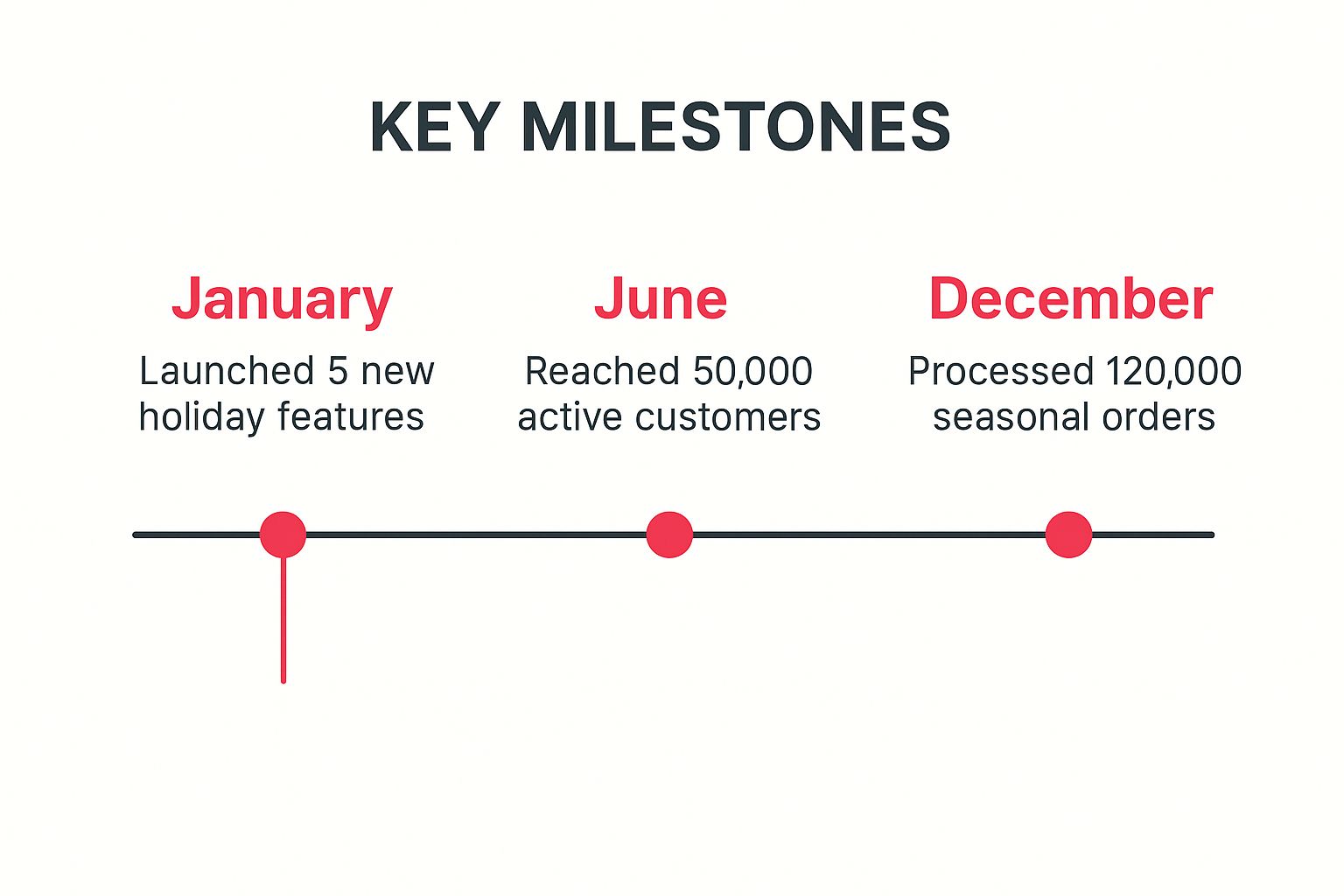
This visual timeline showcases how a company can map its progress over the year, providing tangible milestones to share with its audience. The infographic clearly demonstrates a growth trajectory, making achievements feel concrete and reinforcing the value of customer support throughout the year.
Strategic Breakdown and Examples
- Spotify Wrapped: The gold standard, Spotify provides users with a highly personalized, shareable summary of their listening habits, making each user feel unique while fostering massive organic social media engagement.
- Airbnb: Often shares data-driven insights about community impact, such as total earnings for hosts or the number of guests who traveled, reinforcing its role as a global connector.
- Nonprofits: Effectively use this format to showcase annual impact, detailing funds raised, projects completed, and people helped, directly attributing success to donor contributions.
Key Insight: The most powerful year in review messages balance company achievements with customer contributions. The focus should be on “what we achieved together” rather than “what we did.”
Actionable Takeaways
To create compelling holiday messages to customers with a year-in-review theme, focus on storytelling with data.
- Use Specific Numbers: Quantify achievements like “served 50,000 customers” or “launched 5 new features” to make milestones tangible.
- Highlight Customer Impact: Frame your success around them. For example, “Thanks to you, we were able to process 120,000 seasonal orders this year.”
- Look Forward: End the message with a glimpse into the exciting things planned for the upcoming year, making customers feel like insiders.
This approach is perfect for building an emotional connection and reinforcing brand values. It reminds customers that their support has a real, measurable impact, strengthening their loyalty for the year ahead.
6. Educational Holiday Tips and Resources Message
An educational holiday message shifts the focus from selling products to providing genuine value. Instead of a direct promotion, this approach offers customers helpful tips, guides, or resources related to your niche, positioning your brand as a trusted expert. It’s a content-driven strategy that builds authority and goodwill by solving common holiday-related problems for your audience.
This strategy works because it addresses customers’ seasonal pain points, from budgeting and decorating to travel and wellness. By offering solutions, you create a positive brand association that transcends transactional relationships, making customers more receptive to future marketing efforts. It’s about being a helpful guide during a hectic time of year.
Strategic Breakdown and Examples
- Home Depot: The brand excels at this by sending out SMS alerts with links to DIY guides on holiday decorating, safety tips for hanging lights, or advice for winterizing your home. This content is immediately useful and subtly reinforces their position as the go-to for home improvement.
- A Fitness Brand: A company like MyFitnessPal could send a message like, “Navigating holiday treats? Here are 5 tips for enjoying the season without derailing your goals. Read more: [Link].” This provides actionable advice that aligns perfectly with their brand mission.
Key Insight: The goal is to become an indispensable resource, not just a retailer. When you help customers succeed during the holidays, they remember and trust your brand long after the season ends.
Actionable Takeaways
To execute this, identify the key challenges your audience faces during the holidays that intersect with your expertise. Create simple, digestible content to address these points and deliver it as a valuable holiday message to customers.
- Solve a Specific Problem: Offer tips that provide immediate solutions, such as “3 Ways to Pack Your Luggage More Efficiently” from a travel brand.
- Create Valuable Content: Develop a short blog post, a downloadable checklist, or a quick video tutorial to link to in your message.
- Integrate Products Naturally: If you mention a product, frame it as a solution within your helpful advice rather than a standalone promotion.
This method is highly effective for building brand loyalty and top-of-mind awareness. By providing utility instead of just another sales pitch, you create a more meaningful connection that encourages engagement and future purchases. For more ideas on using content to engage customers, you can explore strategies for customer re-engagement.
7. Customer Spotlight and Success Story Message
A customer spotlight message shifts the holiday focus from your brand to your community, celebrating the real-world success your customers have achieved with your products or services. This approach transforms a holiday greeting into a powerful piece of social proof, showing potential buyers what’s possible while making featured customers feel deeply valued. It’s an authentic way to build community and inspire others during a season of reflection and aspiration.
This strategy works by collecting and sharing genuine user stories, turning individual achievements into relatable content for your entire audience. Rather than telling customers your product is great, you’re showing them through the lens of someone just like them. This authenticates your brand’s value and fosters a strong sense of belonging.
Strategic Breakdown and Examples
- Peloton: During the holidays, Peloton often showcases member milestones and fitness achievements. A message might read: “This holiday season, we’re celebrating YOU. Congrats to [Member Name] for hitting their 500th ride! Your dedication inspires us all.” This validates the member’s hard work and motivates the wider community.
- Etsy: An Etsy seller might receive a message highlighting their success: “Happy Holidays, [Seller Name]! We were blown away by your shop’s growth this year. Your [Product Type] collection was a huge hit! We can’t wait to see what you create next.” This fosters a partnership mentality and encourages seller loyalty.
Key Insight: The power of this message lies in its authenticity. A real customer’s success story is more persuasive than any marketing claim, building trust and providing tangible proof of your product’s impact.
Actionable Takeaways
To effectively use this strategy, you must have a system for collecting customer stories throughout the year. Always secure explicit permission before featuring anyone in your holiday messages to customers.
- Seek Out Relatable Stories: Focus on achievements that feel attainable to your average customer, not just extreme outliers.
- Highlight Specific Outcomes: Instead of saying “great results,” quantify the success (e.g., “doubled their sales,” “completed their first 10k”).
- Make it a Formal Process: Create a simple submission form or use post-purchase surveys to gather testimonials. This is a key part of how to effectively follow up with your customers to collect these powerful narratives.
This approach is ideal for brands in the fitness, education, B2B software, or creative marketplace sectors where customer progress is a core part of the value proposition. By celebrating your customers, you turn them into your most influential advocates.
Holiday Message Types Comparison Table
| Message Type | Implementation Complexity 🔄 | Resource Requirements ⚡ | Expected Outcomes 📊 | Ideal Use Cases 💡 | Key Advantages ⭐ |
|---|---|---|---|---|---|
| Personalized Thank You Holiday Message | Medium – needs data management & segmentation | Moderate – personalized content creation | Builds loyalty, emotional connection, positive brand association | Customer retention, relationship building | High engagement via personal touch; cost-effective |
| Exclusive Holiday Offer Message | Medium – requires targeted segmentation & timing | Moderate – design and promo management | Immediate sales boost, urgency-driven purchases | Driving sales, clearing seasonal inventory | Drives quick action and measurable ROI |
| Company Values and Community Impact Message | Medium to High – requires authentic storytelling & ongoing commitment | Moderate – storytelling and impact data | Strong brand loyalty, positive PR, higher engagement | Purpose-driven branding and CSR communications | Builds brand affinity with value-conscious consumers |
| Holiday Greeting Card Style Message | Low – simple content and design | Low – basic visuals and copywriting | Goodwill creation, long-term relationship maintenance | Broad audience, non-promotional relationship focus | Safe, trustworthy approach; positive brand feelings |
| Year in Review Celebration Message | High – data compilation, design, and storytelling | High – data analysis and infographic design | Showcases growth, transparency, customer appreciation | Company milestones, annual wrap-ups | High shareability and engagement; trust-building |
| Educational Holiday Tips and Resources Message | Medium – requires subject expertise & resource creation | Moderate to High – research and content creation | Builds authority, customer engagement, long-term trust | Thought leadership, value-driven marketing | Positions brand as expert; encourages sharing |
| Customer Spotlight and Success Story Message | Medium to High – story collection & consent process | Moderate – content curation and permission management | Social proof, community building, customer engagement | Highlighting successes, social proof campaigns | Powerful credibility; emotional connection |
Putting It All Together: Your Holiday Messaging Blueprint
The holiday season presents a monumental opportunity for e-commerce businesses to connect with their audience on a deeper, more personal level. As we’ve explored through detailed examples, from personalized thank you notes to exclusive VIP offers and community-focused updates, the right holiday messages to customers can do more than just drive sales. They build lasting relationships, foster brand loyalty, and create memorable experiences that keep customers coming back long after the decorations are packed away.
The core lesson is clear: authenticity and value are your most powerful tools. A generic “Happy Holidays” message gets lost in the noise. A message that acknowledges a customer’s loyalty with a unique offer, shares a genuine story about your company’s values, or provides genuinely useful holiday tips stands out and makes a real impact.
From Inspiration to Implementation
To transform these ideas into a cohesive strategy, focus on the following key principles we’ve discussed:
- Segmentation is Non-Negotiable: Not all customers are the same. Tailor your messages for different segments, such as new subscribers, loyal VIPs, recent purchasers, and those who haven’t shopped in a while. A message celebrating a “Year in Review” with a loyal customer will be far more effective than sending them a generic first-time buyer discount.
- Embrace Multichannel Timing: Plan your campaign cadence carefully. An early-season greeting card-style message can build goodwill, while a last-minute exclusive offer can capture final sales. Think of your campaign as a narrative that unfolds over the season, not as a series of one-off blasts.
- Balance Promotion with Connection: The most successful campaigns mix promotional content with relationship-building messages. For every sales-focused text, consider sending one that offers value without asking for a purchase, like the “Educational Holiday Tips” or “Company Values” examples. This approach ensures your brand is seen as a partner, not just a retailer. A successful holiday messaging strategy is an integral part of broader content marketing and strategic communications with your customers.
- Analyze and Optimize: Don’t just send and forget. Track key metrics for each message type. Which messages had the highest click-through rates? Which ones generated the most revenue? Use this data to refine your approach for future holidays and marketing campaigns.
Ultimately, your holiday messages to customers are a direct reflection of your brand’s voice and its commitment to its community. By moving beyond simple promotions and embracing a strategy rooted in personalization, value, and genuine connection, you can create a holiday season that is not only profitable but also deeply meaningful for your brand and your audience.
Ready to automate your holiday messaging and recover lost sales with perfectly timed, personalized SMS? CartBoss integrates directly with your store to send high-converting cart recovery and customer engagement messages that turn abandoned carts into loyal customers. Start your free trial and build your powerful holiday campaign today at CartBoss.