


Before you can boost your e-commerce sales, you have to play detective. The whole process boils down to finding the friction points in your sales funnel, tweaking your site for better conversions, and putting smart retention strategies in place. A data-first approach means you’re not just guessing—you’re directly fixing the biggest leaks that are costing you money.
Finding the Leaks in Your Sales Funnel

You can’t fix a problem until you know exactly what it is. I see it all the time: store owners throw money at ads or shiny new themes, completely blind to where their sales process is actually falling apart. It’s like trying to fill a leaky bucket without knowing where the holes are.
The trick is to look past vanity metrics like total traffic and dive into the data that tells the real story of what your shoppers are doing.
Your mission is to pinpoint the exact pages where potential customers are giving up. Is it a confusing category page? A weak product description? Or a checkout process that feels like running a marathon? Answering these questions with hard data is the only way to build a real growth strategy.
Identifying High-Exit Pages and Friction Points
Your first stop should be Google Analytics 4 (GA4). You can build funnel exploration reports that literally map out the journey shoppers take on your site. This lets you see the drop-off rate at every critical step, from landing on a product page to hitting “complete purchase.”
Be on the lookout for pages with an unusually high exit rate. For instance, if 80% of users who add an item to their cart never even make it to the payment page, you’ve just found a massive friction point. That single insight tells you exactly where to focus your energy.
Here are a few key areas to investigate in your analytics:
- Product Page Drop-offs: Are people looking at products but not adding them to their cart? This could point to issues with your pricing, product images, or a lack of trust-building social proof.
- Checkout Abandonment: Where are they bailing during checkout? Is it the moment they see the shipping costs? Or when you ask them to create an account?
- Category Page Bounces: Are visitors landing on a category page and leaving right away? Maybe the navigation is clunky or the product filters just aren’t cutting it.
Mapping the Customer Journey
Going beyond simple exit rates, you need to analyze user behavior flows to see the actual paths people take. You might find that your best customers all visit your “About Us” page before buying—a clear sign that your brand story is closing deals. On the flip side, you could uncover a broken link sending users in frustrating loops, killing any chance of a sale.
Think of your analytics data as a collection of stories about your customers’ experiences. When you learn to read these stories, you can systematically remove the roadblocks and create a smoother, more profitable path to checkout.
This kind of funnel analysis is non-negotiable for sustainable growth. The e-commerce market is blowing up; by 2025, U.S. e-commerce sales are projected to hit $292.9 billion in a single quarter. To grab your piece of that pie, you have to be surgical—and that starts with understanding your data. You can dig into more e-commerce sales trends on the U.S. Census Bureau website.
When you diagnose these leaks first, every change you make becomes strategic. You’ll stop wasting time on things that don’t work and start fixing the issues that directly pad your bottom line. To get started, check out our in-depth guide on conversion funnel optimization to turn these insights into action.
Crafting a High-Converting On-Site Experience
Your website is your digital storefront. It’s your top salesperson, working 24/7. And you’ve got just a few seconds to make a great first impression before a visitor clicks away.
To really move the needle on sales, you need to think of your site as more than just a product catalog. It has to be a finely-tuned conversion machine. This isn’t just about pretty design; it’s about understanding the psychology of a great product page and paving a frictionless path to the checkout. Every single element, from your product photos to your site speed, plays a part.
Mastering the Art of the Product Page
Think of your product page as the final pitch. This is where a shopper decides to add an item to their cart or leave your site forever. It needs to be persuasive, trustworthy, and crystal clear.
Your job is to anticipate and answer every question a shopper has before they even think to ask it. Use high-resolution images and videos that show your product from every angle, ideally in a real-world setting. Don’t just show a purse on a white background; show it on someone’s shoulder as they walk through the city.
A great product page doesn’t just list features; it sells a better version of the customer’s life. Instead of saying “water-resistant fabric,” say “keeps your gear dry on your rainy commute.” You’re not selling a product; you’re selling a solution.
Your product descriptions have to do the heavy lifting here. Use a mix of storytelling and scannable bullet points to drive home the core benefits. Why is this product the best choice for them?
Building Trust with Social Proof and Reviews
In e-commerce, trust is everything. Shoppers can’t touch or feel your products, so they lean heavily on the experiences of others. This is where social proof becomes your most powerful tool.
Displaying customer reviews, ratings, and user-generated content (UGC) is non-negotiable. Make sure star ratings are visible right near the product title and sprinkle your best customer photos directly onto the page. Seeing real people happily using your products builds instant credibility.
A few types of social proof are essential:
- Customer Reviews: Put them front and center. Over 90% of shoppers read reviews before buying.
- User-Generated Content (UGC): Run a campaign with a branded hashtag to encourage customers to share photos. It’s authentic, free marketing that works.
- Expert Endorsements: If an industry expert or publication has given you a nod, flaunt it. Those badges add a serious layer of authority.
Diving into different strategies for maximizing your website’s conversion rate can really help you dial in your approach and build that crucial trust with visitors.
Prioritizing a Lightning-Fast Mobile Experience
All the beautiful design and persuasive copy in the world won’t matter if your site is slow and clunky, especially on a phone. A slow site is a certified conversion killer. Even a one-second delay in page load time can cause a major drop in sales.
Let’s look at the numbers. Mobile sales are expected to hit a staggering $2.51 trillion globally in 2025. That means over a third of all e-commerce transactions are happening on a phone. If your site isn’t built for thumbs, you’re just leaving money on the table.
To help you audit your own site, we’ve put together a quick checklist of the most important elements for a high-converting experience.
Key Elements for a High-Converting Website
| Element | Key Action | Impact on Sales |
|---|---|---|
| Page Speed | Compress images and use a content delivery network (CDN). Aim for a load time under 3 seconds. | A faster site keeps impatient shoppers engaged and drastically reduces bounce rates. |
| Mobile Navigation | Go for a “thumb-friendly” design with big buttons and a simple, collapsible menu. | An easy-to-use mobile site is a direct lever for improving conversion rates on phones. |
| Simplified Checkout | Offer guest checkout and one-click payment options like Apple Pay or Google Pay. | Reducing checkout steps is one of the quickest wins for lowering cart abandonment. |
Focusing on these key areas will make a huge difference.
Ultimately, a high-converting website is the sum of many small, deliberate optimizations. When you nail the product pages, build undeniable trust with social proof, and guarantee a seamless mobile experience, you create an environment where customers feel confident and excited to buy. For a deeper look at these principles, check out our guide on ecommerce UX best practices.
Winning Back Abandoned Carts
Every single abandoned cart is a missed sale that was just a few clicks away from happening. It’s painful. And it happens a lot—on average, almost 70% of online shopping carts get left behind before checkout.
But don’t look at this as just a lost sale. It’s actually a huge opportunity. These shoppers are telling you they’re interested. They found your store, picked out a product, and were this close to buying. All you need to do is give them a gentle nudge to get them over the finish line. This is exactly where a smart, automated recovery sequence using both SMS and email can become your secret weapon for boosting revenue.
Crafting a Multi-Channel Recovery Strategy
Relying on just one channel like email simply doesn’t cut it anymore. Sure, email is important, but open rates can be all over the place. On the other hand, SMS marketing boasts open rates of up to 99%. That’s a powerful way to make sure your message is actually seen.
A truly killer strategy combines both channels into a seamless flow that re-engages shoppers without being pushy.
- SMS for Immediacy: A quick text is perfect for that first touchpoint. Sending a message within an hour of abandonment catches the shopper while your product is still fresh in their mind.
- Email for Detail: Follow up with an email where you have more room to play. You can include high-quality product photos, sprinkle in some customer reviews for the exact item they left, and write more persuasive copy.
The real goal here is to move beyond the generic “You left something behind!” messages. Your communication needs to feel personal, helpful, and ultimately, convincing.
Of course, this also shines a light on how important your on-site experience is. Things like great product images, glowing reviews, and a lightning-fast site are your first line of defense against abandonment in the first place.
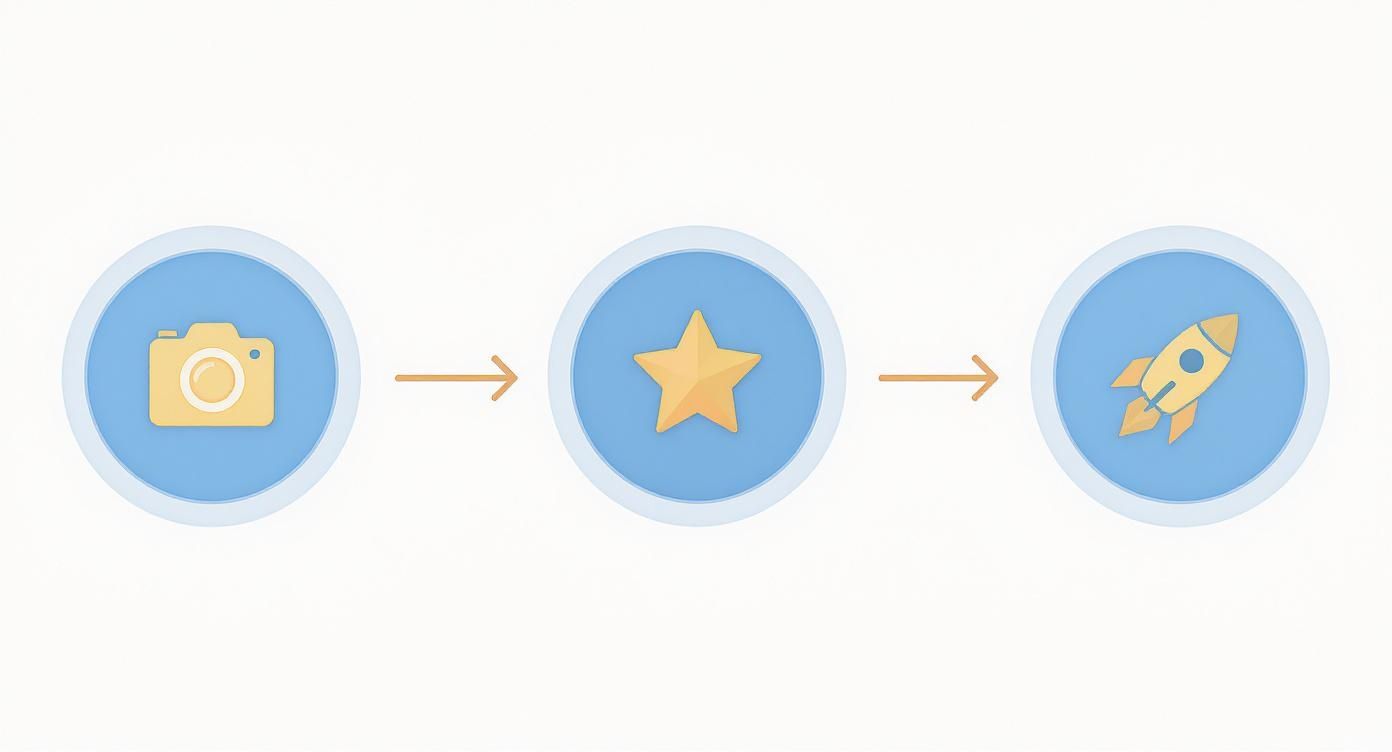
This visual really drives the point home: a solid foundation built on compelling visuals, social proof, and great performance is crucial before you even start thinking about recovery.
Building Your Automated Sequence
In cart recovery, timing and messaging are everything. A well-planned sequence anticipates the common reasons people bail—distraction, sticker shock, or just plain indecision—and addresses them at the perfect moment.
Here’s a proven, multi-step campaign structure that just works:
- The Gentle Nudge (1 Hour Post-Abandonment via SMS): Your first message should be a simple, friendly reminder. Don’t assume the worst; maybe their dog started barking or the doorbell rang. Keep it conversational and, most importantly, include a direct link that takes them right back to their pre-filled cart. Make it ridiculously easy for them.
- The Value Reinforcement (6-12 Hours Post-Abandonment via Email): Now it’s time for your first email. This one isn’t about a discount—it’s about reminding them why they wanted the product. Showcase a beautiful image of the item and maybe a 5-star review from another happy customer. Rebuild that desire.
- The Strategic Incentive (24 Hours Post-Abandonment via SMS/Email): If they still haven’t come back, it’s safe to assume price might be the issue. Now’s the time to sweeten the deal. Offer a small, strategic incentive like free shipping or a modest 5-10% discount. Often, this is the final push they need to overcome any hesitation.
The goal of an abandoned cart sequence isn’t just to make a sale; it’s to turn a moment of friction into a positive brand interaction. By being helpful and timely, you build trust that can lead to a long-term customer relationship.
This kind of automated approach works 24/7 in the background, turning lost visitors into loyal customers. Tools designed specifically for this, like CartBoss, handle the heavy lifting by automatically detecting the shopper’s language and pre-filling the checkout forms, knocking down every possible barrier.
To really become a pro at this, dive into a complete guide to recovering abandoned cart sales and start turning those abandoned carts into one of your most reliable revenue streams.
Driving High-Quality Traffic to Your Store
You could have the most beautiful, highest-converting website on the planet, but if nobody sees it, it’s just a digital ghost town. Driving traffic is the lifeblood of any online store.
But here’s the thing: the real key to boosting your sales isn’t just about getting more traffic—it’s about getting the right traffic.
The goal is to attract shoppers who are already looking for the exact products you sell. This means you have to ditch the “spray and pray” approach and get strategic about the channels you use. It’s the difference between shouting into a crowded stadium and having a real conversation with someone who’s actually interested.
Mastering Foundational Ecommerce SEO
Search Engine Optimization (SEO) is your secret weapon for capturing free, organic traffic. When someone types “waterproof hiking boots for women” into Google, you want your product page popping up right at the top. This doesn’t happen by luck; it’s the result of a deliberate SEO strategy.
It all starts with smart keyword research. Use tools to dig into the specific phrases your ideal customers are searching for. Don’t just focus on broad terms like “boots.” Go deeper for long-tail keywords like “lightweight vegan leather ankle boots”—these signal a much stronger intent to buy.
Once you have your keywords, weave them naturally into:
- Product Titles and Descriptions: Keep them clear, descriptive, and search-friendly.
- Category Pages: Optimize these to rank for broader product categories.
- Image Alt Text: This helps search engines (and visually impaired users) understand what your product images are showing.
A clean, logical site structure is also a game-changer. Your navigation should be so intuitive that both users and search engine crawlers can find their way around effortlessly. For a complete walkthrough, our guide on ecommerce SEO best practices gives you actionable steps to get your products ranking higher.
Running Profitable Paid Advertising Campaigns
While SEO is a long game, paid advertising delivers immediate visibility. Platforms like Google Shopping and Instagram Ads let you put your products directly in front of highly specific audiences. The catch? Without a solid strategy, you can burn through your budget in a flash with almost nothing to show for it.
The secret to profitability is laser-focused targeting. Don’t just aim for everyone interested in “fashion.” Instead, build custom audiences based on demographics, interests, and even past interactions with your site. For instance, you can retarget shoppers who viewed a specific product but didn’t buy, hitting them with an ad for that exact item.
Paid advertising should complement, not replace, your organic efforts. Use it to test new products, amplify promotions, and reach specific customer segments quickly. Analyze your campaign data relentlessly—if an ad isn’t driving sales, cut it and reallocate that budget to what works.
Targeting Your Ideal Customer Profile
Ultimately, every single one of your traffic-driving efforts should be guided by a deep understanding of your ideal customer. Who are they? What do they actually care about? Where do they hang out online? Creating a detailed customer profile helps you make smarter decisions across every marketing channel you use.
This knowledge ensures your ad copy resonates, your SEO keywords match what people are searching for, and your social media content actually engages the right audience. This kind of strategic focus is non-negotiable in such a crowded market.
The scale of online retail is staggering. Global eCommerce sales are projected to hit $6.86 trillion in 2025, with mobile commerce alone set to account for over $2.51 trillion. This incredible growth highlights a massive opportunity, but it also means the competition is fierce. You can learn more about these trends in this in-depth ecommerce statistics report.
To claim your piece of the pie, you have to be efficient. By focusing on high-quality traffic, you ensure your marketing budget isn’t just an expense—it’s a direct investment in your store’s sustainable growth.
Turning First-Time Buyers Into Lifelong Fans
Getting that first sale is a huge win, but the real, sustainable money in ecommerce comes from the second, third, and tenth sale. Too many brands pour their entire budget into acquisition, completely forgetting that the customer journey has just begun.
Focusing on what happens after the purchase is how you turn a one-time transaction into a long-term relationship. It’s usually more profitable, too. Just a 5% bump in customer retention can boost profits by anywhere from 25% to 95%. This is where you build a community of brand fans, not just a list of past orders.
Create a Memorable Unboxing Experience
The first physical interaction a customer has with your brand is when they open that package. This is a massive, often-missed opportunity to make a real impression. A generic brown box with a product tossed inside is forgettable. A thoughtful unboxing experience, on the other hand, creates a moment people want to share.
You don’t have to spend a fortune. Small touches can make a huge difference.
- Branded Packaging: Even custom tape or a simple branded sticker can elevate the whole thing without breaking the bank.
- A Personal Note: A simple, handwritten “thank you” card builds a surprisingly powerful human connection.
- Unexpected Extras: Including a small, relevant freebie—like a sample of a complementary product—can delight customers and introduce them to more of your catalog.
This is your chance to reinforce their decision to buy from you and get them excited for whatever comes next.
Implement a Strategic Post-Purchase Follow-Up
Once the package arrives, the conversation shouldn’t just die. A smart, automated follow-up sequence keeps your brand top-of-mind and helps you gather valuable feedback. This isn’t about spamming them with sales pitches; it’s about being genuinely helpful.
A few days after delivery, send an email asking for a review. This not only gives you crucial social proof but also shows the customer you actually care about their opinion. A couple of weeks later, follow up with content that helps them get more out of their purchase, like a user guide or styling tips.
The period immediately after a sale is your golden window to build loyalty. By providing value instead of just asking for another sale, you shift the relationship from transactional to relational, paving the way for repeat business.
Launch a Loyalty Program That Rewards Action
A well-designed loyalty program is one of the best ways to encourage repeat purchases. It gives customers a clear, tangible reason to choose you over a competitor next time. The key is to keep it simple to understand and rewarding to use.
A points-based system is a great place to start. Customers earn points for every dollar spent, which they can redeem for discounts, freebies, or exclusive access. You can also get creative and reward actions that build your community.
- Referrals: Give both the referrer and the new customer a discount. Win-win.
- Social Follows: Offer a small handful of points for following your brand on Instagram or Facebook.
- Reviews: Reward customers for leaving product reviews right on your site.
These programs do more than just drive sales—they create a powerful incentive loop that keeps customers plugged into your brand. If you’re looking for a step-by-step guide, check out our article on how to create a customer loyalty program that your audience will actually love.
Master the Art of the Strategic Upsell
Finally, use the data from that first purchase to make smart, personalized recommendations for their next one. This is where strategic upsells and cross-sells come in. If someone just bought a high-end camera, a follow-up email suggesting a compatible lens or a protective case feels helpful, not pushy.
Segment your email list based on past purchases and send highly relevant offers. This personalized approach shows you get their needs and can dramatically increase the lifetime value of each customer—a cornerstone of any solid strategy for improving ecommerce sales.
Answering Your Ecommerce Growth Questions
As you start putting these strategies into practice—whether it’s fine-tuning your site or building out new retention campaigns—questions are going to pop up. It’s completely natural. When you get deep into the weeds of your own business, specific challenges always come to the surface.
This section tackles some of the most common questions we hear from store owners who are laser-focused on improving their ecommerce sales. Think of it as your quick-reference guide to keep the momentum going.
What Are the Quickest Ways to See a Sales Increase?
For an immediate impact, you need to focus where shoppers have already shown they want to buy. Recovering these near-misses is almost always the fastest way to get a revenue boost without spending a dime more on ads.
Here are a few tactics that deliver quick wins:
- Launch a Cart Abandonment Sequence: This should be your number one priority. Using an automated SMS and email flow to re-engage shoppers who were moments from buying can start recovering sales within hours. Seriously.
- Optimize Top-Selling Product Pages: Don’t try to boil the ocean by overhauling your whole site. Just identify your top 3-5 best-selling product pages and supercharge them with better images, clearer calls-to-action, and more prominent customer reviews.
- Run a Targeted Promotion: Send a limited-time offer, like free shipping or a small discount, exclusively to your email and SMS lists. This can create a fast sales spike and wake up past customers who haven’t purchased in a while.
How Do I Know if My Changes Are Actually Working?
The only way to know if your efforts are paying off is to track the right metrics before and after you make a change. Stop guessing and start measuring.
Your most important metric is your conversion rate. This is the ultimate report card on your store’s persuasiveness. If that number is trending up, you’re on the right track.
Beyond that, keep a close eye on these two key performance indicators (KPIs):
- Average Order Value (AOV): Is this going up? It tells you if customers are spending more per transaction, which is a great sign that your upselling and cross-selling tactics are working.
- Cart Abandonment Rate: This number should be going down as you improve your checkout process and on-site experience.
The key is to avoid making too many changes at once. Test one major change at a time—like a new product page layout or a different cart recovery message—so you can clearly attribute any lift in sales to that specific action.
Using a tool like Google Analytics to set up conversion tracking is non-negotiable. For more advanced insights, A/B testing software lets you compare different versions of a page head-to-head to see which one performs better with real traffic. If you want to dig even deeper, you can find more real strategies to increase ecommerce sales that are working right now.
Should I Focus on New Customers or Retaining Existing Ones?
This is the classic ecommerce dilemma. While you absolutely need both to grow, the data consistently shows that focusing on retention is almost always more profitable.
Think about it this way: it can cost five times more to attract a brand-new customer than it does to convince an existing one to buy from you again.
Happy, loyal customers are the bedrock of a healthy business. They don’t just make repeat purchases; they also tend to have a higher customer lifetime value (CLV) and become your best brand advocates, referring new customers for free.
Start by building a rock-solid customer retention strategy through personalized email marketing, SMS updates, and maybe a simple loyalty program. Once you have a reliable system for keeping customers coming back, you can invest more confidently in new acquisition channels like SEO and paid ads, knowing you can maximize the value of every new shopper you bring in.
Ready to turn those abandoned carts into your most reliable revenue stream? CartBoss uses powerful, automated SMS campaigns to bring high-intent shoppers back to your store and boost your sales on autopilot. Set it up in minutes and watch your conversions climb. Get started with CartBoss today.