


Why Text Messages Are Boosting Restaurant Revenue
Traditional restaurant marketing, like flyers and newspaper ads, is becoming less effective and more expensive. In our digital world, grabbing your audience’s attention requires a more direct, personal touch. That’s where SMS marketing comes in, giving restaurants a powerful way to connect with customers instantly and meaningfully. This helps restaurants break through the online clutter and see tangible results.
Direct Engagement and Higher Profits
Unlike social media posts that get buried in busy feeds, text messages arrive directly on the customer’s phone, demanding attention. This direct communication lets restaurants engage with customers in real time, promoting limited-time deals, announcing new dishes, or sending personalized birthday wishes. This instant engagement leads to increased revenue as customers are more likely to respond to a text than other digital marketing.
For example, a restaurant might send a text on a slow Tuesday evening offering a 20% discount on appetizers. This targeted, timely promotion could encourage customers to dine in, boosting sales during a typically quiet period. This power to drive immediate action is what makes SMS marketing so valuable. You might be interested in: How to master…
Building Loyalty With Personalized Experiences
SMS marketing also lets restaurants personalize communication, building customer loyalty. Using customer data, restaurants can tailor messages based on past orders, dietary needs, or even birthdays. This personalization makes customers feel valued, increasing the chance they’ll return. Imagine receiving a text from your favorite restaurant offering a free dessert on your birthday – a small gesture that builds strong relationships. In recent years, SMS marketing has become a vital engagement tool for restaurants. For example, SMS campaigns in the food and beverage industry have increased engagement rates by 25%. Almost 40% of companies now use SMS in their marketing mix. Find more detailed statistics here.
A Budget-Friendly Option With High ROI
Compared to traditional marketing, SMS marketing is highly cost-effective. No printing costs for flyers or expensive TV commercials. With SMS, the per-message cost is low, but the potential return on investment is high. This makes it attractive for smaller restaurants with tighter budgets. The simplicity of setting up and running SMS campaigns adds to its appeal. This efficient, affordable approach makes SMS marketing a powerful tool for restaurants of all sizes.
Building Your Restaurant’s Text Marketing Foundation
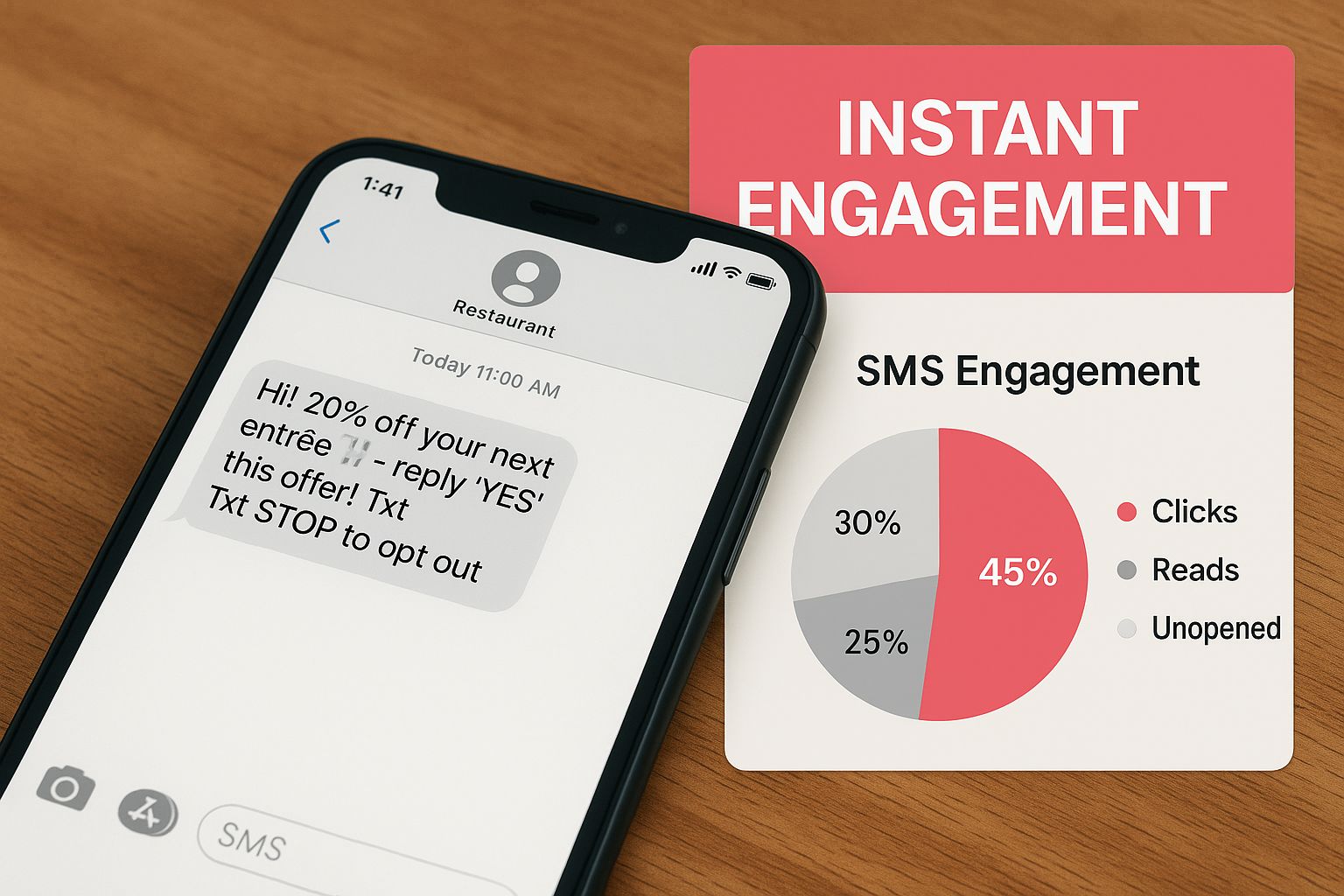
This image showcases the immediate connection you can make with customers through SMS marketing. It features a smartphone displaying a restaurant text message, highlighting how quickly you can reach your audience and encourage responses. This direct channel is perfect for promoting limited-time offers and seeing fast results.
Crafting Irresistible Opt-In Offers
A successful SMS marketing list begins with an appealing offer. Forget generic discounts. Instead, focus on what your customers truly value.
A free appetizer with their first order, a sneak peek at new menu items, or exclusive invitations to special events are all great examples. These offers provide real value and encourage sign-ups.
Be upfront about the benefits of joining. Tell customers what types of messages they’ll receive and how often. Transparency builds trust and minimizes unsubscribes.
Finding Your Text Messaging Voice
Your SMS messages should reflect your restaurant’s personality. Are you fun and casual? Elegant and sophisticated? Your brand’s voice should be consistent across all communication channels, including text messages.
A casual burger joint might use emojis and playful language, while a fine dining establishment would use a more formal tone. This consistency reinforces your brand identity and builds familiarity with your customers.
Integrating With Your Restaurant Operations
Connecting your SMS platform with other systems is crucial. Integrating with your POS system, reservation platform, and loyalty programs allows for personalized messages based on customer behavior and preferences.
You can also automate messages like welcome greetings, birthday wishes, and feedback requests. This not only saves time but also ensures consistent communication. Learn more about effective SMS strategies in our article, How to master your SMS Marketing Strategy.
The Legal Side of SMS Marketing
Complying with regulations like the Telephone Consumer Protection Act (TCPA) is essential. The TCPA requires getting express written consent before sending marketing texts.
This means clearly explaining the types of messages customers will receive and providing a simple way to opt out. Ignoring these rules can result in significant penalties.
Building Your List Organically
Respect customer preferences when building your SMS list. Avoid pre-checked opt-in boxes. Instead, actively promote sign-ups through in-store promotions, website forms, and social media campaigns.
Always make unsubscribing easy. This shows respect for your customers and helps maintain a positive image.
Maintaining High Engagement
Keep your messages short, sweet, and relevant. Avoid overwhelming customers with excessive texts. Instead, provide value in every message.
Exclusive discounts, priority reservations, or personalized recommendations are all great ways to keep customers engaged. By focusing on their needs, you build a loyal following that anticipates your messages. Check out our guide on crafting effective messages: How to write…
To help you choose the best SMS platform, we’ve compiled a comparison table:
SMS Marketing Platform Comparison for Restaurants
This table compares several leading SMS marketing platforms, focusing on pricing, restaurant-specific features, integration capabilities, and compliance tools.
| Platform | Monthly Cost | Restaurant Features | POS Integration | Automation Level |
|---|---|---|---|---|
| Podium | Varies | Online ordering, reviews, webchat | Select POS systems | Basic & Advanced |
| Toast | Varies | Loyalty programs, online ordering, reservations | Toast POS | Basic & Advanced |
| Square Marketing | Varies | Loyalty programs, appointment scheduling | Square POS | Basic |
| SlickText | Varies | Keywords, drip campaigns, contests | Limited Integrations | Basic & Advanced |
This table provides a quick overview of some popular options. Remember to research each platform to find the best fit for your restaurant’s specific needs. Choosing the right platform can significantly impact the effectiveness of your SMS marketing campaigns.
Writing Messages That Fill Tables and Drive Orders
Successful SMS marketing for restaurants hinges on crafting messages that truly resonate with your audience and encourage them to act. It’s about understanding customer motivations and tailoring texts to individual needs and preferences. This transforms bland, generic messages into personalized invitations.
Crafting Compelling Offers
Think of your SMS messages as exclusive invitations, not mass-produced flyers. Instead of standard discounts, create offers that feel special and add value.
For example, offer a free appetizer with a particular entree, a complimentary dessert for birthdays, or early access to special events. This sense of exclusivity makes customers feel valued and more likely to redeem the offer.
Consider bundling offers to increase the average order value. A “Dinner for Two” deal including an appetizer, two entrees, and a dessert for a fixed price can encourage larger orders and boost revenue.
Writing Copy That Converts
The words you choose for your SMS messages are just as important as the offer itself. Keep messages concise and focused on a single call to action. Use strong verbs and create a sense of urgency without being overly aggressive.
For example, instead of “Try our new menu,” try “Limited-time only: Savor our new seasonal menu before it’s gone!” This generates excitement and encourages immediate action. Many restaurants are adopting SMS marketing because of its potential to increase sales. In fact, many businesses, including restaurants, see 21-30% of their online revenue directly from it.
Timing Your Messages Strategically
The timing of your messages significantly impacts their effectiveness. Sending a lunch special offer at 10 am can entice customers to choose your restaurant for their midday meal.
Promoting a happy hour deal an hour or two before it starts can drive immediate traffic. Avoid sending messages too early or too late, as this can reduce engagement. For further insights, check out How to Launch Successful SMS Marketing Campaigns.
Segmenting Your Audience for Personalized Messaging
Generic messaging rarely works. Segmenting your audience by demographics, past orders, or dining preferences allows you to customize messages for each group.
You could send personalized recommendations based on previous orders or offer exclusive discounts to loyal customers. This personalized approach strengthens customer relationships and boosts conversions. Vegetarians, for example, will appreciate a text about new plant-based options, while frequent diners might receive an exclusive invitation to a chef’s tasting.
This targeted approach makes each text feel personal and valuable. For more creative marketing strategies, explore Dental Marketing Ideas for insights into attracting and retaining customers through various channels. By mastering these elements, your SMS campaigns will fill tables, foster customer loyalty, and drive long-term revenue growth.
Smart Automation That Feels Personal, Not Robotic
Generic blast messages are a thing of the past. Today, effective SMS marketing thrives on automation and personalized experiences that truly resonate with each individual customer. Successful restaurants are using data like past orders and behavior patterns to send targeted messages that keep customers coming back. Let’s explore how you can implement these strategies for maximum impact.
Automated Welcome Sequences That Convert
First impressions are everything. A well-crafted automated welcome sequence sets the stage for a positive SMS marketing relationship. Instead of a simple “Welcome,” consider a series of targeted messages.
- A welcome discount in the first message.
- Showcasing popular menu items or weekly specials in the second.
- Highlighting online ordering options or loyalty programs in the third.
Link directly to your online menu to drive orders. For an enhanced dine-in experience, consider high-quality printed menus from providers like 4over4. This tiered approach keeps new subscribers engaged and demonstrates the value of joining your SMS program.
Birthday Promotions That Feel Thoughtful
Generic birthday messages often fall flat. Use customer data to personalize the birthday experience. Knowing a customer’s favorite dish or drink allows you to craft a truly special offer.
A message like, “Happy Birthday, [Customer Name]! Enjoy a free slice of your favorite chocolate cake on us!” creates a memorable experience and fosters loyalty.
Win-Back Campaigns That Re-Engage Lapsed Customers
Inactive customers don’t have to stay inactive. Win-back campaigns can effectively re-engage lapsed diners. Identify customers who haven’t visited recently and send a targeted text offering a special incentive to return.
This could be a discount, a free item, or an invitation to a special event. Remind these customers of what you offer and bring them back through your doors.
The Power of AI and Machine Learning
AI and machine learning are changing the game for SMS personalization. These technologies analyze customer data to predict preferences and anticipate needs.
This allows restaurants to send timely offers that feel intuitive. Imagine a customer receiving a text suggesting their favorite dish just as they’re considering takeout. This anticipation builds a strong connection. The use of AI in marketing is growing rapidly, with 50.4% of businesses planning to adopt it and 81% seeing improved SMS marketing results. Learn more about the impact of AI on marketing here.
Advanced Segmentation Strategies
Effective segmentation goes beyond basic demographics. Successful restaurants segment their audience based on factors like dining frequency, spending habits, and even menu preferences.
This allows for highly tailored messaging. Frequent diners might receive exclusive invitations to chef’s tastings, while regular vegetarian customers might get early access to new plant-based options.
Maximizing Customer Lifetime Value
Combining automation with personalized messaging significantly increases customer lifetime value. When customers feel valued, they’re more likely to become loyal patrons. This translates to increased revenue and long-term success. These strategies help restaurants build genuine relationships with their customers, creating a sense of community and loyalty that drives sustainable growth.
Tracking Results That Actually Matter for Your Bottom Line
Stop focusing on vanity metrics like follower counts. Instead, concentrate on what truly matters for your restaurant: increased revenue and loyal customers. This requires understanding the Key Performance Indicators (KPIs) that demonstrate the effectiveness of your SMS marketing efforts.
Key Performance Indicators (KPIs) for Restaurant SMS Marketing
Several KPIs are essential to track, from basic engagement to more complex metrics:
- List Growth Rate: This measures how quickly your subscriber list is expanding and shows the effectiveness of your opt-in methods.
- Opt-Out Rate: A high opt-out rate may indicate issues with message frequency or content. Keep this number low.
- Redemption Rate: Crucial for evaluating offer effectiveness. How many customers use the coupons sent via SMS?
- Conversion Rate: This tracks how many SMS recipients take a desired action, like making a reservation or placing an order.
- Average Order Value (AOV): Do your SMS campaigns result in larger orders? Compare the AOV of SMS-driven orders to other channels.
- Customer Lifetime Value (CLTV): This metric reveals the long-term impact of SMS on customer loyalty and repeat business.
- Return on Investment (ROI): This shows the financial return on your SMS marketing investment. It requires tracking campaign costs and revenue.
Understanding your SMS marketing expenses is key to calculating ROI. Learn more: Learn more about the cost of SMS marketing.
Setting Up Effective Tracking Systems
To connect your SMS campaigns to measurable outcomes, you need the right tools:
- Unique Promo Codes: Use unique codes in your SMS messages to track redemptions and attribute revenue to specific campaigns.
- Trackable Links: Include these links in your texts to monitor click-through rates and see what content resonates with your audience.
- POS Integration: Connecting your SMS platform with your Point of Sale (POS) system provides valuable data on order value and customer behavior.
- Surveys and Feedback: Gather customer feedback via short SMS surveys to understand preferences and improve future campaigns.
A/B Testing for Optimized Performance
A/B testing is crucial for refining your strategy. Experiment with different message elements to find what resonates best.
- Send Times: Test sending messages at different times to see when your audience is most receptive.
- Message Length: Compare short texts versus longer, more detailed messages.
- Offer Types: Experiment with different offers like percentage discounts, dollar-off deals, or free items.
- Call to Action: Test phrases like “Order Now” versus “Click Here” to identify the most compelling language.
The following table offers benchmarks and optimization tips for key metrics:
To help you understand industry standards and aim for excellent performance with your SMS marketing, we’ve compiled the following table:
| Metric | Industry Benchmark | Good Performance | Excellent Performance | Optimization Tips |
|---|---|---|---|---|
| List Growth Rate | 2-5% per month | 5-10% per month | 10%+ per month | Offer compelling incentives for sign-up, promote your SMS list across multiple channels |
| Opt-Out Rate | <1% per campaign | <0.5% per campaign | <0.25% per campaign | Ensure relevant content and appropriate message frequency, offer easy opt-out methods |
| Redemption Rate | 10-20% | 20-30% | 30%+ | Create compelling offers, clearly state offer terms, target offers based on customer preferences |
| Conversion Rate | 2-5% | 5-10% | 10%+ | Use strong calls to action, personalize messages, offer exclusive deals |
| Average Order Value (AOV) | +5-10% | +10-15% | +15%+ | Promote bundled deals, offer upsells or cross-sells, personalize recommendations |
This table showcases important KPIs for SMS marketing, alongside industry benchmarks and tips for optimizing your campaigns for better results. Aiming for excellent performance in these metrics can significantly improve your restaurant’s overall success.
Analyzing and Scaling Your Success
Regularly analyze your SMS campaign performance:
- Monitor KPIs: Track your KPIs to measure effectiveness and identify trends.
- Identify Patterns: Look for patterns in customer behavior and responses.
- Refine Your Approach: Adjust your strategy based on analysis.
- Scale Successful Strategies: Expand high-performing campaigns for maximum impact.
By tracking these metrics and continually refining your approach, your SMS marketing can become a powerful tool for revenue growth and customer loyalty. A data-driven approach ensures you’re not just sending messages, but building meaningful connections that drive results.
Staying Ahead of Emerging Trends and Opportunities
The restaurant industry is in constant flux. To not just survive, but truly flourish, restaurants must embrace change, both in consumer behavior and technology. This includes understanding how customers interact with SMS marketing and weaving it into the broader dining experience. Staying adaptable is key to long-term success in this competitive market.
Evolving Consumer Texting Preferences
Today’s diners want communication that feels personal and relevant. They appreciate convenience and instant information. These desires have shaped how they use text messaging, making SMS a powerful tool for restaurants to connect with their guests.
For instance, customers value timely order updates, personalized menu recommendations based on past choices, and exclusive deals tailored to their interests. This shift towards personalized communication means moving away from generic mass texts and towards targeted, data-driven SMS marketing campaigns.
The rising popularity of mobile ordering and delivery apps has further cemented the importance of SMS. It’s become the preferred channel for order confirmations, delivery updates, and customer support. Integrating SMS marketing into your existing restaurant operations is no longer a luxury, but a necessity.
Integrating With Emerging Technologies
SMS marketing can seamlessly integrate with other restaurant technologies to create a unified and positive customer experience:
- Voice Ordering: Confirm voice orders via SMS to minimize errors and provide a convenient record of the purchase.
- QR Code Menus: Offer special deals or loyalty program updates through SMS after a customer scans a QR code menu.
- Delivery Platforms: Integrate SMS with your chosen delivery platform (DoorDash, for example) to share real-time delivery updates and gather feedback.
- Reservation Systems: Send SMS reminders and confirmations for reservations, reducing no-shows and streamlining operations.
These integrations make communication smoother and create a more personalized and convenient experience for diners. Businesses already using SMS marketing can delve deeper into the topic in our article about SMS marketing for e-commerce.
Navigating Regulatory Changes and Maintaining Trust
With the growing use of SMS marketing, data privacy and compliance become paramount. Regulations like the Telephone Consumer Protection Act (TCPA) require express written consent before sending marketing texts. Customers also expect transparency and control over their data. Restaurants must prioritize data privacy and security to build and maintain customer trust.
This includes:
- Offering clear opt-in and opt-out choices.
- Respecting customer preferences for message frequency.
- Being transparent about data usage.
- Implementing robust data security measures.
Consumer preferences and technological advancements are influencing SMS marketing for restaurants worldwide. A significant 72% of people have made a purchase after receiving a text from a brand. The global SMS marketing market is projected to grow at a CAGR of 20.8%, reaching $9.96 billion by 2025. Learn more about the impact of SMS marketing here.
Positioning for Continued Growth
Successful restaurants are taking a proactive approach to SMS marketing:
- Data-Driven Decision Making: Analyze customer data to understand preferences and personalize campaigns.
- Continuous Optimization: Employ A/B testing to refine messaging and improve campaign performance.
- Multi-Channel Integration: Integrate SMS with other marketing channels for a cohesive brand experience.
- Focus on Customer Retention: Prioritize building long-term relationships through personalized communication.
By embracing these strategies and remaining adaptable, restaurants can utilize SMS marketing to drive growth, build customer loyalty, and thrive in today’s dynamic marketplace.
Key Takeaways and Your Action Plan
This practical guide provides a roadmap for implementing a successful SMS marketing strategy specifically tailored for restaurants. We’ll explore a step-by-step action plan, discuss realistic timelines, and offer solutions to common hurdles you might encounter.
Phasing Your SMS Rollout
A phased approach is crucial for mitigating risks and maximizing learning opportunities. Begin by targeting a specific customer segment, such as your frequent diners, with a limited initial campaign. Analyze the results of this targeted campaign and refine your strategy before expanding your reach to a wider audience. This measured approach facilitates controlled growth and allows you to make data-driven decisions.
Staff Training and Customer Education
- Staff Training: Properly train your staff to effectively manage SMS opt-ins, answer customer questions regarding the program, and resolve any issues that arise. This ensures a consistently positive customer experience and builds trust.
- Customer Education: Clearly articulate the benefits of subscribing to your SMS list. Be transparent about the types of messages customers can expect, the anticipated message frequency, and how they can easily opt out if they choose. This transparency fosters trust and encourages higher sign-up rates.
Integration With Existing Marketing Channels
Seamless integration with your current marketing efforts is vital for a cohesive strategy. Promote your new SMS program through existing channels such as Instagram, Facebook, email marketing, and in-store signage. Always include a clear call to action, such as “Text JOIN to [Your Number] for Exclusive Deals!” This multi-channel promotion amplifies your reach and maximizes SMS list growth.
Campaign Setup, Compliance, and Performance Monitoring
- Campaign Setup: Define clear objectives for each SMS campaign. Select the appropriate message type, craft compelling and concise content, and strategically schedule send times to optimize engagement. A well-defined plan sets the stage for success.
- Compliance: Ensure all your SMS campaigns comply with regulations such as the TCPA (Telephone Consumer Protection Act). Obtain express written consent before sending marketing messages and always provide easy opt-out mechanisms. This protects your business from legal complications.
- Performance Monitoring: Track essential metrics like list growth, opt-out rates, redemption rates, and conversion rates. Regular analysis of this data helps identify areas for improvement and allows you to scale successful strategies.
Setting Success Criteria and Troubleshooting
- Success Criteria: Establish realistic, measurable benchmarks for each campaign aligned with your restaurant’s overall goals. These might include targeted redemption rates, conversion rates, or increases in average order value. Measurable goals provide clear direction and facilitate progress tracking.
- Troubleshooting: Anticipate potential challenges and proactively develop solutions. This might involve having a plan for managing high opt-out rates, addressing technical issues with your SMS platform, or handling negative customer feedback. Preparedness minimizes disruptions and allows you to react efficiently.
Tracking Progress and Celebrating Wins
- Regular Monitoring: Consistently track progress towards your established goals and celebrate milestones achieved along the way. This keeps your team motivated and reinforces a culture of continuous improvement.
- Performance Reviews: Conduct regular reviews of your SMS marketing performance. Analyze the collected data, identify successes, and address any emerging challenges. Continuous evaluation ensures ongoing optimization and adaptation.
By diligently following this action plan, you can implement a highly effective SMS marketing strategy that drives tangible results and strengthens customer relationships. Remember that SMS marketing is a dynamic process of continuous improvement and refinement.
Ready to transform abandoned carts into profit and boost your e-commerce sales? Discover the power of CartBoss today!