


Let’s be honest, the old playbook of constantly chasing new customers is getting tired—and expensive. The real secret to building a sustainable eCommerce brand isn’t just about acquisition; it’s about mastering how to increase customer retention. When you focus on the customers you already have, you’re not just making more sales. You’re building a resilient business powered by people who genuinely love what you do.
Why Customer Retention Is a Core Profit Driver
For the longest time, the mantra was “always be acquiring.” While getting new people in the door is obviously important, putting all your chips on acquisition is a risky and costly game in today’s market. The price to get a new customer to click “buy” has been climbing for years, making the math on a single purchase look pretty grim.
It’s a huge financial shift. The smart move now is to balance your efforts between finding new buyers and keeping the ones you’ve already won over. This is especially true when you start digging into managing customer acquisition costs.
The Soaring Cost of a Single Purchase
Over the last five years alone, the cost to acquire a new customer shot up by about 60%. This isn’t just a small bump; it’s a massive spike that has left many merchants facing an average loss of $29 on every new customer they bring in.
This stark reality makes one thing crystal clear: a business model that relies on a revolving door of one-time buyers is a recipe for disaster. The first sale is just the beginning. The real profit is in the second, third, and fourth purchases.
It’s a powerful statistic: just a 5% increase in customer retention can boost your profits by a mind-blowing 25% to 95%. This isn’t a small adjustment. It’s a fundamental change in your revenue model that proves the immense value of a loyal customer base.
Shifting Focus from Acquisition to Loyalty
Thinking about retention isn’t just another marketing task—it’s a core business strategy that hits your bottom line directly. Loyal customers don’t just come back more often; they tend to spend more each time. Why? Because they trust you. That trust makes them far more likely to try a new product or add that upsell to their cart.
Building this kind of loyalty doesn’t happen by accident. You have to be intentional about creating an experience so good that your customers wouldn’t dream of going anywhere else. This means getting serious about a few things:
- Understanding Customer Behavior: You need to dig into your data to see not just why people buy, but more importantly, why they don’t come back.
- Providing Exceptional Value: It’s about more than the product. It’s about delivering knockout service and support that makes people feel valued.
- Building Genuine Relationships: Use personalization and smart communication to show customers you see them as more than just an order number.
By shifting some of your energy from shouting at strangers to nurturing the relationships you already have, you build a business that’s more stable, more profitable, and much harder for competitors to disrupt.
For a deeper dive into the specific tactics that work, check out our complete guide to ecommerce customer retention strategies. Getting this balance right is what separates the brands that struggle from the ones that thrive.
Understanding Why Your Customers Really Leave

Before you can boost customer retention, you have to get to the bottom of a simple question: why are people leaving in the first place? Guessing just won’t cut it. The real answers are hiding in your data, and it’s time to do some digging.
Your first stop should be your CRM and analytics. This is where you can start to see where the customer journey is breaking down. The goal isn’t just to make broad assumptions like “our prices are too high.” Instead, you’re looking for specific, concrete friction points.
Are customers bailing right after their first purchase? Is the same complaint popping up over and over in your support tickets? These patterns are your roadmap.
Diving Into Your Customer Data
Your most powerful asset here is the information you already have. When you combine the “what” (quantitative data) with the “why” (qualitative feedback), you get a full picture of the customer experience.
A great place to start is by segmenting your one-time buyers. Look for common threads. Did they all buy the same product? Or maybe they all purchased during a flash sale? Did most of them use guest checkout instead of creating an account? Every one of these details is a clue.
For example, if you see a huge drop-off after someone buys a particularly complex product, that’s a signal you might need better onboarding guides or tutorials. If a wave of customers never returns after a big holiday sale, they were likely just hunting for a deal and never truly connected with your brand.
Key Takeaway: Don’t just track who leaves. Look at when they leave and what action they took right before. The context around the churn is far more valuable than the churn rate itself.
Uncovering The “Why” Behind The Churn
Once you’ve spotted some patterns in your data, it’s time to get direct feedback. Numbers tell you what happened, but only your customers can tell you why. This is where you find the gold.
Here are a few practical ways to collect this crucial feedback:
- Targeted Surveys: Send short, simple surveys to customers who haven’t bought from you in a while. Ask them direct questions like, “What’s one thing we could have done better?” or “What was the main reason you haven’t been back?”
- Review Mining: Your product reviews and public comments are a goldmine of raw, unfiltered opinions. Scan through your negative or so-so reviews for recurring themes. It’s often worth implementing proactive strategies to manage online reviews as part of this process.
- Support Ticket Analysis: Chat with your customer service team. They’re on the front lines and can tell you which complaints or problems they hear about most often. These are direct signs of frustration.
A sudden jump in cart abandonment, for instance, could point to a technical glitch or a confusing step in your checkout process. To really nail this down, it helps to understand the specifics. We actually cover this in detail in our guide on how to reduce cart abandonment.
By blending behavioral data with direct feedback, you can build “churn personas.” These aren’t just sterile demographic profiles; they’re stories that explain why different customer types are walking away. Armed with these insights, you can finally stop guessing and start building retention strategies that solve real problems.
Creating Personalized Journeys That Build Loyalty
Let’s be honest: generic, one-size-fits-all marketing is a dead end. Today’s customers don’t just want you to remember their name; they expect you to get them—their needs, their preferences, their habits. Simply dropping {{first_name}} into an email template isn’t cutting it anymore. If you want to increase customer retention, you have to go deeper.
The real goal here is to make every single person feel seen and uniquely valued. This is where you turn all that customer data you’ve been collecting into real, one-on-one interactions that build a genuine connection.
Beyond The First Name Basis
True personalization is all about using behavior to guide the conversation. Think about your own shopping habits. You browse a specific category, you add an item to your cart, you get distracted by a phone call. Each of these actions is a powerful signal of what you want.
So, instead of a bland “We miss you!” email, you can send something hyper-relevant. Imagine a customer spent time looking at hiking boots but left without buying. A few days later, they get an email showcasing your top-rated boots, complete with rave reviews from other hikers.
This simple shift shows you’re paying attention. You’re not just another brand shouting into the void. You’re a helpful guide, anticipating their needs based on what they’ve already shown you.
Action-Triggered Communication
One of the most powerful ways to bring personalization to life is by using specific customer actions as triggers for your messages. This makes your marketing feel less like an interruption and more like a natural, helpful part of their shopping experience.
Here are a few scenarios where this approach really shines:
- Post-Purchase Help: A week after someone buys a new coffee machine, why not send an SMS with a link to a quick-start video guide? This adds immediate value and helps them enjoy their purchase right away.
- Smart Replenishment Reminders: If a customer buys a 30-day supply of vitamins, you can schedule a reminder text to go out around day 25. Throw in a small discount on their next order, and you’ve made reordering a no-brainer.
- Relevant Cross-Sells: Someone just bought a new tent. Instead of showing them random products, follow up with an email featuring compatible sleeping bags or a best-selling camping stove. It just makes sense.
By making your interactions contextual and timely, you stop just selling things and start solving problems for your customers. This kind of proactive support is the bedrock of real loyalty and a massive driver for increasing customer retention.
Understanding and using these tactics is what separates forgettable brands from the ones people love. Whether it’s through smart recommendations or tailored messages, the power of personalization is what forges those unbreakable customer bonds.
Turning Data Into Delight
Ultimately, your goal is to create a customer journey so smooth and intuitive that the thought of going to a competitor feels like a huge hassle. Every interaction should build on the last, creating a seamless and supportive experience that just works.
Picture this: a customer buys a yoga mat from your store. Your system should instantly tag them as a wellness enthusiast. The next time they visit your site, the homepage should greet them with new yoga apparel, not cycling gear. The next newsletter they get could highlight a blog post on “5 Morning Stretches to Boost Your Energy.”
This isn’t creepy; it’s helpful. It shows you value their business enough to remember what they care about. You’re transforming a purely transactional relationship into one built on trust and genuine value. This is how you stop chasing one-off sales and start building a loyal community that will stick with you for the long haul.
Building Loyalty Programs That Actually Retain Customers
A loyalty program can be a powerful tool for boosting retention, but only if it’s built with your customers in mind. Let’s be honest, many programs feel like a one-sided marketing gimmick. The goal isn’t just to hand out points; it’s about creating a system that makes customers feel genuinely valued and gives them a compelling reason to choose you, every single time.
When done right, these programs create a sense of belonging that turns one-time buyers into repeat customers and repeat customers into your biggest fans.
Choosing the Right Loyalty Model
The first move is picking a model that actually fits your brand and what your customers want. A point-based system is a classic for a reason—it’s straightforward. Customers earn points for what they spend, then cash them in for discounts or freebies. Simple.
For a more exclusive vibe, a tiered VIP program can work wonders. Customers unlock new perks as they spend more, creating a gamified feel that encourages them to climb the ranks. This could be anything from early access to new products, exclusive member-only sales, or free shipping for your top-tier fans. The trick is making the rewards feel special but still achievable.
The best loyalty programs I’ve seen don’t just reward transactions; they reward engagement. Think about offering points for actions like writing a review, a social media follow, or referring a friend. This builds a connection that goes way beyond just the next purchase.
To get started on the right foot, it helps to see what has worked for others. You can explore a variety of models in our detailed guide on how to create a customer loyalty program.
Proactive Re-engagement with Automated SMS
Even the slickest loyalty program won’t keep everyone around forever. That’s where you need to get proactive. Instead of just waiting for customers to drift away, you can use automated tools to win them back at the first sign they’re slipping. Automated SMS is a beast for this.
Imagine one of your best customers hasn’t bought anything in 60 days. An automated system like CartBoss can fire off a personalized text that feels like a real conversation: “We’ve missed you, Sarah! Here’s 15% off your next order as a thank you for being one of our best customers.” That timely, personal touch is often all it takes to bring them right back.
This infographic really drives home the powerful link between acting on customer feedback and seeing your retention metrics climb.
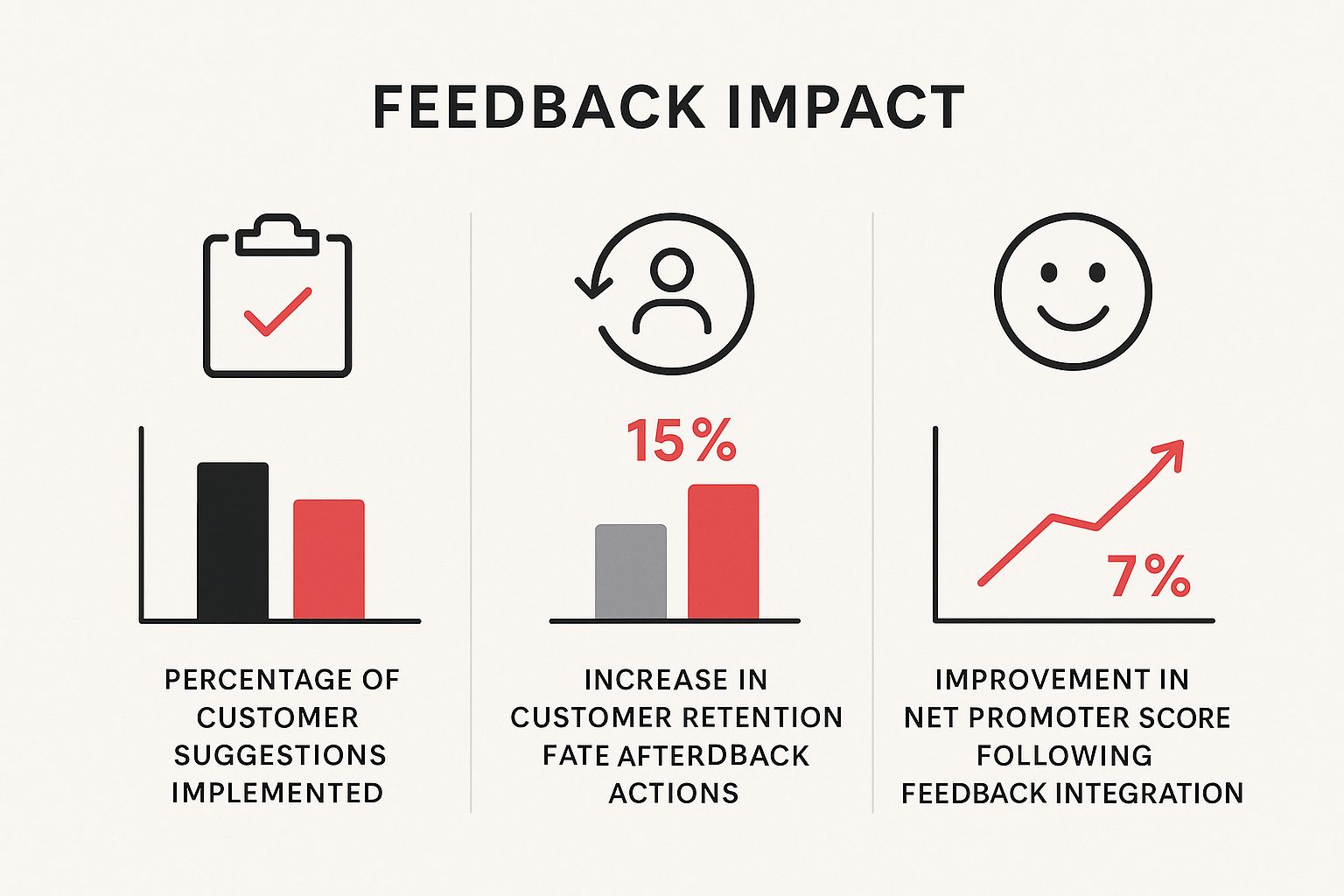
The data is clear: when you actually implement customer suggestions, retention rates go up and people see your brand in a better light. This kind of feedback is gold for fine-tuning your loyalty offers and re-engagement campaigns.
To decide which channel is best for your re-engagement efforts, it’s helpful to compare your options side-by-side.
Customer Re-Engagement Channel Comparison
| Channel | Best For | Typical Engagement Rate | Key Advantage |
|---|---|---|---|
| SMS | Time-sensitive offers, high-value customer win-back | 98% Open Rate | Immediate delivery and high visibility |
| Newsletters, detailed updates, loyalty status reports | 21% Open Rate | Cost-effective for mass communication | |
| Push Notifications | App-specific reminders, flash sale alerts | 4-10% Open Rate | Direct to device, good for app users |
| Social Media | Community building, retargeting ads, general announcements | 1-5% Organic Reach | Great for brand presence and retargeting |
While each channel has its place, SMS clearly stands out for its unmatched open rates, making it a prime choice for critical win-back campaigns where you need to get a customer’s attention immediately.
How to Measure and Optimize Your Retention Efforts
Trying to boost customer retention without tracking the right numbers is like shooting in the dark. You might get lucky, but you’re mostly just guessing. If you want to really understand what’s working—and what’s not—you need to dive into the data.
Think of your metrics as the scoreboard for your entire retention strategy. It’s the only way to see if your loyalty program, re-engagement texts, and other efforts are actually paying off. This data connects your actions directly to your profits, helping you make smart decisions instead of just hoping for the best.
Key Metrics You Need to Track
To get a real sense of your retention performance, you don’t need a hundred different data points. Just start with a few core metrics that tell the clearest story.
- Customer Churn Rate: This is the big one. It’s the percentage of customers who stop buying from you over a given period. A high churn rate is a serious red flag that something in your customer experience isn’t clicking.
- Repeat Purchase Rate: This metric shows you exactly how many customers are coming back for more. It’s a fantastic, straightforward indicator of loyalty and a great way to measure the immediate impact of your retention campaigns.
- Customer Lifetime Value (CLV): This is the holy grail. CLV estimates the total amount of money a single customer will spend with you over their entire relationship with your brand. It reveals just how valuable your loyal fans are and justifies spending a bit more to keep them happy.
Once you start tracking these numbers, you’ll have a clear baseline. From there, you can set real goals and start testing different strategies to see what actually moves the needle. A huge part of this is digging into what your customers are doing. To learn more, check out our guide on how to measure customer engagement.
Connecting Retention to Your Bottom Line
The numbers don’t lie, and when it comes to retention, the financial impact is huge. Even small, incremental improvements can lead to massive gains for your business.
Research from Bain & Company famously found that a mere 5% increase in customer retention can boost profits anywhere from 25% to 95%. This powerful effect comes from the compounding value of loyal customers—they buy more often, spend more over time, and refer their friends.
This proves that focusing on retention isn’t just another marketing task; it’s one of the most powerful financial levers you can pull. After all, every single customer you keep is one less you have to pay to acquire.
Frequently Asked Questions About Customer Retention

As you start putting new retention strategies into play, you’re bound to run into some common questions. I’ve seen it time and again. Let’s tackle some of the most frequent ones so you can move forward with confidence and put your energy where it counts.
What Is a Good Customer Retention Rate?
This is the million-dollar question, but the truth is, there’s no single magic number. Retention rates can swing wildly from one industry to another.
For instance, a SaaS or media company might be aiming for 80% or higher, and that’s a solid goal for them. On the other hand, an e-commerce or retail store could be doing incredibly well with a rate in the 60-70% range.
The real goal isn’t to chase some arbitrary industry average. Instead, your focus should be on consistently improving your own baseline, month after month. That steady, internal growth is the truest sign that your strategy to increase customer retention is actually working.
Customer Acquisition vs Retention: Which Is More Important?
It’s a classic debate. While you obviously need both to grow, many businesses make the mistake of pouring the lion’s share of their budget into acquisition. From what I’ve seen, focusing on retention almost always delivers a much stronger, more sustainable return on investment.
It can be 5 to 25 times cheaper to retain an existing customer than it is to acquire a new one. That cost difference alone makes retention a powerhouse for profitability.
Think of it like a bucket. A steady flow of new customers is great, but if your bucket is full of holes (poor retention), you’re just spinning your wheels. The real money is made turning those new buyers into loyal fans who come back again and again. Winning back customers who have already shown interest is a powerful strategy, and our guide offers specific tips on how to win back lost customers.
How Can Small Businesses Increase Retention on a Budget?
You absolutely do not need a massive budget to build customer loyalty. It’s all about focusing on high-impact, low-cost moves that make your customers feel seen and valued.
Here are a few tactics that work for any size budget:
- Exceptional Customer Service: Being responsive, helpful, and genuinely empathetic costs you nothing but time, yet it builds incredible goodwill. This is non-negotiable.
- Personalized Follow-ups: A simple, personalized “thank you” email or text after a purchase shows you’re paying attention and you care.
- Simple Loyalty Programs: You don’t need a complex system. Start with a basic points-for-purchase program to reward repeat business. It’s a proven winner.
- Actively Collect Feedback: Ask customers for their thoughts. More importantly, act on what they tell you. Showing you’re listening is one of the most powerful retention tools you have.
Ready to turn abandoned carts into loyal customers automatically? CartBoss uses powerful SMS campaigns to win back lost sales and boost your revenue on autopilot. Transform your abandoned carts into profit today.