


Picture this: you get a personal, handwritten invitation in the mail versus another handful of junk flyers. That’s the difference right there. Opt in messaging is the invitation. It’s a way of talking to your customers that’s built entirely on their permission, ensuring every single message you send is actually wanted and welcomed, not just another piece of digital noise.
What Is Opt In Messaging and Why It Matters Now
At its core, opt in messaging is about starting a conversation with a simple “yes.” Instead of just blasting out messages to anyone and everyone, you ask customers for their permission to contact them, usually through SMS or email. This one small step—just asking first—completely changes the dynamic. You’re no longer just a business selling something; you’re a trusted partner.
Think of it like being invited into someone’s home. When a customer gives you their phone number and agrees to get texts, they’re giving you a direct line to the device they carry everywhere. This isn’t just another marketing channel; it’s a genuine privilege. Treating that trust with respect is absolutely essential if you want to build real, lasting relationships with your customers. You can dive deeper into the nuts and bolts by reading up on the basics of an opt-in text message.
The Shift from Interruption to Invitation
Let’s be honest, we’re all drowning in digital noise. With everyone worried about data privacy, aggressive, pushy marketing just doesn’t cut it anymore. People are incredibly picky about which brands they let into their personal space. Opt in messaging gets this. It flips the script, changing your marketing from an annoying interruption into a welcome invitation.
This permission-first mindset has a huge effect on engagement. It’s no coincidence that SMS messages have a jaw-dropping 98% open rate, blowing email’s average of about 37% out of the water. People are actively choosing to hear from brands this way.
Here’s the magic: by asking for explicit consent, you’re automatically building a list of your most engaged and interested people. These are the customers who truly want to hear what you have to say, which makes them far more likely to buy from you and stick around for the long haul.
To put it all together, here’s a quick look at why an opt-in strategy is so powerful for any business.
Opt In Messaging at a Glance
| Benefit | Description | Key Statistic |
|---|---|---|
| Higher Engagement | Messages are sent only to those who have explicitly agreed to receive them, leading to much higher open and click-through rates. | 98% open rates for SMS. |
| Increased Trust | Respecting customer privacy and choice builds a strong foundation of trust, enhancing brand loyalty. | Leads to higher customer lifetime value. |
| Improved ROI | Targeting an engaged audience results in higher conversion rates and a more efficient use of marketing spend. | Reduced wasted ad spend on uninterested leads. |
| Compliance Assurance | Following opt in rules helps you adhere to legal standards like TCPA and GDPR, avoiding costly fines. | Protects your business from legal risks. |
Ultimately, adopting an opt-in approach isn’t just about following the rules; it’s about building a smarter, more respectful, and far more effective marketing program.
Navigating the Complex Rules of Consent
Jumping into opt-in messaging without knowing the rules is a bit like driving without knowing the traffic laws. It’s a risky move. Compliance isn’t just a good idea; it’s the foundation of a program that builds trust, protects your customers, and keeps your business out of hot water. Getting this right from day one is absolutely critical.
The main regulations you need to know are the Telephone Consumer Protection Act (TCPA) in the U.S. and the General Data Protection Regulation (GDPR) in Europe. While they have their differences, they’re built on the same core idea: you need someone’s clear permission before you send them a marketing message.
What Express Written Consent Really Means
Think of express written consent as a clear, digital handshake. It’s not some vague clause buried deep within a privacy policy. It’s a specific, documented “yes” from a customer who understands they’re agreeing to get marketing texts from you.
This means the customer has to actively do something, like check an unticked box or text a specific keyword to your number. You can’t use pre-checked boxes or assume it’s okay to text them just because they gave you their number for a shipping update.
The burden of proof is always on you, the sender. You must be able to show exactly how and when a customer gave you their permission to send promotional messages.
This simple process keeps everyone on the same page. The customer knows exactly what they’re signing up for, and you have a clear record of their consent, which is your shield against compliance issues.
This infographic breaks down what a proper consent process looks like from start to finish.
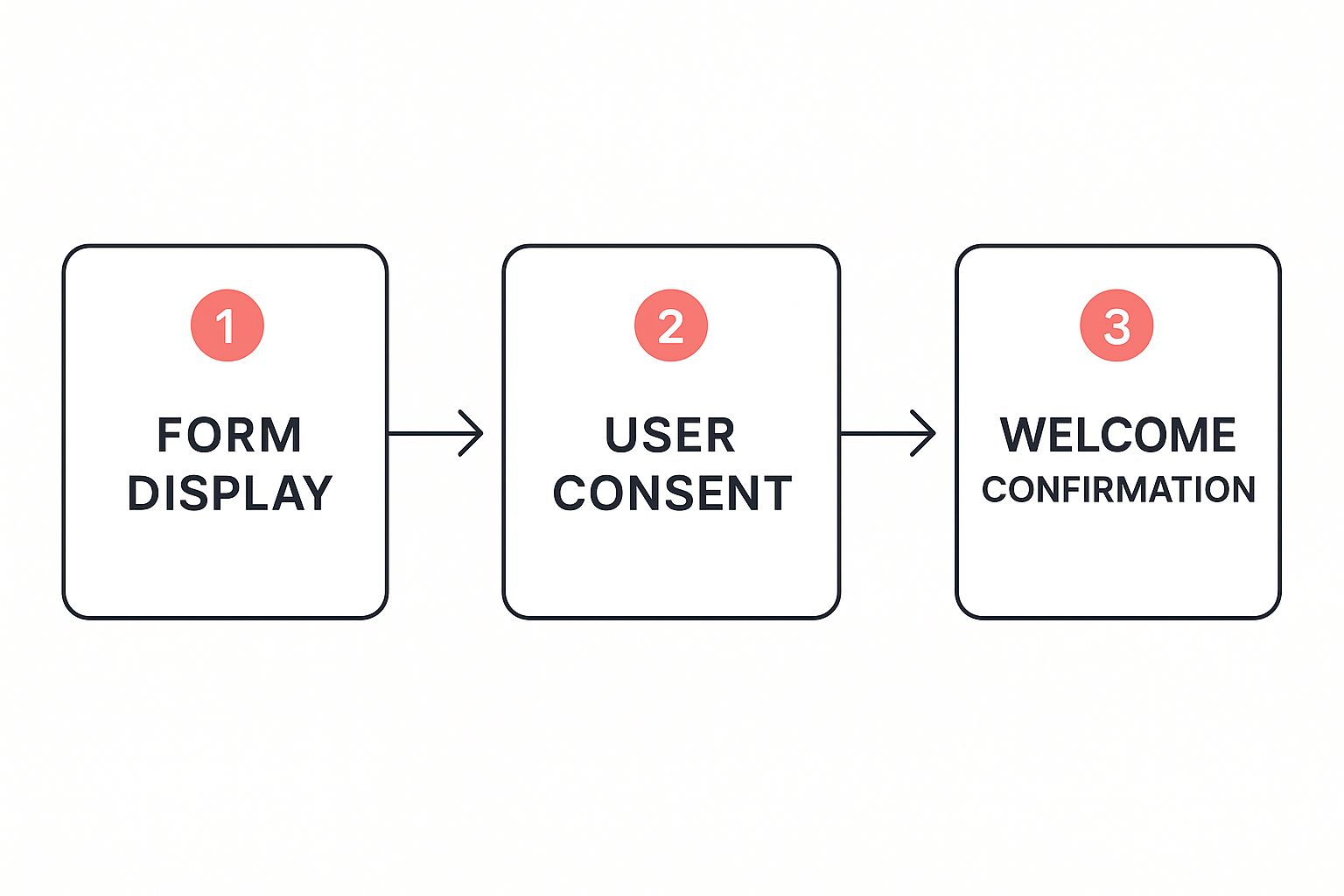
As you can see, a compliant opt-in is a clear, multi-step flow that leaves no room for confusion.
The Non-Negotiable Opt-Out
Just as important as getting permission is honoring the request to take it away. Every single marketing text you send must have simple, clear instructions on how to opt out. The standard, universally understood method is replying with the word “STOP”.
The moment a customer sends that keyword, your system needs to remove them from all marketing lists automatically and immediately. No exceptions. The process has to be completely seamless for the user—no follow-up questions, no delays, and definitely no last-ditch efforts to get them to stay.
Ignoring an opt-out request is one of the quickest ways to find yourself in legal trouble and destroy the trust you’ve built with your customers. You can find a deeper dive into these requirements in this guide to compliant https://www.cartboss.io/blog/opt-in-text-messaging/.
The Consequences of Non-Compliance
Let’s be blunt: ignoring these rules can be incredibly costly. Fines for TCPA violations, for instance, can run from $500 to $1,500 per single text message. If you have a large list, those numbers can spiral into the millions before you know it.
But it’s not just about the money. Breaking these rules shatters brand trust, leading to sky-high unsubscribe rates and a damaged reputation that’s tough to fix. Understanding these legal frameworks, including how to avoid common carrier violations, is essential for building a successful and sustainable messaging strategy from the ground up.
Growing Your Subscriber List Ethically and Effectively

This is where it all starts—getting that initial “yes” from a potential customer. But here’s the thing: a healthy subscriber list isn’t built by just grabbing phone numbers. It’s built on trust and a clear value exchange.
Before anyone gives you their number, they’re silently asking, “What’s in it for me?” Your answer to that question is everything. You have to make subscribing feel like an obviously smart move for them, not just another lead for your database.
Where to Capture Sign-Ups
To get people to opt-in, you need to meet them where they already are. The key is to weave these sign-up opportunities into the customer journey so they feel natural, not disruptive.
Here are a few of the most effective places to ask:
- Website Pop-Ups: A pop-up that appears after someone has browsed a few products or spent some time on your site is perfect. They’ve already shown they’re interested.
- Checkout Opt-Ins: The checkout page is prime real estate. A customer is already engaged and ready to buy, so adding a simple, unchecked box to get SMS deals is an easy win.
- Dedicated Landing Pages: Build a simple page that sells the perks of your SMS list. You can then drive traffic to this page from your social media posts or email newsletters.
- In-Store Signage and QR Codes: If you have a physical store, don’t miss out. A sign with a QR code or a simple keyword (“Text DEALS to 12345”) is a brilliant way to connect your offline and online worlds.
And remember, your SMS efforts don’t have to live in a silo. A solid email marketing automation strategy can work right alongside your text campaigns, keeping customers engaged across all fronts.
Crafting a Compelling Call-to-Action
Your call-to-action, or CTA, is your one shot to make a great first impression. It has to be crystal clear, straight to the point, and all about what the customer gets. Forget vague phrases like “Sign up for updates.” They just don’t cut it.
The best CTAs dangle a real, tangible reward in front of the customer. They promise instant value and manage expectations right from the start, turning a simple ask into an exciting opportunity.
There’s a reason this is so important. SMS opt-in messaging now reaches an estimated 5 billion people around the world. In the U.S. alone, 42% of mobile users are on promotional SMS lists, and the main reason they sign up is for discounts and coupons. This just goes to show how powerful a good incentive can be.
To write a CTA that actually gets people to sign up, focus on specific, irresistible benefits:
- Exclusive Discounts: “Join our VIP Text Club & get 20% off your first order.”
- Early Access: “Be the first to know! Sign up for texts to get early access to our new collection.”
- Valuable Content: “Get expert tips and exclusive guides sent straight to your phone.”
When you lead with value, you’re not just collecting a phone number. You’re starting a real relationship with a customer who could stick around for a long, long time.
Crafting Messages That Build Lasting Engagement

Getting a customer’s permission to text them is a huge win. But that’s just the starting line. Now comes the real work: earning their attention with every single message you send. This is where the art of effective opt-in messaging truly shines, turning a simple text into a conversation that feels personal, valuable, and genuinely helpful.
Your goal is to be a welcome sight in their inbox, not just another notification to be swiped away. This means ditching the generic blasts and zeroing in on three things: timing, frequency, and personalization. Nail these, and you’ll build an engaged audience that actually looks forward to what you have to say.
Finding Your Rhythm: Timing and Frequency
Sending the right message at the wrong time is the fastest way to get an unsubscribe. Seriously, nobody wants a promo text at 3 AM. It’s disruptive and instantly shatters the trust you’ve worked so hard to build. Respecting your customer’s time is non-negotiable.
For general promotions, stick to standard business hours in your customer’s local time zone. But for triggered messages, like a cart reminder, the timing is even more crucial. Sending it within an hour or two of abandonment usually hits the mark, while the desire to buy is still fresh.
Just as important is how often you text. Bombarding your subscribers with daily messages is a guaranteed recipe for fatigue and frustration. A good rule of thumb is to start with 2-4 messages per month. This keeps your brand on their radar without becoming overwhelming.
The key is to deliver consistent value, not just constant contact. Keep a close eye on your analytics—especially unsubscribe rates after each campaign—to find the perfect frequency for your specific audience.
The Power of Personalization and Segmentation
The best SMS messages feel like they were written for one person, not a massive list. This is where personalization and segmentation become your secret weapons. Instead of shouting the same offer to everyone, you can whisper the right message to the right person.
Segmentation is simply about grouping your audience based on what you know about them. This lets you craft campaigns that are incredibly relevant and resonate on a much deeper level.
Here are a few common ways to segment your audience:
- Purchase History: Send special offers for products that complement what a customer has already bought.
- Website Behavior: Target shoppers who lingered on a specific product category but never made it to checkout.
- Geographic Location: Announce local pop-up shops or promotions relevant to their city.
- Engagement Level: Reward your most loyal subscribers with exclusive “VIP” perks and early access.
This kind of detail makes your texts feel less like marketing and more like a helpful tip from a friend. For example, using targeted texts to recover abandoned carts is incredibly effective. If you’re looking to get started, checking out some proven SMS templates for recovering abandoned carts can give you a fantastic playbook for writing messages that get results.
When you combine thoughtful timing, a respectful frequency, and smart personalization, you create an opt-in messaging strategy that does more than just sell products—it builds real, lasting relationships.
Using Opt-In Messaging to Recover Lost Sales

Every abandoned cart is a story of a sale that got paused right at the finish line. It’s a moment of hesitation, but for savvy e-commerce stores, it’s also a prime opportunity for a conversation. This is precisely where a smart opt-in messaging strategy shifts from being just another communication channel to a powerful engine for recovering lost revenue.
The idea is simple. A customer who has already agreed to hear from you via text leaves items in their cart. A short while later, an automated, friendly SMS reminder lands on their phone. This isn’t about being pushy; think of it as a helpful nudge that guides them back to their purchase at just the right time.
Crafting the Perfect Cart Recovery Message
A truly effective cart recovery message has to be both helpful and compelling. Your main goal is to make it incredibly easy for the customer to pick up exactly where they left off. A direct link to their pre-filled cart is absolutely essential—it removes friction and gets them back in the game with a single tap.
But the best messages do more than that. They create a little bit of urgency without sounding demanding. Here’s what makes these texts so effective:
- A Gentle Reminder: Kick things off with a friendly, low-pressure tone. Something as simple as, “Did you forget something?” or “Your items are waiting!” works perfectly.
- A Direct Link: Always, always include a link that takes them straight to their populated shopping cart. No detours.
- A Small Incentive: A little something extra, like 10% off or free shipping, can be the final push a hesitant shopper needs to go through with the purchase.
The real secret is to frame the message as a helpful service, not a desperate sales pitch. You’re simply reminding them about products they already showed interest in and making it easier to buy them.
Turning Lost Carts Into Loyal Customers
The potential here is massive. An estimated 5.9 billion people send and receive texts across the globe, making SMS an incredibly direct and personal way to connect. This reality is changing e-commerce, with mobile sales in the U.S. projected to account for 10.4% of all retail sales—more than double the pre-pandemic figure.
The returns speak for themselves. Marketers are seeing around $71 for every dollar spent on SMS marketing. For a deeper dive into the numbers, you can check out more stats on the impact of SMS marketing.
The real magic of using SMS for cart recovery is in the timing and automation. Sending a friendly reminder within an hour of cart abandonment catches the customer while their interest is still fresh. Many brands find this simple, automated tactic not only recovers sales that would have been lost forever but also improves the customer experience.
Want a closer look at the strategy? We break it all down in our guide on abandoned cart recovery with text messages. When you use opt-in messaging this way, you’re not just winning back a sale; you’re building a stronger, more engaged relationship with your customers.
Common Questions About Opt-In Messaging
https://www.youtube.com/embed/g2wYmkK4fCI
Even with the best strategy laid out, you’re going to have questions when you first dive into opt-in messaging. It’s only natural. Getting straight answers to these common questions is the key to building your SMS program with confidence, making sure you stay compliant while delivering real value.
Let’s walk through some of the most frequent uncertainties that businesses run into. We’ll provide clear, actionable answers to help you get past the common hurdles of permission-based marketing.
Single Opt-In vs. Double Opt-In
So, what’s the real difference between these two? It all boils down to one simple thing: confirmation.
- Single Opt-In: The moment a person gives you their phone number, they’re on your list. It’s a quick, low-friction method that helps you grow your subscriber base fast.
- Double Opt-In: After signing up, the user gets a confirmation text and has to reply (often with something like “YES”) to officially join. This extra step guarantees you have a more engaged, higher-quality list and is widely seen as the strongest form of consent for compliance.
While single opt-in makes it easier for the user, double opt-in is the gold standard. It helps you build a list of genuinely interested subscribers and seriously cuts down on compliance risks.
How Often Should I Send Messages?
Figuring out how often to text your customers is a delicate balancing act. You need to stay on their radar without becoming an annoyance. While there’s no single magic number that fits every business, a great starting point is somewhere between 2-4 messages per month.
The best strategy? Set expectations from the very beginning. When someone signs up, let them know what’s coming and how often. After that, keep a close eye on your engagement and unsubscribe rates—they’ll tell you everything you need to know to fine-tune your sending schedule.
Your real goal should be consistency and value. If every single message you send is genuinely helpful or exciting, your audience will be far more forgiving and receptive, no matter the frequency.
Can I Text Customers Who Gave Me Their Number for Other Reasons?
This one is a hard and fast no. You absolutely must have express written consent specifically for marketing messages.
Taking a phone number that a customer gave you for a shipping update, an appointment reminder, or a support ticket and using it for promotions is a major compliance violation. This shady practice, sometimes called “list-stuffing,” flies in the face of regulations like the TCPA. It can lead to massive fines and, just as damaging, completely shatter the trust your customers have in you.
Consent has to be clear, specific, and freely given for the exact purpose of marketing. The good news is that the investment for a compliant program is usually minimal, and you can learn more about why SMS marketing costs are worth it for sustainable growth.
What Metrics Are Most Important to Track?
SMS open rates are almost always sky-high, but that doesn’t tell the whole story. To really understand how your opt-in program is performing, you need to dig a little deeper. Focus on the numbers that show both customer engagement and direct financial impact.
Here are the essentials to keep on your dashboard:
- Click-Through Rate (CTR): This tells you how many subscribers are actually interacting with the links you send. It’s a direct measure of how compelling your message is.
- Conversion Rate: This tracks how many of those clicks turn into a sale. This is your ROI, plain and simple.
- Unsubscribe Rate: Think of this as a health check for your list. If it starts climbing, it’s a clear signal that your content or frequency might be off.
