


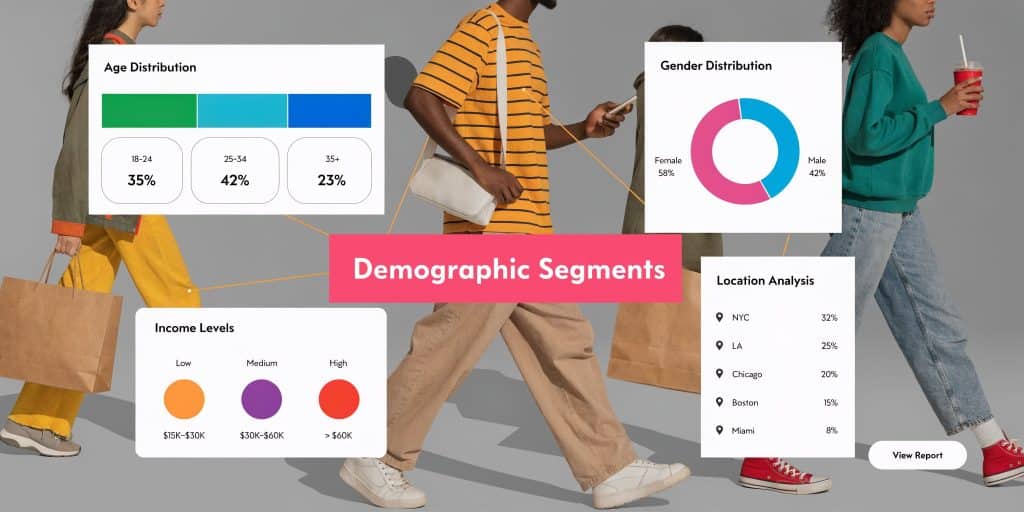
Cart abandonment is expensive, but broad messaging usually makes it worse. Demographic segmentation fixes that by matching the reminder to the shopper. Nike’s segmentation playbook is a strong example. Its age-based focus on shoppers aged 15-45, combined with gender-specific targeting, helped drive a 24% revenue increase in its push to win more female consumers, according to NielsenIQ’s demographic segmentation examples.com/global/en/info/market-segmentation-examples/). That’s the core lesson for e-commerce teams. The more clearly you define who’s abandoning carts, the easier it gets to send an SMS that feels timely instead of generic.
For store owners, this matters because demographics influence tone, offer type, urgency, language, and even checkout friction. A younger shopper may respond to speed and social proof. A higher-income shopper may ignore a discount-heavy message but complete the order when you emphasize convenience, exclusivity, or service. A multilingual customer may convert only after they receive the message in the right language with the right checkout experience.
The good news is that you don’t need enterprise complexity to use this well. You can start with segments you already have, or can infer safely, such as age range, location, language, customer status, device type, or purchase history. Then tie each segment to a simple SMS recovery flow with a clear KPI. That’s where demographic segmentation becomes practical instead of theoretical.
Below are 10 examples of demographic market segmentation that work especially well in e-commerce. Each one includes a real use case, what usually works, what often fails, and how to connect the segment to SMS cart recovery without building a bloated automation setup.
1. Age-Based Segmentation 18-35 Young Digital Natives

Mobile behavior dominates this age group. For many e-commerce brands, shoppers aged 18 to 35 move from product page to cart to exit in minutes, usually on their phones. That speed creates a clear SMS opportunity, but only if the recovery flow respects how fast they browse and how little patience they have for friction.
Brands in fashion, beauty, sneakers, and gaming keep coming back to this segment because age shapes message style, offer type, and timing. As noted earlier, large consumer brands have long used age to shape campaigns around identity, status, and lifestyle. For store owners, the practical takeaway is simple. Design the recovery message for a mobile-native buyer who already knows how to buy and mostly needs a fast route back to checkout.
What tends to work
Short copy wins here. So does a checkout link that opens directly to the saved cart, not a generic homepage or category page.
A useful SMS cart recovery setup for this segment usually includes:
- Send quickly: Start with the first message soon after abandonment, while product interest is still high.
- Write like a person: Casual, clear copy usually performs better than polished brand language.
- Use one CTA: Give them one action to take, which is returning to checkout.
- Add urgency with proof: Low-stock cues, expiring perks, or product popularity work better than vague pressure.
- Test perk vs no perk: Many 18 to 35 shoppers convert without a discount if the path back is easy.
One pattern I see often is strong click-through with weak recovered revenue. In that case, the SMS did its job. The checkout likely has issues such as forced account creation, slow page load, limited payment options, or too many form fields.
SMS workflow and KPIs to watch
For this segment, keep the flow light:
- Message 1: Quick reminder with product context and a direct cart link
- Message 2: Sent later only if they did not purchase, with a small incentive or urgency cue
- Exit rule: Stop the flow immediately after purchase or if the shopper clicks through and converts on another channel
Track these KPIs first:
- Click-through rate: Confirms whether the message and timing fit the segment
- Recovered checkout rate: Shows whether mobile checkout is doing its job
- Revenue per recipient: Helps you decide whether an incentive is worth the margin hit
- Unsubscribe rate: A fast signal that your tone, timing, or send frequency is off
Template checklist
Use this before you activate the segment:
- Age range is inferred or collected compliantly
- SMS link returns shoppers to their exact cart
- Message fits within a short mobile read
- Tone matches the product category and brand voice
- Incentive is tested, not added by default
- Mobile checkout is reviewed before scaling spend
A simple example:
Hey [First Name], your cart is still saved. [Product Name] is waiting here: [Link]
If the first reminder underperforms, I would test timing and landing experience before rewriting the whole strategy. For 18 to 35 shoppers, poor results often come from checkout friction, not weak intent.
What usually fails
Long explanations, formal copy, and blanket discounting tend to hurt performance. This audience does not need a lecture on product benefits after they already added the item to cart. They need speed, relevance, and a reason to finish now.
Another common mistake is copying what works for older or higher-consideration buyers. Younger digital-native shoppers usually respond better to direct language, tighter timing, and fewer steps.
2. Income-Based Segmentation High-Income Earners
Income-based segmentation changes the offer more than the audience. Affluent shoppers don’t automatically want a bigger discount. Often, they want fewer reasons to hesitate.
That’s why premium retailers, luxury accessories brands, and high-end electronics stores recover carts better when the SMS reflects status, service, and confidence. Generic “Complete your purchase now and save” copy can cheapen the product. A more effective message might highlight reserved inventory, white-glove support, free delivery, or extended returns.
A real revenue case for demographic precision
Experian shared a retail example where demographic segmentation by income, family structure, and job types uncovered $1.1 billion in unrealized spending potential, showing how much value gets missed when every customer sees the same campaign. The case is outlined in Experian’s demographic segmentation examples.
That doesn’t mean every store needs detailed income data. In practice, many e-commerce teams use proxies:
- Product mix: Premium collections, designer items, or higher average order values
- Purchase history: Prior full-price orders and repeat premium purchases
- Shipping preference: Faster shipping or concierge expectations
- Location cues: Used carefully and compliantly, especially in luxury-heavy regions
What works better than aggressive discounting
For a luxury watch, fine jewelry, or premium home goods cart, try messaging like this:
Your selected piece is still available. Complete your order here with secure checkout.
That often beats a loud promo code. It protects brand positioning and keeps the focus on product value.
What doesn’t work is treating high-income shoppers like bargain hunters by default. Deep discounting can recover some carts, but it can also train premium buyers to wait. If you sell a high-consideration product, start with reassurance and convenience. Add an incentive only if the second touch is necessary.
The KPI to watch here isn’t just recovery rate. It’s recovered revenue quality. If you’re winning carts back only by eroding margin, the segment strategy needs work.
3. Geographic Segmentation International Multi-Language Markets

Location and language are among the most practical segmentation levers in global e-commerce. They affect how people read messages, when they shop, which offers feel reasonable, and what kind of checkout experience they trust.
Many stores underperform here. They ship globally but recover carts with one English message, one send time, and one offer structure. That usually leaves money on the table.
Why localization matters in cart recovery
Delve AI highlights a gap in how brands apply demographic segmentation to multilingual e-commerce. Its analysis points to 70-80% global cart abandonment rates, with 18-34-year-olds showing 75% abandonment due to unexpected costs in emerging markets like India and Brazil. It also notes that privacy-first segmentation tied to language and location is still underused in cart recovery. The details appear in Delve AI’s demographic segmentation article.
For a Shopify or WooCommerce store, the practical move is to localize these parts of the flow:
- Language: Match the shopper’s likely language automatically where possible
- Timing: Send in local waking and shopping hours
- Offer framing: Free shipping may matter more in one market, local payment trust in another
- Checkout context: Show local currency and familiar payment paths
If you need ideas for adapting messaging by region, these localization strategy examples are a useful starting point.
Local relevance beats perfect copy. A simple message in the right language usually outperforms a polished message in the wrong one.
What to avoid
Don’t assume one region behaves like another just because the product is the same. A cosmetics brand might need ingredient-led reassurance in one market and delivery-speed reassurance in another. Test by region, not just globally.
The KPI here is recovered conversion by market. If one country clicks but doesn’t convert, check language quality, payment options, and shipping clarity before you touch the SMS copy.
4. Purchase Frequency Segmentation Repeat vs First-Time Buyers
This isn’t a pure demographic segment on paper, but in e-commerce it becomes one of the most useful overlays because repeat status often lines up with different life situations, confidence levels, and buying habits. A first-time buyer needs trust. A repeat customer needs relevance.
I treat these as two separate recovery jobs.
The first-time buyer needs reassurance
If someone has never ordered from you, don’t act like they already trust the brand. Recovery messages should reduce risk. Mention easy returns, checkout security, or product fit guidance if that’s what usually blocks the sale.
That’s especially important because generalized messaging often underperforms compared with more predictive segmentation. In Curate Partners’ audience segmentation case study, a team moved from manual, reactive retention work to integrated segmentation and improved a 6-month retention rate from 58% to 74%, while monthly churn dropped from 4.5% to 2.6%. It also increased revenue from returning users from $1.8M to $2.6M, according to the Curate Partners case study on audience segmentation and retention analytics.
The lesson for cart recovery is clear. Don’t send the same message to everyone.
The repeat buyer needs speed
Returning shoppers already know your brand, so a long reassurance sequence can feel unnecessary. A simple “Welcome back” style reminder with a direct path to checkout often works better.
Use different triggers for each group:
- First-time buyers: Reviews, guarantees, return policy, or limited introductory incentive
- Repeat buyers: Saved preferences, loyalty perks, or fast reorder-style messaging
- Lapsed repeat buyers: A softer reminder and context tied to their prior purchase pattern
What fails is overdiscounting loyal buyers and under-reassuring new ones. If your repeat customers convert only with heavier offers than new customers, something is off in your pricing or loyalty setup.
5. Product Category Segmentation Vertical-Specific Recovery

Product category isn’t a demographic variable by itself, but it becomes powerful when paired with demographic intent. A shopper abandoning sneakers behaves differently from someone abandoning a sofa, skincare routine, or power tool set. If you ignore category context, the SMS sounds generic even when the segmentation logic looks advanced in your dashboard.
Match the message to the buying decision
For apparel, size confidence matters. For furniture, delivery clarity matters. For beauty, compatibility and ingredients often matter. For electronics, warranty and specs can close the gap.
That’s why category-specific SMS templates usually outperform one universal reminder. A few examples:
- Fashion: Mention size availability, easy returns, or fit reassurance.
- Furniture: Call out delivery timing, shipping details, or assembly support.
- Beauty: Highlight product match, routine completion, or shade continuity.
- Electronics: Reinforce warranty, support, or compatibility.
- Home improvement: Focus on project completion and complementary items.
Where category-based segmentation helps demographic segmentation
A younger shopper abandoning streetwear may respond to urgency. A family shopper abandoning nursery furniture may respond to delivery reliability. The category gives context to the demographic profile.
Field note: Most stores don’t need more segments here. They need better message-library discipline. Five strong category templates usually beat twenty weak ones.
What doesn’t work is using the same incentive across every category. A discount might help in beauty. In furniture, free shipping or delivery reassurance may do more. In fashion, an exchange-friendly message can outperform either one.
For KPIs, track recoveries by category and average recovered order value. If one category gets clicks but weak completion, the missing information is usually in the landing or checkout experience, not the first SMS.
6. Device Type Segmentation Mobile vs Desktop Shoppers
Device type often exposes where the abandonment happened. Mobile users usually don’t abandon because they lost interest. They abandon because checkout asks too much from a small screen.
That’s why mobile deserves its own recovery logic.
Mobile users need fewer taps
If the shopper came from mobile, the recovery message should assume short attention, interrupted sessions, and low patience for forms. Keep the SMS to one or two short sentences and send the customer straight back into a pre-filled checkout whenever possible.
Stores that tighten this flow usually see the biggest gains from SMS because the channel fits the device. The reminder appears on the same screen the shopper uses to buy.
You can improve the recovery path by applying the same principles covered in this guide to mobile checkout optimization.
A practical split looks like this:
- Mobile abandoners: Shorter copy, faster send, direct checkout link
- Desktop abandoners: Slightly more context, sometimes a longer consideration window
- Tablet users: Test separately if volume justifies it
Don’t copy desktop thinking into mobile recovery
Long product explanations, multi-step landing pages, and coupon complexity all hurt mobile recovery. So does a link that opens to a homepage instead of a restored cart.
This segment also overlaps well with younger age groups and impulse-heavy categories such as fashion, accessories, and beauty. If the customer started on mobile, recover on mobile. Don’t force an email-first workflow and hope they come back later on a laptop.
The KPI to watch is mobile recovered checkout completion. If SMS clicks are strong but completion is weak, remove form fields, tighten page speed, and make sure the return path restores the cart immediately.
7. Customer Behavior Segmentation Browsing Intensity and Cart Value
Behavior gives demographic segmentation teeth. A cart from a casual browser shouldn’t get the same treatment as a cart from a shopper who viewed multiple products, built a large basket, and hesitated near the end.
Many stores can improve here without collecting any extra personal data. You already know how many items were added, how long the session lasted, and how valuable the cart is.
Build recovery tiers around intent
High-value or high-intent abandoners usually deserve faster and more personalized outreach. Lower-value carts may still convert well, but they often need a lighter-touch sequence to preserve margin.
You can pair a few simple tiers with your demographic segments:
- Low-value carts: Short reminder, test whether convenience alone is enough
- Mid-value carts: Reminder plus a carefully chosen incentive if needed
- High-value carts: Premium support angle, shipping reassurance, or stronger trust cues
- Repeat abandoners: Softer messaging that avoids sounding pushy
If you want to combine behavior with audience logic more systematically, this overview of what is behavioral targeting helps frame the setup.
What different cart values usually need
A large electronics cart often benefits from support messaging. A lower-value beauty cart may recover through urgency. A multi-item fashion cart may respond best to a bundled value message or a note that items are still reserved.
What doesn’t work is treating every high-value cart with an automatic discount. Sometimes the blocker is confidence, not price. A better first move might be secure checkout reassurance, shipping clarity, or a customer support route.
The KPI here should reflect segment value, not just raw recoveries. A small number of recovered high-value carts can outperform a much larger batch of low-value wins.
8. Seasonal and Holiday-Based Segmentation Shopping Season Behavior
Shopping behavior changes fast during peak periods. The same customer who ignores a standard reminder in a quiet month may respond immediately during Black Friday, back-to-school, or holiday gifting season. Timing changes urgency. It also changes tolerance for frequency.
Seasonal buyers don’t need standard messaging
Gift shoppers often need deadlines. Back-to-school buyers need practicality. Holiday deal seekers expect urgency and inventory pressure. If your SMS flow stays static through these periods, it won’t match the buying mood.
Starbucks offers a useful reminder that demographic segments often gain power when you combine them with context. Research on the brand describes two core customer groups, including 25-40 year old professionals and younger urban millennials, and says those targeted groups drive 89% of total revenue globally through specific strategies, according to an ETSU paper on Starbucks segmentation.etsu.edu/cgi/viewcontent.cgi?article=1294&context=honors).
That same principle applies in seasonal e-commerce. A holiday gift buyer and a self-purchase buyer may sit in the same age bracket but need different recovery copy.
How to adjust the workflow during peak periods
- Increase urgency: Mention delivery cutoffs or stock pressure where accurate.
- Shorten decision windows: Peak shoppers often act faster.
- Adjust incentives: Seasonal buyers may expect a clear offer.
- Protect experience: Keep do-not-disturb rules in place so frequency doesn’t turn into fatigue.
For planning ideas around year-end campaigns, these Black Friday marketing strategies are worth reviewing.
What fails here is recycling generic abandoned-cart text during the busiest shopping periods. Seasonal traffic has different motives. Your copy should reflect that.
9. Trust and Brand Awareness Segmentation Customer Familiarity Levels
New visitors and known customers don’t read the same SMS the same way. One sees risk. The other sees interruption. That difference matters.
Trust is the first conversion lever for unfamiliar shoppers
If someone barely knows your brand, the recovery message should reduce doubt. That’s especially true in categories where fit, quality, or authenticity matter. DTC brands often recover more carts from new visitors when they reference easy returns, guarantees, or strong social proof.
A good trust-building message is simple. It reminds the shopper what they left, gives a direct checkout path, and removes one concern.
For example:
Still thinking it over? Your cart is saved. Complete your order with secure checkout and easy returns.
That works better for a new visitor than “Last chance” copy with no context.
Familiar shoppers need relevance, not reassurance
Returning customers, email subscribers, and prior buyers usually don’t need a trust speech. They need a clean path back to purchase and a reason to act now. If you already know their preferences, reflect that lightly without sounding invasive.
Brands often get the trade-off wrong here. They use the same social-proof-heavy message for loyal buyers and the same discount-first message for uncertain first-timers. Both approaches waste the segment.
What tends to work:
- New visitors: Returns, guarantee, secure checkout, concise social proof
- Returning non-buyers: Reminder plus category or product relevance
- Past buyers: Fast checkout, loyalty cue, exclusive access, or replenishment framing
If trust-driven segments are underperforming, review the landing page after the SMS. A strong reminder can’t compensate for a product page that still leaves the main concern unanswered.
10. Engagement Level Segmentation SMS Receptiveness and History
Not every subscriber should get the same cadence. Some buyers click quickly and recover with one nudge. Others ignore repeated messages and only unsubscribe when brands keep pushing.
Engagement-based segmentation protects performance and deliverability at the same time.
Use message frequency as a segment rule
Highly engaged users can usually handle a longer recovery sequence. Low-engagement users often need one clean reminder and then silence. Over-messaging weakens results even when the audience was strong to begin with.
For e-commerce teams, that means separating users by recent responsiveness, prior recoveries, and unsubscribe risk. If someone often clicks SMS, a follow-up can make sense. If they rarely engage, more messages probably won’t fix it.
This is also where opt-in quality matters. Stores that want stronger engagement segmentation should tighten consent flows first. These practical tips on SMS opt-in can help improve list quality before you build more logic.
What a healthy setup looks like
- High engagement: Multi-step recovery sequence with stronger personalization
- Moderate engagement: Standard reminder plus one follow-up if no action
- Low engagement: Single reminder, then pause
- Unresponsive or sensitive windows: Respect do-not-disturb and quiet hours automatically
The biggest mistake is forcing all subscribers through the same automation because it’s easier to manage. It is easier. It’s also less profitable over time.
Your KPI here is segment-level unsubscribe pressure alongside recovered revenue. If recoveries rise but complaints or opt-outs also rise, the sequence is too aggressive for that audience.
10-Example Demographic Market Segmentation Comparison
Stores usually do not need ten segmentation systems at once. They need one comparison table that shows which segment is easiest to launch, which KPI to watch first, and which SMS cart recovery workflow fits the customer.
Use this as a build order, not just a reference chart. Start with the segments that match your data quality, checkout friction, and margin room.
| Segment | Implementation Complexity 🔄 | Resource Requirements ⚡ | Expected Outcomes ⭐📊 | Ideal Use Cases 💡 | Recommended SMS Recovery Workflow | Primary KPI | Key Advantages ⭐ |
|---|---|---|---|---|---|---|---|
| Age-Based Segmentation (18–35 Young Digital Natives) | Low, simple time and tone rules with short templates | Low, SMS copy and mobile-optimized checkout | High open and click rates, more frequent recoveries, lower average order value | Mobile-first fashion, beauty, impulse categories | 1 to 2 short texts, sent quickly, mobile-first copy, direct checkout link | Click-through rate and recovered orders | Strong SMS responsiveness, social influence, fast conversions |
| Income-Based Segmentation (High-Income Earners $100K+) | Medium, requires stronger personalization and VIP workflows | Medium to high, CRM data, concierge support, premium creative | Higher revenue per recovery, lower but more valuable conversion volume | Luxury goods, premium electronics, high-AOV stores | Fewer messages, service-led copy, premium positioning, no aggressive discounting | Recovered revenue and recovered AOV | Bigger order values, better margin protection, stronger loyalty when targeted well |
| Geographic Segmentation (International Multi-Language Markets) | High, multi-language, time zone, and compliance rules | High, translation, localization, regional operations | Better relevance, wider market coverage, fewer compliance mistakes | Global sellers, marketplaces, multi-country stores | Local-language SMS, local send windows, region-specific shipping and currency details | Conversion rate by region | Better local relevance and cleaner compliance handling |
| Purchase Frequency Segmentation (Repeat vs. First-Time Buyers) | Medium, customer lifetime value cohorts and separate flows | Medium, analytics, loyalty data, specific offers | Better return from incentive use, stronger retention, less wasted discounting | Subscription brands, repeat-purchase categories, DTC stores | First-time buyers get reassurance and a light incentive. Repeat buyers get faster reminders and loyalty-focused copy | Recovery rate by buyer type | Smarter discount allocation and better retention control |
| Product Category Segmentation (Vertical-Specific Recovery) | High, many category-specific templates and rules | High, copy variations, testing, category knowledge | Better conversion and timing fit by category | Stores with broad catalogs, including furniture, fashion, and electronics | Category-based timing, objection handling, and offer rules. Fit and returns for apparel. Delivery and assembly for furniture. Specs and warranty for electronics | Category-level recovery rate | More relevant messaging and better incentive control by product type |
| Device Type Segmentation (Mobile vs. Desktop Shoppers) | Low, device detection and specific links | Low, pre-filled checkout and device-specific copy | Stronger mobile recovery and faster conversions | Mobile-first retailers and app-led brands | Mobile users get a short text with a direct checkout path. Desktop users can receive a reminder timed for later purchase completion | Mobile checkout completion rate | SMS plus pre-filled checkout reduces mobile friction |
| Customer Behavior Segmentation (Browsing Intensity & Cart Value) | High, complex rules for cart thresholds and behavior | High, session tracking and predictive modeling | Better spend prioritization and more focus on valuable carts | High-ticket stores, multi-item carts, electronics | High-intent users get faster follow-up. High-cart-value users get stronger service or financing messages instead of broad discounts | Recovered revenue per send | Better budget allocation and clearer conversion signals |
| Seasonal & Holiday-Based Segmentation (Shopping Season Behavior) | Medium, calendar-based flows and preparation work | Medium to high, campaign planning and inventory alignment | Higher recovery volume during peak periods and stronger response to urgency | Black Friday, Christmas, back-to-school campaigns | Shorter recovery windows, inventory-aware copy, deadline-driven reminders | Peak-period recovered revenue | Handles high-volume seasonal sequences with better timing |
| Trust & Brand Awareness Segmentation (Customer Familiarity) | Medium, visitor identification and specific trust messages | Medium, reviews, guarantees, trust badges, tracking | Better first-purchase conversion and less discount dependence for loyal buyers | New-customer acquisition, loyalty programs, DTC growth | New visitors get proof points, shipping clarity, and return policy reminders. Known customers get a faster path back to checkout | First-time buyer recovery rate | Builds confidence and cuts irrelevant reassurance for existing customers |
| Engagement Level Segmentation (SMS Receptiveness & History) | Medium, engagement scoring and frequency rules | Low to medium, analytics and compliance tools | Lower opt-out pressure and steadier deliverability | Programs focused on long-term list health | Highly engaged subscribers can receive a follow-up. Low-engagement subscribers should get one clear reminder and then stop | Unsubscribe rate by segment | Protects deliverability and sets message cadence more carefully |
A practical checklist helps keep this table usable during implementation.
- Match each segment to one SMS workflow before writing copy
- Assign one primary KPI, not five
- Use specific offers only where margin and conversion data support them
- Add specific trust messages for new or unfamiliar shoppers
- Send device-specific links that reduce checkout steps
- Review segment performance monthly and remove rules that add complexity without improving recovery
The trade-off is straightforward. The more precise the segmentation, the more setup and QA your team needs. For many e-commerce stores, the best first move is a segment that changes the message and the checkout path with minimal operational overhead. Age, device, and buyer status usually meet that standard.
Next Steps: Implement Your Segmentation Strategy
The best examples of demographic market segmentation aren’t useful unless they change your workflow. That’s the main difference between a strategy slide and a revenue-driving setup. In e-commerce, segmentation should end in action. A different message. A different send time. A different checkout path. A different offer.
Start small. Don’t build all ten segments at once.
Pick one segment where the intent is already obvious. Age-based mobile shoppers are often a good place to begin because the copy, timing, and checkout experience are usually easy to adjust. Geographic and language segmentation is another strong starting point for stores selling internationally. If your product catalog is broad, product category segmentation may give you the fastest clarity because it maps directly to buying objections.
Once you’ve chosen a segment, define three things before you write any message:
- The recovery goal: More completed checkouts, higher recovered order value, or better margin preservation
- The likely objection: Price, trust, delivery, fit, complexity, or distraction
- The simplest SMS response: Reminder, reassurance, urgency, service, or incentive
That’s enough to launch a useful first test.
Keep the KPI set tight. Track open rates, click-through to checkout, completed recoveries, and unsubscribe behavior. If a segment clicks but doesn’t convert, the problem is usually on-site. If it doesn’t click, the issue is more likely message relevance, timing, or offer fit. That kind of diagnosis is where segmentation starts paying off.
Two trade-offs are worth keeping in mind.
First, more segments don’t automatically mean better performance. Most stores don’t fail because they have too little segmentation. They fail because they create too many weak segments with no distinct messaging behind them. A small number of clear segments with disciplined templates almost always beats a sprawling setup nobody maintains.
Second, demographic segmentation works best when it’s paired with behavior. Age, income, language, and life stage tell you who the shopper is. Cart value, device, product category, and repeat status tell you what they’re trying to do. The strongest cart recovery flows combine both.
If you’re looking for a broader conversion framework beyond abandoned-cart recovery, this guide on how to increase ecommerce conversion rate is a helpful companion read.
CartBoss can fit into this process if you want to operationalize SMS recovery with features like automatic language detection, pre-filled checkout forms, dynamic discounts, analytics, and compliance controls. The practical approach is still the same regardless of tool choice. Build one segment. Measure it. Improve the message. Then expand to the next segment with what you learned.
The opportunity is real. Cart recovery doesn’t need more volume. It needs more relevance. Apply the segment definitions above, build your first workflow, and refine from there. For many stores, that’s the shortest path to lifting abandoned-cart performance and improving how SMS contributes to revenue.
If you want to turn these segmentation ideas into automated SMS recovery flows, CartBoss is built for Shopify and WooCommerce stores that need localized messages, pre-filled checkouts, analytics, and compliance-friendly cart recovery on autopilot.