



An SMS opt in is the clear, provable permission a customer gives your business to send them text messages. Think of it less as a formality and more as the digital handshake that kicks off a trusting and profitable relationship. It’s the foundation of everything that follows.
Why the SMS Opt In Matters Now More Than Ever
Picture your customer’s phone. It’s their personal space, their direct line to friends and family. An SMS opt in is your formal invitation into that space. It turns what could be a one-sided shout into a welcome, two-way conversation. Without that consent, your messages aren’t just unwelcome—they feel intrusive and can land you in legal hot water. Getting this first step right has a massive impact on your engagement rates, brand reputation, and bottom line.
In a world where everyone is drowning in digital noise, the directness of SMS gives it a unique power. People are fiercely protective of their email inboxes, suffering from what many call inbox fatigue. A text message, on the other hand, feels immediate and important. When a customer willingly signs up, they’re sending a strong signal: they’re genuinely interested and they trust your brand.
To give you a clearer picture, here’s a quick breakdown of what goes into a solid SMS opt-in process.
SMS Opt In at a Glance
| Component | What It Means | Why It’s Important |
|---|---|---|
| Explicit Consent | The customer actively agrees to receive messages (e.g., checking a box, texting a keyword). | This isn’t just a suggestion; it’s a legal requirement. It ensures you’re only messaging people who want to hear from you, which skyrockets engagement. |
| Clear Language | Your opt-in form clearly states what they’re signing up for, how often they’ll get messages, and how to stop. | Transparency builds trust from day one. No one likes surprises or feeling tricked into a subscription. |
| Trackable Proof | You must have a record of when and how each customer gave their consent. | This is your proof of compliance. If there’s ever a dispute, you can show exactly how you got permission. |
| Easy Opt-Out | Every message must include a simple way to unsubscribe, like texting “STOP.” | Respecting a customer’s choice to leave is just as important as getting them to join. It’s a key part of maintaining a good reputation. |
Mastering these elements is about building a marketing channel that people actually want to be a part of.
The Foundation of Trust and Engagement
This explicit permission is precisely what makes SMS marketing so incredibly effective. The numbers tell a pretty compelling story about where customers and businesses are putting their attention.
By 2025, it’s predicted that nearly 50 million people will have opted into business SMS, pushing the global market toward a staggering $327.1 billion. This isn’t just hype; it’s driven by real engagement. SMS has a 98% read rate—a number that completely eclipses the average email open rate of around 37%.
This incredible level of engagement doesn’t happen by accident. It’s a direct result of the permission-based nature of SMS. Every single SMS opt in represents a customer who is actively asking to hear from you, making them far more likely to open, read, and click on your messages. To see how this consent fuels entire campaigns, check out our deep dive on what is SMS marketing and how it all works together.
Ultimately, getting the opt-in process right is about more than just checking a compliance box; it’s about respecting your customer. It’s the critical first move that turns a stranger on your site into a loyal, engaged subscriber who is genuinely ready to listen.
Navigating SMS Compliance and Regulations

Sending a text feels instant and easy, but when you’re a business, there’s a crucial set of rules you have to play by. Think of SMS compliance as the essential “rules of the road” for your marketing. Following them isn’t just about dodging massive fines; it’s about building genuine trust with your customers, which is worth far more in the long run.
The two big players setting these rules are the Telephone Consumer Protection Act (TCPA) in the U.S. and the CTIA (Cellular Telecommunications Industry Association). They might sound intimidating, but their guidelines boil down to one core idea: respect and transparency. Getting this wrong is no joke—penalties can soar up to $1,500 per single text message. That makes compliance a non-negotiable part of your strategy.
Your number one job is to get express written consent before you hit send on any promotional texts. This is the absolute foundation of a healthy SMS program.
The Pillars of SMS Compliance
To keep your SMS marketing both effective and on the right side of the law, you need to nail these key requirements. They’re the bedrock of a list full of engaged, happy subscribers.
- Secure Express Written Consent: This isn’t something you can hide in your terms and conditions. Consent has to be crystal clear and provable. Your customers must take a specific action, like checking an un-ticked box or texting a keyword to your number, to officially say “yes.”
- Provide Clear Disclosures: Right where they sign up, you need to be upfront. State your brand’s name, why you’re texting them (e.g., “for marketing alerts and promotions”), how often you’ll text (e.g., “up to 4 msgs/month”), and always include the line, “Message and data rates may apply.”
- Offer a Simple Opt-Out: Every single message needs a clear, easy escape route. Standard keywords like “STOP,” “END,” or “UNSUBSCRIBE” must trigger an immediate and automatic opt-out. No questions asked.
A compliant opt-in process is your best defense against legal headaches and your best tool for building a high-quality audience. It guarantees every single person on your list actually raised their hand to hear from you.
What Compliance Looks Like in Practice
Let’s make this real. Picture a customer at your store’s checkout page. Just before they pay, they see a checkbox.
Example of a Compliant Opt-In:
[ ] Yes, I’d like to receive exclusive offers and updates from [Your Brand] via text message at the phone number provided. I agree to the Terms and Conditions. Message frequency varies. Message and data rates may apply. Reply HELP for help or STOP to cancel.
See how the box is unchecked by default? The customer has to make a conscious choice to join. This simple setup covers all the bases and creates a clear record of their consent. If you want to dive deeper into the specifics, a complete guide to SMS marketing compliance can give you even more confidence.
When you treat the SMS opt-in with this kind of care, you’re doing more than just following the law. You’re showing your customers you respect their privacy, which sets the stage for a positive relationship that lasts. This turns compliance from a chore into a powerful way to attract and keep your very best customers.
Proven Strategies to Grow Your SMS Subscriber List
Building a quality SMS subscriber list is a lot like planting a garden. You can’t just toss seeds out and hope for the best. Instead, you need to prepare the soil and create the perfect conditions for interested customers to willingly join your community. The goal isn’t just to collect phone numbers—it’s to attract an engaged audience that actually wants to hear from you.
The best strategies meet customers right where they are, giving them a clear and valuable reason to sign up. Let’s dig into some proven methods that turn casual visitors into loyal, high-value subscribers.
Transform Your Website into an Opt-In Magnet
Your website is prime real estate for growing your SMS list. The secret is making the invitation impossible to miss but incredibly easy to say “no, thanks” to.
- Mobile-Friendly Pop-ups: A pop-up that appears at just the right moment on a mobile device works wonders. You can set it to trigger when a user is about to leave or after they’ve browsed a few pages. Make the offer the star of the show.
- Embedded Forms: Place simple sign-up forms in your website’s footer, sidebar, or even within blog posts. This creates a constant, non-intrusive opportunity for people to opt in whenever they feel the time is right.
For either method, the incentive is everything. A compelling offer, like “Get 15% off your first order,” gives customers an immediate reward for handing over their contact info. For more ideas, our guide on collecting phone numbers has a bunch of extra tactics you can start using today.
Bridge the Gap Between Physical and Digital
If you have a physical presence, whether it’s a brick-and-mortar store or a booth at a live event, QR codes are your best friend. They create a seamless bridge for customers to join your list with a quick scan of their phone.
Pro Tip: Stick QR codes on receipts, in-store signs, product packaging, or event banners. Link the code straight to a pre-filled text message or a simple landing page where they can complete their SMS opt in in just a few seconds.
This approach cashes in on that in-the-moment interest when your brand is fresh in their minds. It feels modern, convenient, and shows you respect your customer’s time.
Leverage High-Intent Moments
Certain points in the customer journey are just perfect for an opt-in invitation. By far the most powerful one is at checkout.
- Checkout Invitation: Add a simple, unchecked checkbox during the checkout process. Keep the language clear and compliant, offering subscribers access to exclusive deals or order updates. Since they’re already typing in their information, it’s a very low-friction moment to ask.
- Social Media Campaigns: Run targeted ads on platforms like Instagram or Facebook that promote your SMS club. “Tap to Text” ads are especially effective, as they automatically open a user’s messaging app with a pre-written keyword, making the sign-up process totally effortless.
The growth in this channel is impossible to ignore. The U.S. SMS marketing industry is on track to hit $12.6 billion by 2025, partly because 47% of Millennials prefer getting brand updates via text. But here’s the catch: with 84% of Americans concerned about data privacy, building this list on a foundation of trust is more critical than ever. You can explore more SMS marketing statistics to get a better feel for the market’s direction.
When you focus on these value-driven, transparent strategies, you’ll build more than just a list of numbers. You’ll create a community of loyal customers who are actually excited to see your next message pop up on their screen.
Designing a Seamless Opt In User Experience
A clunky or confusing sign-up process is one of the fastest ways to kill a potential subscriber’s interest. The whole point is to make the SMS opt-in experience so smooth and intuitive that saying ‘yes’ feels like the natural next step. This all comes down to designing clean opt-in forms, writing simple language that builds confidence, and making sure that promised welcome message hits their phone instantly.
Think of your user experience as the red carpet you roll out for your new subscribers. A frictionless journey shows you respect their time and that you’re a professional brand they can trust. Every single element, from the pop-up design to the button text, plays a part in getting them to sign up without a second thought.
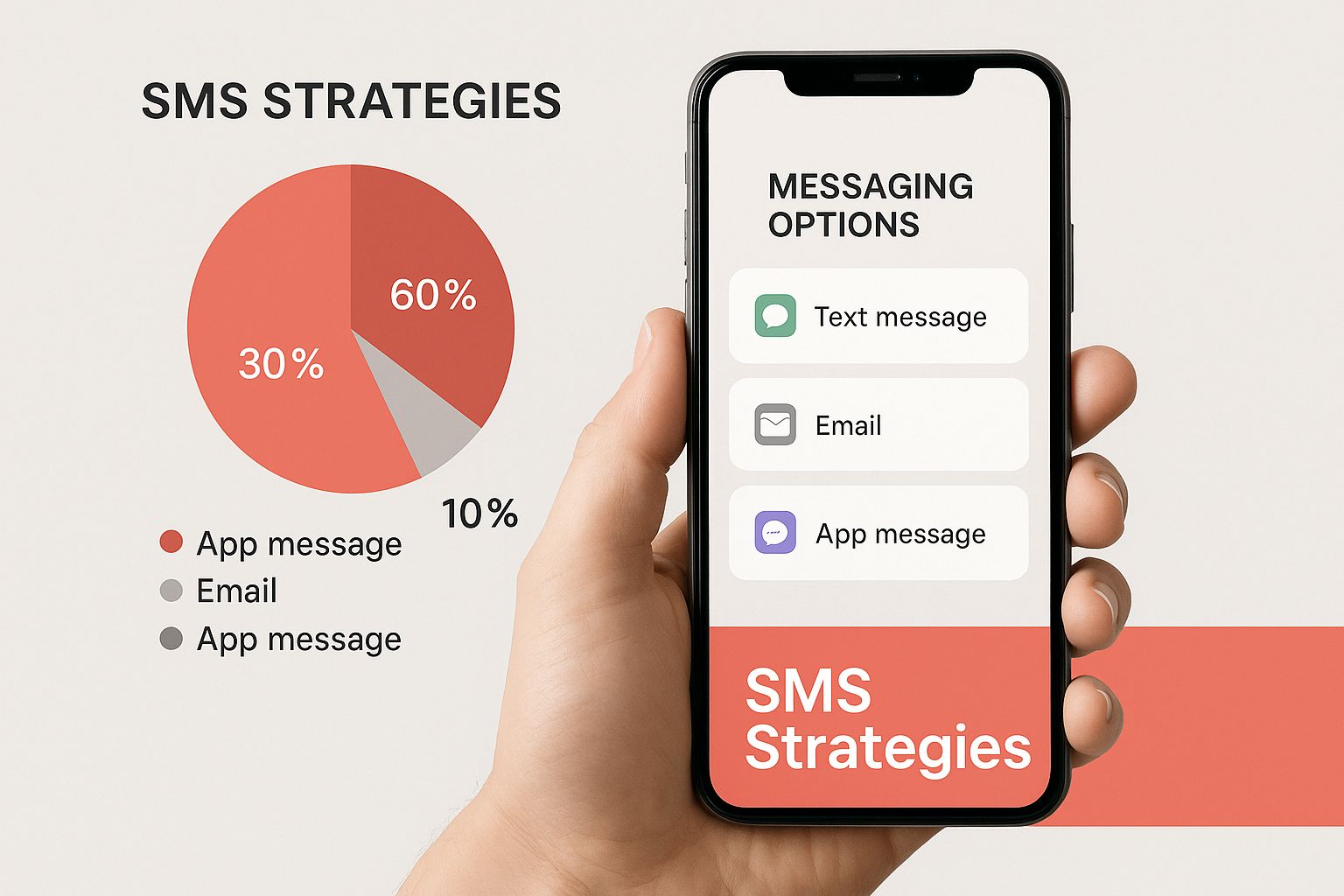
Clarity and Simplicity in Your Pop-Up
Your opt-in pop-up or form is your first impression. It has to be clean, direct, and focused on one simple action: getting them to sign up.
- Headline: Kick things off with a benefit they can’t ignore. Instead of a boring “Sign Up for Texts,” try something like “Get 15% Off Your Next Order.”
- Body Copy: Keep it short and sweet. Tell them what’s in it for them and tuck the required compliance language in without making it complicated.
- Call to Action (CTA): Use action-packed text on your button. “Get My Discount” is way more exciting and compelling than a generic “Submit.”
When you keep the design uncluttered and the language direct, you make the decision effortless for the user. A visitor should be able to see the offer and know exactly how to claim it within seconds.
Your goal is to remove every single point of friction. The moment a user has to stop and think, “What does this mean?” or “Where am I supposed to click?”, you risk losing them for good.
Single Opt In vs Double Opt In
A big decision you’ll face is whether to use a single or double opt-in method. A single opt-in adds a user to your list the moment they enter their phone number. A double opt-in, on the other hand, asks them to confirm their subscription by replying to an initial text message, usually with a keyword like “YES.”
Choosing between them is a classic “quality vs. quantity” debate. A single opt-in gets you more subscribers, faster. But a double opt-in gets you better subscribers.
Here’s a quick breakdown to help you decide which path is right for your brand.
Single Opt In vs Double Opt In
| Feature | Single Opt In | Double Opt In |
|---|---|---|
| Speed | The fastest way to get a subscriber; they’re on your list instantly. | Slower, since it needs an extra confirmation step. |
| Friction | Almost no friction, which can lead to rapid list growth. | Adds a bit of friction, so you might lose a few people along the way. |
| List Quality | You might get some fake numbers or less interested subscribers. | Guarantees you have a valid number and a highly engaged subscriber. |
| Compliance | Meets the basic legal requirements for consent. | Gives you rock-solid, undeniable proof of consent. |
While a single opt-in looks tempting for its speed, the double opt-in method is the gold standard for building a high-quality, engaged audience. It ensures every subscriber has verified their number and explicitly confirmed their interest. This leads to much better message deliverability and a higher return on investment for your SMS campaigns down the line.
Using Technology for Automated and Personalized Opt-Ins
Sure, a basic sign-up form gets the job done. But let’s be honest, that’s just scratching the surface. Modern technology can transform a simple SMS opt-in into a powerful, personalized customer touchpoint that makes people feel seen from the very first interaction. This is where automation and personalization completely change the game.
Imagine a customer signs up for your texts. Instead of hearing crickets, they instantly get a welcome message delivering that discount you promised. This isn’t just good service; it’s the work of a smart automation platform triggering tailored messages the moment they opt-in, setting a positive tone right away. You can explore how an auto text message service can handle all this heavy lifting for you.
Dynamic Offers That Actually Convert
The real magic happens when you use technology to show dynamic opt-in offers based on what a visitor is doing on your site. It’s about ditching the one-size-fits-all approach and tailoring the invitation to the individual.
Here’s how it works:
- Behavioral Triggers: You can show a specific pop-up offer only after a visitor views, say, three products in the same category. If they’re browsing running shoes, your opt-in could offer “15% off your first pair of running shoes.” It’s relevant and timely.
- Cart-Based Incentives: Got a shopper with over $100 in their cart who seems to be hesitating? A pop-up could offer free shipping in exchange for their SMS opt-in. It’s often the perfect nudge they need to finish the purchase.
This level of personalization makes the opt-in feel less like a pushy ad and more like a helpful suggestion. You’re showing the customer you’re paying attention to what they actually want.
The Technology Behind the Scenes
Pulling off these advanced strategies requires tools that can track user behavior and fire off automated actions. This is usually handled by sophisticated e-commerce plugins or dedicated marketing platforms. For developers testing these automated flows, services that let you rent virtual phone numbers for SMS verification can be a lifesaver for making sure everything works perfectly before going live.
When you connect user actions to specific opt-in incentives, you create a system that’s far more effective and engaging. This approach doesn’t just boost your subscriber count; it ensures that every new person on your list has already had a positive, relevant experience with your brand, making them more valuable from day one.
Common SMS Opt-In Questions Answered
Even with a solid plan in place, you’re bound to run into specific questions as you manage your SMS program. Getting clear, direct answers is what gives you the confidence to run your campaigns well and know every part of your process is sound.
Let’s tackle some of the most common questions that pop up about SMS opt-ins.
What Is the Difference Between an SMS Opt-In and an Opt-Out?
Think of the SMS opt-in as the “on” switch for your text marketing. It’s the crystal-clear, provable permission a customer gives you to send them promotional messages. It’s the green light that officially starts the conversation.
On the flip side, an SMS opt-out is the “off” switch. This is when a subscriber decides to take back their permission, usually by replying with a standard keyword like “STOP.” You are legally required to honor this request instantly and pull them from your marketing list. The customer must always have control of this switch.
Can I Text Customers Who Give Me Their Phone Number at Checkout?
Absolutely not—and this is one of the most common and costly mistakes a business can make. Just because you have a customer’s phone number for something transactional, like a shipping update, doesn’t mean you have their consent for marketing.
Under regulations like the TCPA, you need express written consent specifically for marketing texts. This means having a separate, unchecked checkbox right at the checkout. The language has to be unambiguous, clearly stating that by checking the box, they agree to get promotional messages from your brand.
Simply having a customer’s phone number is not the same as having their permission to market to them. The distinction is critical for compliance and for building a relationship based on trust.
What Is a Double Opt-In and Should I Use It?
A double opt-in is a simple, two-step confirmation process that adds a powerful layer of verification to your SMS list. It’s a great way to make sure your subscribers really want to be there.
Here’s how it works:
- A person signs up on your website or texts a keyword to join your list.
- They instantly get an automated confirmation text and have to reply (usually with “YES”) to finalize their subscription.
While it does add one tiny extra step for the user, using a double opt-in is something we highly recommend. It confirms the phone number is valid and active, and it weeds out anyone who isn’t genuinely interested. This gives you a higher-quality subscriber list, much better engagement rates, and rock-solid proof of consent—which is invaluable for compliance.
How Often Should I Send Texts After Someone Opts In?
Finding the right frequency really depends on your industry and what you promised when they signed up. For most e-commerce brands, a good starting point is somewhere between 2-4 messages per month.
The golden rule here is transparency. Be upfront about your messaging frequency in your opt-in disclosure (e.g., “Up to 4 msgs/month”). Sending texts too often is a surefire way to annoy subscribers and spike your opt-out rates. But if you wait too long between messages, they might forget why they signed up in the first place. You can learn more about finding the right cadence by reading about how to follow up with customers effectively. The key is to watch your analytics and find that sweet spot that keeps your audience engaged without feeling overwhelmed.
Ready to turn these insights into action? CartBoss makes it simple to implement compliant, high-converting SMS opt-in strategies on autopilot. Recover abandoned carts and boost your sales effortlessly. Start your free trial with CartBoss today and see the difference it makes.
