



Tired of shouting into the void? If your marketing feels like you’re talking to a wall, it’s probably because you’re using a one-size-fits-all approach. Today’s customers are smart—they expect you to get them, and lumping everyone together is a surefire way to waste your ad spend.
This is where you need to get smarter. Real connection starts with customer segmentation. It’s not just about sorting people into buckets; it’s about understanding the unique groups that make up your audience so you can talk to them in a way that actually lands.
Customer segmentation means splitting your audience into distinct groups based on things they have in common—what they buy, where they live, what they care about. This lets you move beyond generic blasts and create hyper-relevant experiences that people actually appreciate, which is what drives real engagement and, you guessed it, more sales.
The Four Pillars of Customer Segmentation
So, where do you start? The foundation of any solid segmentation strategy rests on four core models. Each one gives you a different lens through which to view your customers, answering a fundamental question about them.
Here’s a quick breakdown of what they are and why they matter.
| Segmentation Type | What It Answers | Example Data Points |
|---|---|---|
| Demographic | The “Who” | Age, gender, income, occupation, education level |
| Geographic | The “Where” | Country, city, region, climate, zip code |
| Psychographic | The “Why” | Lifestyle, values, interests, personality traits, hobbies |
| Behavioral | The “How” | Purchase history, browsing activity, product usage, cart abandonment |
Each of these pillars gives you a different piece of the puzzle. Demographics are often the easiest place to begin, but the real magic happens when you start layering these models together.
Of course, smart segmentation today goes way beyond dusty old labels. Relying on broad categories like ‘millennials in tech’ just doesn’t cut it anymore and often leads to burned budgets. Modern consumers expect you to understand them on a deeper level, and advanced strategies are now using all kinds of data points to create truly personal experiences. For more on this, check out the latest on advanced segmentation at marketingcourse.org.
Remember, the point isn’t just to group customers. It’s to deliver so much value that casual shoppers turn into die-hard fans. Personalizing everything from your email campaigns to what people see on your site makes your marketing more efficient and a hell of a lot more effective.
Think about an eCommerce store for a minute. Using behavioral data, they can easily spot a group of “frequent cart abandoners.” Instead of hitting them with the same old generic email, they could send a targeted text with a small, one-time discount.
That single, tailored action can be the difference between a lost sale and a loyal customer. It’s all about turning friction points into conversion opportunities. For a deeper dive into these kinds of tactics, check out our guide on e-commerce checkout optimization.
Choosing the Right Segmentation Model
Picking the right way to segment your customers isn’t about finding some magical “best” method. It’s about choosing the framework that actually gives you a clear picture of who you’re talking to. The four main models—Demographic, Geographic, Psychographic, and Behavioral—each answer a different question about your customers. The trick is to pick the one, or combine a few, that lines up with what you’re trying to achieve.
Think of it this way: a local restaurant chain running a lunch special gets a massive win from Geographic segmentation. Knowing which customers live or work within a five-mile radius lets them ping out targeted SMS alerts about daily deals right before noon. In that scenario, a customer’s lifestyle (psychographic) or age (demographic) is way less important than their physical location.
When Demographic and Geographic Data Is Enough
Sometimes, the simplest data gives you the most direct path to growth. These models are foundational for a reason—they’re often the easiest to get your hands on and put into action immediately.
- Demographic Segmentation (The “Who”): This is all about the objective, statistical stuff like age, gender, income, and occupation. An online clothing boutique, for example, will use this to build completely different campaigns for its menswear and womenswear lines, and then probably slice it even thinner for different age groups.
- Geographic Segmentation (The “Where”): This groups customers by location, anything from a country down to a specific zip code. A hardware store could use this to promote snow blowers to customers in colder climates while pushing lawnmowers to everyone sweating it out in warmer regions.
These models are great for broad targeting, but they often miss the why behind a purchase. They tell you who and where your customers are, but not what actually motivates them to click “buy.”
Digging Deeper with Psychographics and Behavior
This is where segmentation goes from a useful tool to an absolute game-changer. When you move beyond the basics, you start to understand the person behind the purchase, which opens the door for personalization that actually feels personal.
“Your customers don’t care about you, about the numerous awards you’ve won, and generally, anything that doesn’t have to do with their interests. So don’t trouble them with offers or products that don’t fit their needs.”
Psychographic segmentation gets to the “why” by looking at a customer’s lifestyle, values, interests, and personality. A company selling sustainable, eco-friendly products would use this to find customers who value environmental consciousness, no matter their age or where they live. Their marketing would be all about shared values, not just product features.
Behavioral segmentation is probably the most powerful model for e-commerce and SaaS businesses because it’s based on what people actually do. This model answers the “how” by analyzing things like:
- Purchase history
- Login frequency and feature usage
- Website browsing patterns
- Cart abandonment rates
For a SaaS company, knowing which users are “power users” of a certain feature versus those who are about to churn is pure gold. For an e-commerce brand like CartBoss, segmenting users who repeatedly bail on their carts allows for laser-focused SMS recovery campaigns. This stops being a generic reminder and becomes a precise, action-driven solution. You can see more real-world examples by exploring different customer segmentation techniques in our detailed guide.
Ultimately, the smartest strategies often blend these models together. You might target high-income individuals (demographic) in major cities (geographic) who have previously bought luxury goods (behavioral) and follow high-fashion blogs (psychographic). This multi-layered approach creates a full, three-dimensional view of your ideal customer.
Gathering the Data That Actually Matters

Any effective customer segmentation strategy is built on a foundation of solid, high-quality data. If you skip this part, you’re not segmenting—you’re just guessing.
The good news? You probably have more valuable information at your fingertips than you realize. The real trick is knowing where to look and what’s actually important.
Your first stop should always be the data you already own. We call this first-party data, and it’s an absolute goldmine for behavioral insights. It’s all the information you’ve collected directly from your audience as they’ve interacted with your brand.
This treasure trove holds everything from website analytics and CRM notes to the purchase histories sitting inside your e-commerce platform. For instance, your Shopify or WooCommerce dashboard can instantly tell you who your repeat buyers are, their average order value, and which products they browse the most. This stuff is powerful because it’s based on what people actually do, not what you think they do.
Unlocking Different Data Types
Beyond the data you’ve already collected, a few other sources can add much-needed color and depth to your customer profiles, giving you a more complete picture.
- Zero-Party Data: This is the information customers willingly hand over. Think about their answers to quizzes, details they submit in a preference center, or responses to a direct email survey. Even a simple post-purchase survey asking, “What was the main reason you bought today?” gives you a direct line into their motivations.
- Third-Party Data: This is broader data pulled together from various outside sources, offering a high-level view of market trends. It can be useful for context, but it’s far less specific than your own data. Use it to supplement what you already know, not to drive your entire strategy.
By 2025, market segmentation has become a seriously sophisticated game, moving way beyond basic demographics. Companies are now blending huge datasets—tracking behaviors, psychographics, and real-time interactions—to build incredibly rich customer profiles. You can dive deeper into these emerging market segmentation techniques on globalbankingandfinance.com.
Pro Tip: Don’t get overwhelmed. Start with what you can easily access today. Your existing sales records are more than enough to identify your most valuable customers, and that’s a fantastic starting point for any segmentation project.
Building Your Data Collection Plan
Putting together a simple plan helps you gather information ethically and without wasting time. Start by figuring out what you actually need to know. Are you trying to understand why customers are leaving? Or are you looking for your most loyal fans who will shout about your brand from the rooftops?
Once your goal is clear, pick the right tools for the job. Website analytics can track browsing behavior, while a well-placed survey can get you those juicy psychographic details.
The insights you gather are invaluable for creating targeted campaigns that increase customer lifetime value and forge stronger relationships. This data helps you shift from just selling products to creating personalized experiences that keep people coming back for more. Find out more here: https://www.cartboss.io/blog/increase-customer-lifetime-value/
How to Analyze Data and Build Your Segments
Alright, you’ve gathered your data. Now for the fun part: turning all those numbers and clicks into actual, human-centered segments. This step can feel a bit overwhelming, but you don’t need a Ph.D. in data science to spot meaningful patterns. Honestly, your CRM’s dashboard or even a simple spreadsheet can be surprisingly powerful.
The whole point here is to find the story in the data. You’re hunting for clusters of behavior, shared interests, or common pain points that tie groups of customers together. This is where you connect the dots between what people buy and who they are.
This flow shows how all those different data points—from sales history to survey answers—come together to form the foundation of your analysis.
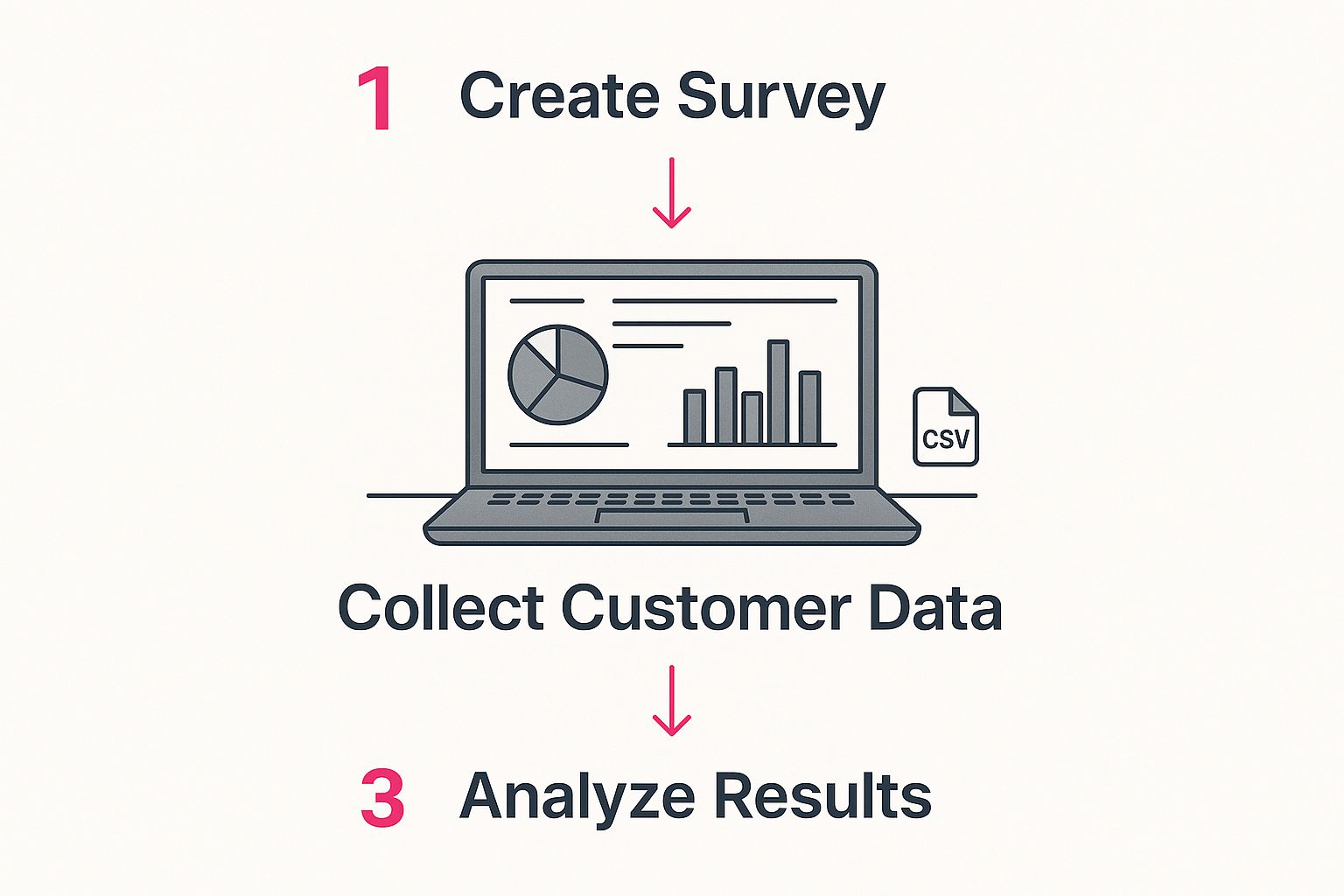
As you can see, it all starts with collecting diverse information, which you then analyze to build out the distinct segments that will power your marketing.
Let’s Use a Skincare Brand as an Example
Imagine you run an online skincare store. You export your purchase history and start playing around with the data in a spreadsheet.
First, you filter for customers who have bought products from your “Vegan & Cruelty-Free” line more than twice in the last six months.
Boom. A list of 350 customers instantly populates.
Curious, you dig a little deeper and cross-reference this list with your email engagement data. You notice that a whopping 78% of these customers also opened your last newsletter about sustainable packaging. That’s no coincidence; it’s a clear pattern.
You’ve just uncovered your first segment: the “Eco-Conscious Buyer.”
This group isn’t defined by age or location, but by shared values and buying habits. Now you can craft campaigns that speak directly to them, like highlighting your commitment to ethically sourced ingredients.
By focusing on the why behind their purchases, you move from basic demographic targeting to value-based marketing. This is how you build a loyal community, not just a customer list.
Your Essential Segment Checklist
Before you lock in your new segments, it’s smart to run them through a quick quality check. A truly useful segment needs to tick these four boxes:
- Measurable: Can you actually count them? You need to know if you’re talking to 50 people or 5,000.
- Accessible: Do you have a direct line to them? This could be a specific email list, a social media audience, or a targeted ad campaign.
- Substantial: Is the group large enough (or profitable enough) to justify the effort? Creating a custom campaign for just five people probably isn’t the best use of your time.
- Distinct: Do these customers have unique needs? Will they respond differently to your marketing compared to everyone else?
Answering “yes” to these questions ensures you’re creating segments that are practical, not just interesting on paper.
Think about it: identifying a segment of high-value, frequent buyers who still have a high cart abandonment rate is incredibly valuable. Instead of sending a generic reminder, you can send a highly targeted SMS offer—a proven strategy to help reduce cart abandonment rates and pull that lost revenue back in.
All that analysis is just a fun fact until you do something with it. Once you’ve defined your customer segments, the real work begins. It’s time to turn those insights into marketing campaigns that actually get results.
This is where your segments come to life across all your channels. You’ll finally move beyond generic email blasts and one-size-fits-all social ads, creating experiences that feel personal and relevant.
Tailoring Your Marketing Channels
Think back to the “Eco-Conscious Buyer” segment. Instead of a generic sales promo, you could hit them with an email campaign that spotlights your sustainable sourcing. What about your “First-Time Homebuyer” group? A content series on mortgage tips would connect with them far better than an ad for a luxury penthouse.
This laser-focused approach works everywhere:
- Email Marketing: Build out separate email flows for each segment. Your “High-Value Spenders” might get early access to new products, while your “Discount Shoppers” get a heads-up on upcoming sales. Simple, yet powerful.
- Social Media Ads: Use your segments to create custom audiences. Target your “Empty Nester” group on Facebook with ads for downsizing options. Meanwhile, your younger, budget-conscious segment sees ads focused on affordability and value.
- Website Content: Personalize the experience on your site. You can dynamically change homepage banners or product recommendations based on a visitor’s segment. It makes them feel like the site was built just for them.
This diagram shows how you can slice and dice your audience in different ways.
The big takeaway here is that you can segment your audience by their needs, behaviors, or demographics to find the sharpest angle for your messaging.
The Power of A/B Testing and AI
Don’t just set your campaigns on autopilot. The final piece of the puzzle is to continuously test and refine your approach. A/B test your email subject lines, ad copy, and offers for each segment. What gets your “Eco-Conscious Buyers” to click might completely miss the mark with your “Luxury Seekers.”
This is also where technology can give you a serious leg up. The explosive growth of AI is fueling some incredibly powerful segmentation tools. With the AI marketing space projected to hit over $356 billion by 2030, marketers are leaning on these platforms to create hyper-personalized experiences that scale. For a deeper dive, you can check out insights on 2025 AI customer segmentation trends on superagi.com.
The goal isn’t to get it perfect on the first try. It’s about making small, smart improvements that prove the ROI of your segmentation work, one test at a time.
For example, what if you notice your “Frequent Cart Abandoner” segment is ignoring your email reminders? Time to try a different channel. An automated SMS campaign can be a game-changer. For anyone looking to set this up, our guide on how to recover abandoned carts gives you actionable strategies for turning those lost sales into revenue.
When you let data guide your actions, you stop guessing and start turning insights into higher conversion rates and much stronger customer relationships.
Got Questions? We’ve Got Answers.

As you start digging into segmentation, you’re bound to run into a few questions. It’s totally normal. Below are some of the most common ones we hear from businesses just like yours, along with straightforward answers to keep you moving forward.
Think of this as your go-to cheat sheet for navigating the most common hurdles.
How Many Customer Segments Should I Create?
There’s no single magic number here, but a great place to start is with 3 to 5 core segments. This keeps things from getting overwhelming while still giving you enough detail to personalize your marketing in a meaningful way.
The goal is to create groups that are genuinely different from each other and large enough to justify the effort. If you notice two segments are responding to the exact same message, that’s a huge clue they can probably be merged. My advice? Focus on your most valuable customer groups first, then you can always expand later as you get the hang of it.
The quality of your segments matters far more than the quantity. A handful of well-defined, actionable segments will always beat a dozen vague ones.
What’s the Difference Between Market and Customer Segmentation?
It’s easy to get these two mixed up, but they serve very different purposes. They’re related, for sure, but they’re aimed at completely different audiences.
- Market Segmentation is about the big picture. It looks at the entire potential market for your product—including people who have never bought from you. This is all about finding new opportunities and figuring out where to grow next.
- Customer Segmentation is laser-focused on your existing customer base. Here, you’re using your own data (like purchase history and website behavior) to better understand and serve the people who have already chosen to do business with you.
Simply put, market segmentation is for finding new customers, while customer segmentation is for keeping the ones you have happy and maximizing their value over time.
How Often Should I Update My Customer Segments?
Your segments should never be a “set it and forget it” kind of thing. Markets change, people’s habits evolve, and your own business will look different a year from now.
A good rule of thumb is to review your segments at least once a year to make sure they still hold up. It’s also smart to revisit them after any major company event, like launching a new product, running a massive marketing campaign, or making a big shift in your business strategy.
What Are the Common Segmentation Mistakes to Avoid?
I see one mistake more than any other: doing all the hard work of defining segments and then… nothing. The analysis just sits in a report. Segmentation is a tool for action, not just an interesting piece of research.
A few other common pitfalls include:
- Creating way too many segments: This makes personalization a nightmare to manage and you end up spreading yourself too thin.
- Using bad or outdated data: Your segments are only as strong as the information they’re built on. Garbage in, garbage out.
- Failing to adapt: If you don’t update your segments, you’ll eventually be marketing to ghosts of customers past.
Steer clear of these, and you’ll be well on your way to using customer segments to drive real, tangible results for your business.
Ready to turn abandoned carts into revenue with laser-focused SMS campaigns for your customer segments? CartBoss makes it simple to recover lost sales on autopilot. Discover how CartBoss can boost your sales today!