


Want to get your message in front of your entire audience, all at once? Sending a mass text is the fastest way to do it. Unlike emails that can sit unopened for hours or get buried in a crowded inbox, an SMS lands right in their pocket, ready to be read. It’s the closest thing to a guaranteed open rate you can get.
Why Mass Texting Is a Non-Negotiable Channel
In a world buzzing with digital noise, grabbing someone’s attention is half the battle. When you look at different ways to reach people, like traditional email marketing strategies, you see a clear difference. Email is still a workhorse, no doubt, but its impact isn’t immediate. Mass texting, on the other hand, gives you a direct, instant line to your customers.
This isn’t just a hunch; the numbers are pretty staggering. Texts have a mind-blowing 98% open rate, and 95% of those are read within just three minutes of being delivered. Think about that. You get near-instant attention from almost everyone you send a message to. That kind of speed is unbeatable for time-sensitive offers and important updates. For a deeper dive, check out why consumers are embracing business texts.
From Send to Engagement
The whole process is incredibly direct. This quick visual breaks down just how fast a mass text goes from your dashboard to your customer’s screen.
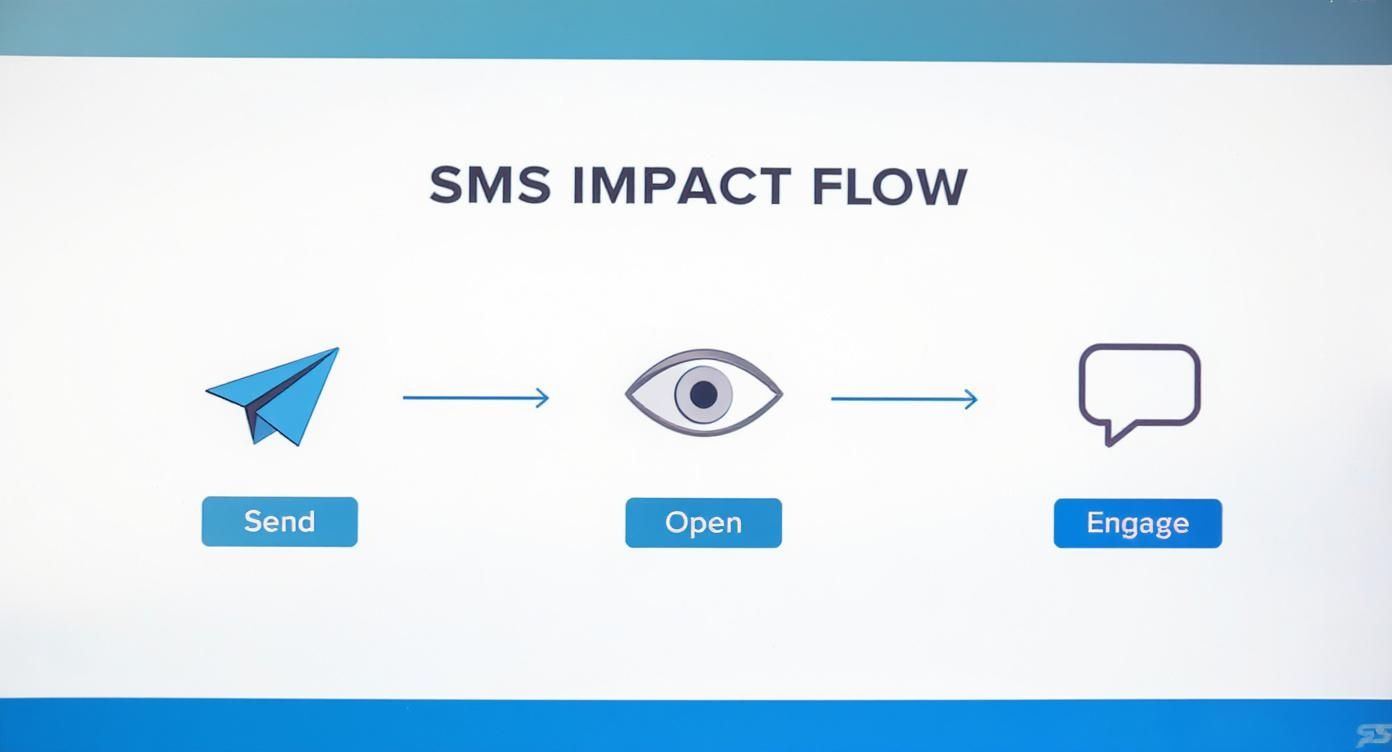
As you can see, the path from sending a message to capturing a customer’s focus is almost instant. This rapid feedback loop is what gives SMS a real strategic edge, whether you’re driving sales or just building a stronger connection with your audience.
The core value of mass texting lies in its immediacy and personal feel. You’re not just sending a notification; you’re starting a conversation in the most accessible channel your customers use every day.
This direct-to-pocket communication drives real business results. We’re talking about everything from recovering abandoned carts to announcing a flash sale that ends in a few hours. Those incredible engagement rates aren’t just for show—they represent a massive opportunity to boost your revenue and build lasting customer loyalty.
Choosing the Right Mass Texting Platform
Picking the right platform is probably the single most important call you’ll make when you decide to send mass text messages. This tool is the engine for your entire SMS strategy, so you need to look past the flashy feature lists and really zero in on what your business needs to grow. You’re not just finding a tool; you’re finding a partner.
Sure, your immediate needs might seem simple—maybe just a weekly promo blast. But fast-forward a year. Will you need sophisticated audience segmentation? What about deep integrations with your e-commerce platform or CRM? Choosing a platform that can scale with you from day one saves you the massive headache of migrating thousands of contacts and workflows down the road.
Key Factors For Your Decision
The number of options out there can feel overwhelming. To cut through the noise, I always recommend focusing on a few core areas that will directly impact your campaign’s success and your team’s sanity.
- Ease of Use: A platform can have all the power in the world, but it’s useless if your team finds it too clunky to use. Look for a clean, intuitive interface that makes everyday tasks—uploading contacts, writing messages, checking analytics—feel effortless.
- Integration Capabilities: Your mass texting platform shouldn’t be an island. Check for native integrations with the tools you already rely on, like Shopify, WooCommerce, or your customer support desk. Smooth data flow is non-negotiable.
- Analytics and Reporting: To get better, you need to know what’s working. A good platform gives you clear, actionable data on delivery rates, click-through rates (CTR), conversions, and unsubscribes.
Here’s a look at how platforms are often compared, highlighting things like user satisfaction and core features. It’s a great way to get a quick feel for the market.
Overviews like this help you see who the market leaders are and what real users think, giving you a solid starting point for your own research.
Platform Types at a Glance
Not all SMS tools are created equal. They generally fall into three buckets, each serving a different need. Understanding the difference is key to avoiding a bad fit.
| Feature | All-in-One Marketing Suites | Dedicated SMS Platforms | API-First Solutions |
|---|---|---|---|
| Primary Focus | Broad marketing channels (email, social, SMS) | SMS/MMS campaigns | Developer-centric, custom integrations |
| Ease of Use | Generally user-friendly, GUI-based | Very intuitive, built for marketers | Requires technical expertise |
| Best For | Businesses wanting a single marketing hub | E-commerce, retail, and service businesses | Tech companies needing full control |
| Key Strength | Centralized customer data and campaigns | Deep SMS features, compliance, analytics | Unmatched flexibility and scalability |
| Potential Drawback | SMS features can be less advanced | May require more integrations | Higher initial setup cost/effort |
| Example Platforms | HubSpot, Klaviyo | CartBoss, Postscript | Twilio, MessageBird |
The table above should give you a clearer picture of where your business might fit. An all-in-one suite is great for consolidation, but a dedicated platform like CartBoss will almost always offer more powerful, specialized SMS features that drive better results for that specific channel.
Understanding Pricing Models
Pricing can be tricky, so it’s crucial to read the fine print. Some platforms charge a flat monthly fee for a set number of texts, while others use a pay-as-you-go credit system. Watch out for hidden costs like fees for incoming messages, keyword rentals, or charges for going over your contact limit.
The best pricing model is one that aligns with your sending volume and predictability. If you send consistent campaigns, a monthly plan may be cost-effective. If your volume fluctuates, a pay-as-you-go model offers more flexibility.
Ultimately, making the right choice comes down to your specific goals. For a much deeper dive, you can explore detailed guides on the best SMS messaging platforms to see how different solutions really stack up. This ensures you invest in a platform that doesn’t just meet today’s needs but supports your ambitions for years to come.
Building an Engaged and Compliant Contact List
Before you can fire off a mass text campaign that actually gets results, you need an audience. Not just any audience, though—you need a high-quality list of people who genuinely want to hear from you. Building this list isn’t a numbers game; it’s about attracting the right people who have given you clear permission to message them.
The bedrock of any solid SMS strategy is a clean, compliant, and motivated subscriber list. Honestly, a small, hyper-engaged list of 1,000 true fans will always demolish a generic list of 10,000 uninterested contacts. Engagement is your most valuable currency here.
Proven Strategies for Growing Your List
Ethical list growth is all about a fair trade: you provide clear value, and they give you their phone number. People are protective of their inboxes, but they guard their text message alerts even more fiercely. You have to make the offer irresistible and the sign-up process totally frictionless.
Here are a few tactics that have worked time and time again:
- Keyword Opt-Ins: This is a classic for a reason. Advertising a simple call-to-action like “Text DEALS to 55555 for 15% off your next order” is direct and incredibly effective. It’s perfect for in-store signs, social media bios, and even podcast ads.
- Website Pop-Ups and Forms: You need to capture visitors when their interest is at its peak. A well-timed pop-up or a simple embedded form offering exclusive access to sales or new product drops is a fantastic way to get that number.
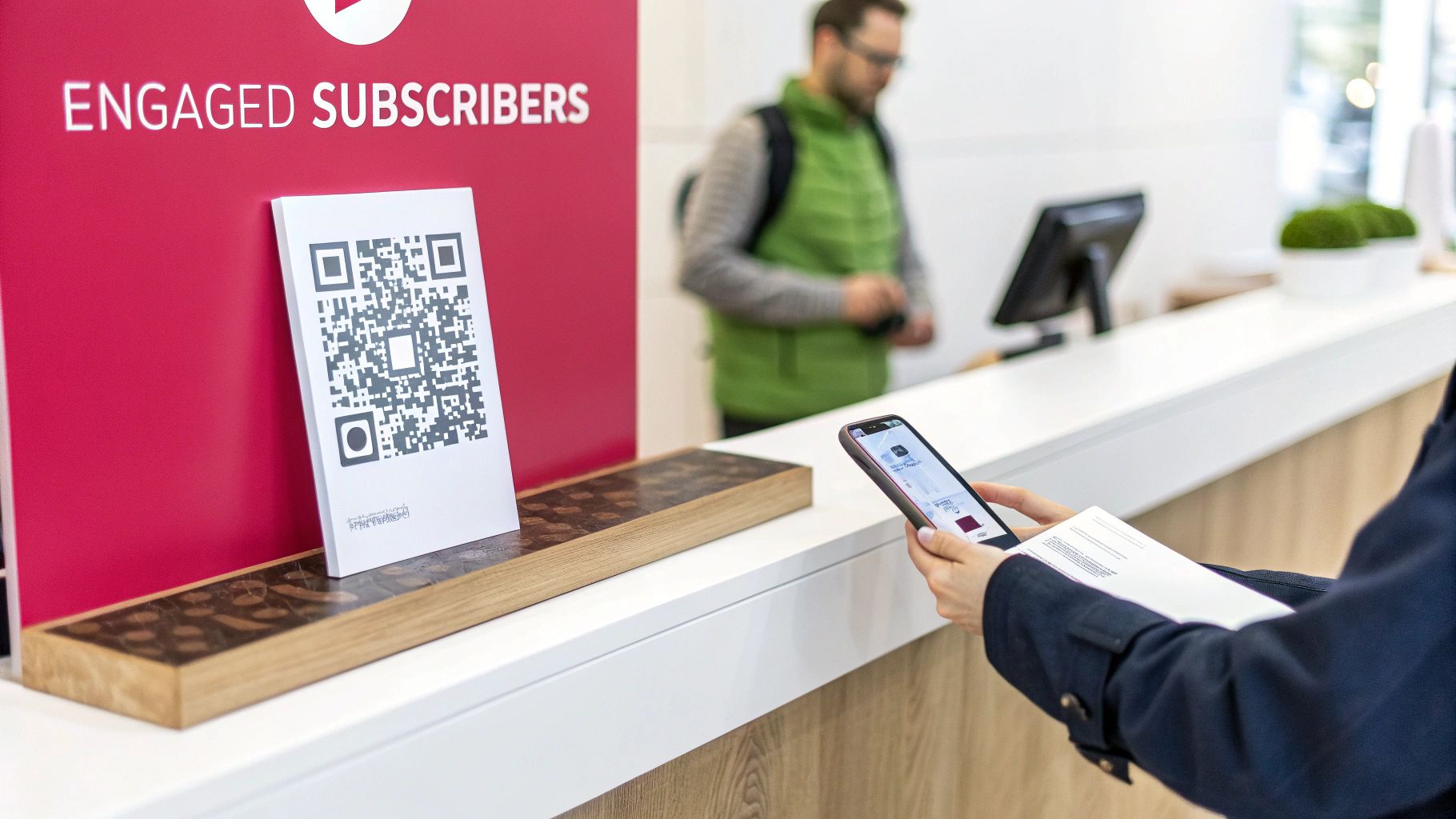
- QR Codes: Slap these on your packaging, receipts, or event banners. A quick scan can take a customer straight to a sign-up page, making it ridiculously easy to join your list while they are physically interacting with your brand.
For a much deeper dive into the mechanics of getting subscribers, our guide on proven SMS opt-in strategies covers these methods in far greater detail.
The Power of Smart Segmentation
Okay, so you’ve got subscribers. Now the real magic begins. Sending the same generic message to every single person on your list is a surefire way to watch your unsubscribe rate skyrocket. Segmentation is what turns a generic broadcast into a personal conversation.
Don’t just collect contacts; categorize them. A well-segmented list allows you to send targeted messages that resonate deeply, turning passive subscribers into active buyers.
Instead of one giant, unwieldy list, think of it as a collection of smaller, more focused groups. This mindset shift allows you to tailor your campaigns with incredible precision.
How to Segment Your Audience Effectively
Start by breaking down your list based on the data you already have. The whole point is to group subscribers with shared characteristics or behaviors so you can send them messages they’ll find genuinely useful, not annoying.
Consider segmenting your contacts by things like:
- Purchase History: Group customers who bought a specific product and send them tips or accessory recommendations. You could also create a “VIP” segment for your repeat buyers and give them early access to sales as a thank you.
- Geographic Location: Running a local event or offering location-specific shipping deals? Target subscribers by city or zip code to make sure the message is actually relevant to them.
- Engagement Level: Create a segment for your most engaged subscribers—the ones who always click your links. On the flip side, you can try to re-engage a “lapsed” segment of users who haven’t bought in a while with a special “we miss you” offer.
This level of personalization is what separates amateur efforts from professional, high-return campaigns. When you send the right message to the right person at the right time, you build trust and drive significantly higher conversion rates. It’s that simple.
Crafting Text Messages That Convert
Alright, you’ve got your list. Now for the fun part: writing texts that actually get people to click. To send mass text messages that drive real action, every single character has to count. The short format of SMS is its best feature, but it’s also the biggest hurdle. You don’t have room to ramble like you do with email; you have to deliver value and a clear next step in just a few lines.
The global SMS market is booming for a reason. It’s projected to hit an eye-watering $327.1 billion by 2025, which shows just how many businesses are getting this right. You can read more about the growth of SMS marketing at Notifyre.com. This isn’t just a random stat—it proves that customers are open to texts, but only when they’re short, relevant, and give them something valuable.
The Anatomy of a High-Performing Text
A text that converts isn’t just a jumble of words. It follows a simple, powerful structure designed to grab attention and drive a click in seconds. Think of it as a three-part formula.
Here’s how it breaks down:
- The Hook: Kick things off with something that grabs them immediately. This could be using their name, announcing a big discount, or creating a feeling of exclusivity.
- The Value: Tell them exactly what they’re getting. Is it 25% off? Free shipping? First dibs on a new product? This is the “why” they should care.
- The Call-to-Action (CTA): Finish with a clear, direct instruction. Use a shortened link and punchy phrases like “Shop Now,” “Claim Your Deal,” or “Book Your Spot.”
The best text message feels both personal and urgent. It should land like a helpful tip from a friend, not a cold corporate broadcast. Striking that balance is what builds trust and gets people to act right away.
Personalization and Urgency
Generic blasts are a one-way ticket to getting ignored. Making a mass text feel personal is all about using the data you’ve gathered. Sure, dropping in a [FirstName] token is a good start, but the real magic happens when you pair it with smart segmentation.
For instance, instead of a blanket sale announcement, imagine sending this to a customer who recently bought running shoes:
“Hey [FirstName]! Gear up for your next run. Our new trail shoes just dropped, and we’re giving you early access + free shipping. Get yours before they’re gone: [link]”
See why that works? It’s directly relevant to their past purchases, it makes them feel special (“early access”), and it adds a touch of urgency (“before they’re gone”). This simple tweak can turn a standard text into a serious sales driver. If you’re looking for more ideas, check out our guide on SMS marketing message examples that drive conversions.
Real-World Examples That Work
Let’s look at a few common scenarios and how to write messages that get the job done.
- Flash Sale: “VIP ALERT! Our 24-hour flash sale starts NOW. Get 40% OFF everything, exclusively for our SMS subscribers. Don’t wait! Shop here: [link]”
- Appointment Reminder: “Hi [FirstName], just a friendly reminder about your appointment with us tomorrow at 10 AM. Reply C to confirm or R to reschedule. See you soon!”
- Feedback Request: “Thanks for your recent order, [FirstName]! We’d love to hear your thoughts. As a thank you, get 15% off your next purchase for leaving a review: [link]”
Each of these is short, personal, and has a no-nonsense CTA. When you stick to these principles, your SMS list can quickly become one of your most consistent and powerful ways to generate revenue.
Navigating Texting Compliance and Legal Rules
Before you hit “send” on any mass text campaign, you have to get the legal stuff right. It’s not the most exciting part of SMS marketing, but trust me, it’s the most important. Diving in without a solid grip on compliance is like driving blind—it’s not a matter of if you’ll run into trouble, but when.
These regulations aren’t just friendly suggestions; they’re serious legal requirements put in place to protect consumers from spam. The big one you need to know in the U.S. is the TCPA (Telephone Consumer Protection Act). This federal law sets the rules for telemarketing, and that absolutely includes text messages. Ignoring it can lead to eye-watering fines of up to $1,500 per single text. That can add up to a business-ending amount in a hurry.
Getting Explicit Consent
The entire foundation of the TCPA—and really, all ethical SMS marketing—is consent. You absolutely must have express written consent from a person before you send them a single marketing text.
And no, this isn’t a vague “they signed up for our newsletter” kind of permission. It has to be explicit and crystal clear. The person needs to know exactly what they are signing up for. This means your pop-up forms, checkout boxes, or keyword opt-ins need to have very specific disclosure language. For a deeper dive into what that looks like, you can learn more about the TCPA and its impact on text messaging.
The golden rule of SMS compliance is simple: Permission is everything. Never assume you have it. Always get clear, documented consent before adding a number to your marketing list.
Mandatory Disclosures and Opt-Outs
Consent is just the starting point. Every single campaign you send has to follow specific rules to stay on the right side of the law. Your messages need to clearly identify who you are and, crucially, provide a simple, free way for people to opt out whenever they want.
Here are the non-negotiables for your campaigns:
- Clear Opt-Out Instructions: Every promotional message must include language like, “Reply STOP to unsubscribe.” This has to be a real, working mechanism that automatically and immediately honors the request.
- Message Frequency Disclosure: When someone opts in, be upfront about how often they’ll hear from you. Something like “up to 4 msgs/month” sets the right expectation.
- “Message and data rates may apply”: This little disclaimer is a standard requirement. It informs subscribers that their mobile carrier might charge them for receiving texts.
Finally, keep meticulous records of when and how each person gave you their consent. This documentation is your only defense if a complaint ever comes your way. By making compliance a top priority from day one, you build trust with your audience and shield your business from massive legal and financial risks.
Measuring Performance to Optimize Your Campaigns
Hitting “send” on a mass text campaign is just the start. The real growth, the stuff that actually impacts your bottom line, comes from digging into the data to see what worked, what flopped, and why. If you’re not measuring performance, you’re essentially just guessing, and that’s a costly way to run an SMS strategy.
Sure, deliverability is important, but true success is all about action. A high open rate is practically a given with SMS—that’s the beauty of it. The metrics that truly matter are the ones that show real engagement and, ultimately, drive revenue. This is where you separate a good campaign from a great one.
Key Metrics You Should Be Tracking
To get a clear picture of your campaign’s health, you need to look beyond the vanity metrics. Let’s focus on the data points that directly connect your texting efforts to actual business outcomes.
- Click-Through Rate (CTR): This is your first major indicator. It shows you what percentage of people actually clicked the link in your message. If your CTR is low, it’s a strong signal that your offer or your copy isn’t hitting the mark.
- Conversion Rate: This is the big one—the ultimate measure of success. It tracks how many people completed the goal, whether that’s making a purchase or signing up for a list, after clicking your link.
- List Growth Rate: Are you consistently adding new, engaged subscribers? A healthy growth rate tells you that your opt-in methods are working and people genuinely want to hear from you.
- Unsubscribe Rate: Some unsubscribes are perfectly normal, so don’t panic. But a sudden spike is a major red flag. It’s a clear sign that something is off with your message frequency, timing, or content.
It’s no secret that the business world has caught on to how effective SMS is. A whopping 66% of businesses now use SMS marketing software, which is a 55% jump from just four years ago. You can read more about the rise of business texting at SlickText.com. This massive adoption means the competition is heating up, making data-driven optimization more critical than ever.
Your campaign data tells a story about what your audience wants. Analyzing it is how you learn to speak their language, turning each send into a smarter, more profitable conversation.
Using A/B Testing to Systematically Improve
To really nail your campaigns, you have to test. A/B testing, also known as split testing, is your best friend here. It’s simple: you send two slightly different versions of a message to small, separate chunks of your audience to see which one performs better.
You can A/B test almost anything you can think of:
- Message Copy: Try a straightforward offer like “20% OFF Today” against something that creates a little urgency, like “20% OFF Ends at Midnight!”.
- Call-to-Action (CTA): Does “Shop Now” work better than “Get Your Deal”? There’s only one way to find out.
- Send Times: Does your audience buy more when you text them at 10 AM on a Tuesday or 6 PM on a Thursday? Test it.
By continuously testing and keeping a close eye on these key metrics, you create a powerful feedback loop. Every campaign gives you insights that make the next one even stronger. This is how you maximize your ROI and turn your efforts to send mass text messages into a reliable revenue engine for your business.
Got Questions About Mass Texting? We’ve Got Answers.
Even with the best plan, you’re going to have questions once you start rolling out your SMS campaigns. It’s only natural. Let’s tackle some of the most common ones I hear from store owners so you can move forward with confidence.
What’s This Actually Going to Cost Me?
The cost can vary quite a bit, but most platforms will either have you pay per message or offer a monthly subscription. Pay-per-message is great for flexibility when you’re just starting out, while a subscription usually makes more sense if you’re sending a high volume of texts.
But here’s the thing: the real cost isn’t the price of a single text. It’s all about the return you’re getting. I’ve seen a single recovered cart or one converted lead pay for an entire month’s campaign. Think of it as an investment, not an expense.
Can I Just Buy a List of Phone Numbers?
Let me be blunt: absolutely not. This is the single fastest way to get your number flagged as spam, burn your brand’s reputation, and land yourself in serious legal hot water.
Sending texts to people who haven’t explicitly agreed to hear from you is a major violation of regulations like the TCPA. Building your list organically through on-site pop-ups and checkout opt-ins is the only way to go. It’s slower, yes, but it ensures compliance and, more importantly, a list of people who actually want to hear from you.
A small, engaged list of 500 subscribers who gave you their permission will always, always outperform a purchased list of 5,000 strangers. Quality over quantity is the name of the game here.
How Often Should I Be Sending Messages?
There’s no magic number that works for everyone, but a solid rule of thumb is to only hit “send” when you have real value to share.
For your promotional texts, sticking to a range of one to four messages per month is usually a safe bet. Transactional messages, like shipping updates or appointment reminders, can obviously be more frequent. Your best guide? Keep a close eye on your unsubscribe rates. If you see a sudden spike, it’s a clear signal you’re texting too often.
Ready to turn those abandoned carts into cash with automated, compliant SMS campaigns? CartBoss makes it ridiculously simple. Start recovering your lost sales today.