


Sending group text messages is one of the best ways for e-commerce brands to cut through the noise and get right to their customers. An email can sit unopened for days, but a text message? That lands instantly. It demands attention and creates a direct, personal connection that gets people to act.
Why Group Texts Are Your Most Powerful Sales Channel
Let’s be honest, your customer’s inbox is a battlefield. Between a flood of promotional emails, endless social media pings, and daily spam, getting your message seen is tougher than ever. This is where SMS marketing completely changes the game for online stores.
While email is still a core part of any strategy, its impact is often watered down by low open rates and sheer volume. Think about the sense of urgency. An email can be archived or ignored with a single swipe, but a text message notification is almost always checked within minutes. That immediacy makes SMS the perfect channel for your time-sensitive offers and important updates.
The Unbeatable Engagement of SMS
The numbers behind SMS marketing don’t just speak for themselves; they shout. Text messaging boasts an incredible 98% open rate, a figure that absolutely dwarfs most other digital channels.
And customers are on board. In 2022, around 70% of customers opted into receiving texts from businesses, a 12% jump from the year before. With companies worldwide spending over $327 billion on texting and 60% of owners planning to increase their SMS budget, it’s crystal clear where the market is headed. You can dig into even more SMS marketing statistics that prove these trends.
For an e-commerce brand, this translates directly into sales. Imagine you’re launching a 24-hour flash sale. An email might get lost in the shuffle, but a group text ensures your most engaged customers see that offer the second it goes live. The result? A surge in traffic and sales right when you need it most.
By sending a simple, direct message, you bypass all the digital clutter and put your offer right in the palm of your customer’s hand. It’s more than just marketing; it’s a conversation waiting to happen.
This direct line of communication forges a stronger, more personal relationship with your audience, turning one-time buyers into loyal fans of your brand.
To really put the power of SMS into perspective, let’s stack it up against traditional email marketing.
SMS Marketing vs Email Marketing At a Glance
The table below breaks down the key differences in performance, highlighting why SMS often comes out on top for immediate engagement and action.
| Metric | SMS Marketing | Email Marketing |
|---|---|---|
| Open Rate | 98% | ~21% |
| Click-Through Rate | 35-45% | ~3% |
| Response Rate | 45% | 6% |
| Time to Open | 90 seconds | 90 minutes |
| Conversion Rate | ~29% | ~2.5% |
While email certainly has its place for newsletters and longer-form content, the data is undeniable. When you need to drive quick, measurable results, SMS is in a league of its own.
Real-World Scenarios
So, how does this actually play out for a growing online store? Let’s get practical.
- Flash Sale Alerts: A Shopify store selling limited-edition sneakers sends a group text to its VIP list an hour before a public launch. This creates a sense of exclusivity and practically guarantees those first crucial sales.
- Exclusive VIP Offers: A beauty brand rewards its top spenders with a unique discount code sent only via SMS. This makes them feel valued and gives them a powerful reason to make another purchase.
- New Product Announcements: When a new collection drops, a targeted text message ensures your most interested subscribers are the first to know. This can lead to a wave of immediate interest and even pre-orders before anyone else sees it.
In every one of these cases, the message is timely, relevant, and feels personal. Sending group text messages isn’t about blasting out generic ads. It’s about delivering real value at the perfect moment, turning your contact list into a reliable and seriously powerful revenue stream.
Building Your Foundation in CartBoss
Before you can launch those high-converting SMS campaigns, you need to get the basics right. A solid technical setup is the foundation for everything that comes next. Think of it as laying the groundwork to make sure your messages not only send but actually hit their mark and drive sales.
The first move is connecting CartBoss directly to your eCommerce platform, whether you’re on Shopify, WooCommerce, or another provider. This isn’t just about flipping a switch; this integration is what breathes life into your campaigns. It allows CartBoss to pull real-time customer data—like abandoned cart details and purchase history—which is the secret sauce for the powerful segmentation you’ll be using later on.
Connecting Your Store and Importing Contacts
Once your store is linked up, it’s time to tackle your contact list. This is more than just a bulk upload. It’s about being smart and, most importantly, compliant. Regulations like GDPR and TCPA aren’t suggestions; they’re rules you have to follow.
My two cents: Never, ever send marketing texts without getting explicit consent (opt-in) first. Starting with a clean, compliant list is the single most important thing you can do for a successful—and sustainable—SMS strategy. It protects you and builds trust with your customers.
CartBoss helps you out here by automatically verifying phone numbers during the import. This might seem like a small detail, but it’s huge for your deliverability. Sending texts to dead numbers tanks your sender reputation and is just a flat-out waste of money. If you want to dig deeper into how costs are calculated, this guide on SMS marketing pricing is a great resource.
Here’s a quick peek at the CartBoss dashboard, your new command center.
As you can see, it’s designed to give you a clean, simple overview of what’s happening without burying you in useless data.
Understanding the Campaign Dashboard
Getting comfortable with the dashboard is where you start turning setup into action. This is where you’ll build your group text messages, see what’s working, and figure out how to do even better next time. We’ve intentionally kept it focused on the metrics that actually matter.
You’ll want to get familiar with these key areas:
- Campaign Creation: Your home base for writing, designing, and scheduling every message you send.
- Analytics and Reporting: This is where you track the important stuff—delivery rates, click-through rates (CTR), and of course, the conversions that make you money.
- Audience Segmentation: The toolbox for creating those hyper-targeted customer groups for truly personal messages.
Take a moment to connect your store, import your contacts the right way, and just click around the dashboard. You’re not just setting up a piece of software; you’re building a revenue engine. With this foundation solid, you’re ready to launch your first targeted campaign and see just how powerful group SMS can be.
How to Segment Your Audience for Maximum Impact
The real secret to sending group texts that actually feel personal—not just like another promo blast—is smart segmentation. A generic, one-size-fits-all message is the fastest way to get an “STOP” reply and lose a subscriber for good.
You only unlock the true power of SMS marketing when you stop looking at your audience as one big list. Instead, think of them as a collection of smaller, distinct groups of people with their own unique needs and purchase histories.
This is how you go from just sending messages to actually building relationships. Inside CartBoss, segmentation isn’t just another feature; it’s the engine that powers everything, driving relevance and boosting your return on every text sent. By tapping into real customer data from your online store, you can craft messages that connect on a much deeper level.
Building Your First High-Value Segments
Getting started is way simpler than it sounds. Don’t try to boil the ocean by creating dozens of complex groups right away. Instead, focus on a few high-impact segments that can deliver results almost immediately. The goal here is simple: send the perfect message to the right people at exactly the right time.
Here are a few powerful, practical segments you can build in CartBoss today:
- VIP Customers: This is your inner circle. Create a list of anyone who has spent over a certain amount (say, $500) or has made more than three purchases in the last six months. These are your brand champions, and they absolutely deserve a first look at new products or exclusive loyalty rewards.
- Recent First-Time Buyers: This group includes anyone who placed their very first order within the last 30 days. Sending them a follow-up text with a small discount on their next purchase is a fantastic way to encourage that crucial second sale and start building a buying habit.
- High-Intent Cart Abandoners: This is a goldmine. Filter for shoppers who abandoned a cart with a value over a specific threshold, like $150, or those who left a particular high-margin product behind. A targeted text reminding them about that specific item can be incredibly effective at recovering what would have been lost revenue.
These segments work so well because they’re based on actual behavior. That level of targeting ensures your messages are seen as helpful reminders, not annoying ads.
For more advanced strategies, you can dive deeper into our detailed guide on powerful customer segmentation techniques.
Turning Segments into Successful Campaigns
Once you’ve defined your segments, the next step is to create campaigns that speak directly to what motivates each group. A message for a VIP customer should feel exclusive and special. A message for a customer who hasn’t purchased in a while needs to be compelling enough to win them back.
Key Takeaway: The whole point of segmentation is to make every single customer feel like you’re talking directly to them. When a message is hyper-relevant, it doesn’t feel like marketing—it feels like great service.
Think about how people use their phones. They check texts constantly, with over 90% of U.S. consumers texting every single day. And since a text message typically gets a response within just 90 seconds, the immediate attention your campaign gets is unmatched.
Let’s walk through a real-world scenario. Imagine you create a “Lapsed Customers” segment for shoppers who haven’t bought anything in over 90 days.
- The Message: “Hey [FirstName]! We’ve missed you. To welcome you back, here’s an exclusive 20% off your next order. Use code COMEBACK20 at checkout. Offer ends Friday!”
- The Impact: This message does three things perfectly. It’s personalized with their name, it acknowledges their absence (making them feel valued), and it creates a sense of urgency with a clear deadline. It’s a simple but incredibly effective way to reactivate dormant customers and drive more sales.
Crafting Messages That People Want to Read
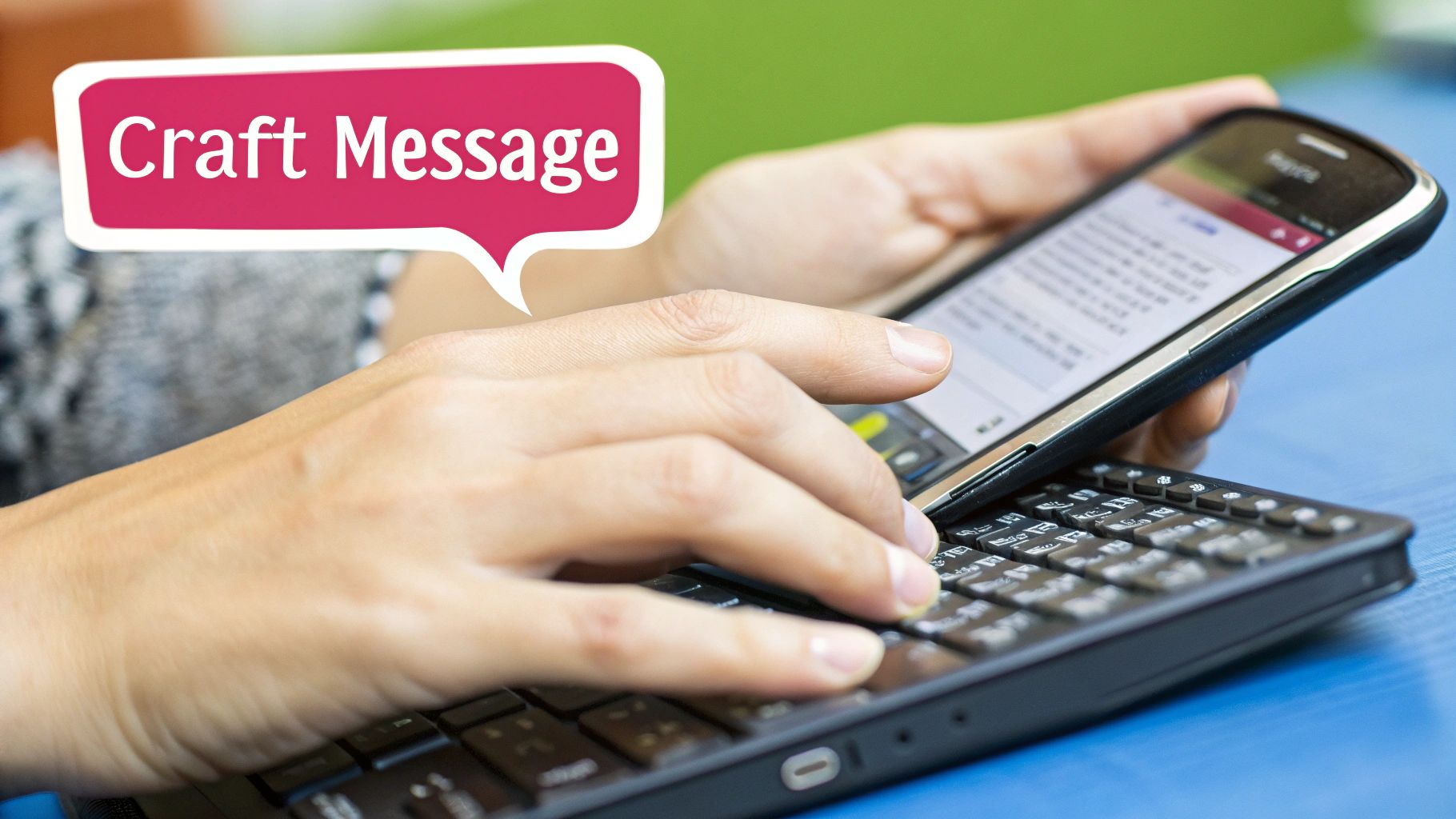
Alright, you’ve sorted out your audience segments. Now for the fun part: writing the actual messages that get people to click. This is where the art of good copy meets the science of SMS marketing.
A well-crafted text should feel less like a marketing blast and more like a helpful tip from a friend. Your goal is to be concise, valuable, and crystal clear. You’re competing for attention in a very personal space—their phone’s inbox—so your message needs to justify its presence immediately. The best way to do that? Blend personality with a clear purpose, making every single character count.
Personalization Is Non-Negotiable
The absolute best way to make a group text feel like a one-on-one conversation is by using personalization tags. You’d be surprised how much of a difference just including a customer’s first name can make.
Using a tag like [FirstName] is your starting point. It instantly breaks down the barrier between a generic broadcast and a personal note.
Think about it. “Hey [FirstName], your favorites are back in stock!” feels much warmer and more direct than a cold announcement. This tiny touch shows you see them as an individual, not just another number on a list.
Creating Urgency Without Sounding Desperate
Urgency is a powerful motivator in eCommerce, but it’s a fine line to walk. You want to encourage immediate action, not create anxiety or sound like you’re shouting from a digital rooftop. The key is to be authentic and give them a legitimate reason for the urgency.
Ditch the generic “BUY NOW!” approach. Instead, frame your offer with a clear benefit and a specific, real deadline. This respects the customer while still nudging them to make a quick decision.
Here’s a quick comparison of what works and what doesn’t:
| Campaign Type | The Bad Example (Vague & Pushy) | The Good Example (Clear & Compelling) |
|---|---|---|
| New Product Drop | “NEW STUFF IS HERE! Shop now before it’s gone.” | “Hey [FirstName], the wait is over! The Summer Collection just dropped. Be the first to get yours: [Link]” |
| Flash Sale | “HUGE SALE! Everything 50% off for a limited time! Don’t miss out!” | “VIP Alert! Our 24-hour flash sale starts now. Get 30% off everything with code FLASH30. Ends midnight! [Link]” |
| Feedback Request | “Tell us what you think. Your opinion matters. Click here.” | “Hi [FirstName], how are you liking your new order? We’d love your feedback & will send a 15% off code for your time! [Link]” |
Notice how the good examples are personalized, provide a clear value proposition, and set specific expectations? They just feel better. For a deeper dive into what works, exploring these SMS marketing best practices can give you a solid playbook for boosting engagement and ROI.
Writing a Crystal-Clear Call-to-Action
Your call-to-action (CTA) is arguably the most important part of your message. It’s the one thing you want the reader to do. There should be absolutely zero confusion about what comes next.
Pro Tip: Your CTA should be a single, clear instruction. Don’t ask subscribers to “check out our new blog and also shop the sale.” Give them one simple job to do.
A strong CTA is direct and uses an action-oriented verb. Here are a few that consistently work well:
- Shop the Collection: Perfect for guiding users directly to a product page.
- Get Your Code: Great for delivering a unique discount.
- Complete Your Order: A gentle nudge that’s ideal for abandoned cart recovery.
- Leave a Review: A simple way to encourage post-purchase engagement.
Finally, and this is crucial, always include the required opt-out language, like “Reply STOP to unsubscribe.” This isn’t just a best practice; it’s a legal requirement that builds trust and ensures you’re only messaging people who genuinely want to hear from you.
Putting Your SMS Campaigns on Autopilot (and Watching the Sales Roll In)
Sending group texts manually just isn’t going to cut it. Once you’ve nailed down your message, the real magic happens when you automate the process and then analyze what’s actually working. This is where you move from just sending texts to running a smart, profitable marketing channel.
With CartBoss, you can schedule your campaigns to go out at the exact moment they’ll make the biggest splash. Think about it: a flash sale announcement hitting phones at 6 PM on a Friday, or a new product drop landing on Tuesday morning right when people are settling in to browse. That’s the kind of timing that drives sales.
If you really want to get into the nuts and bolts of streamlining your efforts, this guide to SMS automation is a fantastic resource.
Setting Up Smart Automation Workflows
One of the most powerful automations you can build is an abandoned cart recovery sequence. Instead of just one reminder, you can create a simple flow that gently nudges shoppers back to your store.
Here’s a classic two-step flow that works wonders:
- First Message (1 hour after they leave): Keep it simple and helpful. “Hey [FirstName], did you forget something? Your cart is waiting for you: [Link]”
- Second Message (24 hours later): Sweeten the deal to get them over the finish line. “Still thinking it over? Complete your order now and get 10% off with code SAVE10. [Link]”
This is the definition of a “set it and forget it” strategy. It runs quietly in the background, recovering sales that you would have otherwise completely lost. For more hands-on advice, our blog is packed with tips covering everything related to SMS marketing for ecommerce.
Tracking the Numbers That Actually Matter
Once your campaigns are live, the CartBoss dashboard is your mission control. It’s easy to get bogged down in data, but you need to ignore the vanity metrics and focus on what directly impacts your bottom line.
The goal isn’t just to send a bunch of texts. It’s to figure out what’s working and why. When you can interpret your data correctly, you can make every single campaign more profitable than the last one.
Here are the key metrics you should be watching like a hawk:
- Delivery Rate: What percentage of messages actually made it to your subscribers’ phones?
- Click-Through Rate (CTR): This is a huge one. It tells you what percentage of people clicked the link in your message, showing how compelling your copy and offer were.
- Conversion Rate: The ultimate measure of success. This tracks the percentage of people who actually bought something after clicking your link.
The number of smartphones out there is staggering—it’s expected to hit over 7.7 billion by 2028. While messaging apps are everywhere, SMS is still king because everyone has it and the engagement is incredibly high. Analyzing those key metrics is how you turn that massive reach into real revenue for your store.
Common Questions About Sending Group Texts
Jumping into SMS marketing always brings up a few questions, especially when it comes to the rules of the road and what actually works. Getting those questions answered is the key to sending group text campaigns that feel confident, effective, and actually drive sales.
Let’s break down some of the most common hurdles you’ll face.
Staying Compliant and Building Trust
One of the biggest concerns we hear is about staying on the right side of the law. It’s simpler than it sounds. The golden rule is to always get explicit consent before you send a single marketing text. This is a non-negotiable, especially under laws like the TCPA in the US. Your subscribers have to knowingly opt-in. No exceptions.
On top of that, every single message has to give people an easy way out. Think “Reply STOP to unsubscribe.” This isn’t just a friendly suggestion; it’s a legal must-have that also builds trust and keeps your contact list clean and engaged.
Making Your Texts Feel Valuable, Not Spammy
Want to keep your messages from getting ignored or, worse, marked as spam? Your entire strategy needs to be built around value and relevance. Blasting a generic offer to your whole list is a guaranteed way to see your unsubscribe numbers spike.
Instead, focus on these core ideas:
- Use smart segmentation: Send offers that actually make sense for the customer based on what they’ve bought or looked at. A targeted message about a cart they just abandoned? That’s incredibly relevant.
- Respect their time: Don’t hammer subscribers with messages every single day. Find a sending schedule that feels like a helpful tap on the shoulder, not a constant interruption.
- Provide a clear benefit: Whether it’s an exclusive discount, early access to a new product, or a helpful reminder, every text should give them something they actually want.
The real goal is to make your audience look forward to your texts. When a message is personalized and timely—like a reminder for an item they were just about to buy—it feels like a helpful service, not just another ad.
For a deep dive into making your messages feel like a service, you can learn more about how to recover abandoned carts with SMS that’s packed with value.
Finding the Perfect Send Time
“When’s the best time to send my campaign?” It’s the classic question, and the honest answer is: it depends on your audience and your offer. That said, some general guidelines can give you a massive head start.
Sending during standard business hours (roughly 10 AM – 6 PM) on weekdays is usually a safe bet. For most e-commerce brands, we’ve seen late afternoons and early evenings (4 PM – 8 PM) perform exceptionally well. This catches people right as they’re unwinding and scrolling through their phones.
The best approach? Test it. Send campaigns at different times to different segments and watch your analytics dashboard. The data will tell you exactly which time slots are driving the most clicks and sales. Then, you can double down on what’s proven to work for your customers.
Ready to turn your group text messages into a powerful sales channel? With CartBoss, you can automate your SMS campaigns, recover lost sales, and build stronger customer relationships. Start converting abandoned carts into profit today.