



An automatic text message response is simply a pre-written message that sends out the moment a specific event happens—like a customer texting your business or someone abandoning their shopping cart. Think of it as your company’s 24/7 digital assistant, making sure no customer is ever left hanging and no opportunity slips away, even when you’re closed. It’s a surprisingly simple tool that has become fundamental to modern customer communication.
How Automatic Text Message Response Works
The easiest way to understand an automatic text message response system is to imagine a set of simple “if-then” rules for your business. If a customer texts the word “hours,” then the system instantly replies with your store hours. It’s a smart and incredibly efficient way to handle common questions without anyone on your team having to lift a finger.
At its core, this technology is designed to help businesses automate repetitive tasks. Instead of an employee manually typing the same reply hundreds of times, the system does it for them instantly and perfectly every time. This frees up your team to focus on the more complex issues that really need a human touch.
To give you a better idea of how these responses fit into a business strategy, here’s a quick overview.
Automatic Text Message Response At a Glance
| Feature | Primary Benefit | Common Use Case |
|---|---|---|
| Instant Replies | Improved Customer Service | Answering FAQs like “What are your hours?” or “Where is my order?” |
| Trigger-Based Actions | Increased Sales & Recovery | Sending a reminder text when a customer abandons their cart. |
| Scheduled Messages | Enhanced Engagement | Following up 24 hours after a purchase to request a product review. |
| Keyword Recognition | Lead Generation | Replying with a contact form when someone texts “QUOTE”. |
As you can see, the applications are pretty straightforward but incredibly powerful for keeping customers engaged and happy.
The Technology Behind the Scenes
You don’t need to be a tech wizard to get this working. Most platforms, including CartBoss, give you a simple interface where you can set up triggers and write the messages that go with them. These triggers can be as basic or as advanced as you need.
- Keyword-Based Triggers: A customer texts “SUPPORT,” and the system instantly sends back a link to your help center.
- Time-Based Triggers: A message is sent 24 hours after a purchase asking for a review.
- Action-Based Triggers: A shopper leaves items in their cart, which triggers a reminder text an hour later.
This level of automation has become a powerhouse for effective marketing. SMS marketing has a mind-blowing 98% open rate and a 45% response rate—numbers that completely blow traditional channels like email out of the water. With 5 billion people using SMS worldwide, its reach is undeniable.
From Simple Replies to Smart Conversations
The real magic of an automatic text message response is its ability to kick off conversations that actually lead to sales. It’s not just about acknowledging that someone reached out; it’s about gently guiding them to the next logical step.
A well-crafted automated text does more than just answer a question—it creates a seamless customer experience that builds trust and drives action. It’s the difference between a missed call and a closed deal.
For example, an out-of-stock notification doesn’t have to be a dead end. It can automatically include a link to similar products, turning a potential letdown into another sales opportunity. For a deeper dive into the setup process, check out our guide on how to send an automatic text.
Once you grasp these basic mechanics, you can start to see how this simple tool can solve some of the most common business headaches, from frustratingly slow customer service to lost sales.
The Real Benefits of SMS Automation

Okay, so we’ve covered the basics. But what’s the real payoff of using automatic text message responses? This goes way beyond saving a few minutes here and there. It’s about building a smarter, more responsive business that can scale faster.
The advantages really boil down to four key pillars that directly boost your bottom line.
Elevate the Customer Experience
We live in a world of instant gratification, and your customers absolutely expect immediate answers. An automated text delivers that instant acknowledgment, reassuring them that their message has been received and you’re on the case.
That simple action can turn a moment of potential frustration into a positive first impression, building trust right from the get-go.
Think about it: an instant order confirmation text does more than just inform the customer. It gives them peace of mind. This one simple automation dramatically cuts down on the number of “Where is my order?” tickets your support team has to deal with, freeing them up for more complex problems.
Boost Operational Efficiency
Repetitive tasks are an absolute killer for your team’s time and energy. Manually answering the same questions over and over, sending out appointment reminders, or confirming orders is a surefire way to burn out your staff. An automated system takes over these duties, working 24/7 without a single complaint.
By automating routine communication, you empower your team to focus on high-value activities that actually drive growth, rather than getting bogged down in repetitive, low-impact tasks.
Picture a salon that used to have someone manually call every single client to confirm their appointment. By setting up an automatic reminder text, they can slash no-show rates and reclaim countless hours of admin work every single week.
Drive More Sales and Revenue
Don’t sleep on this: automation is one of the most powerful sales tools you have. A timely, relevant text can be the perfect nudge to get a customer to take action. This is most obvious with abandoned cart recovery, where a gentle reminder can bring a shopper right back to complete a purchase they were seconds away from making.
But it’s not just about cart recovery. You can automate follow-ups to ask for reviews, which builds crucial social proof and convinces new buyers to pull the trigger. You can also send exclusive offers to your most loyal customers, creating repeat business without any manual effort. Every single one of these automated touchpoints is a direct line to more revenue.
To really dial this in, you’ll want to brush up on the fundamentals. Understanding SMS marketing best practices is a critical next step.
Gather Valuable Customer Data
Every automated text is a chance to learn more about your audience. Tracking which messages get the highest response rates or which discount codes get used most often gives you powerful insights into your customers’ minds.
This data is gold. It helps you refine your marketing messages, tweak your offers, and understand what truly gets people excited about your brand.
Automated Text Responses You Can Use Today
Theory is great, but let’s get down to brass tacks. A killer automatic text message response strategy is all about sending the right message at the right moment. Let’s look at some real-world templates you can steal for your own business, broken down by what you’re trying to achieve.

These examples are all about being short, sweet, and to the point. They’re designed to be helpful and push for a specific action, turning a simple SMS into one of your most powerful business tools.
For Boosting Customer Service
The name of the game here is instant reassurance. When a customer reaches out for help, they want to know someone—or something—is listening. A quick automated reply confirms you got their message and tells them exactly when a real person will jump in.
- General Inquiry: “Hi [Name], thanks for contacting us! We’ve received your message and our team will get back to you within 2 business hours.”
- Support Ticket Confirmation: “Got it! Your support ticket #[Ticket Number] is confirmed. An agent will review your issue and reply shortly.”
- After-Hours Reply: “Hello! You’ve reached us outside of our business hours (M-F, 9am-5pm). We’ll respond first thing tomorrow morning.”
For Driving Sales and Marketing
When it comes to sales and marketing, your automated texts need to deliver value and create a little urgency. Whether it’s a welcome offer or an exclusive deal, the message has to feel personal and give them a reason to act now.
A well-timed sales text isn’t just a promotion; it’s a personalized invitation to engage with your brand. It capitalizes on interest at the exact moment a customer is most receptive.
Here are a few templates that do a great job of turning curiosity into a sale:
- Welcome Discount: “Welcome to the club, [Name]! As promised, here’s 10% off your first order. Use code WELCOME10 at checkout.”
- VIP List Confirmation: “You’re in! Get ready for exclusive deals and first access to new arrivals. Thanks for joining our VIP list!”
These simple texts kick off the customer relationship on a high note by immediately giving them the value they were promised for signing up.
Of course, one of the most powerful sales automations is for cart recovery. For a deep dive into that specific strategy, check out our guide to reduce cart abandonment with SMS. A solid abandoned cart message can bring back otherwise lost revenue just by giving shoppers that little nudge they need to finish checking out.
Setting Up Your System for Success

Alright, let’s move from just talking about automated texts to actually making them work for you. The difference between a helpful, human-sounding automatic text message response system and one that just feels spammy comes down to a few key practices. Get these right, and you’ll build trust from the very first message.
The absolute foundation of any SMS strategy is getting clear consent. You have to get a direct opt-in from every single contact before you fire off any automated messages. This isn’t just about staying on the right side of the law (like the TCPA); it’s about basic respect for your customers and starting the relationship off properly.
Once you have that green light, the goal is to make your messages feel personal. Use the information you already have—like a customer’s first name or what they just bought—to customize the content. A text that says, “Hi Jessica, your new sneakers are on the way!” is always going to beat a generic “Your order has shipped.”
Defining Your Automation Triggers
Automation shines when it’s linked to specific, meaningful moments in the customer’s journey. These “triggers” are the signals that tell your system it’s time to send a message. Think of them like a helpful store employee noticing a customer might need a hand.
Some of the most common and effective triggers are:
- A recent purchase: Instantly sends out an order confirmation.
- An abandoned cart: Triggers a friendly reminder an hour later.
- A birthday or anniversary: Sends a special discount to help them celebrate.
- A specific keyword: A customer texts “HOURS,” and your system replies instantly with your business hours.
Picking the right moments ensures your messages are always relevant and perfectly timed. For a deeper dive into how this all works, check out our guide on text message automation.
Crafting Messages That Convert
With your triggers set, the last piece of the puzzle is the message itself. Every text needs to be short, offer clear value, and have a single, obvious call to action. People scan texts in seconds, so you have to get straight to the point.
An automatic text message should feel like a helpful tap on the shoulder, not a disruptive shout. Brevity, value, and clarity are your guiding principles for creating a system customers actually appreciate.
Finally, always—and I mean always—give people an easy way to opt out, like replying “STOP.” This is another legal must-have, but it’s also just good business. Making the exit clear shows respect and keeps your subscriber list full of people who actually want to hear from you.
Recovering Abandoned Carts with Automation
Let’s talk about one of the most profitable ways to use an automatic text message response: tackling the biggest headache in e-commerce—the abandoned cart. Every time a shopper adds an item to their cart but bails without buying, that’s cash left on the table. But with the right automation, you can turn a huge chunk of those near-misses into sales.
Why do people abandon carts? The reasons are all over the place. Maybe they got a distracting phone call, were surprised by the shipping cost, or just decided to “sleep on it.” A well-timed SMS message cuts right through the noise of a crowded email inbox and reminds them of what they were just about to buy.
A Proven Cart Recovery Workflow
A solid recovery strategy is all about timing and delivering value. Instead of just blasting out a single, generic message, a multi-step sequence gives the customer some breathing room while slowly sweetening the deal to come back. This is how you directly connect your automation to real, measurable revenue.
It’s actually a pretty simple flow when you break it down.
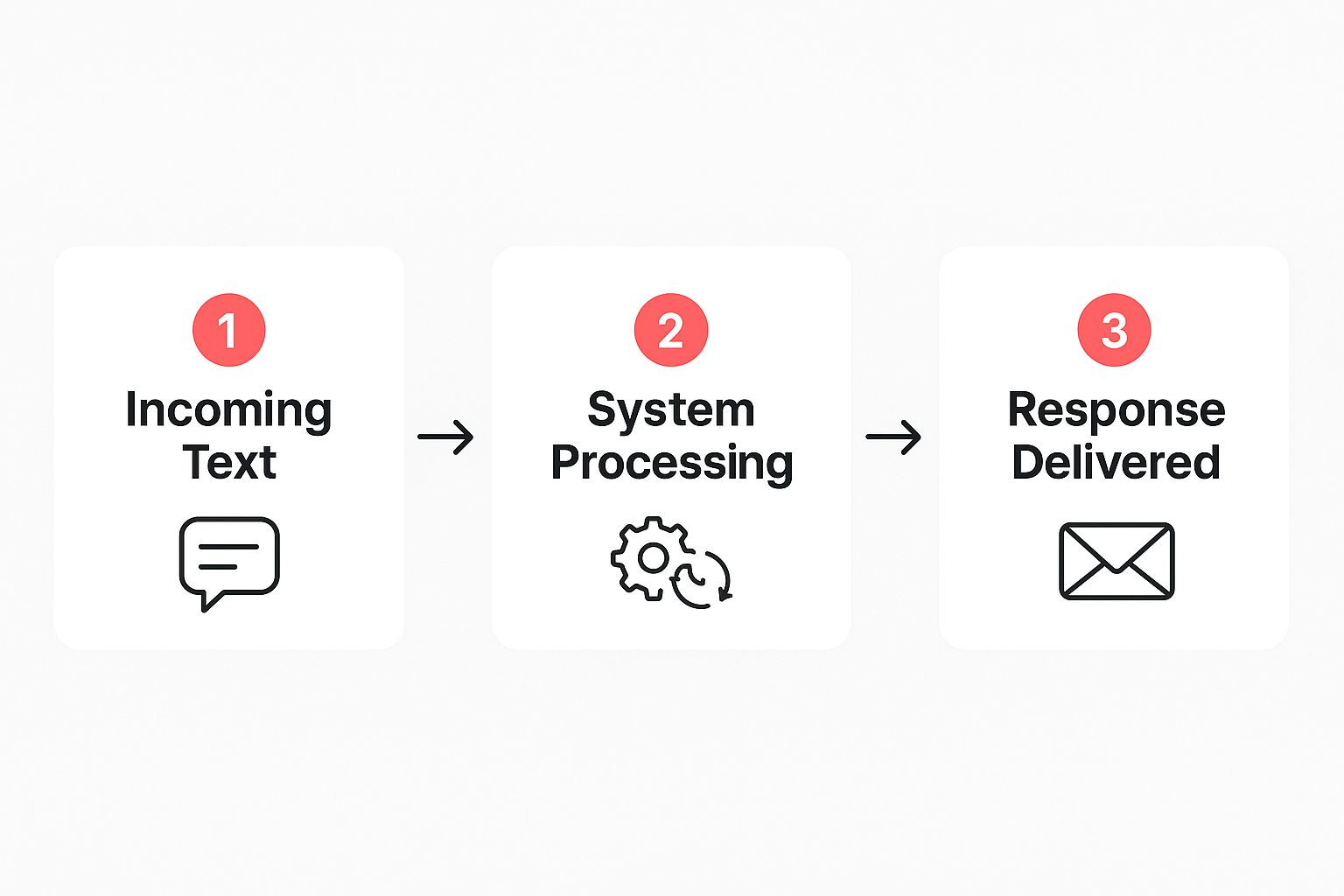
As you can see, the customer’s action—leaving your site—kicks off an automated system that sends the perfect recovery message at just the right time. Here’s a proven, two-step workflow that we see deliver results again and again:
- The Gentle Reminder (1 Hour Post-Abandonment): The first message needs to be friendly and helpful, not pushy. Send it about an hour after they’ve left, just letting them know their items are saved. You’d be surprised how often this is all it takes to bring back someone who just got sidetracked.
- The Compelling Incentive (24 Hours Post-Abandonment): If the cart is still sitting there a day later, it’s time to sweeten the pot. The second text can offer a small but tempting incentive, like free shipping or a 10% discount. This is great for overcoming any hesitation they had about the price.
This strategic timing works. We know that an automatic text message response is a powerful tool for driving purchases. In fact, one recent report found that nearly half of consumers made a purchase after getting a text from a business. That’s a massive signal that people are ready and willing to engage with brands over SMS.
By automating this follow-up, you’re essentially creating a safety net that catches sales you would have otherwise lost. It’s a low-effort, high-reward strategy that flips cart abandonment from a frustrating problem into a genuine opportunity.
This targeted approach turns a simple notification into a powerful sales machine. To really nail this, it’s worth digging into the specific tactics for crafting the perfect abandoned cart SMS. The right message truly makes all the difference.
Frequently Asked Questions
Even when the benefits are clear, jumping into a new system always comes with a few questions. It’s only natural.
To clear up any hesitation, we’ve put together the most common questions we hear about setting up an automatic text message response system. Below are straightforward answers to help you move forward with confidence.
How Much Does an Automated SMS System Cost?
The cost can vary, but it’s probably more affordable than you think. Many modern platforms have ditched the old model of high monthly fees. Instead, they operate on a pay-as-you-go or, even better, a performance-based model.
This is a huge win for businesses of any size. For example, some platforms only bill you for the messages you send. The best ones only charge you when those messages actually make you money. This setup means the platform’s success is tied directly to yours, making it a low-risk way to get started.
A performance-based pricing model means you’re not just buying a tool; you’re investing in results. You pay only when the system is actively generating revenue, which completely changes the ROI conversation.
Look for a solution with transparent pricing and no long-term contracts. That flexibility lets you scale up or down as needed, ensuring you’re getting real value without being locked into a big monthly bill.
What Are the Legal Rules for Sending Business Texts?
This is a big one, and it’s non-negotiable. In the United States, the main regulations you need to know are the Telephone Consumer Protection Act (TCPA) and the CAN-SPAM Act. The absolute core principle of these laws is explicit consent.
You must have clear, documented permission from someone before you send them automated marketing texts. This is called an “opt-in.” Just because someone bought from you in the past doesn’t mean you can start texting them promotions.
To stay compliant, you also have to:
- Identify Your Business: Make it clear who the message is from.
- Provide an Easy Opt-Out: Include simple instructions like “Reply STOP to unsubscribe.”
- Respect Quiet Hours: Don’t send texts at odd hours, like late at night or super early in the morning.
Following these rules isn’t just about avoiding massive fines—it’s about building a relationship with your customers based on trust and respect.
Can Automated Messages Still Feel Personal?
Absolutely. The secret to making an automatic text message response feel personal is using the customer data you already have. Generic, robotic messages are a thing of the past. Today’s systems allow for a deep level of personalization that makes every message feel like it was sent just for them.
And I’m not just talking about using their first name. You can tailor messages based on their purchase history, what they looked at on your site, or even their location. A message that says, “Hey Sarah, saw you were checking out our new hiking boots! Here’s 10% off to get you ready for your next adventure,” will always beat a generic sales blast.
The goal is to make the customer feel seen and understood. By connecting your automated messages to their specific actions, you shift from broadcasting to having a one-on-one conversation, which is how you build real brand loyalty.
How Do I Choose the Right Software?
Choosing the right software comes down to figuring out your specific needs and finding a platform that matches them. A great place to start is finding a tool that integrates smoothly with your e-commerce platform, whether that’s Shopify, WooCommerce, or something else. A clean integration will save you a ton of headaches.
Next, think about the features that will actually move the needle. A solid automatic text message response tool should have powerful cart recovery features, analytics you can actually understand, and the ability to easily segment your audience for targeted campaigns.
Finally, look at the pricing model and support. A platform with performance-based pricing and a responsive support team ensures you get help when you need it and only pay for tangible results. You want a solution that makes your life easier, not one that adds another layer of complexity to your day.
Ready to stop losing sales to abandoned carts? CartBoss turns those missed opportunities into profit with powerful, automated SMS campaigns. Our system is built to recover lost revenue on autopilot, so you can focus on growing your business while we bring customers back. Discover how CartBoss can boost your sales today!