


The core difference between SMS and push notifications is pretty straightforward. SMS messages can reach any mobile phone number, period. Push notifications, on the other hand, require a user to have your app installed. Your decision hinges on a simple question: do you need the universal, immediate reach of a text message, or a cheaper way to engage your most loyal customers—the ones who already have your app?
Understanding the Core Differences
Picking between these two powerhouse channels isn’t about finding a single winner. It’s about knowing which tool to pull out of your toolbox for the right job. Both SMS and push notifications land messages directly on a user’s phone, but they live in completely different worlds and serve very distinct purposes for e-commerce brands.
SMS, or Short Message Service, is the classic text message we all know. It runs on the cellular network, which means it doesn’t need an internet connection or a specific app to get delivered. This makes it an incredibly reliable and direct line to your customers. Its real power is its simplicity and unmatched reach.
Push notifications are a different beast entirely. These are messages sent by your mobile app. They pop up on a user’s lock screen or notification center and need an active internet connection to show up. They are fundamentally tied to your app, making them the perfect channel for building a relationship with users who’ve already shown serious commitment by installing it. That connection also allows for richer, more interactive content like images and buttons.
This isn’t just SMS versus push. It’s about knowing when to use the guaranteed reach of a text versus the rich, in-app experience of a push. One is a universal key that opens any door; the other is a VIP pass for your best customers.
To make the strategic tradeoffs crystal clear, let’s break down a high-level comparison.
At-a-Glance Comparison of SMS vs Push Notifications
This table gives you a quick snapshot of the core differences between SMS and push notifications, helping you see where each channel shines.
| Attribute | SMS | Push Notification |
|---|---|---|
| Reach | Universal; only a phone number is needed. | App-dependent; user must have the app installed. |
| Opt-In | Requires explicit consent (e.g., reply “YES”). | Granted through app/OS permissions upon install. |
| Delivery | Uses cellular network; no internet required. | Requires an active internet connection. |
| Cost Model | Typically a per-message sending fee. | Generally free to send (after app development costs). |
| Content Type | Primarily text-based (up to 160 characters). | Supports rich media (images, GIFs, buttons). |
| Urgency | Extremely high; ideal for time-sensitive alerts. | Moderate; effective for promotions and updates. |
Ultimately, the right choice depends entirely on your audience and your goal. If you need to reach everyone, instantly, SMS is your go-to. If you want to nurture a dedicated app user base with engaging content, push notifications are the way to go.
The Power and Simplicity of SMS Marketing
When you stack up SMS vs. push notifications, the biggest edge for SMS is its sheer simplicity. It doesn’t need an app or even an internet connection. It just works, using the native messaging function that’s on every single mobile phone out there.
This universal access gives it a reach that no other channel can realistically claim.
A text message also carries a different kind of weight. It feels personal and urgent, more like a message from a friend than a corporate broadcast. That perception alone is a huge reason why its performance numbers are so ridiculously good.
Unmatched Immediacy and Engagement
The direct line SMS opens to your customers translates into some staggering engagement metrics. A mind-blowing 98% of SMS messages are opened, and even better, 90% are read within just three minutes.
This near-instant visibility makes SMS the undisputed champion for time-sensitive deals and critical alerts that need eyes on them right away.
This high engagement isn’t just about getting opened; it drives real action. SMS campaigns consistently pull in higher click-through and conversion rates than other channels. Plus, with opt-out rates typically staying below 3%, it’s clear that people are happy to get texts from businesses when they offer real value.
The power of SMS lies in its universal access and the user’s perception of it as an essential communication channel. When a text arrives, people instinctively check it, creating an unparalleled opportunity for direct-response marketing that drives immediate action.
The Critical Role of Compliance and Consent
A core part of any smart SMS strategy is that it’s permission-based. Regulations like the TCPA require businesses to get explicit, documented consent before sending any marketing texts. This might sound like a hurdle, but it’s actually a massive advantage.
This opt-in process means you’re building a list of highly engaged subscribers who have literally asked to hear from you. You’re not just shouting into the void; you’re talking to a pre-qualified audience that’s ready to listen.
Our in-depth guide to SMS marketing fundamentals explains how to build a compliant list that performs. This approach builds trust and ensures your messages land with maximum impact, making SMS a true powerhouse for any campaign where timing is everything.
Driving Engagement with Push Notifications
While SMS has near-universal reach, push notifications are your secret weapon for nurturing a direct relationship with your most loyal customers—the ones who’ve already downloaded your app. This channel creates a powerful and cost-effective way to build loyalty and bring shoppers back again and again.
Push notifications are fundamentally more visual and interactive than a standard text. You can pack them with rich media like images, GIFs, and even interactive buttons. This turns a simple alert into a compelling micro-ad that pulls users right back into your app, making it perfect for showing off new products or sparking fresh interest.
Maximizing In-App Interaction
A critical factor in the SMS vs. push notification debate is how users opt-in, and it’s a totally different ballgame depending on their phone. Android users are much more likely to opt-in, with a median rate of 81%, while iOS sits at 51%. This is all down to how each operating system asks for permission.
Knowing this is key to building your strategy. Personalization is what really moves the needle here—tailored notifications see 59% more user interaction than generic ones. Throw in some rich media, and you can boost click rates by another 25%. It’s clear that visual engagement pays off.
The real power of push notifications is their ability to drop context-aware, personalized content straight onto a user’s lock screen. It’s a low-cost, high-impact channel for re-engaging customers who’ve already signaled a strong interest in your brand.
If you want to get into the technical nitty-gritty of setting them up, check out a practical guide to Capacitor push notifications.
Strategic Use Cases for E-commerce
Push notifications are good for more than just flash sales. They are a fantastic tool for guiding customers through their buying journey and encouraging them to come back for more.
Here are a few killer use cases for e-commerce brands:
- Price Drop Alerts: Let users know when an item they’ve viewed or added to their wishlist goes on sale. It’s a powerful nudge to finally make the purchase.
- Back-in-Stock Notifications: Automatically ping shoppers the moment a sold-out product is available again. This is a simple way to capture sales you would have otherwise lost.
- Re-engagement Campaigns: Target users who haven’t been active in a while with personalized recommendations based on their past browsing to pull them back in.
These tactics are incredibly effective for building long-term customer value and can be a core part of your efforts to reduce cart abandonment rates by keeping your brand at the front of their minds.
Comparing Performance Metrics That Matter
When you’re trying to decide between SMS and push notifications, it’s easy to get lost in the stats. But what really matters are the numbers that directly affect your bottom line. Each channel has its own strengths, and knowing when to use which one is the secret to a killer e-commerce recovery strategy. The right move really depends on what you’re trying to accomplish.
The biggest difference right out of the gate is reach. SMS is universal. All you need is a customer’s phone number, and you can connect with them whether they have your app installed or not—heck, they don’t even need a stable internet connection. Push notifications, on the other hand, live and die within your app’s ecosystem. Your audience is automatically limited to only those who’ve gone through the trouble of installing it.
Engagement And Open Rates
The difference in engagement is pretty stark, and it has a huge impact on your campaign’s success. SMS messages have a nearly guaranteed audience, with open rates that consistently hit around 98%. That’s a level of visibility no other channel can touch, making it the king for urgent messages that absolutely must be seen.
Push notifications don’t get opened as often, but they deliver a much richer, more interactive experience when they are. While not everyone will tap on a push, the ones who do are often your most engaged customers, already immersed in your brand’s app environment.
This chart really drives home the dramatic difference in open rates between the two.
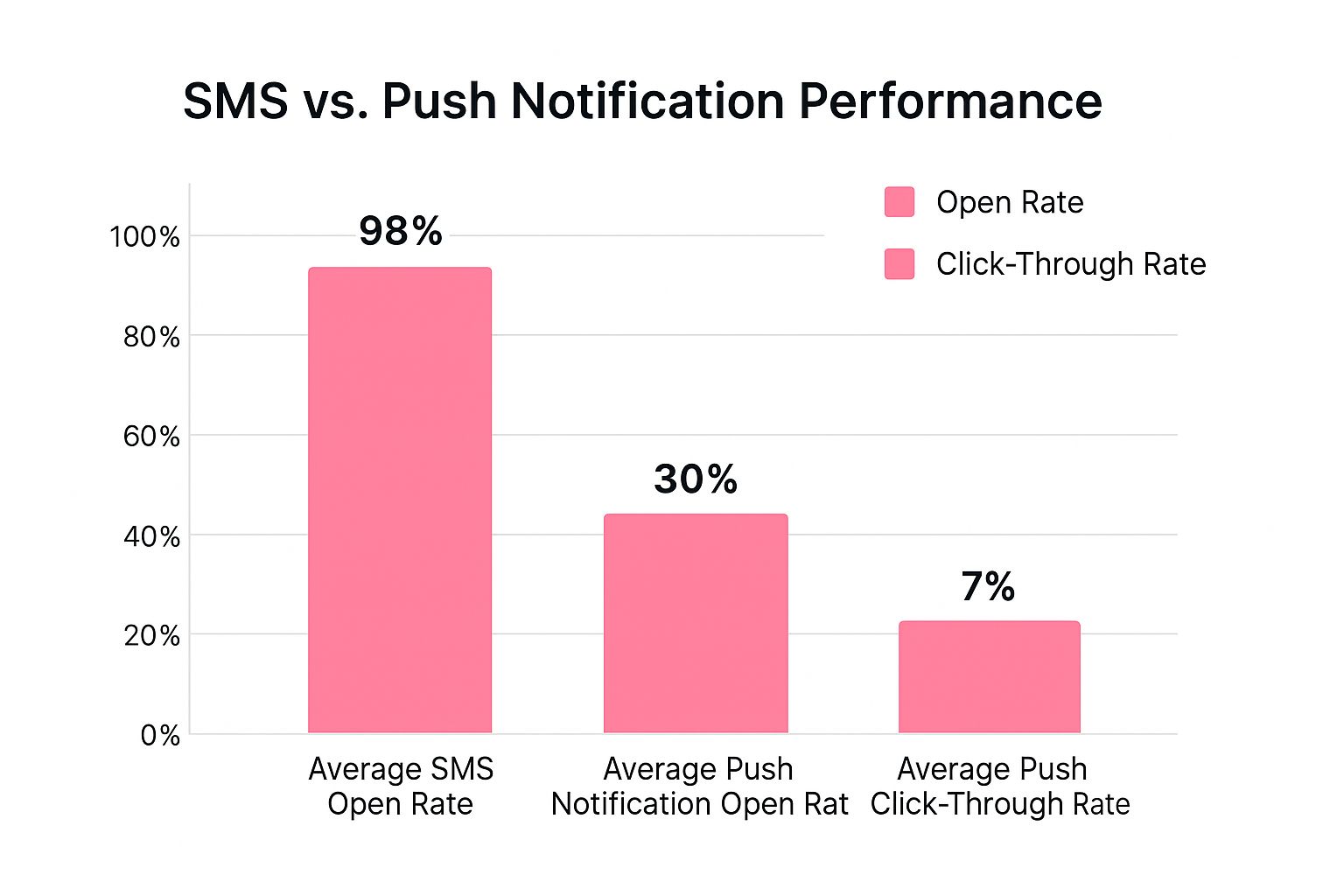
The data is clear: SMS all but guarantees your message gets seen, while push notifications have to work harder with compelling content to drive clicks from a smaller, but often more dedicated, audience.
Performance Deep Dive SMS vs Push Notification
To really get to the bottom of which channel to use and when, let’s break down the core performance metrics side-by-side. This isn’t just about picking a winner; it’s about understanding the specific job each tool is built for so you can allocate your resources wisely.
| Metric | SMS Analysis | Push Notification Analysis | Strategic Verdict |
|---|---|---|---|
| Open Rate | Unbeatable at 98%. Your message is almost guaranteed to be seen, making it ideal for high-priority alerts. | Highly variable, 3%-10%. Success depends heavily on timing, personalization, and compelling copy. | Use SMS for must-see, time-sensitive messages. Use Push for ongoing engagement where viewership isn’t critical. |
| Click-Through Rate (CTR) | Strong, averaging 10%-30%. The direct, personal nature of SMS drives immediate action. | Moderate, around 4%-7%. Rich media and deep links can boost this, but it’s fighting for attention. | SMS is the clear winner for driving immediate clicks to a specific landing page or checkout. |
| Conversion Rate | Very high, especially for cart recovery. The urgency and directness lead to quick conversions. | Lower overall, but highly effective for re-engaging existing app users and promoting in-app sales. | Deploy SMS for quick, high-value conversions. Leverage Push to nurture existing customers toward repeat purchases. |
| Cost Per Send | Pay-per-message model. Costs can scale with volume, requiring careful budget management. | Essentially free to send. The primary cost is the significant upfront investment in app development and maintenance. | Push is more cost-effective for frequent, large-scale broadcasts. SMS offers a higher ROI on targeted, high-intent campaigns. |
| Audience Reach | Nearly universal. As long as you have a phone number, you can reach the customer. | Limited to users who have your app installed and have opted in to receive notifications. | SMS is superior for reaching your entire customer base. Push is for communicating with a select, highly-engaged segment. |
Ultimately, the numbers show two very different tools for two very different jobs. SMS is your surgical instrument for high-stakes moments, while push notifications are your broadcast system for keeping your loyal app users in the loop.
Cost and Conversion Potential
The way you pay for these channels couldn’t be more different. SMS marketing is typically a pay-as-you-go model where you’re charged per message. This can add up quickly if you’re running massive campaigns. In contrast, sending push notifications is usually free—but that “free” comes after you’ve made the substantial investment to build and maintain a mobile app in the first place.
For a deeper look at how SMS costs stack up against other channels, our guide comparing SMS marketing vs. email marketing breaks it down even further.
This cost difference naturally shapes how you think about conversions. With mobile commerce now accounting for over 57% of all e-commerce sales, both channels are crucial. SMS shines when you need to drive immediate action, like for abandoned carts or flash sales. Push notifications are better for the long game—nurturing loyalty and retaining customers through richer, app-based interactions.
It’s also worth noting that about 43% of app users actually find push notifications less intrusive than a text message, which can foster better long-term engagement if you get the frequency and content right.
When to Use SMS vs Push Notifications
Knowing the difference between SMS and push notifications is one thing. Knowing exactly when to deploy each channel is what separates a good strategy from a truly great one.
This isn’t about picking a “winner”—it’s about choosing the right tool for the job. Each channel has its moment to shine, depending on the urgency, the message, and what you want the customer to do next. Get this right, and you’ll see a real impact on your conversions and customer trust. Let’s dig into some real-world scenarios to see where each channel really pulls its weight.
Scenarios Built for SMS Success
SMS is your heavy hitter for anything time-sensitive, critically important, or needing immediate action. With near-perfect open rates, it’s the channel you use when you absolutely can’t afford for your customer to miss the message.
Here’s where it excels:
- Abandoned Cart Recovery: A time-sensitive discount code sent via SMS is pure gold for creating urgency. Something like, “Still thinking it over? Use code SAVE20 for 20% off in the next 3 hours!” plays on scarcity and cuts right through the noise to get that sale back.
- Critical Shipping Updates: For high-stakes transactional messages, nothing beats SMS. Alerts like “Your order #12345 has shipped!” or “Heads up! Your package is out for delivery” are perfect for building trust and keeping customers in the loop with information they genuinely want.
- Two-Factor Authentication (2FA): When security is on the line, SMS is the most reliable way to deliver 2FA codes. It doesn’t rely on an app or an internet connection, making sure your users can always get into their accounts safely.
The rule for SMS is simple: if the message is urgent, transactional, or needs a quick response, text is the answer. It demands attention in a way no other channel can.
If you want to go deeper on crafting these kinds of campaigns, check out our guide on SMS marketing for ecommerce for some next-level tactics.
Scenarios Perfect for Push Notifications
Push notifications are your go-to for engaging your most loyal customers—the ones who have already downloaded your app. They’ve invited you into their world, so they’re much more open to brand-building messages and promotions that bring them back for another look.
Here are a few smart ways to use them:
- Price Drop Alerts: Let shoppers know the moment an item they’ve viewed or wishlisted goes on sale. It’s a personalized, perfectly-timed nudge that often provides the final push they need to buy.
- In-App Flash Sales: Promote exclusive, app-only sales to make your loyal customers feel special. Using rich media like a product image right in the notification can skyrocket click-through rates and send traffic flooding to your sale page.
- Re-engaging Dormant Users: Pull inactive users back into your store with personalized product recommendations based on their browsing history. A simple message like, “We found something you’ll love!” can be surprisingly effective at rekindling their interest.
Creating a Unified Messaging Strategy
The whole debate around SMS vs push notifications misses the point. You don’t have to choose. The smartest e-commerce brands have stopped seeing it as a competition and started integrating both into a single, unified strategy.
When you let each channel play to its strengths, you create a seamless customer journey that respects their preferences and, most importantly, drives conversions. It’s not about blasting the same message everywhere. It’s about mapping the right message to the right channel at the perfect moment. This way, you deliver real value at every touchpoint without causing notification fatigue.
Orchestrating a Smart Workflow
Abandoned cart recovery is the perfect place to see this tag-team approach in action. You can kick things off with a low-cost, gentle reminder using a push notification. It’s a simple nudge that’s perfect for re-engaging app users without feeling intrusive.
If they don’t bite, you escalate. That’s when you bring in the heavy hitter: a high-impact SMS. This text message creates real urgency, maybe with a time-sensitive offer, and leverages its near-perfect open rate to lock in the sale.
Here’s what that tiered approach looks like in practice:
- Step 1 (Push Notification): Within the first hour, send a simple reminder. “Forgot something? Your cart is waiting for you!”
- Step 2 (SMS Follow-up): If there’s still no action after 24 hours, send an SMS. “Still thinking it over? Complete your order in the next 3 hours and get 15% off!”
By combining channels, you create a powerful, escalating sequence. The initial push serves as a gentle prompt for your most engaged audience, while the follow-up SMS acts as a high-impact final nudge that drives immediate action.
Assigning Roles to Each Channel
This strategy works best when you assign clear, distinct jobs to each channel. Think of it as building a consistent communication playbook.
Use push notifications for ongoing brand-building and engagement. They’re great for announcing new product drops, sharing fresh content, or promoting in-app exclusives. This keeps your brand top-of-mind with your most loyal app users.
Reserve SMS for high-priority, must-see messages that demand immediate attention. This means things like shipping updates, delivery confirmations, and other critical alerts. By sticking to these roles, you train customers to instantly recognize the value of each notification.
For a deeper dive into getting your texting strategy just right, our SMS marketing best practices playbook is packed with expert guidance.
Frequently Asked Questions

As you start digging into SMS and push notification strategies, some common questions always come up. Getting straight answers on the big three—cost, compliance, and user experience—is what separates a good strategy from a great one. Let’s tackle the questions we hear most often from e-commerce brands.
We’ll break down the practical details you’ll face when you actually start sending messages. Understanding these nuances is key to building a communication plan that gets real results without burning out your audience.
Which Is More Expensive SMS Or Push Notifications?
When you look at the price tag, SMS and push notifications are worlds apart. SMS marketing is a pure pay-as-you-go model. Every text you send has a cost, which means your expenses climb right alongside your campaign volume. For big lists or frequent sends, this can add up fast.
Push notifications are a different story. Once your app is built, sending the actual notification is typically free. The catch? The upfront cost to develop and maintain a quality mobile app is a serious investment. So while sending is free, getting to that point is the expensive part.
Can I Use Both SMS And Push Notifications For The Same Customer?
Not only can you, but you absolutely should. The smartest brands use both channels in harmony, playing to each one’s strengths to create a seamless experience. The golden rule is simple: don’t send the exact same message on both platforms. That’s a surefire way to annoy customers and trigger notification fatigue.
A solid approach is to use push notifications for your marketing content—think new product drops, flash sales, and general app engagement. Save your SMS sends for the really important stuff that needs to be seen now.
Think of it this way: push is for marketing and brand building, while SMS is for critical, time-sensitive alerts like shipping updates or two-factor authentication codes. This distinction trains customers to value each channel appropriately.
Do I Need Permission To Send SMS And Push Notifications?
Yes, for both, permission is non-negotiable. With SMS, you need explicit, documented consent—an opt-in—to comply with strict regulations like the TCPA in the U.S. This isn’t just about following rules; it guarantees you’re only messaging people who have actively asked to hear from you.
For push notifications, users have to grant permission through their phone’s operating system (iOS or Android) when they first install or open your app. Both channels are strictly permission-based, which is a huge benefit. It ensures you’re working with a highly engaged audience from the start.
Ready to turn your abandoned carts into your biggest revenue source? With CartBoss, you can recover lost sales on autopilot using the unmatched power of SMS. See how our automated, high-conversion campaigns can boost your sales today. Get started with CartBoss.