



So, what exactly is multi-channel marketing? Think of it as a strategy where a business uses a bunch of different channels to chat with customers. The key thing here is that each channel is treated as its own separate opportunity to make a connection. It’s like setting up individual shops on different streets—one on social media, one through email, and maybe even a physical store—to reach as many people as possible, wherever they happen to be.
Understanding The Core Idea of Multi Channel Marketing
At its heart, multi-channel marketing is all about giving your customers choices. The goal isn’t to be everywhere at once, but to show up on the platforms your audience already knows and loves. This maximizes your chances to engage with them in a way that feels natural.
Each channel—whether it’s email, a social media feed, a physical storefront, or even direct mail—operates independently to get your brand’s message across.
Imagine a clothing brand running ads on Facebook, sending out weekly promotional emails, and operating a brick-and-mortar store downtown. A customer might scroll past a Facebook ad for a new jacket and not think much of it. A few days later, an email about a flash sale pops into their inbox. That email might just be the nudge they need to head to the physical store and make a purchase. In this scenario, each channel did its own job to reach that one customer.
Key Channels in The Mix
A smart multi-channel approach isn’t about carpet-bombing every platform out there. It’s about being selective and focusing on the right places where your customers hang out.
Here are some of the most common channels brands use:
- Email Marketing: The classic direct line to your customer’s inbox for promotions, newsletters, and updates.
- Social Media Platforms: Great for building community and engaging with people on sites like Instagram, Facebook, and TikTok.
- Physical Retail Stores: Nothing beats the in-person experience for direct product interaction.
- SMS Campaigns: Perfect for sending time-sensitive offers and notifications straight to a customer’s phone. A deep dive into what is SMS marketing can show you just how powerful this channel is for driving immediate action.
- Website and Blog: Your brand’s central hub for providing in-depth information and telling your story.
To make this crystal clear, here’s a quick breakdown of the core components.
Core Components of Multi Channel Marketing
| Concept | Simple Explanation | Everyday Example |
|---|---|---|
| Customer Choice | Giving people the freedom to engage with you on their preferred platform. | A customer can choose to buy from your website, a mobile app, or your physical store. |
| Multiple Channels | Using a variety of platforms (like email, social media, SMS) to communicate. | You run Instagram ads, send weekly email newsletters, and have a pop-up shop at a local market. |
| Independent Operation | Each channel works on its own and doesn’t necessarily “talk” to the others. | A customer service ticket raised via email isn’t visible to the social media team. |
| Broad Reach | The goal is to cast a wide net to attract as many potential customers as possible. | A brand advertises on TV, in magazines, and on billboards to maximize visibility. |
Ultimately, it’s about being accessible and convenient, which is exactly what modern shoppers want.
Why Customers Prefer This Approach
Let’s be real—people don’t stick to a single platform, and they expect the brands they love to be available on multiple fronts. In fact, research shows that around 72% of consumers prefer connecting with brands through a mix of channels instead of being locked into just one. This preference makes it pretty clear that businesses need to diversify how they communicate.
A successful multi-channel strategy is built on a simple premise: go where your customers are. It’s not about shouting your message from one rooftop but about having meaningful conversations in multiple town squares.
The fundamental idea is that more channels equal more touchpoints. And more touchpoints create more opportunities for a conversion. By being present in various places, you ensure your brand stays top-of-mind and delivers the convenience that today’s buyers demand.
Why This Strategy Is a Game Changer for Growth

Jumping into multi-channel marketing does a lot more than just get your name out there; it fundamentally builds a more resilient, customer-focused business that’s built for growth. The real power here is meeting modern shoppers where they already are, giving them the convenience and choice they’ve come to expect.
When you show up across different platforms, you’re creating a web of touchpoints that keeps your brand visible. This isn’t about being annoying; it’s about building familiarity and trust—two key ingredients for turning a casual browser into a loyal fan. You become an accessible, reliable part of their daily life, both online and off.
Boosting Brand Recognition and Loyalty
Think of every channel as another chance to tell your brand’s story. A customer might see a sponsored post on Instagram, get a promotional email a week later, and then walk past your physical store. Each interaction is a separate piece of the puzzle, but together, they build a powerful and memorable picture of your brand.
This consistency creates a strong sense of reliability. When customers know they can reach you on their preferred channel—whether it’s social media for a quick question or email for a detailed offer—their experience feels personal and effortless.
By offering multiple ways to interact and buy, you’re not just selling a product; you’re building a relationship. This convenience is a cornerstone of modern customer loyalty, making them far more likely to come back.
Here’s a classic example: a customer sees a Facebook ad for a pair of sneakers. They click over to your site but get distracted and don’t buy. A few days later, an email lands in their inbox with a limited-time discount on those exact shoes. That little nudge is all it takes to get them into your local store to try them on, and boom—you’ve made a sale. No single channel closed the deal; it was the combined, seamless journey that did the work.
Driving Tangible Revenue Growth
At the end of the day, it’s all about increasing sales, and a multi-channel strategy opens up more doors for customers to make a purchase. Each platform appeals to different buying habits. Some people love the one-click convenience of an in-app purchase, while others want to see and touch the product in a real store. By offering both, you cast a much wider net.
And this isn’t just theory—the numbers back it up. Companies with a solid multi-channel plan report an average annual revenue bump of around 9.5%. This shows the direct impact of engaging customers where they are. You naturally boost customer lifetime value by staying visible and giving them more ways to buy, which is a surefire way to lift conversion rates.
You can dig into more insights on how multi-channel strategies drive revenue at improvado.io.
Choosing the Right Channels for Your Audience

A killer multi-channel strategy isn’t about being on every single platform. That’s a fast track to burning out and getting zero results. The real magic happens when you show up where it actually matters—where your customers are already hanging out.
Think of it like fishing. You wouldn’t just toss a net into any random pond and hope for the best. You’d figure out exactly where the fish you want are swimming, what they like to eat, and when they’re most active. Marketing is no different. You need to know your customer’s digital habitats before you spend a dime.
Start with Data, Not Assumptions
Guessing is your worst enemy in marketing. A solid channel strategy is always built on cold, hard data about your customers. Who are they, really? Where do they scroll online? And how do they actually want to hear from a brand like yours?
To get those answers, you’ve got to dig into your analytics. Check out your website traffic, see who’s following you on social media, and look at what worked (and what bombed) in your past campaigns. This data is a roadmap to your audience’s behavior, showing you precisely how they find you.
Once you have that info, you can connect the dots between channels and people. For instance:
- Younger, visually-focused crowds? They’re probably all over TikTok and Instagram.
- Professionals and B2B clients? You’ll find them on LinkedIn and in their email inboxes.
- Older demographics? Don’t discount the power of direct mail or even a well-placed print ad.
This data-first approach means you’re not just shouting into an empty room. You’re starting meaningful conversations in the right places.
Understanding Key Digital Channels
Every channel has its own vibe, its own rules, and its own strengths. Picking the right ones means knowing what each platform is built for. Let’s break down some of the most critical channels for any modern multi-channel plan.
Email and SMS Marketing
Email is still the king for nurturing leads and bringing customers back for more. It’s your direct line for sending personalized offers and valuable content to your most loyal fans. At the same time, SMS is an absolute beast for time-sensitive deals and alerts, with open rates that are through the roof. We dive deep into the differences in our guide on email marketing vs. SMS marketing.
Social Media Platforms
Think of social media as your brand’s community hub. Platforms like Facebook, Instagram, and Twitter are perfect for showing off your brand’s personality, talking directly to your followers, and running laser-focused ad campaigns. The trick is picking the platforms that match your brand’s voice and your audience’s scrolling habits.
Key Takeaway: The goal isn’t just to have a profile; it’s to participate authentically. Each platform demands its own tailored content that respects its unique format and what its users expect to see.
Search Engine Optimization (SEO)
SEO is the long game. It’s all about making sure customers find you at the exact moment they’re searching for a solution you offer. By optimizing your website and content for the right keywords, you pull in high-intent traffic that’s ready to convert. For any business with a website, this isn’t just a “nice to have”—it’s non-negotiable.
How to Build Your Multi Channel Strategy
Turning the idea of multi-channel marketing into a real, revenue-driving machine isn’t about guesswork. It requires a clear blueprint. Building this strategy is a deliberate process of understanding your customer, choosing your battlegrounds wisely, and measuring what truly matters. This step-by-step approach gives you a repeatable framework for launching campaigns that actually work.
The whole thing starts and ends with your customer. Without a deep, almost obsessive understanding of who they are, your efforts will feel disjointed and just plain ineffective. You have to move past basic demographics and dig into the real reasons that drive their decisions.
Develop Detailed Customer Personas
Before you even think about which channels to use, you need to know exactly who you’re talking to. A customer persona is a detailed, semi-fictional profile of your ideal buyer, built from real data and market research. This isn’t just about age and location; it’s about their goals, their pain points, and their daily habits.
What social media platforms do they scroll through on their lunch break? Do they prefer quick SMS updates or in-depth email newsletters? Answering these questions is the foundation of your entire strategy. To really nail this, you can dive deeper into creating a comprehensive customer journey mapping template guide, which helps you visualize every single touchpoint.
The goal is to create a persona so vivid that you can almost hear them asking, “How does this brand solve my problem?” This clarity will guide every decision you make, from ad copy to channel selection.
Once you have this crystal-clear picture, you can start mapping their journey. A key part of your strategy should also include tactics that help to reduce cart abandonment and make the entire buying process smoother across all your channels.
This process flow diagram breaks down the fundamental steps, from identifying your audience to selecting channels and analyzing performance.
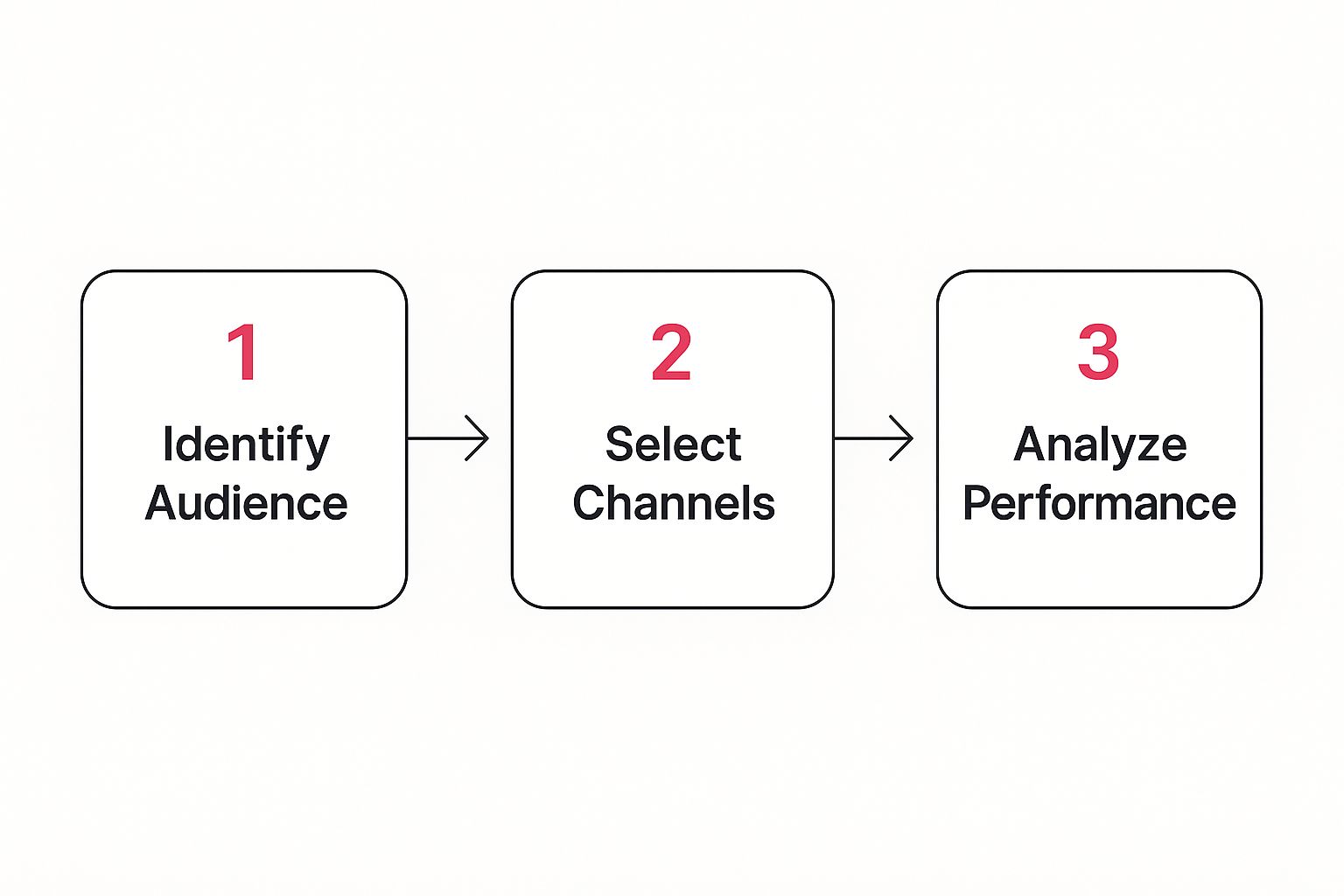
As you can see, it’s a cycle. The insights you get from performance analysis constantly feed back into and refine your understanding of your audience.
Select Channels Based on Data
With your personas in hand, picking your channels becomes a logical next step, not just a shot in the dark. Your data will show you exactly where your audience spends their time, making it easy to prioritize the platforms with the highest potential for engagement. Don’t spread yourself thin trying to be everywhere at once.
Instead, focus on mastering two or three core channels first. For an e-commerce brand targeting millennials, this might be Instagram for visual discovery, email for nurturing leads, and SMS for flash sales.
Craft a Consistent Brand Message
Your brand voice should be instantly recognizable, no matter where a customer bumps into it. Consistency builds trust and makes your brand identity stick. While the format will change—an Instagram caption is obviously different from an email—the core message, tone, and values have to stay the same.
A fragmented message just confuses customers and weakens your brand. A unified one, however, creates a seamless experience that makes customers feel like they’re interacting with a single, cohesive company, not a bunch of disconnected departments.
Set Measurable KPIs and Integrate Your Tools
Finally, you can’t improve what you don’t measure. You need to establish clear Key Performance Indicators (KPIs) for each channel.
- For Email: Track open rates, click-through rates, and conversion rates.
- For Social Media: Monitor engagement rates, reach, and website clicks.
- For SMS: Focus on conversion rates and return on ad spend (ROAS).
Get your marketing tools integrated so they create a cohesive system. Your CRM, email platform, and analytics software should all talk to each other, giving you a unified view of every customer interaction. This integration is what allows you to track the customer journey across different channels and see exactly where your conversions are coming from.
Measuring What Matters for True ROI
Running a multi-channel marketing strategy without solid measurement is just expensive guesswork. You need to look past vanity metrics like likes and shares and dig into the data that connects your marketing spend directly to your bank account. It’s all about tracking what’s working, ditching what isn’t, and putting your budget where it delivers the best return.
When you measure your strategy effectively, you’re turning raw numbers into smart decisions. You can stop burning cash on channels that don’t perform and double down on the platforms that bring in real customers. This is how you build sustainable growth and maximize your profits.
Key Metrics for Multi-Channel Success
To get a clear picture of what’s going on, you need to track a few critical metrics. These are the numbers that tell the real story behind your campaigns.
- Conversion Rate by Channel: This tells you exactly which platforms are best at turning casual visitors into paying customers. If your email campaigns are hitting a 5% conversion rate while your social media ads are stuck at 1%, you know exactly where to put your energy.
- Customer Acquisition Cost (CAC): Simple question, powerful answer: how much are you spending to get one new customer on each channel? A low CAC means you’re running an efficient, profitable machine on that platform.
- Customer Lifetime Value (CLV): This is the long game. CLV projects the total amount of money you can expect a single customer to spend with you over time. A high CLV is a sign you’re not just making quick sales but building real, valuable relationships.
The ultimate goal is to find channels where your CLV is way higher than your CAC. That simple formula is the bedrock of a profitable marketing engine. It’s the key to figuring out your actual return on investment.
For a deeper dive, check out our complete guide on how to calculate marketing ROI to really get these essential calculations down.
Understanding Attribution Modeling
One of the trickiest parts of multi-channel marketing is figuring out which touchpoint gets the credit for a sale. A customer might see a Facebook ad, get an email a few days later, and then finally click a Google search ad before they buy. So, who’s the hero? This is where attribution modeling steps in.
Attribution modeling is just a way of assigning value to each stop on the customer’s journey. Instead of giving 100% of the credit to the very last click, it helps you see how all your channels work together to convince someone to make a purchase. By analyzing these paths, you can make much smarter decisions about where to spend your money and keep fine-tuning your strategy for a real, measurable ROI.
The Technology That Powers Your Strategy
Let’s be honest, you can’t run a sophisticated multi-channel marketing strategy by hand. It’s less about sheer manual effort and more about having the right tech in your corner. To truly connect with customers across all these different platforms, you need a solid tech stack that talks to each other, turning scattered data into smart decisions.
Think of your technology as the central nervous system for your entire marketing plan. It’s what coordinates every move, processes all the incoming information, and makes sure every part of the system is on the same page. This unified setup is often called a marketing hub.
The Core Components of a Marketing Tech Stack
A powerful marketing hub isn’t just one magic tool; it’s a collection of platforms working together. Each piece has a specific job, but they all share data to build a complete, living picture of your customer.
The absolute essentials include:
- Customer Relationship Management (CRM): This is your command center for all customer information. It keeps track of every interaction, purchase history, and contact detail, giving you that coveted 360-degree view of every single person.
- Email Automation Software: This is how you send targeted email campaigns—from newsletters to abandoned cart reminders—that are triggered by actual customer behavior, not just guesswork.
- Social Media Management Tools: These tools are a lifesaver. They let you schedule posts, keep an eye on engagement, and check your performance across every social network, all from one dashboard.
These platforms are no longer optional. The market for multi-channel marketing hubs was valued at over USD 6 billion and is only getting bigger. This explosion in growth shows just how critical these integrated systems have become for any business trying to manage complex campaigns without pulling their hair out. You can dive deeper into this trend in an in-depth market analysis on gminsights.com.
The Role of AI in Personalization
Beyond these core platforms, Artificial Intelligence (AI) is the secret sauce that drives real personalization at scale. AI algorithms dig through mountains of customer data to predict what someone might do next, recommend products they’ll actually love, and deliver the perfect message at the perfect time.
AI isn’t just about making things faster; it’s about making every customer interaction feel personal and unique. It gives a small team the power to create the kind of one-on-one experiences that used to be reserved for massive corporations.
This is what helps you move away from old-school “batch-and-blast” messaging and toward creating conversations that actually connect with your audience. For a closer look at the tools that can bring all your efforts together, our guide on omnichannel marketing software has some great insights into building that seamless customer experience. This kind of intelligent foundation is exactly what you need to build a multi-channel plan that doesn’t just reach people, but builds real, lasting relationships.
Common Questions About Multi Channel Marketing
As you start piecing together your strategy, you’ll probably run into a few common questions. Getting these answers straight is a big step toward building a plan that actually works for your brand.
What Is the Main Difference Between Multi Channel and Omnichannel Marketing?
Let’s break it down with a simple analogy. Think of multi-channel marketing like a city with several roads leading to the same destination—your brand. Each road (email, social media, SMS) is separate. A customer can take any of them, but they don’t connect.
Omnichannel, on the other hand, builds interchanges and bridges between those roads. It creates a seamless, unified highway. A customer might see an ad on Facebook, click through to your site, get a follow-up text, and then receive an email confirmation. Each channel works together, creating one smooth, continuous experience.
How Many Channels Should a Small Business Start With?
This is where “quality over quantity” really shines. It’s tempting to try and be everywhere at once, but that’s a surefire way to burn out and get mediocre results.
Instead, start small. Pick just two or three channels where you know your customers hang out the most. Pour your energy into mastering those platforms, deliver an incredible experience, and get to know what works. Once you have a solid foundation and the data to back it up, you can start expanding.
Ready to turn abandoned carts into profit? CartBoss uses powerful SMS automation to recover lost sales and boost your revenue on autopilot. Start recovering sales today!