


Conversion tracking is just a fancy term for figuring out what’s actually working. It’s the process of connecting your marketing efforts—like an ad click or a text message—to a valuable action someone takes on your website, like making a purchase. In short, it shows you what’s making you money and what’s not.
Think of it as Your Digital Scorekeeper
Imagine running a brick-and-mortar shop. You see people walk in all day, but you have no clue if it was your radio ad, a flyer, or the cool window display that brought them in. That’s what marketing feels like without conversion tracking—you’re just guessing.
Conversion tracking is like having a friendly greeter at the door asking every customer, “Hey, what brought you in today?” It follows their journey from the first click all the way to the final “buy now” button, giving you a crystal-clear picture of which marketing channels are actually worth your time and money. It’s the difference between flying blind and having a GPS for your business goals.
But a “conversion” isn’t always a sale. It can be any action you decide is valuable for your business. To really get a handle on this, it helps to split these actions into two groups.
Macro vs. Micro Conversions
Think of these as your ultimate goal versus the small steps a customer takes to get there.
- Macro conversions are the big wins. These are the main goals that are almost always tied directly to your revenue—think a completed purchase or a paid subscription.
- Micro conversions are the smaller, but still important, steps along the way. These actions show a customer is interested and moving in the right direction, like signing up for your newsletter or adding a product to their cart.
Paying attention to both is key. It helps you see the entire customer journey, not just the finish line. To really understand how these actions impact your bottom line, it’s a good idea to learn more about calculating your conversion rate.
Tracking both types of conversions gives you a full picture of what’s happening on your site. Here’s a quick breakdown to make it even clearer.
Examples of Key Conversions to Track
| Conversion Type | Description | Example for E-commerce | Example for Service Business |
|---|---|---|---|
| Macro | The primary goal of your business, usually a direct revenue-generating action. | A customer completes a purchase. | A client signs a contract or pays an invoice. |
| Micro | A smaller step indicating a user is moving toward a macro conversion. | A user adds an item to their cart. | A potential client fills out a contact form. |
| Macro | A user subscribes to a premium monthly plan. | Subscribing to a paid membership or service. | |
| Micro | A user signs up for a newsletter to get a discount code. | A user downloads a free guide or case study. |
By keeping an eye on both macro and micro conversions, you get a much smarter, more complete view of how customers interact with your brand.
By tracking both macro and micro conversions, you gain a holistic understanding of the customer journey, allowing you to optimize every touchpoint and guide users more effectively toward your ultimate business goals.
How Conversion Tracking Technology Actually Works
So, how does this all work behind the scenes? What’s the magic that makes conversion tracking possible?
Think of it as leaving a digital breadcrumb trail. The whole process kicks off the second someone clicks on one of your ads or marketing links.
The moment that click happens, a tiny, invisible piece of code gets attached to their browser. You’ll often hear this called a tracking pixel or a cookie. This little snippet acts like a temporary, anonymous name tag. It doesn’t grab personal info; it just creates a unique ID for that specific visitor’s session.
As that person moves around your website, this digital name tag sticks with them, quietly watching what they do without getting in their way. It’s the foundation for understanding exactly how they got from your ad to your product page, and hopefully, to your checkout.
The Moment of Conversion
The final piece of the puzzle is waiting on your “thank you” or order confirmation page—the page they see right after making a purchase or signing up. There’s another bit of code on this page, and its only job is to look for that digital name tag.
When a visitor with that tag lands on the confirmation page, the code spots the ID and sends a signal back to your ad platform, like Google Ads or Meta. That signal is basically saying, “Hey, the person who clicked that ad just completed the goal!”
This is what we call attribution. The system connects the final sale directly back to the initial ad click. It gives you clear, undeniable proof of which marketing efforts are actually making you money.
The infographic below lays out this simple journey from ad click to completed action.
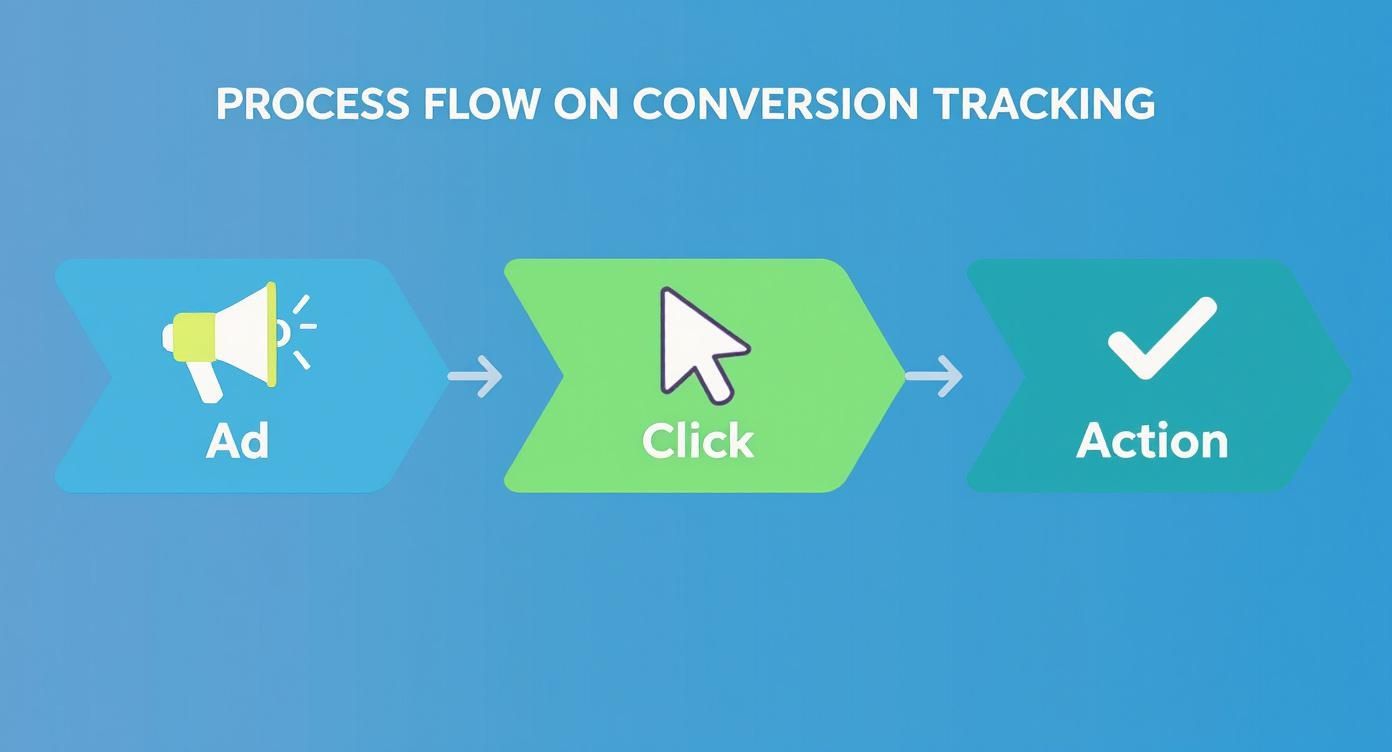
This visual shows the seamless path from that first moment of interest to the final conversion—which is exactly what this technology is built to measure. If you want to get even more granular with user actions, you can dive deeper into what is behavioral analytics and see how it works alongside conversion data.
By following this digital trail, you can stop guessing and start making smart, data-driven decisions. You’ll know precisely which campaigns are working, allowing you to fine-tune your strategy for better performance and a much higher return on your investment.
The Real-World Benefits of Tracking Conversions
Let’s get down to brass tacks. Conversion tracking isn’t some abstract marketing theory—it’s about making smarter, more profitable decisions for your store. It bridges the gap between your marketing spend and actual revenue, finally answering that nagging question: “Is this campaign actually working?”
Instead of just hoping your ads are paying off, you get a crystal-clear financial picture. You see exactly which channels are bringing in sales and which are just eating your budget. This kind of clarity is what separates guessing from growing. If you really want to get into the nuts and bolts, you can learn exactly how to calculate marketing ROI to see the full story.
Optimize Campaigns with Confidence
Once you have accurate conversion data, you can start making some real moves. You’ll be able to confidently pour more money into your high-performing ads and cut the dead weight without a second thought.
Picture this: an online store is running ads across three different social media platforms. Without tracking, they might assume the one with the most clicks is the winner. But with conversion tracking in place, they discover that a different platform—despite getting fewer clicks—is driving a whopping 80% of their actual sales. That single insight allows them to reallocate their budget for a massive boost in profitability.
Conversion tracking isn’t just about collecting data. It’s about connecting your marketing actions to real business outcomes, so you can invest in what truly grows your brand.
Uncover Deeper Customer Insights
Finally, conversion tracking shines a light on the hidden paths your customers take before they hit “buy.” You start to understand which touchpoints are the most influential and where potential roadblocks are causing people to drop off. Understanding these real-world behaviors is the key to implementing effective strategies to increase your conversion rates.
This data becomes even more powerful when you look at industry benchmarks. For example, the average e-commerce conversion rate in the U.S. was 2.6% in 2021, but that number can be misleading. The consumer goods sector saw rates as high as 4.22%, while home and furniture lagged behind at just 1.44%. The only way to know where you stand is with solid tracking.
Applying Conversion Tracking to E-commerce and SMS

Alright, let’s stop talking theory and see how conversion tracking actually works in the real world of e-commerce and SMS marketing. For any online store, tracking isn’t just about the final cha-ching of a sale; it’s about understanding all the little steps a shopper takes to get there.
Think about it. When you track smaller actions—or micro-conversions—like someone hitting the ‘add to cart’ button or starting the checkout process, you’re gathering priceless intel. This is the exact data that fuels powerful abandoned cart recovery campaigns. It pinpoints the shoppers who were this close to buying but got sidetracked, telling you exactly who to nudge and when.
This is where smart marketing automation, especially with text messaging, really shines.
How Tracking Powers SMS Cart Recovery
SMS marketing platforms plug into this tracked data to send super-personal, automated messages that reel shoppers back in. Picture this all-too-common scenario:
- A customer is browsing your site, finds something they love, and adds it to their cart. Then, life happens—the dog barks, the doorbell rings—and they leave.
- Your tracking system instantly logs this as an “abandoned checkout” event.
- An automated SMS is triggered, zipping a perfectly timed message straight to their phone.
- The text contains a unique, direct link that whisks them right back to their pre-filled cart.
- They click, finish the purchase, and you’ve just saved a sale.
Without solid conversion tracking, that sale might have been lost forever or, just as bad, credited to the wrong marketing effort.
With a proper setup, the system attributes that recovered sale directly to the SMS campaign. This gives you undeniable proof of your campaign’s return on investment (ROI) and shows its direct impact on your bottom line.
This clear attribution is crucial for understanding what’s actually working. For a much deeper dive into this, check out our complete SMS e-commerce guide and see how you can transform your own sales with text marketing. By applying these tracking principles, you stop guessing and start turning raw data into actionable strategies that genuinely move the needle.
A Practical Guide to Implementing Conversion Tracking
Diving into conversion tracking can feel like a huge technical headache, but it doesn’t have to be. A solid, step-by-step approach makes all the difference. The goal here isn’t just to slap some code on your site; it’s to build a reliable system that feeds you clean, actionable data.
And it all starts with a clear plan, not with a bunch of code snippets.
Before you even think about which tools to use, you need to nail down what a “conversion” actually means for your store. Is it a sale? A newsletter signup? A “request a quote” form? Forget vanity metrics and focus on the actions that directly fatten your wallet.
Get this foundation right, and you’ll have accurate data from day one, which is crucial to measure your marketing campaign success.
Key Steps for a Solid Setup
A good setup follows a logical path, from big-picture strategy all the way down to testing the tiny details. If you rush through these steps, you’ll end up with wonky data that sends you chasing ghosts.
Here’s a simple roadmap that works every time:
- Define Your Primary Conversions: Pinpoint the most critical actions a user can take. For an e-commerce shop, the holy grail is almost always a purchase. For a B2B service, it might be a “Request a Quote” form getting filled out.
- Choose the Right Tools: Pick the platforms that fit what you’re trying to do. Google Analytics is a fantastic, all-around starting point. But to get the full story, you’ll also need to set up tracking inside your ad platforms, like Google Ads or Meta Ads.
- Install Tracking Codes Correctly: Now we get to the technical part. This involves placing small snippets of code (often called pixels or tags) on your website. The most important spot? The confirmation or “thank you” page that customers see right after they convert.
- Test, Test, and Test Again: Seriously, never just assume it’s working. Use tools like Google Tag Assistant or just run a few test purchases yourself. Make sure the data is flowing through and showing up correctly in your reports.
This whole process has come a long way. Before the internet, tracking anything with this level of detail was pure science fiction. The rise of digital marketing completely changed the game, giving us incredible new ways to see what works.
Got Questions About Conversion Tracking? We’ve Got Answers.
Even after you get the hang of conversion tracking, a few tricky questions always seem to pop up. Let’s walk through some of the most common ones that store owners and marketers run into.
Our goal here is to clear up the confusion so you can feel confident putting your tracking data to work.
Web Analytics vs. Conversion Tracking
What’s the real difference between general web analytics and focused conversion tracking? Think of it like a weather report versus a storm tracker.
Your web analytics, like what you’d find in Google Analytics, gives you the big picture. It shows you everything visitors are doing—page views, bounce rates, time on site. It’s the full, detailed weather forecast for the entire day.
Conversion tracking, on the other hand, is your storm tracker. It’s a specialized tool that zeroes in on the specific actions that actually make you money. It tells you if people are doing what you want them to do (like buying something) and, crucially, which ad or message got them to do it.
What About All These Privacy Changes and Cookies?
This is a big one. With all the privacy updates, especially the slow death of third-party cookies, how does tracking even work anymore? It’s a huge shift, no doubt, but the industry is moving fast to adapt.
As third-party cookies fade out, the focus is shifting to first-party data—that’s the information you collect directly from your customers on your own site. New methods are taking their place, like server-side tracking and Google’s Enhanced Conversions, which uses scrambled, privacy-safe customer data (like an email address) to connect sales back to the ads that drove them. It’s all moving toward a more transparent, consent-based model.
This shift means building real relationships with your customers and being upfront about data is more important than ever. The future of tracking is built on trust, not just tech.
Can I Track Offline Conversions?
You bet. What if someone sees an online ad, then calls you or walks into your store to buy? You can absolutely track that, and it’s a game-changer for understanding your full marketing impact.
This is called offline conversion tracking, and here’s how it usually works:
- For phone calls: You can use dynamic call-tracking numbers. The system shows a unique phone number for each of your ad campaigns, so when a customer calls, you know exactly which ad they saw.
- For in-store visits: You can upload customer data from your POS system or loyalty program to platforms like Google Ads or Meta. They can then match that data to users who saw or clicked your ads online.
Doing this connects your digital ad spend to actual, real-world revenue, giving you the complete picture of your ROI.
How Do I Know My Data Is Accurate?
Great question. Your data is only as good as it is accurate, so making sure it’s reliable is non-negotiable.
The best thing you can do is audit your setup regularly. Use tools like Google Tag Assistant to double-check that your tracking pixels are firing when and where they’re supposed to. It’s also a smart move to compare the data in your ad platform with the numbers in your e-commerce platform. Small differences are normal, but if you see a huge gap, it’s a red flag that a tag is broken or a trigger is misconfigured. A little consistency here goes a long way in maintaining trust in your data.
Ready to turn abandoned carts into your biggest revenue stream? CartBoss uses the power of SMS and proven conversion tracking principles to recover lost sales automatically. Our platform seamlessly integrates with your store, sending perfectly timed, personalized texts that bring customers back to complete their purchase. Stop guessing and start recovering with the #1 SMS recovery tool. See how CartBoss can boost your sales today!