


Lost Sales? Let’s Fix That!
High cart abandonment rates hurting your e-commerce business? This listicle reveals the top 8 reasons for cart abandonment, helping you diagnose and solve this costly problem. Understanding why shoppers abandon their carts is crucial for increasing conversions and revenue. We’ll cover everything from unexpected shipping costs and mandatory account creation to security concerns and return policies. Learn how to optimize your checkout process and turn abandoned carts into completed purchases.
1. Unexpected Shipping Costs
One of the most common reasons for cart abandonment is the unwelcome surprise of high shipping costs at checkout. When a customer adds items to their cart, they have a certain price expectation. Discovering additional shipping fees during the final checkout step creates a psychological barrier to completing the purchase. This unexpected price increase can feel like a hidden fee, triggering feelings of being misled and ultimately driving potential customers away. This is particularly impactful for lower-priced items where the shipping cost becomes a significant percentage of the total cost, sometimes even exceeding the product price itself.
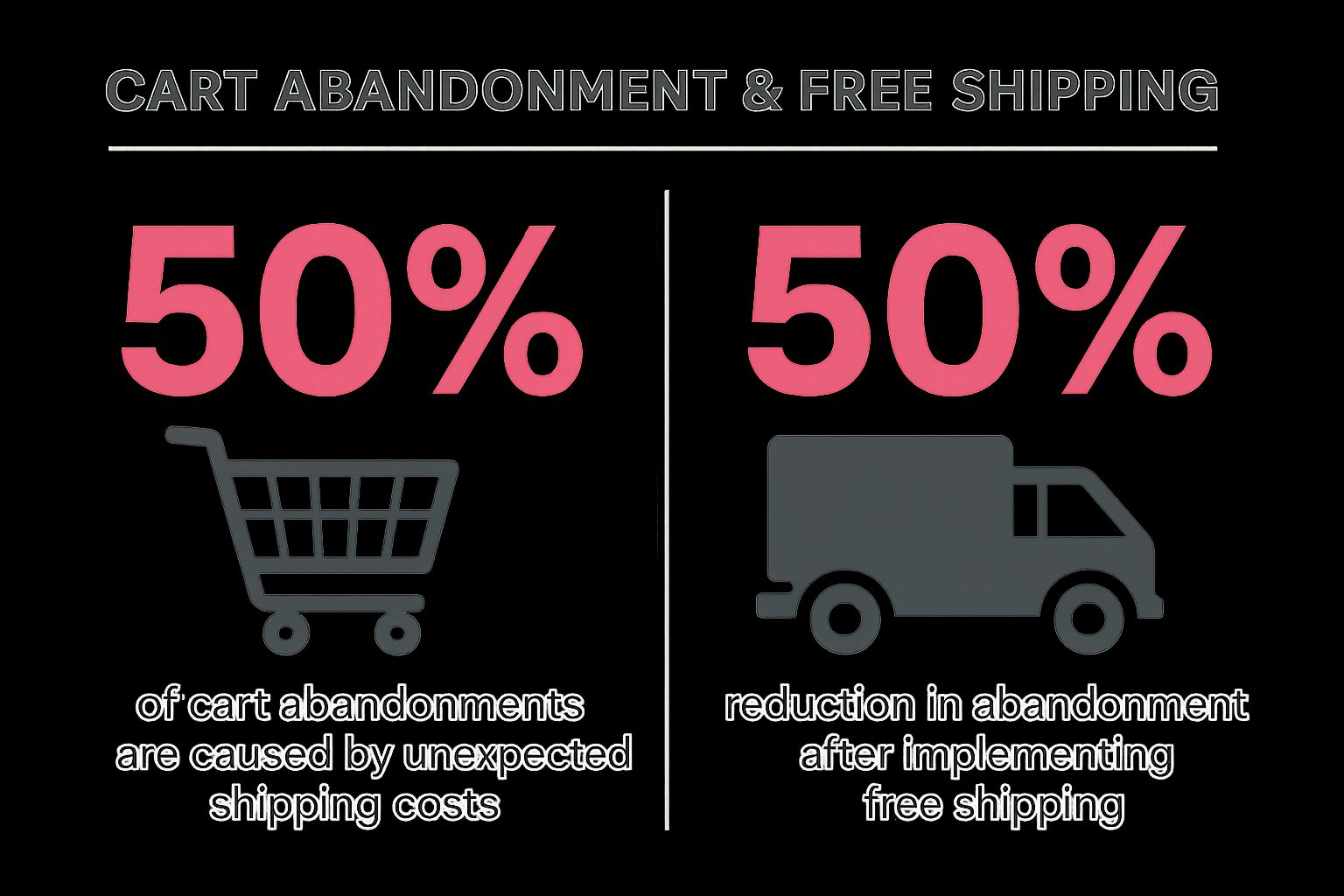
This infographic visually represents key statistics related to the impact of unexpected shipping costs on cart abandonment. As the graphic shows, 61% of customers cite high shipping costs as the primary reason for abandoning their cart. Furthermore, 49% of shoppers abandon carts specifically due to unexpected shipping costs at checkout, reinforcing the importance of transparency throughout the purchase journey. These numbers clearly demonstrate the significant negative impact of unexpected shipping fees on conversion rates. Learn more about Unexpected Shipping Costs
This problem typically occurs at the final stage of checkout, making it easy to identify through checkout funnel analysis. It’s a relatively straightforward issue to address with policy changes, though it requires careful consideration. While shipping costs are a real business expense, absorbing them or offering more competitive rates can significantly improve conversion rates.
The pros of addressing this issue include its easy identification and the relatively straightforward solutions available. However, the cons involve the financial implications for businesses. Changes may require margin adjustments to implement free or discounted shipping, and completely absorbing shipping costs isn’t always feasible.
Examples of successful implementation abound. Amazon’s Prime membership success is largely built around solving the shipping cost problem by offering free and fast shipping. Zappos built their brand partly on free shipping both ways, recognizing the value proposition for customers. Similarly, ASOS witnessed a remarkable 50% reduction in cart abandonment after implementing free shipping and returns. These examples highlight the potential ROI of addressing shipping costs strategically.
So, when and why should you focus on this approach? If your checkout funnel analysis reveals a high drop-off rate at the final stage, unexpected shipping costs are likely a culprit. Prioritizing transparent and competitive shipping options becomes crucial, especially if you’re targeting price-sensitive customers or selling lower-priced items.
Here are some actionable tips for mitigating cart abandonment due to unexpected shipping costs:
- Display shipping costs early in the shopping process: Transparency is key. Show shipping costs on product pages or in the cart summary before checkout.
- Offer free shipping above a certain order threshold: This incentivizes larger purchases and can increase average order value.
- Consider building shipping costs into product prices: While this requires careful calculation, it simplifies the customer experience by presenting a single, all-inclusive price.
- Test flat-rate shipping options: This provides predictability for customers and can simplify your shipping logistics.
- Provide multiple shipping options at different price points: This caters to varying customer needs and budgets, offering flexibility and choice.
2. Mandatory Account Creation
Forcing customers to create an account before they can finalize their purchase is a major contributor to cart abandonment. This practice introduces unnecessary friction into the checkout process, creating a barrier between the shopper and their desired items. First-time customers, in particular, are hesitant to commit to a long-term relationship with a brand they’ve yet to experience. The added steps of creating an account, verifying an email address, and remembering yet another password can be enough to deter a shopper from completing their purchase. Essentially, it adds complexity to a process that should be as streamlined as possible.

This requirement goes beyond simply collecting the necessary information for the transaction. It also introduces concerns about future marketing communications, potentially overwhelming the customer and contributing to a sense of distrust. While gathering customer data is valuable for businesses, demanding it upfront can be counterproductive. This is a significant reason why mandatory account creation earns its place on the list of top reasons for cart abandonment.
Features of Mandatory Account Creation:
- Creates additional steps in the checkout process.
- Requires personal information beyond what’s needed for the transaction.
- Introduces concerns about future marketing communications.
Pros:
- Account creation allows for better customer tracking and personalization.
- Enables easier repeat purchases for returning customers.
- Provides valuable customer data for marketing purposes.
Cons:
- Significantly increases friction in the checkout process.
- Can reduce conversion rates by 23-35% according to various studies.
- Particularly problematic for mobile shoppers, where the checkout process is often already more complex.
Examples of Successful Implementations (of guest checkout):
- ASOS: Saw a significant increase in conversions after implementing a guest checkout option, demonstrating the positive impact of removing this barrier.
- Amazon: Their “Buy Now” one-click purchasing bypasses traditional checkout altogether, minimizing friction and maximizing convenience. While requiring an account, the initial setup and subsequent one-click functionality streamline the process significantly.
- Walmart: Simplified their checkout process with guest options and experienced a noticeable drop in abandonment rates.
Tips for Optimizing Your Checkout:
- Always Offer a Guest Checkout Option: This is the most crucial step in mitigating cart abandonment due to mandatory account creation.
- Place Account Creation After the Purchase is Complete: Allow customers to create an account after they’ve successfully made a purchase. This allows them to enjoy a frictionless experience and then opt-in to the benefits of an account at their leisure.
- Use Social Login Options: Simplify account creation by allowing customers to use their existing social media accounts.
- Clearly Explain the Benefits of Creating an Account: If customers understand the value proposition, such as exclusive discounts or order tracking, they may be more inclined to create an account.
- Allow Customer Information to be Saved During Guest Checkout: This simplifies the process of creating an account later, as the customer won’t need to re-enter their information.
Popularized By:
- Amazon’s one-click purchasing patent (expired in 2017) significantly influenced the e-commerce landscape.
- Shopify’s checkout optimization tools provide merchants with the ability to customize and streamline their checkout processes, including offering guest checkout options.
By addressing the issue of mandatory account creation and implementing the tips outlined above, e-commerce businesses can significantly reduce cart abandonment rates and improve their overall conversion rates. Focusing on a user-friendly and streamlined checkout experience is essential for maximizing sales and fostering positive customer relationships.
3. Complicated Checkout Process
A complicated checkout process is a major contributor to reasons for cart abandonment. It’s the digital equivalent of standing in a long, slow-moving line at the grocery store. When faced with a lengthy, multi-step checkout riddled with numerous form fields, confusing validations, and page after page of information requests, many online shoppers simply give up. Modern consumers expect a streamlined and efficient purchasing experience. Every unnecessary click, field, or page increases the likelihood of frustration and cart abandonment, particularly on mobile devices where typing and navigating forms can be cumbersome. This is a critical area to address for any e-commerce business seeking to optimize its conversion rates and minimize lost sales.
This issue earns its place on the list of reasons for cart abandonment due to its direct impact on the bottom line. Features contributing to a complicated checkout process include: multiple pages or steps to complete the purchase, excessive form fields requesting unnecessary information, unclear progress indicators, poor form validation and unhelpful error messaging, and a lack of autofill support. Imagine asking a customer for their birthday, favorite color, and mother’s maiden name just to buy a t-shirt – it’s simply excessive.
Streamlining the checkout process can yield significant improvements, with some studies showing conversion rate increases of 35% or more. This is a relatively easy issue to identify through usability testing and analytics, providing clear data-driven insights into where friction points lie. Companies like Apple, Shopify, and Amazon have set the gold standard for simplified checkouts. Apple’s integration with Apple Pay, Shopify’s optimized one-page checkout template, and Amazon’s streamlined process with saved payment methods all exemplify best practices in minimizing friction and maximizing conversions.
While streamlining has clear advantages, there can be drawbacks. Redesigning the checkout flow might require significant development resources, and some level of complexity may be unavoidable due to regulatory requirements in certain industries. However, the potential return on investment in terms of reduced cart abandonment and increased sales often outweighs these costs.
Actionable Tips for Optimizing Your Checkout:
- Reduce Form Fields: Only ask for essential information. Do you really need their phone number for a digital download?
- Single-Page or Accordion-Style Checkout: Condense the process into a single, easily navigable page.
- Mobile Optimization: Use appropriate input types (e.g., numeric keypads for phone numbers) to simplify mobile entry.
- Autofill Support: Enable autofill for addresses and payment details to reduce manual input.
- Progress Indicator: For multi-step checkouts, a clear progress indicator reassures customers and manages expectations.
- Real-Time Validation: Implement real-time form validation with clear, helpful error messages to prevent frustration.
The minimalist checkout design popularized by Apple, Amazon’s patented one-click purchasing, and the widespread adoption of PayPal’s express checkout all highlight the importance of a frictionless checkout experience. By implementing these tips, e-commerce businesses can significantly reduce cart abandonment and boost their bottom line. Learn more about Complicated Checkout Process for additional strategies to optimize your website’s checkout process and combat reasons for cart abandonment.
4. Website Errors or Crashes
One of the most frustrating reasons for cart abandonment, both for the customer and the business, is website errors or crashes. This occurs when technical issues interrupt the checkout process, effectively halting a potential sale. Imagine a customer adding items to their cart, navigating to checkout, and then encountering an error message, a page timeout, or even a complete site crash. This not only results in an immediate lost sale but can severely damage trust in your brand. Customers rightfully question the security and reliability of a site that can’t handle their payment information, making them less likely to return. This reason for abandonment is particularly concerning because it signifies a failure at the final hurdle, after the customer has demonstrated clear purchase intent.
Several technical glitches can trigger this issue: payment processing errors, slow page loading speeds or timeouts, form validation failures, server crashes during peak traffic (like Black Friday), and browser compatibility issues can all lead to abrupt exits from the checkout process. Think of the high-profile Black Friday site crashes experienced by major retailers like Walmart, Best Buy, and Macy’s, or the widespread impact of PayPal outages on thousands of e-commerce sites. Even Ticketmaster’s high-profile technical failures during popular concert sales exemplify the devastating consequences of website instability. These incidents not only cost millions in lost revenue but also significantly damage brand reputation.
The good news is that many of these issues are identifiable through error logs and website monitoring tools. This allows for a systematic approach to technical improvements and bug fixes. New Balance’s successful implementation of Cloudflare to handle 30x traffic spikes during peak periods is a prime example of how proactive measures can prevent website crashes and capitalize on high-demand periods.
However, addressing these problems can sometimes require significant technical resources and expertise. The cost of fixing the underlying issues and the potential long-term damage to brand reputation beyond the immediate lost sale can be considerable.
Pros:
- Often identifiable through error logs and monitoring tools
- Can be systematically addressed through technical improvements
Cons:
- May require significant technical resources to identify and fix
- Can damage brand reputation beyond just the lost sale
Tips for Preventing Website Errors and Crashes:
- Implement robust error monitoring and alerting systems: Be notified immediately when errors occur.
- Conduct regular load testing before high-traffic periods: Ensure your site can handle anticipated traffic spikes.
- Have a graceful degradation strategy for peak traffic: Prioritize essential functionality during overload situations.
- Ensure compatibility across all major browsers and devices: Test your website thoroughly on various platforms.
- Implement a recovery strategy to reach out to customers who experienced errors: Offer apologies and incentives to regain their trust.
- Use a reliable payment processor with high uptime guarantees: Minimize payment gateway-related errors.
Learn more about Website Errors or Crashes to understand the impact of technical issues, particularly on mobile devices.
By understanding the impact of website errors and crashes and implementing preventative measures, e-commerce businesses can significantly reduce cart abandonment rates and build stronger customer trust. This directly translates into higher conversion rates, increased revenue, and a more resilient online presence. Addressing this critical aspect of the customer journey is essential for any business striving for success in the competitive e-commerce landscape.
5. Lack of Payment Options
One of the most frustrating reasons for cart abandonment occurs at the very final stage of the purchase process: the checkout. When a customer reaches the checkout, ready to finalize their purchase, only to find their preferred payment method isn’t available, they’re likely to abandon their cart. This seemingly small oversight can have a significant impact on your bottom line, contributing directly to lost sales and revenue. This is a critical factor contributing to reasons for cart abandonment, particularly as customer expectations around payment flexibility continue to evolve.

Different demographics and geographical regions have strong preferences for specific payment methods. Younger shoppers are more likely to favor digital wallets like Apple Pay and Google Pay, along with the flexibility of buy-now-pay-later (BNPL) options like Klarna, Afterpay, and Affirm. International customers often rely on country-specific payment gateways or methods not commonly used in other regions. Limiting payment options creates an unnecessary barrier to purchase completion, essentially turning away customers at the finish line. Features that contribute to this issue include limited credit card acceptance (e.g., only accepting Visa and Mastercard but not Discover or American Express), missing digital wallet options, no BNPL options, and a lack of region-specific payment methods for international customers.
Offering a variety of payment options is crucial for reducing cart abandonment and increasing conversions. Expanding payment methods can lead to a substantial increase in conversion rates, often between 10-30%. Furthermore, implementing popular BNPL solutions can significantly boost average order values, as seen with ASOS, where Klarna’s integration resulted in a 27% increase. Amazon’s success in global markets is partly attributed to its comprehensive support for numerous international payment methods. Similarly, Etsy experienced notable conversion improvements after adding Apple Pay and Google Pay.
While adding more payment options is generally beneficial, there are some trade-offs. Each payment method typically involves transaction fees, which can eat into profit margins. Managing multiple payment systems also introduces complexity to reconciliation and reporting.
Tips for Optimizing Payment Options:
- Research your target market: Understand the preferred payment methods of your customer base. Conduct surveys, analyze website data, and research industry trends to identify the most relevant options.
- Prioritize digital wallets: Digital wallets are rapidly becoming a standard expectation for online shoppers. Prioritize adding Apple Pay, Google Pay, and other popular options.
- Consider BNPL: Buy-now-pay-later options can attract new customers and increase average order value, particularly for higher-priced items.
- Prominent display: Clearly display accepted payment method logos throughout the shopping experience, from product pages to the checkout page. This builds trust and reduces uncertainty.
- Compatibility: Ensure your checkout process is compatible with password managers and autofill functionality to streamline the payment process.
The importance of diverse payment options has been highlighted by companies like PayPal, whose early dominance paved the way for widespread online payment acceptance. Platforms like Shopify, with their extensive payment gateway integrations, further demonstrate the value of offering a wide array of choices. The rise of BNPL services like Klarna, Afterpay, and Affirm has also underscored the demand for flexible payment solutions. By addressing this critical point in the customer journey, e-commerce businesses can significantly reduce reasons for cart abandonment and maximize their revenue potential.
6. Lack of Trust or Security Concerns
Lack of trust is a significant contributor to reasons for cart abandonment. When customers feel uneasy about a website’s security or legitimacy, they’re far less likely to complete their purchase. This hesitancy stems from a fear of having their personal and financial information compromised, a valid concern in an era of increasingly frequent data breaches. This is especially true for smaller or lesser-known brands that haven’t yet established a strong reputation for online security. Essentially, if customers don’t trust you with their credit card details, they won’t buy from you, no matter how appealing your products may be. This is why addressing security concerns deserves a prominent place on any list of reasons for cart abandonment.
Several factors can contribute to this lack of trust. Missing security badges (like Norton Secured or McAfee Secure) or SSL certificates are immediate red flags. A lack of transparent policies regarding privacy and data handling also raises suspicion. Other seemingly minor details, such as unprofessional website design, poor quality product images, missing contact information, or insufficient product details, can also erode customer confidence. These elements create an impression of amateurism or even outright scamming, leading potential customers to abandon their carts and seek more reputable sellers.
Learn more about Lack of Trust or Security Concerns
Building trust, while potentially less technically complex than some other fixes for cart abandonment, is a process that requires ongoing effort. However, the benefits extend beyond simply reducing cart abandonment rates. Increased trust enhances your overall brand perception and fosters long-term customer loyalty.
Pros:
- Building trust signals is often less technically complex than other fixes for cart abandonment.
- Improvements in trust can benefit overall brand perception and customer loyalty.
Cons:
- Establishing trust takes time and consistent effort.
- Implementing robust security measures can require significant technical resources.
Examples of Successful Implementation:
- Airbnb: Introduced verified profiles and identity verification to build trust between hosts and guests.
- Shopify: Implements automatic SSL encryption across all its stores, ensuring a baseline level of security for every merchant.
- Amazon: Offers the A-to-Z Guarantee, protecting customers from potential issues with third-party sellers.
Actionable Tips:
- Display recognizable security badges and SSL certification: This is a fundamental step in assuring customers their data is safe.
- Showcase authentic customer reviews and testimonials: Social proof is a powerful tool for building trust. Platforms like TrustPilot can facilitate this.
- Make contact information easily accessible: This includes a physical address, phone number, and email address. Show real customer service phone numbers, not just email forms.
- Clearly communicate your return and refund policies: Transparent policies demonstrate confidence in your products and build customer confidence.
- Include detailed “About Us” and company information pages: Give potential customers insight into who you are and what your business stands for.
- Implement and advertise secure payment processing: Promote the use of trusted payment gateways like PayPal, which offer buyer protection programs.
By addressing these trust and security concerns, you can significantly reduce cart abandonment rates and cultivate a more positive and profitable relationship with your customers. This is particularly crucial for e-commerce businesses, marketing professionals, and online retailers struggling with high cart abandonment rates. Whether you’re a small to medium-sized e-commerce store, operate across multiple languages, use platforms like Shopify or WooCommerce, prioritize customer retention, aim to optimize marketing spend, or are an agency managing multiple e-commerce clients, focusing on trust and security is paramount for success.
7. Price Comparison and Research
Price comparison and research is a significant contributor to cart abandonment and deserves a prominent place on this list. It represents a stage in the buying process where customers, while demonstrating genuine interest, are not yet ready to commit. Essentially, the online shopping cart becomes a temporary holding place, a research tool, allowing shoppers to compare prices, shipping options, and overall value across multiple websites. Learn more about Price Comparison and Research to delve deeper into the psychology behind this behavior.
This “try-before-you-buy” approach is especially prevalent with high-value items or considered purchases like electronics, appliances, or travel packages. For example, a customer might add a new laptop to their cart on Best Buy, then open another tab to check prices on Amazon and Newegg. This is also common with commodity products where price is the key differentiator. Think about everyday items like batteries or printer paper – a small price difference can sway a customer. This often involves juggling multiple browser tabs or even different devices as shoppers meticulously compare their options.
One of the defining features of this type of cart abandonment is that it can result in delayed rather than permanent abandonment. The customer may return and complete the purchase after their research confirms your offer is the best. This makes understanding and addressing this particular reason for cart abandonment crucial for maximizing conversions.
Pros:
- Represents customers with real purchase intent, offering a strong potential for conversion.
- Provides valuable data on which products customers are actively considering, informing inventory management and marketing strategies.
Cons:
- Can be challenging to distinguish from other forms of cart abandonment without detailed analytics.
- Often requires competitive pricing strategies or compelling value propositions to win the sale.
Successful Implementations:
- Best Buy’s price match guarantee: Directly addresses price comparison by assuring customers they’re getting the best deal.
- Travel sites (Expedia, Booking.com) using urgency tactics: “Only 2 rooms left at this price!” counters the tendency to delay booking while comparing.
- Amazon’s “Available from these sellers” feature: Acknowledges and facilitates comparison shopping within their own platform.
Actionable Tips:
- Implement cart abandonment emails: Remind customers about their items and highlight unique value propositions like free shipping, extended warranties, or exceptional customer service.
- Offer price match guarantees (where feasible): Build trust and reduce the incentive for customers to shop elsewhere.
- Create comparison charts: Showcase your product’s advantages against competitors directly on your website.
- Highlight unique benefits beyond price: Emphasize factors like warranty, service quality, expert advice, or ethical sourcing.
- Implement exit-intent popups: Offer last-minute incentives like a small discount or free gift to encourage immediate purchase.
- Show stock scarcity or limited-time offers: Create a sense of urgency, nudging customers towards a decision.
The rise of price comparison websites like PriceGrabber and Google Shopping, and browser extensions like Honey and Rakuten that automate comparison shopping, underscores the importance of addressing this reason for cart abandonment. By understanding the customer’s research process and proactively addressing their needs, businesses can effectively convert comparison shoppers into loyal customers. This is especially critical for e-commerce businesses, marketing professionals, and online retailers grappling with high cart abandonment rates, including small to medium-sized stores, brands operating across languages, and Shopify/WooCommerce store owners focused on customer retention and optimizing marketing spend. Agencies managing multiple e-commerce clients will also find these insights invaluable.
8. Return Policy Concerns
Return policy concerns are a major contributor to reasons for cart abandonment. Unclear, restrictive, or expensive return policies create significant hesitation during checkout, especially when customers can’t fully evaluate a product’s suitability until after receiving it. If a customer is unsure about the return process or anticipates difficulties or high costs associated with returning an unwanted item, they are far more likely to abandon their cart rather than risk being stuck with something they don’t want. This is especially true for higher-priced items where the financial risk is more substantial. This factor deserves its place on the list because a negative return experience can not only lose a sale but also damage customer trust and future purchase potential.
Why Return Policies Matter:
This concern is particularly prevalent in certain product categories:
- Apparel and Footwear: Fit and comfort are paramount, and trying things on at home is essential.
- High-Value Electronics: Performance and compatibility can only be truly tested after purchase.
- Gifts: Uncertainty about recipient preferences increases the likelihood of returns.
- International Purchases: Added complexity and potential costs of international shipping complicate returns.
- First-Time Customers: Lack of established trust with the brand makes a clear and reassuring return policy even more critical.
Pros of a Customer-Friendly Return Policy:
- Competitive Advantage: Generous return policies can differentiate your brand and attract customers.
- Increased Sales: Reducing the perceived risk encourages customers to complete their purchases.
- Improved Customer Loyalty: Positive return experiences build trust and encourage repeat business.
- Easy Implementation: Clearly communicating your policy on your website is relatively straightforward.
Cons of Liberal Return Policies:
- Increased Operational Costs: Processing returns, restocking inventory, and covering shipping costs can add up.
- Impact on Profit Margins: Higher return rates, particularly in industries like apparel, can significantly affect profitability.
Examples of Successful Implementation:
- Zappos: Built their brand reputation on a 365-day free return policy, showcasing how customer-centric returns can drive success.
- REI: Their satisfaction guarantee fostered trust in online purchases of outdoor gear, demonstrating the power of a strong return policy in a specialized market.
- Warby Parker: The home try-on program directly addresses return concerns for eyewear, illustrating how innovative approaches can minimize purchase hesitation.
Actionable Tips for E-commerce Businesses:
- Clear Communication: Display your return policy prominently before checkout begins. Avoid complex jargon and clearly outline all conditions.
- Free Returns: Consider offering free returns, especially for apparel and footwear, to remove a major barrier to purchase.
- Extended Return Windows: Offer extended return periods during peak shopping seasons like holidays.
- Prepaid Return Labels: Include return shipping labels with orders for a hassle-free return process.
- In-Store Returns: Allow customers to return online purchases in physical stores for added convenience.
- Detailed Product Information: Provide comprehensive size guides, product specifications, and high-quality images to reduce the likelihood of returns due to incorrect choices.
- Highlight Your Policy: If your return policy is customer-friendly, make it a selling point in your marketing materials.
Popularized By:
Zappos, Nordstrom, and Amazon have set industry standards for customer-friendly return processes. Zappos’ customer-centric approach, Nordstrom’s legendary return policy, and Amazon’s streamlined return system using QR codes demonstrate the significant impact of a well-executed return strategy on customer loyalty and brand perception. By learning from these examples, e-commerce businesses can optimize their return policies to minimize cart abandonment and foster positive customer relationships.
8 Key Reasons for Cart Abandonment Comparison
| Reason | 🔄 Implementation Complexity | 🛠 Resource Requirements | 📊 Expected Outcomes | 💡 Ideal Use Cases | ⭐ Key Advantages |
|---|---|---|---|---|---|
| Unexpected Shipping Costs | Low to Medium – policy adjustments needed | Moderate – margin changes or pricing tweaks | High – ~50% cart abandonment due to this | Low-priced items, price-sensitive shoppers | Reduces a major psychological barrier |
| Mandatory Account Creation | Medium – changes to checkout flow required | Medium – account system, social login setups | Medium – 23-35% abandonment reduction possible | First-time shoppers, mobile users | Improves customer tracking and repeat sales |
| Complicated Checkout Process | Medium to High – UX redesign & testing | High – significant development needed | High – up to 35% conversion improvement | Mobile shoppers, multi-step forms | Streamlined experience reduces friction |
| Website Errors or Crashes | High – technical monitoring & fixing | High – IT & infrastructure resources | Critical – 57% abandon if load >3s | High traffic periods, complex payment flows | Improves reliability and customer trust |
| Lack of Payment Options | Low to Medium – adding payment integrations | Moderate – payment gateway management | Medium to High – 10-30% conversion lift | Diverse demographics, international customers | Expands payment flexibility and reach |
| Lack of Trust or Security | Low to Medium – adding badges, content | Moderate – design & security implementations | Medium – 18% abandon due to trust issues | New or lesser-known brands | Builds credibility and increases conversions |
| Price Comparison and Research | Medium – requires marketing & UX tactics | Moderate – pricing, content creation | Medium – 67% shoppers compare prices | High-value or commodity products | Captures interested, comparison shoppers |
| Return Policy Concerns | Low to Medium – policy and communication | Moderate – logistics and customer service | Medium – 15% abandon if policy unsatisfactory | Apparel, footwear, high-value or gift items | Competitive advantage through policy clarity |
Turn Abandoned Carts into Conversions with CartBoss
Understanding the key reasons for cart abandonment—from unexpected shipping costs and mandatory account creation to security concerns and limited payment options—is crucial for any e-commerce business striving for growth. By addressing these pain points, you can significantly improve the customer experience, reduce friction in the checkout process, and ultimately boost your bottom line. Remember, every abandoned cart represents a potential sale, and by implementing the strategies discussed above, you’re taking proactive steps to recapture those lost opportunities. For businesses looking to build more predictable revenue streams and potentially minimize cart abandonment caused by price sensitivity, adopting an ecommerce subscription model can be a powerful strategy. This comprehensive guide, “Ultimate Guide to Ecommerce Subscription Model: Expert Strategies for Predictable Growth” from Sharpei, provides valuable insights into setting up and scaling a successful subscription service.
Mastering these concepts isn’t just about improving conversion rates; it’s about building stronger customer relationships, fostering trust, and creating a more positive brand experience. This translates to increased customer lifetime value and sustainable growth for your business. Don’t let potential revenue slip away. Recapture lost sales and transform abandoned carts into conversions with the power of targeted SMS reminders and personalized offers. Ready to win back lost customers and boost your revenue? Explore how CartBoss can help you automate cart recovery and address the common reasons for cart abandonment with its powerful SMS marketing platform.