


In the competitive world of online retail, acquiring a new customer can cost five times more than retaining an existing one. This stark reality places a premium on building lasting relationships. While many brands pour their budgets into attracting new traffic, the most successful ones understand a powerful secret: sustainable growth is built on loyalty. For a broader look at the foundational principles, you can refer to a comprehensive guide to customer retention, which covers overarching tactics.
This article, however, moves beyond general advice to provide a deep dive into 9 actionable ecommerce customer retention strategies that not only keep your customers coming back but also turn them into vocal brand advocates. We will explore a curated set of proven methods, from hyper-personalized email marketing and seamless post-purchase experiences to innovative subscription models and effective community building on social media.
You will leave with practical tools and specific, implementation-ready insights needed to fortify your customer base. Our focus is on helping you drive long-term profitability by transforming one-time buyers into lifelong fans. Let’s explore the strategies that create genuine customer loyalty and secure your brand’s future.
1. Personalized Email Marketing
Personalized email marketing is one of the most powerful ecommerce customer retention strategies available today. This approach leverages customer data, such as purchase history, browsing behavior, and stated preferences, to deliver highly relevant content. Instead of sending generic, one-size-fits-all broadcasts, you create individualized experiences that make each customer feel seen and valued, significantly boosting loyalty.

This strategy moves beyond simply using a customer’s first name. True personalization is about providing tangible value. For example, Amazon’s product recommendations are based on items you’ve recently viewed or purchased. Similarly, Sephora sends tailored skincare suggestions based on a customer’s previously identified skin type, demonstrating a deep understanding of their individual needs.
How to Implement Personalized Email Marketing
To effectively use this retention tactic, focus on segmentation and automation. Start by grouping your audience based on simple criteria before moving to more complex behavioral triggers.
- Segment Your Audience: Group customers by purchase history (e.g., first-time buyers, VIPs), browsing behavior (e.g., viewed specific categories), or engagement level.
- Automate Triggered Emails: Set up automated campaigns for key actions. A post-purchase follow-up email that recommends complementary products is a classic, effective example.
- Use Dynamic Content: Implement dynamic content blocks in your emails that change based on the recipient’s data. For instance, you could show different product banners to customers in different locations or with different interests.
- Gather Data Progressively: Use progressive profiling forms to slowly build customer profiles over time without overwhelming them with a long initial sign-up form.
By sending the right message at the right time, you transform your email list from a simple communication channel into a robust retention tool. To dive deeper into execution, explore these email marketing best practices on cartboss.io for maximizing engagement.
2. Loyalty and Rewards Programs
Implementing a loyalty or rewards program is a cornerstone of modern ecommerce customer retention strategies. These structured initiatives incentivize repeat purchases by offering tangible benefits like points, discounts, or exclusive perks. By rewarding customers for their continued patronage, you create a powerful psychological investment in your brand, making them less likely to switch to a competitor.

This strategy builds a mutually beneficial relationship. For example, Sephora’s Beauty Insider program offers tiered rewards, from birthday gifts to exclusive events, making customers feel like valued members of an elite club. Similarly, Starbucks Rewards uses a mobile-first approach to seamlessly integrate points collection and personalized offers, turning routine coffee runs into an engaging experience that fosters long-term loyalty.
How to Implement a Loyalty and Rewards Program
A successful program is simple for customers to understand and provides genuine value. Focus on creating an experience that feels rewarding, not transactional.
- Make It Simple: Ensure the program is easy to join and the rules for earning rewards are crystal clear. A complicated points system can deter participation.
- Offer Meaningful Rewards: Provide perks that your customers actually want. This could range from discounts and free products to exclusive access or experiential rewards.
- Personalize the Experience: Use customer data to tailor offers and communications within the program. A personalized reward feels more special and demonstrates that you understand your customer’s preferences.
- Integrate Across All Channels: Your loyalty program should be visible and accessible across your website, mobile app, email communications, and social media for a consistent brand experience.
By creating a system that consistently gives back, you build a loyal community around your brand. To get started, explore these detailed steps on how to create a customer loyalty program on cartboss.io and design a system that keeps customers coming back.
3. Exceptional Customer Service
Exceptional customer service is a cornerstone of effective ecommerce customer retention strategies. It transforms routine support interactions into memorable, positive experiences that build lasting emotional connections. This approach isn’t just about solving problems; it’s about demonstrating genuine care and exceeding expectations, making customers feel valued far beyond their initial transaction.

This philosophy is powerfully demonstrated by brands known for their service-first culture. For example, Chewy builds incredible loyalty by sending handwritten cards, pet portraits, and even condolence flowers to customers. Similarly, Zappos became legendary for its 365-day return policy and empowering support agents to do whatever it takes to “wow” a customer, proving that superior service is a powerful competitive advantage.
How to Implement Exceptional Customer Service
Building a culture of exceptional service requires a strategic investment in your people, processes, and technology. The goal is to make every customer touchpoint feel helpful, responsive, and personal.
- Empower Your Team: Train support staff extensively and give them the autonomy to resolve issues without rigid scripts or escalations. Empowered agents can make decisions that create happy, loyal customers.
- Implement Feedback Loops: Actively collect customer feedback through surveys and reviews, and more importantly, act on the insights you gather. Use this data to continually refine your service standards.
- Utilize a CRM System: Use a Customer Relationship Management (CRM) tool to track customer history, preferences, and past interactions. This allows your team to provide context-aware, personalized support.
- Respond with Urgency: Address all feedback, especially negative comments, quickly and empathetically. A swift and effective resolution can often turn a dissatisfied customer into a vocal brand advocate.
By making service a core part of your brand identity, you create a powerful reason for customers to return. Learn more about cultivating this mindset by exploring Amazon’s customer obsession leadership principle.
4. Post-Purchase Experience Optimization
Optimizing the post-purchase experience is a critical ecommerce customer retention strategy that focuses on the customer’s journey after they click “buy.” This approach encompasses everything from order confirmation and shipping to the unboxing and initial product use. By transforming these often-overlooked touchpoints into delightful moments, you reinforce the customer’s purchase decision and build a strong foundation for a long-term relationship.
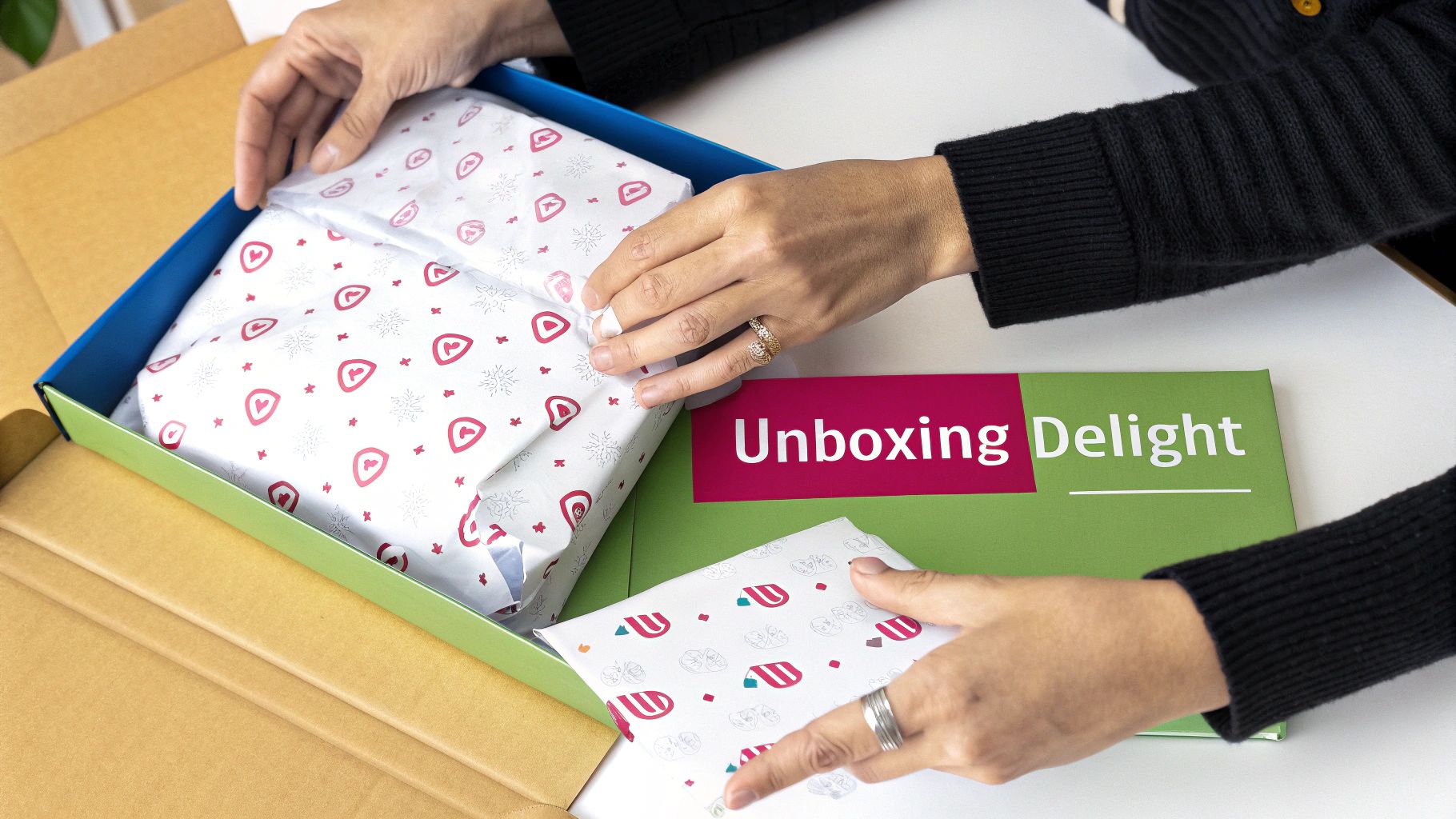
This strategy recognizes that the sale is the beginning, not the end, of the customer experience. For instance, Apple’s minimalist and premium unboxing experience makes customers feel they’ve invested in quality. Similarly, Glossier turns packaging into a marketing tool with its signature pink bubble wrap and stickers, encouraging social sharing and creating brand advocates. These thoughtful details make a lasting impression and significantly boost loyalty.
How to Implement Post-Purchase Experience Optimization
To excel at this, map out the entire journey and identify opportunities to add value and delight. Your goal is to make the wait for the product as exciting as the purchase itself.
- Invest in Branded Packaging: Use high-quality packaging that reflects your brand’s values. This is your first physical touchpoint with the customer, so make it count.
- Send Proactive Shipping Updates: Keep customers informed with timely, branded notifications about their order status. Don’t rely solely on the carrier; own the communication.
- Include Surprise Elements: A small, unexpected gift, a handwritten thank-you note, or exclusive stickers can transform a standard delivery into a memorable event.
- Provide Educational Follow-Ups: Send emails or include guides on how to get the most out of the purchased product, demonstrating that you care about their success.
A seamless journey from checkout to delivery sets the stage for repeat business. To ensure this entire flow is smooth, discover how to refine your final transactional steps on cartboss.io and connect it to your post-purchase strategy.
5. Subscription and Membership Models
Shifting from one-off purchases to a recurring revenue model is one of the most effective ecommerce customer retention strategies for building long-term loyalty. Subscription and membership programs create an ongoing relationship by offering convenience, value, and exclusivity. Instead of hoping a customer returns, you secure their future business, creating predictable revenue and regular brand touchpoints.
These models excel by integrating your products directly into a customer’s lifestyle. For instance, Chewy’s Autoship program for pet supplies ensures customers never run out of essentials, building deep-seated loyalty through sheer convenience. Similarly, Dollar Shave Club disrupted the grooming industry by delivering razors on a schedule, transforming a mundane purchase into a reliable service.
How to Implement Subscription and Membership Models
To launch a successful program, your focus must be on delivering consistent, undeniable value that justifies the recurring charge. Transparency and flexibility are key to earning and keeping customer trust.
- Offer Tangible, Ongoing Value: Ensure each delivery or membership period provides clear benefits, whether it’s cost savings, exclusive access to products, or curated experiences.
- Make Management Effortless: Provide a user-friendly customer portal where subscribers can easily pause, skip, or cancel their service. A difficult cancellation process breeds resentment, not retention.
- Personalize the Experience: Use purchase data to recommend new products to add to a subscription or to offer customized bundles.
- Provide Flexible Tiers: Cater to different needs and budgets by offering various subscription frequencies or membership levels (e.g., basic vs. premium tiers with different perks).
By embedding your brand into a customer’s routine, you transition from being just another online store to an indispensable partner, making this one of the most powerful ecommerce customer retention strategies available.
6. Retargeting and Remarketing Campaigns
Retargeting and remarketing are powerful digital advertising strategies designed to re-engage customers who have previously interacted with your brand. These campaigns use tracking technologies like pixels and cookies to display targeted ads to past visitors across other websites and social media platforms, making them an essential tool among ecommerce customer retention strategies for bringing back shoppers who didn’t convert or haven’t visited in a while.
This approach keeps your brand top-of-mind, gently nudging customers back towards a purchase. For example, Facebook’s dynamic product ads can show a user the exact product they left in their cart, while Google Shopping remarketing campaigns display your products to past visitors as they search on Google. These reminders are highly effective because they target an audience already familiar with your brand.
How to Implement Retargeting and Remarketing Campaigns
Successful retargeting requires careful audience segmentation and compelling creative to be persuasive without being intrusive. Start with your most valuable audiences, like cart abandoners, and expand from there.
- Segment Your Audience: Create distinct audience lists based on behavior. Separate users who viewed a product, added an item to their cart, or are lapsed customers who haven’t purchased in 90 days.
- Use Compelling Creative: Your ads should offer a clear value proposition. Consider including a special offer, like free shipping or a 10% discount, to incentivize a return visit.
- Set Frequency Caps: Avoid ad fatigue by limiting how many times a single user sees your ad within a specific period. Overexposure can annoy customers rather than attract them.
- Exclude Recent Purchasers: To prevent wasting ad spend and irritating satisfied customers, make sure to exclude anyone who has recently completed a purchase from your campaigns.
Platforms like AdRoll and Criteo offer sophisticated tools to manage these campaigns across multiple channels. To learn more about building high-converting ad creatives, check out these tips on creating effective Facebook ads on adespresso.com.
7. Customer Feedback and Review Management
A systematic approach to collecting, managing, and acting on customer feedback is one of the most transparent ecommerce customer retention strategies. This involves actively seeking out reviews, surveys, and direct communication to understand the customer experience. By using these insights to improve your products and services, you demonstrate that you value customer opinions, which builds immense trust and loyalty.
This strategy goes beyond simply having a review section on your product pages. It’s about creating a closed-loop system where feedback directly informs business improvements. For example, Airbnb’s two-way review system holds both hosts and guests accountable, creating a trusted community. Similarly, Amazon’s verified purchase reviews give shoppers confidence, while providing sellers with invaluable data to refine their offerings and address product flaws.
How to Implement Customer Feedback and Review Management
To effectively leverage feedback for retention, you must make the process seamless for customers and create a clear workflow for your team to act on the insights gathered.
- Make Leaving Feedback Easy: Use post-purchase emails, simple on-site widgets, or SMS prompts to ask for reviews. The fewer clicks required, the higher the submission rate.
- Respond to All Reviews: Acknowledge both positive and negative feedback publicly. Thank happy customers and offer solutions to unhappy ones. This shows you are engaged and care about every customer’s experience.
- Identify Systemic Issues: Analyze feedback for recurring themes. If multiple customers mention slow shipping or a confusing checkout step, you’ve identified a critical area for improvement that can prevent future churn.
- Highlight Positive Reviews: Showcase your best reviews in marketing materials, on social media, and on your homepage. This social proof reassures potential buyers and reinforces the positive choice existing customers made.
By treating customer feedback as a strategic asset, you turn your audience into a collaborative partner in building a better brand. To create a robust process for this, explore these insights on building a customer feedback management system on cartboss.io for your business.
8. Content Marketing and Education
Content marketing and education is an ecommerce customer retention strategy focused on providing value beyond the transaction. Instead of solely promoting products, this approach builds authority and trust by offering useful, relevant content like tutorials, industry insights, and how-to guides. This keeps your brand top-of-mind and positions you as a helpful resource, fostering loyalty that extends well beyond a single purchase.
This strategy nurtures the customer relationship by solving their problems and addressing their interests. For example, Home Depot creates extensive DIY project guides and videos that empower homeowners, making them a go-to resource for supplies. Similarly, Patagonia’s content on environmentalism and outdoor education resonates with its audience’s values, creating a powerful, purpose-driven community that remains loyal between purchases.
How to Implement Content Marketing and Education
To effectively use content for retention, shift your focus from selling to helping. Your goal is to become an indispensable part of your customer’s journey in your niche, providing them with knowledge and inspiration.
- Solve Customer Problems: Use customer service inquiries, reviews, and social media comments as inspiration. If customers frequently ask how to use a product, create a detailed video tutorial.
- Create a Content Hub: Build a blog or resource center on your website to house your educational materials. This centralizes value and improves your site’s SEO. When publishing, you can also learn about strategies for instant indexing to ensure your new content is quickly discoverable by search engines.
- Repurpose Across Channels: Turn a comprehensive blog post into a video, an infographic, a podcast episode, and a series of social media tips. This maximizes your reach and caters to different content consumption preferences.
- Showcase Expertise: Collaborate with industry experts or feature user-generated content that demonstrates your product in real-world scenarios, adding credibility and authenticity.
By consistently delivering valuable information, you build a relationship based on trust and expertise, making customers more likely to return when they are ready to buy again.
9. Social Media Community Building
Building a community on social media is a powerful ecommerce customer retention strategy that transforms your brand from a simple retailer into a central hub for like-minded individuals. This approach focuses on creating dedicated spaces where customers can connect, share experiences, and engage directly with your brand and each other. By fostering these connections, you cultivate a sense of belonging and turn passive followers into loyal brand advocates.
This strategy goes beyond just posting promotional content. It’s about facilitating genuine conversations and shared passions. For example, Lululemon has cultivated a massive community around yoga and fitness, using social media to share user-generated content, host events, and inspire its audience. Similarly, Peloton’s integrated social features and dedicated fan groups create an environment where members cheer each other on, strengthening their bond with the brand.
How to Implement Social Media Community Building
To build an engaged community, your focus must shift from selling to facilitating connection. Start by identifying the platforms where your customers are most active and create content that encourages participation.
- Choose Your Platforms Wisely: Don’t spread yourself too thin. Focus your efforts on one or two platforms where your target audience congregates, whether it’s Instagram, Facebook Groups, TikTok, or a dedicated forum.
- Encourage User-Generated Content (UGC): Actively ask customers to share photos and videos using your products. Create branded hashtags and feature the best UGC on your official page to make customers feel recognized.
- Engage Authentically: Respond to comments, messages, and mentions quickly and with a human touch. Ask questions, run polls, and start conversations that are not directly related to sales.
- Partner with Micro-Influencers: Collaborate with smaller, niche influencers who genuinely love your brand. Their authentic endorsement can help build trust and attract new, engaged members to your community.
To truly build a lasting relationship and encourage repeat business through social media, explore various effective community engagement strategies that foster loyalty and active participation. For more in-depth guidance, you can explore these proven social media community building strategies from CartBoss.
Customer Retention Strategies Comparison
| Strategy | Implementation Complexity 🔄 | Resource Requirements ⚡ | Expected Outcomes 📊 | Ideal Use Cases 💡 | Key Advantages ⭐ |
|---|---|---|---|---|---|
| Personalized Email Marketing | Moderate to High (complex setup, ongoing optimization) | Medium (data management, automation tools) | Higher engagement, improved customer lifetime value | Customer retention, targeted promotions | High ROI, scalable automation, stronger relationships |
| Loyalty and Rewards Programs | Moderate (program design, management) | Medium to High (rewards cost, system maintenance) | Increased repeat purchases, customer retention | Brands seeking long-term loyalty and repeat business | Builds emotional connection, generates referrals |
| Exceptional Customer Service | High (staff training, multi-channel support) | High (staffing, technology investment) | Strong emotional bonds, reduced churn | Customer-centric brands aiming to differentiate | Positive word-of-mouth, competitive differentiation |
| Post-Purchase Experience Optimization | Moderate (cross-department coordination) | Medium (packaging, communication tools) | Increased satisfaction, upselling opportunities | E-commerce, high involvement products | Enhances brand perception, encourages repeat sales |
| Subscription and Membership Models | Moderate to High (billing, curation) | Medium (platforms, content/product delivery) | Predictable revenue, higher lifetime value | Recurring revenue models, convenience-focused offers | Regular engagement, customer stickiness |
| Retargeting and Remarketing Campaigns | High (technical setup, optimization) | Medium (ad spend, creative production) | Higher conversion rates, abandoned cart recovery | Brands with online traffic wanting conversion boost | Cost-effective re-engagement, measurable ROI |
| Customer Feedback and Review Management | Moderate (monitoring, response systems) | Medium (tools, staff for moderation) | Improved products, increased trust and loyalty | Brands focused on transparency and continuous improvement | Builds credibility, drives SEO benefits |
| Content Marketing and Education | High (content creation, consistency) | High (time, expertise, production) | Brand authority, sustained customer engagement | Brands aiming for thought leadership and inbound marketing | Enhances trust, improves SEO, shareable content |
| Social Media Community Building | High (continuous engagement, moderation) | Medium to High (content, community management) | Authentic advocacy, emotional brand connection | Brands focusing on lifestyle, engagement, advocacy | Cost-effective organic reach, real-time feedback |
Turning Retention Strategies into Revenue
The journey through these ecommerce customer retention strategies reveals a powerful, unifying truth: sustainable growth is not built on a constant, frantic search for new customers. Instead, it is carefully cultivated by nurturing the relationships you already have. We’ve explored a comprehensive toolkit, moving far beyond generic advice to provide actionable frameworks for building a loyal customer base that actively contributes to your bottom line.
From the hyper-personalized touchpoints of targeted email marketing to the community-driven engagement on social media, each strategy serves as a vital thread in a larger tapestry. The goal is no longer to simply complete a transaction but to initiate a lasting, mutually beneficial relationship. This is the fundamental shift from a transactional mindset to a relational one.
Synthesizing Your Retention Game Plan
The most successful brands don’t just pick one strategy; they weave them together into a cohesive customer experience. Think about the powerful synergy at play:
- An exceptional customer service interaction can be the perfect moment to invite a happy customer to your loyalty program.
- Valuable content marketing, like a how-to guide, can be promoted through your personalized email sequences to bring customers back to your site.
- A seamless post-purchase experience can be the catalyst that encourages a customer to leave a positive review, which then fuels your customer feedback management efforts and provides social proof.
The key takeaway is that these are not isolated tactics but interconnected systems. When your retargeting campaigns, subscription models, and community-building efforts all speak the same brand language and work in concert, you create an environment where customers want to stay.
Your Actionable Next Steps
Mastering ecommerce customer retention strategies is an iterative process, not an overnight transformation. The most critical step is to begin. Don’t feel pressured to implement everything at once. Instead, identify the area with the most significant potential impact for your specific business.
- Conduct a Retention Audit: Where are you losing customers? Analyze your churn rate, repeat purchase rate, and customer lifetime value. Use this data to pinpoint your biggest opportunity.
- Choose Your Starting Point: Select one or two strategies from this guide that directly address your biggest weakness. If your post-purchase communication is weak, start there. If you have no formal feedback loop, implement a review management system.
- Set Clear, Measurable Goals: Define what success looks like. Is it a 10% increase in repeat purchases in the next quarter? Or achieving a customer satisfaction score of 95%?
- Measure, Analyze, and Iterate: Continuously track your key performance indicators. Use the insights to refine your approach, test new ideas, and double down on what works.
By consistently applying and refining these principles, you transform one-time buyers into repeat customers, and repeat customers into passionate brand advocates. This is how you turn retention strategies into predictable, scalable revenue and build an ecommerce brand that stands the test of time.
Ready to supercharge your post-purchase and cart recovery efforts with a tool designed for instant results? CartBoss helps you implement powerful retention strategies using the channels your customers actually use, like SMS and WhatsApp. Recover abandoned carts and engage customers more effectively by visiting CartBoss to see how simple and profitable retention can be.