


At its core, the difference between a single opt-in and a double opt-in comes down to one step versus two.
A single opt-in adds a person to your list the moment they hit “subscribe.” A double opt-in, on the other hand, makes them click a confirmation link in a follow-up message before they’re officially on board.
Think of it like this: single opt-in is like someone giving you their phone number. Double opt-in is getting their number, then sending a quick text saying, “Hey, is this you?” and waiting for a “Yep!” before you add them to your contacts.
Building Your Subscriber List The Right Way

Choosing your opt-in method is a foundational decision for your email and SMS marketing. It’s not just a technical detail; it shapes the quality of your list, your reputation with carriers and email providers, and ultimately, how well your campaigns perform.
Let’s walk through what your new subscribers actually experience with each approach.
The Single Opt In Journey
The single opt-in process is all about speed. It’s a straight shot from your sign-up form to your marketing list, designed to grow your audience as fast as possible.
As soon as someone enters their details and clicks submit, they’re in. No extra steps, no waiting. They can start getting your messages right away. While this is great for rapid list growth, it opens the door to fake email addresses, typos, and people who aren’t genuinely interested.
The Double Opt In Journey
Double opt-in, in contrast, adds a simple but powerful verification step. When someone signs up, they aren’t immediately added to your active list. First, they get an automated email or text message asking them to confirm they really want to hear from you, usually by clicking a link.
Only after they click that confirmation link are they officially subscribed. This simple action confirms the contact info is legit and proves the owner is genuinely engaged. You can learn more about how to nail this first message in our guide to crafting effective opt-in messaging.
This extra step acts as a powerful quality filter. It weeds out bots, misspelled addresses, and uninterested individuals, leaving you with a list of highly engaged contacts who have explicitly consented to your communications.
This difference in the sign-up journey is everything. It sets the stage for your legal compliance, your deliverability, and the long-term health of your entire marketing program.
Single Opt In vs Double Opt In At a Glance
To make it even clearer, here’s a quick breakdown of how the two methods stack up side-by-side from the user’s perspective.
| Feature | Single Opt In | Double Opt In |
|---|---|---|
| Initial Sign-up | User fills out the form and clicks “Subscribe.” | User fills out the form and clicks “Subscribe.” |
| Confirmation | None. They are added to the list instantly. | User receives a confirmation email or text. |
| Final Step | Starts receiving marketing messages immediately. | User must click the confirmation link to be added to the list. |
| User Effort | Minimal – just one step. | Low – two simple steps. |
| Result | A fast-growing list with potentially lower quality. | A slower-growing list with highly engaged, verified subscribers. |
As you can see, the double opt-in adds a small amount of friction, but it pays off by ensuring every single person on your list really wants to be there.
Weighing the Pros and Cons for Your Business
Deciding between single and double opt-in isn’t just a technical choice—it’s a core business decision that shapes how you connect with your audience. It really boils down to a classic trade-off: do you want fast list growth, or do you want a high-quality, engaged list? Each approach has its own perks and pitfalls you need to consider carefully.
The Case for Single Opt-in
The main draw of single opt-in is how smooth it is for the user. No extra confirmation step means it’s incredibly easy to subscribe, which usually leads to much faster list growth. If you’re a new business trying to build an audience from scratch or running a campaign where you need sign-ups now, this can be very tempting.
But that speed comes with some serious baggage. Without that verification step, your list can get messy—fast. You’ll see more typos, fake email addresses from bots, and people who signed up on a whim but weren’t truly interested. This low-quality data leads to higher bounce rates and spam complaints, which can absolutely tank your sender reputation over time.
The Power of Double Opt-in
Double opt-in is the long game. It’s how you build a healthy, profitable marketing channel that lasts. By asking users to confirm their subscription, you’re getting a list of people who have raised their hand to say “yes, I want to hear from you” not once, but twice. This builds a solid foundation of consent and ensures higher engagement right from the start.
A verified, double opt-in list is more than just a bunch of contacts; it’s a genuine asset. These are your most dedicated followers—the ones who are actually going to open your messages, click your links, and become loyal customers.
The downside? Your list will grow more slowly. Some people just won’t bother with that second confirmation step. But the trade-off is huge. A smaller, super-engaged list will almost always crush a massive, unverified one in performance. Why? Because every single person on it has proven they want to be there. This choice also intersects with whether you’re using email or SMS, since consent and deliverability are king for both. We dive deeper into that comparison in our guide on email marketing versus SMS marketing strategies.
Quality Over Quantity: The Data-Backed Reality
The benefits of building a high-quality list aren’t just theory. A clean list of verified subscribers directly leads to better marketing results, from higher open rates to better deliverability. Studies consistently show that lists built with double opt-in get better engagement because they filter out all the noise—the accidental sign-ups and the uninterested browsers. If you want to see the numbers for yourself, Campaign Monitor’s definitive guide has some great insights on this.
At the end of the day, it comes down to your goals. If you’re focused on building a sustainable, high-performing communication channel that respects your audience and protects your brand, double opt-in is the clear winner for long-term success.
Navigating Global Compliance and Consent
Let’s be honest, navigating data privacy laws can feel like a minefield. But compliance isn’t just about ticking a legal box; it’s the very foundation of trust you build with your customers. It all boils down to respecting their choices and being transparent.
Regulations like the General Data Protection Regulation (GDPR) in Europe and the Telephone Consumer Protection Act (TCPA) in the US have set the ground rules. While they have their differences, they both hammer home one key point: consent must be clear, provable, and freely given.
This is where the difference between a single and double opt in becomes a massive deal—not just for managing risk, but for building a list of customers who actually want to hear from you.
Proving Consent Under GDPR
The GDPR demands “unambiguous” consent. This means a customer has to take a clear, deliberate action to subscribe. A simple checkbox can technically meet this bare-minimum standard, but it’s a shaky foundation to build on. How do you prove that consent years down the road?
This is exactly why double opt in is the undisputed gold standard for GDPR. It creates a bulletproof digital paper trail. You get a timestamped record proving that a specific email address didn’t just get signed up—its owner actively confirmed they wanted your marketing messages.
By requiring a second action, double opt-in provides verifiable proof that the owner of the email address consented. This isn’t just a best practice; it’s a powerful defense against potential complaints.
To make sure you’ve covered all your bases with European regulations, it’s worth running through a comprehensive GDPR compliance checklist.
Meeting the Bar for SMS and the TCPA
When it comes to SMS marketing in the United States, the stakes are even higher. The TCPA requires “express written consent” for automated marketing texts, and the penalties for getting it wrong are steep. Relying on a single opt-in, where a phone number could be entered by mistake (or maliciously), is like walking a tightrope without a net.
The double opt in process is the cleanest, most direct way to meet this strict standard for SMS. It’s simple:
- Initial Sign-up: A customer types their phone number into your form.
- Confirmation Text: They instantly get a text asking them to reply “YES” to confirm they want to subscribe.
- Verifiable Consent: Their “YES” reply is logged, creating a rock-solid record of their express written consent.
This two-step handshake ensures you’re only texting people who have clearly said, “Yes, I want to hear from you.” It protects your business from expensive legal headaches and makes sure your SMS list is clean and engaged from the get-go. We take a deeper dive into these specifics in our guide on ensuring GDPR compliance in e-commerce SMS marketing.
How Your Opt-In Choice Impacts Deliverability
The choice between a single and double opt-in isn’t just a small detail—it’s one of the biggest factors determining whether your messages hit the inbox or disappear into a spam folder. Think of Internet Service Providers (ISPs) and mobile carriers as the gatekeepers of your customers’ phones. They’re always watching, evaluating your sender reputation to decide if you’re a trustworthy source.
Every single campaign you send out creates ripples. A list built with single opt-in is often full of typos, dead numbers, and even spam traps set up to catch shady senders. This leads directly to high bounce rates and spam complaints, which are massive red flags for those gatekeepers. These negative signals tell them your sending practices are risky, which hurts your ability to reach even your most loyal, engaged subscribers.
Protecting Your Sender Score
Your sender score is basically a credit score for your marketing program. A clean, verified list from a double opt-in process sends powerful, positive signals that boost this score and keep you in good standing.
When a subscriber takes that extra step to confirm their interest, they’re showing you they actually want to hear from you. This creates a fantastic positive feedback loop:
- Lower Bounce Rates: Verified numbers mean way fewer hard bounces.
- Fewer Spam Complaints: People who willingly confirm they want your texts rarely mark them as spam.
- Higher Engagement: More opens and clicks tell ISPs that your content is valuable and welcome.
This positive engagement is absolutely crucial for maintaining high deliverability. For a deeper dive, check out our guide on SMS marketing best practices for launching successful campaigns.
A high sender score is your passport to the inbox. Double opt-in is the most reliable way to secure it, proving your list is made of willing and engaged participants.
This isn’t a new trend; double opt-in has long been a best practice for marketers who care about quality over quantity. A MarketingSherpa report way back in 2012 found that 39% of marketers used double opt-in, a number that has proven its staying power. It’s especially vital when you’re collecting contacts from places like in-store sign-ups or affiliate sites where the risk of getting bad data is much higher.
As detailed in an insightful piece on the enduring value of double opt-in on e-focusmarketing.com, this method transforms your subscriber list from a potential liability into your greatest marketing asset, ensuring your messages are actually seen.
When to Use Each Opt In Strategy
Deciding between single or double opt-in isn’t about finding one right answer for everything. It’s about picking the right tool for the right job. But let’s cut to the chase: for most businesses, the decision is pretty straightforward.
Double opt-in should be your default setting. Think of it as the gold standard.
This two-step verification is your best bet for your most valuable channels, like your company newsletter, lead magnet delivery, and ongoing promotional campaigns. By having every subscriber confirm their interest, you build a high-quality list from day one, protect your all-important sender reputation, and create a clear record of consent.
To get the most out of this, you’ll want to weave your opt-in process into an effective email marketing automation strategy that nurtures these high-intent subscribers from the very beginning.
When Double Opt In Is Non-Negotiable
Some situations absolutely demand the security and proof that only a double opt-in can provide. In these cases, it’s not an optional feature—it’s a required safety measure.
You should always use this method for:
- Core Email Lists: Your main newsletter or marketing list is a long-term asset. Using double opt-in keeps it healthy, engaged, and valuable.
- SMS Marketing: This is a big one. With strict rules like the TCPA, verifiable consent is mandatory. A double opt-in (like a simple “Reply Y to subscribe” text) is the safest, clearest way to get express written consent and steer clear of massive fines.
- Compliance-Heavy Regions: If you do business in areas covered by strict privacy laws like GDPR in Europe, this method gives you the strongest possible proof of unambiguous consent.
The extra confirmation step is your best defense against compliance headaches and deliverability disasters. It proves that every single person on your list actively wants to be there.
This flowchart below perfectly shows how your opt-in choice directly impacts your sender reputation.
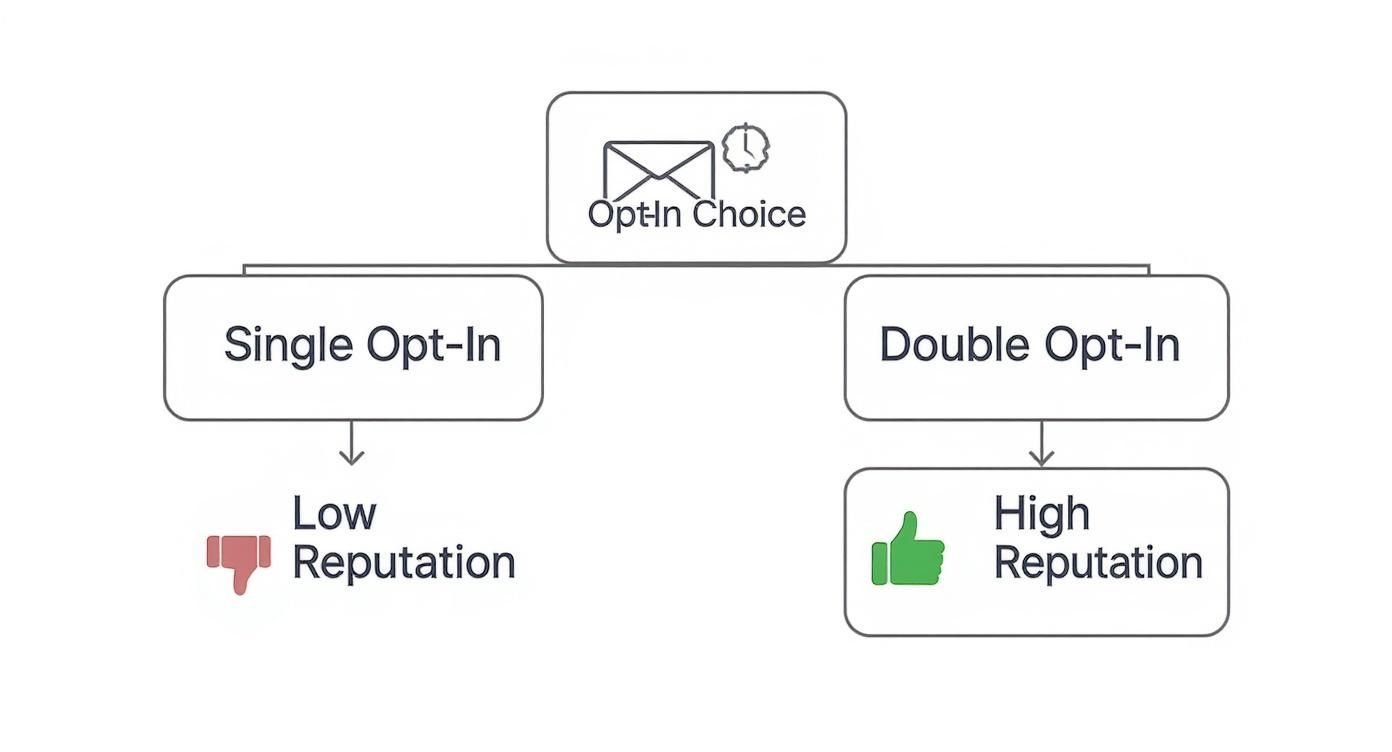
As you can see, the path is clear. Double opt-in leads straight to a high sender reputation, while the single opt-in route is a gamble that can easily end in damage.
The Rare Case for Single Opt In
So, is there ever a time to use single opt-in? Almost never, and only with extreme caution. Think of it as a calculated risk best saved for low-stakes situations where you have a ton of control.
A classic example is collecting emails in person at a trade show or a brick-and-mortar store, where you can literally watch the person type their email and verbally confirm it with them right there. That’s about it.
The industry trend backs this up. Today, nearly 40% of senders use a double opt-in process. Why? Because it builds higher-quality lists by filtering out typos, bots, and uninterested leads right from the start.
For almost every digital form and every marketing channel—especially SMS—the choice is obvious. The safety, quality, and long-term value you get from double opt-in far outweigh the fast but flimsy growth that single opt-in offers.
Your Practical Double Opt-In Checklist

Ready to start building a high-quality list? Getting a double opt-in process up and running is actually pretty straightforward once you break it down. Think of this checklist as your roadmap for creating a smooth journey that turns interested visitors into confirmed, engaged subscribers.
Your entire goal here is to make the confirmation step as frictionless as possible. From the second a user signs up to the moment they hit your thank-you page, every single element should nudge them toward one action: confirming their subscription.
Optimizing Your Sign Up Form
The journey always starts here. A well-designed form doesn’t just collect information; it sets clear expectations and encourages that first “yes,” which is the critical first step in any opt in double opt in flow.
- Be Upfront About Confirmation: Just add a simple line of text right under the sign-up button. Something like, “Check your inbox to confirm your subscription!” This little heads-up prepares them for what’s next and cuts down on confusion.
- Keep It Simple: Only ask for what you absolutely need. For most newsletter or SMS lists, a phone number or email address is plenty to get started. You can always ask for more info later.
The initial form isn’t just for data collection; it’s the first promise you make to your subscriber. Clarity here builds trust and improves the chances they’ll complete the confirmation.
Crafting the Confirmation Message
This is where the magic happens. Your confirmation email or SMS has exactly one job: get that click. Everything about the message should be laser-focused on that single goal.
- Use a Clear Subject Line: For email, be direct. “Action Required: Confirm Your Subscription” works like a charm. It creates a bit of urgency and makes the email’s purpose crystal clear.
- Have One Call-to-Action (CTA): The message needs a single, obvious button or link that says something like “Confirm My Subscription” or “Yes, Subscribe Me.” Don’t clutter it up with links to your blog or social media—those are just distractions.
- Explain the “Why”: Briefly remind them what they’re getting. A simple sentence like, “Click the button below to confirm you want to receive our weekly e-commerce tips,” reinforces the value and jogs their memory.
For a deeper dive into this crucial first message, our guide on crafting the perfect opt-in message has more detailed templates and strategies. By nailing these core elements, you’ll build a double opt-in system that creates a clean, compliant, and highly engaged subscriber list from day one.
Still Have Questions? Let’s Clear Things Up
Diving into subscriber consent can feel a bit tricky, and it’s normal to have a few questions pop up. Let’s tackle some of the most common ones marketers ask when deciding between single and double opt-in.
Is Double Opt-In a Legal Requirement?
Nope. Major regulations like GDPR or the TCPA don’t explicitly say you must use double opt-in. However, they do demand clear, undeniable proof that someone agreed to get your messages.
This is where double opt-in becomes the gold standard for proving consent. It creates a digital paper trail that’s incredibly hard to argue with, making it the safest bet for keeping your business compliant and protected.
Will Using Double Opt-In Kill My List Growth?
You’ll probably see your list grow a bit slower than with single opt-in. That’s a fact. Some people just won’t bother with that second confirmation step.
But here’s the thing: that’s not a bad thing. Think of it as a built-in quality filter.
You’re trading raw numbers for genuine interest. A smaller list packed with verified subscribers who actually want to hear from you will always crush a massive, unverified list full of typos, bots, and people who couldn’t care less.
Can I Switch from Single to Double Opt-In Later?
Absolutely, and it’s a smart move for improving the health of your list. You can switch on a double opt-in process for all new subscribers anytime you want.
You don’t have to go back and re-confirm your entire existing list, but it’s a great idea to run a re-engagement campaign. This helps you clean out old contacts and make sure the people who signed up ages ago still want to be there.
What’s a Good Confirmation Rate to Aim For?
A healthy confirmation rate for a double opt-in process usually lands somewhere between 70% and 85%. If you’re seeing numbers well below that, something in your process might be broken.
A few common culprits to investigate are:
- Your confirmation email is getting snagged by spam filters.
- The email’s subject line is confusing or uninteresting.
- The call-to-action (CTA) button inside the email is buried or unclear.
Nailing this step is crucial. Fine-tuning your opt in double opt in strategy here ensures that genuinely interested people actually make it onto your list.
Ready to turn those abandoned carts into your biggest revenue driver? CartBoss brings customers back with automated SMS, boosting your sales by up to 50%. See how it works at https://www.cartboss.io.
