



Let’s be real for a moment: checkout friction is the number one killer of online sales. A customer finds something they love, adds it to their cart, but gets sidetracked right before hitting “buy.” An hour goes by, and that potential sale is just gone, buried in a pile of unopened email reminders. This is exactly where offering a payment by text message can completely change the game for your store.
Imagine someone abandons a cart full of your latest products. Instead of sending an email that might not get seen for days, you send a direct, simple text: “Hey [Name], still thinking about those items? Here’s your cart to finish checking out.” That immediate, personal touch cuts right through the digital noise.
The Power of Immediacy and Convenience
Unlike email, which has an average open rate of around 21%, SMS messages have a staggering open rate of up to 98%. And most of those are opened within just a few minutes of being sent. This speed is critical for recovering sales, especially in industries like fashion or electronics where impulse buys cool off fast. By meeting customers on the device they’re already using, you create a smooth, mobile-first experience that turns a forgotten cart into a completed purchase.
If you’re curious about different ways to implement this, you can explore a detailed breakdown of different text message payment strategies to see what fits your business best.
The core advantage is simple: you are placing a one-click path to purchase directly into the palm of your customer’s hand, at the moment their interest is highest.
Aligning with Modern Consumer Habits
This strategy also fits perfectly with how people shop and pay today. The use of mobile wallets is exploding, with projections showing usage will hit 4.8 billion people by 2025. This massive shift points to a future of mobile-first transactions, creating a huge opportunity for SMS-based cart recovery.
When you integrate a payment by text message system, you’re not just clawing back a lost sale. You’re adapting to the future of commerce and building a checkout process that your customers will actually prefer.
Comparing Checkout Communication Channels
To really see the difference, let’s stack SMS up against the usual methods. It quickly becomes clear why text messages are so effective at capturing revenue that would otherwise be lost.
| Feature | Payment by Text Message | Email Cart Recovery | Standard On-Site Checkout |
|---|---|---|---|
| Delivery Speed | Instant (within seconds) | Can be delayed by servers/filters | No direct communication; relies on customer return |
| Open/Engagement Rate | Up to 98% open rate, high engagement | ~21% open rate, often ignored or sent to spam | Zero, unless the customer actively returns |
| Convenience for Customer | Extremely high; pay with a single click from their phone | Moderate; requires opening an email, clicking a link, and logging in | Low; requires the customer to remember and navigate back to the site |
| Recovery Effectiveness | Very high, especially for impulse purchases | Low to moderate, depends heavily on timing and visibility | Ineffective for abandoned carts |
| Mobile Experience | Optimized for mobile by design | Can be clunky or poorly formatted on mobile devices | Varies; may not be fully optimized for mobile |
After looking at the numbers, it’s obvious that relying solely on email or hoping customers come back on their own is leaving money on the table. Text messages offer a direct, highly effective channel to bring shoppers back and close the sale.
Choosing the Right SMS Payment Workflow
Not all “pay by text” methods are the same. Far from it. The workflow you choose is going to have a direct impact on your customer experience and, more importantly, your conversion rates.
At a high level, you have two main options: sending a customer a direct link to your checkout page, or trying to handle the entire payment inside the text message conversation itself. Understanding the difference is crucial. One is built for speed and simplicity, while the other offers a more integrated—but much clunkier—experience.
For most online stores, especially if your goal is to win back abandoned carts, the choice is actually pretty simple.
The Power of the Pre-Filled Checkout Link
The most effective, hands-down winner is sending a customer a direct link to a pre-filled checkout page. It’s a beautifully simple concept. When a shopper leaves items in their cart, an automated system like CartBoss pings them a text with a unique link.
This isn’t just a link to your homepage. When they tap it, they land right back on your checkout page with all their details—name, address, and everything in their cart—already filled in. This simple step removes almost all the friction.
By eliminating the need for customers to re-enter their details, you create a seamless one-tap path to purchase. This is the single most powerful strategy for converting abandoned carts into sales via SMS.
This is the entire philosophy behind successful text message automations. You make it as easy as humanly possible for the shopper to finish what they started.
This flowchart lays out the decision process pretty clearly. If abandoned carts are your problem, SMS payments are a direct line to fixing it.
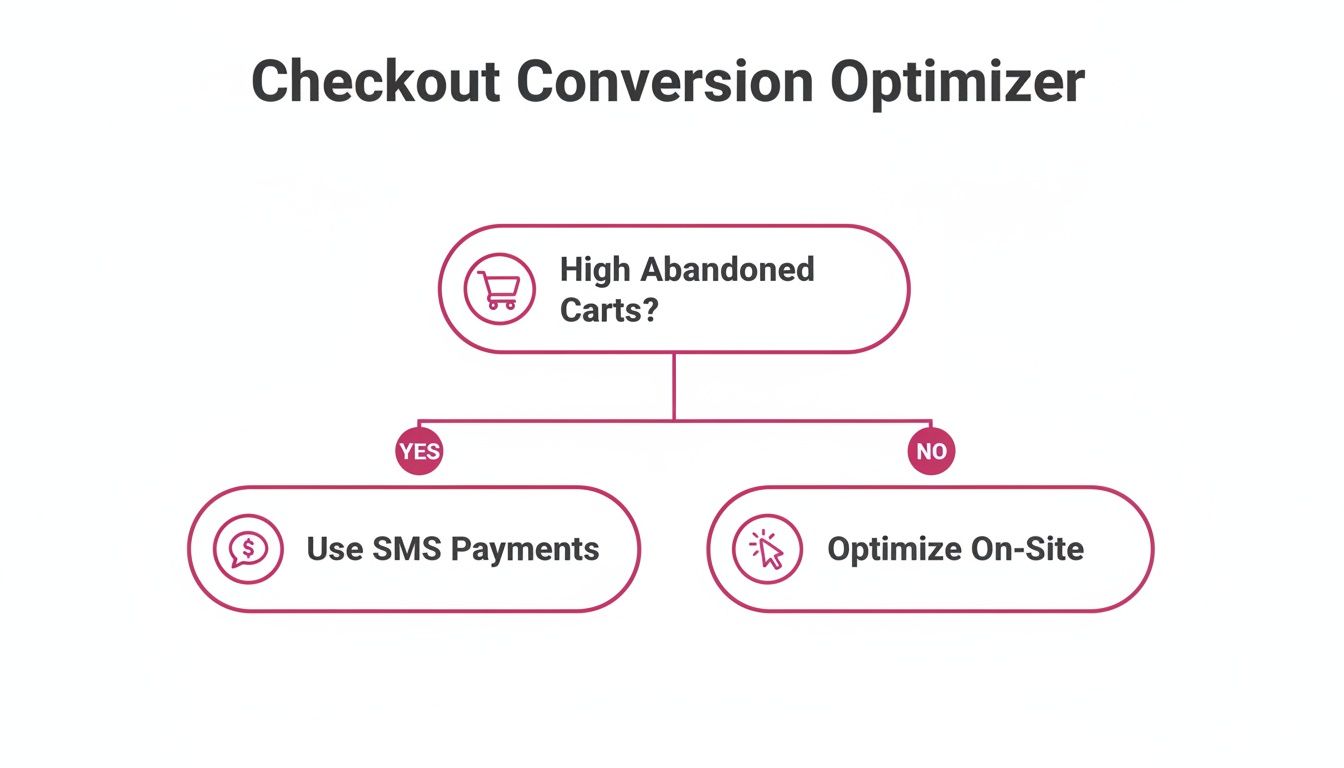
As you can see, when cart abandonment is the main leak in your funnel, SMS payments offer a powerful way to patch it and recapture that lost revenue.
In-SMS Payments: A More Complex Alternative
The second option lets customers pay without ever leaving their messaging app. This usually involves a back-and-forth chat, where the customer confirms their order details and payment info right in the text thread.
It sounds cool and futuristic, but in practice, it’s often a mess for typical e-commerce stores. Here’s why:
- More Friction, Not Less: The customer has to go through multiple steps to confirm products, shipping, and payment. Every extra message is another chance for them to drop off.
- A Technical Headache: Setting up true in-SMS payments is a heavy technical lift. It often requires custom development and deep integrations with specific payment gateways that you might not even use.
- Trust Issues: Let’s be honest, many shoppers are still wary of punching their credit card numbers directly into a text message chat. They feel much safer on a familiar, secure checkout page.
This method can work for things like recurring subscriptions where the details are already saved, but for recovering a cart full of different items? It just adds unnecessary steps.
Making the Right Choice for Your Store
For 99% of e-commerce stores, the pre-filled checkout link is the way to go. It’s the perfect blend of SMS immediacy and the familiar security of your own checkout page.
This is the workflow that’s been proven time and again to crush it for cart recovery, which is the whole point of using pay-by-text in the first place. It’s exactly what tools like CartBoss are built to do—making it dead simple to set up and highly profitable from day one.
Integrating SMS Payments with Your E-commerce Platform
Getting your payment-by-text system up and running is probably a lot easier than you think. Forget about long development cycles or getting tangled up in code. Modern tools are built to be plug-and-play, meaning you can have everything live in less than an hour. The real goal here is to get you recovering sales, fast.
For anyone on Shopify or WooCommerce, this means using dedicated apps or plugins that do all the heavy lifting. These tools are the bridge between your store’s backend and an SMS service, automating everything from detecting an abandoned cart to sending out the perfect recovery text.
Finding a solution like CartBoss in the Shopify App Store is as simple as a quick search and a few clicks. The trick is to pick an app with solid reviews that’s specifically built for cart recovery. This ensures you’re getting a reliable tool that’s ready to perform right out of the box.
Getting Started with Shopify
If you’re a Shopify store owner, the integration is incredibly smooth. The whole process happens right inside the Shopify ecosystem, which keeps everything secure and connected.
- Find the Right App: Head over to the Shopify App Store and search for an SMS cart recovery tool like CartBoss. Pay attention to the ratings and look for key features like pre-filled checkouts and built-in GDPR/CCPA compliance.
- One-Click Installation: Found the one? Installation is literally a single click. Shopify handles all the behind-the-scenes authentication, seamlessly linking the app to your store’s data.
- Configure Your Sender ID: The sender ID is what your customers see on their phone—think of it as the “From” name. You can usually set this to your brand name, which is a small but powerful way to build trust and boost open rates.
Honestly, this initial setup should take you no more than 15-20 minutes. After that, you can jump into the fun part: customizing your message templates and discount offers.
Setting Up on WooCommerce
WooCommerce is an open-source powerhouse, and its plugin architecture offers the same kind of easy integration. If you’ve ever managed a WordPress site, this will feel very familiar.
You’ll start by searching for the plugin in the WordPress plugin directory. Once you install and activate it, you’ll usually find a new menu item in your dashboard. This is where you’ll plug in your API keys to connect the service and tweak the settings. If you’re curious about what’s happening under the hood, learning about the role of an API to send SMS can give you some great insight into how it all works.
The most important thing you can do after setup is test it. Before you go live, send a test message to yourself. Make sure the link works, the cart is pre-filled correctly, and any dynamic discounts are actually applied. Don’t skip this step.
Key Configuration Steps After Installation
No matter which platform you’re on, there are a few universal steps you’ll need to take after installation. These are the settings that transform a generic tool into a high-powered sales recovery machine.
- Data Synchronization: First, make sure the app is tracking cart data correctly. This connection is what allows for personalization—like using the customer’s name and listing the specific items they left behind.
- Opt-in and Compliance: Double-check that your compliance settings are active. While tools like CartBoss manage GDPR and CCPA requirements automatically, it’s always smart to understand how and where consent is captured during checkout.
- Do-Not-Disturb Hours: Be sure to set a “quiet hours” window when messages will not be sent. Nothing sours a customer relationship faster than a text message at 3 AM.
When you’re piecing this together, smooth payment provider integration for financial services is crucial for a frictionless transaction. The investment in this space is massive for a reason. The global SMS marketing industry has ballooned to $327.1 billion in spending. This isn’t just a niche tactic; it’s a core communication channel. Getting the setup right from the start puts your store in a prime position to capitalize on it.
Crafting SMS Messages That Actually Convert
Having the right tech is just one piece of the puzzle. The actual words you use in your texts are what will ultimately nudge a customer to pull out their wallet and finish the purchase.
A poorly written SMS can feel spammy or intrusive, instantly turning someone off. But a great one? It feels like a helpful, personal reminder. The goal is to drive action, sure, but without souring the customer experience.
Effective SMS copy for a payment by text message system really boils down to three things: personalization, clarity, and a gentle sense of urgency. Generic, one-size-fits-all messages just get ignored. You have to show the customer you know who they are and what they were looking at.
Personalize Everything You Can
The difference between a generic blast and a personal note is massive. A message that feels tailored to an individual is so much more likely to get a positive response.
Always aim to include specific details that make the text feel like it was written just for them.
- Customer’s First Name: Starting with “Hey Jessica,” is way better than a cold, impersonal opening. It’s a small touch that makes a big difference.
- Specific Cart Items: Mentioning the actual products they left behind (e.g., “your Black Leather Tote”) instantly jogs their memory. It reminds them what they were excited about in the first place.
- Store Name: Always, always include your brand name. They need to know who is texting them. This builds trust and keeps your brand top-of-mind.
The most successful SMS campaigns I’ve seen feel less like marketing and more like good customer service. When you reference specific cart items, you’re not just sending a generic reminder; you’re helping a real person pick up their shopping journey right where they left off.
Structure Your Message for Action
You’ve only got about 160 characters to play with, so every single word counts. There’s zero room for fluff. Your message needs to be direct, crystal clear, and super easy to act on.
I’ve found this simple structure for cart recovery messages works incredibly well:
- Personal Greeting: Start with their name.
- Friendly Reminder: A quick mention of their forgotten items.
- The Offer: This is optional, but a small, time-sensitive discount works wonders for creating urgency.
- The Call to Action: Your direct, pre-filled checkout link. Make it easy!
- Compliance: Don’t forget the required opt-out language (e.g., “Reply STOP to unsubscribe”).
Here’s what that looks like in the real world: “Hi Mark! Still thinking about the Solar Flare Sunglasses in your cart? Complete your order in the next 3 hours and get 10% off! Your cart: [Link]. Reply STOP to opt out.”
This simple formula covers all your bases for a high-converting text.
If you’re looking for more ideas, you can find a whole bunch of SMS marketing message examples and templates to get you started. The real key is to test. See what resonates with your audience. What works for one brand might need a few tweaks for another, so don’t be afraid to experiment with your copy and offers to find that perfect combo.
Navigating SMS Payment Compliance and Regulations
Sending a payment by text message isn’t as simple as just hitting send. To protect your business and your customers, you have to operate within a pretty strict legal framework. Ignoring these rules isn’t just an option—it can lead to some seriously hefty fines and, even worse, a complete loss of customer trust.
There are three main pillars of compliance you absolutely need to know: PCI DSS, GDPR, and TCPA. Think of them as the non-negotiable rules of the road for any kind of SMS commerce.
- PCI DSS (Payment Card Industry Data Security Standard): This one is all about keeping payment data locked down. Even if your SMS platform doesn’t process the payment itself, it’s still handling links that lead to your checkout. You need to be sure that your provider, and your own website, are PCI compliant to protect sensitive cardholder info.
- GDPR (General Data Protection Regulation): If you have customers in the European Union, GDPR is a must-know. It dictates exactly how you can collect, store, and use their personal data, and it demands clear consent and total transparency.
- TCPA (Telephone Consumer Protection Act): For anyone doing business in the United States, the TCPA is critical. It mandates that you get explicit, prior written consent from your customers before you send them a single marketing text message.
Your Essential Compliance Checklist
Getting compliance right from the very beginning is crucial. The absolute cornerstone of SMS marketing is explicit consent. You can’t just text someone because they bought from you once. They have to knowingly agree to get messages from you. For a deeper dive, understanding the nuances of what constitutes expressed written consent is a great way to build a solid foundation.
The golden rule is simple: treat your customer’s phone number with the same respect you’d give their credit card details. Unsolicited payment reminders are a fast track to getting blocked and reported as spam.
Here’s a quick rundown of what you must have in place:
- Clear Opt-In Language: At your checkout, you’ll need a checkbox (it has to be unchecked by default) that clearly says the user agrees to receive marketing and cart recovery texts.
- Easy Opt-Out Instructions: This is non-negotiable. Every single message you send must include a clear way to unsubscribe, like “Reply STOP to opt out.”
- Maintain Your Contact Lists: You need to regularly scrub your lists to remove anyone who has opted out. A good platform will handle this automatically, but ultimately, it’s your responsibility to make sure it’s happening.
Thankfully, you don’t have to juggle all of this manually. Platforms like CartBoss are built with compliance at their core. They automate the whole consent management process, automatically include the mandatory opt-out language, and stick to global privacy standards like GDPR and CCPA, helping you stay protected.
To make sure your payment-by-text initiatives follow all the rules and are set up for success, it’s always a good idea to consult SMS marketing best practices, including compliance guidelines.
Measuring Success and Optimizing Your Strategy
Launching your SMS payment campaign is just the start. To really make this channel work for you, you need a clear view of what’s clicking, what’s flopping, and how to improve. This means going beyond simple metrics like delivery rates and drilling down into the numbers that actually impact your bottom line.
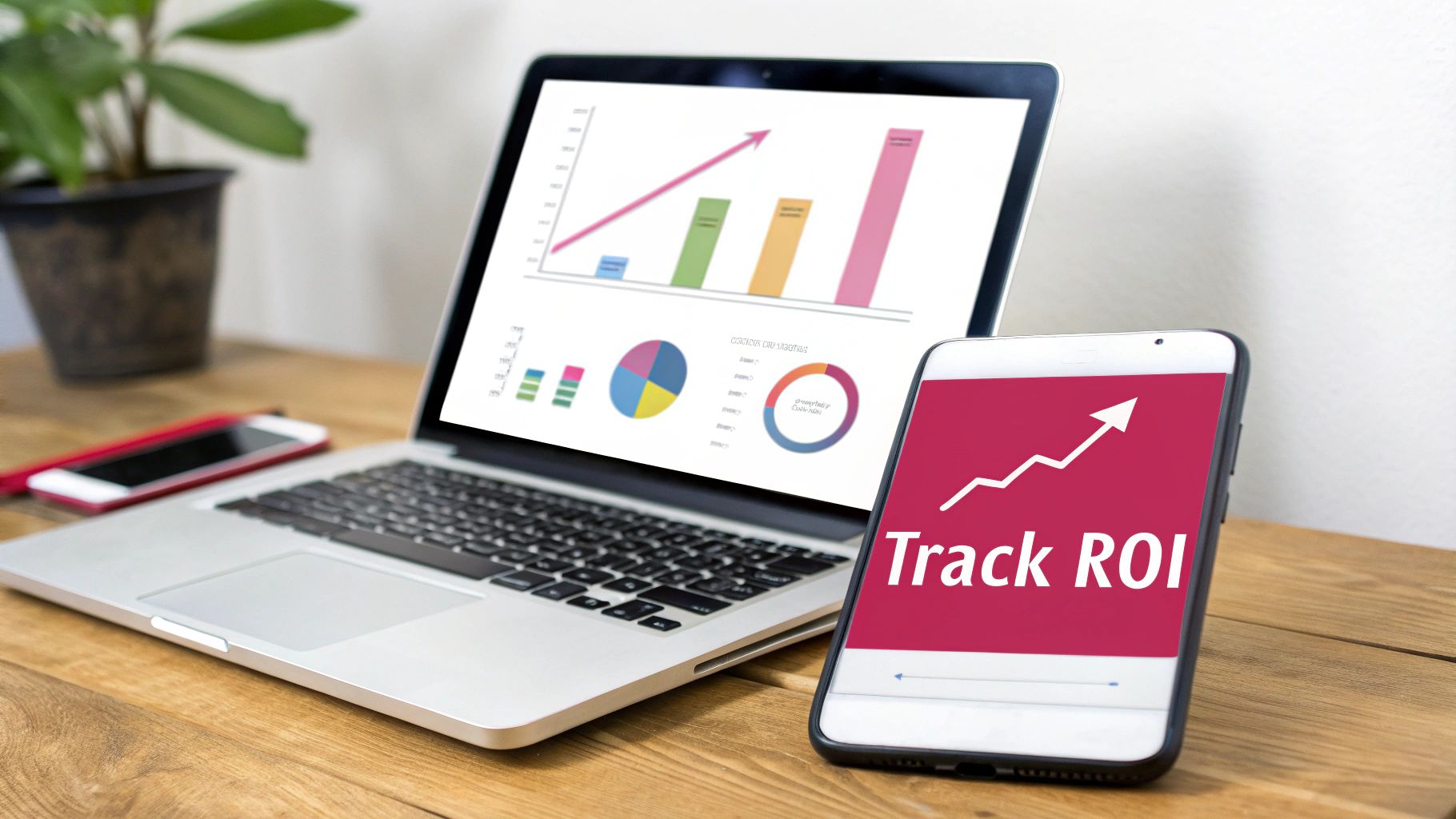
The right analytics dashboard gives you an instant, real-time snapshot of your campaign’s financial performance. It’s the difference between guessing and knowing exactly how much extra revenue your texts are pulling in. This data-driven approach is what separates a decent strategy from a highly profitable one.
Key Performance Indicators to Track
Your analytics should make it easy to see the most important success metrics at a glance. Don’t get lost in the noise; you need to zero in on what drives growth.
Here are the three core KPIs you absolutely must monitor:
- Conversion Rate: This is the percentage of abandoned carts that you successfully recover after sending a text. A high conversion rate is a great sign that your messages, timing, and offers are all hitting the mark.
- Revenue Recovered: This is the total dollar amount of sales you’ve clawed back—sales that would have otherwise been lost forever. It’s the clearest indicator of your campaign’s direct financial impact.
- Return on Investment (ROI): This metric tells you how much revenue you’re generating for every single dollar you spend on the SMS service. A strong ROI proves the profitability of your entire text message payment strategy, plain and simple.
Your goal here is to create a powerful feedback loop. You use real-world data to refine your messages, test out new offers, and tweak send times. These changes then drive even better results, and the cycle continues. This continuous improvement is the key to maximizing your profitability.
A/B Testing for Maximum Impact
Once you have a baseline of data, the next move is to start optimizing through A/B testing. It sounds technical, but it’s really just sending two slightly different versions of a message to see which one performs better. From my experience, even tiny changes can lead to huge improvements in conversion rates.
Consider testing these variables to get started:
- Discount Offers: Does a 10% discount pull in more orders than a flat $5 off coupon? Test different incentive structures to see what actually motivates your audience to buy.
- Message Timing: Try sending your first reminder 30 minutes after a cart is abandoned versus one hour. The sweet spot can vary dramatically between different customer segments and even product types.
- Copy Variations: Experiment with different tones. Is a straightforward, urgent message more effective, or does a friendly, helpful reminder work better? Let the data be your guide.
By systematically testing these elements, you’ll quickly uncover what truly resonates with your customers. This lets you fine-tune your approach, ensuring every payment by text message you send has the highest possible chance of turning a lost sale into a completed order.
Got Questions About Text Payments? We’ve Got Answers
Stepping into the world of SMS payments always brings up a few questions. We’ve been there. To help you get clear on the details, we’ve put together answers to the most common questions we hear from store owners just like you.
A big one that comes up right away is whether major e-commerce platforms have this feature built-in. The short answer is no. Platforms like Shopify and WooCommerce don’t natively support sending payment by text message reminders. To do this right, you need a specialized app like CartBoss that plugs into your store and handles all the automation, tracking, and compliance for you.
Are Text Message Payments Secure?
Yes, they’re incredibly secure when you do it the right way. The magic is in the workflow. Instead of handling payment details in the text itself, the SMS sends a direct link back to your store’s own secure checkout page.
This means your customer is completing their purchase on your website, which is already secure and PCI-compliant. The text message just acts as a convenient, safe bridge to get them there.
Your customer’s payment information never actually travels through the SMS. The text simply provides a pre-filled link to your secure checkout, where the transaction is protected by all your existing security measures.
What Are The Typical Costs Involved?
Costs can vary, but the best services out there—including CartBoss—run on a performance-based model. This is a game-changer. You only pay a small commission on sales you actually recover through the text messages.
There are no monthly subscription fees, which makes it a low-risk, high-reward investment for your store. This pay-for-performance setup means your costs are directly tied to the new revenue you’re bringing in.
Can I Customize The Messages?
Of course! Customization is what makes this strategy click. A solid platform will give you full control over your message templates using dynamic variables.
Think about it: you can greet the customer by name, mention the specific items they left in their cart, and even generate a unique, time-sensitive discount code just for them. This level of personalization makes your messages feel genuinely helpful, not like generic spam, which is absolutely crucial for getting that conversion.
Ready to stop watching sales slip away from abandoned carts? CartBoss helps you roll out a powerful payment-by-text strategy in just a few minutes, recovering lost revenue on autopilot. See the results for yourself and get started today.