


A reminder text message is a short, direct SMS sent to a customer who ditched their online shopping cart before checking out. These messages act as a gentle nudge, cutting through the email clutter to bring distracted shoppers right back to your store. With SMS open rates hitting up to 98%, it’s an incredibly direct line to your customer.
Why Reminder Texts Are Your Secret Sales Weapon
Let’s be honest: abandoned carts are painful. They represent a customer who was just seconds away from buying before something—anything—pulled them away. For years, email has been the standard for cart recovery, but its power is fading in a world of overflowing inboxes. This is exactly where a well-timed text message changes the game.
The Psychology of Interruption and Recovery
Customers abandon carts for a million different reasons. Maybe the doorbell rang, they got sticker shock from shipping costs, or they just decided to “think about it.” A text message bypasses all that noise and lands directly on the one device they never put down.
Because of its personal and immediate feel, it comes across less like a corporate marketing blast and more like a helpful tap on the shoulder.
By meeting customers on a channel they check within minutes, you re-engage them while their purchase intent is still warm. It’s a direct line to recapture a sale that would otherwise be lost.
This strategy hinges on an immediacy that other channels just can’t match. An email might sit unread for hours, if it gets opened at all. An SMS, on the other hand, is almost always read instantly. That directness is your single biggest advantage in turning a moment of hesitation into a completed sale.
The Tangible Impact on Revenue
The payoff for using SMS in your cart recovery isn’t just theoretical—it’s clear and measurable. The channel’s massive engagement rates translate directly into higher conversions, giving your bottom line a serious boost. For a look at how this fits into a larger sales strategy, you can see similar principles in guides on how to sell gym memberships.
Putting a solid SMS reminder plan in place can:
- Skyrocket Recovery Rates: Brands frequently see a major lift in recovered carts compared to campaigns that rely only on email.
- Boost Customer Engagement: A well-written text feels personal, and when done right, it can actually strengthen the customer relationship.
- Drive Immediate Action: The convenience of a direct link that takes them back to a pre-filled cart is a powerful push toward a quick conversion.
If you want to see the hard numbers, the data on https://www.cartboss.io/blog/abandoned-cart-sms-effectiveness/ proves just how powerful this tool really is. This isn’t just a good idea; it’s a proven method for winning back lost revenue.
Anatomy of a High-Converting Reminder Text

Ever wondered what separates a reminder that gets ignored from one that actually brings a customer back? It’s all in the details.
A truly effective text is so much more than a simple “you forgot something.” It’s a carefully crafted message that blends your brand’s personality with a clear, compelling reason for them to act right now. To build a message that actually converts, you need to think about every single component. Each word has a job, guiding the customer smoothly back to their cart and through to checkout. This isn’t about being pushy; it’s about being genuinely helpful in a very limited space.
Start with Who You Are
First things first: they need to know who’s texting them. An anonymous message is confusing at best and spammy at worst. It’ll get deleted almost instantly.
Always, always start by clearly stating your brand’s name. This one small step builds immediate trust and sets the stage for the rest of your message. Think of it as the friendly “hello” you’d offer someone walking into your store. It’s an absolute must.
Here’s an example:
“Hey from Cozy Home! We noticed you left some amazing things in your cart.”
Go Beyond Just a First Name
Personalization is your secret weapon. Using the customer’s first name is a great start, but the real magic happens when you reference the specific items they were looking at.
Mentioning a product by name instantly creates a strong mental picture, rekindling that initial desire. This extra detail makes the message feel like a personal follow-up, not some automated blast sent to thousands. You can dig deeper into how to recover abandoned carts with text messages using these exact tactics.
A great reminder text doesn’t just say, “You left items in your cart.” It says, “That handcrafted leather wallet you were looking at is still waiting for you.” The specificity makes all the difference.
Give Them a Clear Call to Action
Every single message needs a direct, easy-to-follow call to action (CTA). Don’t leave them guessing what to do next. The goal here is to make completing their purchase completely frictionless.
Your CTA has to include a direct link that takes them straight back to their pre-filled cart. You want to remove every possible barrier and minimize the steps needed to finalize the sale.
Here are a few strong CTA examples:
- Simple & Direct: “Complete your order here: [Link]”
- Urgency-Driven: “Finish checkout before it’s gone: [Link]”
- Benefit-Focused: “Claim your items now: [Link]”
Let’s not forget the power of this channel. Marketing and reminder texts reach a staggering 5 billion people daily. The average response rate for SMS is 45%, blowing email’s 6% out of the water. A clear CTA in a text is one of the most powerful ways to get someone to act immediately.
Add a Nudge of Urgency or an Incentive
Finally, give them a reason to act now. A gentle sense of urgency or a small incentive can be the final push a hesitant customer needs to cross the finish line.
This isn’t about faking scarcity. Instead, you can use phrases that hint at limited stock or offer a small, time-sensitive discount. This simple, strategic element can turn a basic reminder into a compelling offer that’s hard to ignore. For instance, a message could end with, “We can’t hold your items forever!” or “Use code WELCOME10 for 10% off your order in the next 24 hours.” This approach respects the customer while motivating a quick decision—turning a forgotten cart into a recovered sale.
To pull it all together, a high-converting reminder text has several distinct parts working in harmony. Each piece has a specific role in getting that click and recovering the sale.
Key Elements of a High-Converting Reminder Text
| Element | Purpose | Example |
|---|---|---|
| Brand Identifier | To build immediate trust and recognition. | “Hey, it’s [Your Brand]!” |
| Personalization | To create a personal connection and remind them of their initial desire. | “Still thinking about that [Product Name]?” |
| Clear CTA | To provide a direct, frictionless path back to the cart. | “Finish your order here: [Link]” |
| Urgency/Incentive | To motivate immediate action and overcome hesitation. | “Grab it before it’s gone!” or “Use code NOW15 for 15% off.” |
| Opt-Out Language | To maintain compliance and respect the customer’s choice. | “Reply STOP to unsubscribe.” |
By making sure each of these elements is present and thoughtfully crafted, you’re not just sending a reminder—you’re creating a powerful conversion tool.
Mastering SMS Timing and Automation
A powerful reminder text sent at the wrong time is just noise. The real magic in converting abandoned carts lies in strategic timing and smart automation—creating a sequence that feels helpful, not pushy. Getting this right means understanding the customer’s mindset from the moment they hesitate at checkout.
The first few hours after someone leaves your site are a golden window. The purchase is still fresh in their mind, and often, the reason for leaving was a simple distraction. A gentle nudge sent within the first hour can be incredibly effective at bringing them right back. If you wait too long, that initial buying intent cools off fast.
This whole process can be put on autopilot. A simple workflow identifies the trigger (the abandoned cart), crafts the right message, and ensures it gets delivered.
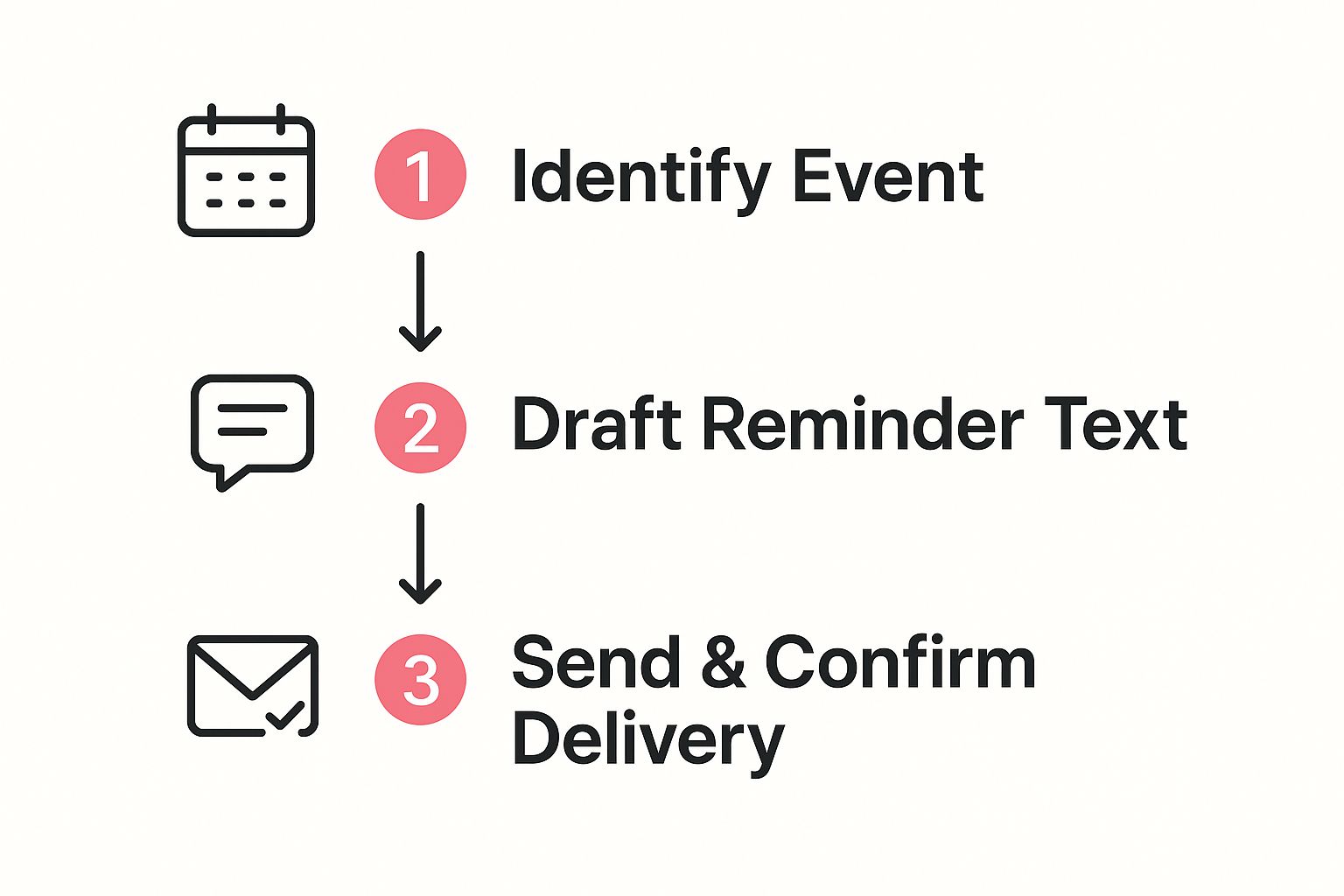
This is where modern automation tools really shine. They can run a sophisticated SMS strategy with almost no manual effort, making it a scalable solution for any size business.
Crafting The Ideal SMS Sequence
A single message is good, but a well-timed sequence is far better. Here’s a proven timeline that successful brands use to maximize their recovery rates without overwhelming the customer.
- The Gentle Nudge (1 Hour Post-Abandonment): This is your first and often most effective touchpoint. Keep it friendly and low-pressure. The goal is simply to remind them of the items they loved and give them a frictionless path back to their cart.
- The Follow-Up (24 Hours Later): If the first text didn’t convert, a follow-up a day later can work wonders. This is a great opportunity to introduce a subtle incentive, like a small discount or free shipping, to overcome any price hesitation they might have had.
A great automation workflow should be smart enough to immediately stop the sequence once a customer makes a purchase. Nothing damages trust faster than sending a reminder for a cart they’ve already bought.
This careful cadence respects the customer’s time while creating multiple opportunities for you to close the sale. For a deeper dive into building a respectful and effective strategy, check out our guide on SMS marketing best practices.
Respecting Time and Building Trust
Effective automation isn’t just about sending messages; it’s about sending them at the right human moment. This means being mindful of your customer’s daily routine and where they live.
Here are a couple of hard-and-fast rules your automation needs to follow:
- Time Zone Awareness: Never send a reminder text at 3 AM. A good SMS platform will automatically adjust send times based on the recipient’s local time zone, ensuring your message arrives at a reasonable hour.
- Implement ‘Quiet Hours’: Set rules to prevent messages from being sent late at night or early in the morning. This small act of consideration shows respect and protects your brand’s reputation.
The power of automation extends far beyond just scheduling. Nearly half (47%) of customer service interactions are now handled by AI-powered chatbots within SMS ecosystems, which drastically cuts down response times. For consumers, this translates to better service, with 60% of holiday shoppers saying they prefer SMS reminders for deals. This technology allows your reminder system to be both timely and intelligent.
Using Personalization and Incentives to Convert
An automated text can feel pretty cold and robotic. A great reminder text, though, should feel more like a one-on-one conversation.
The real magic happens when you move beyond basic personalization and start using incentives strategically to nudge customers over the finish line. This is how you turn a simple reminder into a serious conversion tool.
Just using a customer’s first name isn’t enough anymore. True personalization is all about referencing the specific products they left behind. Mentioning the “Vintage Leather Journal” or the “Sunrise Bliss Coffee Blend” creates an instant visual and emotional connection, reigniting the desire that brought them to your store in the first place.
This level of detail makes your message feel less like an automated blast and more like a helpful, personal follow-up from a store that’s actually paying attention.
When a Nudge Is Enough
Look, not every abandoned cart needs a discount. Sometimes, a simple, friendly reminder is all it takes to bring a distracted shopper back into the fold. For lower-value carts or for customers who have a strong purchase history with you, a straightforward nudge often works best.
The goal here is helpfulness, not pressure. You just want to bring their cart back to the top of their mind.
- Example for a Low-Value Cart: “Hey Alex, from The Artful Shelf. Your handcrafted bookmarks are still waiting for you! Ready to finish your order? [Link]”
- Example for a Returning Customer: “Welcome back, Sarah! The Sunrise Bliss Coffee Blend you loved is ready when you are. Complete your purchase here: [Link]”
This approach protects your profit margins while still recovering sales effectively. You’re respecting the customer’s intent without immediately devaluing your products with an offer they may not even need.
A simple reminder is often the most powerful tool. With 98% of text messages being read, your friendly nudge is almost guaranteed to be seen, making it highly effective for re-engaging customers who were merely sidetracked.
Deploying Incentives Strategically
For higher-value carts or first-time shoppers, a small incentive can provide that final push they need to overcome any hesitation. The key here is to be strategic. If you offer a discount on every single abandoned cart, you’ll just train your customers to wait for a deal, which will eat into your bottom line.
Instead, create a clear framework for when and what to offer. It’s also a great idea to test different incentives to see what really resonates with your audience.
- A percentage discount is great for carts with multiple items.
- Free shipping is a massive motivator—unexpected shipping costs are one of the top reasons people bail on their carts.
To help you decide, think about which incentive makes the most sense for the situation.
Choosing the Right Incentive for Your SMS Reminder
Here’s a quick breakdown of common incentives to help you choose the right one.
| Incentive Type | Best For | Potential Drawback |
|---|---|---|
| Percentage Off (e.g., 10%) | Higher-value carts, first-time buyers. | Can reduce profit margins if overused. |
| Free Shipping | Carts just below your free shipping threshold. | May not be appealing if the order value is very low. |
| Fixed Amount Off (e.g., $5) | Lower to mid-value carts. | Less impactful on very large orders. |
There’s no single “best” offer, so don’t be afraid to experiment to find what works for your store and your customers.
By personalizing your reminder text message with specific product details and using these incentives thoughtfully, you create a high-converting recovery strategy that feels both personal and effective. You’ll be turning those forgotten carts into completed sales in no time.
Navigating Compliance to Build Customer Trust
Any effective SMS strategy is built on a solid foundation of trust. Think about it: customers are giving you a direct line to the most personal device they own. Respecting that privilege isn’t just a good idea—it’s non-negotiable.
This means that navigating legal compliance isn’t just about checking a box. It’s the very core of building a sustainable, profitable relationship with your audience.
The power of a simple reminder text is undeniable. A staggering 98% of texts are opened and read, making it a much more direct and impactful channel than email could ever hope to be. But this effectiveness hinges entirely on consumer trust. When brands play by the rules, customers are incredibly receptive; the average SMS opt-out rate is a remarkably low 0% to 1.5%.
This is where regulations like the Telephone Consumer Protection Act (TCPA) in the United States come into the picture. The rules are pretty straightforward and are all designed to protect people from getting messages they never asked for.
Securing Express Written Consent
Before you even think about sending a single promotional text, you absolutely must have express written consent from the customer. It sounds super formal, but it really just means the customer has to knowingly and actively agree to get marketing messages from you.
You can’t bury this consent in a massive wall of text in your terms and conditions, and you definitely can’t use a pre-checked box. It has to be a clear, explicit action taken by the customer.
Here’s how to get consent the right way:
- Use Clear Language: Your opt-in form needs to be crystal clear. Something like, “By entering your number, you agree to receive marketing texts and cart reminders from us.” No jargon.
- Make It an Action: The customer must physically check a box or click a button to opt in. This removes any doubt about their intent.
- Provide Value: Why should they sign up? Offer a small discount or early access to a sale. Frame the exchange as a win-win.
Getting consent this way does more than just help you avoid massive fines. It’s the very first step in building a relationship based on trust. It also has a direct impact on your bottom line, because customers who willingly sign up are far more likely to actually engage with your messages. For more on this, check out our guide on how to reduce checkout abandonment.
Essential Elements of Every Reminder Text
Once you have that all-important consent, every single reminder text you send must contain two non-negotiable elements. These components ensure you’re being transparent and are putting the customer in control, which only reinforces the trust you’ve worked to build.
Every message must clearly identify who is sending it and provide a simple, free way for the recipient to opt out of future communications.
First, always state your brand name right at the beginning of the message. This cuts out any confusion and immediately reminds the customer who they’re hearing from. An anonymous text just feels like spam and will get ignored or deleted instantly.
Second, you have to include clear and easy opt-out instructions, like “Reply STOP to unsubscribe.” This is a legal requirement, but it’s also just a fundamental sign of respect. Making it easy to leave ensures you’re only messaging an audience that actually wants to hear from you.
Common Questions About Reminder Text Messages
Even with a solid game plan, questions always pop up when you’re rolling out a new SMS campaign. Let’s tackle some of the most common ones head-on. Getting clear on these details helps you move from just sending texts to sending the right texts.
One of the first things people ask is about how often to send messages. It’s a delicate dance—you want to be persistent without being annoying. A well-thought-out sequence is the key to striking that perfect balance.
The goal is to be a helpful guide, not an unwelcome interruption. A thoughtful sequence respects the customer’s inbox while maximizing your chances of recovering the sale.
How Many Reminders Should You Send?
From what we’ve seen, a sequence of two to three messages is the sweet spot for abandoned cart recovery. This multi-touch approach hits different points in the customer’s decision-making process without becoming overwhelming.
Here’s a breakdown that works wonders:
- The First Nudge (1 Hour): This first text is just a gentle, low-pressure reminder. It catches customers while the product is still fresh in their minds.
- The Follow-Up (24 Hours): A day later, a second message can pull them back in. This is a great time to introduce a small incentive, like free shipping, to knock down any hesitation over price.
- The Final Chance (48-72 Hours): A last reminder can create a bit of urgency. Let them know their cart or a special offer is about to expire.
This is critical: your automation has to be smart enough to immediately stop the sequence once a purchase is made. Nothing sours a customer’s experience faster than getting a reminder for an order they’ve already placed. It’s also helpful to understand why people leave in the first place; you can dig deeper into the top five reasons for cart abandonment in our detailed guide.
Can You Use Images in a Reminder Text?
Yes, you absolutely can—and you should. By using MMS (Multimedia Messaging Service) instead of a standard SMS, you can include images or even short GIFs right in your message.
This is a total game-changer for abandoned carts.
Think about it: a customer gets a text with a crisp, clear image of the exact product they were just looking at. That visual cue is incredibly powerful for reigniting their initial interest and making your message impossible to ignore.
While MMS messages cost more to send than plain SMS, their higher character limit and visual appeal often lead to much better engagement. It’s always a good idea to test their ROI to make sure the boost in conversions justifies the extra cost for your brand.
Ready to turn those abandoned carts into your biggest revenue stream? CartBoss makes it simple with automated, high-converting SMS campaigns that work on autopilot. Stop losing sales and start recovering them effortlessly. Get started with CartBoss today!