


To send a mass text, you really just need two things: a list of contacts who have agreed to hear from you and a solid SMS platform to handle the heavy lifting of composing and sending the message.
This approach works so well because texts feel personal, land instantly, and have a near-perfect open rate. It’s quickly become a go-to for any serious marketing strategy.
Why Mass Texting Is a Modern Marketing Must
Let’s be honest, it’s noisy out there. Getting your audience’s attention feels harder than ever. Email inboxes are a disaster zone, and social media is one giant distraction. But the humble text message? That’s still a direct, personal line to your customer.
Sending a mass text isn’t just another box to check on your marketing to-do list. It’s a smart move to meet customers right where they are—glued to their phones.
The real magic of SMS is its immediacy. Think about it: how long does a new text message sit unread on your phone? If you’re like most people, it’s a matter of minutes. That opens up some powerful opportunities.
- Flash Sales and Promotions: You can alert customers to a limited-time deal and see revenue come in almost immediately. A single, well-timed text can be the final push someone needs to buy.
- Important Announcements: Need to get the word out about new store hours, a product launch, or a critical update? SMS cuts through the noise and ensures your message isn’t buried in a spam folder.
- Event Reminders: Drastically cut down on no-shows for appointments, webinars, or in-store events. A quick reminder text sent directly to an attendee’s phone works wonders.
The Unbeatable Engagement of SMS
The numbers don’t lie. Mass texting consistently blows traditional channels out of the water. We’re talking about a staggering 98% average open rate for SMS, with most texts read within just a few minutes of being sent.
To put that into perspective, let’s compare it directly with email.
Mass Texting vs. Email Marketing At a Glance
While email is still a valuable tool, the numbers show a clear winner when it comes to getting eyeballs on your message.
| Metric | Mass Texting (SMS) | Email Marketing |
|---|---|---|
| Open Rate | 98% | ~37% |
| Response Time | ~90 Seconds | ~90 Minutes |
| Click-Through Rate | 25% – 45% | ~2.5% |
| Read Immediacy | Within 3 minutes | Hours or never |
The data makes it obvious: SMS is a far more reliable way to ensure your message is actually seen.
By connecting directly with customers on a platform they check constantly, you build a more responsive and engaged relationship. It’s less about broadcasting a message and more about starting a valuable conversation.
This incredible level of engagement leads directly to action. Whether you’re aiming for clicks, calls, or foot traffic, a text message gives your customer a dead-simple path to follow. For a deeper look at why customers are embracing business texts, you can explore these insightful SMS marketing statistics.
Building a Contact List People Want to Be On
Before you can even think about sending a mass text, you need a list of people who have given you an enthusiastic “yes.” The entire strength of your SMS strategy hinges on the quality of this contact list, and quality always starts with explicit consent.
Simply put, you can’t text people who haven’t clearly agreed to it. This isn’t just bad form; it’s a direct violation of regulations like the TCPA and can lead to some seriously hefty fines. The goal isn’t to just hoard phone numbers, but to build a community of engaged subscribers who actually want to hear from you.
Getting an Enthusiastic Opt-In
Your opt-in process is that crucial first handshake with a potential subscriber, so you have to make it a good one. It needs to be dead simple, clear, and totally transparent about what they’re signing up for.
Here are a few methods that we see working time and time again:
- Website Pop-ups or Forms: Give them a good reason to say yes, like a 15% discount on their next order. Use clear, direct language like, “Get exclusive deals and updates sent straight to your phone.”
- Keyword to a Short Code: This is a classic for a reason—it works. For example, a coffee shop could run a promo saying, “Text COFFEE to 555-55 to join our VIP club for weekly specials.”
- In-Store Signage: A simple QR code at the checkout counter can lead customers directly to a quick opt-in form on their phone. Easy.
Whichever method you choose, always be upfront about what you’ll be sending and how often. Setting clear expectations right from the start builds trust and is the best way to keep people from hitting that unsubscribe link later. For a deeper look, check out our guide on creating a high-converting SMS opt-in strategy.
The foundation of successful mass texting is a permission-based list. Every contact should represent a customer who has explicitly raised their hand and asked to receive your messages.
This focus on ethical list-building is more important now than ever. The global SMS marketing space is absolutely booming, projected to hit $92 billion by 2025, with almost 50 million people opting into texts from businesses. This massive growth just shows the incredible potential you unlock when you connect with a willing audience. You can discover more insights about SMS marketing’s growth.
Crafting a Message That Gets a Response
When you send a mass text, you have maybe two seconds to make an impression. That’s it. The line between a message that gets a tap and one that gets ignored is razor-thin, and it all comes down to being concise, clear, and compelling.
Your absolute must-have is a powerful call-to-action (CTA). Never, ever leave your subscribers wondering what you want them to do. Vague suggestions like “check it out” are a waste of characters. You need direct, action-focused language that creates a little bit of urgency.
Make Every Message Count
Personalization is where you can really stand out. Just dropping in a first name is the bare minimum these days. The real magic happens when you go a step further. Reference a product they left in their cart or a past purchase to show you’re actually paying attention. That small touch makes the message feel like it was written just for them, and it works wonders for engagement.
Let’s look at a couple of real-world examples:
- Weak Flash Sale: “Big sale this weekend! Don’t miss out.”
- Strong Flash Sale: “Hey [Name]! Our 48-hour flash sale is ON. Get 25% off everything with code SAVE25. Shop now: [Link]”
- Weak Reminder: “You have an appointment tomorrow.”
- Strong Reminder: “Hi [Name], this is a reminder of your appointment with us tomorrow, Oct 26, at 2 PM. Reply C to confirm.”
For those campaigns that need an extra visual punch, don’t forget about MMS (Multimedia Messaging Service). Adding a sharp product image or a fun GIF can make your offer jump off the screen in a way plain text just can’t.
The most effective SMS messages are short, personal, and end with a crystal-clear directive. Every character should serve the purpose of guiding the user toward a specific action.
This direct-to-the-point approach is incredibly powerful. The average response rate for SMS hovers around a massive 45%, completely blowing email’s typical 6% rate out of the water. This is why texting is such a potent tool for driving sales and building real, interactive relationships with your customers.
If you’re looking for more inspiration on what to write, check out our collection of SMS marketing message examples that drive conversions.
Choosing Your Mass Texting Platform
The right software is the engine behind any successful SMS strategy, making the process to send a mass text feel effortless. With so many options out there, the key is to focus on core features that directly impact your results, rather than getting distracted by flashy but unnecessary extras.
Your choice of platform will directly influence how well you connect with customers. It’s less about finding a tool with the most bells and whistles and more about finding the one with the right features for your specific business goals.
Focus on What Truly Matters
Before you commit to a platform, you need to look under the hood at three critical areas: contact management, segmentation, and automation. A solid platform should make it dead simple to import and organize your subscribers without causing any technical headaches.
This is the foundation you’ll build everything else on.
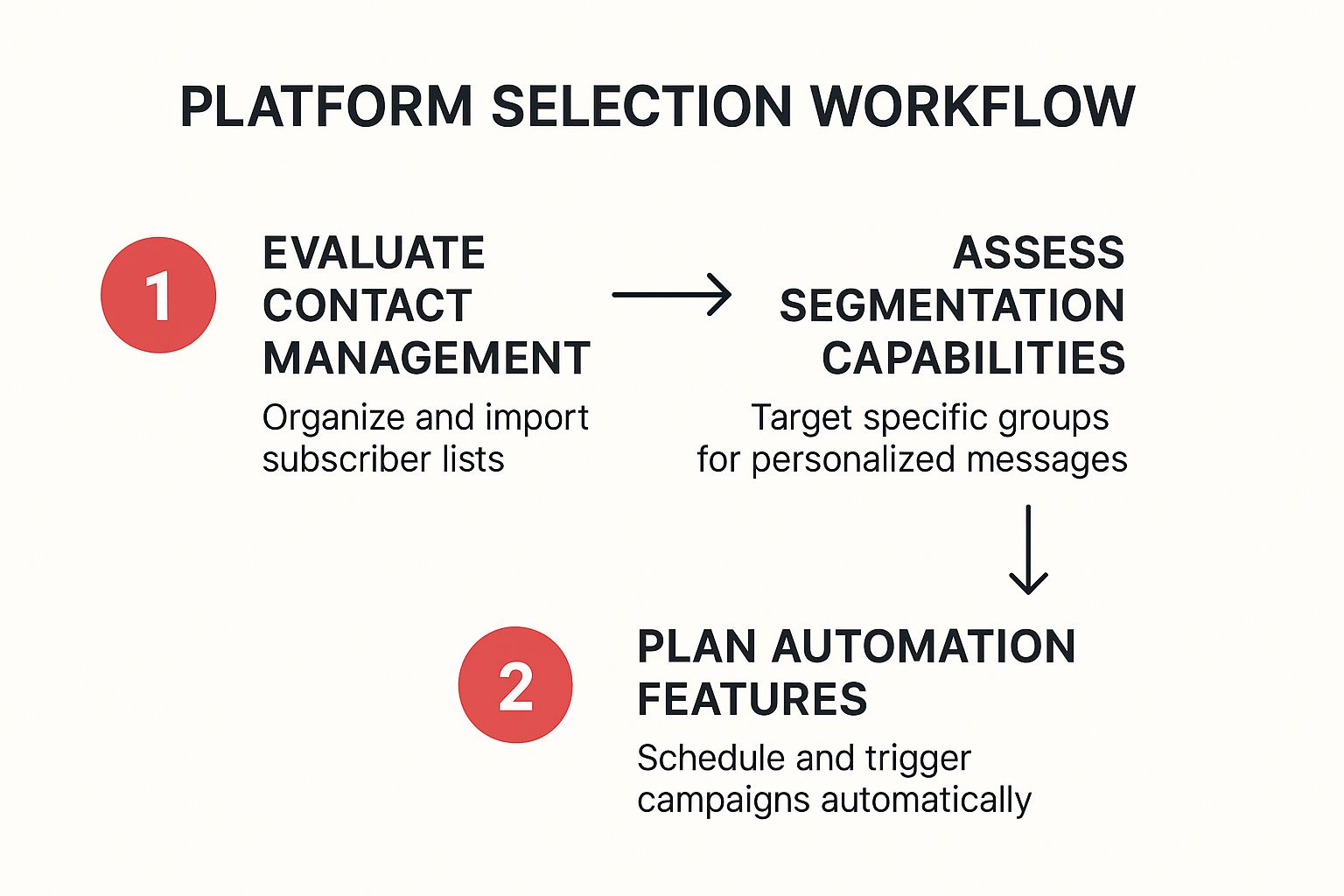
As you can see, strong contact management is the base that powerful segmentation and automation are built upon.
Segmentation is where the real magic happens. It lets you move beyond generic blasts and send messages that are actually relevant. Think about it: a local restaurant could use segmentation to text a happy hour special only to customers who live within a five-mile radius. That’s a message that will get results. For a deep dive, check out our guide to the best SMS marketing platforms.
Finally, robust automation is a complete non-negotiable if you want to scale. You need a platform that lets you set up campaigns that run on their own, like abandoned cart reminders or welcome messages for new subscribers. This is how you make money while you sleep.
The goal isn’t just to send a mass text; it’s to send the right text to the right person at the right time. The best platforms make this level of personalization and automation accessible to everyone.
Don’t overlook the importance of a clean, intuitive user interface for your day-to-day use, either. If you have to fight with the software to get a simple campaign out the door, you’ve already lost. Prioritize a tool that feels easy to use from the moment you log in.
Essential Features in a Mass Texting Service
Choosing the right mass texting service can feel overwhelming, but it boils down to matching the platform’s strengths to your business model. What’s essential for an e-commerce store might just be a “nice-to-have” for a local service business. This table breaks down the core features and their importance for different types of companies.
| Feature | Importance for E-commerce | Importance for Service Businesses |
|---|---|---|
| Segmentation | High: Crucial for targeting based on purchase history, cart value, and browsing behavior. | Medium: Useful for targeting by location, service history, or last appointment date. |
| Automation | High: Essential for abandoned cart recovery, post-purchase follow-ups, and win-back campaigns. | High: Key for appointment reminders, booking confirmations, and follow-up requests for reviews. |
| Two-Way Messaging | Medium: Good for customer service, but less critical for one-way promotional blasts. | High: Absolutely vital for confirming appointments, answering questions, and providing quotes. |
| MMS Support | High: Invaluable for showcasing products with images, GIFs, and videos. | Low: Often unnecessary, as text-based reminders and confirmations are usually sufficient. |
| Link Shortening | High: A must-have for tracking clicks on product links and including long URLs. | Medium: Helpful for sending links to booking pages or invoices, but less frequently used. |
By focusing on the features that will actually move the needle for your specific business, you can cut through the noise and select a platform that will become a true asset, not just another monthly subscription.
Firing Off Your First Mass Text Campaign
You’ve got your list, your message is ready to go—now for the fun part. Kicking off your first campaign is always a thrill, but a little prep work goes a long way. Think of this as your pre-flight checklist before hitting the launch button.
The first real step is getting your contacts into your SMS platform. Most services, like CartBoss, make this super simple, usually just by uploading a CSV file. But before you do, triple-check that every single person on that list has given you explicit permission to text them. Seriously, this is non-negotiable for keeping your customers happy and staying on the right side of the law.
Once your list is locked and loaded, it’s all about timing.
Nailing the Timing for Maximum Engagement
You could have the best offer in the world, but if you send it at 3 AM, you’re just asking for angry unsubscribes. Timing isn’t just a small detail; it’s a massive piece of the puzzle. You need to think about your audience’s day.
- For eCommerce Stores: Try hitting people up during their lunch breaks (12 PM – 2 PM) or as they’re heading home from work (5 PM – 7 PM). That’s prime phone-scrolling time.
- Weekend Deals: A message on a Saturday morning can land perfectly as people are figuring out their weekend plans and shopping.
Here’s a pro tip that has saved me more times than I can count: always send a test message to yourself or a few team members first. It takes two seconds and lets you spot any broken links, embarrassing typos, or weird formatting before it goes out to thousands of people.
Getting the timing right shows you respect your customers’ daily rhythm. This is especially true for younger shoppers. A whopping 67% of them actually prefer getting texts from businesses over any other method. By sending your message at the right moment, you’re not interrupting them—you’re giving them a welcome opportunity. You can dig into more consumer texting habits here.
Measuring Success and Refining Your Strategy
Hitting ‘send’ is the start, not the finish line. The real growth comes from digging into the data to see what actually worked.
Think of it this way: when you send a mass text, you get immediate feedback. That feedback is pure gold, telling you exactly what you need to tweak to make your next campaign even better. This isn’t about getting lost in complex spreadsheets, either. It’s about focusing on a few key numbers that tell the real story.
Key Metrics to Watch
You really only need to track a handful of metrics to get a clear picture of what’s happening. Forget the vanity stats and focus on the ones that directly impact your bottom line.
- Click-Through Rate (CTR): This is the big one. It’s the percentage of people who actually clicked the link in your text. A low CTR is a clear sign that your offer or your call-to-action just didn’t hit the mark.
- Conversion Rate: This tracks how many of those clicks turned into a sale. It’s the ultimate measure of your campaign’s profitability. A high CTR with a low conversion rate might point to a problem on your landing page, not your text message.
- Opt-Out Rate: This is the percentage of subscribers who unsubscribed after getting your message. A few opt-outs are totally normal, but a sudden spike is a major red flag that something is off—maybe you’re sending too many messages, or the offer isn’t relevant.
These numbers are your road map. They tell you where to go next. For a complete overview, you can learn more about how to measure marketing campaign success in our detailed guide.
Your data tells a story. A low click-through rate isn’t a failure; it’s a clear signal to test a stronger call-to-action or a more urgent offer in your next message.
Turning Insights into Action with A/B Testing
So, how do you improve those numbers? The single best way is through A/B testing.
This sounds technical, but it’s simple. You just send two slightly different versions of a message to small, separate groups of your audience to see which one performs better. It takes the guesswork out of the equation.
You can test almost anything:
- The Discount: Does 15% OFF work better than $10 OFF?
- The Call-to-Action: Is “Shop Now” more effective than “Grab Yours”?
- The Timing: What happens if you send it at 10 AM versus 6 PM?
By making these small, continuous improvements based on real data, you can steadily increase your ROI over time. This process is how you turn a good campaign into a repeatable, money-making machine.
Common Questions About Sending Mass Texts
Jumping into the world of mass texting can feel a bit like navigating a new city—it’s exciting, but you’ve probably got some questions. Let’s tackle the big ones right away, especially around the rules and the costs, so you can get your campaigns running without hitting any unexpected bumps.
The Big Question: Is This Even Legal?
This is usually the first thing people ask, and for good reason. Is it actually okay to send a mass text to your customers? The short answer is yes, but with a huge caveat: you absolutely must have explicit, written consent from every single person on your list.
This isn’t just a suggestion; it’s a hard-and-fast rule under regulations like the TCPA in the US. It’s all about protecting people from spam, and ignoring this can land you in serious hot water. So, before you send anything, double-check your opt-in process.
What’s This Going to Cost Me?
The second question is always about the price tag. The good news is that pricing usually scales with your needs. Most platforms, including CartBoss, work on tiered subscription plans based on how many messages you send. This makes it really accessible, whether you’re just starting out or you’re a massive brand.
Understanding Phone Number Types
You’ll also run into a choice between different types of phone numbers for sending your campaigns. It’s not as complicated as it sounds.
- Short Codes: These are the memorable 5-6 digit numbers you often see from big brands. They’re built for sending a massive volume of texts at once and are super easy for customers to recognize.
- 10-Digit Long Codes (10DLC): These look just like a regular phone number. They’re fantastic for creating a more personal, conversational feel and are perfect for two-way chats, while still being able to handle large campaigns.
Which one is right for you? It really just depends on your goals. Are you blasting out a huge promo, or are you trying to start a more personal conversation? Your answer will point you to the right choice.
Ready to turn abandoned carts into revenue with the power of SMS? CartBoss makes it easy to send a mass text that converts. Start recovering lost sales on autopilot today!