



Think of an autoresponder text message as your store’s most attentive sales assistant—one who works around the clock, 24/7. It’s an automated SMS sent to a customer right after they take a specific action, like leaving a few items in their shopping cart.
Unlike emails that can get buried in a crowded inbox, these messages land directly on your customer’s phone almost instantly. It’s a direct, personal way to connect at just the right moment.
Understanding the Power of Automated SMS
At its core, an autoresponder text message is a pre-written SMS that fires off automatically when a specific trigger happens.
Picture this: a customer adds your best-selling product to their cart but gets distracted by a phone call before they can check out. Instead of that sale disappearing forever, an automated system like CartBoss sends a timely, personalized text. It’s a gentle reminder that often turns a near-miss into a confirmed purchase.
This isn’t just about blasting out messages. It’s about starting a conversation at the most critical points in the customer journey. The goal is to feel helpful and personal, not robotic.
These automated touchpoints are essential for:
- Recovering Lost Sales: Nudging customers who abandon their carts to complete their purchase.
- Welcoming New Subscribers: Sending an immediate greeting and maybe a special offer when someone signs up.
- Re-engaging Past Customers: Winning back shoppers who haven’t visited your store in a while.
Why Text Beats Email For Urgent Reminders
Let’s face it, email just doesn’t have the same punch for time-sensitive messages. SMS is immediate, and the numbers back it up.
Text messages have a staggering 98% open rate, completely dwarfing email’s average of around 20%. When you consider that the global cart abandonment rate is hovering near 70%, making sure your message is seen is the difference between losing a sale and recovering revenue.
This is where SMS really shines. It cuts through the noise.
SMS Autoresponders vs Email Autoresponders at a Glance
Still not convinced? Let’s break down the key differences to see why SMS is the clear winner for urgent, action-oriented messages like cart recovery.
| Feature | SMS Autoresponder | Email Autoresponder |
|---|---|---|
| Open Rate | ~98% | ~20% |
| Response Time | Within minutes | Hours, or even days |
| Delivery | Instant, direct to phone | Often filtered into spam or promotional tabs |
| Message Length | Short, concise, and to-the-point | Can be long-form, often leading to skimming |
| Best For | Urgent reminders, flash sales, cart recovery | Newsletters, detailed updates, non-urgent communications |
The table makes it clear: when you need to get a customer’s attention right now, nothing beats a text message.
Expanding Beyond Traditional SMS
The power of timely, trigger-based messaging isn’t just limited to SMS. The same core principles apply across different platforms.
For instance, you can use Instagram Direct Message automation to engage with your audience instantly when they comment or message your page. It all comes back to the same strategy: meeting your customers where they are with a relevant message at the perfect time.
If you want to get a better handle on how all these pieces fit together, our guide on what is SMS marketing is a great place to start. A simple tool like an SMS autoresponder can completely change the game for your store, helping you build loyalty and recover sales—all without any extra manual effort.
Crafting Your High-Converting Automated SMS
An effective autoresponder text message isn’t just another notification—it’s your secret weapon for getting customers back to their cart. Think of it as a friendly tap on the shoulder. You’ve only got a few seconds and a handful of characters to grab their attention, remind them what they’re missing, and make it ridiculously easy for them to finish their purchase.
Every single word counts. From the moment the message lands on their screen, the customer needs to know who it’s from, why you’re texting them, and what to do next. If you miss any of these key ingredients, even the most perfectly timed message will get ignored.
Start with Trust: Use a Branded Sender ID
Imagine getting a text from a random phone number telling you to click a link. Sketchy, right? Most people would hit delete without a second thought, assuming it’s spam. That’s exactly why a branded Sender ID is a must-have for any serious SMS campaign.
Instead of a confusing string of numbers, a Sender ID shows your store’s name (like “STYLECO”). This simple tweak works wonders:
- Instant Recognition: They immediately know it’s you. No guesswork involved.
- Higher Open Rates: People are far more likely to open and trust a message from a brand they recognize.
- Looks Professional: It instantly signals that you’re a legitimate business, not some fly-by-night operation.
Using a Sender ID is the first step to making your automated SMS feel safe and professional. It sets the stage for a positive conversation right from the start.
Hook Them with a Compelling Opening
You have about two seconds to make an impression. Seriously. Your opening line has to be punchy, personal, and get straight to the point in a friendly way. Ditch the generic greetings and jump right in.
The best opening lines usually reference the action the customer just took, which makes the message feel incredibly relevant. A little bit of brand personality here goes a long way in making your message memorable.
A great automated SMS should feel like a helpful reminder from a brand you love, not a pushy sales pitch from a stranger. That first line is what sets the tone.
Make It Personal with Dynamic Fields
This is where the magic happens. A message that says, “Hey [Customer Name]” will always beat a generic “Hello.” Using dynamic fields lets you automatically slot in customer details to make each text feel like a one-on-one conversation.
But don’t just stop at their name. With a platform like CartBoss, you can pull in details straight from their abandoned cart. Mentioning the specific product they left behind—like the “Midnight Blue Running Shoes”—is a powerful, hyper-relevant nudge that’s hard to ignore. If you want to really master this, check out our tips on how to write your custom text messages for the biggest impact.
Drive Action with a Clear CTA
Every message needs a job to do. Your call-to-action (CTA) is the most critical part of the text because it tells the customer exactly what you want them to do next. It needs to be simple, direct, and create a little urgency without sounding desperate.
A killer CTA usually combines a few key elements:
- A Direct Link: Always, always include a link that takes them straight back to their pre-filled cart. You want to remove as much friction as possible. One click, and they’re back in the checkout.
- An Irresistible Offer: A unique, time-sensitive discount code can be the final push they need. Something like, “Use code SAVE15 for 15% off in the next 24 hours!” is incredibly effective.
- Action-Oriented Language: Use strong, clear verbs. Think “Complete your order,” “Get your items,” or “Claim your discount.”
When you bring all these pieces together, you turn a simple reminder into a powerful conversion machine that gets results.
Mastering SMS Timing and Sequence Strategy
Nailing the perfect autoresponder text message is only half the battle. The other, arguably more important half, is sending it at exactly the right time. An SMS that lands too soon can feel pushy; one that arrives too late is just noise. The real goal is to build a multi-step sequence that feels like a helpful, timely nudge—not a barrage of spam.
Think of it like a conversation. You wouldn’t immediately shout “last chance!” at someone just browsing in your store. You’d probably offer some gentle assistance first. Your automated SMS sequence should follow that same natural, respectful flow, building urgency over time without ever feeling desperate.
The Proven Three-Step Cadence
For abandoned cart recovery, a three-message sequence is the gold standard. It gives you multiple touchpoints to re-engage a distracted shopper, gently ramping up the incentive and urgency with each text. This cadence is designed for maximum impact, giving customers every possible chance to come back and finish their purchase.
The key here is spacing. You have to give the customer some breathing room between messages. This shows you respect their time and keeps your brand from looking needy.
- Message 1: The Gentle Nudge (30-60 Minutes Post-Abandonment)
This first text is just a simple, friendly reminder. Maybe the customer got distracted, or their card was declined. This message acts as a helpful check-in, letting them know their items are saved and ready when they are. - Message 2: The Soft Incentive (24 Hours Later)
If the first message didn’t bring them back, it’s time to sweeten the deal a little. This text should offer a small, time-sensitive incentive, like free shipping or a modest 5-10% discount. It gives them a logical reason to act now instead of putting it off again. - Message 3: The Final Offer (48-72 Hours Later)
This is your “last chance” message. It should combine a slightly better offer with a clear sense of urgency. Make it clear that this is the final reminder and that their special discount is about to expire.
This infographic breaks down the core components that make each message in your sequence actually work.
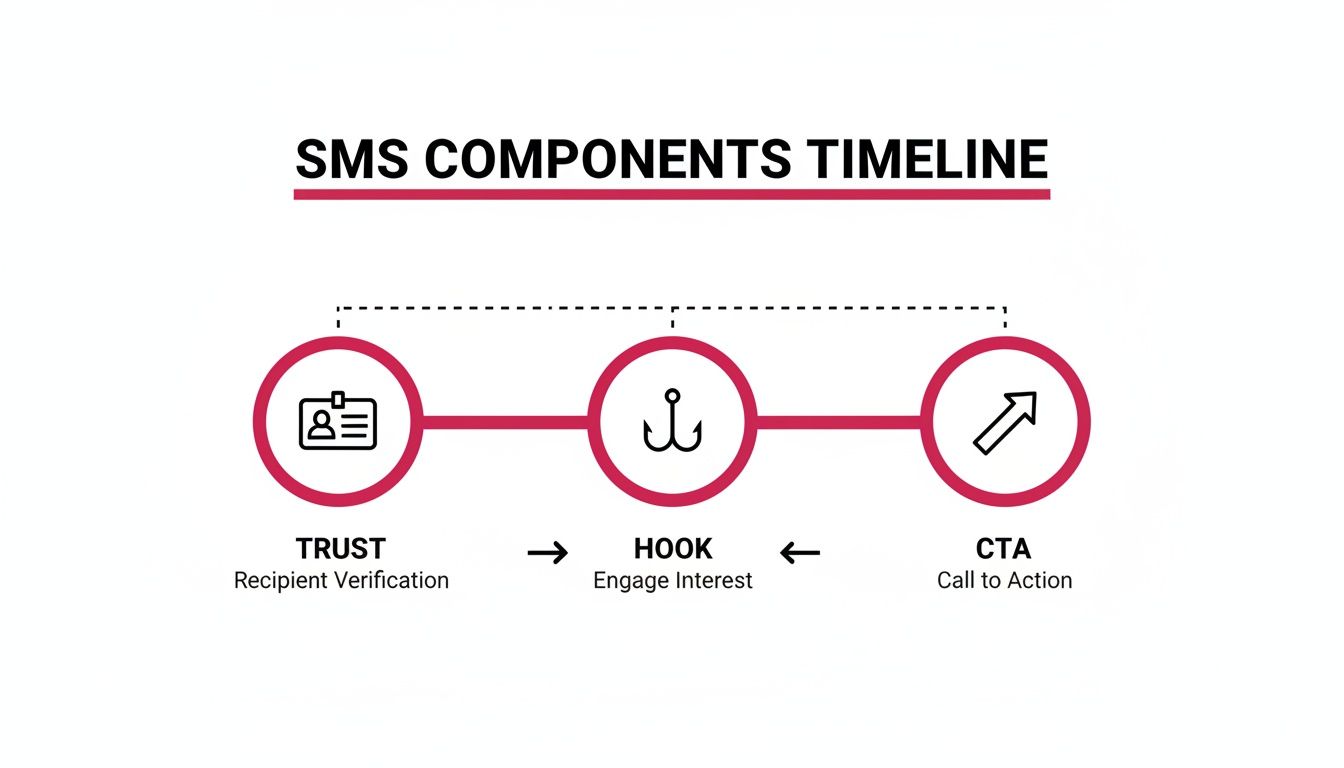
By structuring each text to first build trust, then hook their interest, and finally drive them to action, you create a sequence that’s incredibly persuasive.
Why This Timing Strategy Works
This multi-day approach taps into some powerful consumer psychology. The initial delay shows you respect their decision-making process, while the follow-up messages grab their attention at different points in their day. The sheer speed of SMS makes this strategy incredibly potent.
An effective sequence is all about rhythm. It’s a dance between being persistent and being patient. The goal is to stay top-of-mind without becoming a nuisance, and this is where a well-timed sequence shines.
This immediacy is a total game-changer. Research shows 77% of these kinds of SMS messages get a response within just 10 minutes—that’s over three times faster than email. For businesses, automated SMS flows generated 18% of total revenue from only 9% of sends in a recent year, proving just how much punch they pack.
Smart Sending Respects Your Customers
Timing isn’t just about the delay between messages; it’s also about when during the day you send them. An autoresponder text message that buzzes someone’s phone at 3 AM is a guaranteed way to annoy a customer and get an instant unsubscribe. This is where smart sending features are absolutely essential.
A platform like CartBoss has a built-in ‘Do-Not-Disturb’ mode that automatically stops messages from being sent during unsociable hours, like late at night or super early in the morning. So if a cart is abandoned at midnight, our system will intelligently hold that first reminder until a more reasonable time, like 9 AM the next day.
This feature is crucial for building a positive brand reputation. It shows your customers you value their time and privacy, which is how you build trust and long-term loyalty. By combining a strategic sequence with respectful sending windows, you create a powerful, customer-first recovery strategy that drives sales without damaging your brand.
For more advanced sequencing ideas, check out our guide on drip campaign examples that you can adapt for your own store.
Proven Autoresponder Templates That Actually Convert
Knowing when to send an autoresponder text message is a huge piece of the puzzle, but knowing exactly what to say is how you actually make the sale. A solid template is your blueprint for success, blending your brand’s personality with a bit of urgency and a clear call-to-action. It takes the guesswork out of the equation.
These templates aren’t just random bits of text; they’re built for the most critical moments in an eCommerce customer’s journey. Think of them as strategic tools designed to bring back lost sales, give a warm welcome to new customers, and re-engage shoppers who’ve gone quiet. Let’s dive into the formulas you can put to work today.
The Abandoned Cart Recovery Sequence
For any online store, this is the most important autoresponder text message sequence you’ll ever send. The idea is to gently nudge the customer back to their cart with a series of messages that slowly build in value and urgency.
Here’s a look at how a simple, three-part SMS sequence can work wonders for your abandoned cart recovery rate. Each message has a specific job to do, sent at just the right time to maximize its impact.
Cart Recovery Message Template Sequence
| Message | Timing | Template Example | Goal |
|---|---|---|---|
| 1: The Gentle Nudge | 30-60 minutes after abandonment | Hey [Customer Name]! It looks like you left something behind at [Your Store Name]. Your items are saved and waiting for you! Complete your order here: [Cart Link] |
A friendly, no-pressure reminder for distracted shoppers. The goal is to make it incredibly easy for them to pick up right where they left off. |
| 2: The Soft Incentive | 24 hours after abandonment | Hi [Customer Name], still thinking it over? We didn't want you to miss out! Use code SAVE10 for 10% off your order at [Your Store Name]. Your cart expires soon: [Cart Link] |
Introduce a small discount to sweeten the deal. Adding a hint of urgency about the cart expiring often provides the push they need. |
| 3: The Final Offer | 48 hours after abandonment | [Your Store Name]: Last chance, [Customer Name]! Your cart is about to disappear. Complete your purchase now with 15% off using code FINAL15. Don't miss out: [Cart Link] |
Go for a direct, urgent approach. The slightly better offer and “last chance” language creates scarcity, prompting immediate action. |
This tiered approach respects the customer’s space while systematically overcoming their hesitation. It’s a proven method that balances helpful reminders with compelling incentives, turning forgotten items into completed sales.
The New Customer Welcome Message
The moment a customer makes their first purchase or signs up for your texts, you have a golden opportunity. An instant welcome message is your chance to start the relationship off on the right foot.
Template: The Warm Welcome & First Perk
- Message:
Welcome to the [Your Store Name] family, [Customer Name]! We're thrilled to have you. As a thank you, here's 10% off your next purchase: WELCOME10. Shop now: [Your Website Link] - Why It Works: This does three things perfectly: it confirms their signup, shows genuine appreciation, and gives them immediate value with a discount. It sets a positive, generous tone for the future and encourages them to come back and shop again soon.
Your welcome text is your digital handshake. It’s your first chance to make a great impression and turn a one-time buyer into a loyal fan. Make it count by being warm, welcoming, and generous.
The Customer Win-Back Campaign
It happens. Even your most loyal customers sometimes go quiet. A win-back autoresponder text message is specifically designed to reconnect with shoppers who haven’t bought anything in a while, reminding them why they fell in love with your brand in the first place.
Template: The “We Miss You” Offer
- Message:
Hey [Customer Name], it's been a while! The team at [Your Store Name] misses you. Come back and see what's new with 20% off on us. Use code COMEBACK20: [Your Website Link] - Why It Works: This message feels personal. “We miss you” is so much warmer and more human than a generic marketing blast. When you pair that sentiment with a genuinely compelling discount, you give past customers a powerful reason to come back. For more creative ideas, check out our deep dive into SMS marketing message examples.
Going Global with Pre-Translated Messages
Want to sell internationally? You have to speak your customer’s language—literally. This is where a platform like CartBoss becomes a massive advantage. It completely removes the language barrier by using pre-written and pre-translated message templates.
When a customer from France abandons their cart, the system automatically detects their language and sends the reminder in perfect French. Same for a shopper in Spain, Germany, or anywhere else.
This means your abandoned cart reminders, welcome texts, and win-back offers are always perfectly understood, no matter where your customers are. It makes global expansion feel effortless and ensures your messages hit home and convert, without you lifting a finger.
Navigating SMS Compliance and Deliverability
An autoresponder text message strategy is a powerful tool, but it’s only as good as its ability to legally and reliably land on your customer’s phone. Anyone can send a text; the real trick is making sure it’s compliant and consistently delivered. That’s what separates the pros from the spammers. It means understanding the rules of the road—regulations designed to protect people and, in turn, build trust in your brand.
Think of SMS compliance as the concrete foundation of your entire messaging strategy. If it cracks, the whole thing comes crashing down. You’ve got major regulations like the TCPA (Telephone Consumer Protection Act) in the U.S. and GDPR in Europe setting strict guidelines. The absolute biggest rule? Explicit consent. You must have clear, undeniable permission from a customer before a single marketing text hits their inbox.
The Golden Rules of SMS Compliance
Getting compliance right isn’t just about dodging massive fines—it’s about building a real, respectful relationship with your audience. When customers trust you, they’re far more likely to buy from you. Simple as that.
Here are the absolute non-negotiables:
- Explicit Opt-In: Customers have to knowingly agree to get texts from you. This is usually done with a checkbox at checkout that is never pre-selected.
- Clear Opt-Out: Every single promotional message has to include an easy way to unsubscribe, like the classic “Reply STOP to cancel.”
- Identify Yourself: Don’t be a stranger. Always make it crystal clear who the message is from.
For a deeper dive into the nitty-gritty of these regulations, this TCPA compliance checklist is a fantastic resource.
Ensuring Your Messages Get Delivered
Once you’ve got your legal ducks in a row, the next challenge is deliverability. You need to make sure your texts actually make it to the inbox and aren’t flagged as spam by mobile carriers. These networks are getting smarter every day at filtering out messages that look shady.
A compliant and well-crafted message builds brand equity with every send. It tells the customer you respect their privacy, which is the cornerstone of modern marketing. Getting this right is non-negotiable.
To keep your deliverability rates sky-high, you need to avoid common spam triggers. That means no ALL CAPS shouting, no sketchy-looking links, and not blasting out too many messages at once. This is where a platform like CartBoss becomes your best friend. It’s built with compliance at its core, handling these details for you automatically. Features like a built-in do-not-disturb mode and effortless unsubscribes help you build that customer trust without even thinking about it. Our own guide on SMS marketing compliance breaks down even more strategies.
Following the rules isn’t a drag; it’s your secret weapon. The average SMS click-through rate is a staggering 18%, which absolutely demolishes email’s typical 2.5%. Sticking to compliant practices is what lets you achieve those kinds of numbers and stand out from the noise. It proves that playing by the rules isn’t a limitation—it’s your greatest advantage.
How to Measure and Optimize Your SMS Campaigns
Launching an autoresponder text message campaign without keeping an eye on the data is like driving with your eyes closed. You might be moving, but you have no idea if you’re headed in the right direction. To really understand what’s working, you have to get past the guesswork and focus on the numbers that actually impact your bottom line.
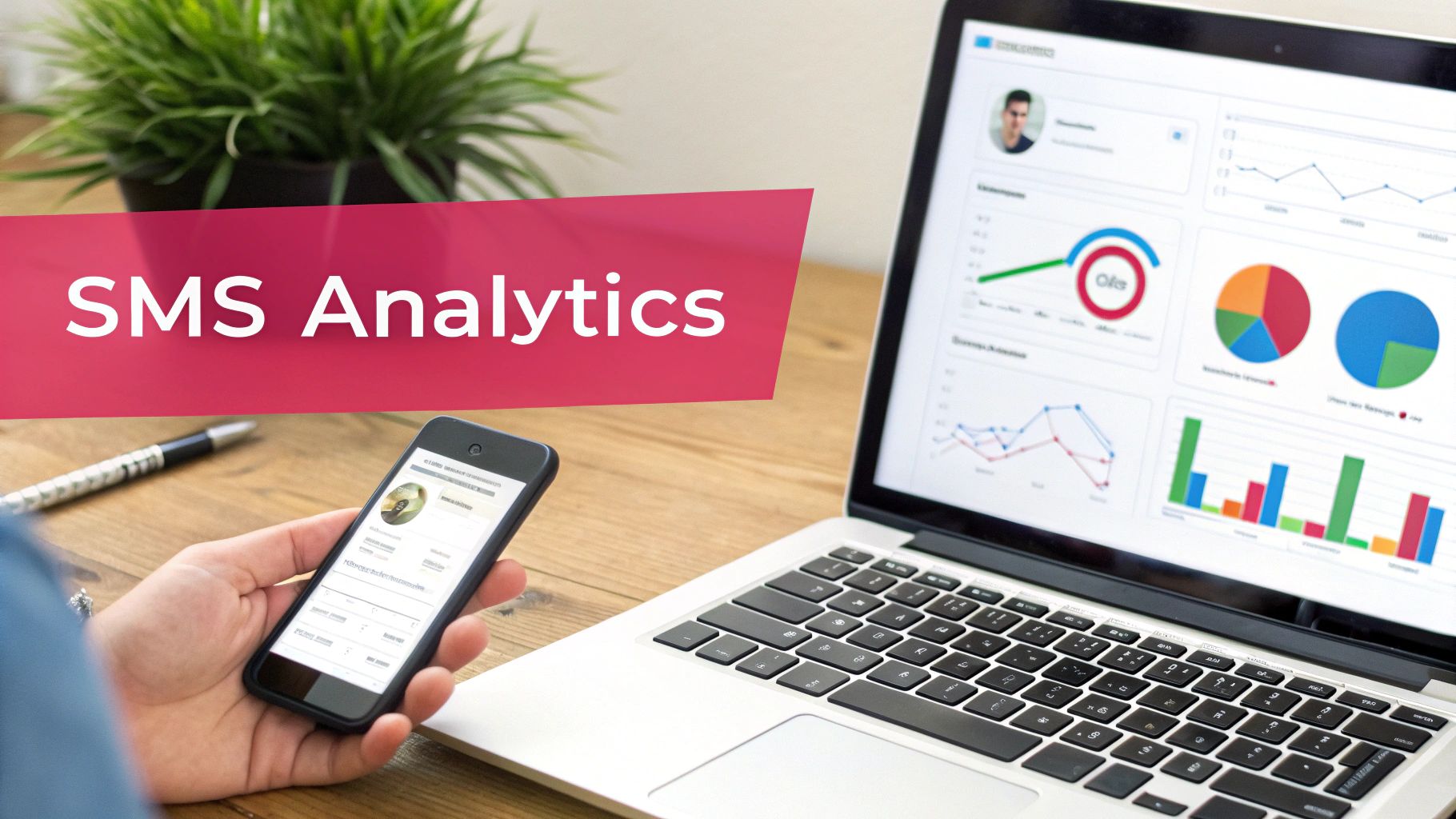
You can’t improve what you don’t measure. A solid analytics dashboard, like the one built into CartBoss, is designed to turn all that raw data into clear, actionable insights. It lets you see exactly which messages are making customers click “buy” and which ones are falling flat.
Key Metrics That Actually Matter
It’s easy to get lost in a sea of numbers. Forget the vanity metrics that look good on a chart but don’t add a single dollar to your revenue. Instead, zone in on the performance indicators that tell you the real story of your SMS strategy.
Here are the essential metrics you should be tracking:
- Conversion Rate: This is the big one. It’s the percentage of people who actually completed the purchase after getting your text. A high conversion rate is the clearest sign that your message, timing, and offer are all perfectly aligned.
- Click-Through Rate (CTR): This tells you what percentage of people clicked the link in your message. A strong CTR means your copy was compelling enough to grab their attention and make them want to see more.
- Return on Investment (ROI): This is the ultimate measure of success. It calculates exactly how much money your campaign made for every dollar you put into it. It doesn’t get much clearer than that.
- Unsubscribe Rate: This tracks how many people are opting out. If you see a sudden spike, it’s a red flag. It could mean your messages are too frequent, not relevant enough, or you’re sending them at annoying times.
Turning Data Into Actionable Insights
Just looking at these numbers isn’t enough. The real magic happens when you use that data to make smart decisions and fine-tune your campaigns for even better results. For example, if you have a high CTR but a low conversion rate, the problem probably isn’t your text message—it’s likely an issue on your landing page or in your checkout process.
Think of your analytics dashboard less like a report card and more like a treasure map. Every data point is a clue that points you toward more revenue and happier customers.
You might run a test and discover that a 10% discount offer converts way better than free shipping. That’s a powerful insight. It allows you to ditch what isn’t working and pour your resources into the strategies that are proven to deliver.
Done right, SMS campaigns can bring in a staggering $21 to $41 for every $1 spent, making it one of the most profitable channels available to e-commerce stores. This is especially true for abandoned cart texts, where over 54% of all SMS revenue comes from these automated flows. You can dive deeper into these powerful business texting trends to see the potential.
The key to unlocking these kinds of returns is constant A/B testing. Keep experimenting with different message copy, offers, and send times to continuously improve your performance and maximize your ROI.
Your Autoresponder Text Questions, Answered
Jumping into automated text messaging can bring up a few questions. From the legal stuff to sending messages across the globe, getting clear answers is the first step to building a strategy that actually works—and one that your customers will appreciate.
Let’s clear up some of the most common questions we hear.
Are Autoresponder Text Messages Legal for Marketing?
Yes, they are 100% legal, but you have to play by the rules. Regulations like the TCPA in the US and GDPR in Europe are there to protect consumers, and sticking to them is non-negotiable.
It really boils down to two golden rules:
- Get Clear Consent: You absolutely must have explicit permission before sending any marketing texts. Usually, this is a simple checkbox at checkout that the customer has to actively click themselves.
- Make Opting Out Easy: Every single message needs a simple way for people to unsubscribe, like replying with “STOP”.
This is where a tool like CartBoss becomes so valuable. It’s designed to be compliant from the ground up, handling these requirements automatically so you can focus on making sales, not worrying about legal headaches.
What’s the Best Number of Texts for a Recovery Sequence?
The sweet spot is 2-3 messages. Send just one, and it’s easy to miss. Send more than three, and you start to get annoying, which is a fast track to getting an unsubscribe.
A good sequence feels like a helpful conversation, not a robot yelling at you. It respects the customer’s attention while giving them a couple of chances to come back, turning a simple distraction into a finished sale.
A proven rhythm usually works best. A gentle reminder an hour or so after they leave, a follow-up with a small discount 24 hours later, and maybe a final “last chance” offer around the 48-hour mark is a killer strategy. It builds a bit of urgency without being pushy.
Can I Send Automated Texts to International Customers?
Of course! We’re all selling in a global market now. Talking to customers in their own language isn’t just a nice-to-have; it’s how you build trust and get them to click “buy.”
Modern SMS platforms are built for exactly this. Features like automatic language detection and a whole library of pre-translated messages are a total game-changer. This means when a shopper from Germany leaves their cart, they get a perfectly worded reminder in German—automatically. It breaks down the language barrier and makes your autoresponder text message campaigns work no matter where your customers are.
Ready to turn those abandoned carts into your biggest source of revenue? With CartBoss, you can launch powerful, compliant, and globally-ready SMS campaigns in just a few minutes.