



To really nail your SMS blast campaigns, you need a strategy that grabs attention the second it lands. It all starts with picking the right battleground, and for any e-commerce store, that’s almost always abandoned cart recovery—the single biggest leak in your sales funnel.
Why SMS Is Your Best Bet for Cart Recovery
Let’s be honest: abandoned carts are a frustrating part of life for every online store. A customer finds something they love, adds it to their cart, gets to the checkout… and then they’re gone. This isn’t just a missed opportunity; it’s lost revenue that was just seconds away from being yours.
For a long time, email was the go-to for recovery efforts. But its power is fading fast in a world of overflowing inboxes and aggressive spam filters.
This is where a timely, personal text message cuts right through the noise. SMS marketing isn’t just another channel; it’s a direct line to your customer’s pocket. The speed and crazy-high engagement rates make it the perfect weapon for time-sensitive situations like cart recovery.
The Unbeatable Advantage of a Direct Message
The real power of SMS is in its incredible open and response rates. Unlike emails that can sit unread for days, a text message is almost always seen within minutes. That speed is absolutely critical when a customer’s intent to buy is still fresh.
You get a few huge wins with SMS:
- Near-Perfect Open Rates: People are hardwired to check their text messages. This guarantees your recovery attempt is actually seen, not buried under a pile of promotional emails.
- Immediate Action: The short, direct nature of an SMS just begs for a quick click. A simple reminder with a link straight back to their cart is often all it takes to close the sale.
- Personal Connection: A text feels more like a one-on-one conversation and less like a mass marketing blast. This helps build a stronger relationship with your customer, making them feel looked after.
SMS vs Email for Cart Recovery Showdown
When you put the numbers side-by-side, it becomes crystal clear why SMS is the superior choice for winning back would-be customers. Email has its place, but for the fast-paced world of abandoned carts, there’s no contest.
| Metric | SMS Blast Performance | Email Campaign Performance |
|---|---|---|
| Open Rate | ~98% (Almost guaranteed to be seen) | ~20% (Often lost in the inbox) |
| Response Time | ~90 seconds (Nearly instant engagement) | ~90 minutes (A much slower burn) |
| Click-Through Rate | 21-35% (High intent and direct action) | ~6% (Lower engagement, more friction) |
| Conversion Rate | Significant (Often 10%+ recovery) | Modest (Typically a few percent) |
The data tells the story. With an average cart abandonment rate hovering between 70-80%, SMS became the secret weapon for savvy retailers. They saw 45% response rates and 21-35% click-through rates—numbers that email’s typical 6% CTR can’t even touch.
Stores that automated their SMS recovery saw a 16.7% overall revenue lift, which jumped to 21% during peak seasons like BFCM. This was fueled by a 93% growth in messaging volume that successfully re-engaged shoppers who would have otherwise been lost for good.
This automated approach is where the magic happens. Tools like CartBoss let you program SMS blast sequences that are sent at the perfect moment, recovering sales completely on autopilot.
Want to dive deeper? Find out more about how text messages vs emails stack up in our detailed comparison. In the next section, we’ll walk through setting this powerful strategy up for your own store.
Setting Up a Compliant SMS Marketing Program
Before you even think about crafting that perfect SMS blast, we need to talk about the legal stuff. I know, it’s not the fun part, but building a rock-solid legal foundation is non-negotiable. An effective SMS program isn’t just about pushing out messages; it’s about creating a trusted, two-way street with your customers.
Ignoring compliance doesn’t just put you at risk for massive fines—it completely shatters the trust you’ve worked so hard to build. Get this wrong, and your whole strategy is dead in the water.
Regulations like the Telephone Consumer Protection Act (TCPA) in the US and GDPR in Europe are incredibly strict for a reason: they shield people from spam. This means you absolutely must have explicit, documented consent from every single person on your list before a marketing text ever leaves your platform.
Securing Explicit Customer Consent
Let’s be crystal clear: implied consent isn’t going to cut it. You need a direct, affirmative action from the customer—what we call an “opt-in”—where they knowingly agree to get your texts. The trick is to make this feel natural and valuable, not like a legal hurdle.
Here are a few proven ways I’ve seen work time and time again to collect compliant opt-ins:
- Checkout Checkbox: This is a classic. Add a simple, unchecked box on your checkout page with clear language like, “Sign me up for exclusive offers and order updates via text.”
- Pop-Up Forms: Use a pop-up that triggers on exit-intent or after a set time. Offer a small discount for their phone number, but make sure the call-to-action is completely unambiguous.
- Keyword Opt-Ins: Promote a unique keyword (e.g., text DEALS to 555888) across your social media, email newsletters, or website banners. It’s a quick and easy way for people to join your list.
This is one area where using a specialized platform saves you a world of headaches. A tool like CartBoss, for instance, automatically bakes compliant language and consent-gathering mechanics right into its features.
The screenshot above shows how clear, compliant language is built directly into the user experience, making consent a no-brainer for the customer. Platforms with built-in compliance take the guesswork out of the equation and help protect your program from day one.
Building Trust Beyond the Opt-In
Compliance isn’t a one-and-done task; it’s an ongoing commitment. You’re being invited into a customer’s most personal device, so you have to respect their space and their time.
A huge part of this is giving them an easy way out. Every single marketing text you send must include instructions like, “Reply STOP to unsubscribe.” This isn’t just a courtesy; it’s a legal requirement. To really make sure your program is hitting all the right notes, it’s worth diving into a comprehensive guide on SMS marketing best practices.
Remember: A customer’s phone number is a privilege, not a right. Treat it that way. Respecting quiet hours (generally 8 pm to 11 am in the recipient’s local time) is absolutely critical for keeping customers happy and avoiding a flood of opt-outs.
It’s also vital to get familiar with the specifics of different regulations. If you need a deeper dive, you can learn more about SMS marketing compliance to ensure every message is both safe and effective.
When you put these rules first, you’re not just dodging penalties. You’re building a sustainable marketing channel that customers will actually find valuable.
How to Write SMS Copy That Actually Converts
Your automation workflow can be perfect, but it means absolutely nothing if the message itself falls flat. When you’re programming an SMS blast, every single character counts.
This isn’t email. You don’t have the luxury of space. You get just a few seconds to grab attention, create a bit of desire, and drive a click. The real magic is in writing short, powerful copy that feels personal and urgent.
Forget those generic templates that scream “marketing blast.” To be effective, your SMS copy has to connect on a human level. Use the customer’s name, reference the specific item they were looking at, and speak directly to why they wanted it in the first place. This isn’t just about sending a bland reminder; it’s about reigniting the excitement they felt when they first added that product to their cart.
The Anatomy of a High-Converting Text
To consistently win back sales, I’ve found that your SMS copy really only needs three core components. Think of it as a simple but powerful formula for every message you send out.
- Personalization: Always start with their name. Mention the product they were looking at. This simple touch instantly transforms a generic blast into a personal nudge that’s hard to ignore.
- A Clear Value Prop: Why should they come back right now? This is where a compelling offer, like a dynamic discount or free shipping, makes all the difference. It gives them a real, tangible reason to stop what they’re doing and finish the purchase.
- An Irresistible Call-to-Action (CTA): Just be direct. Use action-oriented phrases like “Complete your order” or “Grab your items.” Most importantly, always include a direct link back to their pre-filled checkout. Reducing friction is everything.
Pro Tip: The best SMS CTAs lead directly to a checkout page where the customer’s info and cart items are already loaded. The fewer steps they have to take, the higher your conversion rate will be. This one detail can make or break your recovery efforts.
Before and After Real-World Examples
Let’s look at this framework in action. A weak, generic message almost always gets ignored, while a strategic one gets the click.
Before (Generic and Ineffective):
"You left items in your cart. Click here to finish your purchase: [link]"
This message is completely forgettable. It has no personality, no urgency, and zero real incentive. It feels like it was sent by a robot—because it was.
After (Personalized and Powerful):
"Hey Jessica! Still thinking about the Trailblazer Hiking Boots? They're waiting for you! Use code COMEBACK15 for 15% off, but hurry—it expires tonight. Grab them here: [link]"
See the difference? This version is a game-changer. It uses her name, calls out the specific product, creates real urgency with an expiring discount, and gives her a clear, actionable link.
This screenshot shows how a tool like CartBoss automates the creation of these powerful messages, complete with dynamic discounts and pre-filled checkouts.
The system automatically pulls in customer and product details, making sure every single message feels personal without any manual work on your end. It even handles language translation, which is crucial if you’re trying to reach a global audience effectively.
To get more inspiration, check out these powerful SMS marketing message examples and templates that drive conversions. When you program an SMS blast, using pre-written, optimized copy ensures your messages hit the mark every time, no matter who the customer is or where they live.
Programming Your Automated SMS Recovery Workflow
You’ve got the perfect copy ready to roll. Now it’s time to build the engine that actually delivers it. This is where you program your SMS blast to do the heavy lifting, turning a manual chore into a powerful, automated revenue stream. Think of it as creating a “set it and forget it” system that sends the right message at the right moment, every single time.
The goal here is to create a recovery cadence that feels helpful, not pushy. A well-programmed workflow is persistent enough to win back sales but smart enough not to tick off your customers. Nailing this balance is how you maximize recovery rates without burning out your subscriber list.
Designing Your Trigger and Timing Sequence
The trigger for any abandoned cart workflow is simple: a customer adds items to their cart, maybe even starts to check out, but then vanishes. The real art is in timing the messages that follow. A great sequence respects the customer’s journey while gently nudging them back to your store.
Here’s a tried-and-true, three-step cadence that consistently brings in results:
- The First Nudge (1-2 Hours After Abandonment): This first text is just a friendly, low-pressure reminder. Life happens. Maybe they got distracted or had to answer the door. A quick message saying, “Hey [Name], did you forget something?” is often all it takes to bring them back while the purchase is still fresh in their mind.
- The Incentive (24 Hours After Abandonment): If that first gentle nudge didn’t work, it’s time to sweeten the deal. This second message introduces a real reason to act now, like a small discount or a free shipping offer. It shifts the conversation from a simple reminder to an exclusive opportunity they won’t want to miss.
- The Final Call (48-72 Hours After Abandonment): This is your last-chance message. You want to create a little bit of urgency by letting them know their cart or the special offer is about to expire. This final prompt is surprisingly effective at catching procrastinators and scooping up sales that would otherwise be lost for good.
This flow diagram breaks down the core ingredients that make these automated messages work.
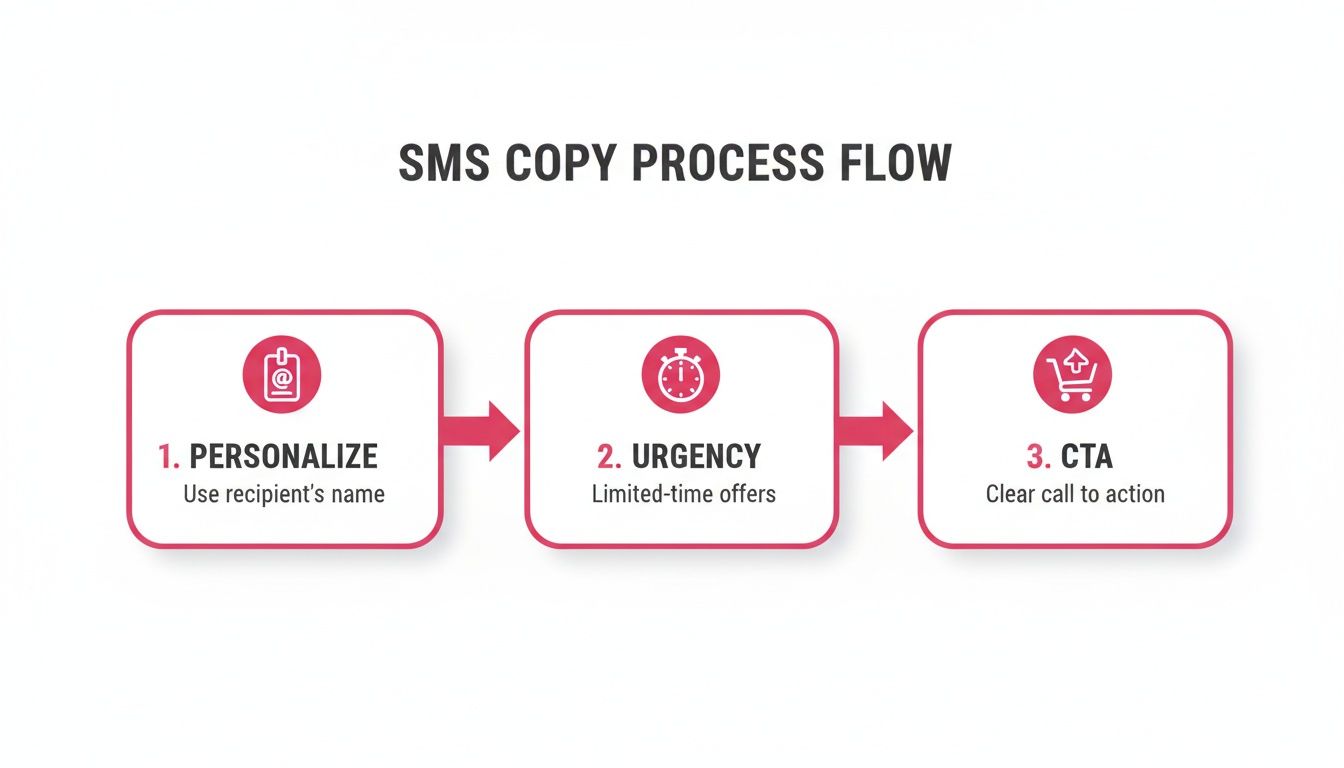
As you can see, every single message has to blend personalization with a touch of urgency and a crystal-clear call-to-action to get the job done.
To give you a clearer picture, here’s what this cadence looks like in practice.
| Sample Automated Cart Recovery SMS Sequence |
| :— | :— | :— | :— |
| Message | Timing | Message Goal | Example Copy Snippet |
| #1: The Reminder | 1-2 Hours Post-Abandon | Gently remind and re-engage while purchase intent is high. | “Hey [Name], looks like you left something behind at [Store Name]! Your cart is saved for you…” |
| #2: The Offer | 24 Hours Post-Abandon | Introduce a compelling incentive to overcome price hesitation. | “Still thinking it over? Complete your order now and get 10% OFF with code…” |
| #3: The Urgency | 48-72 Hours Post-Abandon | Create a final push by adding a sense of scarcity or a deadline. | “Last chance, [Name]! Your cart at [Store Name] expires tonight. Don’t miss out on…” |
This structured approach ensures you’re staying top-of-mind without becoming a nuisance, strategically escalating the offer to capture as many sales as possible.
Seamless Integration for True Automation
To truly run your SMS blasts on autopilot, your messaging tool absolutely must connect directly with your e-commerce platform. If you’re running on Shopify or WooCommerce, this integration isn’t just a nice-to-have; it’s essential. It’s the magic that lets your system automatically spot an abandoned cart and kick off your pre-programmed sequence without you lifting a finger.
A truly automated system doesn’t just blast out messages. It needs to intelligently manage the entire customer journey. For instance, if a customer buys after the first text, the system has to be smart enough to cancel the rest of the scheduled messages for them. Nobody wants to get a discount offer for something they just paid full price for.
This is where a platform like CartBoss really shines. By integrating directly with your store, it handles everything—from detecting the abandoned cart to applying dynamic discounts and even sending pre-translated messages based on the customer’s country. You can learn more about the power of SMS marketing automation in our detailed guide.
This kind of seamless connection is what’s fueling the massive growth of the SMS marketing market, which was projected to hit $12.6 billion in the US alone by 2025. The growth is all thanks to overwhelming consumer demand—a staggering 82% of people read their texts within five minutes. By programming your workflow, you’re tapping directly into this highly engaged audience, turning abandoned carts into a consistent source of profit while you focus on growing your business.
How to Measure and Optimize Your SMS Campaigns
Launching an automated SMS program is a great start, but the real growth comes from paying close attention to the data. An effective SMS strategy is always data-driven, turning raw numbers into smart decisions that actually boost your return on investment. You can’t just “set it and forget it” and expect magic to happen; you have to measure, tweak, and optimize.
The goal here is to move past just sending messages and start understanding their true impact. To really get a grip on your SMS efforts, you need to know how to measure marketing performance the right way, looking beyond vanity metrics to see what’s actually driving your bottom line.
Key Metrics You Absolutely Must Track
When you program an SMS blast, your platform’s dashboard can look like a wall of numbers. It’s easy to get overwhelmed. To cut through the noise, just focus on the handful of key performance indicators (KPIs) that directly show the health and profitability of your campaigns.
- Delivery Rate: This is the percentage of messages that successfully landed on your subscribers’ phones. If this number is low, it could point to problems with your contact list, like old or invalid numbers.
- Click-Through Rate (CTR): This is the gold standard for engagement. It measures the percentage of people who actually clicked the link in your text. It’s a direct reflection of how compelling your copy and offer are.
- Conversion Rate: The one that really matters. This tracks how many of those clicks turned into actual sales, telling you exactly how much revenue your SMS campaign is generating.
- Return on Ad Spend (ROAS): This is your profitability metric, plain and simple. It calculates how much money you earn for every dollar you spend on SMS. A high ROAS means your campaigns are a solid financial win.
When you look at the numbers, the performance of SMS often blows other channels completely out of the water. We’re talking a staggering 98% open rate for SMS campaigns, with 90% of those messages being read within just three minutes. And with response rates for SMS offers hitting 45%, it’s no wonder retailers have seen a 16.7% year-over-year revenue bump from this channel alone.
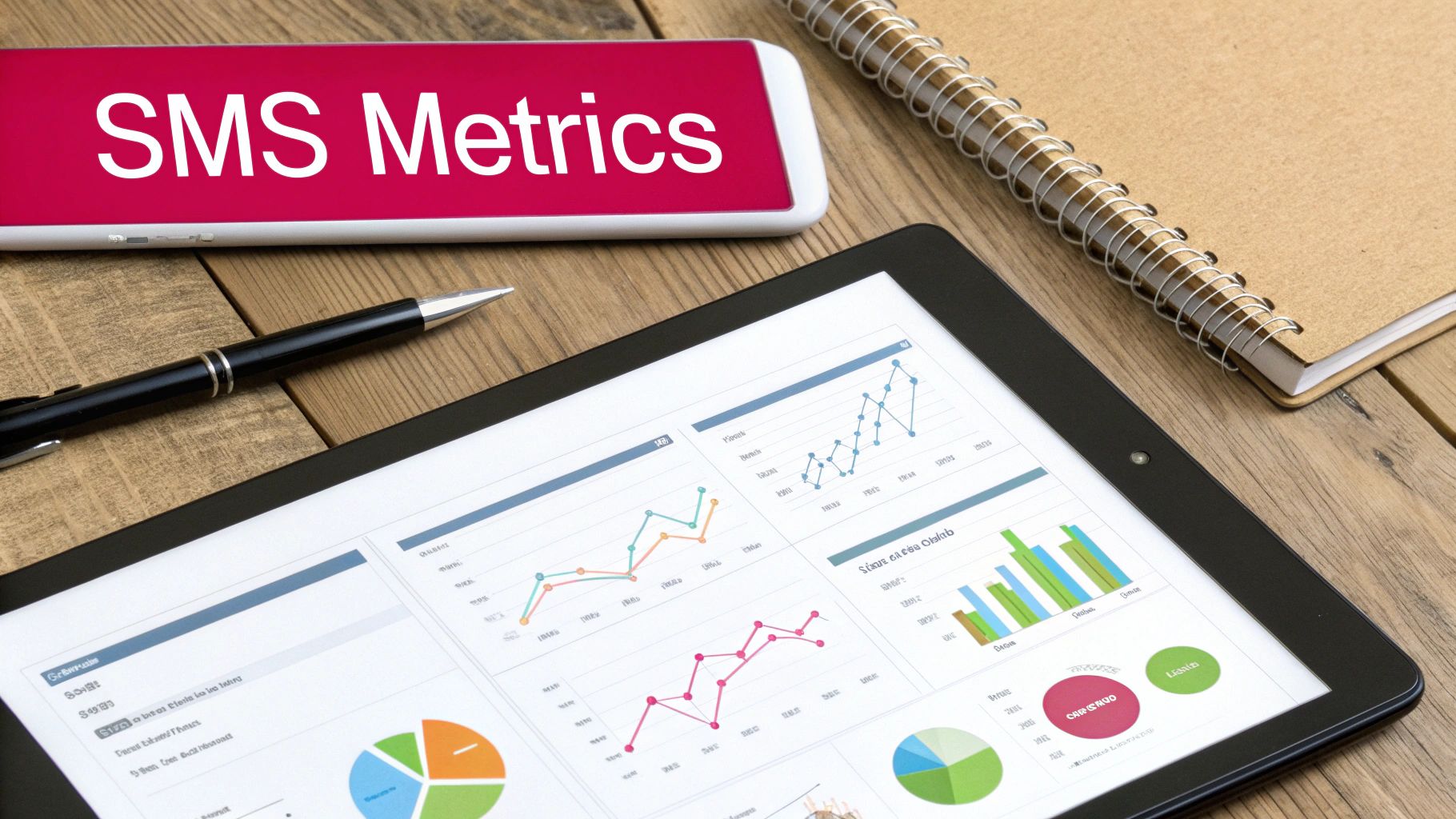
A detailed analytics dashboard like this gives you a clear, at-a-glance view of your campaign’s performance. It makes it so much easier to spot trends and identify opportunities to do better.
Turning Analytics Into Action
Data is totally useless if you don’t do anything with it. A low CTR, for instance, isn’t just a number; it’s a puzzle you need to solve. Is your call-to-action weak? Is the discount not exciting enough? Or maybe you’re just sending messages at the wrong time of day?
The only way to find out what truly works for your audience is to test relentlessly. A/B testing is your best friend for continuous optimization.
Start by testing just one thing at a time. Pit two different discount levels against each other—maybe 10% off versus free shipping. Try sending messages at noon versus 7 p.m. to see when your audience is most active. You can even experiment with different tones in your copy, like a playful message versus a more direct one.
By isolating these variables, you get clean data that tells you exactly what resonates with your customers. This constant cycle of testing and learning is how you turn a good SMS program into a highly profitable machine.
For a deeper look into improving this key metric, you might want to check out our guide on how to boost your SMS marketing conversion rates.
Answering Your Questions About SMS Blasts
Getting started with any new marketing channel brings up a few questions. When you’re programming an SMS blast for the first time, it’s totally normal to wonder about the details. Let’s clear up some of the most common queries we hear from e-commerce owners so you can launch your campaigns with confidence.
What’s This Going to Cost Me?
This is usually the first question on everyone’s mind. Unlike email, SMS isn’t free because it involves carrier fees for sending messages. But don’t let that scare you off—the pricing model is often much more profitable in the long run.
Many modern platforms, including CartBoss, have shifted to a performance-based model. What does that mean for you? You only pay a small commission on the sales that the platform actually recovers. This approach completely removes the upfront risk and ties your costs directly to the revenue you generate, pretty much guaranteeing a positive ROAS from the get-go.
Is It a Pain to Set Up?
We get it. The thought of integrating another tool with your Shopify or WooCommerce store sounds like a technical headache waiting to happen.
The good news is that today’s SMS automation platforms are built for people who aren’t developers. Most offer simple, plug-and-play installations that you can get running in just a few minutes. The process is usually guided, walking you through everything from connecting your store to activating pre-written, translated message templates. The whole point is to get you recovering sales almost instantly, without a massive learning curve.
The best tools are designed to handle all the heavy lifting for you. From compliance checks to automated message sequences, the system manages the complexity so you can focus on results, not technical details.
Will My Customers Think It’s Spammy?
This is a really important concern. Will sending texts feel too intrusive? It’s a valid point, but one that’s easily managed with a smart, respectful strategy. You build trust by following the golden rules: always get explicit consent, respect quiet hours, and make sure every message provides real value.
A properly programmed system is your best friend here. It ensures you’re sending messages at the right times (like mid-day, not midnight) and automatically stops sending reminders the moment a purchase is made. When done right, an SMS campaign doesn’t feel like spam. It feels like helpful, personal customer service guiding shoppers back to products they were already interested in.
Ready to turn abandoned carts into your biggest revenue source? CartBoss makes it simple to program SMS blast campaigns that recover sales on autopilot, with an average ROAS of 4,500%. See how it works at https://www.cartboss.io.