

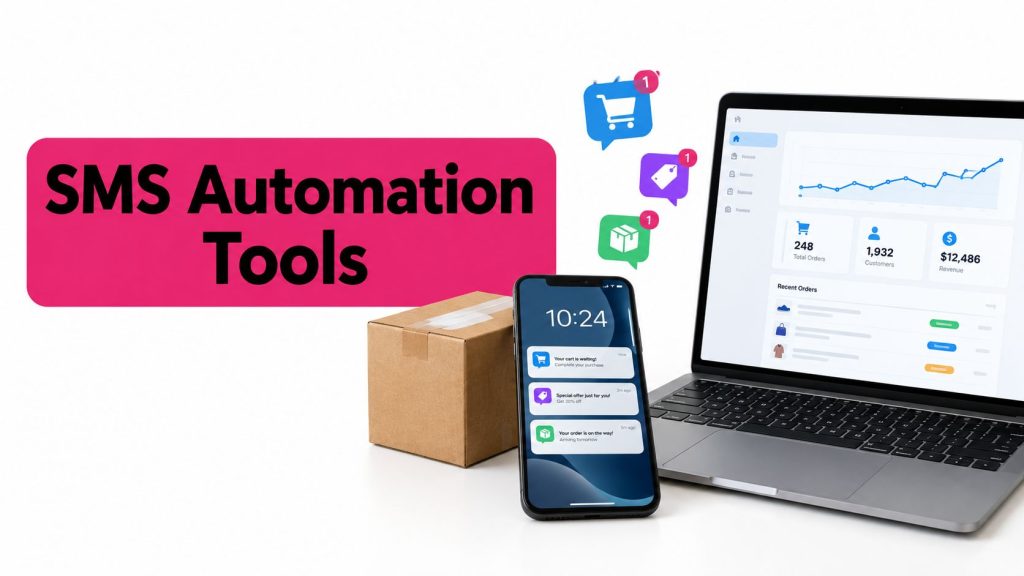
SMS automation tools can recover carts, drive promotions, and send transactional messages at a 99% open rate, which is why they’re the highest-impact channel most ecommerce stores aren’t using properly yet. Email fights for attention in a crowded inbox. A text lands where shoppers already live, and it gets seen fast.
You hire these tools for three jobs. Cart recovery brings shoppers back to a pre-filled checkout. Promotions move product without waiting for an email open. Transactional messages cover order confirmations, shipping updates, and delivery alerts. If a tool can’t do the first job profitably, the other two won’t save it.
The scale backs this up. U.S. wireless customers exchanged more than 2.1 trillion text messages in 2022, a 6% increase from about 2.0 trillion in 2021, across nearly 523 million U.S. wireless connections, according to CTIA’s 2023 annual survey highlights. Shoppers are already trained to act on texts.
I compared seven platforms on features, pricing, Shopify and WooCommerce support, deliverability and compliance, and best-fit use case. If you’re trying to turn paid traffic into profit, start here and pick one this week.
Table of Contents
- 1. CartBoss
- 2. Klaviyo
- 3. Postscript
- 4. Attentive
- 5. Omnisend
- 6. Privy
- 7. Shopify Messaging
- SMS Automation Tools: 7-Platform Comparison
- Pick the Right SMS Automation Tool and Start Recovering Revenue
1. CartBoss
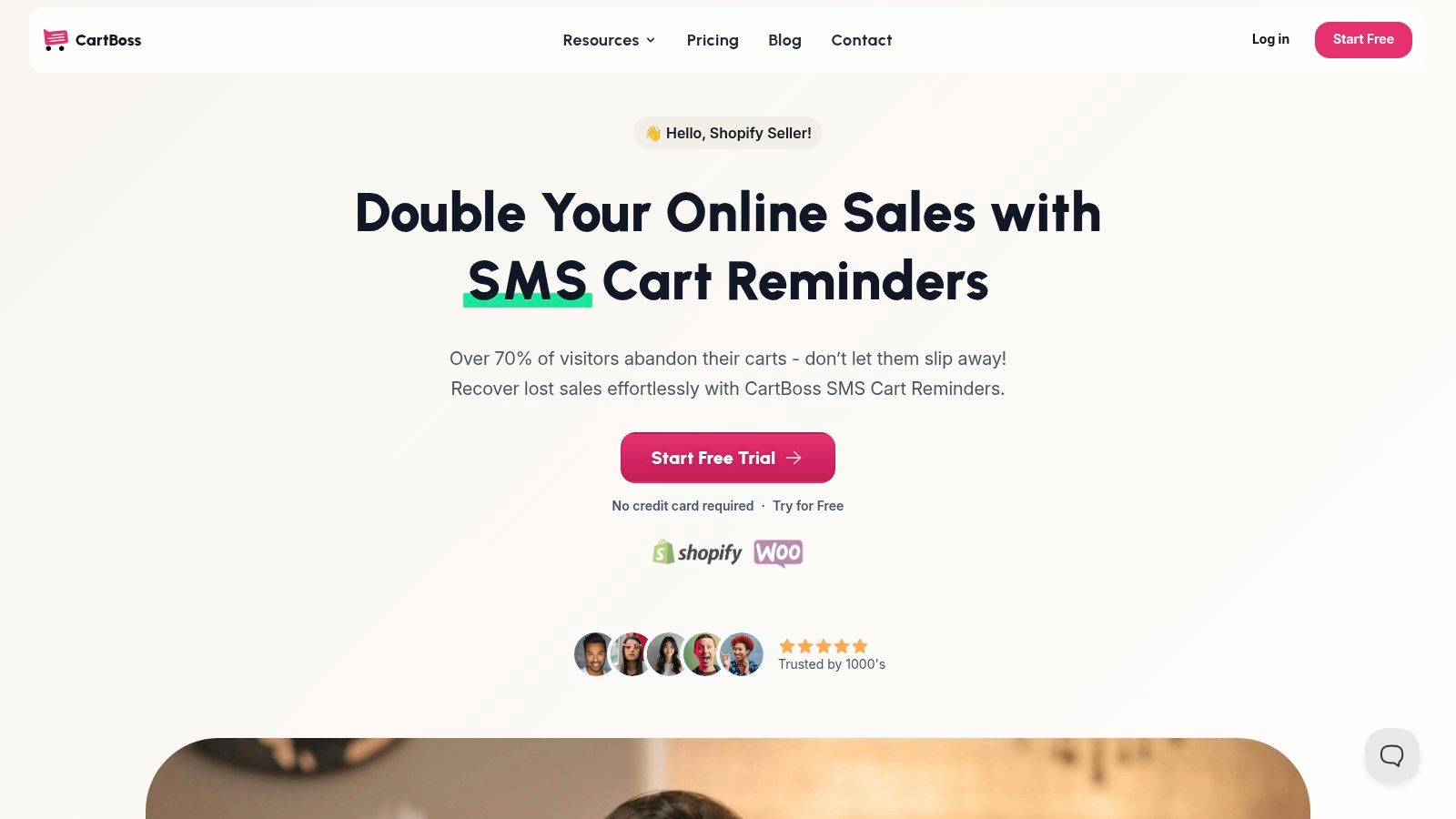
Pick CartBoss if your one job is recovering abandoned carts on Shopify or WooCommerce without building a lifecycle marketing department. It does one thing and does it fast. Install it with no code, it detects an abandoned checkout, and it sends a timely reminder with a direct link to the shopper’s pre-filled cart. A follow-up can add an optional discount if the first nudge doesn’t close the sale.
That focus pays off. Generic platforms make you configure flows, segments, and sender setup before you recover a single order. CartBoss ships with pre-written, localized messages in more than 30 languages, automatic language detection, and branded sender IDs. Customize wording, timing, and offers later, but you never start from a blank canvas.
Why It Wins for International Cart Recovery
If you sell across borders, reach decides whether SMS works at all. GSMA estimates approximately 5.8 billion unique mobile subscribers in 2024, equal to 71% of the global population, plus about 4.7 billion mobile-internet subscribers at 58% penetration, in GSMA’s Mobile Economy 2025 report. SMS reaches those shoppers without requiring a specific app, and CartBoss’s language detection turns that reach into messages they can read in their own language.
On performance, stay skeptical. The company reports a 99% SMS open rate and a 50%+ click rate. It also claims more than 7 million carts recovered and an average 4,500% ROAS, company-reported figures from CartBoss’s supplied product information rather than a guarantee for your store. Test them against your own revenue per send.
- Pricing: Pay-as-you-go with no monthly subscription, free to start with no credit card required. Rates vary by destination, so check your top countries before scaling.
- Compliance tools: Do-not-disturb hours and unsubscribe links are built in, plus GDPR and CCPA positioning for privacy-conscious stores.
- Analytics: Track recovered carts and revenue so you can judge the flow, not guess.
Practical rule: Launch with the pre-written sequence, measure one week of revenue per send, then customize. Don’t rewrite copy before you have a baseline.
The trade-offs are real. Costs grow with volume and destination because there is no single fixed price. You also need eligible phone numbers with proper consent, and platform support centers on Shopify and WooCommerce rather than every commerce system. For a focused recovery job, that is the right trade.
2. Klaviyo
Pick Klaviyo when you want SMS and email running off the same customer data. Its campaigns and automated flows share customer profiles, shopping behavior, and segmentation, so an abandoned checkout, welcome series, and post-purchase sequence run on one brain instead of three disconnected tools.
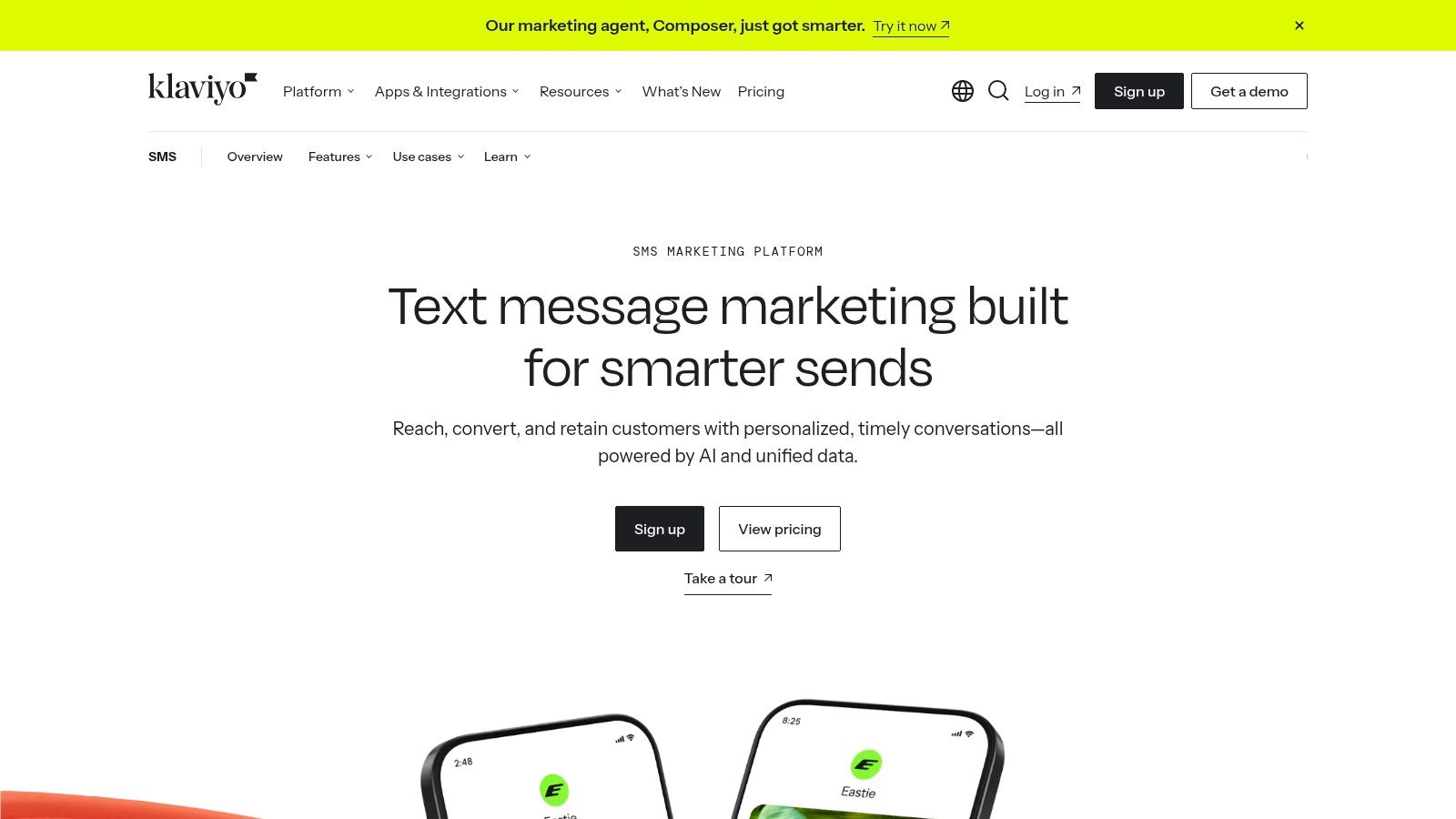
That shared data is the selling point. You can split shoppers by cart value, purchase history, or engagement and hold the text until email has already failed to convert. For stores with deep list depth, that prevents channel cannibalization and keeps discounts aimed at shoppers who need the push.
Klaviyo’s own research gives you a build order. Across thousands of ecommerce customers, Klaviyo found that two to three abandoned-cart messages produce optimal performance, per its abandoned cart flow documentation. Send a plain reminder first, handle shipping or checkout friction second, and save the incentive for the final message. One text alone leaves money on the table.
Cost and Fit
A free tier exists with limited allowances, but SMS is billed separately and rates vary by usage, channel, and destination. Sending numbers and eligibility also vary by country. Budget SMS as its own line item, and read up on SMS marketing pricing for ecommerce and maximizing ROI before you forecast margins.
My take: if you run a small store that only needs cart texts, Klaviyo is more platform than you need and you will pay for it in setup time and complexity. If you already run email there and want lifecycle marketing in one place, it is the obvious pick.
3. Postscript
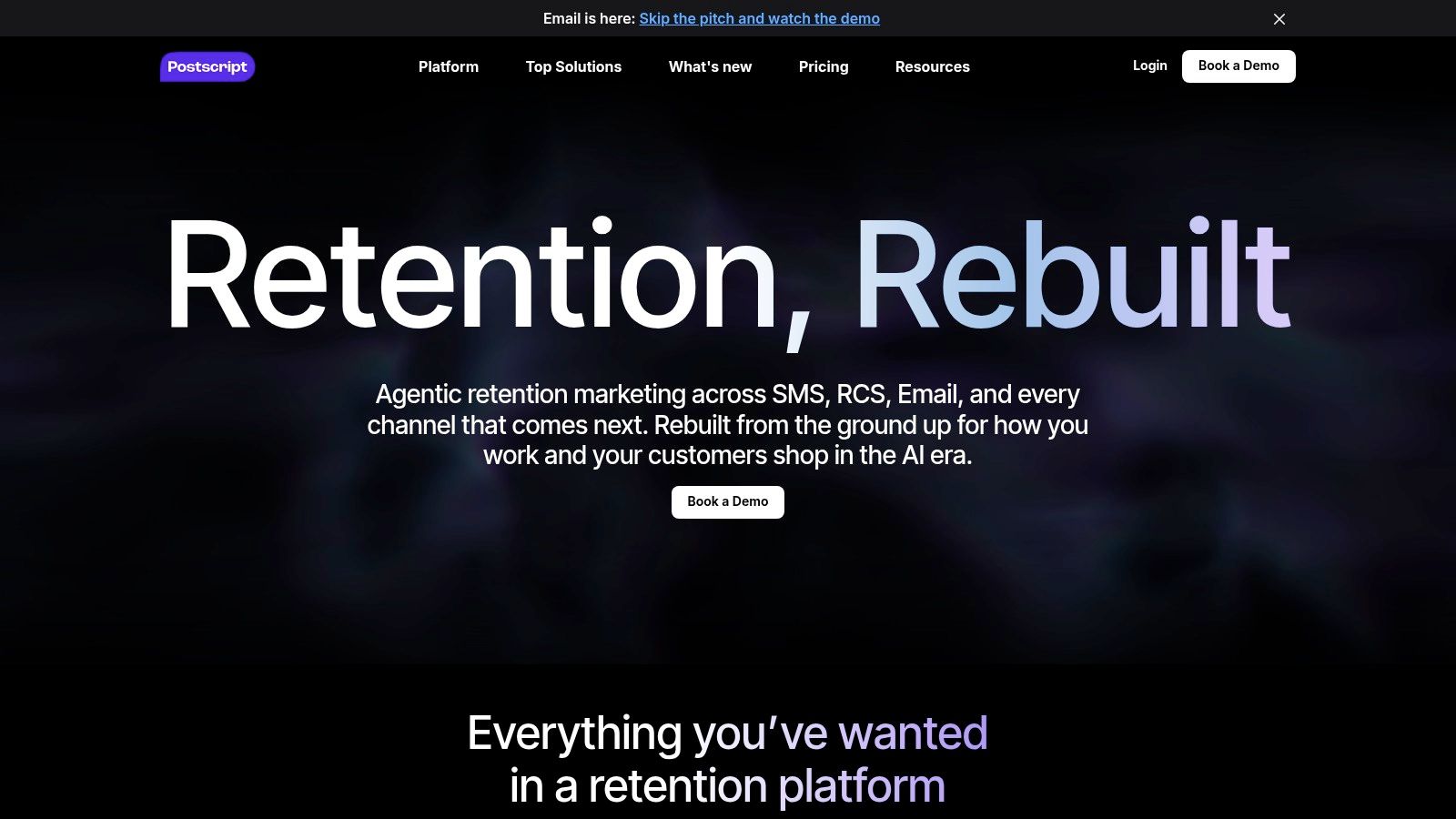
Postscript is the SMS-first choice for Shopify brands that want list growth, campaigns, and automation in a specialist tool. It covers subscriber acquisition, segmented campaigns, automated flows, and reporting, all oriented around ecommerce behavior rather than generic texting.
Speed is where a tool like this earns its keep. An independent survey found 42% of consumers expected a business response within 15 minutes and 66% within an hour, while 81% had opted in to receive business texts, in EZTexting’s 2024 consumer texting report. That means your automation can’t be a slow broadcast queue. It needs fast triggers, keyword routing, and a path to a human when a shopper asks about sizing, refunds, or returns.
Postscript fits that two-way model better than a basic reminder tool. Shopify merchants frequently praise its automation and segmentation, and the tight store integration makes triggers around cart and order activity straightforward. Compare the details directly in this CartBoss vs Postscript comparison of features and pricing if you’re deciding between a recovery specialist and a broader SMS program.
Watch the bill. Message charges and carrier fees mean total cost depends on volume, and some merchants find it expensive for their needs. The Shopify focus is also a ceiling. If you run WooCommerce or multiple platforms, look elsewhere. If you’re Shopify-only and SMS is a primary revenue channel, shortlist it.
4. Attentive
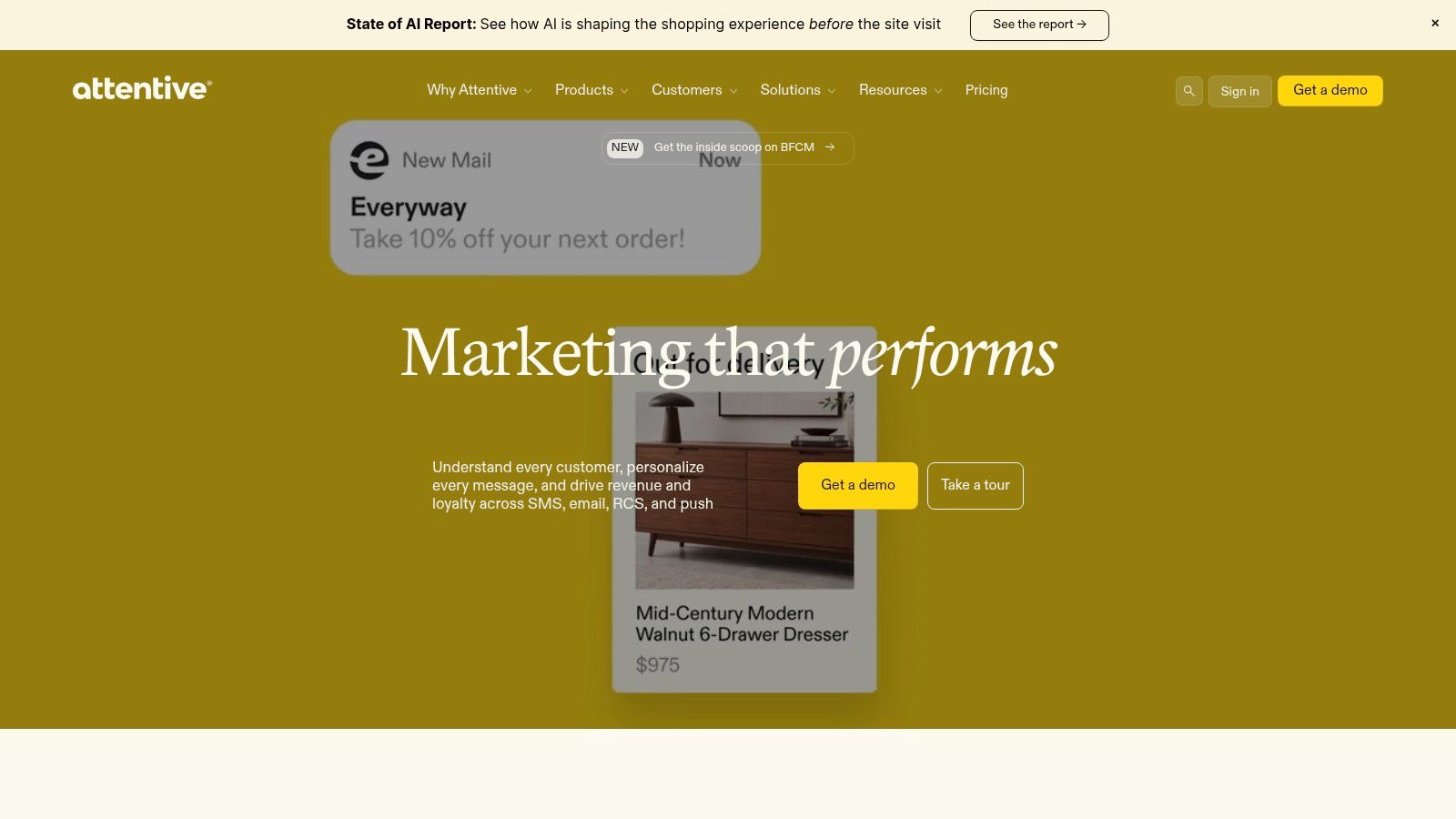
Enterprise recovery programs need more than a cart trigger, and Attentive is built for that scale. It ships prebuilt cart, checkout, browse, and session-abandonment journeys, plus SMS, MMS, email, RCS, and push depending on plan. Segmentation, campaign builders, analytics, onboarding, and strategic support are designed for teams running serious volume.
That power earns its price only when you fix why shoppers left. Research found 17% of U.S. online shoppers abandoned an order in the previous quarter because checkout was too long or complicated, and a checkout can be reduced to approximately 12 form elements, according to Baymard’s ecommerce checkout usability research. Point every recovery text at a simplified, mobile-friendly checkout with the cart restored. A deep link to a bloated checkout wastes the click.
Where Attentive Does Not Fit
Pricing is custom, so you can’t compare costs without talking to sales. That’s a real disadvantage for smaller stores that need a number today. US abandonment texts are also limited to one message per abandonment event sent within 48 hours under Attentive’s published sending rules, which constrains multi-step recovery design in that market.
If you want a wider pricing view before a sales call, see these top SMS marketing platforms for ecommerce compared on pricing and features. Attentive makes sense when you have the team and budget to use multichannel journeys.
A small shop with one recovery flow will drown in it.
5. Omnisend
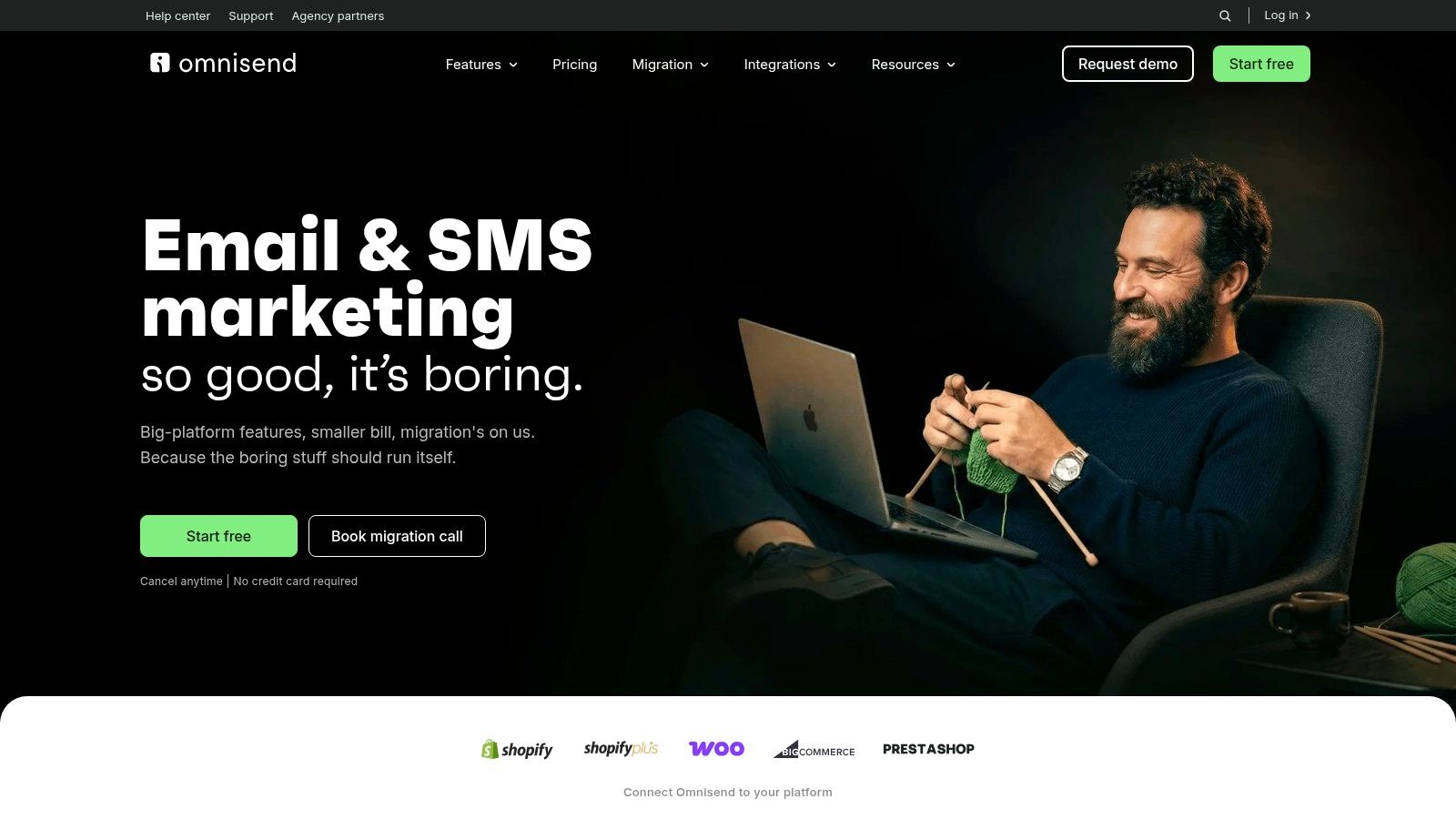
Omnisend is the pick when email already carries revenue and you want SMS plus web push inside the same automation. Drop SMS blocks into prebuilt abandoned-cart, welcome, and post-purchase sequences, then let the workflow choose the next channel instead of stacking separate tools.
Use it for cart recovery that respects email behavior: send the email, branch to a text only when the shopper stays cold, and save push for the ignore-both path. For promos, the same logic keeps a launch from hitting every channel at once. Lean teams get value because segmentation and templates shorten setup.
Check the gate before you build. Current SMS access requires the Pro plan and an SMS credits subscription, with rates varying by country and volume. The free plan can show you the editor, but it cannot prove SMS economics, so model Pro plus credits against recovered orders before migration.
This CartBoss vs Omnisend review for SMS abandoned cart campaigns maps the trade-off: dedicated recovery flow first, or one multichannel workflow with SMS inside it.
If email leads and SMS supports, Omnisend fits. If SMS is the revenue engine, choose a specialist and get live faster.
For cart-text-only needs, the extra channels are overhead.
6. Privy
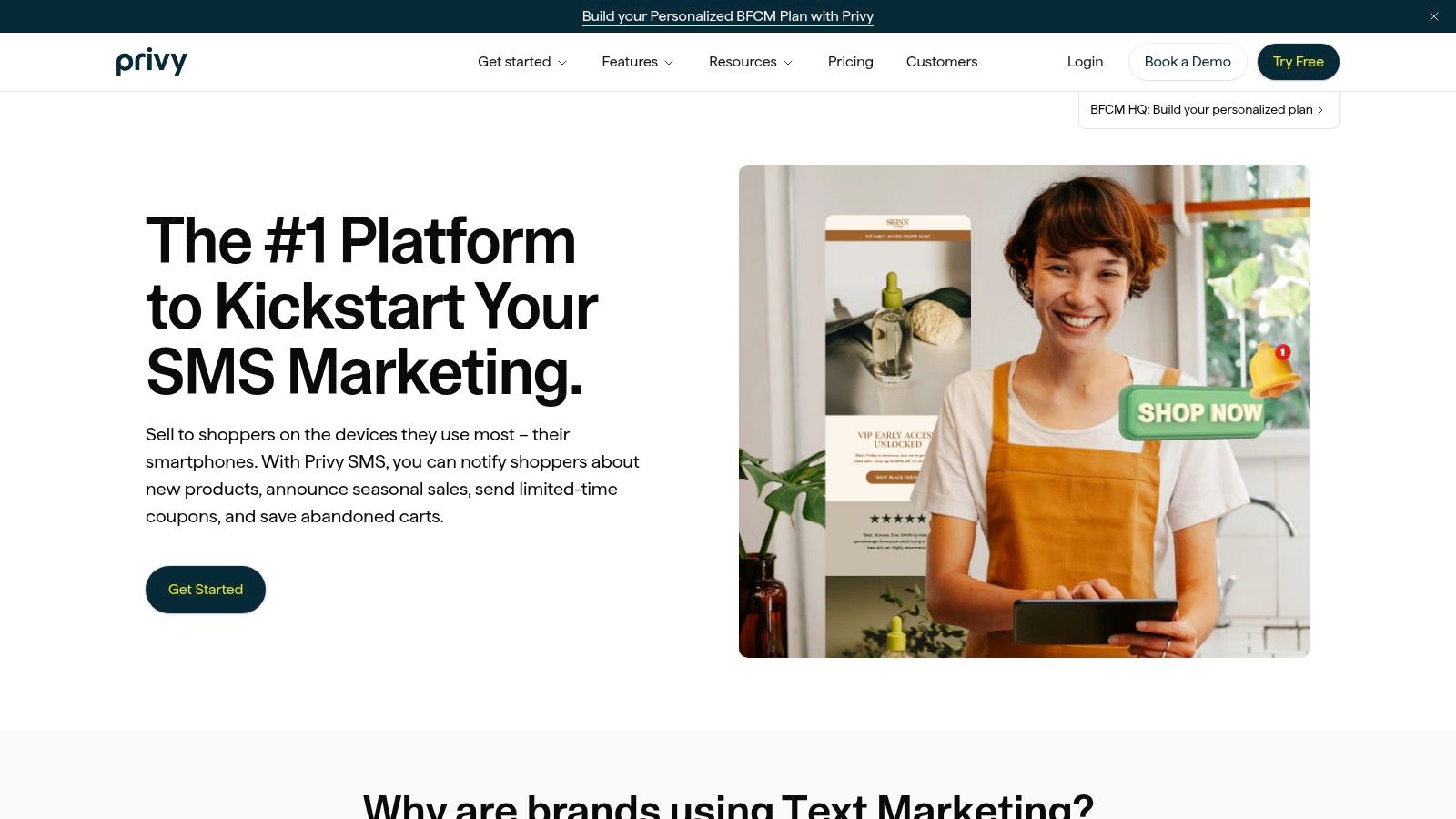
A weak SMS list caps every cart flow you build. Privy fixes that bottleneck first: signup forms and popups bundled with email, SMS, and automations for abandoned cart, welcome, and win-back flows. You collect the number and message the shopper inside one tool, which removes a common integration headache for smaller stores.
The cart controls earn their keep. Configure texts by cart activity, cart-value limits, and timing, so a high-value cart gets a faster, stronger follow-up than a low-value one. Reporting covers clicks, conversions, and revenue, giving you enough signal to tune thresholds instead of blasting every abandonment equally.
Judge those clicks against a real bar. Klaviyo classifies an SMS campaign click rate of 14.6% or higher as great, 8.9% to 14.5% as good, and below 5.9% as critical, in Klaviyo’s SMS benchmark guidance. A Privy flow sitting in the critical range needs a better offer and a tighter segment before it needs more volume. A good score means you test timing and call-to-action wording.
Pricing Reality Check
Pricing starts at $30 per month with a 15-day trial, and SMS credits cost extra beyond the base subscription. Confirm current credit allowances and platform compatibility before committing.
My read: pick Privy when list growth is the gap, because it solves capture and messaging at once. Skip it when forms and email are already covered, since the popup tooling becomes dead weight you still pay for.
7. Shopify Messaging
Already all-in on Shopify? Shopify Messaging is the path of least resistance. You build and track SMS, email, and WhatsApp campaigns inside Shopify admin, using templates, segmentation, reporting, and automations for abandoned cart, browse abandonment, welcome, and win-back. It also works with Shopify Flow and Forms.
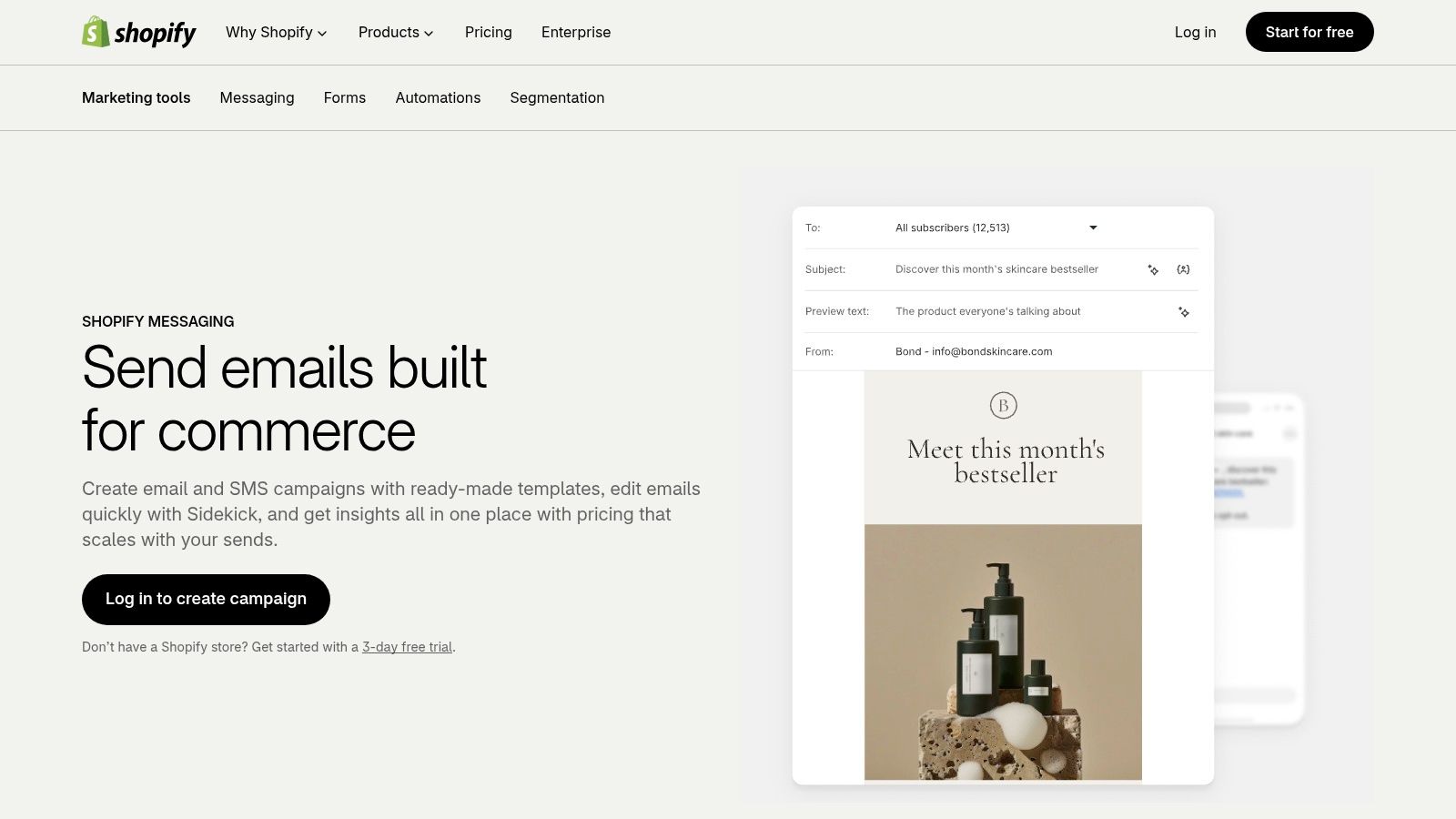
Native access to store data simplifies setup, and it’s free to install with published US per-message pricing, though an approved toll-free number carries a monthly fee. For a first automation, that convenience is hard to beat.
Where it earns its keep: cart recovery first, promos second. The abandoned cart and browse abandonment automations cover the highest-value triggers, and segmented campaigns handle promo sends. Order updates stay in Shopify’s native notifications, so the tool covers marketing campaigns rather than transactional messaging.
Make the text address the actual reason for abandonment. Shopify reports 40% of shoppers abandoned because extra costs were too high and 20% because delivery was too slow, in Shopify’s summary of Baymard checkout research. Surface shipping cost and delivery timing instead of shouting a discount. Guest checkout and recognizable payment options help too.
Before you rely on the default flow, read this guide to Shopify abandoned cart recovery with text messages.
Start here if your store lives in Shopify and you need cart recovery and promos running this week. Plan to graduate when SMS becomes a major revenue line: SMS marketing works only in select countries, and dedicated platforms go deeper on list growth and automation.
SMS Automation Tools: 7-Platform Comparison
| Platform | 🔄 Implementation Complexity | ⚡ Resources & Pricing | 📊 Expected Outcomes | 💡 Ideal Use Case & Key Advantage |
|---|---|---|---|---|
| CartBoss | Low, no-code setup for Shopify and WooCommerce | Pay-as-you-go SMS; no monthly subscription; costs vary by destination and volume | Automated cart reminders with pre-filled checkout links. Company-reported results include 7M+ carts recovered and 4,500% average ROAS; not guaranteed | Stores seeking focused cart recovery, quick setup, and localized SMS in 30+ languages |
| Klaviyo | Moderate, setup and segmentation for coordinated journeys | Free tier available; SMS billed separately based on usage, channel, and destination | Combines SMS and email for cart, welcome, and post-purchase journeys | Retailers needing customer-data-driven, multichannel lifecycle marketing |
| Postscript | Moderate, specialist SMS setup, subscriber acquisition, and automation | Message and carrier charges vary by volume | SMS campaigns, automated flows, segmentation, and reporting | Shopify-focused brands seeking SMS list growth and advanced ecommerce automation |
| Attentive | High, broad journeys, channels, and program support | Custom pricing; costs require sales consultation | Behavior-triggered messaging across SMS and other channels, depending on plan | Larger marketing programs needing multichannel messaging and strategic support |
| Omnisend | Moderate, configure coordinated ecommerce workflows | SMS requires Pro and an SMS credits subscription; rates vary by destination and volume | Coordinates email, SMS, and web push in flows such as abandoned-cart sequences | Stores wanting ecommerce automation across several channels in one platform |
| Privy | Moderate, combines subscriber capture, email, SMS, and automations | Starts at $30/month; SMS credits cost extra | Cart, welcome, and win-back texts with click, conversion, and revenue reporting | Stores seeking list-growth tools and cart-value controls alongside SMS and email |
| Shopify Messaging | Low for Shopify merchants, managed inside Shopify admin | Free to install; SMS billed per message, with a monthly toll-free-number fee in the US | Templates, reporting, and basic cart, browse, welcome, and win-back automations | Shopify stores seeking a native starting point; SMS availability is limited to select countries |
Pick the Right SMS Automation Tool and Start Recovering Revenue
A cart-recovery flow, a promotional campaign, and a shipping update each need a different kind of SMS automation. Choose the platform around the first job you want to improve, then check the pricing model against your expected message volume.
For cart recovery, CartBoss suits Shopify and WooCommerce stores that want localized reminders and pay-as-you-go pricing. Shopify Messaging is a simpler option for merchants in supported countries who prefer to work inside Shopify. For lifecycle marketing, choose Klaviyo to coordinate email and SMS, or Omnisend for a lighter multichannel workflow. Attentive fits larger teams running multichannel programs with sales-led pricing. For SMS-first growth on Shopify, Postscript offers specialist automation; Privy makes more sense if popups and subscriber capture are also priorities.
Before choosing, map the cost to the use case. CartBoss charges by use rather than a monthly subscription. Shopify Messaging bills per message, while Omnisend and Privy require paid plans or SMS credits for texting. Klaviyo and Postscript costs depend on the plan and usage, and Attentive requires a sales consultation. For transactional texts, confirm that your chosen platform supports the message type and destination countries you need.
Set compliance rules before turning on automation. Businesses must accept opt-outs through reasonable methods, including STOP, QUIT, END, REVOKE, OPT OUT, CANCEL, and UNSUBSCRIBE, and process requests within 10 business days, according to Bloomreach’s guide to TCPA and CTIA compliance for SMS marketing. Record each shopper’s opt-in method and date, identify the sender, state message frequency, and suppress promotional texts after an opt-out across connected stores.
International sending needs its own review. Standard U.S. long-code traffic increasingly involves 10DLC registration, and unregistered traffic faced carrier blocking beginning in February 2025, according to FluenceFlow’s analysis of the SMS marketing market. Check destination-specific rules, including GDPR, CCPA, and do-not-disturb windows, before launch. For a broader look at mobile channels, see this guide to mobile marketing apps.
Start with one measurable job, such as recovering carts above your average order value. Build a single flow with a restored-cart link and clear shipping details, then track delivery, clicks, orders, opt-outs, and revenue per send by segment. Expand only when the flow shows a profit.
If cart recovery is your priority, CartBoss offers automated localized reminders, pre-filled checkout links, and pay-as-you-go pricing without a monthly subscription. Start free, measure revenue per send in your store, and scale what works by visiting CartBoss today.