


Cart abandonment averages 70.22% across 50 ecommerce studies, according to Baymard’s cart abandonment research. That number makes text message marketing tools look like an obvious solution, but a reminder alone won’t fix a checkout that surprises shoppers with shipping fees, demands account creation, or raises payment-security concerns.
The practical question isn’t “Which tool sends the most texts?” It’s why did the shopper leave, and can the tool remove that specific obstacle? A shipping-cost exit needs different copy and a different destination from a payment failure. A browser who isn’t ready to buy may need reassurance, not a discount.
| Tool category | Best fit | Main strength | Main trade-off |
|---|---|---|---|
| Generalist email and SMS platform | Stores managing broad lifecycle marketing | Deep segmentation and omnichannel workflows | SMS may receive less specialized cart-recovery attention |
| Specialized cart-recovery tool | Stores focused on abandoned checkout revenue | Fast automation and prefilled checkout links | Narrower scope than a full CRM |
| Conversational commerce platform | Teams handling support and two-way sales conversations | Human replies and customer assistance | Conversation management can slow high-speed recovery flows |
| Developer-oriented messaging API | Businesses with technical resources | Maximum flexibility | More setup, testing, and maintenance |
Table of Contents
- The Case for SMS in Your Recovery Stack
- Decoding Tool Metrics and What Actually Matters
- SMS Tool Categories and Core Trade-offs
- Compliance, Localization, and Avoiding Fatigue
- Implementation Checklist for E-Commerce Stores
- Choosing the Right Strategy for Recovery
The Case for SMS in Your Recovery Stack
SMS gives recovery campaigns a direct route to a shopper’s phone instead of relying on an inbox algorithm or social feed. The first SMS was sent on December 3, 1992, when Neil Papworth sent “Merry Christmas” from a computer to a Vodafone Orbitel 901 handset. By 2011, more than 150 billion text messages were sent in the United Kingdom, compared with 51 billion in 2006, according to ITV’s account of SMS history and Ofcom data.
That history matters because SMS is a familiar channel, not an untested experiment. Stores already use it for order updates, delivery reminders, appointment notices, promotions, and abandoned-cart prompts. The same direct habit can bring a shopper back to a checkout, provided the store has consent and gives the recipient a useful next step.
A store owner may see 100 shoppers add products to carts, then watch most leave before payment. Email remains useful for education and longer product consideration. SMS creates a faster return path, but only when the message addresses the reason for the exit.
Practical rule: Use SMS to remove the next obstacle, not simply to repeat that a cart exists.
The abandonment diagnosis comes first
Baymard’s analysis identifies unexpected costs, including shipping and taxes, as a reason for abandonment in 48% of cases, while forced account creation accounts for 26%, payment-security concerns for 25%, and complicated checkout for 22%. Those figures appear in Baymard’s referenced analysis of cart abandonment causes.
Each cause requires a different recovery job:
- Unexpected costs: Link to a checkout where delivery information and the total cost are easy to review.
- Forced account creation: Return shoppers to a guest-friendly, prefilled checkout.
- Payment concerns: Send them to a trusted payment step and provide a support route.
- Checkout complexity: Restore cart details and remove unnecessary form friction.
A generic “You forgot something” message may recover some intent, but it does not address why the shopper left. A more useful text could say, “Your items are still reserved. Review delivery costs and complete checkout here: [link].” That wording acknowledges a likely concern without sacrificing margin through an unnecessary discount.
Where SMS fits
SMS belongs after the store has improved its checkout experience. Baymard reports that checkout usability improvements could produce an average 35.26% increase in conversion for large ecommerce sites, though that estimate comes from its research model and is not a guaranteed result for every store. As the Baymard data cited above shows, recovery tooling works best when it sends shoppers to a checkout that deserves another visit.
The channel’s value depends on relevance as much as reach. A text that solves a shipping question, restores a cart, or offers a clear payment route can shorten the path back to purchase. A text that merely repeats the product name adds another interruption without addressing the shopper’s hesitation.
The benefits of SMS marketing for ecommerce include direct communication, but stores still need to match the message to the diagnosed obstacle. That means checking the destination link, preserving cart details, and making the next action clear before the campaign goes live.
The opportunity is direct attention. The constraint is relevance. If the tool sends a message that solves nothing, the same immediacy becomes irritation.
Decoding Tool Metrics and What Actually Matters
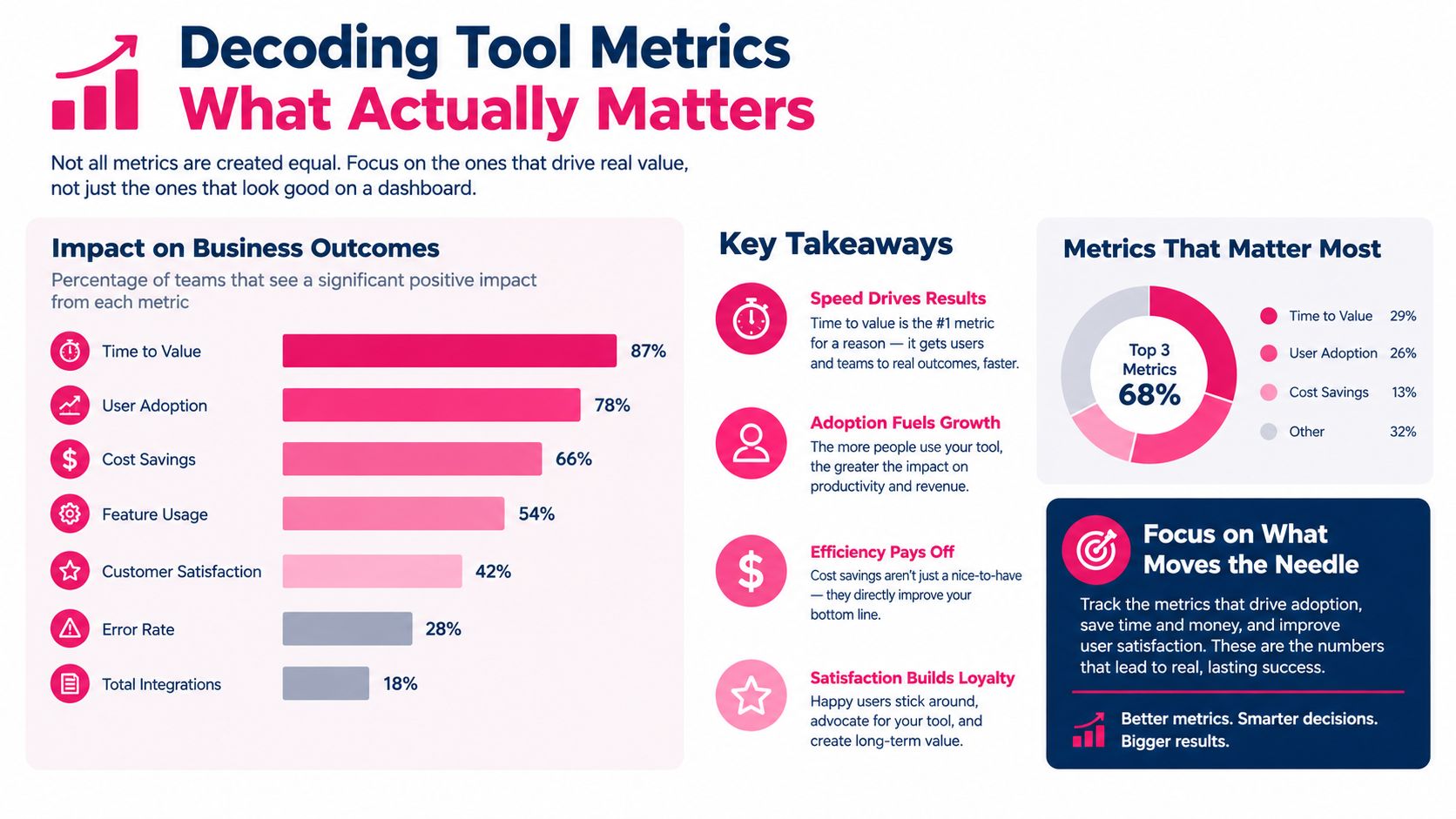
Most text message marketing tools advertise an impressive “open rate.” Treat that figure cautiously. SMS doesn’t use email-style tracking pixels, and many platforms can’t verify whether a specific person read a message. Independent benchmark summaries explain that commonly cited 90% to 98% exposure figures generally refer to delivered messages or device-level message expansion, not verified reading, as discussed in SMS open and click-through measurement research.
The metric chain that exposes weak tools
A useful dashboard follows the customer through the funnel:
- Delivered messages: Did the carrier accept and deliver the text?
- Unique clickers: How many recipients clicked the link?
- Placed orders: How many completed checkout after clicking?
- Revenue per recipient: Did the flow produce enough value to justify its cost?
- Opt-outs and replies: Did the message create fatigue, confusion, or useful engagement?
- Consent coverage: Can the store prove that recipients had the right permission?
The distinction between delivery and engagement is critical. A low click rate may indicate poor copy, weak relevance, or an unattractive offer. A delivery problem may point to carrier filtering, sender registration, list quality, unsupported destinations, or local regulatory rejection. A tool that reports only a large exposure number hides those differences.
One benchmark compilation reports an 8.7% median SMS click-through rate, while Klaviyo-derived ranges classify 8.9% to 14.5% as good and 14.6% or higher as strong. The comparison appears in text marketing benchmark guidance. These ranges aren’t universal guarantees. Country, carrier, consent quality, message timing, offer relevance, and checkout quality all affect performance.
Ask vendors for definitions, not slogans
A vendor should explain exactly how it calculates every metric. “Click rate” should be based on recipients who received the message, not the full upload or an unclear audience denominator.
Klaviyo recommends tracking delivered messages, clicks, placed orders, revenue per recipient, and unsubscribe rate, with a cited 8.5% campaign click-rate target and 0.14% conversion-rate target for ecommerce. Its campaign categories place 2.1% or higher placed-order conversion in the “great” band, 1.0% to 2.0% in the “good” band, 0.5% to 0.9% as needing improvement, and below 0.5% as critical, according to Klaviyo’s ecommerce SMS benchmarks.
Use those figures as comparison points, not promises. Compare the same flow, audience definition, country, and attribution window across tools. A platform that makes this analysis easy is more valuable than one that leads with an unverifiable open-rate headline.
For implementation, SMS campaign analytics guidance can help structure reporting around clicks, orders, and attributed revenue.
SMS Tool Categories and Core Trade-offs
The right text message marketing tools depend on the job your store needs done. A generalist platform may be excellent for customer lifecycle marketing and still be less efficient at identifying an abandoned checkout, generating a prefilled link, and suppressing a message immediately after purchase.
A specialized tool may do that narrow job well but offer less support for broad audience management. A conversational platform can help a shopper answer a product question, yet require more human capacity than a simple recovery flow.
| Category | What it handles well | Where it struggles | Choose it when |
|---|---|---|---|
| Generalist CRM or marketing platform | Email, SMS, segmentation, customer journeys, audience data | Cart-specific logic may need configuration | Your team already operates a mature lifecycle program |
| Specialized cart recovery | Abandoned-cart triggers, rapid reminders, checkout links, discount logic | Less suitable for complex sales or service conversations | Recovering checkout revenue is the immediate priority |
| Conversational commerce | Replies, support, product questions, assisted selling | Response queues and human workflows can add latency | Customers need dialogue before purchase |
| API or custom messaging layer | Bespoke logic and full control | Requires technical ownership and testing | Your team has engineering resources and unusual requirements |
Generalist platforms
A generalist CRM makes sense when your store already relies on shared customer profiles, email sequences, audience rules, and complex post-purchase journeys. Keeping those functions in one environment can simplify reporting and reduce duplicate consent records.
The trade-off is operational depth. A broad platform may require more configuration before it knows whether a shopper abandoned during product selection, shipping review, or payment. It can also make a narrowly defined recovery experiment compete with many other campaigns for attention and engineering time.
Specialized recovery tools
A dedicated cart-recovery product focuses on speed. It typically connects to the store backend, detects an abandoned cart, sends a reminder, and routes the customer to a checkout containing the relevant items. Dynamic discounts, language handling, and purchase-based suppression can turn a basic reminder into a more contextual flow.
CartBoss is one example of this category. It provides automated abandoned-cart SMS for Shopify and WooCommerce, with prefilled checkout forms, dynamic discount application, translated messages, automatic language detection, analytics, and do-not-disturb controls. Those features matter when the store needs a focused recovery workflow rather than another general campaign builder.
The limitation is scope. If your primary problem is a complex sales conversation, a specialized recovery tool won’t replace a support inbox or CRM.
Conversational tools
Two-way messaging earns its keep when customers ask questions before buying. A shopper may need clarification about fit, delivery, compatibility, or returns. A human answer can overcome uncertainty that no discount code can solve.
That strength introduces cost and process requirements. Someone must monitor replies, maintain approved answers, escalate unusual cases, and distinguish a genuine question from an automated opt-out. Use conversational tooling when customer dialogue is central to conversion, not because every abandoned cart needs a conversation.
For a wider comparison of platform capabilities and pricing considerations, consult SMS marketing platforms for ecommerce.
Compliance, Localization, and Avoiding Fatigue
Permission is the starting point, not the entire governance system. A store needs a defensible record of consent, clear separation between transactional and promotional messages, accessible opt-outs, quiet-hour controls, and suppression after purchase. Those controls matter even more when one automation serves customers in multiple countries.
The operational risk is fatigue. A cited 2025 consumer survey found that 53% of recipients named excessive frequency as the leading reason for opting out, while 21% cited spam-like content and 11% cited irrelevant messages. The figures are reported in SMS marketing survey coverage. The same coverage says 84% of consumers opted in to business texts, which reinforces the point that permission alone doesn’t guarantee durable engagement.
Build governance into the flow
A store’s automation should answer these questions before sending:
- Who consented: Is the customer permission record current and tied to the relevant message type?
- When can the tool send: Does it enforce local quiet hours and do-not-disturb periods?
- What stops the flow: Does a completed order immediately suppress further cart reminders?
- How often can the customer hear from you: Are promotional, transactional, and recovery messages included in one frequency policy?
- What happens after STOP: Does the system update suppression lists across every connected campaign?
- Which language applies: Can the tool use the shopper’s language without relying on a vague default?
A recovery message can be urgent without being aggressive. One neutral reminder may be appropriate for a shopper who was only browsing. A customer who encountered payment failure may need help. A buyer who completed the order should exit the cart sequence immediately.
Operational standard: The safest automation knows when not to send.
Localization changes the message objective
Translation isn’t just a language swap. Shipping terms, payment expectations, local holidays, currency presentation, and privacy requirements can change the meaning of a short message. A tool that supports automatic language detection and localized templates reduces the chance that a concise reminder becomes confusing or inappropriate.
Use country-level reporting to find these differences. A weak click rate in one market may reflect poor translation. A weak delivery rate may reflect sender configuration or carrier restrictions. Don’t combine the results and label the entire program underperforming.
The compliance layer should also cover GDPR and CCPA requirements, branded sender identification where supported, easy unsubscribe handling, and records that distinguish transactional notices from promotional offers. A feature list is only useful if the team can audit how those controls operate in real campaigns.
For a practical review of permission, opt-outs, and responsible sending, use SMS marketing compliance guidance.
Implementation Checklist for E-Commerce Stores
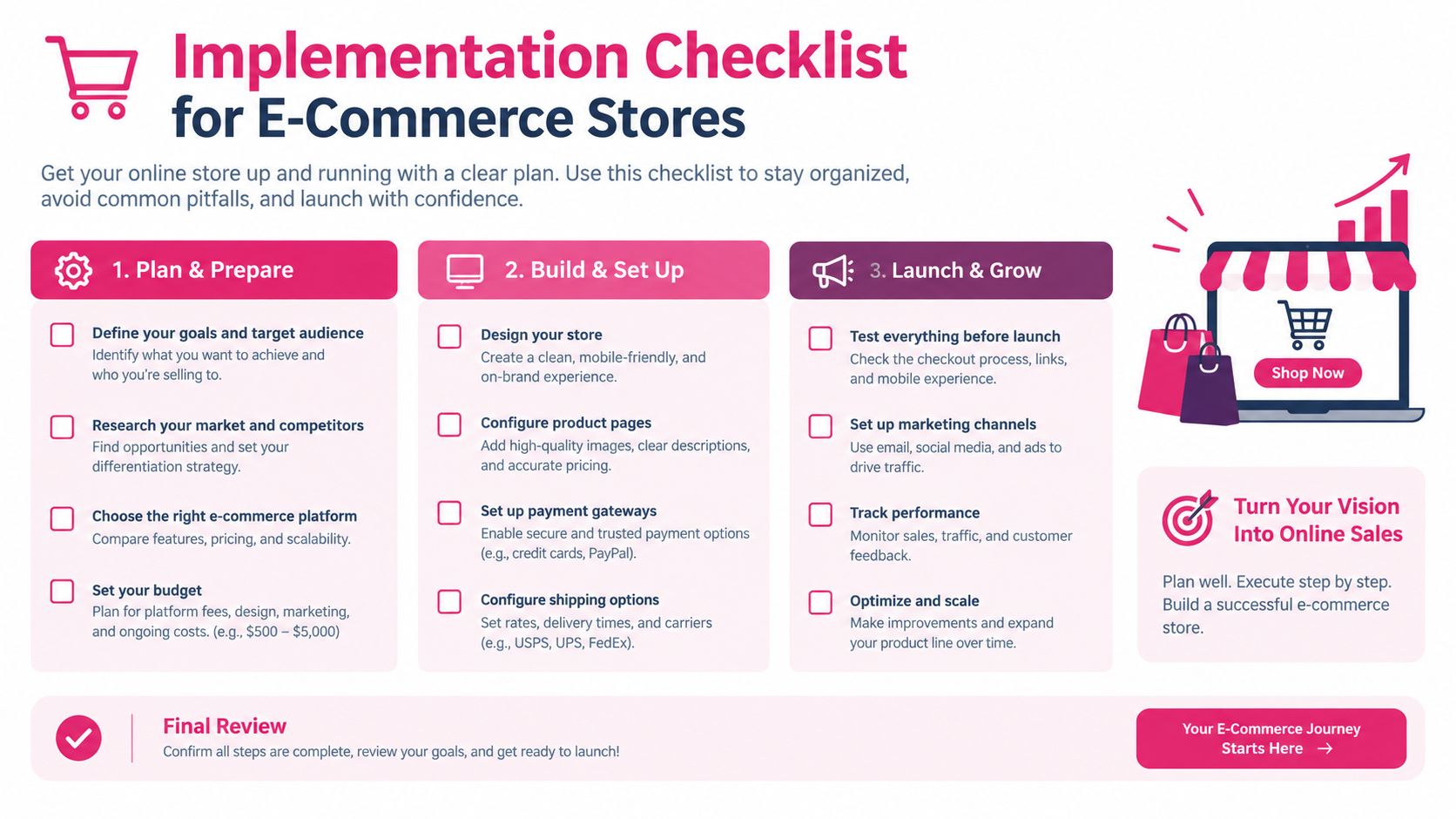
A good launch is smaller than you might expect. Start with one recovery problem, one country or language, and one measurable flow. Expanding before the store understands delivery, clicks, orders, and opt-outs makes diagnosis harder.
1. Confirm the integration
Check that the tool connects to your Shopify or WooCommerce store and can receive the events it needs. At minimum, verify cart creation, customer phone number, consent status, completed purchase, discount application, and checkout URL.
Ask whether the integration preserves product details and whether a completed order suppresses every pending recovery message. A tool that sends a reminder after purchase creates confusion and can damage trust.
2. Define the first flow
Choose the abandonment signal before writing copy. A shipping-cost flow should link to transparent delivery information. A form-abandonment flow should restore entered details where the platform supports it. A payment-failure flow should offer assistance or a reliable payment route rather than automatically reducing the price.
Start with a neutral reminder. Add urgency only when it reflects genuine inventory or offer conditions. Introduce a discount only when the margin model supports it.
3. Test on real devices
Send test messages to your own phone and check the complete experience:
- Link behavior: Confirm that the URL opens the intended cart or checkout.
- Mobile layout: Verify that product, delivery, and payment information remain readable.
- Personalization: Check names, item details, discount codes, and language selection.
- Opt-out behavior: Test STOP handling and suppression.
- Timing: Confirm quiet-hour rules and purchase cancellation.
- Replies: Decide who receives and answers customer responses.
Don’t stop at a dashboard preview. The customer sees a phone notification, a short message, and a landing page. Test all three.
4. Build the measurement view
Create a report containing delivered messages, unique clickers, placed orders, revenue per recipient, unsubscribe rate, replies, country, language, and consent coverage. Separate delivery failures from click failures so the team knows whether to investigate carriers or creative.
If possible, use a randomized holdout group to estimate incremental recovered revenue. Comparing total attributed revenue without a control can overstate what the SMS flow caused.
For broader automation planning, review marketing automation for ecommerce. The useful principle is simple: automate repeatable decisions, but preserve enough visibility for a person to inspect failures.
Choosing the Right Strategy for Recovery
Choose the tool after identifying the abandonment cause. If shipping cost is the dominant problem, prioritize transparent checkout links and delivery information. If forced account creation causes friction, prioritize guest checkout restoration. If shoppers ask pre-purchase questions, prioritize two-way replies. If the store has complex lifecycle programs, a generalist CRM may justify its setup overhead.
Small and medium-sized stores usually benefit from a focused, plug-and-play recovery workflow when their immediate need is speed and low operational complexity. A specialized cart-recovery tool can connect directly to the store, automate reminders, apply relevant discounts, and route shoppers to a prefilled checkout without requiring the team to build an entire messaging program.
Larger organizations may need a generalist platform when they depend on deep CRM integration, extensive segmentation, and coordinated email, SMS, service, and loyalty journeys. That flexibility comes with more configuration, governance, and ownership. A conversational tool is the better fit when sales assistance and customer support drive more value than automated reminders.
The evaluation should stay grounded in profit:
- Measure the cause: Segment exits by shipping, account, payment, browsing intent, and checkout friction.
- Match the intervention: Change the message and landing page to fit the cause.
- Protect margin: Don’t lead with discounts when information or trust would solve the issue.
- Control contact: Suppress after purchase and cap promotional frequency.
- Compare fairly: Review delivery, clicks, orders, revenue per recipient, opt-outs, and incremental results by market.
Text message marketing tools don’t recover revenue just because they send quickly. They recover revenue when the message arrives with the right context, reaches a usable checkout, and stops when the customer no longer needs it.
CartBoss connects Shopify and WooCommerce stores to automated SMS abandoned-cart recovery, with prefilled checkout forms, dynamic discounts, multilingual messages, language detection, analytics, and do-not-disturb controls. Visit CartBoss to evaluate whether a focused recovery workflow fits your store’s abandonment causes and operational capacity.