


Unlocking the Power of Perfect SMS Timing
Want to know the best time to send SMS marketing messages and boost your campaign performance? This listicle reveals seven proven strategies to optimize your SMS timing for maximum impact. Discover the optimal windows for sending texts, including mid-day, early evening, and weekends, plus learn the importance of time zone segmentation and behavioral triggers. We’ll also cover how to leverage flash sales and urgency to drive conversions. Mastering these tactics can significantly improve your open and click-through rates, ultimately transforming your SMS marketing into a revenue-generating machine.
1. Mid-Day Window (12 PM – 2 PM)
The mid-day window, specifically between 12 PM and 2 PM local time, represents a prime opportunity for SMS marketing. This period coincides with the typical lunch break for a large segment of the population, making it a high-traffic time for mobile device usage. People are often stepping away from their work tasks, checking their phones, and engaging with social media or other content, creating a receptive audience for your SMS messages. This makes the mid-day window one of the best times to send SMS marketing campaigns and achieve higher engagement.
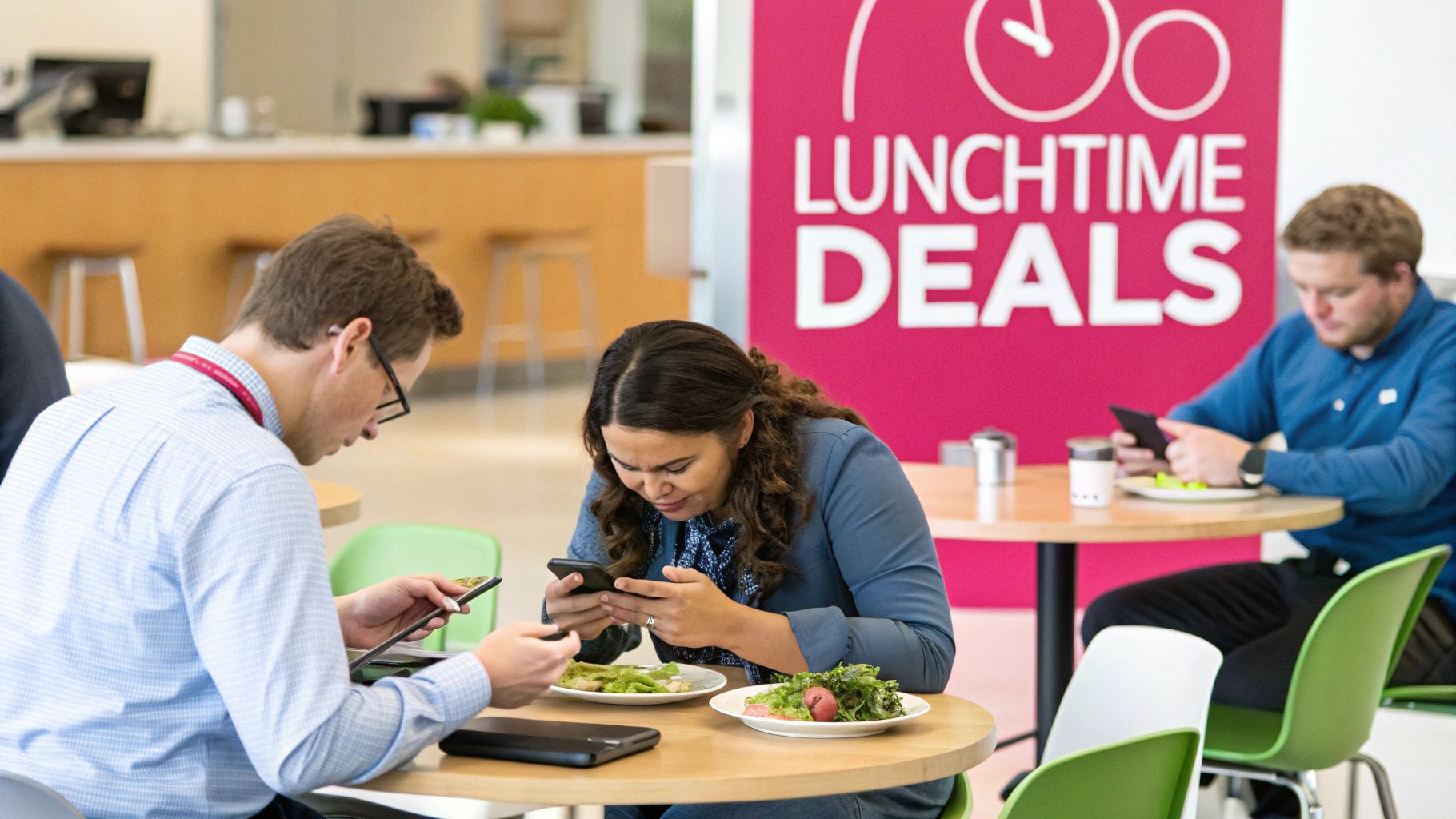
This time slot capitalizes on several key factors. First, the sheer volume of phone usage during lunch breaks ensures a large potential audience for your message. Second, there’s a temporary lull in work-related notifications, meaning your SMS message is less likely to get buried under a barrage of emails and instant messages. This reduced competition for attention significantly increases the chances of your message being read. Third, the mid-day window has universal appeal across various demographics, as lunch breaks are a common practice across numerous industries and professions. Finally, this timeframe is particularly effective for time-sensitive offers and flash sales, as people are more inclined to make impulse purchases during their break.
The benefits of using the mid-day window for your SMS marketing campaigns are numerous. Studies consistently show high open rates across various industries during this period. People are generally in a more relaxed and receptive mindset during their lunch break, making them more open to engaging with promotional content. This window works effectively for both Business-to-Business (B2B) and Business-to-Consumer (B2C) campaigns. Moreover, messages sent during this time are less likely to be perceived as intrusive compared to those sent during early morning or late evening hours.
However, there are a few potential drawbacks to consider. The high open rates also mean higher competition from other marketers vying for the same audience attention. Additionally, this window might not be suitable for targeting night-shift workers whose schedules differ significantly. Similarly, those employed in the restaurant and food service industries might have limited access to their phones during their peak lunch service hours.
Several successful examples demonstrate the effectiveness of mid-day SMS marketing. Domino’s Pizza reported a 45% higher engagement rate by sending out lunch-time pizza deals. Retail giants like Target have seen open rates as high as 38% for mid-day flash sales. Even fitness apps like MyFitnessPal leverage this window, sending lunch reminders and promoting healthy eating habits to their users. These examples highlight the versatility and potential of the mid-day window across different industries.
To maximize the effectiveness of your mid-day SMS marketing campaigns, consider these actionable tips:
- Test 12:30 PM specifically: While the 12 PM to 2 PM window is generally effective, testing messages around 12:30 PM can often yield optimal results, as this is typically the peak of lunch breaks for many people.
- Include clear, actionable CTAs: Ensure your message includes a clear call to action, prompting recipients to take immediate action, such as visiting a website, redeeming a coupon, or browsing a sale.
- Keep messages concise: People are short on time during their lunch break, so keep your messages brief and to the point. Focus on conveying the key information quickly and effectively.
- Use urgency tactics: Incorporate limited-time offers and other urgency tactics to encourage immediate responses. This can be particularly effective during the mid-day window when people are more likely to make impulse purchases.
By understanding the dynamics of the mid-day window and implementing these strategies, businesses can leverage the best time to send SMS marketing messages and significantly improve their campaign performance, ultimately driving higher conversion rates and boosting overall ROI. This makes the mid-day window an essential consideration for any e-commerce business, marketing professional, or online retailer looking to optimize their SMS marketing strategy.
2. Early Evening Engagement (5 PM – 7 PM)
The early evening, between 5 PM and 7 PM, represents a prime window of opportunity for SMS marketing, earning its spot as one of the best times to send messages. This period targets the post-work transition, when people are commuting home, winding down from their workday, or beginning their evening activities. It’s a time when audiences are shifting from work mode to personal time, making them significantly more receptive to messages focused on leisure, lifestyle, and immediate needs. This shift in mindset presents a valuable opportunity for businesses to connect with consumers when they’re thinking about dinner plans, entertainment options, and relaxing after a long day. Leveraging this specific timeframe strategically can significantly boost engagement and conversions for your SMS marketing campaigns.
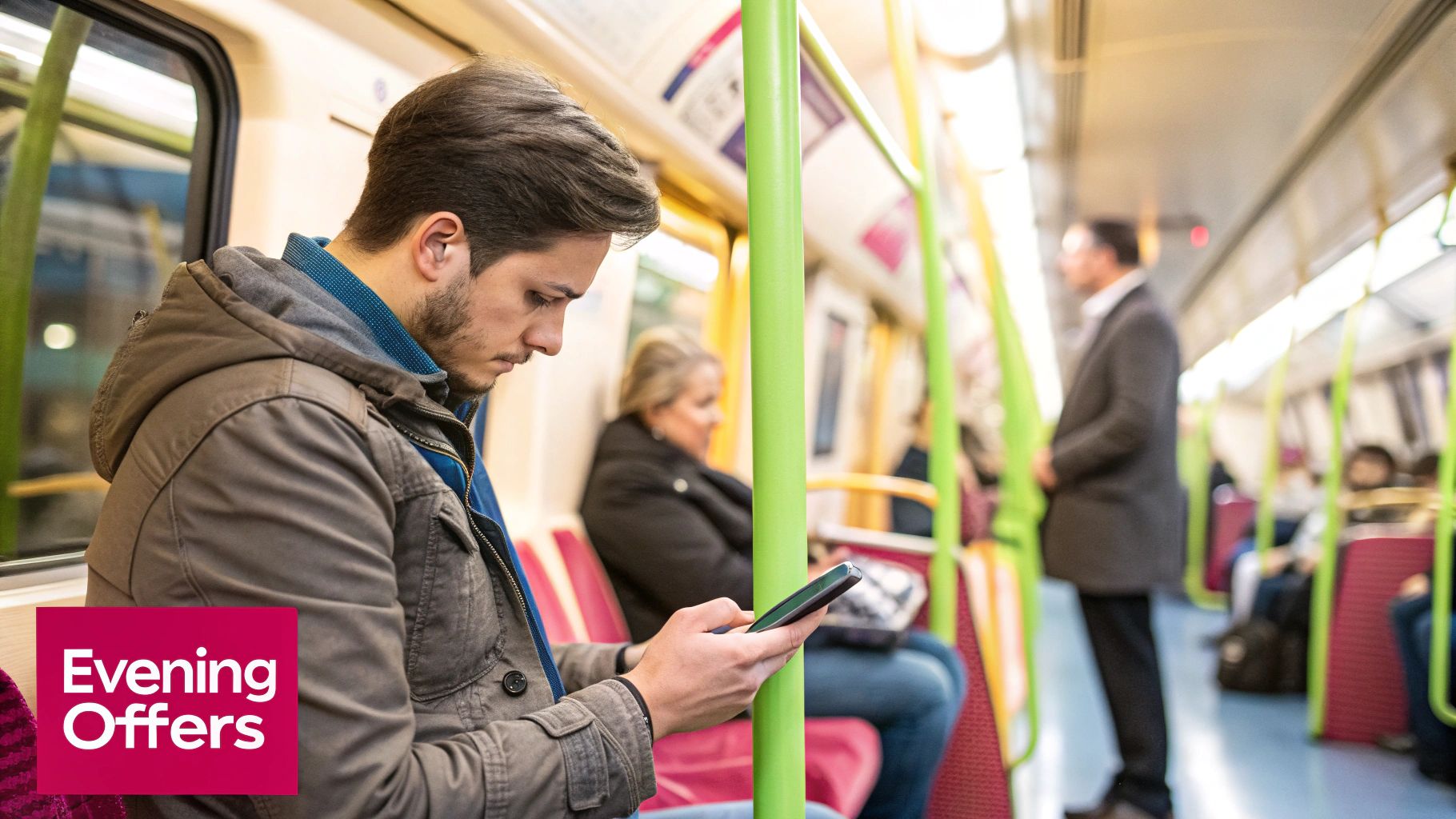
This time slot is particularly effective due to several converging factors. Firstly, commuter accessibility is high during transit. Many people rely on public transport or are in their cars, often with their smartphones readily available to check messages. Secondly, the transition from a work to a personal mindset makes individuals more open to considering leisure and lifestyle-related offers. They’re beginning to think about what to do with their evening, making them more susceptible to suggestions and deals. Finally, high smartphone usage on public transport and during downtime creates an ideal environment for receiving and engaging with SMS messages. This combination of accessibility, mindset, and device usage makes early evening a highly effective period for reaching your target audience.
One of the most significant advantages of the 5 PM to 7 PM window is its effectiveness for entertainment and dining offers. People are often making decisions about dinner plans and evening activities during this time, presenting a perfect opportunity for restaurants, entertainment venues, and related businesses to capture their attention. Think about promoting early bird specials, happy hour deals, limited-time offers on movie tickets, or exclusive discounts for online food delivery. The immediacy of these offers aligns perfectly with the consumer’s mindset during this timeframe.
The pros of utilizing this time slot are numerous. It captures the post-work spending mood when people are more inclined to treat themselves or make plans for the evening. It’s particularly excellent for restaurant and entertainment promotions, driving same-day foot traffic and online orders. High conversion rates for same-day activities are a hallmark of this window, making it ideal for promoting time-sensitive offers. Furthermore, the 5 PM to 7 PM window works relatively well across multiple time zones, allowing businesses to reach a broader audience without significant scheduling adjustments.
However, there are also some potential drawbacks to consider. Sending messages during this time may conflict with family dinner time for some demographics, potentially reducing engagement or leading to negative reactions. Rush hour distractions, such as navigating traffic or crowded public transport, can also reduce the attention given to marketing messages. Finally, this timeframe is generally less effective for B2B messaging, as most professionals are still finishing their workday or have already disconnected for the evening.
Several successful examples demonstrate the power of early evening SMS marketing. Uber Eats has reported 52% higher order rates with 6 PM dinner promotions, capitalizing on the pre-dinner decision-making window. Similarly, MovieTickets.com has achieved 41% conversion rates for evening show promotions, demonstrating the effectiveness of targeting people as they plan their evening entertainment. Happy hour promotions by chains like TGI Friday’s have also seen a 35% increase in foot traffic when promoted via SMS during this time.
To maximize the impact of your early evening SMS campaigns, consider these actionable tips: Focus on immediate gratification offers that encourage quick action. Target location-based promotions for nearby establishments to capitalize on the “on-the-go” mindset of your audience. Use phrases like “on your way home” or “tonight only” to create a sense of urgency and relevance. Always include easy ordering or booking links to streamline the conversion process. Companies like Uber Eats, DoorDash, OpenTable, and Fandango have successfully popularized and refined this approach, proving its effectiveness in driving engagement and revenue.
3. Tuesday-Thursday Sweet Spot Strategy
Finding the best time to send SMS marketing messages can significantly impact your campaign’s success. The Tuesday-Thursday Sweet Spot Strategy focuses on leveraging the mid-week period when audiences are settled into their routines and more receptive to marketing communications. This strategy capitalizes on peak productivity and engagement, offering a prime window for connecting with your target audience before the weekend distractions set in. It’s a consistent performer across many industries and demographics, proving effective for both promotional messages and informational updates. This approach allows you to strategically target your audience when they are most likely to engage, leading to improved open and conversion rates.
This strategy deliberately avoids the Monday morning rush when inboxes and to-do lists overflow, and the Friday afternoon anticipation of the weekend, when focus shifts away from work and towards leisure activities. By targeting the Tuesday-Thursday window, your SMS messages are more likely to capture attention and prompt action. This is particularly true for considered purchases, where customers need time to evaluate the offer and make an informed decision. The less competitive landscape compared to weekends further enhances visibility, giving your messages a better chance of standing out. Professional audiences, in particular, are highly engaged during this mid-week period, making it an ideal time for B2B communications.
The benefits of this strategy are compelling. Studies have shown that open rates for SMS messages sent on Tuesday through Thursday are typically 15-20% higher than those sent on Monday or Friday. This translates to better conversion rates for products or services that require deliberation, not impulse buys. Furthermore, the reduced competition for attention from weekend entertainment and activities contributes to the effectiveness of mid-week campaigns. For instance, data from Mailchimp has revealed that Tuesday sends achieve an 18.7% higher open rate. E-commerce brands like Warby Parker have also reported their best conversion rates on Wednesday campaigns. Similarly, B2B companies have seen a 25% increase in lead generation through Tuesday-Thursday SMS campaigns. You can Learn more about Tuesday-Thursday Sweet Spot Strategy and related email marketing best practices to boost your overall marketing strategy.
While the Tuesday-Thursday Sweet Spot Strategy is highly effective for many businesses, it’s crucial to consider its limitations. This approach may not be optimal for retail businesses heavily reliant on weekend traffic or those selling impulse purchase items. These types of businesses often see higher engagement and sales during weekends when consumers are more likely to make spontaneous purchases. Additionally, this strategy requires consistent week-over-week scheduling to maintain momentum and achieve optimal results. This commitment to consistent scheduling is essential for establishing a reliable communication cadence with your audience.
To maximize the impact of your Tuesday-Thursday SMS campaigns, consider these actionable tips: schedule campaigns for Tuesday at 2 PM or Wednesday at 11 AM for optimal open and click-through rates. Utilize Tuesdays for product launches and major announcements, capitalizing on the high engagement levels. Reserve Thursdays for nurture campaigns and follow-ups, ensuring continued engagement and building stronger customer relationships. Finally, A/B test different times within the Tuesday-Thursday window to fine-tune your strategy and identify the most effective sending times for your specific audience.
By understanding the nuances of the best time to send SMS marketing messages and implementing the Tuesday-Thursday Sweet Spot Strategy effectively, businesses can significantly improve their engagement, conversion rates, and overall return on investment. Remember to analyze your own data and adjust your strategy based on your specific audience and industry.
4. Weekend Leisure Targeting (Saturday 10 AM – 12 PM)
Finding the best time to send SMS marketing messages can significantly impact your campaign’s success. Saturday mornings, specifically between 10 AM and 12 PM, present a unique opportunity known as Weekend Leisure Targeting. This strategy capitalizes on the relaxed mindset of consumers as they plan their day and are more receptive to lifestyle and entertainment-focused messaging. It’s a prime time to connect with your audience when they are more likely to engage with your brand and make impulse purchases. This approach is particularly effective for businesses in retail, events, and leisure activities, offering a window of opportunity to boost engagement and drive sales. But why does this time slot deserve a place on the list of best times to send SMS marketing messages? Let’s delve deeper.
Weekend Leisure Targeting works by tapping into the consumer’s state of mind during weekend mornings. Free from the pressures of the workweek, people are generally more relaxed and open to exploring new experiences and indulging in leisurely pursuits. This relaxed, leisure-focused mindset translates into a higher likelihood of impulse purchases, making it an opportune time for businesses to promote their products or services. Moreover, the competition for message volume from other businesses is typically lower during this period, increasing the chances of your message being seen and acted upon.
This strategy boasts several advantages. It’s perfect for lifestyle and luxury brands aiming to connect with their target audience on a more personal level. The relaxed atmosphere of Saturday mornings makes consumers more receptive to visual and entertainment content, increasing engagement rates. It’s also an excellent window for promoting same-day events and activities, allowing for immediate action from recipients. Finally, people generally have more time to engage with longer messages, allowing for more detailed promotions and storytelling. For example, Sephora achieved 43% higher engagement with weekend beauty tutorials sent during this timeframe, demonstrating the power of aligning content with the consumer’s weekend mindset.
However, Weekend Leisure Targeting also has its drawbacks. Sending marketing messages during this time may be perceived as intrusive during family time by some demographics. It generally has lower effectiveness for B2B communications, as most business professionals are not actively engaged in work-related activities during this time. Furthermore, the results can be inconsistent across different demographics, requiring careful audience segmentation and targeting. While Home Depot sees 35% more weekend project engagement with Saturday morning SMS promotions, a B2B software company might see minimal returns. Therefore, understanding your target audience is crucial for maximizing the effectiveness of this strategy.
The following infographic visualizes the key components of Weekend Leisure Targeting, illustrating the relationships between a Relaxed Weekend Mindset, increased Impulse Purchase Likelihood, and Low Campaign Competition. These factors combine to create a unique window of opportunity for SMS marketing.
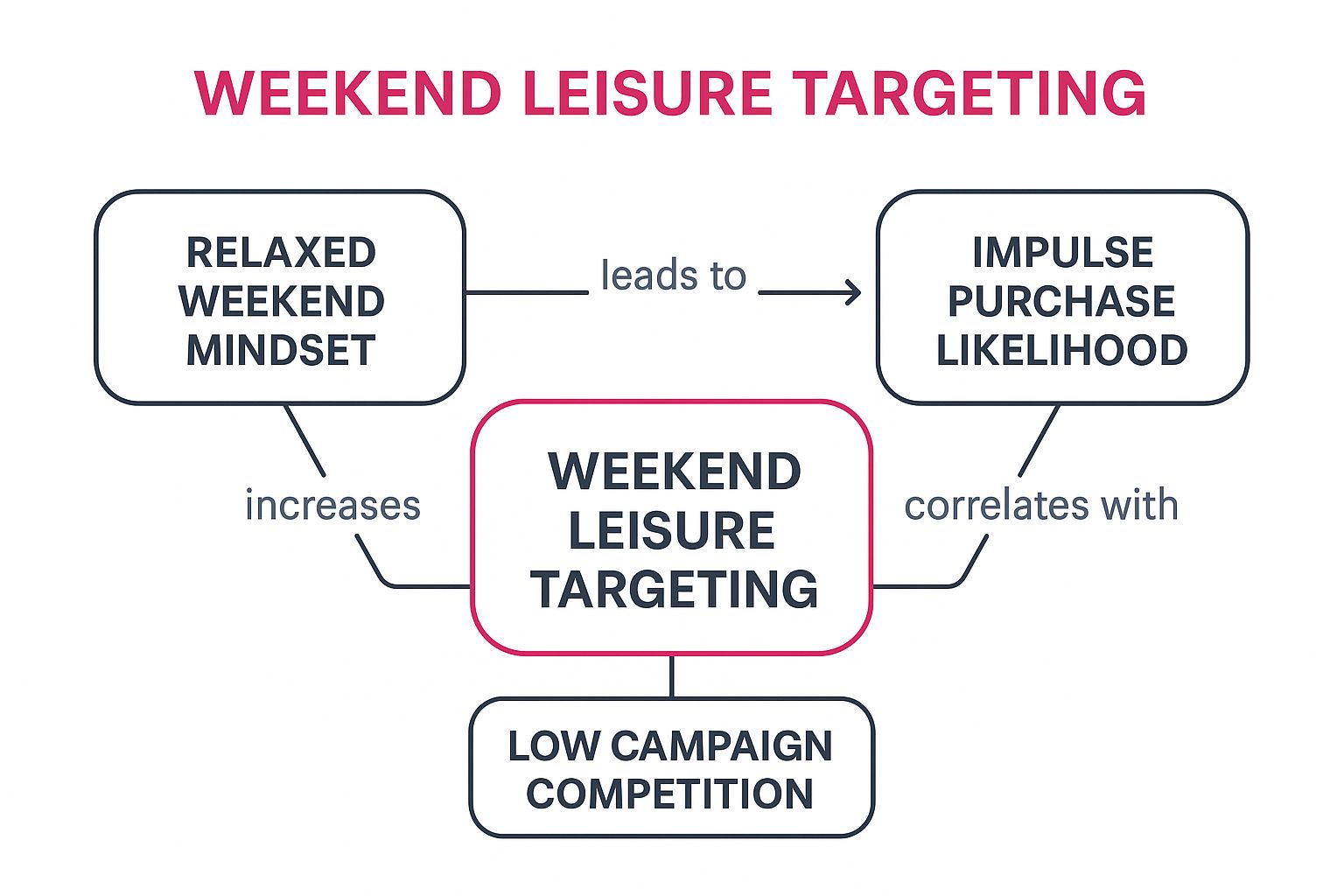
The infographic highlights how the relaxed atmosphere of the weekend contributes to a greater likelihood of impulse purchases, while the lower competition for attention enhances the effectiveness of SMS campaigns. This confluence of factors makes Saturday mornings an ideal time to engage consumers. Local event venues, for instance, have reported a 60% higher attendance with Saturday morning promotions via SMS.
To effectively leverage Weekend Leisure Targeting, consider these actionable tips: focus on lifestyle and leisure-oriented messaging that resonates with the weekend mindset; include compelling visuals or multimedia content to capture attention; promote same-day or weekend activities to encourage immediate action; and use a casual, friendly tone rather than formal business language. Learn more about Weekend Leisure Targeting (Saturday 10 AM – 12 PM). By understanding the nuances of this strategy and tailoring your messages accordingly, you can effectively reach your target audience and maximize the impact of your SMS marketing campaigns.
5. Time Zone Segmentation Strategy
Finding the best time to send SMS marketing messages can feel like hitting a moving target. What works for one customer might completely miss the mark for another, especially when dealing with a geographically diverse audience. A blanket approach simply won’t cut it if you’re serious about maximizing engagement and ROI. That’s where the power of time zone segmentation comes in. This sophisticated strategy is a game-changer for businesses operating across multiple time zones, allowing you to tailor your SMS campaigns for optimal local times, rather than relying on a single, potentially ineffective, sending time. This ensures your messages reach recipients when they’re most likely to be receptive, regardless of their location. For businesses aiming to optimize their SMS marketing efforts and truly connect with a global audience, understanding and implementing time zone segmentation is crucial.
Time zone segmentation works by dividing your audience into distinct groups based on their geographic location and time zone. Instead of blasting out a single message at 9 am in your company’s time zone, you schedule separate sends targeting each segmented group at their respective 9 am local time. This personalized approach acknowledges and respects your customers’ local time, dramatically increasing the chances of your message being read and acted upon. Imagine the difference between receiving a promotional text about brunch while enjoying your morning coffee versus receiving the same message in the middle of the night!
This strategy is particularly powerful for businesses with international customer bases or those operating across different time zones within a single country. For example, Starbucks effectively utilizes location-based morning coffee promotions across its global locations, sending targeted SMS messages to customers with offers relevant to their local breakfast time. Similarly, streaming giants like Netflix employ this tactic by sending show release notifications optimized for local prime viewing times, ensuring subscribers are informed when their favorite shows are available to watch in their region. International airlines like Delta also customize flight deal promotions by local business hours, targeting potential travelers when they’re most likely to be planning their next trip.
The benefits of adopting a time zone segmentation strategy are numerous. First and foremost, it significantly increases engagement rates for businesses with a broad geographic reach. By delivering messages at optimal local times, you capture your audience’s attention when they’re most active and receptive, leading to higher open and click-through rates. This personalized approach also shows respect for your customers’ time, fostering a positive brand image and enhancing customer loyalty. Furthermore, time zone segmentation enables true 24/7 global marketing, allowing you to maintain a constant presence in different markets without overwhelming any single segment. Finally, by avoiding poorly timed messages, you minimize the risk of annoying customers and reduce unsubscribe rates, preserving your valuable contact list.
However, implementing a time zone segmentation strategy does come with some challenges. It requires access to sophisticated SMS marketing platforms with robust segmentation capabilities. These platforms often come with higher costs compared to basic SMS services. You’ll also need to ensure accurate location data collection, either through app permissions, signup forms, or other reliable methods. Managing multiple segmented campaigns can also be more complex than running a single, universal campaign. Setting up and scheduling messages for different time zones requires careful planning and organization.
To effectively implement time zone segmentation, invest in an SMS platform specifically designed for this purpose. Learn more about Time Zone Segmentation Strategy Look for features that allow you to easily segment audiences based on location and automate message scheduling across different time zones. Prioritize accurate location data collection and ensure your signup processes clearly explain how this information will be used. To simplify management, consider creating 3-4 major time zone groups rather than trying to cater to every single time zone individually. Finally, and perhaps most importantly, remember to test and refine your strategy. Local cultural preferences regarding timing can vary significantly even within the same time zone. Conduct A/B testing to identify the optimal sending times for each segment and continuously monitor your results to ensure your campaigns remain effective.
When striving for the best time to send SMS marketing messages, adopting a time zone segmentation strategy is a worthwhile investment. Although it requires more complex setup and management than a single-send approach, the potential gains in engagement and customer satisfaction make it a crucial consideration for any business aiming to maximize the impact of its SMS marketing efforts. The increased engagement rates, reduced unsubscribe rates, and enhanced customer experience make it a vital component of any successful global SMS marketing strategy.
6. Behavioral Trigger-Based Timing
Finding the best time to send SMS marketing messages can significantly impact your campaign’s success. While general best practices offer a good starting point, a truly effective strategy often lies in personalization. This is where behavioral trigger-based timing comes into play, representing a sophisticated approach to SMS marketing that leverages individual customer behavior to optimize message delivery. Instead of adhering to a fixed schedule, this method analyzes each customer’s unique engagement patterns to pinpoint the ideal moment for reaching out. If you’re looking for the absolute best time to send SMS marketing messages, this approach might be your answer.
Behavioral trigger-based timing operates on the principle of understanding when each customer is most receptive to your messages. This involves analyzing data points like past message opens, purchase history, website browsing activity, and even app usage. By identifying recurring patterns, the system learns the optimal send times for each individual, dramatically increasing the likelihood of engagement and conversions. This individualized approach is a key differentiator from generic scheduled campaigns, allowing you to bypass the noise and connect with customers when they’re most likely to pay attention.
This advanced strategy relies on several key features:
- AI-powered individual timing optimization: Sophisticated algorithms analyze customer data to determine personalized send times, continuously refining these windows based on ongoing behavior.
- Continuous learning from customer behavior: The system constantly learns and adapts to evolving customer patterns, ensuring that message delivery remains aligned with individual preferences.
- Highly personalized delivery windows: Forget blanket send times. This method creates individualized delivery windows for each customer, maximizing the chances of your message being seen and acted upon.
- Integration with customer journey mapping: By integrating with your customer journey map, behavioral triggers can align SMS messages with specific stages of the customer lifecycle, further enhancing relevance and impact.
The benefits of this targeted approach are numerous:
- Highest possible relevance and engagement rates: Delivering messages at the optimal moment drastically increases the likelihood of engagement, leading to higher open, click-through, and conversion rates.
- Reduces message fatigue through precise timing: By avoiding bombarding customers with irrelevant messages, behavioral triggers minimize message fatigue and maintain a positive brand perception.
- Improves customer experience through personalization: Tailored communication makes customers feel valued and understood, enhancing their overall experience with your brand.
- Continuously optimizes performance over time: The system’s continuous learning capabilities mean that your SMS marketing performance improves organically over time.
However, implementing this strategy does come with certain challenges:
- Requires significant data collection and analysis: Effective behavioral targeting relies on having access to substantial customer data, which may take time and resources to gather.
- Complex setup and ongoing management: Setting up and maintaining the system requires technical expertise and ongoing monitoring.
- Higher technology and platform costs: Implementing AI-powered personalization often involves higher upfront costs compared to basic SMS marketing platforms.
- May require significant customer data to be effective: In order to accurately predict optimal send times, a sufficient volume of customer data is necessary. This can be a challenge for businesses with smaller customer bases.
Several real-world examples demonstrate the power of behavioral trigger-based timing:
- Amazon: Uses purchase history and browsing behavior to time product recommendation messages, often leading to impulse buys.
- Spotify: Sends personalized playlist updates based on individual listening patterns, ensuring users receive relevant music suggestions at the right time.
- Fitness apps like Peloton: Time workout reminders based on a user’s historical activity, encouraging consistent engagement and habit formation.
Ready to implement this strategy for yourself? Here are a few actionable tips:
- Start collecting behavioral data from day one: The sooner you begin gathering data, the faster you can build robust customer profiles and personalize your SMS marketing.
- Use machine learning platforms that can analyze timing patterns: Invest in a platform that can handle the complexities of behavioral analysis and automated message delivery.
- Combine with other behavioral triggers like purchase history: Layer in additional triggers like abandoned carts or recent purchases to further refine your targeting.
- Allow customers to set preferences for backup timing: Offer customers the option to customize their notification preferences as a fallback, ensuring they retain control over their communication.
Learn more about Behavioral Trigger-Based Timing
While behavioral trigger-based timing represents a more complex approach to SMS marketing, the potential rewards in terms of engagement and ROI are substantial. By leveraging the power of personalization, you can deliver the right message at the right time, creating a more meaningful and effective customer experience. This precise targeting is what makes it a worthy contender when considering the best time to send SMS marketing campaigns.
7. Flash Sale and Urgency Timing (Evening 7 PM – 9 PM)
Finding the best time to send SMS marketing messages can significantly impact your campaign’s success. One highly effective window is the evening, specifically between 7 PM and 9 PM. This period, often referred to as “Flash Sale and Urgency Timing,” leverages the prime time when people are winding down at home, more relaxed, and receptive to browsing and shopping online. They’ve likely finished dinner, are spending time with family, or simply relaxing and catching up on their phones, making them more likely to engage with your SMS marketing campaigns. This is a sweet spot for capturing attention and driving immediate action, particularly for time-sensitive offers. So, when considering the best time to send SMS marketing messages for maximum impact, this evening window is crucial.
This strategy works because it taps into evening shopping behavior. After a busy day, many consumers find themselves with more free time in the evening to browse online stores, compare prices, and make purchase decisions. This relaxed state of mind makes them more susceptible to compelling offers and impulse buys. The 7-9 PM slot is especially potent for creating a sense of urgency and scarcity, prompting customers to act quickly before a deal expires. This is when you can effectively leverage limited-time offers, flash sales, and last-minute deals to boost conversions. This time frame also allows for higher attention spans for more detailed offers, unlike during the workday when distractions are abundant. It’s perfect for promoting same-day or next-day delivery promotions, adding an extra incentive for immediate purchase.
Numerous examples highlight the success of this approach. Fashion retailers like Zara have reported a 47% increase in conversions by implementing evening flash sales. Electronics retailers have seen a 55% surge in same-day purchases using this strategy, capitalizing on the desire for instant gratification. Travel companies like Expedia have also benefited, achieving a 40% higher booking rate for last-minute deals targeted during these evening hours. These statistics underscore the effectiveness of aligning your SMS marketing with peak consumer availability and purchasing behavior. If you’re seeking the best time to send SMS marketing, particularly for time-sensitive promotions, the 7-9 PM window is a strong contender.
To maximize the impact of your evening SMS campaigns, consider these actionable tips:
- Use countdown timers and urgency language: Phrases like “ending soon,” “last chance,” and “don’t miss out” create a sense of scarcity and encourage immediate action. Countdown timers visually reinforce the limited-time nature of the offer.
- Include clear discount percentages or savings amounts: Make the value proposition instantly clear. Customers should immediately understand the benefit of acting quickly.
- Make the purchase process as simple as possible: Minimize the steps required to complete a purchase. Streamline the checkout process on your mobile site and ensure a seamless transition from the SMS message to the product page.
- Follow up with abandoned cart reminders within 2 hours: Capture lost sales by sending timely reminders to customers who added items to their cart but didn’t complete the purchase. This can significantly improve your conversion rates.
While evening SMS marketing offers significant advantages, it’s essential to be mindful of the potential drawbacks. Sending messages too late in the evening may interfere with dinner or family time, potentially irritating customers. Overusing this tactic can also make your brand appear pushy and detract from the sense of exclusivity associated with flash sales. Additionally, this approach is less effective for products requiring daytime consideration, such as complex software or high-value investments.
This 7-9 PM slot is particularly advantageous for e-commerce businesses, marketing professionals, online retailers grappling with high cart abandonment rates, small to medium-sized e-commerce stores, brands operating in multiple languages, Shopify and WooCommerce store owners, brands focused on customer retention, online stores aiming to optimize marketing spend, and agencies managing multiple e-commerce clients. By strategically targeting this evening window, these businesses can effectively engage their audience, drive conversions, and maximize the return on their SMS marketing investments. Learn more about Flash Sale and Urgency Timing (Evening 7 PM – 9 PM) This link provides further valuable insights into optimizing your SMS strategy.
By understanding the nuances of timing and employing these best practices, you can leverage the power of SMS marketing to boost sales, strengthen customer relationships, and achieve your marketing objectives. Remember, finding the best time to send SMS marketing messages is crucial, and this 7-9 PM window offers a compelling opportunity to connect with your audience when they are most receptive.
Best SMS Marketing Time Slots Comparison
| Time Slot / Strategy | Implementation Complexity 🔄 | Resource Requirements 💡 | Expected Outcomes 📊 | Ideal Use Cases 💡 | Key Advantages ⭐ |
|---|---|---|---|---|---|
| Mid-Day Window (12 PM – 2 PM) | Moderate – standard campaign setup | Moderate – content and timing testing | High open rates; good engagement across demographics | Retail promotions, food & beverage, flash sales, events | High phone usage; relaxed mindset; universal appeal |
| Early Evening Engagement (5 PM – 7 PM) | Moderate – location targeting helpful | Moderate – location data & time targeting | High conversion for leisure offers & same-day activities | Restaurants, entertainment, delivery, local businesses | Captures post-work mood; high smartphone use during commute |
| Tuesday-Thursday Sweet Spot Strategy | Low – scheduling based on weekdays | Low – timing adjustments & A/B testing | Higher open and conversion rates midweek | B2B communications, product launches, educational content | Consistent peak engagement; less competition than weekends |
| Weekend Leisure Targeting (Sat 10 AM – 12 PM) | Low – simple weekend scheduling | Moderate – creative lifestyle content | Increased engagement with leisure and impulse purchases | Retail, event marketing, lifestyle brands, local businesses | Relaxed mindset; lower competition; great for longer content |
| Time Zone Segmentation Strategy | High – requires geo-segmentation tech | High – advanced SMS platform use, data | Significantly higher multi-location engagement | Global e-commerce, travel, multi-location businesses | Respects local time; enables 24/7 marketing; reduces fatigue |
| Behavioral Trigger-Based Timing | Very High – AI and data-driven setup | Very High – behavioral data & ML tools | Highest relevance and personalized engagement | E-commerce, subscriptions, app-based, high-engagement brands | Personalized timing; continuous optimization; reduces fatigue |
| Flash Sale & Urgency Timing (7 PM – 9 PM) | Moderate – urgent messaging strategy | Moderate – design for urgency elements | Excellent conversions for limited-time offers | Flash sales, inventory clearance, impulse purchases | High attention span; less work distraction; urgency drives action |
Supercharge Your SMS Strategy with CartBoss
Finding the best time to send SMS marketing messages is crucial for maximizing engagement and driving conversions. From leveraging the mid-day window and early evening engagement to capitalizing on the Tuesday-Thursday sweet spot and weekend leisure targeting, strategic timing is key. Remember the importance of time zone segmentation and behavioral triggers, and don’t forget the power of flash sales and urgency-driven messaging in the evening. Mastering these timing strategies allows you to reach your target audience when they’re most receptive, leading to higher open rates, click-through rates, and ultimately, increased sales.
These insights are powerful, but applying them consistently can be challenging. Optimizing your SMS timing is just one piece of the puzzle. To truly elevate your SMS marketing and see a significant impact on your bottom line, you need the right tools.
Ready to take your SMS marketing to the next level and unlock the full potential of your campaigns? CartBoss automates the best time to send SMS marketing messages, enabling you to effortlessly implement these strategies, recover abandoned carts, and boost sales. Visit CartBoss today and discover how easy it is to turn lost revenue into profit.