


What if your marketing messages could do more than just shout into the void? What if they could actually start a conversation? That’s the magic of sms 2 way messaging. It turns texting from a one-way street into a real, back-and-forth dialogue between you and your customers.
Why Two Way SMS Matters Now

Think of the old way of texting—one-way SMS—like a billboard on the highway. It blasts the same message to everyone who drives by, but it can’t listen or respond. In contrast, sms 2 way is like having a friendly chat with a store associate who can answer your questions, confirm an appointment, or help you find exactly what you’re looking for.
This isn’t just a minor upgrade; it’s a completely different way for businesses to communicate. Today’s customers expect fast, direct answers. They want to be able to reply to a text to confirm a delivery time, ask about a product, or get help right away without the hassle of making a call or sending an email.
The Shift from Monologue to Dialogue
This conversational style builds a bridge to much stronger customer relationships. Instead of just sending out alerts, you’re actively engaging with people, turning them from passive listeners into active participants. If you want to see how this fits into the bigger picture, check out our guide on what is SMS marketing and its core ideas.
The potential here is massive. The SMS marketing market in the US is projected to hit $12.6 billion by 2025. Yet, surprisingly, only about 40% of businesses are even using SMS, leaving a huge opportunity for brands willing to connect on a more personal level.
The Core Benefits of Interactive Texting
At its heart, two-way SMS makes business communication more human. And a lot more effective. It gives you the power to:
- Improve Customer Support: Quickly solve problems and answer questions right where your customers are—on their phones.
- Boost Engagement: Invite replies, run quick polls, and get instant feedback from your audience.
- Increase Conversions: Guide customers through a purchase with personalized, real-time help.
Two-way SMS isn’t just another channel; it’s a strategy for building trust. It proves to customers that you’re listening and ready to help, creating a powerful connection that one-way messages simply can’t match.
The Real Business Impact of Conversational SMS
The true power of conversational SMS really shines when you pair it with solid CRM and automation development. It’s not just about the tech; it’s about transforming how you connect with customers during those make-or-break moments, turning what could be a simple broadcast into a meaningful conversation.
Instead of just shouting deals into the void, you start building actual relationships. This simple change turns your audience from passive recipients into active participants, creating a connection that one-way blasts could never achieve.
Drive Engagement and Build Loyalty
When a customer can reply to one of your texts and get a quick, helpful response, it instantly builds trust. This conversational back-and-forth makes your brand feel less like a faceless corporation and more like a helpful person, which is a huge advantage in today’s market.
Think about a local service business sending an appointment reminder. With two-way SMS, the customer can just reply “CONFIRMED” or even ask to reschedule right from their messaging app. It’s incredibly convenient for them and massively cuts down on no-shows for the business. It’s a simple win-win.
This ongoing dialogue keeps your brand top of mind. Over time, all these small, positive interactions add up, building genuine loyalty that turns one-time buyers into lifelong fans.
Boost Conversions and Recover Sales
Being able to chat with customers has a direct, measurable impact on your bottom line. It’s a lot easier to guide someone through a purchase when you can answer their questions in real time, right when they have them.
For an e-commerce store, a two-way conversation is a total game-changer for cart recovery. Ditch the generic “You left something behind!” message. Instead, an automated text can ask something like, “Hey [Name], we saw you left the Pro-Series Blender in your cart. Any questions I can help with?”
This simple question opens a door. The customer might be wondering about the warranty or shipping times. A quick, helpful reply gives them the confidence they need to hit that “buy” button.
This approach is part of a growing trend called ‘conversational commerce.’ By 2025, it’s projected that businesses will put nearly 19% of their marketing budgets into SMS campaigns. Customers can ask questions, get recommendations, and even buy products all within a text thread. To see just how fast this market is growing, check out the latest SMS marketing statistics.
Deliver Superior Customer Support
Conversational SMS is a fantastic tool for customer support, giving people a much-needed alternative to waiting on hold or sending an email into the abyss. It lets customers get help on their own terms, whenever it’s convenient for them.
- Faster Resolutions: A single support agent can juggle multiple SMS conversations at once, solving problems far more efficiently than they could over the phone.
- Reduced Call Volume: By handling simple questions via text, you free up your phone lines and allow your support team to focus on more complex, high-stakes issues.
- Higher Satisfaction: Let’s be honest, customers love the convenience of getting quick answers without the hassle. This leads to better satisfaction scores and a much better overall brand experience.
This approach doesn’t just solve problems faster; it also takes a huge load off your support resources, making your whole operation run smoother.
How Two-Way SMS Technology Actually Works
Ever wonder what happens behind the scenes when you text back and forth with a business? It feels instant, but there’s a surprisingly simple process making that conversation happen. Think of it like a digital postman, zipping messages between your business and your customer’s phone in seconds.
It all kicks off with the right kind of phone number. Unlike the one-way blasts you might be used to, real conversations need a number built for dialogue. Your choice here sets the tone for the entire interaction.
- Short Codes: These are the 5-6 digit numbers you see for big campaigns, like voting for a TV show or getting a flash sale alert. They’re great for high volume, but they can feel a bit robotic and aren’t always ideal for a personal chat.
- Long Codes: This is a standard 10-digit phone number. Using one makes your business feel like a person on the other end, which is perfect for building trust in support or sales conversations.
- Toll-Free Numbers: These give you the personal feel of a long code but can handle more message traffic. They’re a solid, versatile choice for businesses that are starting to scale up their texting efforts.
The Journey of a Two-Way Message
So, a customer gets your text and replies. What’s next? That message takes a lightning-fast trip back to your dashboard in just a few seconds.
Let’s say a customer replies “INFO” to your latest offer. Their text first goes to their mobile carrier (think Verizon or AT&T). The carrier immediately forwards it to an SMS gateway. This gateway is the key translator, converting the text into a language that internet apps can understand.
This is where the real magic happens. The gateway shoots the message over to your business platform using an SMS Sender API. This API is the bridge connecting the mobile world to your tools, whether that’s your CRM, your online store, or a specialized service like CartBoss. It “catches” the incoming message and puts it right where you can see it and reply.
If you want to get into the nitty-gritty of the tech, our guide on how an SMS Sender API works breaks it all down.
The whole round-trip—from your platform to the customer’s phone and back again—is a finely tuned system. It ensures that what feels like a simple, personal text conversation is actually a reliable, trackable, and fully integrated part of your business operations.
This quick infographic shows how that seamless technology translates into real-world business wins.
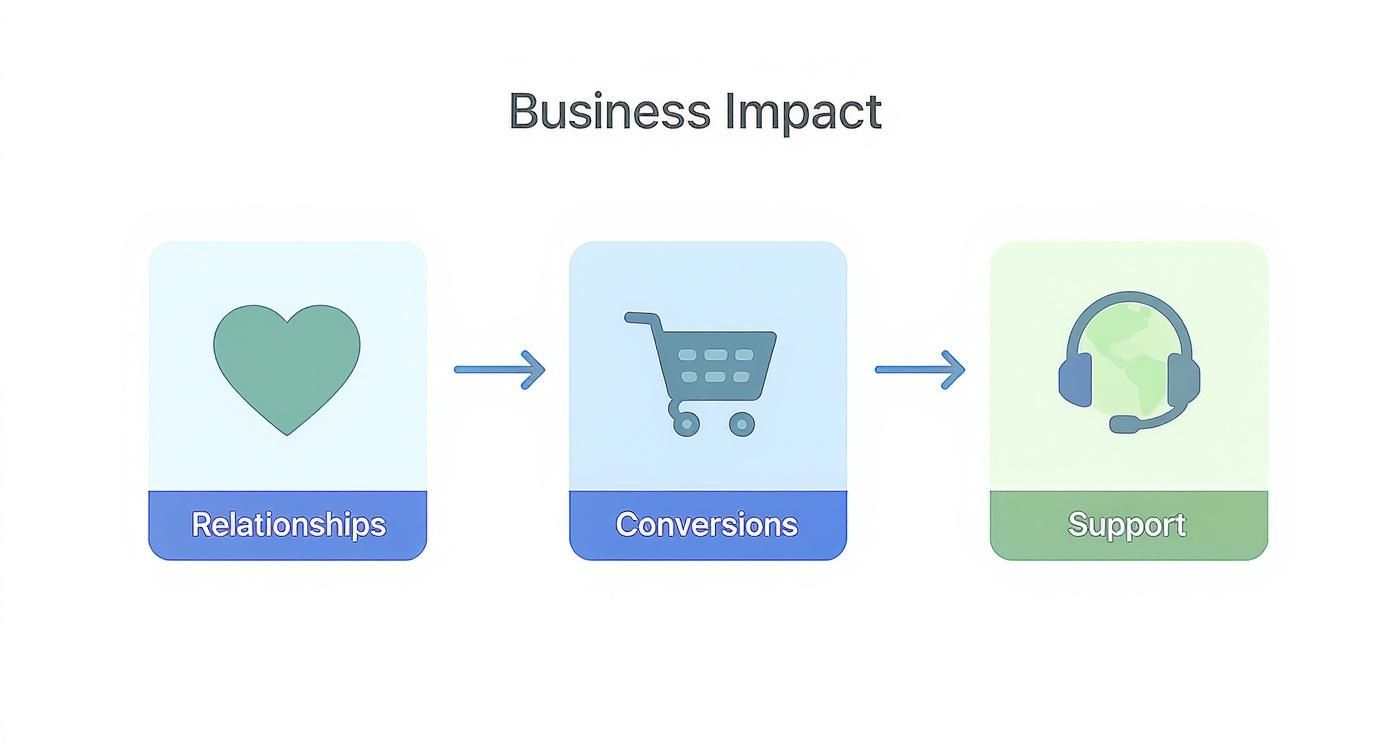
As you can see, this isn’t just about sending messages; it’s about building relationships, driving sales, and offering killer support.
Staying Compliant in Conversational Texting
When you start a two-way SMS conversation, you’re not just sending a message; you’re building a relationship on trust. A massive part of earning that trust comes down to one simple thing: respecting your customers’ privacy and playing by the rules. This isn’t just about dodging fines—it’s about showing your audience you value their permission to be in their inbox.
Before a single text leaves your system, you absolutely must have explicit opt-in consent. This means a customer has to knowingly and clearly agree to get texts from you. Just having their phone number isn’t enough. They need to take a specific, deliberate action to say, “Yes, you can text me.”
Getting Proper Consent
Think of consent as a digital handshake. It’s the official start of a respectful conversation, and you can’t just assume it happened. You have to earn it.
Here are a few solid, compliant ways to get that all-important opt-in:
- Website Pop-ups: A straightforward pop-up on your site that offers a discount for a phone number, paired with a checkbox that clearly says, “I agree to receive marketing texts.”
- Checkout Forms: An optional, never pre-checked box during checkout that lets customers sign up for updates and offers.
- Keyword Opt-ins: Asking customers to text a keyword like “DEALS” to your short code. It’s a direct and clear way for them to join your list.
No matter which method you use, the request needs to be crystal clear. Tell them what kind of messages they’ll get and how they can opt out at any time.
Navigating Key Regulations
Different parts of the world have different rules, but they all boil down to the same goal: protecting consumers.
In the United States, the big one is the Telephone Consumer Protection Act (TCPA). This is the main law governing text message marketing, and violating it can bring on some seriously steep penalties. Understanding what it requires is non-negotiable. You can learn more by exploring our detailed guide on TCPA compliance and text messaging.
Over in Europe, the General Data Protection Regulation (GDPR) sets the standard for data privacy. It gives consumers much more control over their personal info, and its principles apply to SMS just as much as they do to email.
The core idea behind all these regulations is simple: the customer is in control. Your entire SMS strategy has to be built around respecting their choices, from the moment they sign up to the second they decide to leave.
Honoring Opt-Outs and Privacy
Compliance isn’t a one-and-done task; it’s an ongoing commitment. Just as crucial as getting consent is honoring a customer’s request to stop receiving messages.
When a customer replies with a standard opt-out keyword like “STOP”, “UNSUBSCRIBE”, or “CANCEL”, your system needs to automatically and immediately remove them from your list. The process should be instant and frictionless for the user. Texting someone even once after they’ve opted out is a surefire way to kill your brand’s reputation and land you in legal hot water.
Proven Strategies for Effective Two Way Texting
Getting the compliance side of things sorted is just the first hurdle. The real magic happens when you turn those compliant messages into genuine, revenue-driving conversations. Effective sms 2 way texting isn’t about blasting out notifications; it’s about crafting interactions that feel personal, helpful, and, most importantly, human.
Your main goal should be to make every text feel less like a system alert and more like the beginning of a real dialogue.
A solid strategy always starts by setting clear expectations. Let customers know when they can expect a reply, especially if your support isn’t 24/7. A quick auto-response like, “Thanks for your message! Our team is available M-F, 9-5 and will get back to you shortly,” works wonders. It manages expectations perfectly and stops frustration before it can even start.
Personalize and Humanize Your Messages
Nothing kills a conversation faster than a generic, robotic message. The true power of two-way texting lies in its ability to feel like a one-on-one chat. So, use the customer’s name. Reference the specific products they were looking at. Little details make a huge difference.
Keep your tone conversational and straight to the point. Texting is an informal world, so drop the corporate jargon and write like you’d talk to a friend. A friendly, direct approach is what builds rapport and actually encourages a reply. This approach also fits perfectly when you integrate your SMS with broader local business marketing strategies, ensuring your brand voice is consistent everywhere.
The most effective two-way SMS feels less like a marketing blast and more like a helpful concierge service. It anticipates needs, answers questions directly, and guides the customer toward a solution, making the entire experience smooth and personal.
Actionable Message Templates for Common Scenarios
Having a few go-to templates is key to scaling your conversations without losing that personal feel. Think of these not as rigid scripts, but as starting points that you can tweak to fit your brand’s voice and the specific situation. For a deeper dive into different approaches, you can explore a wide range of SMS marketing strategies in our complete guide to business growth.
Here are a few templates designed to kickstart conversations and get people to take action.
Effective Two Way SMS Message Templates
The goal here is simple: craft messages that naturally invite a reply, turning a one-way alert into a two-way street.
| Use Case | Message Template Example | Strategic Goal |
|---|---|---|
| Appointment Reminder | “Hi [Name]! Just a friendly reminder about your appointment with us tomorrow at [Time]. Please reply with YES to confirm or RESCHEDULE if you need to change it.” | Reduce no-shows by making it incredibly easy to confirm or reschedule. This opens a dialogue for any needed changes. |
| Abandoned Cart Recovery | “Hey [Name], we noticed you left the [Product Name] in your cart. Did you have any questions about it? I’m here to help!” | Start a helpful, low-pressure chat to uncover and solve buying hurdles like shipping costs or product questions. |
| Customer Feedback | “Thanks for your recent order, [Name]! On a scale of 1-10, how was your experience? We’d love to hear what you think.” | Get valuable feedback in a quick, conversational way that feels much more personal than a long email survey. |
As you can see, these templates are all built to get a response. By inviting your customers to reply, you open the door to deeper engagement, better customer service, and, ultimately, more sales.
Measuring the Success of Your SMS Conversations
If you’re going to invest in conversational SMS, you need to be able to prove it’s working. With traditional, one-way SMS blasts, you might look at delivery and open rates. But a solid sms 2 way strategy is all about the conversation, so you need to look a little deeper.
It’s a simple shift in mindset: you’re moving from broadcasting a message to building a connection. While the basic delivery stats still matter, the real gold is in how your customers reply and engage with your brand.
Key Metrics for Conversational Health
To get a real sense of your impact, you need to track the back-and-forth. These KPIs show whether you’re actually building relationships and solving problems, not just firing messages into the void.
- Response Rate: This is the big one. It’s the percentage of people who actually reply to your message. A high response rate tells you that your message was relevant, landed at the right time, and was interesting enough to get a response.
- Conversation Rate: This takes it a step further. It tracks how many of those first replies turn into a real conversation (think more than one message back from the customer). This shows you’re not just getting a “yes” or “no,” but actively engaging them.
- Resolution Time: For customer support, this is crucial. It measures how long it takes to solve a customer’s problem from the moment they first text you. Faster resolution times are a dead giveaway of happy, satisfied customers.
The raw power of SMS is hard to ignore when you look at the numbers. Research shows that SMS messages pull in a massive 98% open rate, and 90% of those are read within just three minutes. With an average response rate of 45%, it absolutely crushes email, which often struggles to get into the single digits.
Comparing One Way vs Two Way SMS Metrics
When you switch to a conversational approach, the metrics you care about will change completely. Knowing this difference is key to showing the true ROI of what you’re doing. If you want a wider view, it’s always useful to understand the basics of how to measure marketing campaign success across all your channels.
The table below breaks down the shift in focus. With one-way SMS, you’re looking at simple actions. With two-way, you’re measuring the quality and outcome of the entire dialogue.
| Metric | One-Way SMS Focus | Two-Way SMS Focus |
|---|---|---|
| Engagement | Click-Through Rate (CTR) | Response Rate & Conversation Rate |
| Customer Service | Not applicable | Resolution Time & Satisfaction Score |
| Sales | Conversion Rate from a link | Revenue per Conversation & Lead Quality |
| List Health | Opt-Out Rate | Net Promoter Score (NPS) via SMS |
By tracking these more sophisticated metrics, you can paint a much clearer picture of the business impact. You can prove that your two-way SMS efforts are doing more than just getting opened—they’re building stronger, more profitable relationships with your customers.
Common Questions About Two-Way SMS
Alright, so you get the basics of two-way SMS. But when it comes to actually setting it up and running it, a few practical questions always pop up. Let’s tackle some of the most common ones so you can move forward with confidence.
Short Codes vs. Long Codes: What’s the Difference?
The phone number you choose for your SMS conversations says a lot about your brand. The real difference between a short code and a long code comes down to one thing: are you trying to blast a message out to thousands, or have a real conversation?
A short code is a 5-6 digit number built for high-volume, one-way blasts. Think mass alerts, voting campaigns, or coupon codes. While some can handle replies, they often feel automated and impersonal.
On the other hand, a long code is just a standard 10-digit phone number. This is what you want for genuine, one-on-one conversations. It feels like you’re texting a real person, which is perfect for customer support, talking to sales leads, or just building a relationship. For any true two-way engagement, a long code is your best bet.
The number you use sets the tone for your entire conversation. A long code signals a personal, one-on-one interaction, while a short code often implies a one-to-many broadcast.
How Do I Integrate Two-Way SMS with My Current Tools?
Good news: you don’t need to rip and replace your current software. Most businesses just plug two-way SMS directly into the tools they already use every day, like their CRM or e-commerce platform.
This usually happens in one of two ways:
- Using an SMS API: Think of an API as a bridge that connects an SMS provider to your own software. This lets you send and receive texts directly inside tools like HubSpot or your custom-built CRM, keeping all your conversations synced up with customer profiles.
- Using a Dedicated Platform: Services like CartBoss offer ready-made integrations for platforms like Shopify or WooCommerce. This makes setting up things like abandoned cart recovery totally seamless, with no custom coding needed from your team.
What Are the Best Times to Send Messages?
Timing is everything, not just for getting a reply but also for staying on the right side of the law. You can’t just fire off messages whenever you feel like it; you have to respect your customer’s time.
Legally, especially under rules like the TCPA in the US, you should only send texts during reasonable business hours. The general rule of thumb is between 8 AM and 9 PM in the recipient’s local time zone.
For pure engagement, aim for times when people are most likely to see and respond to a message. Mid-mornings or early afternoons during the week usually work well. Just be sure to avoid sending texts super early in the morning, late at night, or on major holidays. That’s a quick way to get an unsubscribe.
Can You Automate SMS Responses?
Absolutely! Automation is one of the biggest perks of a proper two-way SMS platform. You can set up automatic replies for common keywords like “HELP,” send instant confirmations for new inquiries, or create out-of-office messages.
You can even build out entire automated conversations. For example, if a customer replies “YES” to an offer, an automated message can instantly send them a direct link to the checkout.
The most effective approach is often a hybrid one: use automation for speed on the first touchpoint, then have a real person jump in when the conversation needs a more personal, human touch.
Ready to turn abandoned carts into conversations that convert? CartBoss offers a powerful, automated SMS cart recovery tool that integrates seamlessly with your store. Start recovering lost sales and building stronger customer relationships on autopilot. Find out how CartBoss can boost your revenue at cartboss.io.